
 Click main image to view in full screen. Unlock all 11 preview images:
Public Asset-to-Revenue Shift™ – PDF
PDF document 16 Pages


BENEFITS OF THIS DOWNLOADABLE PDF DOCUMENT
- Provides a structured framework to identify, evaluate, and activate underutilized public assets as recurring own-source non-tax revenue opportunities.
- Helps decision-makers distinguish recurring asset activation from one-off asset disposal while preserving public ownership and long-term economic value.
- Combines international benchmark models, counter-case analysis, asset maturity assessment, and governance safeguards into an adaptable policy architecture.
REAL ESTATE PDF DESCRIPTION
The Public Asset-to-Revenue Shift™ is a strategic policy intelligence asset for municipal leaders, subnational governments, and policy strategists seeking to strengthen local fiscal capacity without relying primarily on broader taxation or increased household burdens.
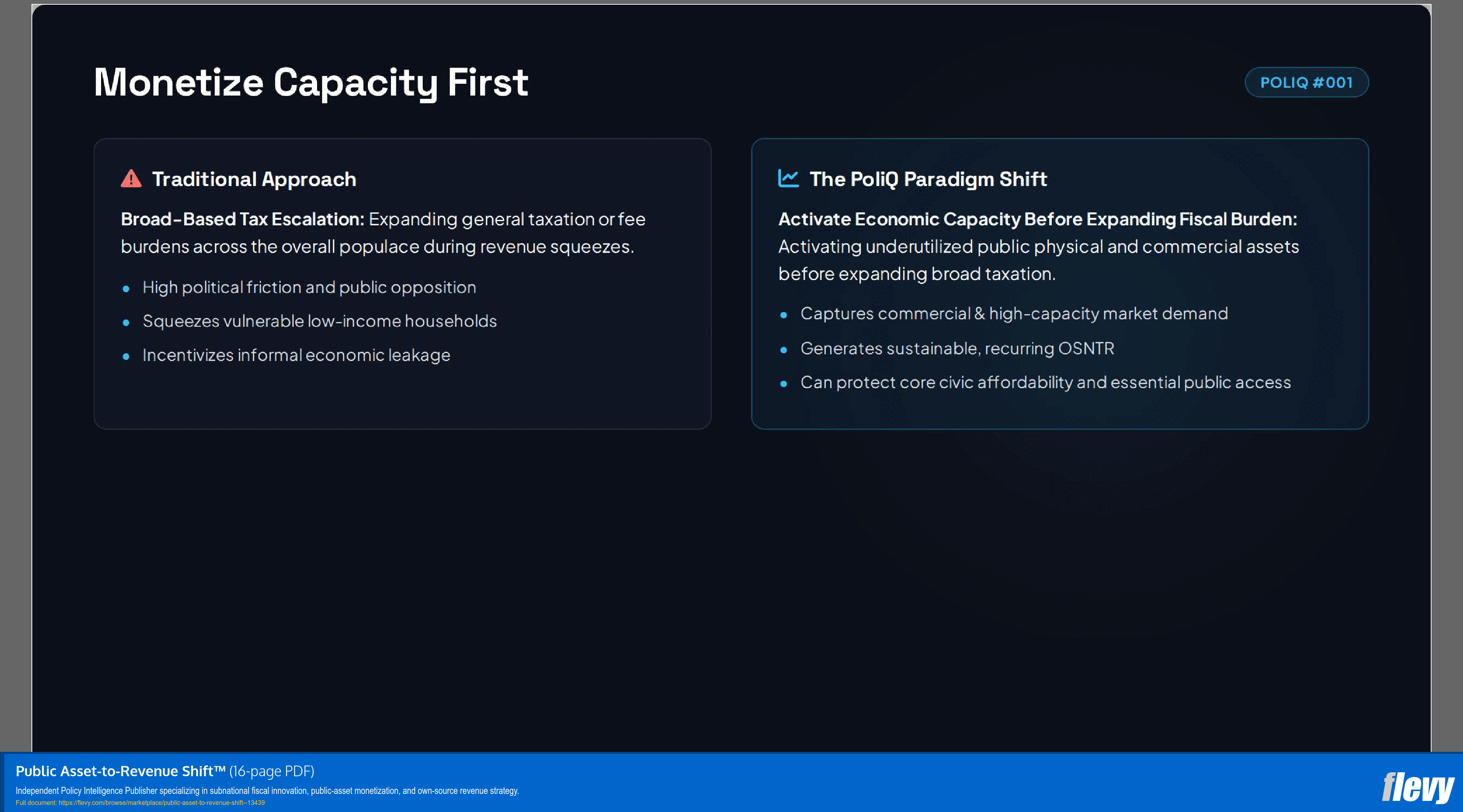
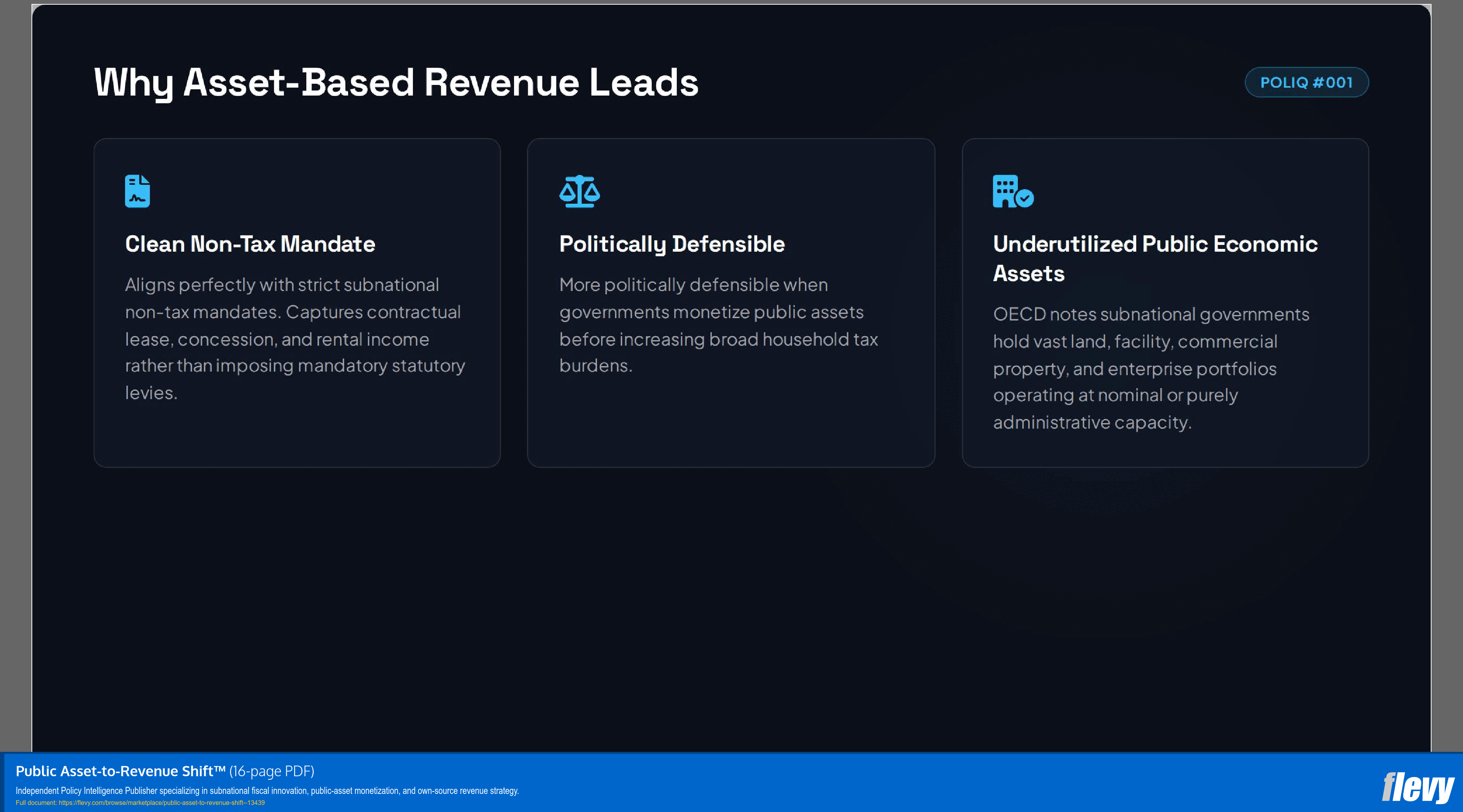
The intelligence examines a central fiscal challenge: governments often control substantial public land, buildings, facilities, commercial properties, and infrastructure assets, yet some of these assets remain underutilized or operate below their potential economic value. Rather than treating additional taxation as the default response to fiscal pressure, the playbook explores how governments can activate existing public economic assets to generate recurring Own-Source Non-Tax Revenue (OSNTR).
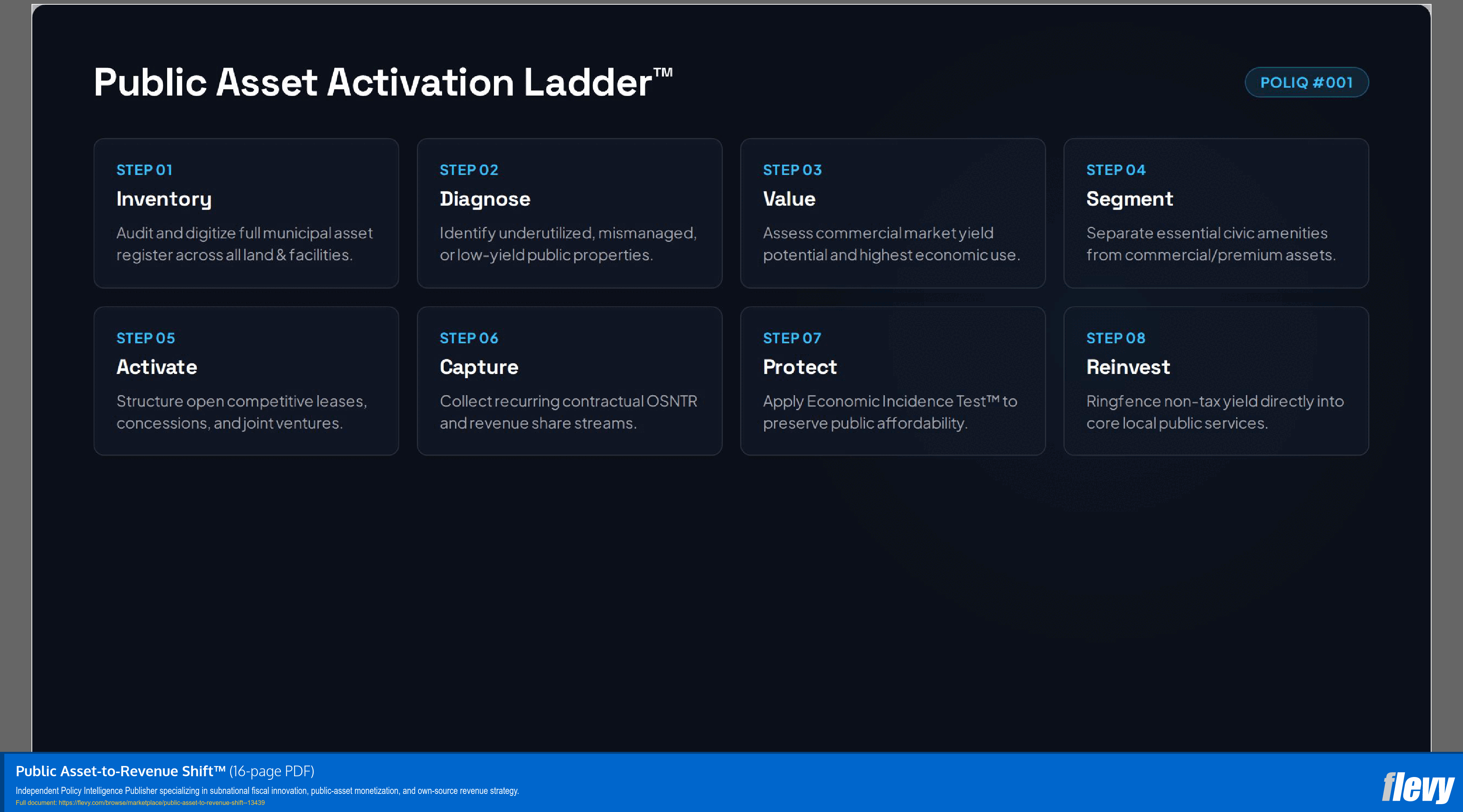
The analysis identifies Asset-Based Revenue as a particularly strong non-tax revenue mechanism and develops a practical Public Asset Activation Ladder™ covering eight stages: Inventory, Diagnose, Value, Segment, Activate, Capture, Protect, and Reinvest. The framework helps decision-makers move from asset identification to commercial activation while retaining public ownership and protecting essential public interests.
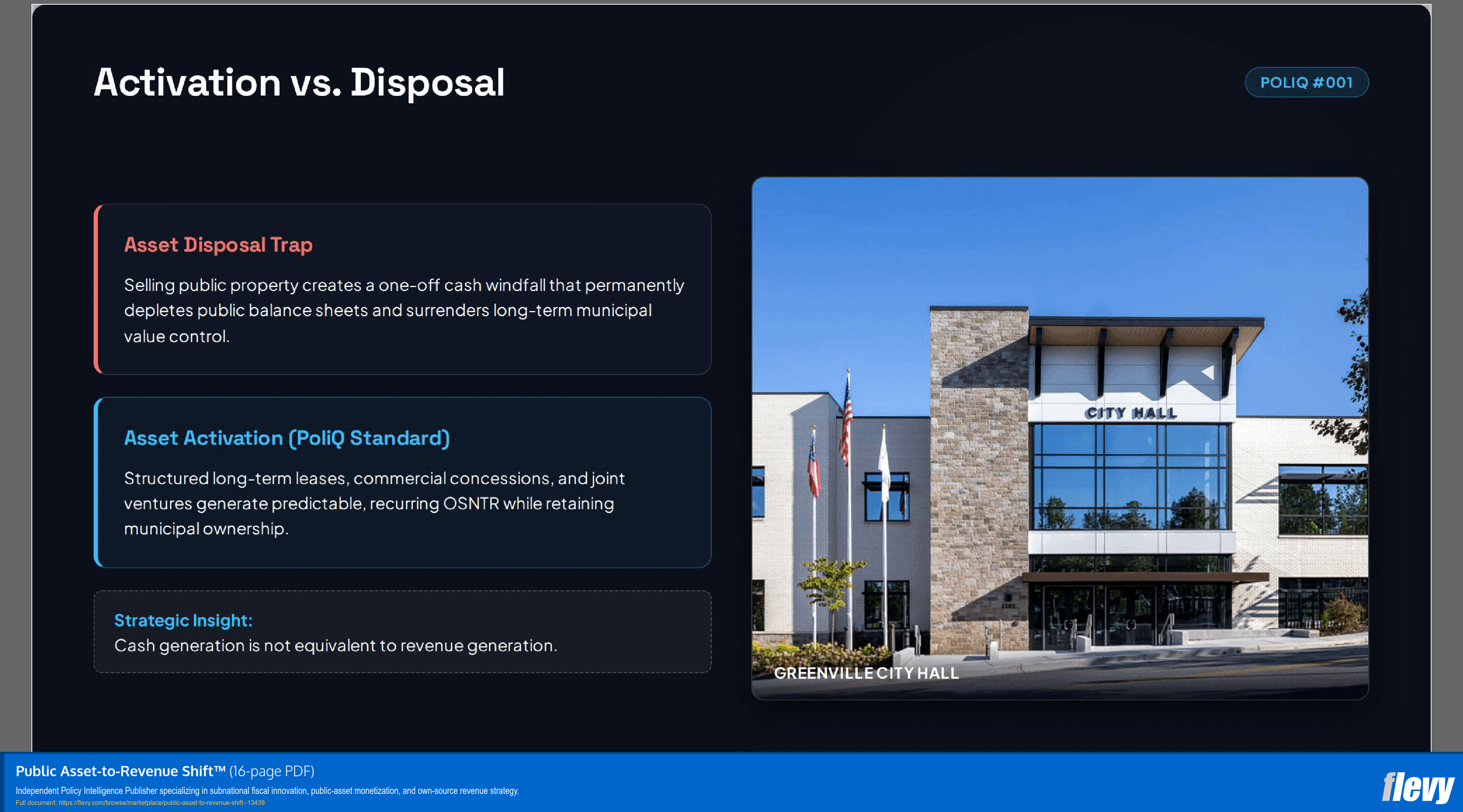
The playbook also distinguishes productive asset activation from one-off asset disposal. It argues that generating immediate cash by selling public property is fundamentally different from creating recurring revenue through leases, commercial concessions, operating partnerships, and other structured utilization mechanisms.
Global benchmark models from Singapore, Hamburg, and Indonesia are examined to identify mechanisms, enabling conditions, evidence bases, and limitations. Rather than simply copying successful policies, the intelligence applies a benchmark-and-refinement approach: identify what works, diagnose limitations and unintended consequences, and develop an adaptable policy model for other jurisdictions.
A dedicated Asset Maturity Revenue Matrix™ evaluates how asset availability and commercialization capability influence OSNTR opportunity. The analysis also incorporates governance safeguards covering affordability, market-rate commercial concessions, ringfenced reinvestment, contractual transparency, and public-interest asset classification.
Inside, decision-makers will find a structured policy architecture for assessing whether public assets should remain protected, become commercially activatable, or support premium market-priced uses. The resulting framework is designed to help governments identify underutilized revenue capacity before expanding broad fiscal burdens—while recognizing that revenue generation must remain subordinate to public interest, affordability, and long-term asset stewardship.
Got a question about the product? Email us at support@flevy.com or ask the author directly by using the "Ask the Author a Question" form. If you cannot view the preview above this document description, go here to view the large preview instead.
Source: Best Practices in Real Estate, Capital Budgeting, Government PDF: Public Asset-to-Revenue Shift™ PDF (PDF) Document, Wisnu Pandega Wardana
ABOUT THE AUTHOR

I am an independent Industrial Intelligence and Strategic Innovation Publisher focused on developing structured business intelligence, innovation frameworks, and opportunity-oriented research for decision-makers.
My work focuses on translating emerging technologies, industrial transformation, sustainability, resource efficiency, and market shifts into structured intelligence assets that
... [read more]
Ask the Author a Question
You must be logged in to contact the author.




























