
 Click main image to view in full screen. Unlock all 22 preview images:
Local Government Capital Stack Shift – PDF
PDF document 25 Pages


BENEFITS OF THIS DOWNLOADABLE PDF DOCUMENT
- Provides a proprietary decision framework for matching local-government infrastructure assets with appropriate capital sources while balancing bankability, repayment capacity, and fiscal risk.
- Translates global municipal-finance experience into practical strategic lessons for governments, infrastructure investors, lenders, development institutions, and PPP stakeholders.
- Connects infrastructure financing to measurable citizen value and fiscal outcomes, helping decision-makers distinguish capital-market success from genuine project and public-service success.
CAPITAL BUDGETING PDF DESCRIPTION
The Local Government Capital Stack Shift™ is an executive intelligence playbook examining how local governments are evolving beyond traditional budget-dependent infrastructure financing toward multi-layer capital architectures that combine public fiscal resources, institutional lending, municipal debt, capital markets, partnerships, asset-backed structures, and outcome-linked finance.
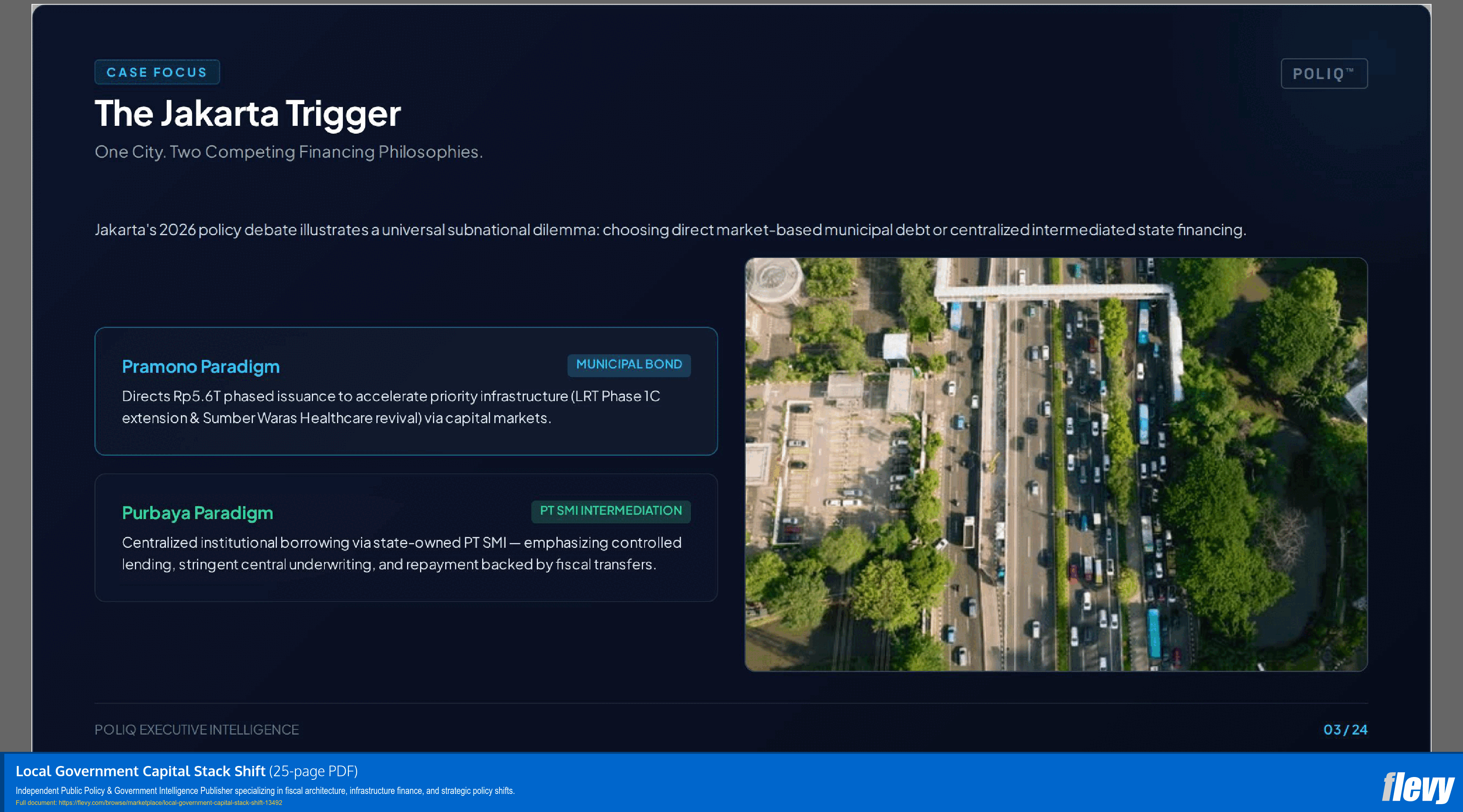
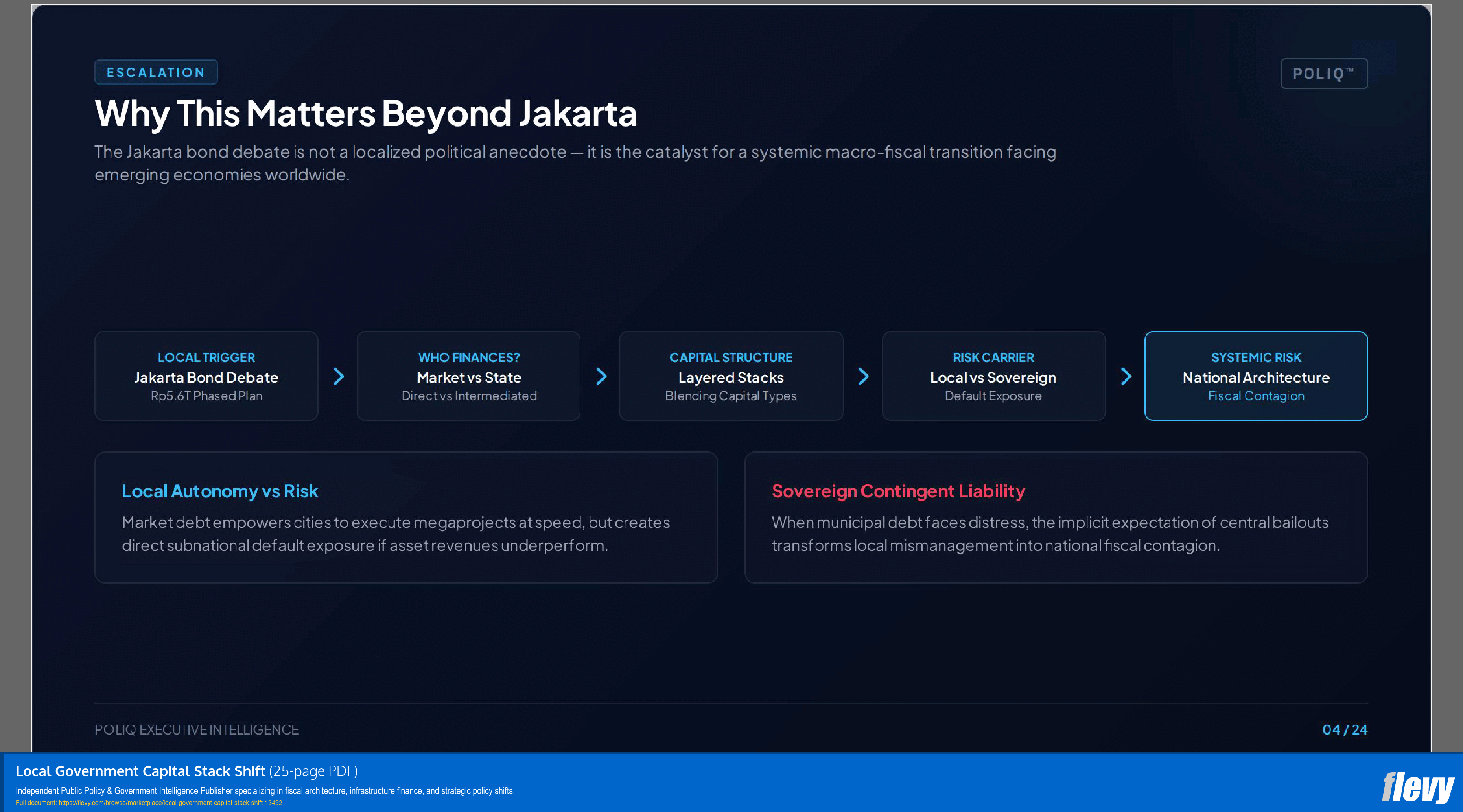
The playbook uses Jakarta's 2026 municipal-bond debate as a trigger case—not as the subject of the analysis—to expose a broader structural question: how should governments match public assets with the right source of capital while containing long-term fiscal and citizen risk?
Inside, you will find:
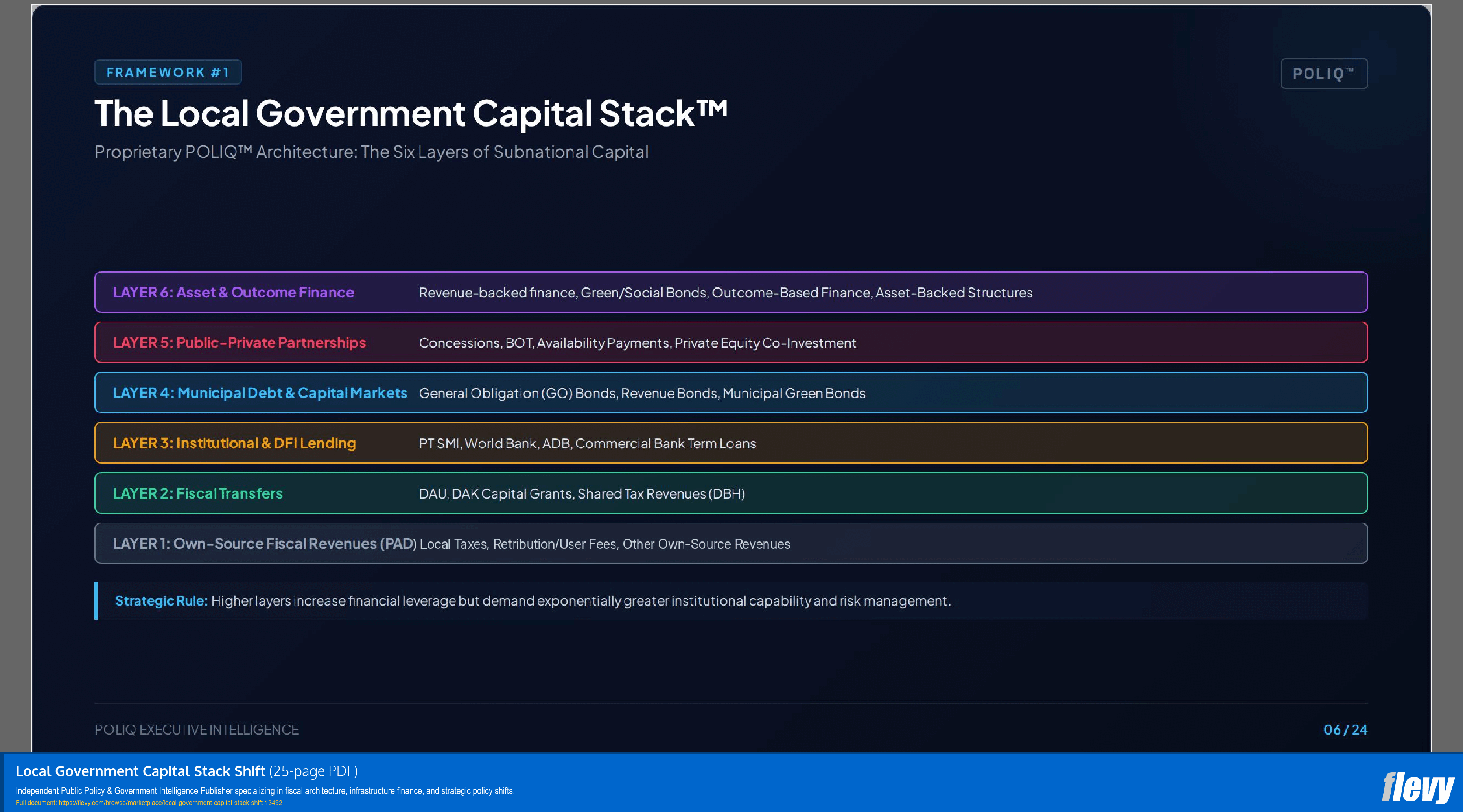
• The Local Government Capital Stack™, mapping the emerging layers of municipal infrastructure finance from APBD and intergovernmental transfers to institutional lending, municipal debt, PPP/private capital, and asset or outcome-linked structures.
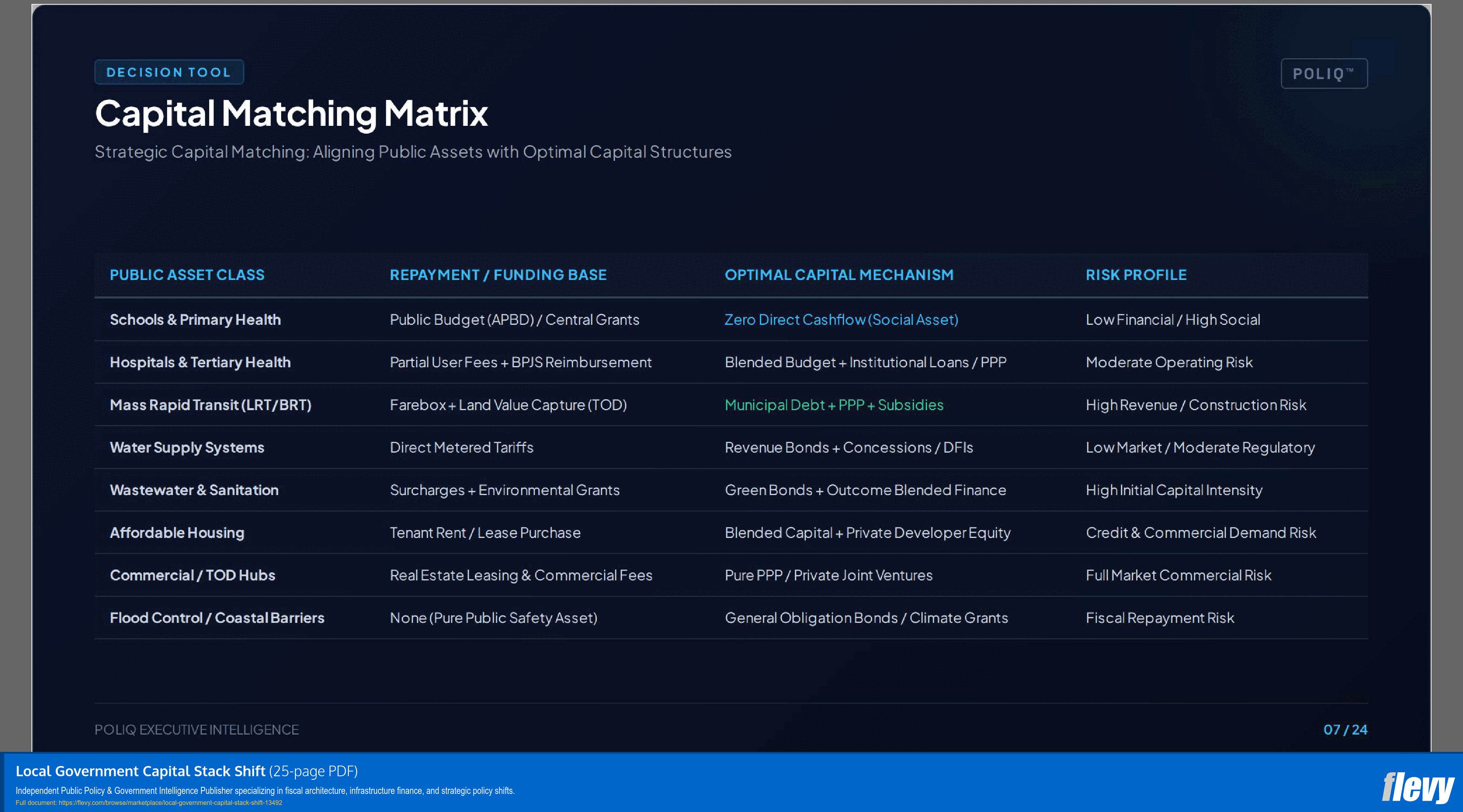
• The Capital Matching Matrix, showing how different public assets—including transport, hospitals, schools, water, wastewater, housing, and flood infrastructure—can be matched with appropriate funding and financing architectures.
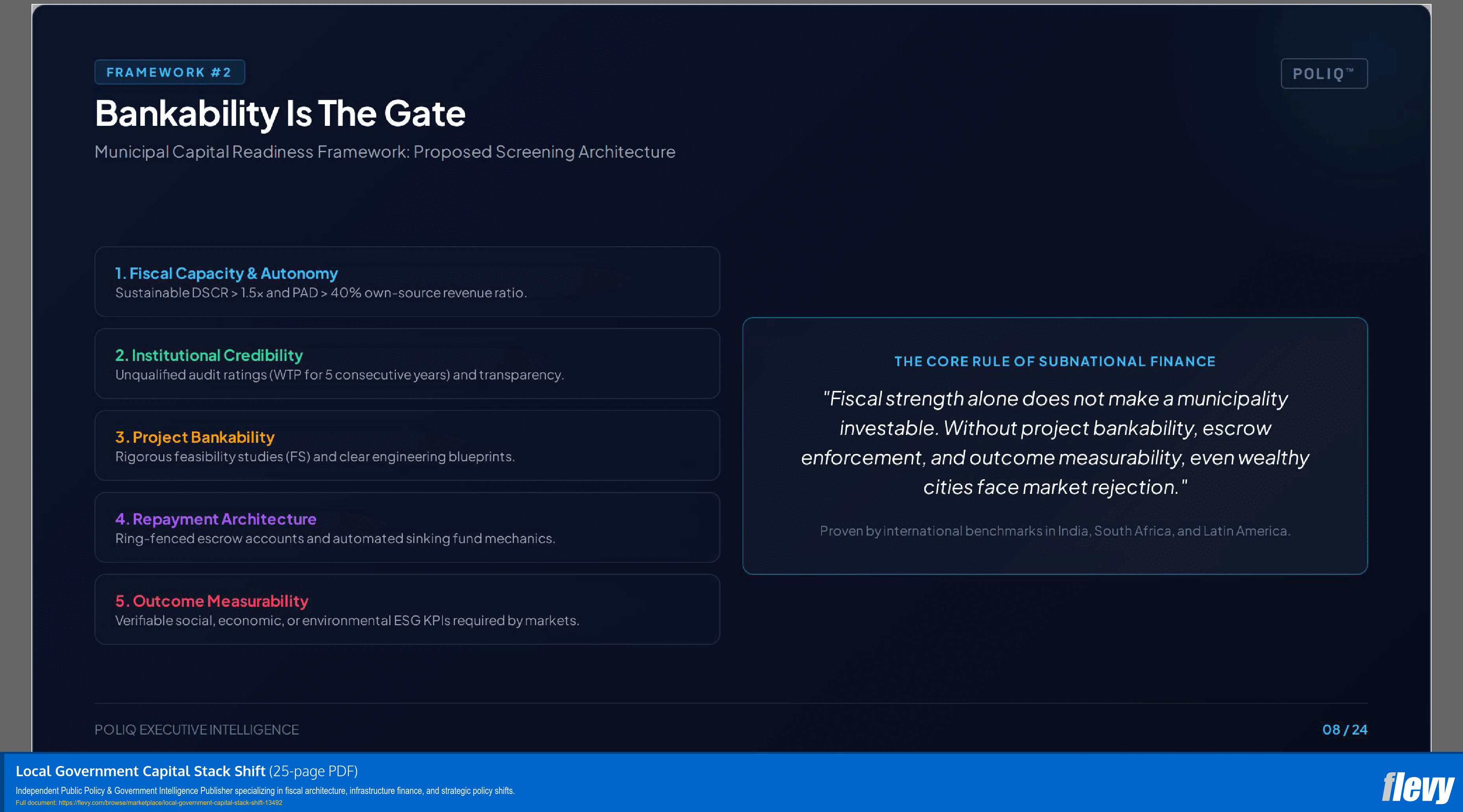
• The Municipal Capital Readiness Framework™, a proposed screening architecture covering fiscal capacity, institutional credibility, project bankability, repayment architecture, and outcome measurability.
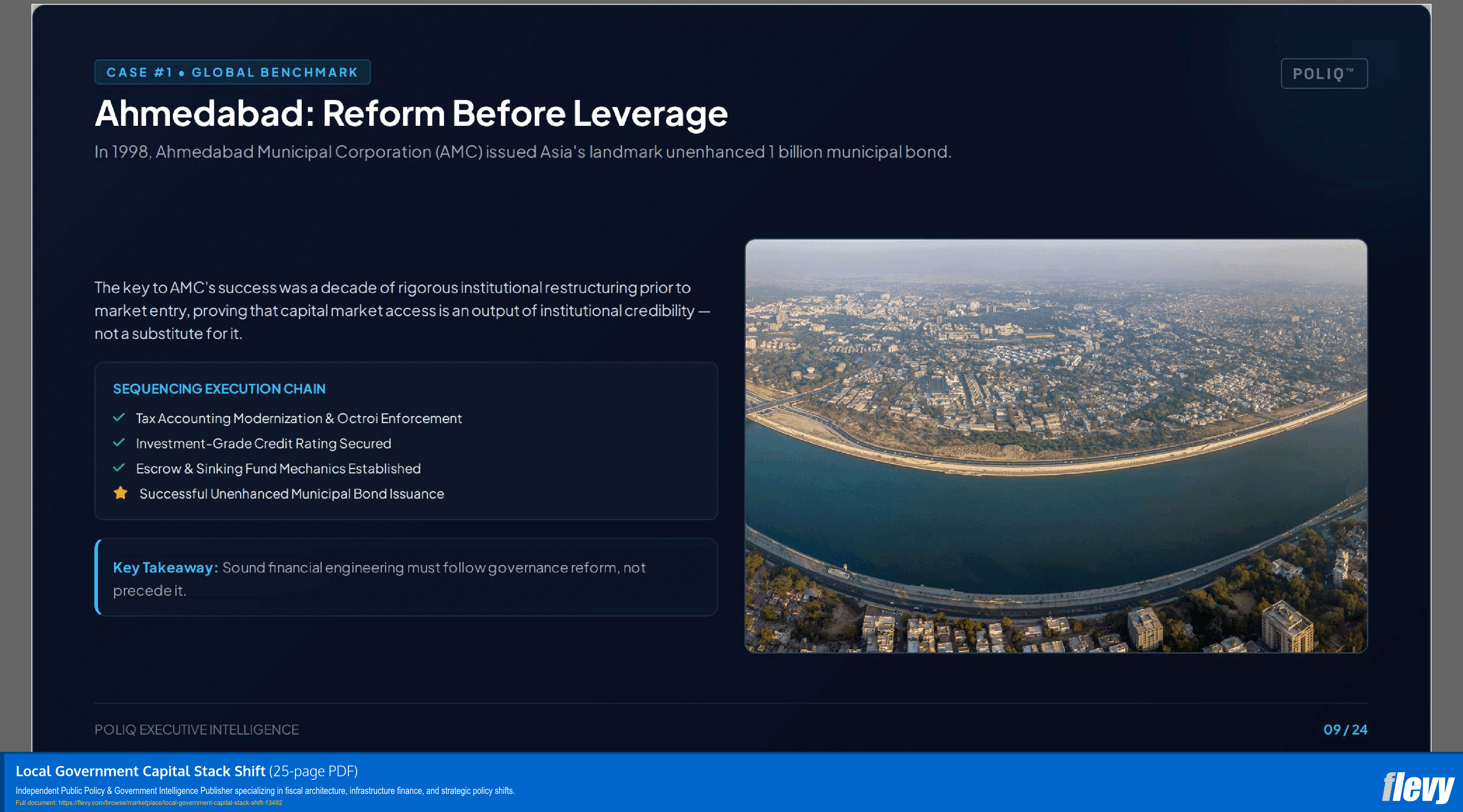
• International benchmark cases from Ahmedabad, Johannesburg, Pune, Bogotá, the United States, Brazil, and Argentina, illustrating both successful market access and the risks of weak execution, soft-budget constraints, and fiscal contagion.
• The Capital-to-Citizen Value Chain™, connecting capital mobilization to physical assets, public services, citizen outcomes, and economic or fiscal returns.
• The Fiscal Risk Transmission Chain™, showing how local borrowing can move from debt-service pressure to budget crowd-out, political pressure, bailout expectations, and broader sovereign exposure.
• An Indonesia-focused analysis of the emerging financing architecture involving APBD, intergovernmental transfers, PT SMI lending, and municipal capital markets, with Jakarta positioned as an early test case.
• Strategic implications for local-government leaders, infrastructure policymakers, institutional investors, development finance institutions, commercial banks, and PPP/infrastructure developers.
The playbook is designed to help decision-makers move beyond the question of whether governments should issue municipal bonds. Instead, it provides a structured way to assess which capital source fits which public asset, whether the issuer is ready for that capital, how citizen value can be measured, and who ultimately bears the fiscal risk.
The central insight is simple: the future of local infrastructure finance will not be funded by one source. Competitive advantage will increasingly depend on the ability to assemble the right capital architecture for the right asset at the right risk.
Got a question about the product? Email us at support@flevy.com or ask the author directly by using the "Ask the Author a Question" form. If you cannot view the preview above this document description, go here to view the large preview instead.
Source: Best Practices in Capital Budgeting, Government PDF: Local Government Capital Stack Shift PDF (PDF) Document, Wisnu Pandega Wardana
ABOUT THE AUTHOR

I am an independent Industrial Intelligence and Strategic Innovation Publisher focused on developing structured business intelligence, innovation frameworks, and opportunity-oriented research for decision-makers.
My work focuses on translating emerging technologies, industrial transformation, sustainability, resource efficiency, and market shifts into structured intelligence assets that
... [read more]
Ask the Author a Question
You must be logged in to contact the author.




























