
 Click main image to view in full screen. Unlock all 15 preview images:
Gym & Fitness Center Financial Model - 60-Month Forecast – Excel XLSX
Excel (XLSX) + supplemental PDF


BENEFITS OF THIS DOWNLOADABLE EXCEL DOCUMENT
- 🏋️ Connect 15 membership products, acquisition, churn and prepaid annual subscriptions to a comprehensive 60-month forecast with integrated financial statements.
- 📊 Evaluate 15-site expansion, member capacity, classes, personal training and operating profitability with 4 linked scenarios and 8 native dashboard charts.
- 💼 Streamline fitness business planning with 25 connected worksheets, deferred revenue accounting, equipment CAPEX, debt schedules, model checks and a 32-page PDF guide.
INTEGRATED FINANCIAL MODEL EXCEL DESCRIPTION
🏋️ GYM & FITNESS CENTER FINANCIAL MODEL
60-MONTH PREMIUM EDITION
🚀 FROM MEMBERSHIP GROWTH TO MULTI-SITE FINANCIAL PERFORMANCE
Transform fitness business assumptions into a comprehensive five-year financial planning system.
The Gym & Fitness Center Financial Model connects member acquisition, subscription pricing, customer churn, prepaid annual memberships, facility capacity, group classes, personal training, operating expenses, capital investment, debt financing and cash flow.
Designed for gym owners, fitness entrepreneurs, boutique studio operators, multi-location managers, business consultants and financial analysts, this editable Excel model helps evaluate membership economics, operational profitability and long-term expansion decisions.
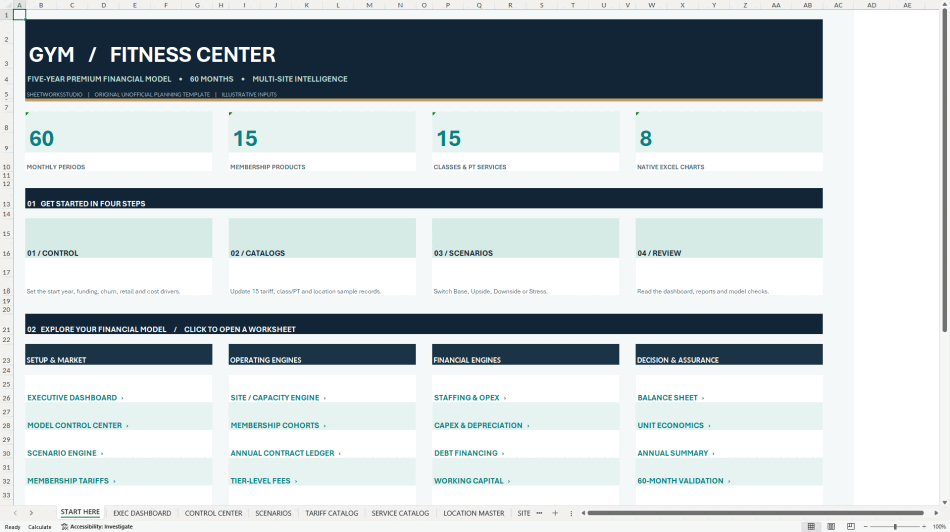
Built around 25 interconnected worksheets, 60 monthly forecast periods, 15 membership products, 15 fitness services, 15 location-planning records, four selectable scenarios and eight native Excel dashboard charts, the workbook brings recurring-revenue operations and financial forecasting together.
All example figures are fictional and intended for illustrative planning purposes.
━━━━━━━━━━━━━━━━━━━━
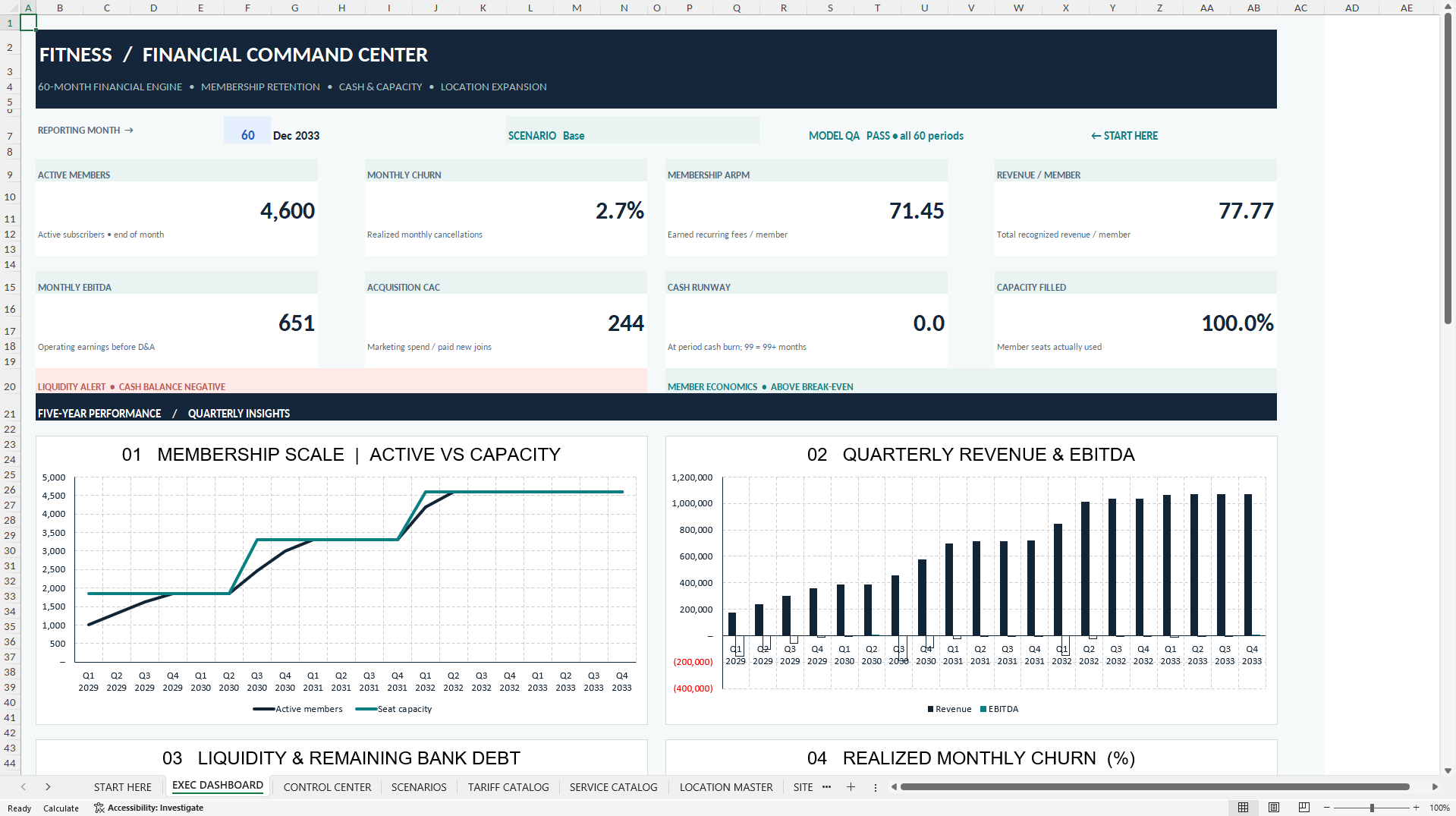
📊 EXECUTIVE FITNESS BUSINESS DASHBOARD
Monitor membership performance, profitability, retention and liquidity from one integrated management dashboard.
The dedicated EXEC DASHBOARD provides eight native Excel charts linked to the model's financial and operating calculations.
Key performance indicators include:
• Active Members
• Realized Monthly Churn
• Monthly EBITDA
• Customer Acquisition Cost (CAC)
• Average Revenue per Member (ARPM)
• Total Revenue per Member
• Simplified Cash Runway
• Facility Capacity Utilization
Dashboard charts visualize:
✓ Membership Growth vs. Facility Capacity
✓ Quarterly Revenue and EBITDA
✓ Cash Balances vs. Bank Debt
✓ Realized Membership Churn
✓ Revenue per Member
✓ Customer Acquisition Costs
✓ Year-Five Revenue Composition
✓ Paid vs. Included Class Attendance
A reporting-month selector allows users to review different periods of the forecast.
━━━━━━━━━━━━━━━━━━━━
💳 MEMBERSHIP PRODUCTS & RECURRING REVENUE
Build subscription revenue forecasts around the commercial structure of a fitness business.
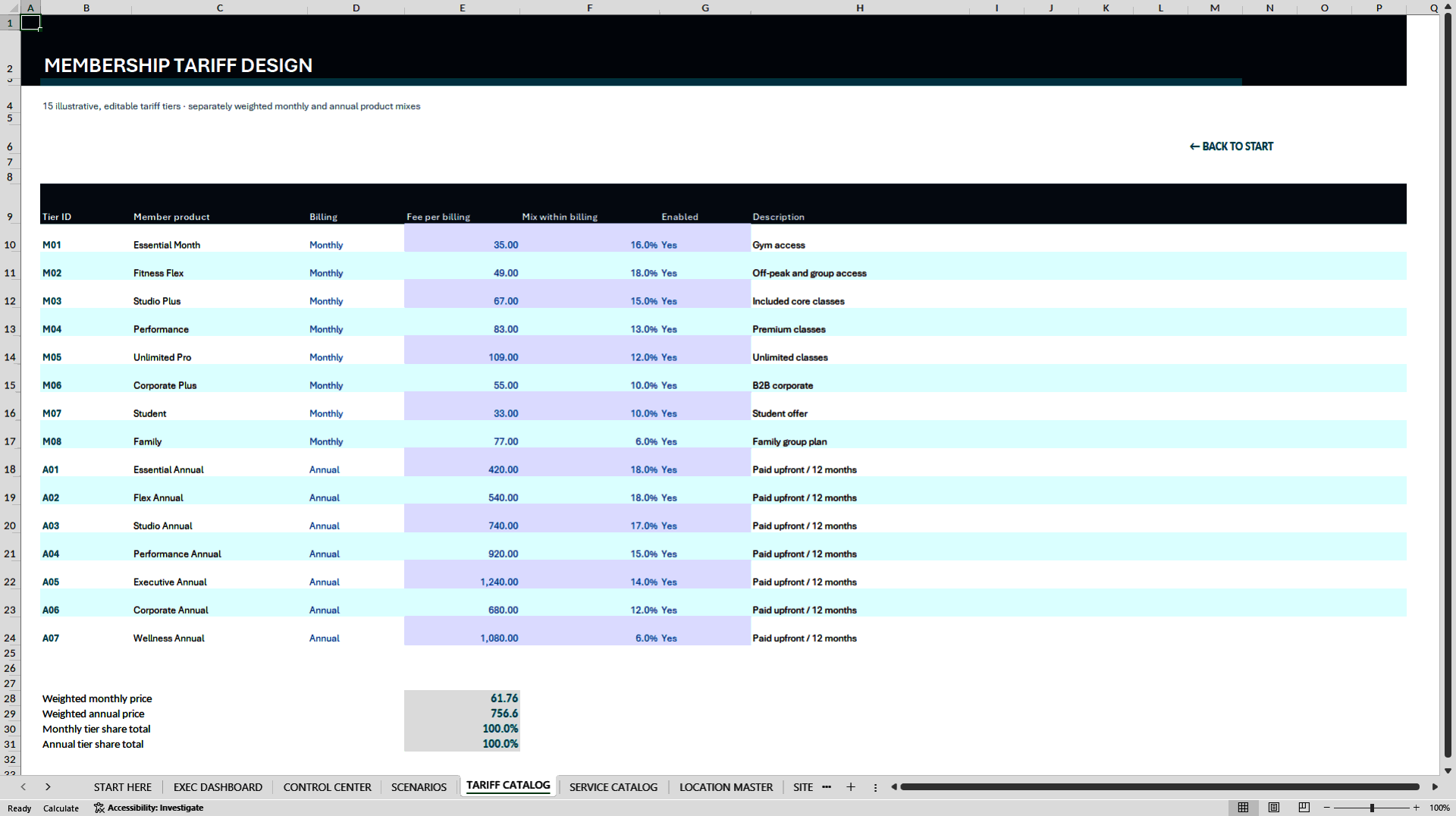
The TARIFF CATALOG includes 15 editable illustrative membership products:
🏷️ 8 Monthly-Billed Membership Plans
📅 7 Prepaid Annual Membership Plans
Editable assumptions include:
• Membership Pricing
• Billing Frequency
• Product Allocation Percentages
• Enabled and Disabled Products
• Membership Mix
• Annual Fee Escalation
The workbook checks that enabled product allocation percentages total 100% within the respective monthly and annual membership categories.
This structure supports the analysis of recurring revenue, subscription pricing and membership portfolio composition.
━━━━━━━━━━━━━━━━━━━━
📉 MEMBER ACQUISITION, CHURN & RETENTION
Connect marketing investment, customer cancellations and new membership demand with realistic facility capacity.
The MEMBER ENGINE calculates:
• Opening Active Members
• Monthly Membership Cancellations
• Annual Contract Renewals
• Paid Acquisition Demand
• Organic Membership Growth
• Available Membership Capacity
• Admitted New Members
• Closing Active Members
• Realized Membership Churn
The model distinguishes potential member demand from actual admitted members.
If acquisition demand exceeds the available capacity of operating locations, excess demand is not automatically converted into paying members.
This helps users investigate retention performance, customer acquisition spending and growth constraints.
━━━━━━━━━━━━━━━━━━━━
💰 PREPAID ANNUAL MEMBERSHIPS & DEFERRED REVENUE
Understand the difference between collected subscription cash and earned membership revenue.
Annual subscriptions create important accounting and cash-flow considerations.
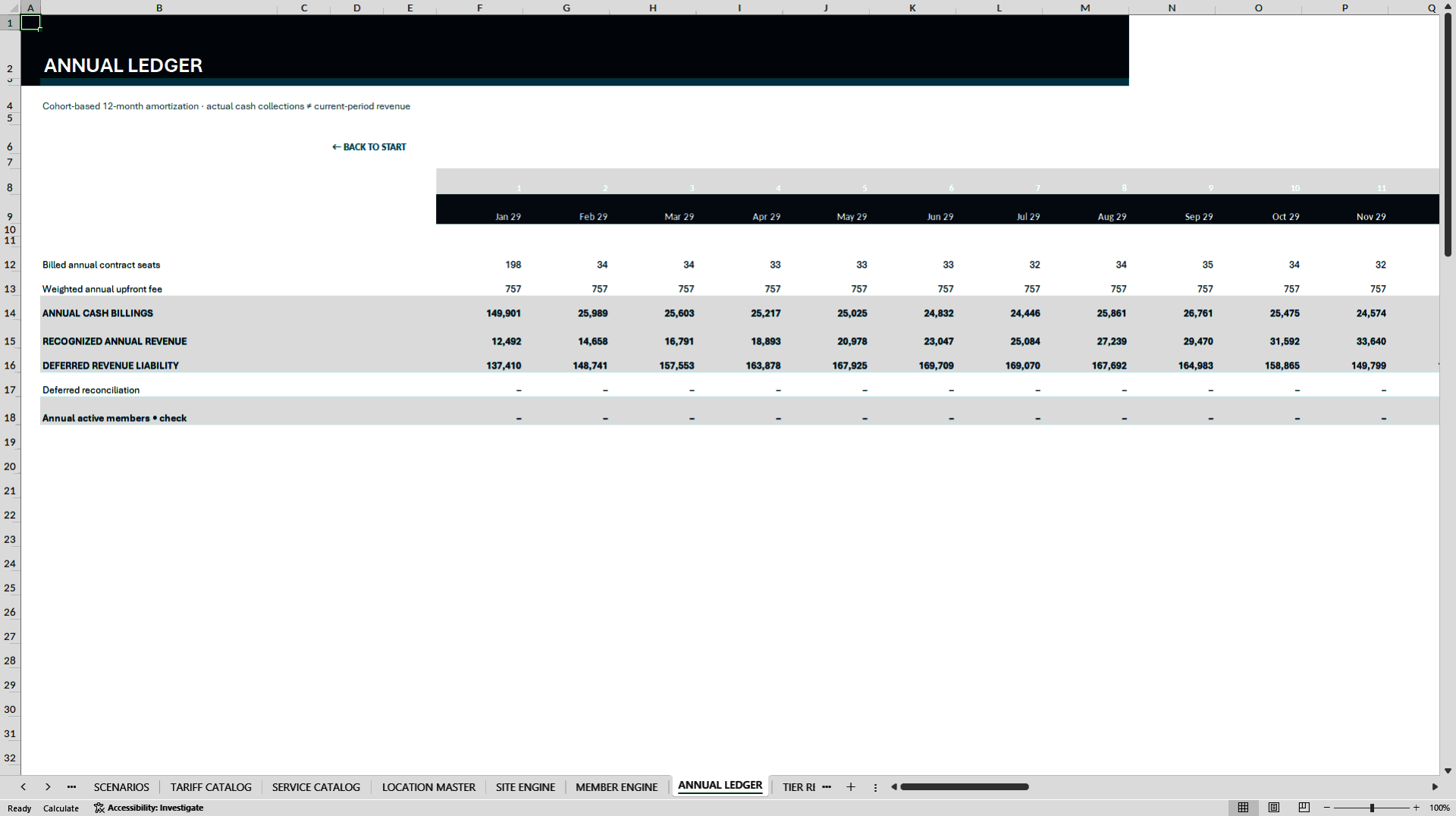
The ANNUAL LEDGER calculates:
• Upfront Annual Membership Billings
• Recognized Subscription Revenue
• Monthly Revenue Recognition
• Outstanding Deferred Revenue
• Annual Membership Renewal Activity
The model recognizes prepaid annual subscription income over the modeled twelve-month service period.
Amounts received but not yet earned are tracked as deferred revenue liabilities within the BALANCE SHEET.
This distinction helps users analyze the relationship between cash collections, recognized revenue, working capital and liquidity.
━━━━━━━━━━━━━━━━━━━━
🏢 MULTI-SITE EXPANSION & LOCATION PLANNING
Evaluate the financial implications of opening additional gym and fitness center locations.
The LOCATION MASTER includes 15 editable site-planning records.
Three illustrative sites are enabled in the sample configuration, with twelve additional records available for expansion planning.
Editable location assumptions include:
• Facility Opening Month
• Maximum Member Capacity
• Monthly Rent
• Employee Full-Time Equivalents
• Fully Loaded Payroll
• Utilities
• Local Marketing
• Initial Opening Investment
• Equipment Replacement Timing
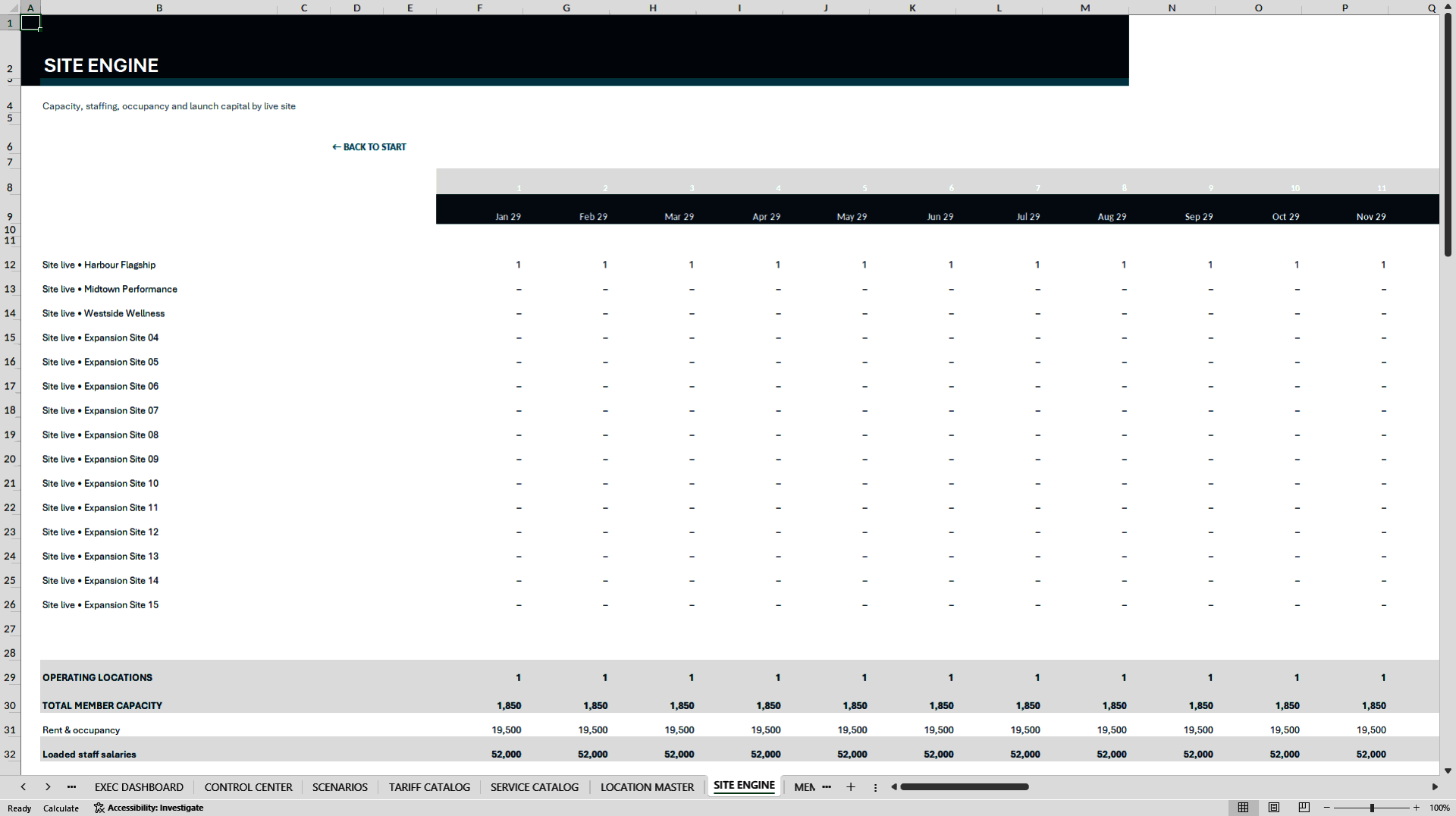
The SITE ENGINE activates facility capacity and location operating expenses according to each site's opening schedule.
This enables users to explore how new facilities affect membership capacity, operating expenditure, capital requirements and funding needs.
Opening another location can increase revenue potential while also creating substantial near-term cash commitments.
━━━━━━━━━━━━━━━━━━━━
🏃 GROUP CLASSES, PERSONAL TRAINING & SERVICES
Model fitness services beyond traditional membership subscriptions.
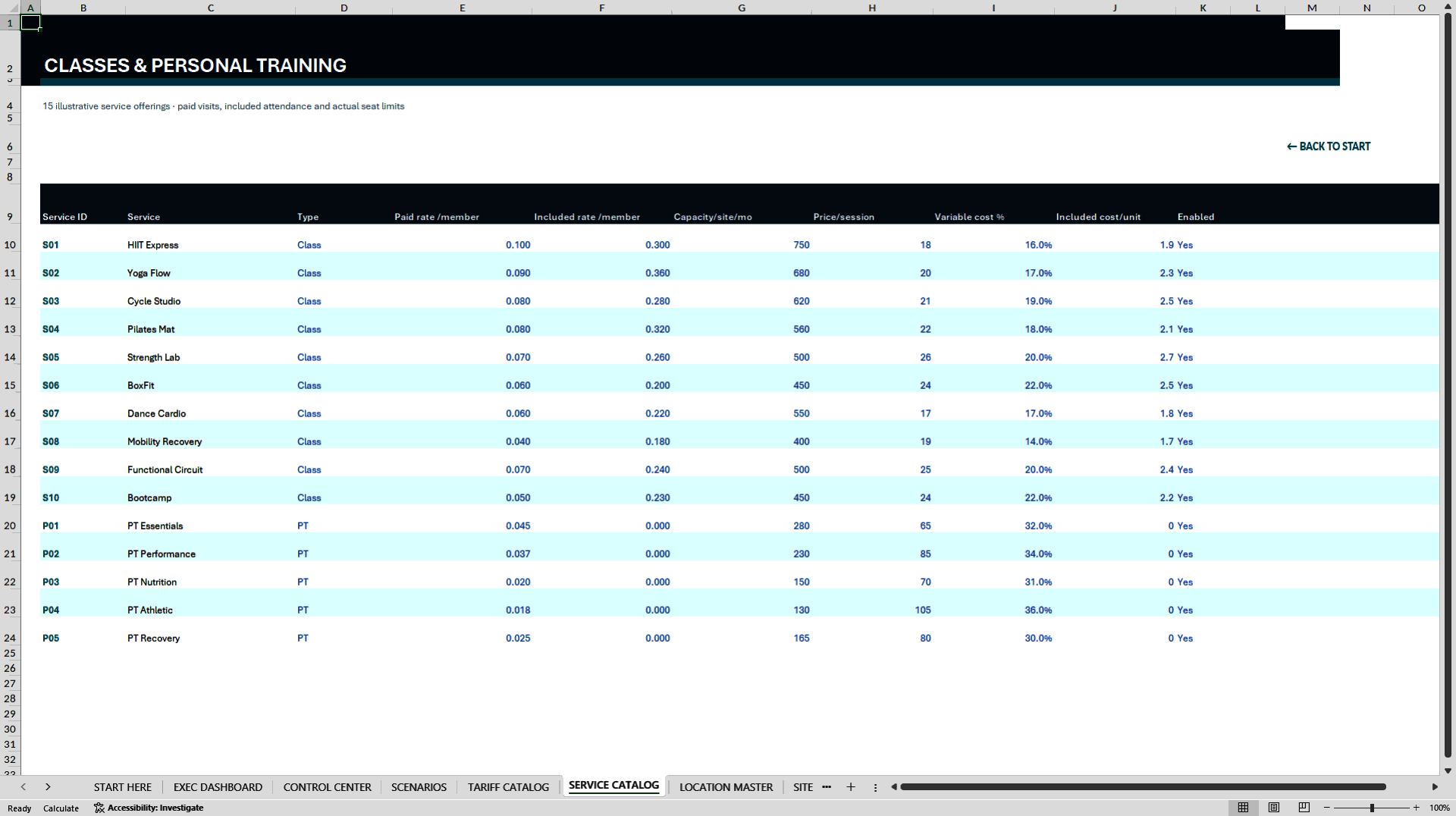
The SERVICE CATALOG includes 15 illustrative offerings:
🧘 10 Group Fitness Class Services
💪 5 Personal Training Products
Editable service inputs include:
• Service Prices
• Paid Attendance
• Included Membership Attendance
• Available Service Capacity
• Service Delivery Costs
• Enabled Service Status
The SERVICE ENGINE connects member participation with the available capacity of operating locations.
Paid class attendance creates recognized service revenue.
Included class attendance can consume instructor and facility resources and generate operating costs without separately charged revenue.
Retail and supplement sales provide an additional illustrative ancillary revenue stream.
━━━━━━━━━━━━━━━━━━━━
⚙️ OPERATING EXPENSES & FITNESS BUSINESS ECONOMICS
Connect recurring operating costs with membership growth and facility expansion.
Cost assumptions include:
• Site-Level Payroll
• Facility Rent and Occupancy Expenses
• Utilities
• Local Marketing
• Central Administration
• Business Software
• Merchant Processing Charges
• Retail Cost of Goods
• Class Delivery Costs
• Personal Training Expenses
The financial schedules calculate EBITDA, contribution per member and an indicative break-even membership level.
These outputs support analysis of operating efficiency, cost structures and recurring-revenue economics.
Break-even and customer economics are simplified planning indicators rather than audited performance benchmarks.
━━━━━━━━━━━━━━━━━━━━
🏗️ EQUIPMENT CAPEX, DEPRECIATION & FINANCING
Evaluate capital requirements associated with fitness facilities and equipment.
The CAPEX & DEPR schedule connects:
• Initial Facility Fit-Out Costs
• Equipment Investment
• Sustaining Capital Expenditure
• Equipment Refresh Cycles
• Fixed Asset Balances
• Depreciation
The debt schedule incorporates:
• Initial Bank Borrowing
• Interest Expense
• Scheduled Principal Repayment
• Monthly Debt Service
• Outstanding Loan Balances
Capital investment and debt financing flow into the connected financial statements.
Working-capital schedules also consider ancillary receivables, service-related payables, accrued taxes and deferred annual membership revenue.
━━━━━━━━━━━━━━━━━━━━
🏦 THREE INTEGRATED FINANCIAL STATEMENTS
Translate fitness business operations into monthly financial projections.
📄 INCOME STATEMENT
Monitor recognized membership and service revenue, operating expenses, EBITDA, depreciation, interest, taxes and net earnings.
💵 CASH FLOW STATEMENT
Analyze operating cash movements, investment expenditure, borrowing, debt repayment and ending liquidity.
🏛️ BALANCE SHEET
Track financial assets, liabilities, bank debt, deferred subscriptions, fixed assets and owner equity.
All three financial statements are connected to the 60-month operating and financing forecast.
A separate ANNUAL SUMMARY consolidates five reporting years, distinguishing annual totals, average operating performance and year-end financial balances.
━━━━━━━━━━━━━━━━━━━━
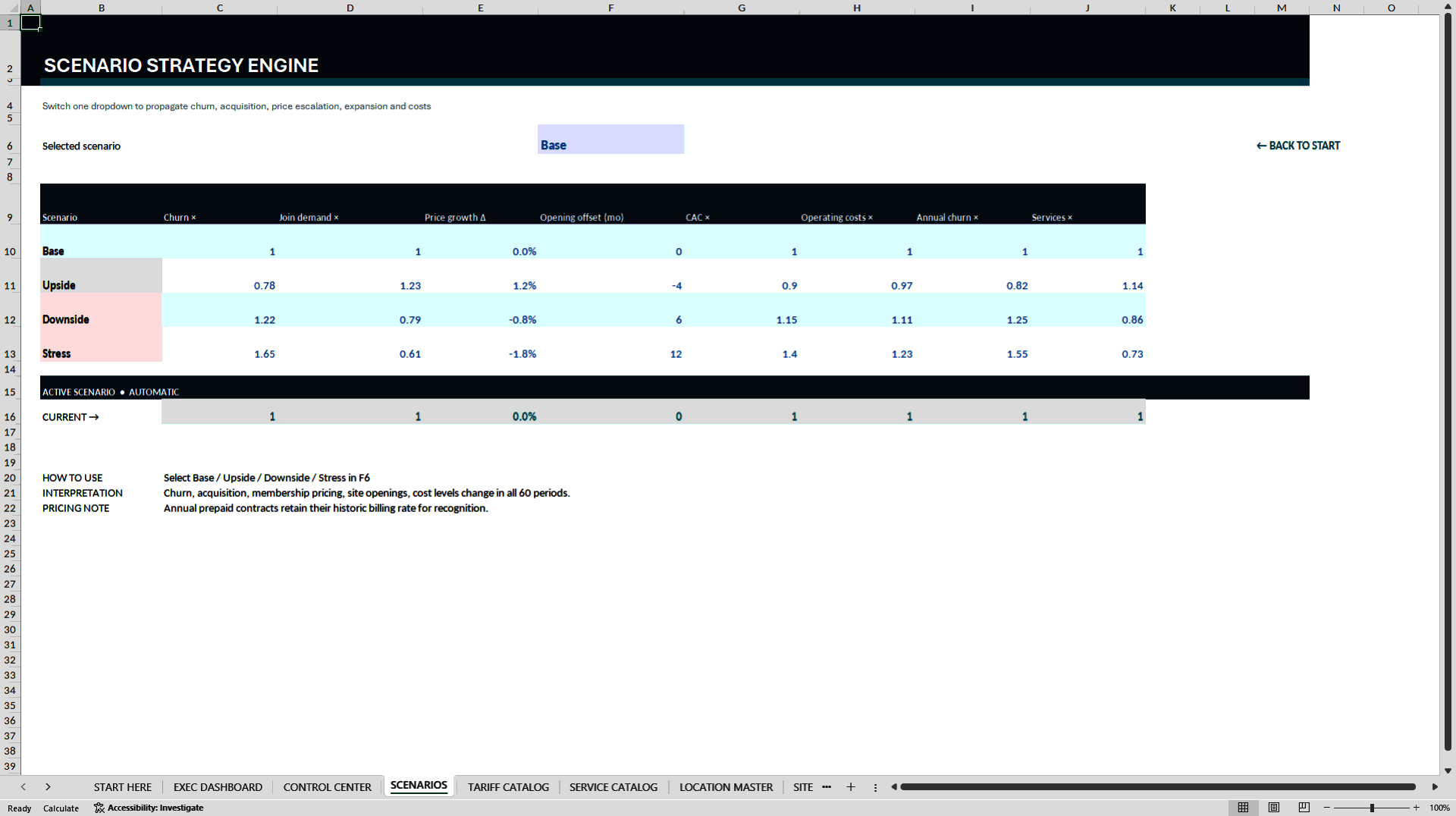
🔀 FOUR LINKED FINANCIAL SCENARIOS
Explore alternative membership, operating and expansion assumptions.
Select one of four planning cases through the SCENARIOS worksheet.
🟢 BASE CASE
Reference membership, operating and expansion assumptions.
🔵 UPSIDE
More favorable modeled growth and business conditions.
🟠 DOWNSIDE
Reduced commercial performance and higher operating pressure.
🔴 STRESS
More severe retention, demand and financial assumptions.
Scenario drivers include:
• Membership Churn
• Customer Acquisition Demand
• Subscription Pricing
• Customer Acquisition Cost
• Operating Expenditure
• Fitness Service Activity
• Annual Membership Renewals
• Location Opening Timing
The active scenario changes the connected monthly financial forecast and calculated outputs.
One scenario is selected at a time. The workbook does not maintain four independently stored full financial forecasts side by side.
⚠️ IMPORTANT STRESS-SCENARIO DISCLOSURE
The supplied illustrative Stress case is designed to expose significant operating and liquidity risks.
Prolonged negative cash balances and unfavorable operating results may indicate additional funding requirements.
These outcomes should be investigated rather than interpreted as evidence of a fully financed business.
━━━━━━━━━━━━━━━━━━━━
📈 UNIT ECONOMICS & MEMBERSHIP PROFITABILITY
Evaluate key drivers of fitness subscription economics.
The UNIT ECONOMICS worksheet and connected operating schedules support analysis of:
• Customer Acquisition Cost
• Revenue per Member
• Membership Retention
• Average Membership Revenue
• Operating Contribution
• Break-Even Membership Levels
• Simplified Customer Lifetime Economics
• Cash Runway
These calculations help illustrate the relationships between membership retention, acquisition spending, recurring revenue and operating profitability.
The model is not a comprehensive discounted cash flow valuation or IRR investment model.
━━━━━━━━━━━━━━━━━━━━
✅ BUILT-IN MODEL CHECKS & FINANCIAL CONTROLS
The dedicated MODEL CHECKS worksheet provides calculation consistency checks across the financial forecast.
Implemented controls include:
✓ Balance Sheet Reconciliation
✓ Membership Movement Reconciliation
✓ Facility Capacity Constraints
✓ Annual Membership Accounting
✓ Deferred Revenue Reconciliation
✓ Loan Balance Movements
✓ Fixed Asset Roll-Forward
✓ Cash Flow Reconciliation
✓ Membership Tariff Allocations
✓ Fitness Service Capacity
The workbook distinguishes calculation consistency from economic risk.
An internal PASS status indicates that selected model relationships reconcile.
It does not confirm adequate funding, guaranteed profitability or commercial viability.
Liquidity shortfalls, negative operating results and potential financing gaps must be evaluated separately.
━━━━━━━━━━━━━━━━━━━━
📦 WHAT'S INCLUDED
📗 1 EDITABLE EXCEL FINANCIAL MODEL (.XLSX)
25 interconnected worksheets:
01 – START HERE
02 – EXEC DASHBOARD
03 – CONTROL CENTER
04 – SCENARIOS
05 – TARIFF CATALOG
06 – SERVICE CATALOG
07 – LOCATION MASTER
08 – SITE ENGINE
09 – MEMBER ENGINE
10 – ANNUAL LEDGER
11 – TIER REVENUE
12 – SERVICE ENGINE
13 – REVENUE ENGINE
14 – STAFF & OPEX
15 – CAPEX & DEPR
16 – DEBT SCHEDULE
17 – WORKING CAPITAL
18 – INCOME STATEMENT
19 – CASH FLOW
20 – BALANCE SHEET
21 – UNIT ECONOMICS
22 – ANNUAL SUMMARY
23 – MODEL CHECKS
24 – USER GUIDE
25 – CHART DATA
📘 1 PROFESSIONAL HOW-TO-USE PDF GUIDE
32 pages of English documentation covering:
• Workbook Setup and Navigation
• Membership Pricing
• Customer Acquisition and Churn
• Annual Subscription Prepayments
• Deferred Revenue Accounting
• Multi-Site Expansion
• Group Classes and Personal Training
• Operating Expenses
• Equipment CAPEX and Depreciation
• Debt and Financing
• Integrated Financial Statements
• Scenario Selection
• Executive Dashboard
• Model Checks
• Limitations and Troubleshooting
━━━━━━━━━━━━━━━━━━━━
🧭 HOW TO USE THE MODEL
① CONFIGURE YOUR FITNESS BUSINESS
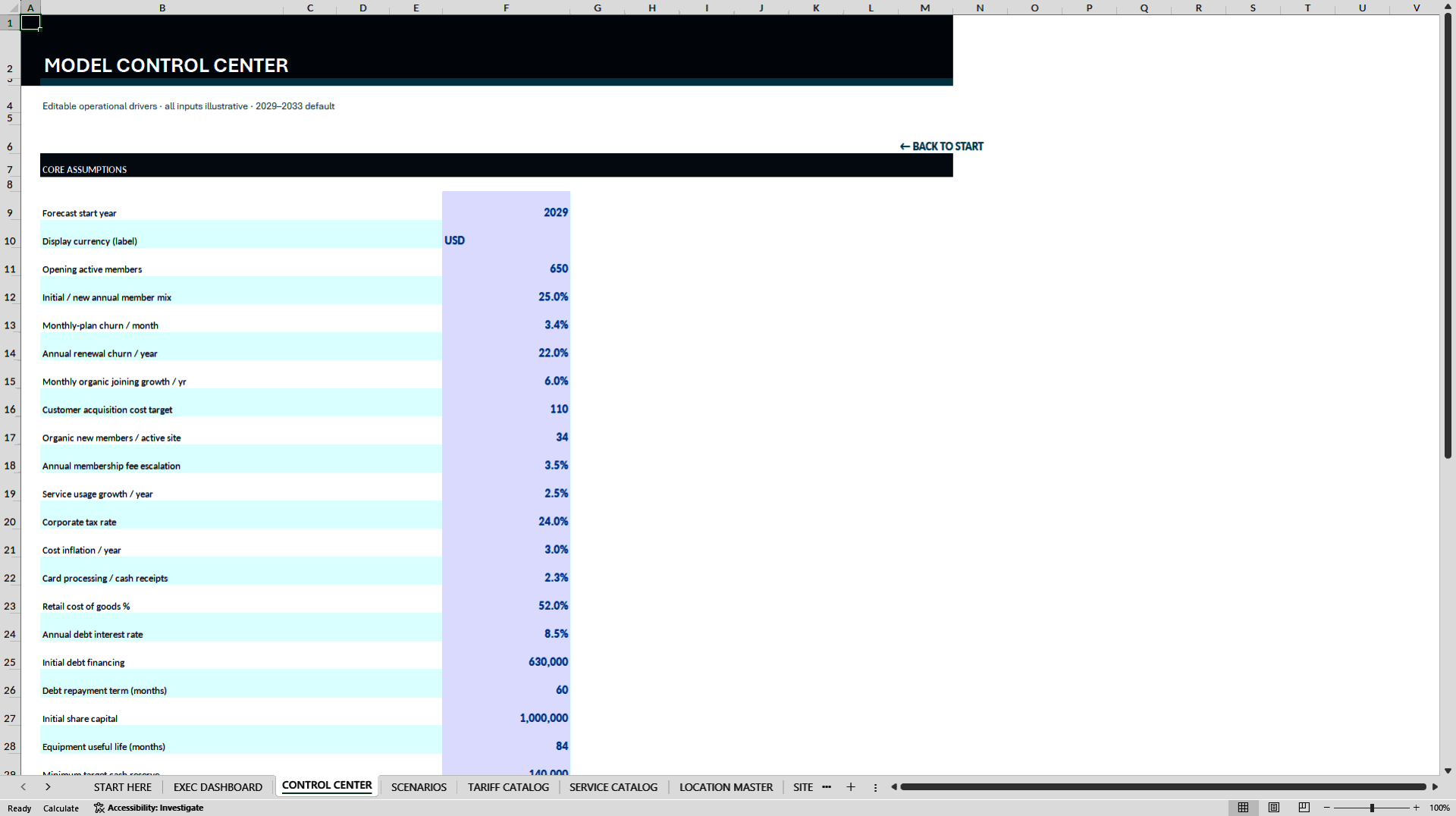
Open START HERE and update the primary operating assumptions in CONTROL CENTER.
② CUSTOMIZE MEMBERSHIP PRODUCTS
Edit the 15 membership products, pricing, billing structure and subscription allocation assumptions.
③ DEFINE LOCATIONS & SERVICES
Configure your gym locations, opening schedules, member capacity, group classes and personal training offerings.
④ SELECT A PLANNING SCENARIO
Choose Base, Upside, Downside or Stress.
⑤ REVIEW FINANCIAL RESULTS
Examine membership movements, annual prepayments, service activity, location economics, financial statements, annual summaries and executive dashboard metrics.
Review MODEL CHECKS and cash warnings before using the projected results for business decisions.
━━━━━━━━━━━━━━━━━━━━
🎯 WHO IS THIS MODEL FOR?
Suitable for:
• Independent Gym Owners
• Fitness Center Founders
• Boutique Fitness Studio Operators
• Fitness Franchise Planners
• Multi-Location Gym Managers
• Personal Training Business Operators
• Fitness Industry Consultants
• Business Financial Analysts
• Startup Finance Professionals
• Business and Finance Educators
━━━━━━━━━━━━━━━━━━━━
⚙️ TECHNICAL SPECIFICATIONS
📅 Forecast Horizon: 60 Monthly Periods
🗓️ Illustrative Timeline: January 2029 – December 2033
📗 Workbook Structure: 25 Excel Worksheets
🏋️ Membership Products: 15
💪 Group Class and PT Services: 15
🏢 Location-Planning Records: 15
🔀 Planning Scenarios: 4
📊 Native Dashboard Charts: 8
🏦 Financial Statements: Income Statement, Cash Flow Statement and Balance Sheet
💳 Annual Membership Recognition: 12-Month Service Convention
📘 Documentation: 32-Page English PDF Guide
💻 File Format: Editable Microsoft Excel .xlsx
🔒 VBA Macros: None
🔗 Required External Workbook Connections: None
Microsoft Excel Desktop is the reference spreadsheet environment.
Google Sheets compatibility and exact native-chart fidelity have not been independently verified.
The 60-month operating forecast and twelve-month annual subscription recognition convention are fixed structural elements.
Changing the displayed currency label does not convert monetary values.
━━━━━━━━━━━━━━━━━━━━
🛡️ IMPORTANT INDEPENDENT TEMPLATE DISCLAIMER
This product is an independent, unofficial financial-planning template developed by SheetworksStudio.
All sample memberships, business assumptions, operating figures and financial projections are fictional and illustrative.
The workbook is not a live gym membership management system, payment processing platform, certified accounting system, independently audited financial forecast or lender-approved financing model.
Membership retention, acquisition costs, service usage, cash runway and break-even calculations use simplified planning conventions.
The template does not guarantee membership growth, profitability, liquidity, successful expansion or investment results.
Users are responsible for independently validating actual pricing, costs, capacity, accounting assumptions and financing conditions.
This product does not constitute individualized accounting, tax, legal, financial or investment advice.
Independent professional review is required before making actual business or investment decisions.
━━━━━━━━━━━━━━━━━━━━
🏋️ MODEL MEMBERSHIPS. UNDERSTAND RETENTION. PLAN MULTI-SITE GROWTH.
Bring recurring revenue, fitness operations, location capacity and long-term cash flow together in one comprehensive 60-month financial planning framework.
Got a question about the product? Email us at support@flevy.com or ask the author directly by using the "Ask the Author a Question" form. If you cannot view the preview above this document description, go here to view the large preview instead.
Source: Best Practices in Integrated Financial Model Excel: Gym & Fitness Center Financial Model - 60-Month Forecast Excel (XLSX) Spreadsheet, SheetworksStudio
ABOUT THE AUTHOR

SheetworksStudio creates premium Excel-based business templates, dashboards, trackers, financial models, and management systems for professionals, consultants, entrepreneurs, and organizations.
Our portfolio covers finance, project management, operations, risk management, compliance, AI governance, HR, supply chain, performance management, and business planning. Each product is designed to
... [read more]
Ask the Author a Question
You must be logged in to contact the author.