 Click main image to view in full screen.
AI Vendor Governance Scorecard - 25-Criteria Dashboard – Excel XLSX
Excel (XLSX)


BENEFITS OF THIS DOWNLOADABLE EXCEL DOCUMENT
- Defensible evidence, not gut feel. Every criterion ties to a named artefact, date, or individual, so a score can be defended to a steering committee rather than argued from impression.
- One score, two risk views. Overall governance maturity and vendor dependency exposure are reported separately, so a healthy average score cannot quietly mask a critical concentration risk.
- Governance that scales with the engagement. Weighting adjusts automatically as vendor allocation grows, and a fresh copy takes under two minutes to set up per vendor, covering onboarding through every later gate.
ARTIFICIAL INTELLIGENCE EXCEL DESCRIPTION
Enterprise AI programmes now route fifty to eighty percent of delivery through system integrators, hyperscaler professional-services arms, and specialist AI consultancies, yet formal governance of that relationship rarely keeps pace. The failure patterns repeat across industries: statements of work that sound precise but are never tested against delivery, knowledge transfer commitments that stall, and no rehearsed plan for what happens if the vendor relationship ends. None of this becomes visible until a steering committee, an auditor, or a departing vendor resource forces the question.
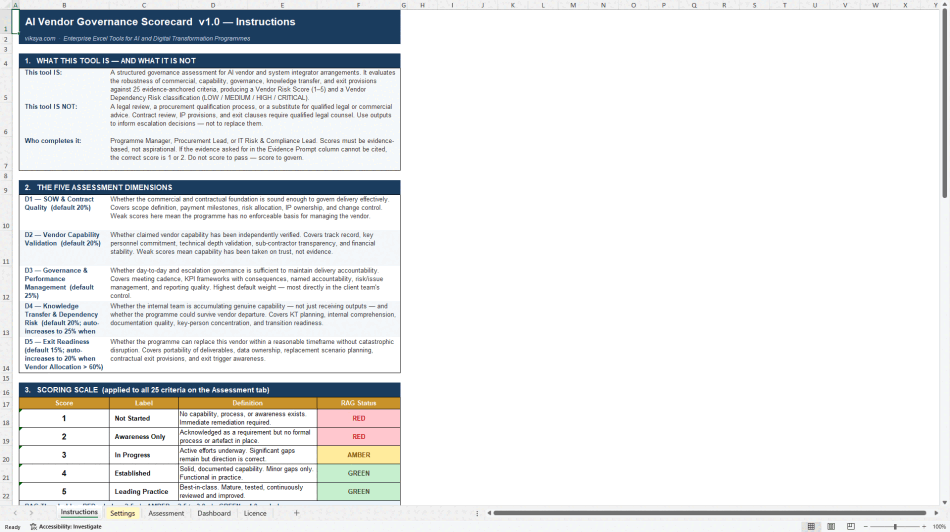
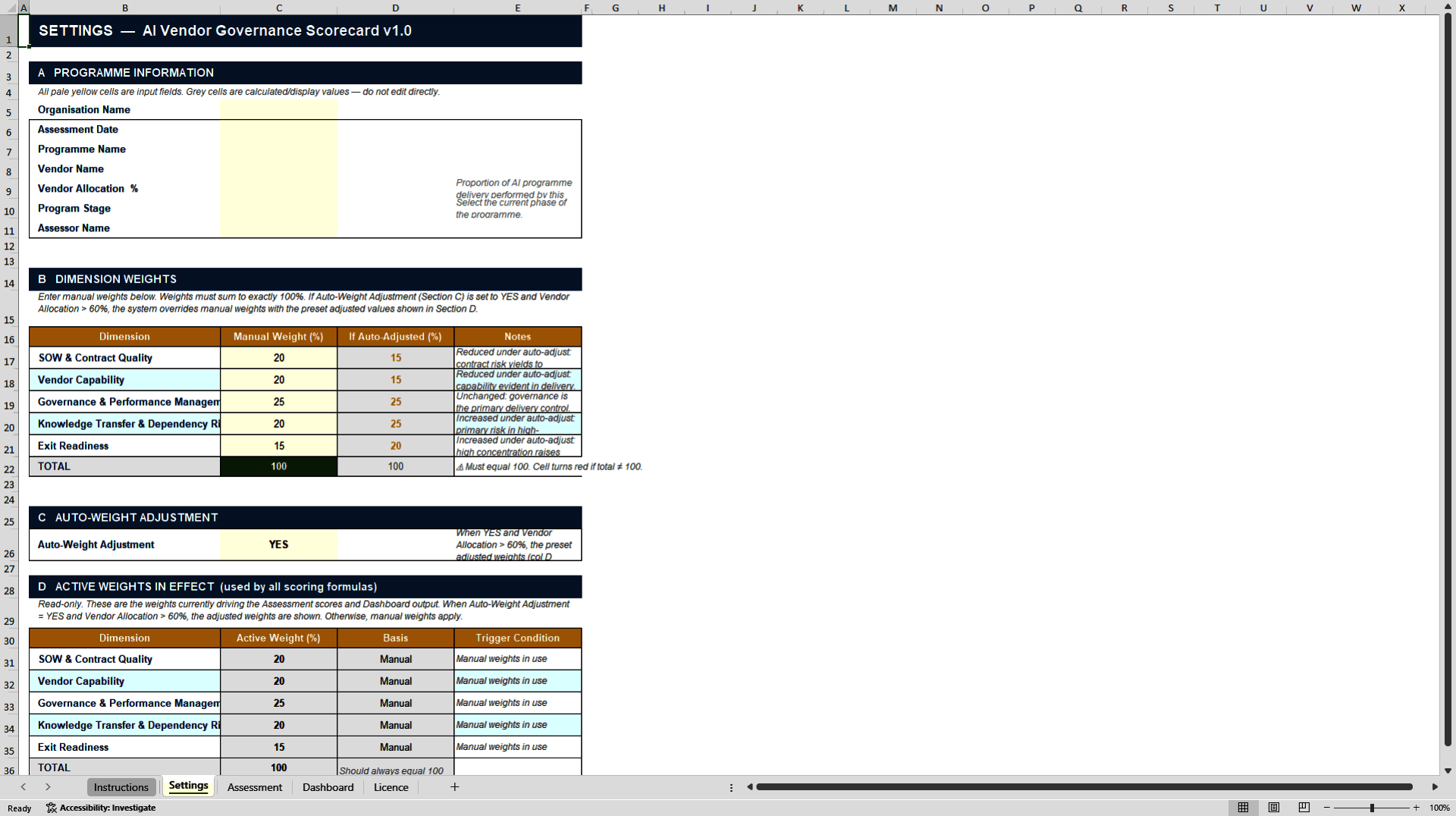
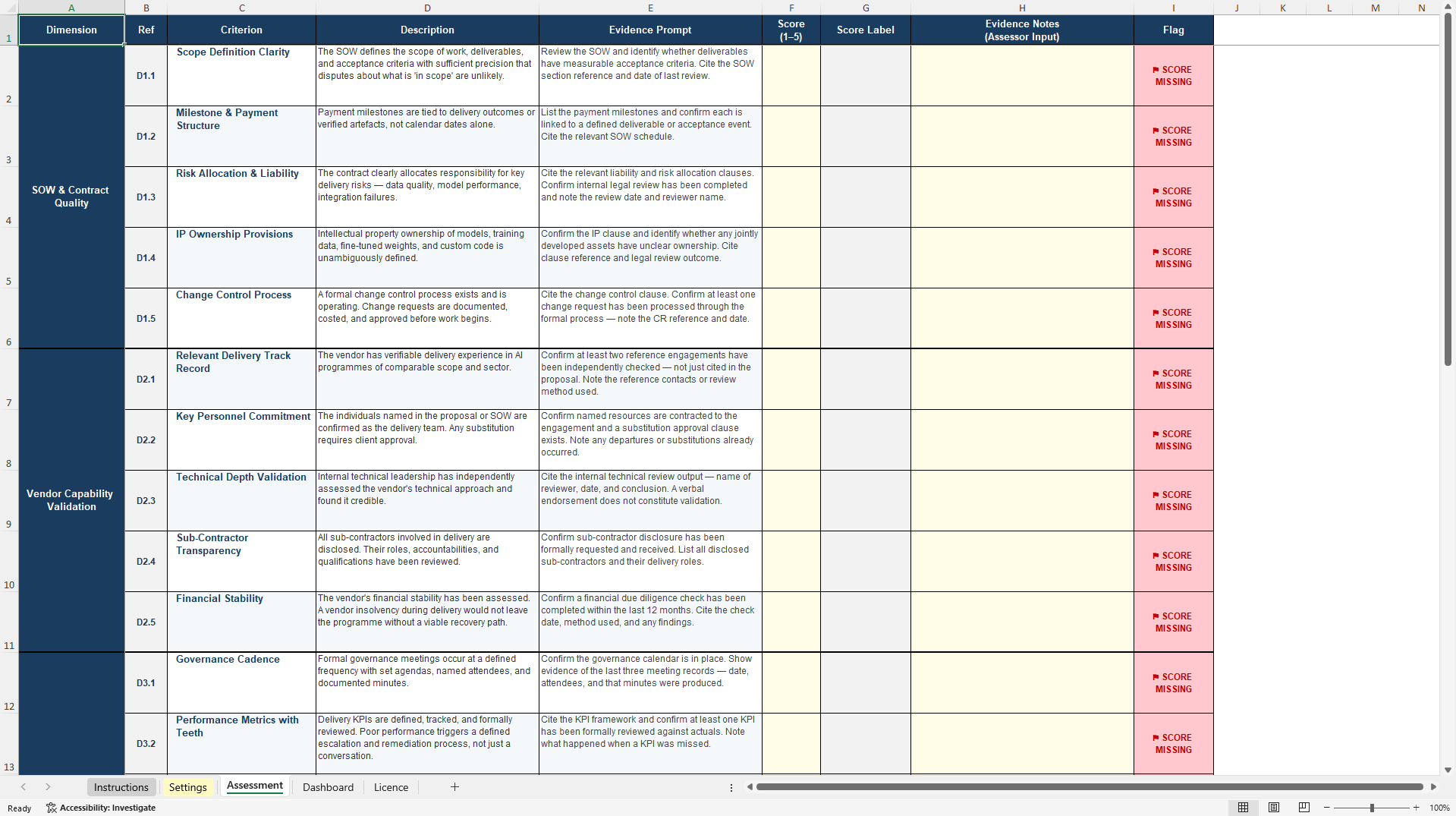
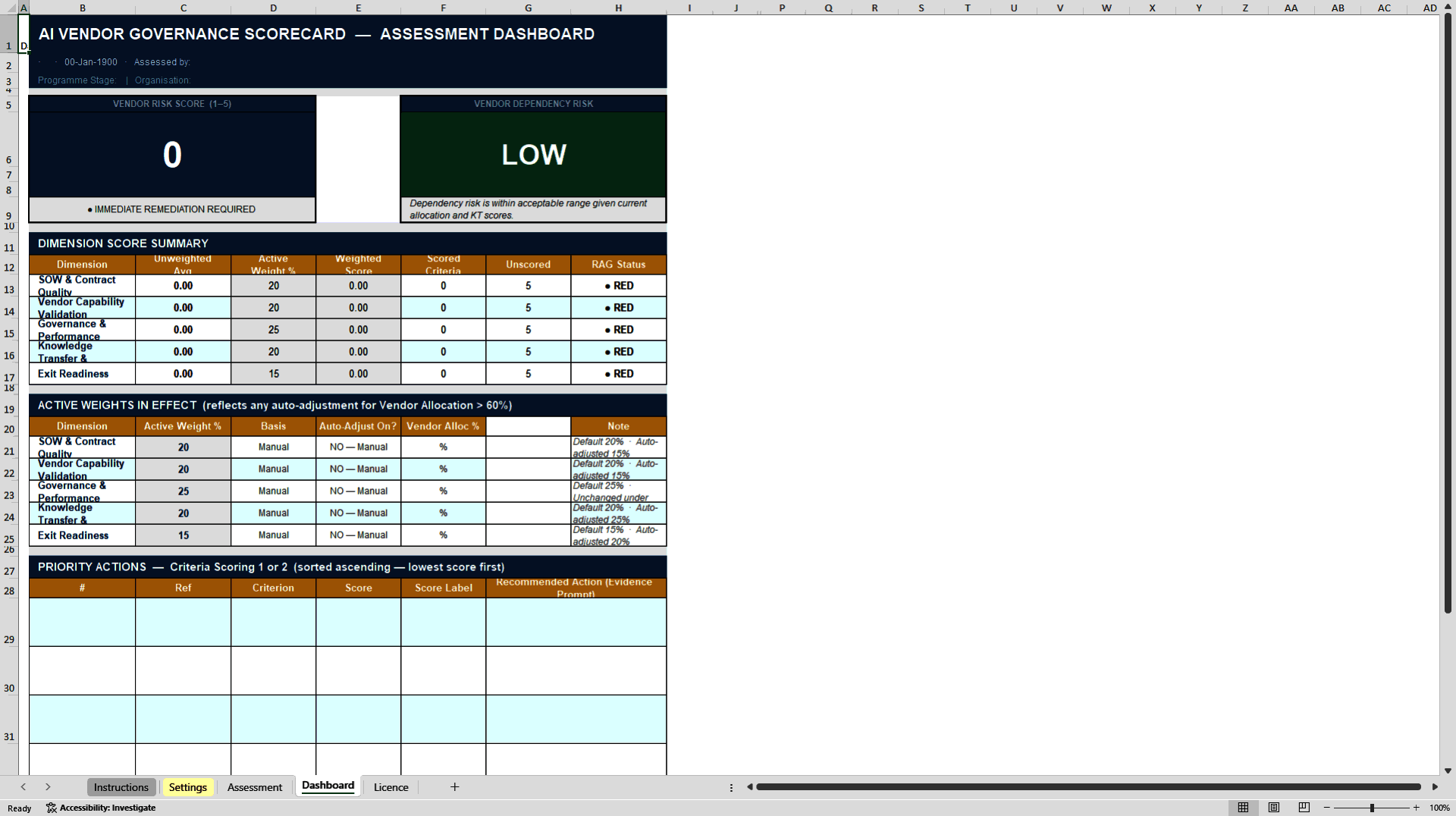
This Microsoft Excel workbook scores 25 evidence-based criteria across five governance dimensions – SOW and Contract Quality, Vendor Capability Validation, Governance and Performance Management, Knowledge Transfer and Dependency Risk, and Exit Readiness – and converts the result into two outputs formatted for steering committee presentation: a weighted Vendor Risk Score on a 1-5 scale, classified red, amber, or green, and a separate four-tier Vendor Dependency Risk flag. Once vendor allocation exceeds sixty percent, dimension weighting shifts automatically toward knowledge transfer and exit readiness, matching where high-dependency arrangements typically break down.
Four tabs carry the workbook end to end. An Instructions tab sets out scoring guidance and a manual weight-redistribution reference. A Settings tab holds organisation, vendor, and programme details, with dimension weights and the auto-weight toggle. An Assessment tab carries all 25 criteria with evidence prompts, scored 1-5 by dropdown, flagging anything left unscored. A Dashboard tab auto-calculates the Vendor Risk Score, the Dependency Risk flag, a dimension-by-dimension RAG summary, and a ranked Priority Actions list.
Built for programme managers, CIOs and technology leaders, procurement and IT risk teams, and management consultants who need a repeatable, evidence-based way to assess vendor arrangements at onboarding and at every subsequent programme gate.
Three benefits stand out:
1. Defensible evidence, not gut feel. Every criterion ties to a named artefact, date, or individual, so a score can be defended to a steering committee rather than argued from impression.
2. One score, two risk views. Overall governance maturity and vendor dependency exposure are reported separately, so a healthy average score cannot quietly mask a critical concentration risk.
3. Governance that scales with the engagement. Weighting adjusts automatically as vendor allocation grows, and a fresh copy takes under two minutes to set up per vendor, covering onboarding through every later gate.
Format: Excel (.xlsx), no macros or VBA, works in Excel 2016 and above, including Microsoft 365 (Google Sheets not formally tested). This is a governance assessment tool, not a legal review; contract terms, IP provisions, and exit clauses should be confirmed with qualified counsel.
Published by Viksya. Seller licence terms are included within the document and take precedence over platform defaults
Got a question about the product? Email us at support@flevy.com or ask the author directly by using the "Ask the Author a Question" form. If you cannot view the preview above this document description, go here to view the large preview instead.
Source: Best Practices in Artificial Intelligence, Vendor Management Excel: AI Vendor Governance Scorecard - 25-Criteria Excel (XLSX) Spreadsheet, Viksya
ABOUT THE AUTHOR

Viksya builds decision frameworks for leaders who answer to a board, not a hunch. Our Excel workbooks and playbooks are developed by a transformation leader with hands-on experience directing $100M+ AI and cloud portfolios inside large enterprises -- the same instruments used to justify, select, estimate, and govern real programmes, productized. The catalog spans three tracks: AI Transformation ... [read more]
Ask the Author a Question
You must be logged in to contact the author.




























