
 Click main image to view in full screen. Unlock all 12 preview images:
Enterprise Cyber Defense Strategy: From Reactive to Proactiv – PowerPoint PPTX Template
PowerPoint (PPTX) 60 Slides


CYBER SECURITY PPT TEMPLATE DESCRIPTION
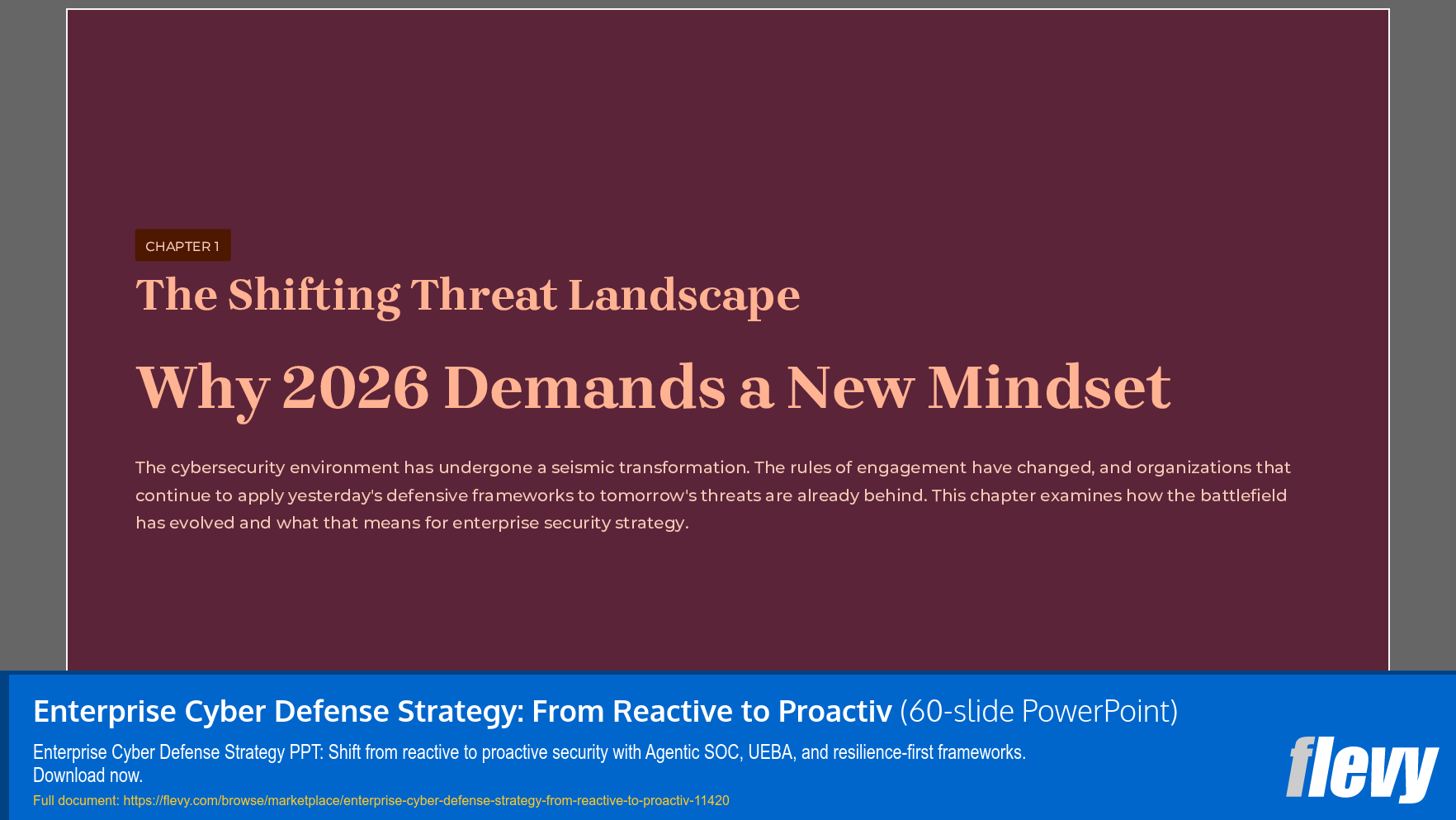
Chapter 1: The Shifting Threat Landscape – Why 2026 Demands a New Mindset
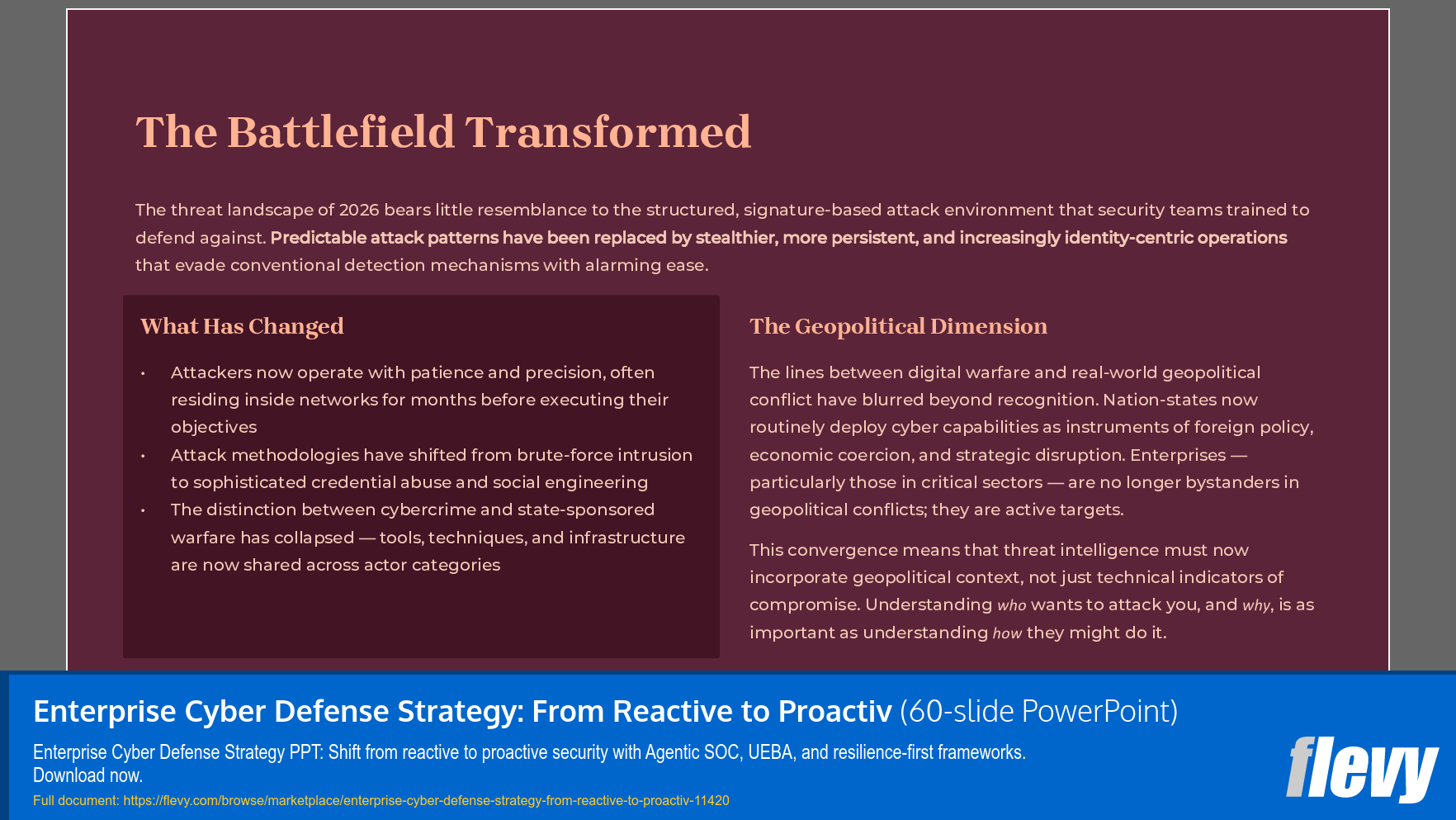
The Battlefield Transformed
• Predictable attack patterns are gone; replaced by stealthier, persistent, identity-centric operations.
• Lines blurred between digital warfare and real-world geopolitical conflict.
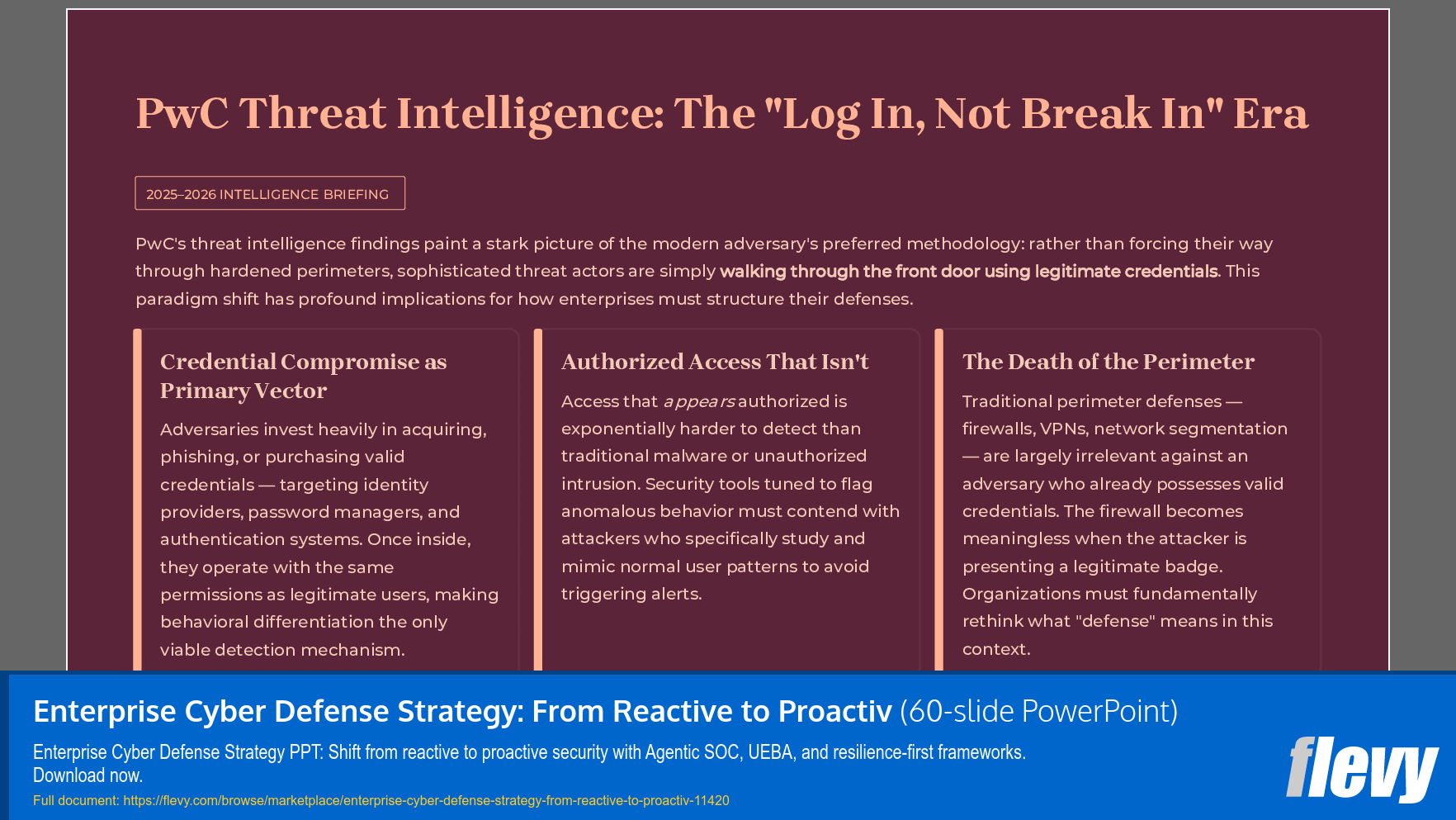
PwC Threat Intelligence: The "Log In, Not Break In" Era
• Adversaries now compromise legitimate credentials and authentication systems.
• Gaining access that appears authorized, making detection exponentially harder.
• Traditional perimeter defenses are largely irrelevant.
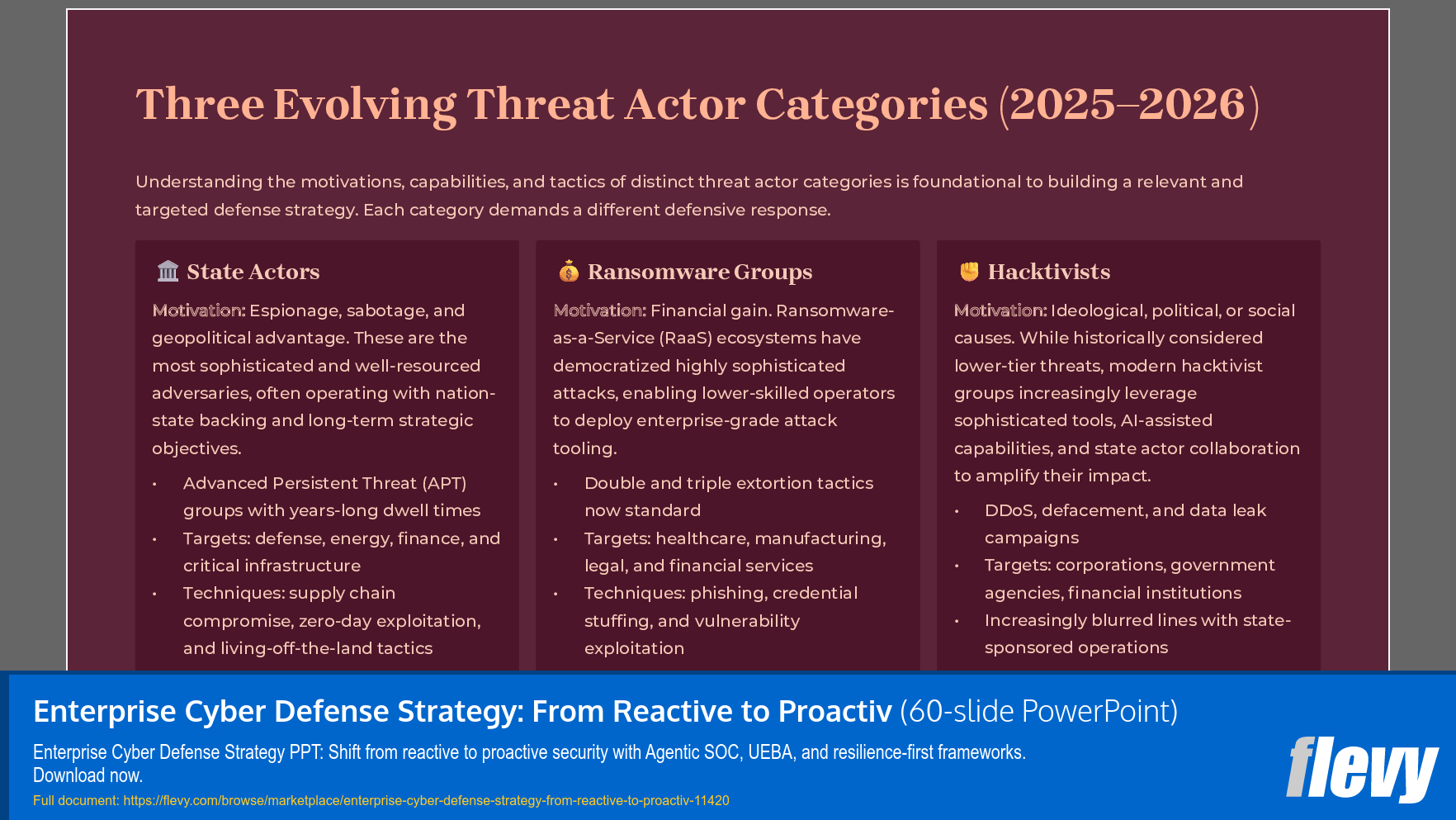
Three Evolving Threat Actor Categories (2025-2026)
• State Actors: Espionage and sabotage motivated.
• Ransomware Groups: Financially driven.
• Hacktivists: Ideologically motivated.
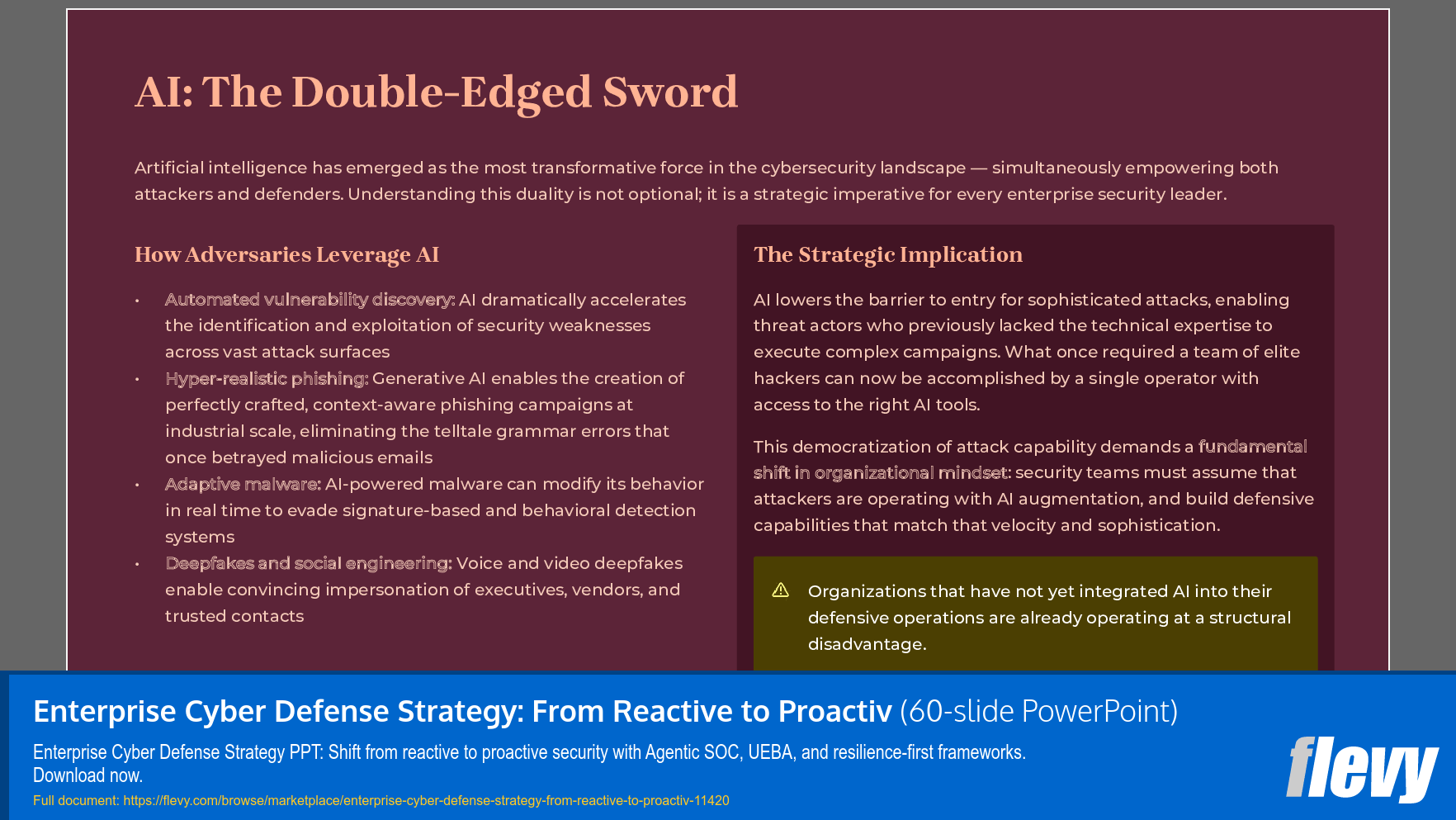
AI: The Double-Edged Sword
• Adversaries leverage AI to amplify capabilities.
• Lowers the barrier to entry for widespread, covert campaigns.
• Demands a fundamental shift in organizational mindset.
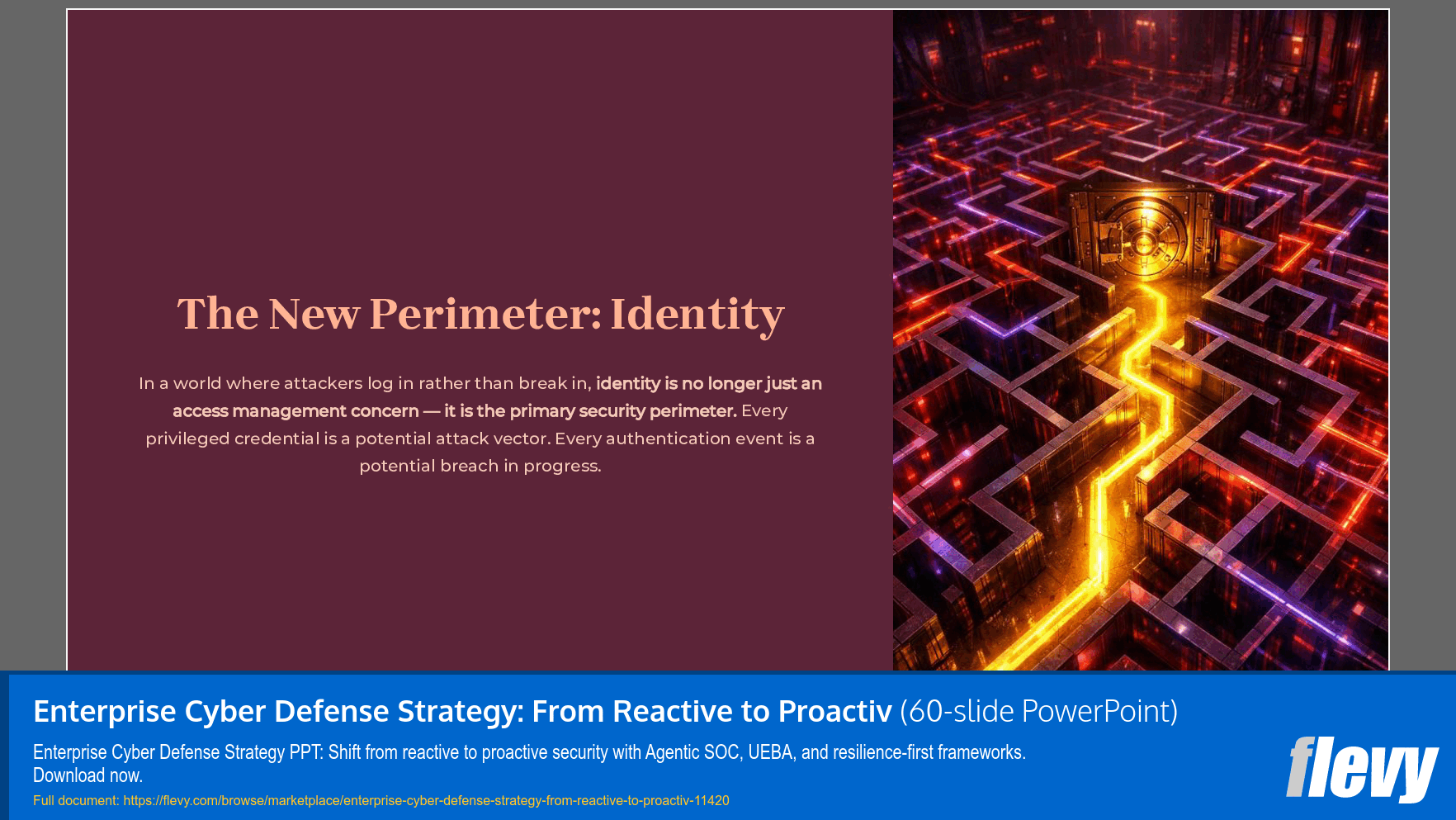
[image] A digital maze with a single, clear path labeled "Identity" leading to a secure vault, surrounded by complex, chaotic paths. Text overlay: "The New Perimeter: Identity"
Chapter 2: The Imperative for Resilience-First Strategy
Reactive vs. Proactive: A Fundamental Shift
• Reactive: Managing threats after they occur, focusing on prevention and remediation.
• Proactive: Building adaptive, anticipatory security capabilities.
• Resilience-First: The ability to anticipate, withstand, recover from, and adapt to cyberattacks while maintaining critical business operations.
The Cost of Reactivity
• Constant cycle of vulnerabilities and patches.
• "Playing defense" leads to an asymmetrical battle where attackers only need to be right once.
• Tarnishes reputation and erodes trust.
The Rise of the Agentic SOC (Security Operations Center)
• Microsoft Security Blog (April 2026): Rethinking SecOps for the next decade.
• Moving beyond human intervention to adaptive, autonomous defense.
• Frees defenders for strategic, high-impact work.
Key Capabilities of an Agentic SOC
• Real-time anomaly detection.
• User and Entity Behavior Analytics (UEBA).
• Predictive threat intelligence.
• Automated incident response orchestrated by next-generation SOAR platforms.
[image] A split screen: Left side shows a frantic security analyst surrounded by alerts. Right side shows a calm analyst overseeing an automated dashboard with AI agents working. Text overlay: "From Human Intervention to Autonomous Defense"
Chapter 3: AI as the Foundation for Resilience
AI: The #1 Security Investment Priority (2026)
• Essential to match the velocity and sophistication of AI-driven threats.
• Provides the only viable means to counter generative AI attacks.
Harnessing AI's Power
• Generative AI: Used by attackers for convincing phishing and BEC campaigns at scale.
• AI-Driven Detection: Analyzes behavior rather than signatures, countering novel text-based attacks.
• AI-Powered Security: Enables real-time anomaly detection, UEBA, and predictive threat intelligence.
Managing New Attack Vectors Created by AI
• Adversarial attacks against AI models themselves.
• AI-powered deepfakes and misinformation campaigns.
• Need for robust governance and AI TRiSM (Trust, Risk, and Security Management).
[image] A brain graphic with glowing neural pathways, some pathways are labeled "Attack" and others "Defense," with AI at the center. Text overlay: "AI: The Ultimate Cyber Weapon and Shield"
Chapter 4: Cloud Security Transformation – Beyond the Perimeter
Cloud Security: The Biggest Gap
• Traditional perimeter defenses fail in dynamic cloud environments.
• Demands AI-driven protection and zero trust architecture.
Moving from Perimeter Defense to Autonomous Protection
• Cloud environments are inherently distributed and scalable.
• Security must be embedded and autonomous, not a bolted-on layer.
• Focus shifts to securing workloads and data wherever they reside.
Zero Trust Architecture: The New Standard
• Never trust, always verify.
• Micro-segmentation and least privilege access.
• Continuous monitoring and validation of all access requests.
[image] A network diagram showing a traditional perimeter firewall being bypassed by cloud-based threats, contrasted with a distributed, interconnected mesh of security nodes in a cloud environment. Text overlay: "Securing the Cloud: From Walls to Workloads"
Chapter 5: The IT/OT Convergence Risk – Securing Operational Technology
The Interconnected World of IT/OT
• Increasing convergence of Information Technology (IT) and Operational Technology (OT).
• OT systems (industrial control systems, SCADA) are now connected to enterprise networks.
The High Stakes of OT Vulnerabilities
• Attacks on OT can lead to physical disruption, safety hazards, and critical infrastructure failure.
• Examples: Power grids, manufacturing plants, water treatment facilities.
Securing Operational Technology
• Requires specialized security solutions and expertise.
• Understanding the unique protocols and vulnerabilities of OT environments.
• Implementing robust segmentation and monitoring for OT networks.
[image] A factory floor with robotic arms and machinery, overlaid with digital security icons and warning symbols. Text overlay: "Protecting the Physical World: IT/OT Convergence Risks"
Chapter 6: Supply Chain as Attack Surface – Building Visibility and Trust
The Extended Attack Surface
• Organizations are only as strong as their weakest link.
• Supply chain partners, vendors, and third-party software are prime targets.
Building Visibility and Trust Across the Ecosystem
• Cyber Threat Intelligence (CTI): Essential for understanding threats targeting your supply chain.
• Vendor Risk Management: Rigorous assessment and continuous monitoring of third-party security.
• Secure Software Development Lifecycle (SSDLC): Ensuring security is built into software from the start.
Key Supply Chain Security Measures
• Software Bill of Materials (SBOM) for transparency.
• Regular security audits of critical vendors.
• Incident response planning that includes supply chain disruptions.
[image] A chain graphic where each link represents a company or software component, with one link highlighted in red and showing a security breach. Text overlay: "Your Supply Chain: A Critical Vulnerability"
Chapter 7: The Workforce Crisis – Closing the Talent Gap
The Growing Cybersecurity Talent Gap
• Demand for skilled cybersecurity professionals far outstrips supply.
• Organizations struggle to find and retain talent.
Closing the Gap: People, Tools, and Managed Services
• People: Investing in training, upskilling, and fostering a security-aware culture.
• Tools: Leveraging AI and automation to augment human capabilities (Agentic SOC).
• Managed Services: Partnering with MSSPs for specialized expertise and 24/7 monitoring.
Fostering a Security-Aware Culture
• Cybersecurity is everyone's responsibility.
• Regular training, phishing simulations, and clear communication.
• Empowering employees to be the first line of defense.
[image] Diverse group of professionals collaborating around a digital security dashboard. Text overlay: "The Human Element: Empowering Your Security Workforce"
Chapter 8: Building a Unified Cybersecurity Strategy – Integration as the Differentiator
The Siloed Approach is Dead
• Pursuing AI, cloud, OT/IT, supply chain, and workforce strategies in isolation leads to failure.
• Success comes from cohesively connecting these elements.
Integration is the Competitive Differentiator
• A unified strategy ensures all security investments work together.
• Creates a more robust, adaptive, and resilient defense posture.
• Maximizes ROI and minimizes operational complexity.
Core Components of an Integrated Strategy
• Governance and Risk Management Framework (NIST CSF 2.0, ISO 27001).
• AI-driven Security Operations (Agentic SOC).
• Zero Trust Cloud Security.
• IT/OT Security Integration.
• Supply Chain Risk Management.
• Workforce Development and Culture.
[image] A complex, interconnected web of security elements (AI, Cloud, Identity, OT, Supply Chain, People) all converging on a central point of "Resilience." Text overlay: "Unified Strategy: The Path to True Resilience"
Chapter 9: The 2026 Action Plan – Priority Steps for Business Leaders
Step 1: Assess Readiness and Strategy Alignment
• Evaluate current security posture against evolving threats.
• Align security investments with business objectives and risk tolerance.
• Identify gaps in AI adoption, cloud security, and identity management.
Step 2: Architect for Resilience and AI Integration
• Design a Zero Trust architecture for cloud and hybrid environments.
• Implement AI-driven security tools and automation.
• Prioritize identity management and access controls.
Step 3: Enhance Visibility and Control
• Gain deep visibility into IT, OT, and supply chain ecosystems.
• Implement robust threat intelligence programs.
• Establish clear governance for AI and data usage.
Step 4: Empower Your Workforce and Foster Culture
• Invest in cybersecurity training and talent development.
• Promote a security-aware culture across the organization.
• Explore managed security services for specialized needs.
Step 5: Pilot, Scale, and Continuously Improve
• Start with high-impact pilot projects for AI and automation.
• Scale successful initiatives enterprise-wide.
• Continuously monitor, adapt, and refine the strategy based on threat intelligence and performance metrics.
[image] A roadmap graphic with clear milestones and arrows indicating progress towards a secure future. Text overlay: "Your Action Plan: Building Proactive Defense"
Chapter 10: Emerging Technology Frontiers and Future Challenges
Beyond Today: Satellite, Quantum, and 6G Security
• New paradigms introduce novel attack vectors and security challenges.
• Proactive research and development are crucial.
Quantum Computing's Disruptive Potential
• Threatens current encryption standards.
• Need for quantum-resistant cryptography.
Securing the Edge and Autonomous AI Agents
• Decentralized attack surface requires AI at the edge.
• Managing the risks of increasingly autonomous AI systems.
[image] Abstract futuristic imagery representing advanced technology and complex networks. Text overlay: "The Horizon: Navigating Tomorrow's Threats"
Chapter 11: Key Takeaways for Business Leaders
Identity-Centric Attacks Dominate
• Focus on identity management as the new cybersecurity perimeter.
AI: Weapon and Shield
• Top security investment priority, but requires careful governance.
Cloud Security is the Biggest Gap
• Embrace AI-driven protection and zero trust.
Proactive Resilience Replaces Reactive Risk Management
• Build adaptive, anticipatory security capabilities.
• Integration is the key differentiator for success.
Got a question about the product? Email us at support@flevy.com or ask the author directly by using the "Ask the Author a Question" form. If you cannot view the preview above this document description, go here to view the large preview instead.
Source: Best Practices in Cyber Security PowerPoint Slides: Enterprise Cyber Defense Strategy: From Reactive to Proactiv PowerPoint (PPTX) Presentation Slide Deck, Mohamed Alshamey
ABOUT THE AUTHOR

Senior Consultant in Cybersecurity GRC, Data Governance, Cybersecurity, Privacy, and Data Management, with over 20 years of experience in information technology, consulting, training, and technical capacity building. holds a PhD. In AI & Data Privacy, he has a master's degree in cybersecurity and is currently pursuing research focused on data privacy. possesses extensive expertise in ... [read more]
Ask the Author a Question
You must be logged in to contact the author.




























