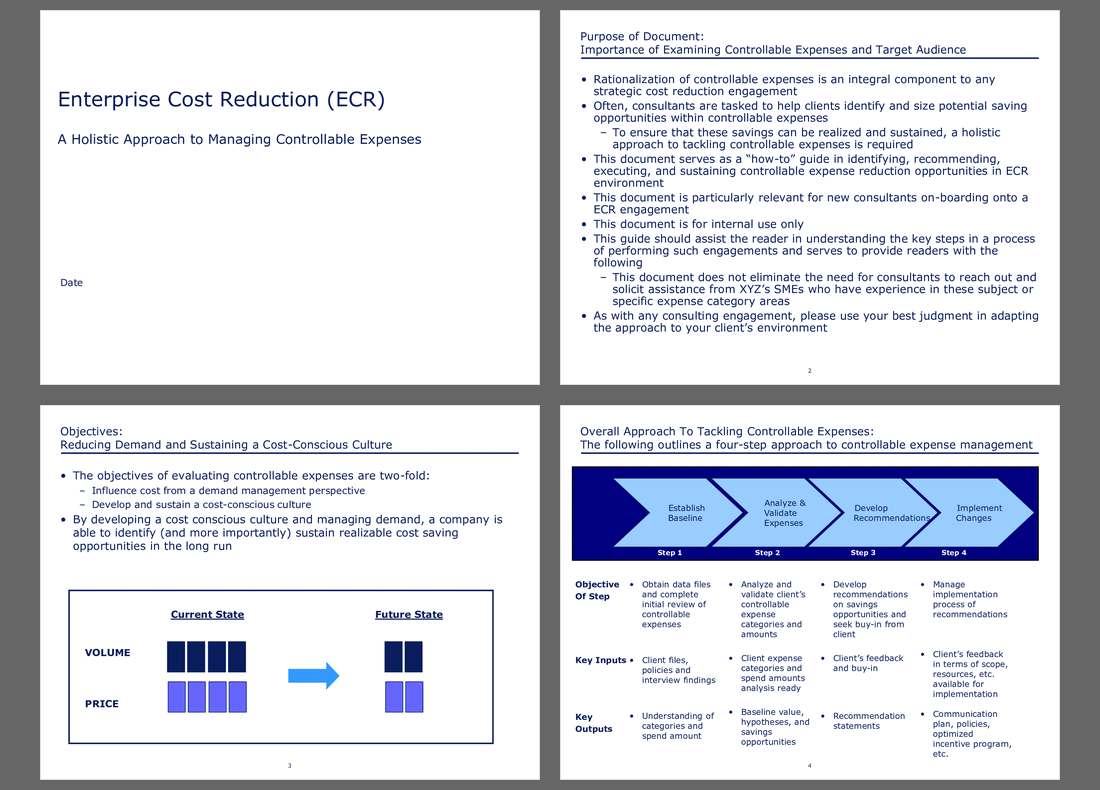
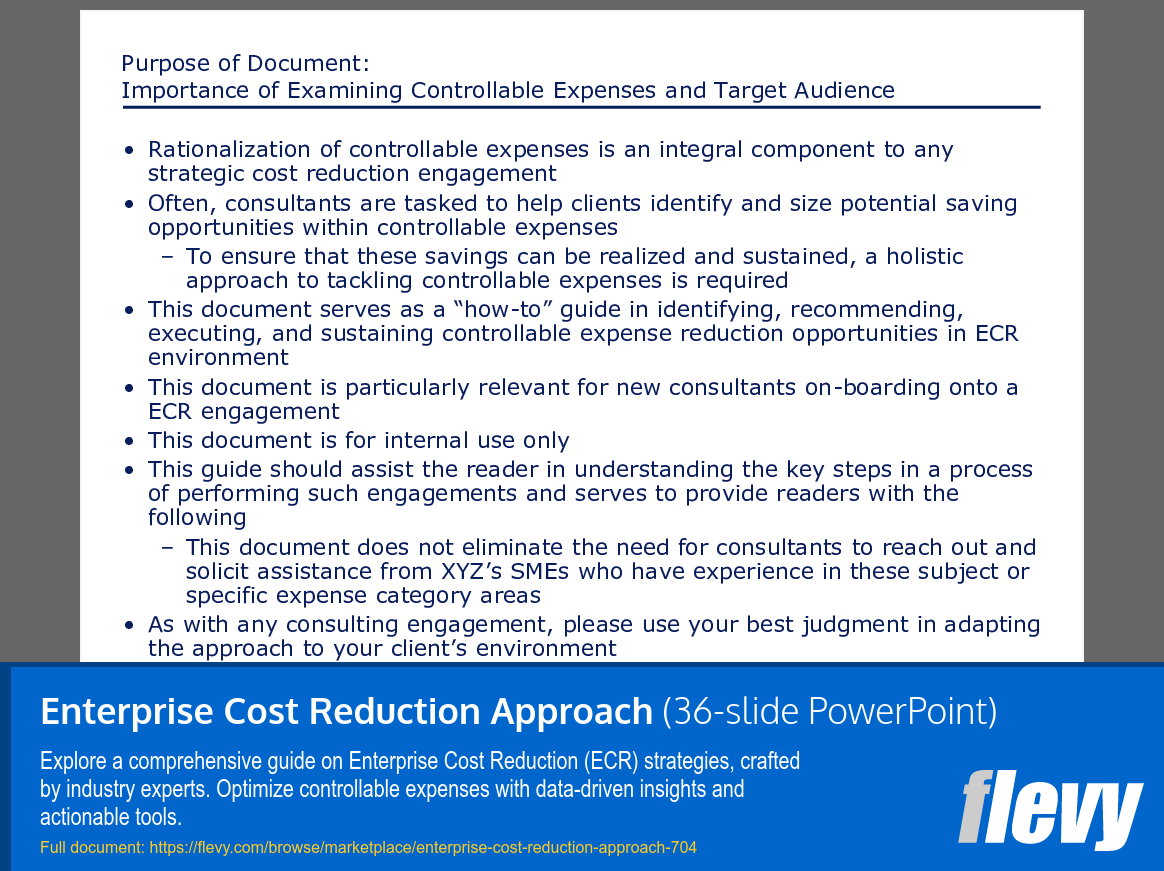

Rationalization of controllable expenses is an integral component to any strategic cost reduction engagement. Often, an organization must identify and size potential saving opportunities within controllable expenses. To ensure that these savings can be realized and sustained, a holistic approach to tackling controllable expenses is required.
This document serves as a "how-to" guide in identifying, recommending, executing, and sustaining controllable expense reduction opportunities in a Enterprise Cost Reduction (ECR) environment. This framework presents a holistic approach to managing controllable expenses.
This document goes beyond just identifying and recommending cost reduction opportunities. It provides a structured approach to establishing a baseline for current expenses, ensuring that all subsequent actions are grounded in accurate data. The baseline establishment phase is critical for setting realistic and achievable targets, making it easier to track progress and measure success.
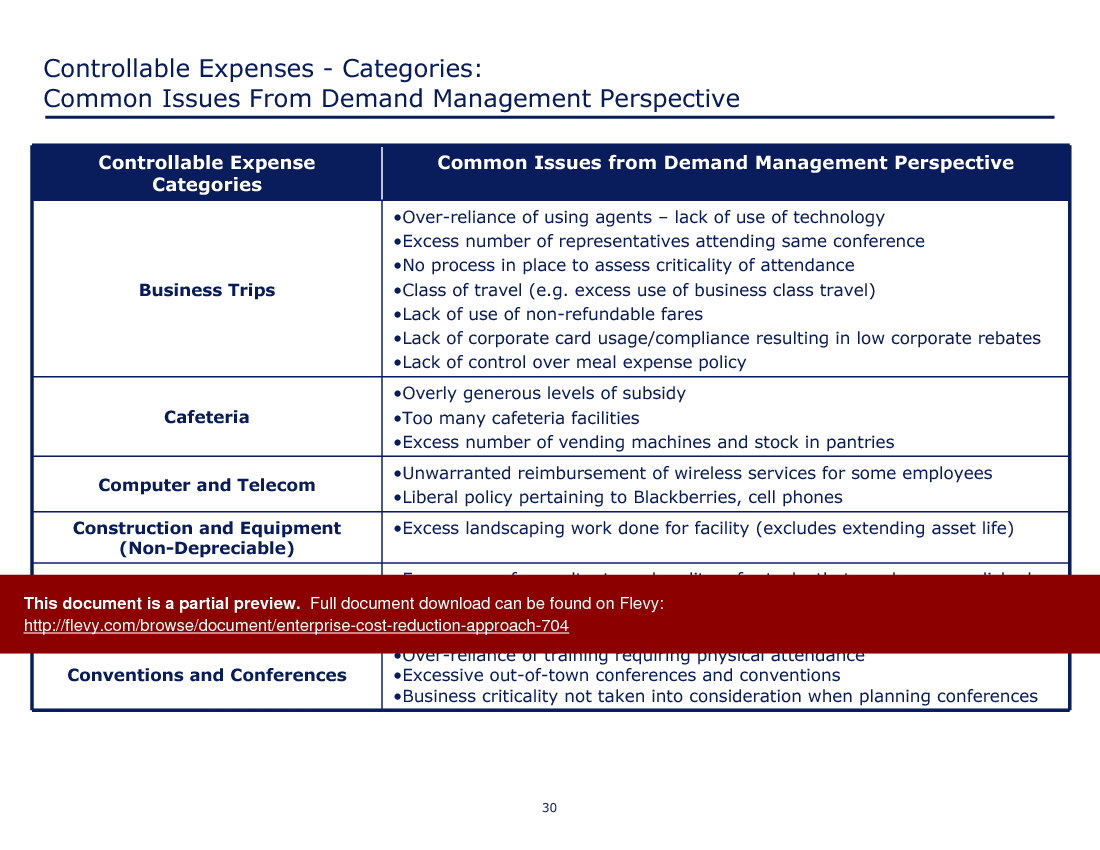
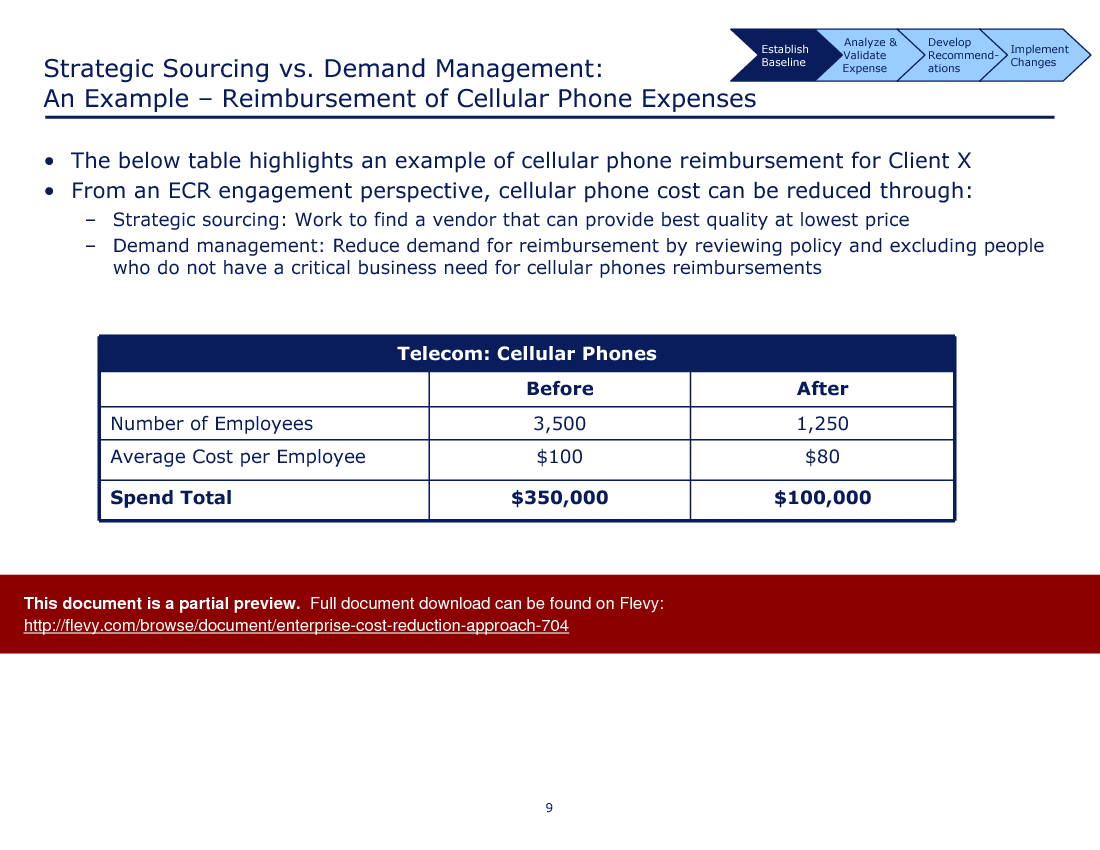
The document also delves into strategic sourcing versus demand management, offering practical examples like cellular phone reimbursement. It highlights how strategic sourcing can help find vendors offering the best quality at the lowest price, while demand management focuses on reducing unnecessary expenses. This dual approach ensures that cost reduction efforts are both comprehensive and sustainable.
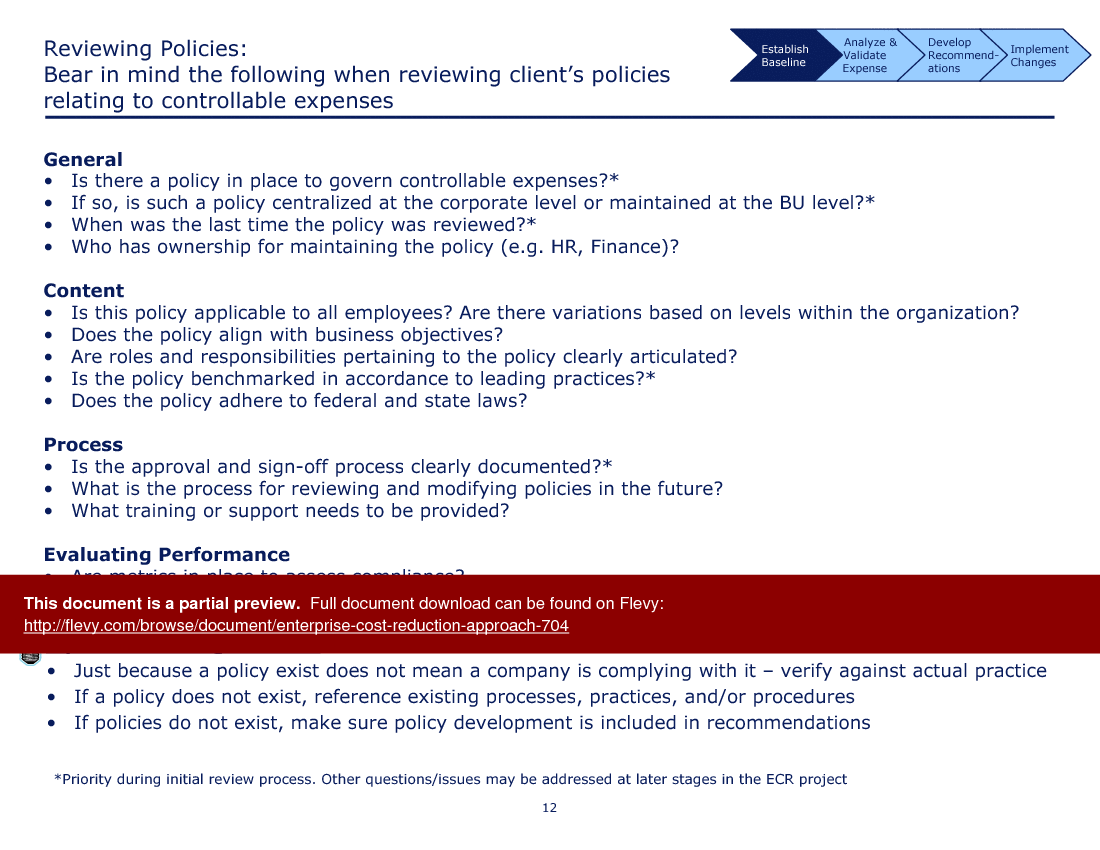
Policy review is another key component covered in this document. It outlines the importance of having clear, well-documented policies governing controllable expenses. The guide provides a checklist for evaluating existing policies, ensuring they are up-to-date, aligned with business objectives, and compliant with federal and state laws. This thorough review process helps identify gaps and areas for improvement, making policy recommendations more effective.
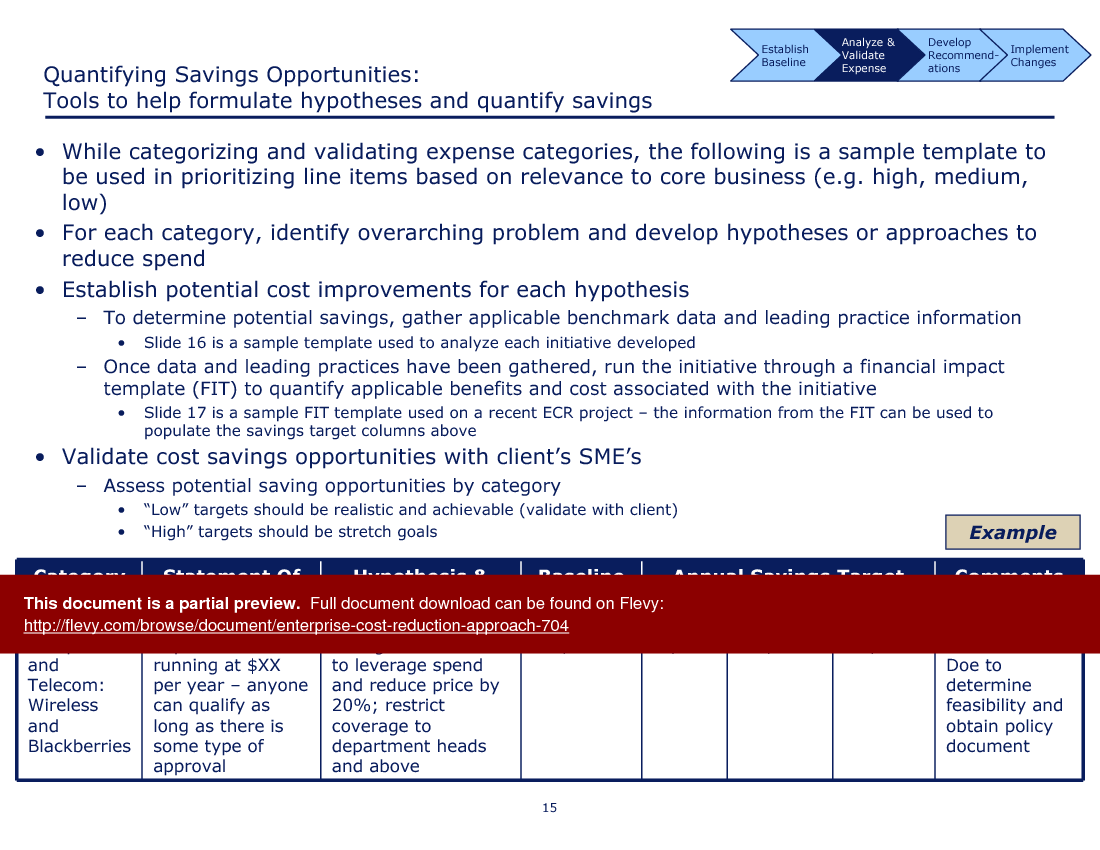
The document also includes tools for quantifying savings opportunities. It offers templates for categorizing and validating expense categories, developing hypotheses for cost reduction, and running financial impact analyses. These tools are designed to help you formulate actionable plans and validate them with subject matter experts, ensuring that your cost reduction initiatives are both data-driven and feasible.
Got a question about the product? Email us at support@flevy.com or ask the author directly by using the "Ask the Author a Question" form. If you cannot view the preview above this document description, go here to view the large preview instead.
Executive Summary
The Enterprise Cost Reduction (ECR) presentation provides a structured approach to managing controllable expenses, designed to deliver McKinsey, Bain, or BCG-quality insights (consulting-grade; not affiliated). This document serves as a comprehensive guide for consultants and corporate executives to identify, analyze, and implement cost-saving strategies effectively. By leveraging data-driven methodologies, the ECR framework empowers organizations to rationalize expenses, enhance demand management, and foster a cost-conscious culture. Users will be equipped to execute actionable recommendations that lead to sustainable savings.
Who This Is For and When to Use
• Corporate executives overseeing financial performance and cost management
• Consultants engaged in cost reduction projects for clients
• Finance teams responsible for expense tracking and analysis
• Operations managers focused on optimizing resource allocation
Best-fit moments to use this deck:
• During initial assessments of controllable expenses in a corporate setting
• When developing strategies for sustainable cost management
• In workshops aimed at fostering a culture of cost consciousness
• For training new consultants on ECR methodologies
Learning Objectives
• Define controllable expenses and their significance in cost reduction
• Analyze current spending patterns to identify savings opportunities
• Develop actionable recommendations for expense rationalization
• Implement changes effectively while ensuring compliance and accountability
• Foster a culture of cost consciousness within the organization
• Utilize data-driven insights to validate and sustain cost-saving measures
Table of Contents
• Purpose of Document (page 1)
• Objectives of Evaluating Controllable Expenses (page 2)
• Overall Approach to Tackling Controllable Expenses (page 4)
• Project Timeline (page 5)
• Understanding Total Spend (page 7)
• Levers for Reducing Controllable Expenses (page 8)
• Understanding What Is Controllable (page 10)
• Baseline, Opportunities, and Priorities (page 11)
• Reviewing Policies (page 12)
• Analyzing and Validating Expenses (page 14)
• Quantifying Savings Opportunities (page 16)
• Recommendations (page 19)
• Implementing Changes (page 22)
• Typical Objections and Concerns (page 27)
• Final Thoughts (page 28)
• Appendix (page 30)
Primary Topics Covered
• Purpose of Document - This section outlines the importance of examining controllable expenses and serves as a guide for consultants to identify and execute cost-saving opportunities.
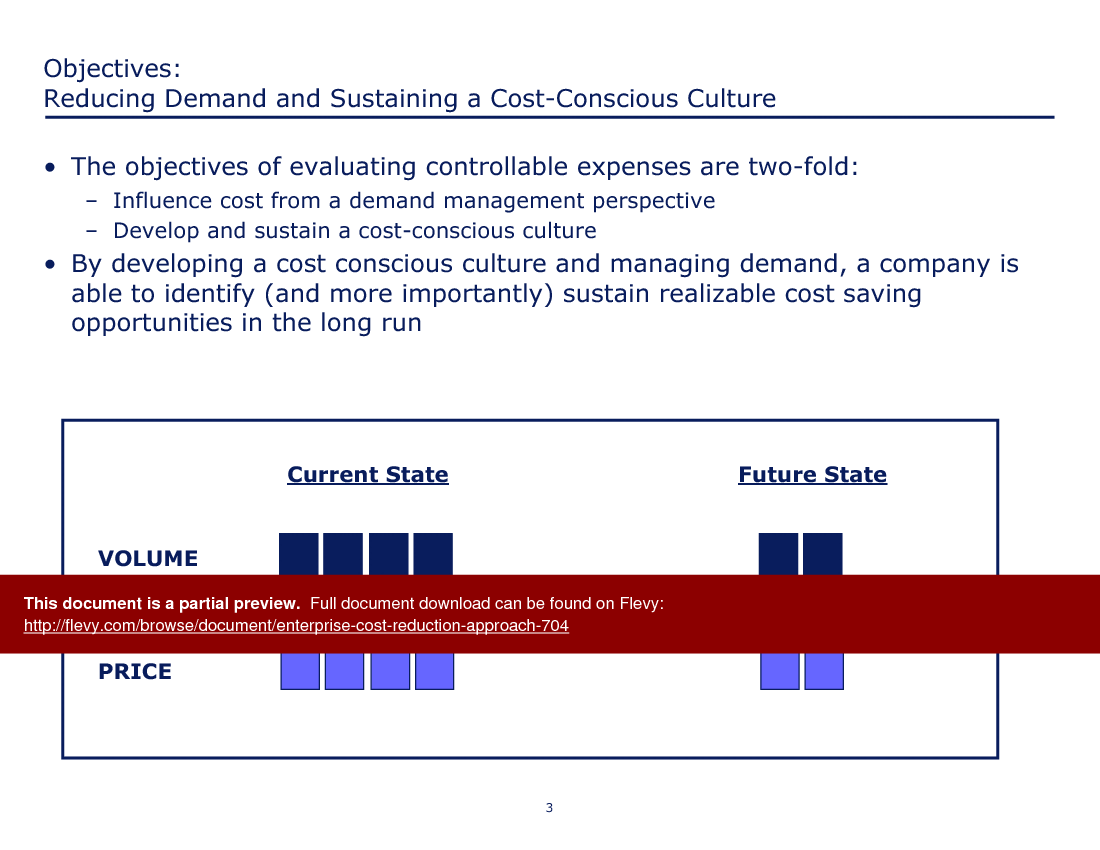
• Objectives of Evaluating Controllable Expenses - Focuses on influencing costs through demand management and fostering a sustainable cost-conscious culture.
• Overall Approach to Tackling Controllable Expenses - Details a four-step process: Establish Baseline, Analyze & Validate Expenses, Develop Recommendations, and Implement Changes.
• Levers for Reducing Controllable Expenses - Discusses strategic sourcing and demand management as key methods for reducing costs.
• Understanding What Is Controllable - Identifies actionable expense categories and their relevance to demand management.
• Quantifying Savings Opportunities - Provides tools and templates to formulate hypotheses and quantify potential savings.
Deliverables, Templates, and Tools
• Controllable expense analysis template for initial assessments
• Baseline data collection framework for expense validation
• Financial impact template for quantifying savings opportunities
• Recommendation statement format outlining costs and benefits
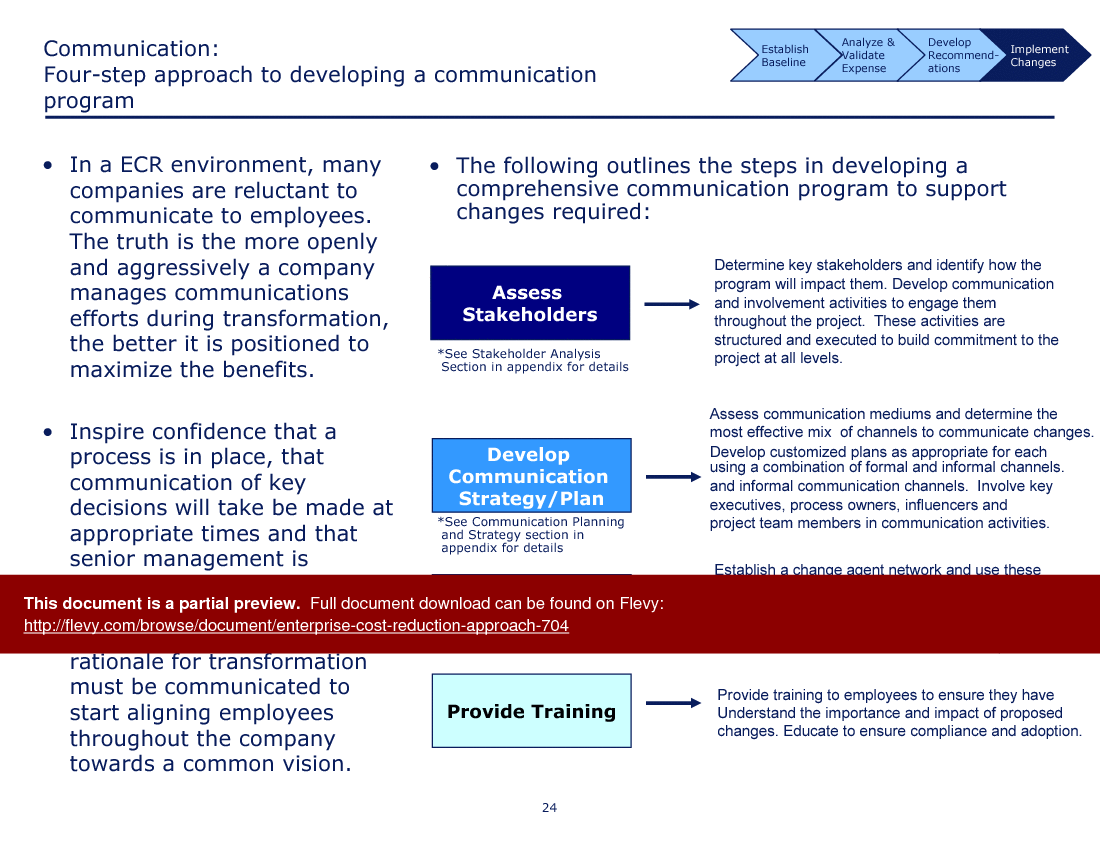
• Communication plan template for stakeholder engagement
• ARCI framework for establishing accountability in implementation
Slide Highlights
• Overview of the four-step approach to managing controllable expenses
• Example of a spend analysis illustrating total spend breakdown
• Comparison of pre- and post-implementation scenarios for cellular phone expenses
• Sample templates for quantifying savings opportunities and developing recommendations
• Communication strategy framework to engage stakeholders effectively
Potential Workshop Agenda
ECR Overview and Objectives (60 minutes)
• Introduce the ECR framework and its significance
• Discuss objectives of evaluating controllable expenses
• Outline the four-step approach to cost reduction
Data Analysis and Validation Session (90 minutes)
• Review baseline data collection methods
• Analyze current spending patterns and identify opportunities
• Validate findings with client stakeholders
Recommendations and Implementation Planning (90 minutes)
• Develop actionable recommendations based on analysis
• Create an implementation roadmap with timelines and responsibilities
• Discuss strategies for sustaining cost savings
Customization Guidance
• Tailor the baseline data collection period to align with the client’s fiscal year
• Adjust the communication plan to fit the organizational culture and stakeholder preferences
• Modify the ARCI framework to reflect the client’s existing roles and responsibilities
• Customize templates to incorporate client-specific expense categories and metrics
Secondary Topics Covered
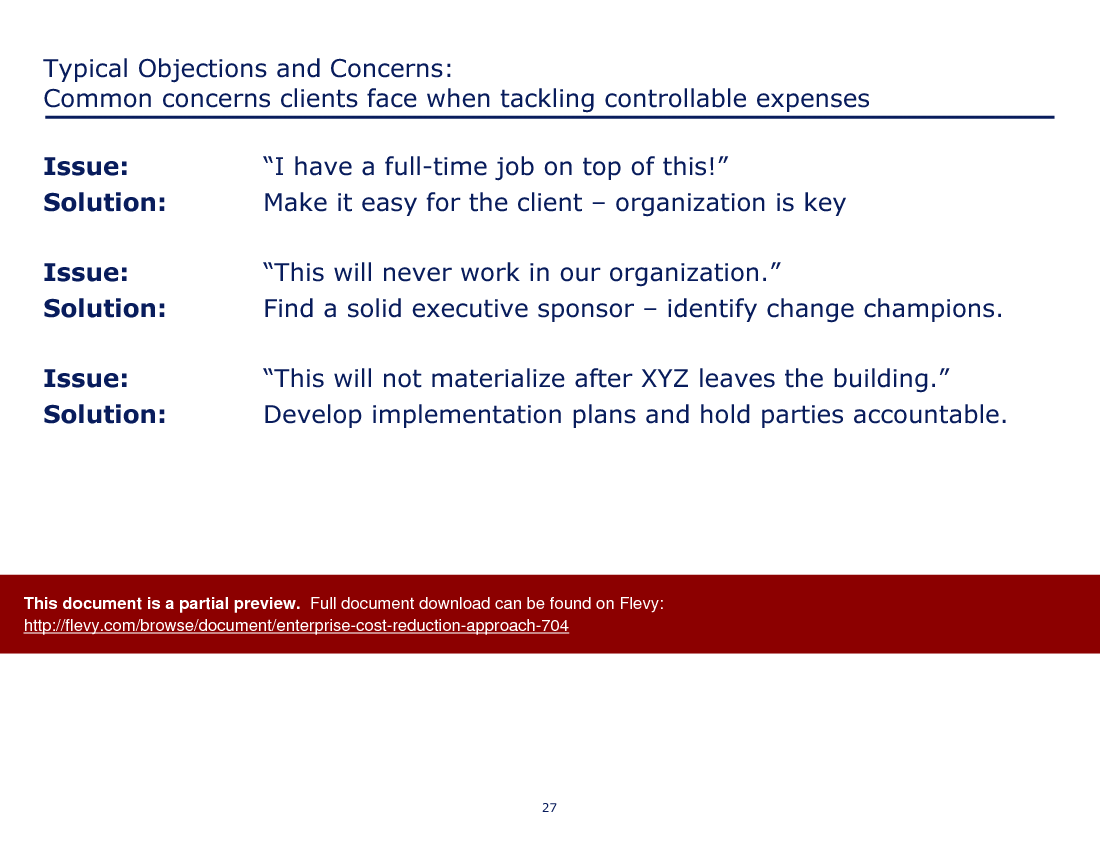
• Common objections and concerns regarding cost reduction initiatives
• Strategies for fostering a cost-conscious culture within organizations
• Importance of compliance and accountability in sustaining savings
• Role of incentives in aligning employee performance with cost management goals
FAQ
What are controllable expenses?
Controllable expenses are costs that can be influenced or managed by the organization, such as discretionary spending on travel, entertainment, and supplies.
How can we validate savings opportunities?
Validation involves analyzing baseline data, comparing it against benchmarks, and engaging with subject matter experts to ensure proposed savings are realistic and achievable.
What is the ARCI framework?
The ARCI framework defines roles and responsibilities in a project: Accountability, Responsibility, Consultation, and Information, ensuring clarity in task ownership.
How long does the ECR process typically take?
The initial 3 steps of the ECR process usually require 8 to 11 weeks, depending on the complexity of the engagement.
What tools are available for quantifying savings?
Templates for financial impact analysis and spend categorization are provided to help quantify potential savings and validate recommendations.
How do we ensure compliance with new policies?
Establishing clear policies, performance measures, and accountability structures is essential for ensuring compliance with new cost management initiatives.
What are the key levers for reducing controllable expenses?
Strategic sourcing and demand management are the primary levers, focusing on optimizing procurement processes and controlling usage.
How can we foster a cost-conscious culture?
Developing training programs, aligning incentives with cost management goals, and communicating the importance of cost savings can help instill a cost-conscious culture.
Glossary
• Controllable Expenses - Costs that can be managed or influenced by the organization.
• Demand Management - Strategies aimed at controlling and reducing demand for certain expenses.
• Strategic Sourcing - The process of identifying and engaging suppliers to optimize procurement.
• Baseline Data - Initial data used to measure performance and identify savings opportunities.
• ARCI Framework - A tool for defining roles and responsibilities in project management.
• Financial Impact Template - A tool for quantifying potential savings and costs associated with initiatives.
• Communication Plan - A strategy for engaging stakeholders and disseminating information.
• Compliance - Adherence to established policies and procedures.
• Incentives - Rewards designed to align employee performance with organizational goals.
• Stakeholder Analysis - A process for identifying and understanding the needs of key audiences.
• Performance Measures - Metrics used to assess effectiveness and drive improvement.
• Cost-Conscious Culture - An organizational mindset focused on managing and reducing expenses.
Source: Best Practices in Cost Reduction Assessment PowerPoint Slides: Enterprise Cost Reduction Approach PowerPoint (PPT) Presentation Slide Deck, Documents & Files
This document is available as part of the following discounted bundle(s):
Save %!
Cost Reduction Toolkit
This bundle contains 3 total documents. See all the documents to the right.
|
Receive our FREE presentation on Operational Excellence
This 50-slide presentation provides a high-level introduction to the 4 Building Blocks of Operational Excellence. Achieving OpEx requires the implementation of a Business Execution System that integrates these 4 building blocks. |