
 Click main image to view in full screen.
E-Commerce Startup Financial Model - 5 Year Business Plan (Excel XLSX)
Excel (XLSX)


BENEFITS OF THIS EXCEL DOCUMENT
- Helps owners calculate unit economics and guide decisions on pricing, growth strategy, and scalability
- Provides a solid financial foundation to evaluate profitability, scale operations, and attract investment.
E-COMMERCE EXCEL DESCRIPTION
An e-commerce platform for physical products is a digital solution that enables businesses to sell tangible goods online. It provides tools for listing products, managing inventory, processing payments, handling shipping, and tracking orders. Customers can browse, purchase, and review items through a user-friendly interface. These platforms help businesses reach wider markets, streamline operations, and operate 24/7 with lower overhead compared to traditional retail.
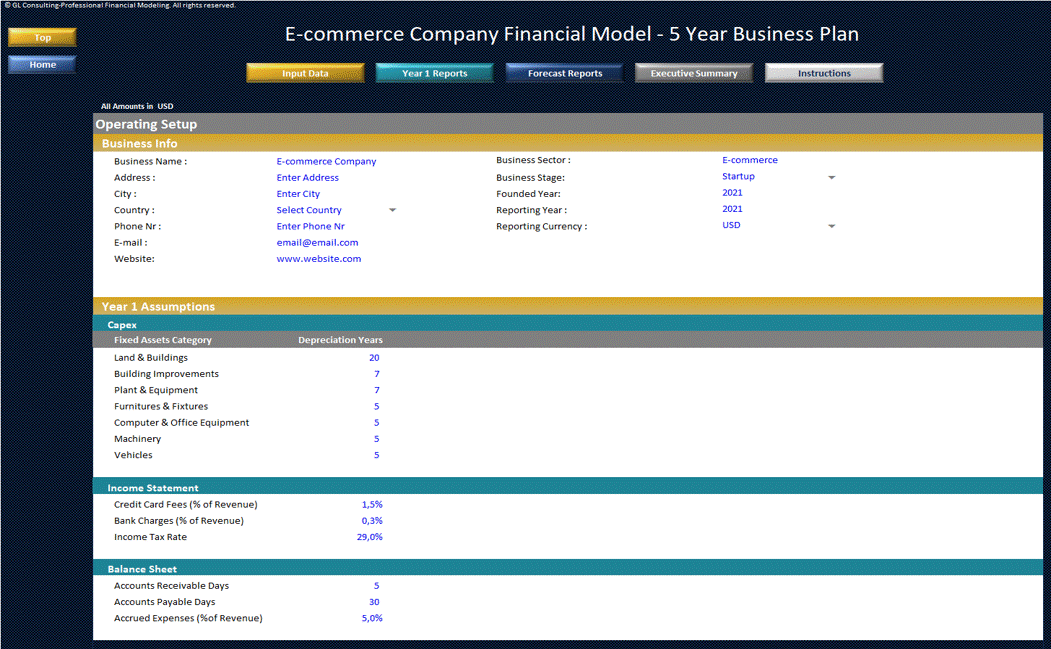
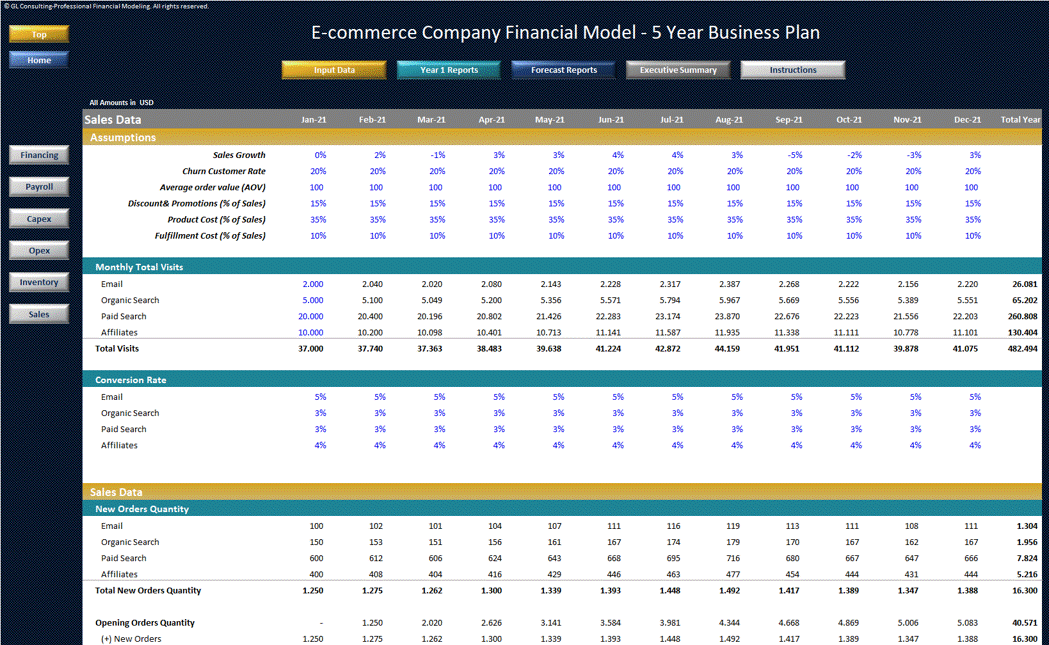
This Financial Model presents an advanced 5-year financial plan for a startup E-commerce platform selling physiscal products and is a flexible tool helping business owners assess profitability, calculate unit economics, and guide decisions on pricing, growth strategy, and scalability. It includes assumptions for Customer Acquisition (Paid and Organic), Buyers Conversion rates, Products (up t0 10 different Product Categories), Orders (avergae units per order) and Retail Prices, COGS Assumptions, Inventory Control including Initial and Additional Inventory Purchases, Payroll, Operating Expenses, Fixed Assets & Depreciation, Financing through Debt & Equity, and Exit Valuation assumptions in case of a potential sale of the business.
The template structure follows principles of financial modeling best practices and is fully customizable.
Detailed instructions for the model's functionality are included in the Excel file.
Model Inputs and Setup Reports:
• General Setup Assumptions, incl. Starting Expenses, Product Categories, Units per Order, Retail Prices, COGS, Customer Assumptions (Visitors and Buyers), and Financing (Debt & Equity)
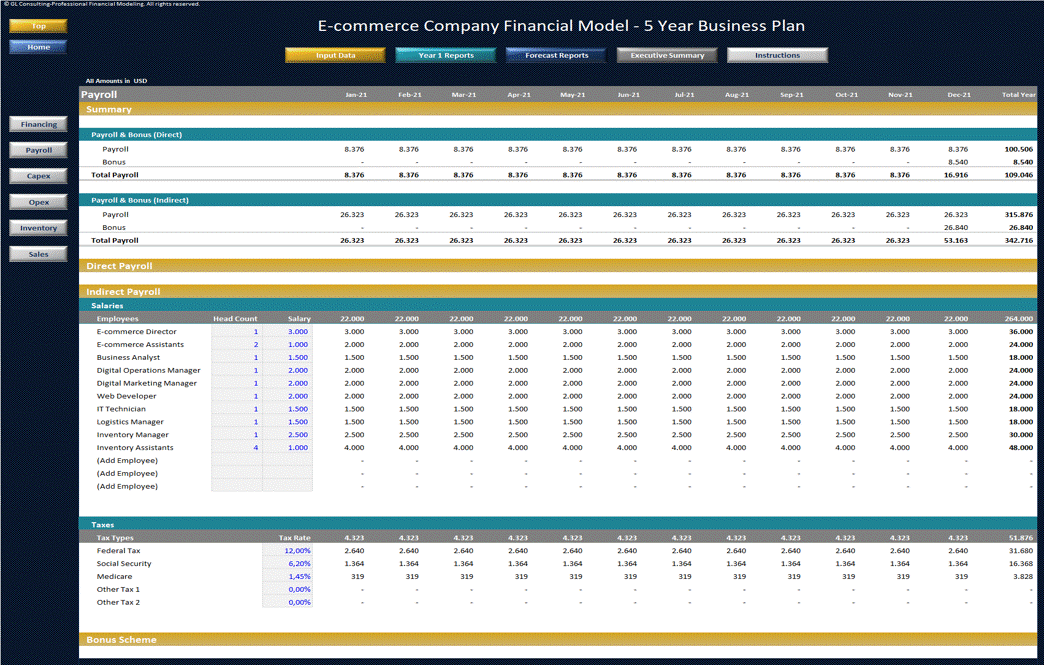
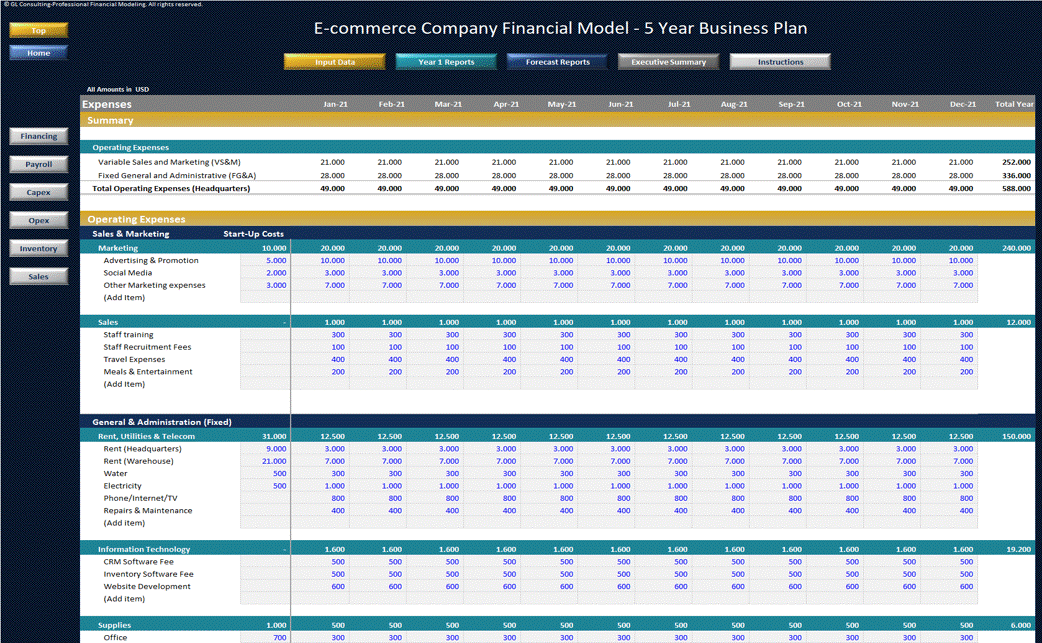
• Payroll, OpEx, Inventory Control, and Annual Capex, incl. Depreciation Schedule
• Monthly Budget Allocation
• Forecast Scenarios
Monthly Output Reports:
• Monthly Budget and Actual Reports
• Budget Summary per Year
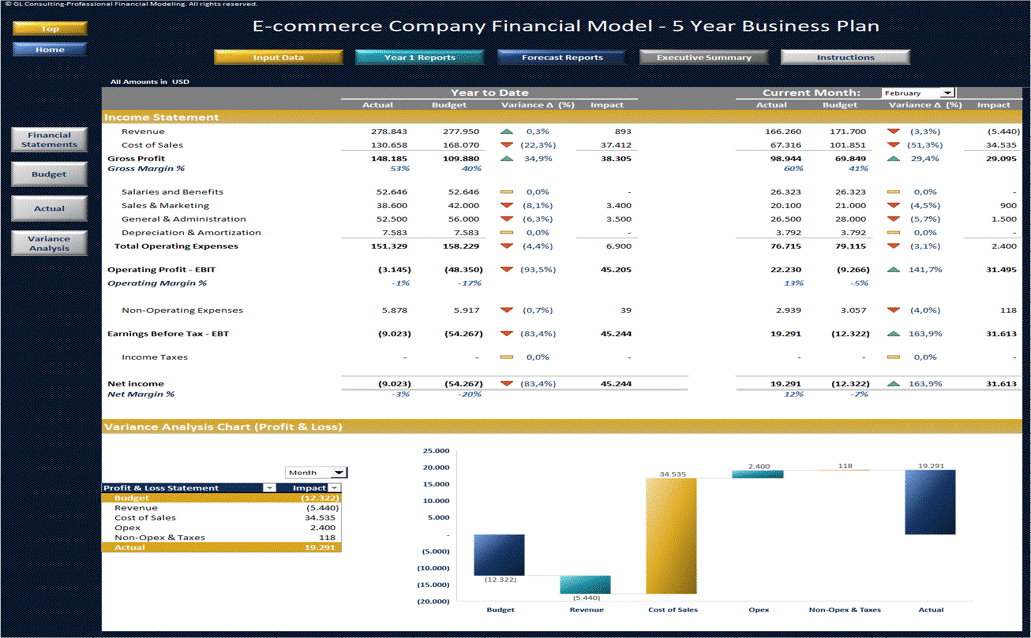
• Budget vs. Actual Variance Analysis at a YTD and Monthly level
5-Year Forecast Output Reports:
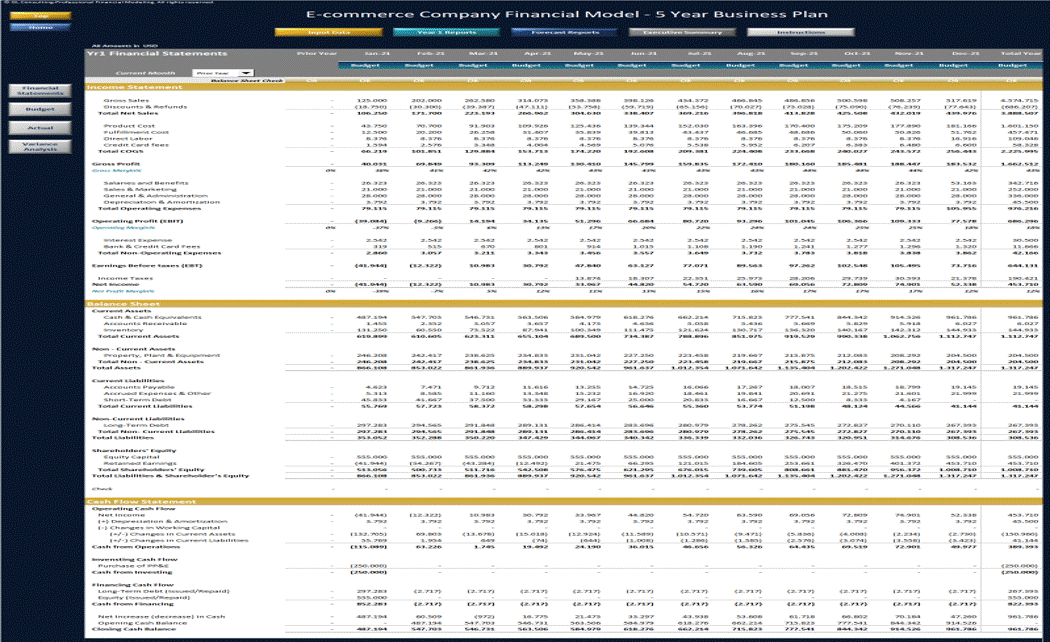
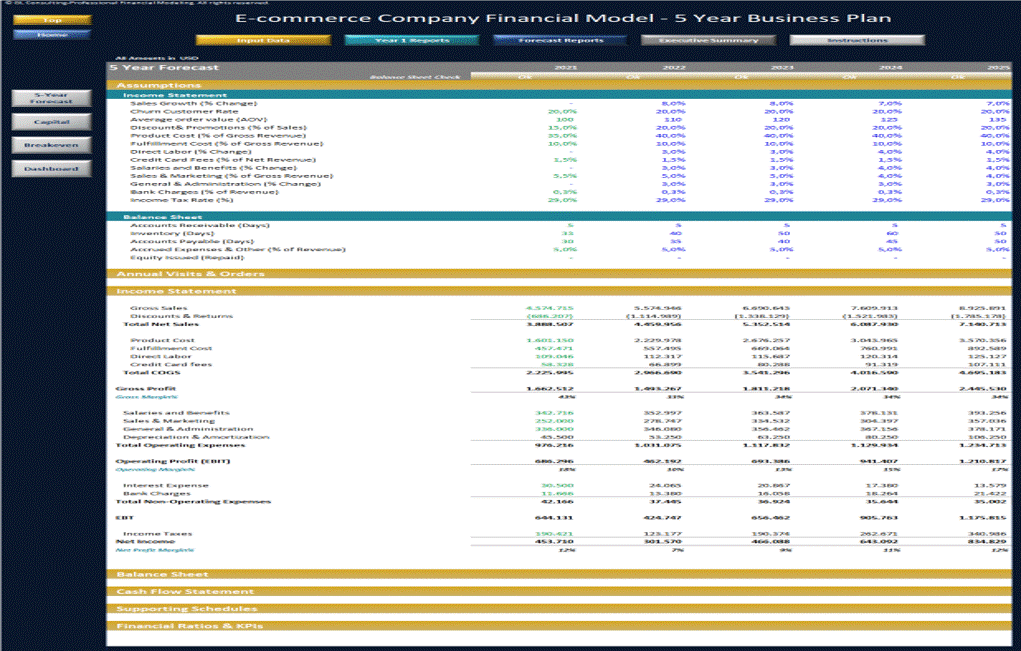
• Annual Financial Statements (3 Statement model)
• Profitability & Break-Even Analysis
• KPIs & Financial Ratios, including several Profitability, Efficiency, Liquidity, and Leverage (Solvency) Ratios
• Dupont Analysis
• Performance Dashboard
• Business Valuation, including DCF Model, Return Metrics (NPV, EV, IRR, MOIC, ROI, etc.), and Sensitivity Analysis
• Investors Returns Waterfall Model
• Professional Executive Summary
Help & Support
Committed to high quality and customer satisfaction, all our templates follow best-practice financial modeling principles and are thoughtfully and carefully designed, keeping the user's needs and comfort in mind.
Whether you have no experience or are well-versed in finance, accounting, and using Microsoft Excel, our professional financial models are the right tools to boost your business operations!
If you experience any difficulty using this template and cannot find the appropriate guidance in the provided instructions, please contact us for assistance.
If you need a template customized for your business requirements, please e-mail us and briefly explain your specific needs.
Got a question about the product? Email us at support@flevy.com or ask the author directly by using the "Ask the Author a Question" form. If you cannot view the preview above this document description, go here to view the large preview instead.
TOPIC FAQ
What core financial statements and monthly reports should an e-commerce startup include in its forecast?
A thorough e-commerce forecast typically includes monthly budget and actual reports, budget summary per year, budget vs actual variance analysis at both monthly and YTD levels, and a 5-year annual 3-statement financial projection, plus KPI dashboards and profitability/break-even analysis; the model ends with a 3-statement model.How can I model unit economics for multiple product categories in an e-commerce template?
Model each product category with its retail price, COGS, average units per order, and category-level order volume, and link those to customers (visitors and buyers) and conversion rates; Flevy's E-Commerce Startup Financial Model - 5 Year Business Plan supports up to 10 product categories.Which valuation methods are commonly used to value an early-stage e-commerce business?
Common valuation approaches for e-commerce startups include discounted cash flow (DCF) and return metrics such as NPV, EV, IRR, MOIC, and ROI, combined with sensitivity analysis to test assumptions; the model explicitly includes a DCF model.What should I prioritize when choosing an off-the-shelf e-commerce financial model template?
Prioritize templates that provide configurable customer acquisition (paid and organic), conversion rates, product-category detail, inventory control, payroll and OpEx inputs, 3-statement outputs, valuation (DCF), and sensitivity tools; Flevy's E-Commerce Startup Financial Model - 5 Year Business Plan contains those elements including a 3-statement model and DCF.How does a purchased template reduce the time and risk of building a forecast from scratch?
A template supplies structured inputs and linked outputs for product pricing, COGS, inventory purchases, payroll, OpEx, monthly budgets, and valuation, plus built-in formulas and instructions so users can adapt assumptions rather than build formulas; this model includes detailed instructions in the Excel file.For an investor pitch, which financial outputs should I prepare first from my e-commerce forecast?
For fundraising, prepare a 5-year forecast with annual financial statements (3-statement model), KPI and ratio analysis, profitability and break-even metrics, and a business valuation with DCF plus an Investors Returns Waterfall Model to show return scenarios.What inputs are essential to model inventory purchases and their cash flow impact for a product-based e-commerce startup?
Essential inputs include initial and additional inventory purchases, COGS assumptions, units per order and sales forecasts, annual CapEx with depreciation schedules, and monthly budget allocation to capture timing and cashflow; include initial and additional inventory purchases.Can a template help me run budget vs actual variance analysis and monthly performance tracking?
Yes, templates designed for e-commerce forecasting should include monthly budget and actual reports and budget vs actual variance analysis at both monthly and YTD levels, plus performance dashboards and KPIs; this model provides budget vs actual variance analysis.Source: Best Practices in E-commerce, Integrated Financial Model Excel: E-Commerce Startup Financial Model - 5 Year Business Plan Excel (XLSX) Spreadsheet, Profit Vision
ABOUT THE AUTHOR

Profit Vision provides Consulting & Outsourced Financial Services as well as Financial Planning & Performance analysis to small and mid-size businesses by implementing efficient and effective tools to assist them with start-up business plans or improve their ongoing operations.
Our range of services include Financial & Operational Analysis, Business Planning, Budgeting & Forecasting, Cash Flow
... [read more]
Ask the Author a Question
You must be logged in to contact the author.




























