
This presentation is created by former McKinsey, BCG, Deloitte, EY, and Capgemini consultants based on the Blockchain thought leadership global consulting firms.
Editor Summary
Digital Transformation: Blockchain Technology is an 87-slide PowerPoint presentation by LearnPPT Consulting, created by former McKinsey, BCG, Deloitte, EY, and Capgemini consultants to explain blockchain concepts, strategic value, implementation challenges, and industry use cases.
Read moreIncludes deliverables such as a blockchain implementation strategy template, smart contract design framework, evaluation criteria checklist, use case assessment template, risk management framework, and communication plan. Target users include corporate executives, integration leaders, consultants, and IT/operations teams. Sold as a digital download on Flevy with immediate digital download.
Use this deck when an organization is planning or assessing blockchain as part of a digital transformation initiative—during strategic planning sessions, feasibility assessments, or educational workshops.
Corporate executives evaluating blockchain’s strategic implications by mapping potential value drivers to business objectives.
Integration leaders developing an implementation plan and tailoring a blockchain implementation strategy template for internal rollout.
Consultants conducting use case prioritization and feasibility analysis using the use case assessment template.
IT and operations teams comparing platforms and technical fit using the evaluation criteria checklist.
The presentation’s phased coverage—from strategy and application evaluation through implementation and governance—reflects the structured, phased methodology used at McKinsey and BCG.
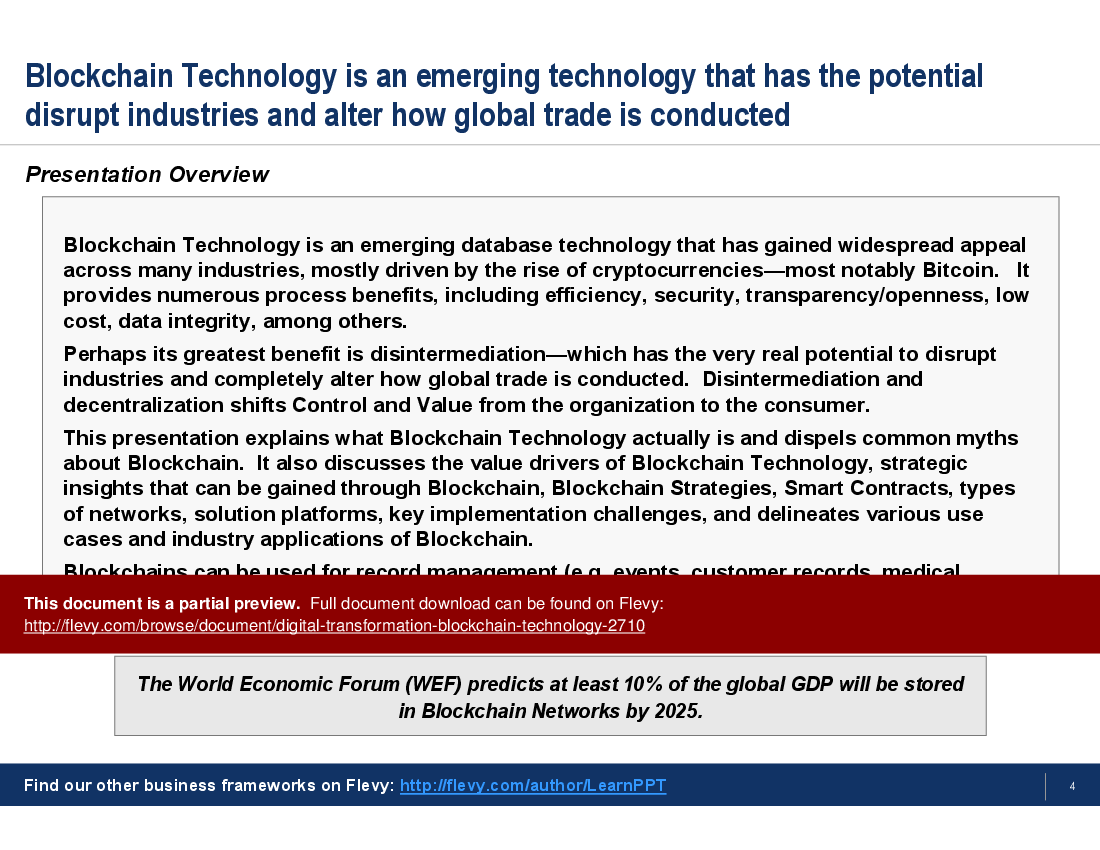
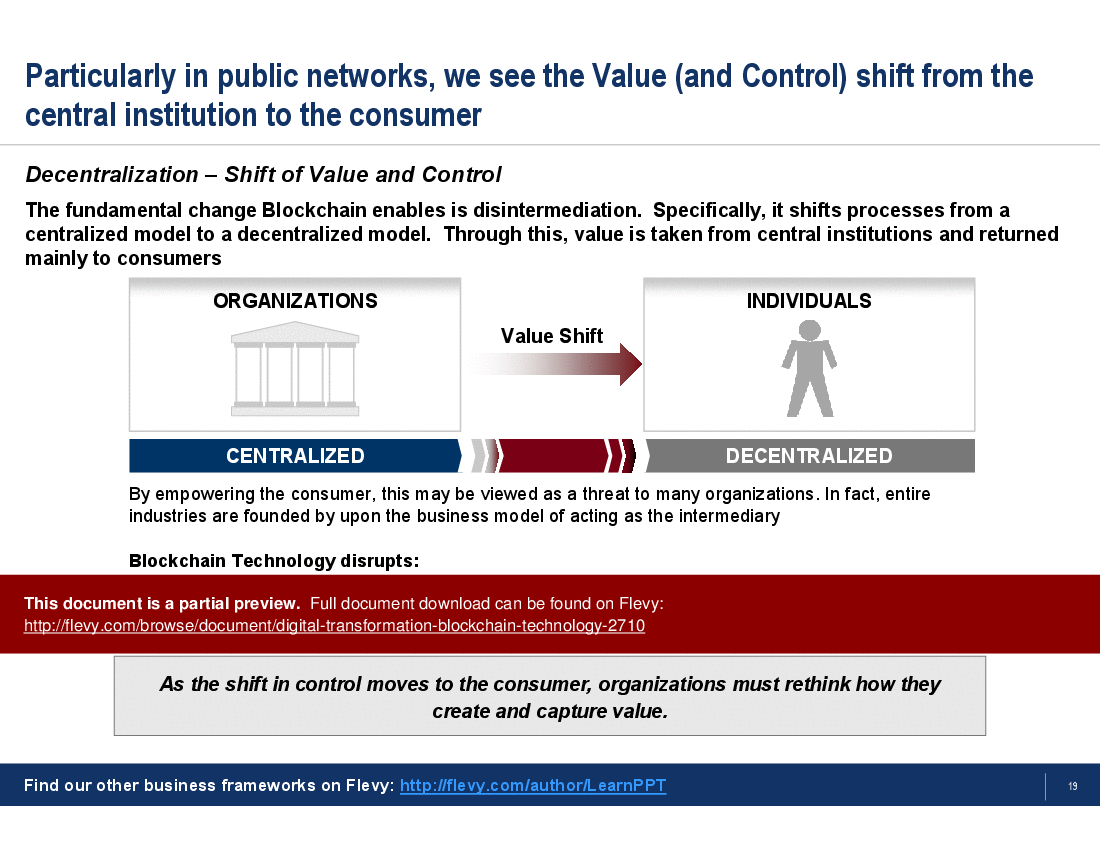
Blockchain Technology is an emerging database technology that has gained widespread appeal across many industries, mostly driven by the rise of cryptocurrencies—most notably Bitcoin. It provides numerous process benefits, including efficiency, security, transparency/openness, low cost, data integrity, among others. Perhaps its greatest benefit is disintermediation—which has the very real potential to disrupt industries and completely alter how global trade is conducted. Disintermediation and decentralization shifts Control and Value from the organization to the consumer.
This presentation explains what Blockchain Technology actually is. Specific topics covered include:

• Blockchain Myths
• Types of Blockchain Networks
• Value Drivers and Shift
• Strategic Value of Blockchain
• Smart Contracts
• Blockchain Strategy
• Implementation Challenges
• Application Evaluation Dimensions
• Use Cases and Industry Applications
• Solution Platforms
Blockchains can be used for record management (e.g. events, customer records, medical records), identity management, transaction processing, and proving provenance. The World Economic Forum (WEF) predicts at least 10% of the global GDP will be stored in Blockchain Networks by 2025.
This document also includes slide templates for to you use in your own business presentations.
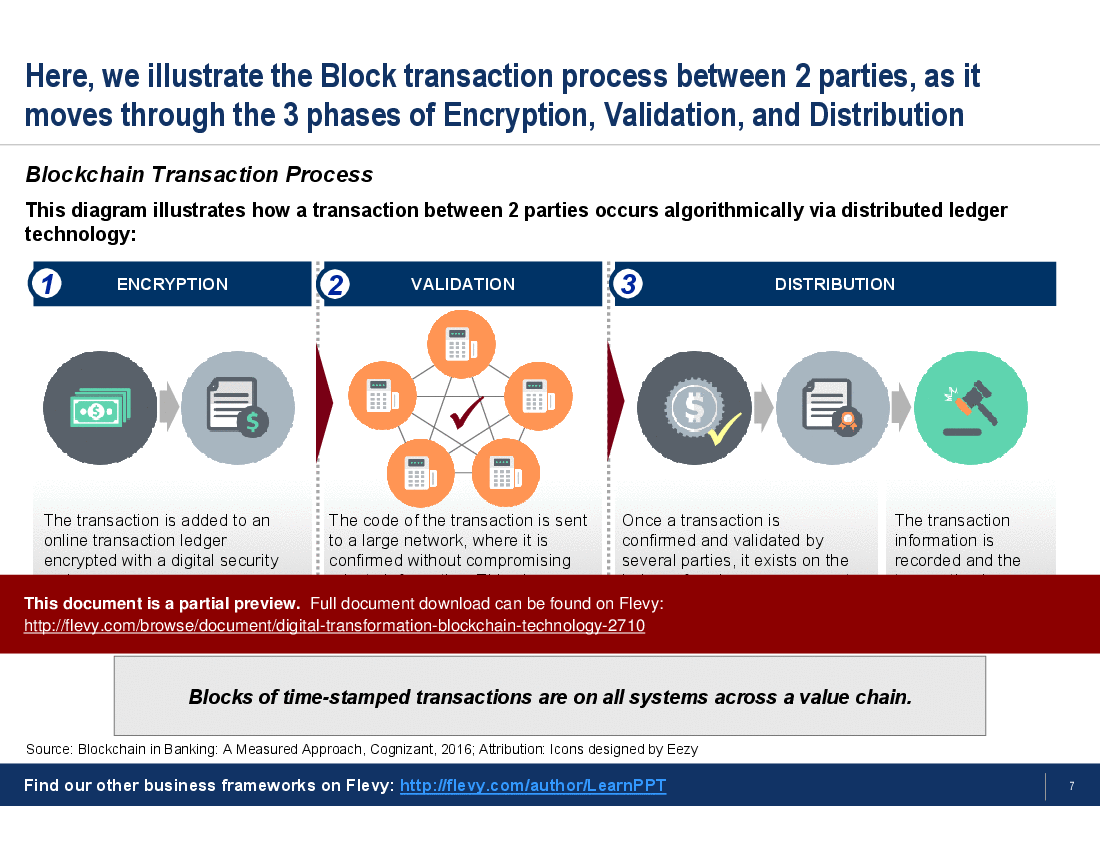
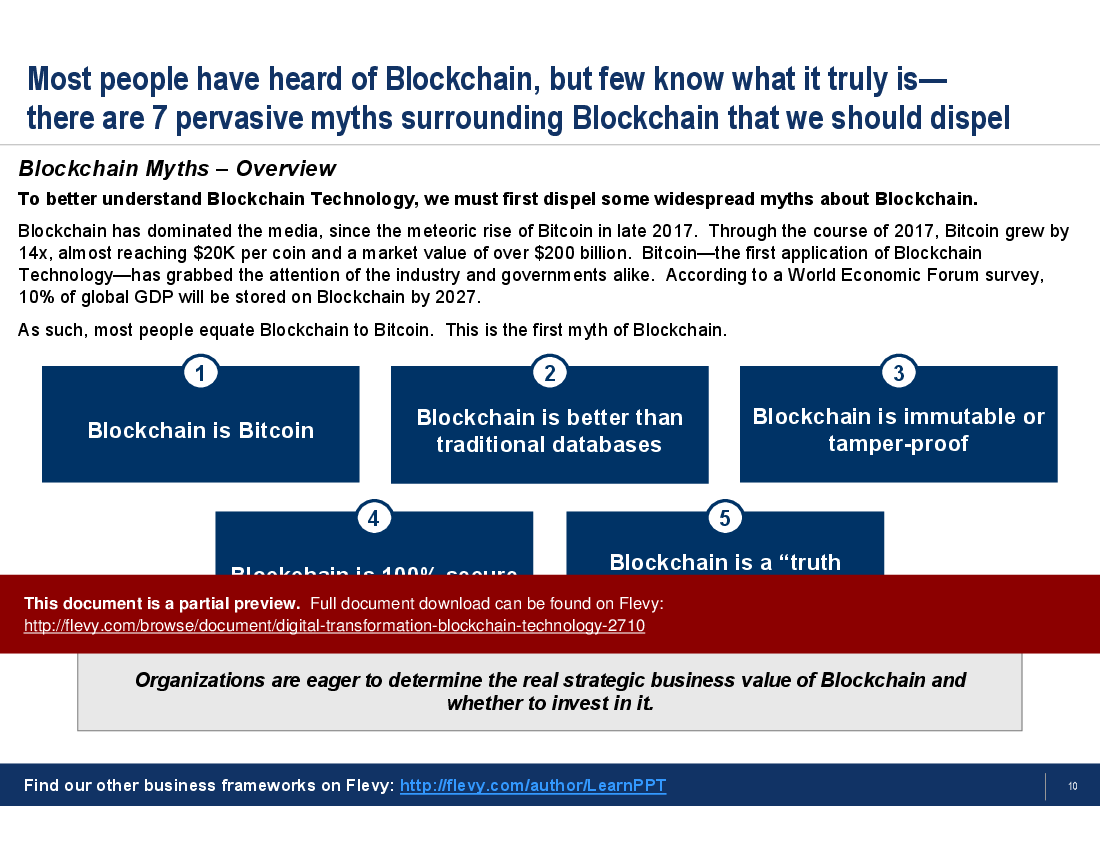
The PPT delves into the intricacies of Blockchain transaction processes, breaking them down into three fundamental phases: Encryption, Validation, and Distribution. This step-by-step breakdown provides a clear understanding of how transactions are securely processed and validated across a distributed ledger. The presentation also tackles common myths about Blockchain, offering a reality check on misconceptions such as the belief that Blockchain is synonymous with Bitcoin or that it is entirely tamper-proof.
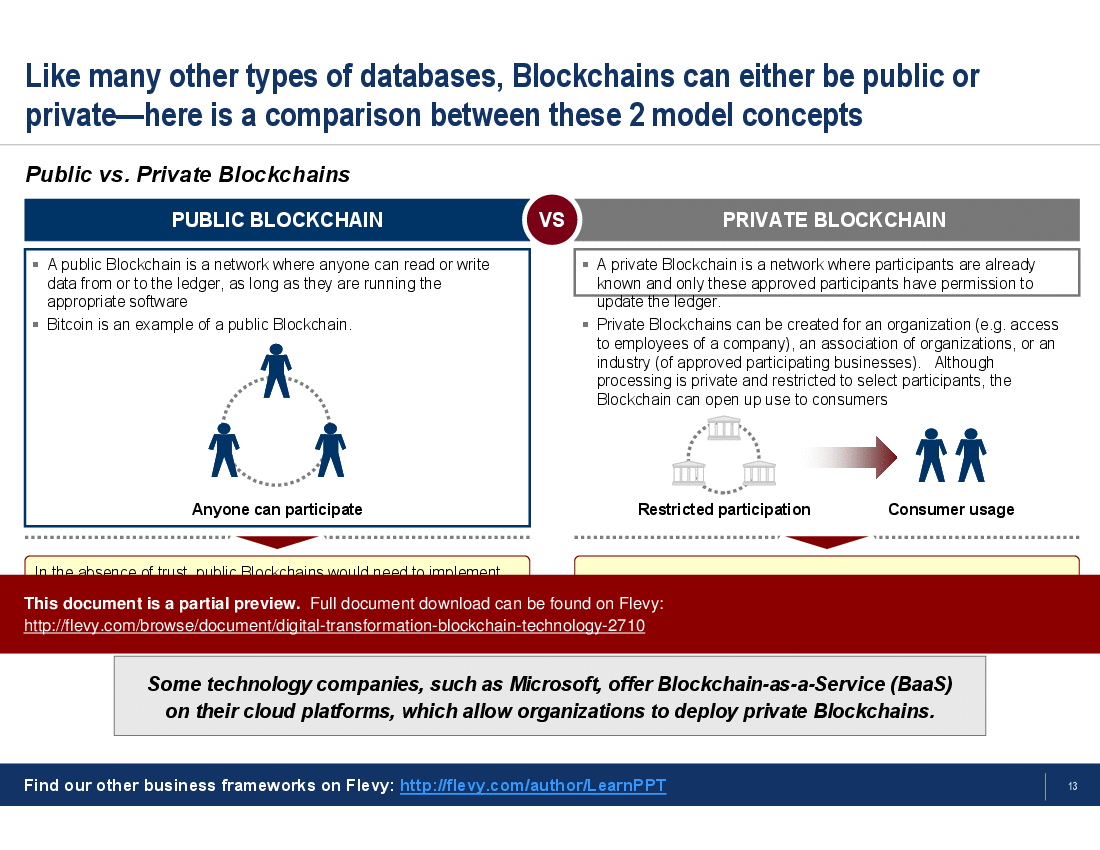
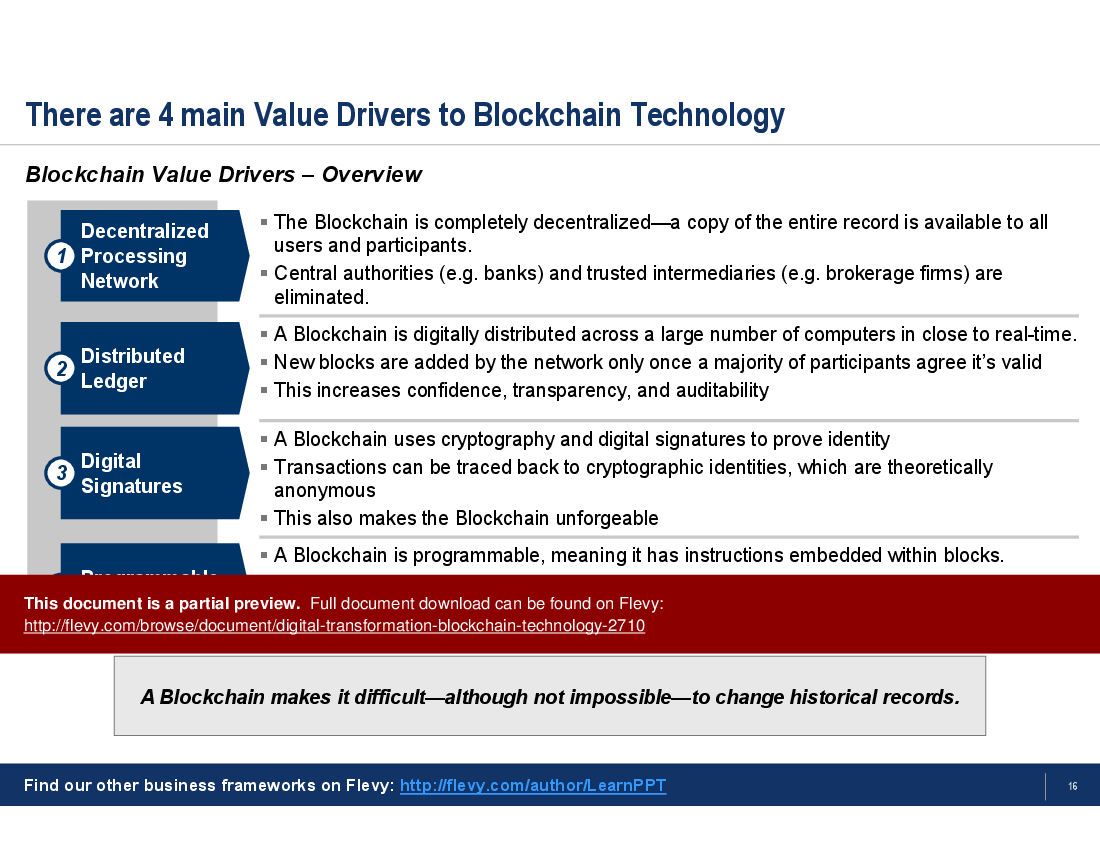
The comparison between public and private Blockchains highlights the flexibility of Blockchain technology in different organizational contexts. Public Blockchains, accessible to anyone, contrast with private Blockchains that restrict participation to known entities, offering a tailored approach for various business needs. The document also identifies four main value drivers of Blockchain, emphasizing its decentralized nature, distributed ledger technology, digital signatures, and programmability. These elements collectively enhance transparency, security, and efficiency in business operations.
Got a question about the product? Email us at support@flevy.com or ask the author directly by using the "Ask the Author a Question" form. If you cannot view the preview above this document description, go here to view the large preview instead.
MARCUS OVERVIEW
This synopsis was written by Marcus [?] based on the analysis of the full 87-slide presentation.
Executive Summary
This presentation on Digital Transformation: Blockchain Technology is crafted by former consultants from McKinsey, BCG, Deloitte, EY, and Capgemini, embodying a McKinsey, Bain, or BCG-quality standard (consulting-grade; not affiliated). It serves as a comprehensive guide for corporate executives and integration leaders to understand the disruptive potential of blockchain technology across various industries. The presentation covers essential concepts, strategic insights, implementation challenges, and practical applications, enabling organizations to harness blockchain for operational efficiency, enhanced security, and improved transparency.
Who This Is For and When to Use
• Corporate executives seeking to understand blockchain's strategic implications for their business.
• Integration leaders responsible for implementing digital transformation initiatives.
• Consultants advising clients on blockchain technology adoption and strategy.
• IT and operations teams evaluating blockchain solutions for process improvement.
Best-fit moments to use this deck:
• During strategic planning sessions focused on digital transformation initiatives.
• When assessing the feasibility of blockchain applications within specific business units.
• For workshops aimed at educating teams on blockchain technology and its potential impact.
Learning Objectives
• Define blockchain technology and its core components.
• Identify common myths and misconceptions surrounding blockchain.
• Evaluate the strategic value and potential applications of blockchain across industries.
• Develop a blockchain strategy tailored to organizational needs and market conditions.
• Analyze implementation challenges and identify solutions for successful adoption.
• Assess various blockchain networks and their suitability for specific use cases.
Table of Contents
• Overview (page 3)
• Blockchain Myths (page 9)
• Types of Blockchain Networks (page 12)
• Value Drivers and Shift (page 15)
• Strategic Value of Blockchain (page 21)
• Smart Contracts (page 28)
• Blockchain Strategy (page 33)
• Implementation Challenges (page 37)
• Application Evaluation Dimensions (page 45)
• Use Cases and Industry Applications (page 50)
• Solution Platforms (page 63)
• Templates (page 72)
Primary Topics Covered
• Blockchain Overview - An introduction to blockchain technology, its definition, and key characteristics, emphasizing its potential to disrupt traditional business models.
• Blockchain Myths - A critical examination of common misconceptions about blockchain, clarifying its capabilities and limitations.
• Types of Blockchain Networks - An exploration of public, private, and consortium blockchains, detailing their unique features and use cases.
• Value Drivers - Identification of the main value drivers of blockchain technology, including decentralization, security, and programmability.
• Strategic Value - Insights into how blockchain can create strategic advantages for organizations, focusing on cost reduction and operational efficiencies.
• Smart Contracts - An overview of smart contracts, their functionality, and their implications for automating business processes.
Deliverables, Templates, and Tools
• Blockchain implementation strategy template to guide organizations in adopting blockchain technology.
• Smart contract design framework for developing automated agreements using blockchain.
• Evaluation criteria checklist for assessing potential blockchain applications.
• Use case assessment template to identify and prioritize blockchain opportunities.
• Risk management framework for addressing challenges associated with blockchain implementation.
• Communication plan template for educating stakeholders about blockchain initiatives.
Slide Highlights
• Overview of blockchain technology and its potential to disrupt industries.
• Key myths surrounding blockchain technology debunked with factual insights.
• Comparison of public, private, and consortium blockchain networks.
• Value drivers that highlight the benefits of adopting blockchain solutions.
• Strategic insights on how organizations can leverage blockchain for competitive advantage.
• Lifecycle of smart contracts and their role in automating business transactions.
Potential Workshop Agenda
Introduction to Blockchain (30 minutes)
• Overview of blockchain technology and its significance.
• Discussion of common myths and misconceptions.
Evaluating Blockchain Opportunities (60 minutes)
• Identifying potential use cases within the organization.
• Assessing the feasibility and value of blockchain applications.
Developing a Blockchain Strategy (90 minutes)
• Framework for creating a tailored blockchain strategy.
• Group exercises to outline implementation plans and address challenges.
Customization Guidance
• Tailor the blockchain strategy template to align with specific organizational goals and market conditions.
• Modify use case assessment criteria based on industry-specific needs and regulatory requirements.
• Adjust communication plans to fit the organizational culture and stakeholder preferences.
Secondary Topics Covered
• Implementation challenges specific to blockchain technology adoption.
• Evaluation dimensions for assessing blockchain applications.
• Industry-specific use cases demonstrating blockchain's versatility.
• Overview of leading blockchain solution platforms and their capabilities.
Topic FAQ
What are the core phases of a blockchain transaction process I should understand?
A blockchain transaction is typically described in 3 fundamental phases: Encryption (securing data and creating digital signatures), Validation (consensus and transaction verification), and Distribution (propagating the validated transaction across the ledger). The presentation breaks the process into these 3 phases: Encryption, Validation, and Distribution.
What types of blockchain networks exist and how do they differ for enterprise use?
The main types are public blockchains (open to anyone), private blockchains (restricted to authorized participants), and consortium blockchains (shared among a group of organizations). Each type balances openness, privacy, and governance differently; the deck compares public, private, and consortium blockchains as distinct options.
How do smart contracts function and when should my organization consider them?
Smart contracts are self-executing agreements with terms written in code that automate business transactions without intermediaries. They are appropriate when process rules can be codified and automated; the presentation includes an overview of smart contracts and a lifecycle discussion covering their design and automation role.
What are the typical implementation challenges organizations face with blockchain?
Common challenges include lack of awareness, organizational barriers, regulatory compliance issues, and the need for cultural change around decentralization. The deck explicitly lists these implementation challenges and provides frameworks and templates to address them, such as a risk management framework.
How should I evaluate whether a specific business process is a good fit for blockchain?
Evaluate potential applications based on security, scalability, privacy, usability, and community support; prioritize processes where decentralization or tamper-evidence adds value. The presentation provides an evaluation criteria checklist and a use case assessment template to guide this analysis with those dimensions.
Our team has limited budget and time—what should we look for when buying a blockchain strategy toolkit?
Look for resources that cover strategy, implementation challenges, technical evaluation, and ready-to-use templates for planning and stakeholder communication. The Flevy product Digital Transformation: Blockchain Technology includes slide templates, an implementation strategy template, and a communication plan template to accelerate work.
What outputs should a one-day blockchain workshop produce for executive stakeholders?
A practical workshop should produce an agreed list of candidate use cases, preliminary feasibility assessments, a draft blockchain strategy or roadmap, identified risks, and stakeholder communication points. The presentation’s suggested workshop agenda maps to outputs like a use case list, feasibility assessment, and a draft implementation plan using the provided templates.
How can I compare blockchain solution platforms to pick the right one for my use case?
Compare platforms by capabilities, governance model, scalability, privacy features, and suitability for targeted use cases. The deck includes a section on solution platforms and provides evaluation dimensions to compare platform capabilities against organizational requirements.
Document FAQ
These are questions addressed within this presentation.
What is blockchain technology?
Blockchain technology is a decentralized digital ledger that records transactions across multiple computers, ensuring data integrity and security without the need for intermediaries.
What are common misconceptions about blockchain?
Common misconceptions include the belief that blockchain is synonymous with Bitcoin, that it is entirely secure, and that it is inherently better than traditional databases.
How can organizations benefit from blockchain?
Organizations can benefit from blockchain through improved operational efficiencies, enhanced security, reduced costs, and increased transparency in transactions.
What are smart contracts?
Smart contracts are self-executing contracts with the terms of the agreement directly written into code, enabling automated and trustless transactions.
What are the main types of blockchain networks?
The main types of blockchain networks are public, private, and consortium blockchains, each serving different purposes and use cases.
What challenges do organizations face when implementing blockchain?
Organizations may face challenges such as lack of awareness, organizational barriers, regulatory compliance issues, and the need for cultural change.
How do I evaluate potential blockchain applications?
Evaluate potential blockchain applications by assessing their security, scalability, privacy, usability, and community support.
What industries are most likely to benefit from blockchain?
Industries such as finance, healthcare, supply chain, and public sector are poised to benefit significantly from blockchain technology.
Glossary
• Blockchain - A decentralized digital ledger that records transactions across multiple computers.
• Smart Contract - A self-executing contract with the terms of the agreement directly written into code.
• Public Blockchain - A blockchain network accessible to anyone, allowing anyone to participate in the network.
• Private Blockchain - A blockchain network restricted to authorized participants, enhancing privacy and control.
• Consensus Mechanism - A protocol used to achieve agreement on a single data value among distributed processes or systems.
• Cryptography - The practice of securing information by transforming it into an unreadable format for unauthorized users.
• Decentralization - The distribution of authority and control away from a central entity, promoting transparency and trust.
• Token - A digital asset created on a blockchain, representing a unit of value or utility.
• Distributed Ledger - A database that is consensually shared and synchronized across multiple sites, institutions, or geographies.
• Mining - The process of validating transactions and adding them to the blockchain, often rewarded with cryptocurrency.
• KYC (Know Your Customer) - A process used by businesses to verify the identity of their clients to prevent fraud.
• Interoperability - The ability of different blockchain networks to communicate and work together seamlessly.
• Use Case - A specific application of blockchain technology that addresses a particular business problem or need.
• Tokenization - The process of converting rights to an asset into a digital token on a blockchain.
• Regulatory Compliance - Adhering to laws and regulations governing the use of blockchain technology and data management.
• Digital Identity - An online representation of an individual or organization, often secured through blockchain technology.
• Data Integrity - The accuracy and consistency of data stored in a blockchain, ensuring it remains unaltered.
• Auditability - The ability to verify and trace transactions on a blockchain for compliance and transparency purposes.
• Decentralized Application (DApp) - An application that runs on a blockchain network, utilizing smart contracts for functionality.
• Consensus Algorithm - A mechanism used to achieve agreement on the validity of transactions in a blockchain network.
• Tokenomics - The study of the economic model behind a cryptocurrency or token, including its supply, demand, and utility.
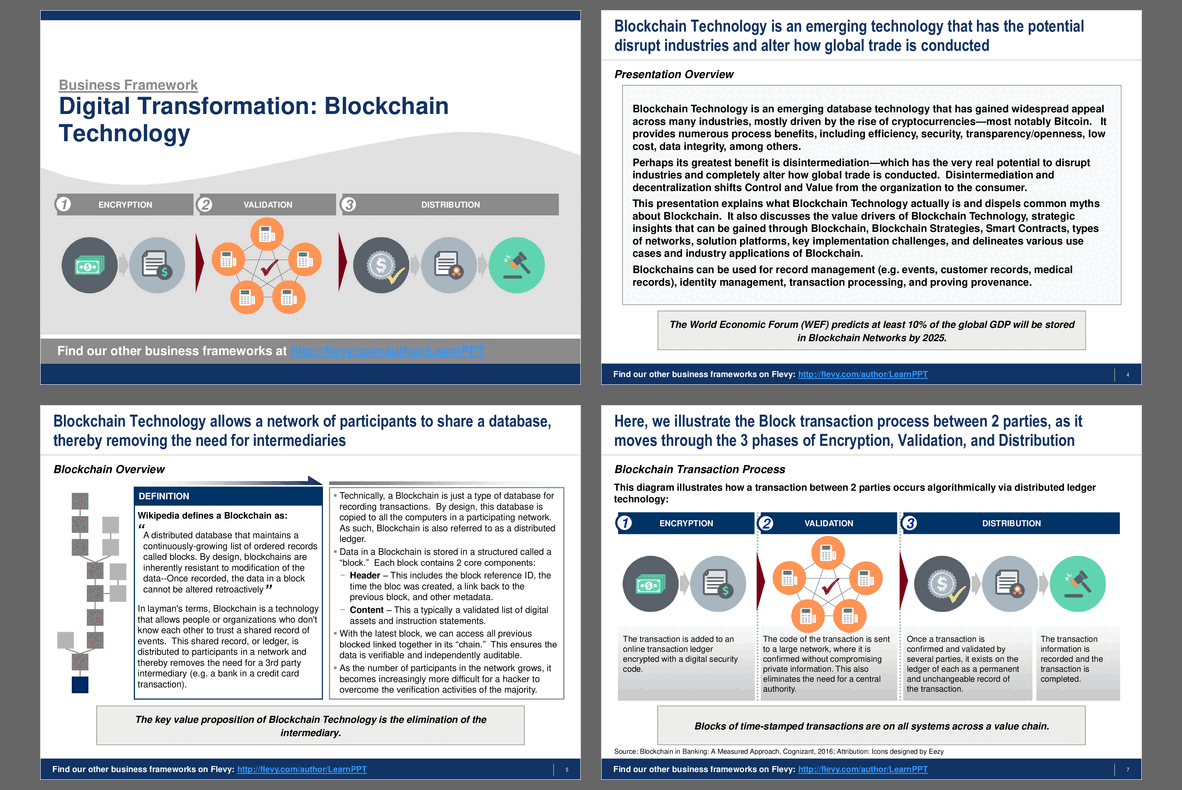
Blockchain technology is defined as a distributed database that maintains a growing list of ordered records known as blocks. This structure is resistant to modifications, ensuring data integrity. Blockchain enables trust among parties without the need for intermediaries like banks, streamlining processes and enhancing transaction efficiency. The blockchain comprises 2 main components: the header, which includes metadata such as block reference ID and timestamps, and the content, typically a validated list of digital assets and instructions. As the network of participants expands, the difficulty for hackers to manipulate data increases, reinforcing security. The value proposition of blockchain lies in eliminating intermediaries, leading to more efficient and secure transactions for organizations considering its adoption.
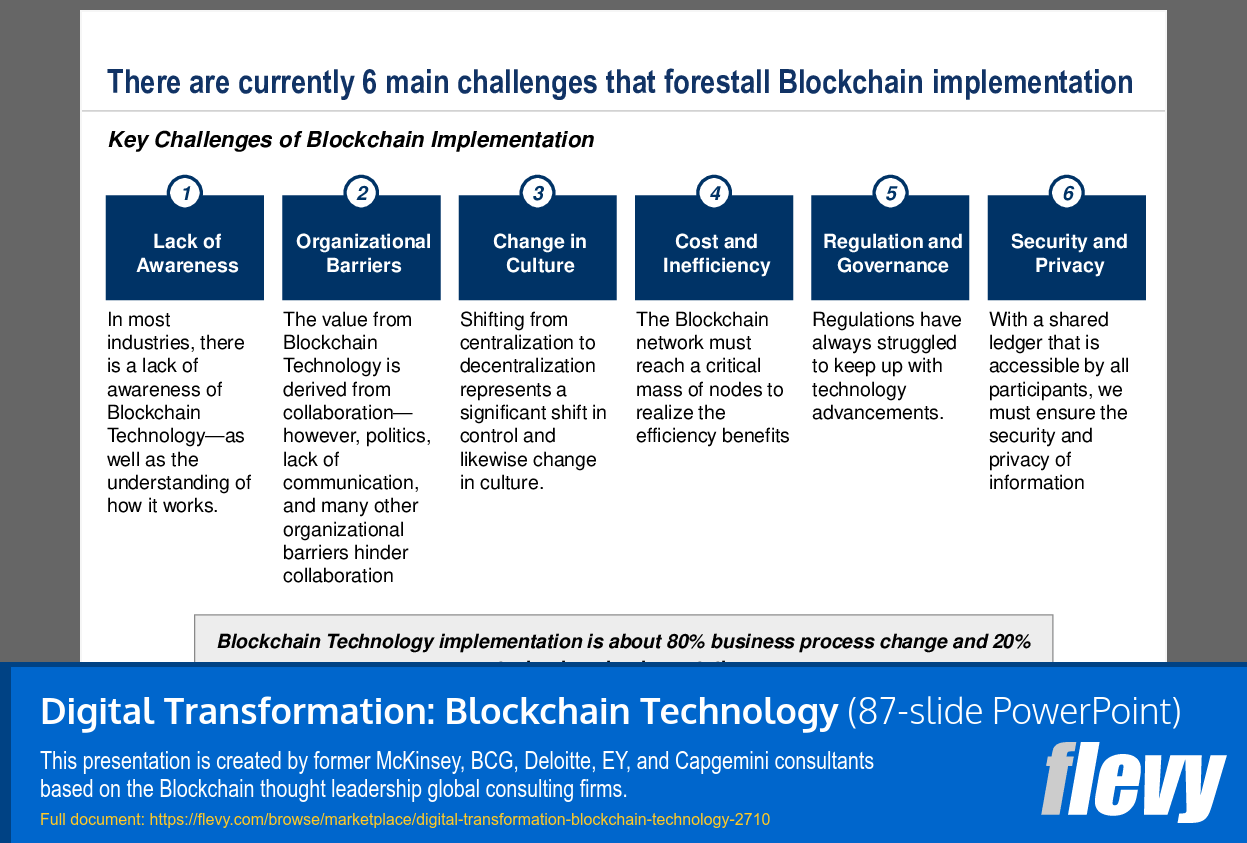
This PPT slide outlines 6 primary challenges to blockchain implementation across industries. The first challenge is "Lack of Awareness," where organizations struggle to understand blockchain's potential and operation, hindering adoption. "Organizational Barriers" arise from the need for collaboration among stakeholders, obstructed by internal politics and poor communication. The third challenge, "Change in Culture," involves transitioning from a centralized to a decentralized approach, requiring significant cultural transformation. "Cost and Inefficiency" highlight that achieving a critical mass of nodes is essential for blockchain efficiency; otherwise, implementation costs may outweigh benefits. "Regulation and Governance" indicate that outdated regulations can create uncertainty, limiting blockchain adoption. Lastly, "Security and Privacy" concerns arise from the shared nature of blockchain, necessitating robust security measures to maintain trust. Implementing blockchain involves approximately 80% business process change and 20% technology change, requiring a reevaluation of operational frameworks.
This PPT slide analyzes public and private blockchains. Public blockchains are open networks allowing anyone to read or write data, exemplified by Bitcoin, emphasizing decentralization and inclusivity. In contrast, private blockchains restrict participation to pre-approved entities, enhancing security and control while still enabling consumer engagement. Public blockchains face trust issues, necessitating dispute resolution mechanisms, with "mining" used in Bitcoin to maintain data integrity. Companies can leverage blockchain technology to integrate with existing systems, enhancing functionality and offering innovative pathways for operational coherence.
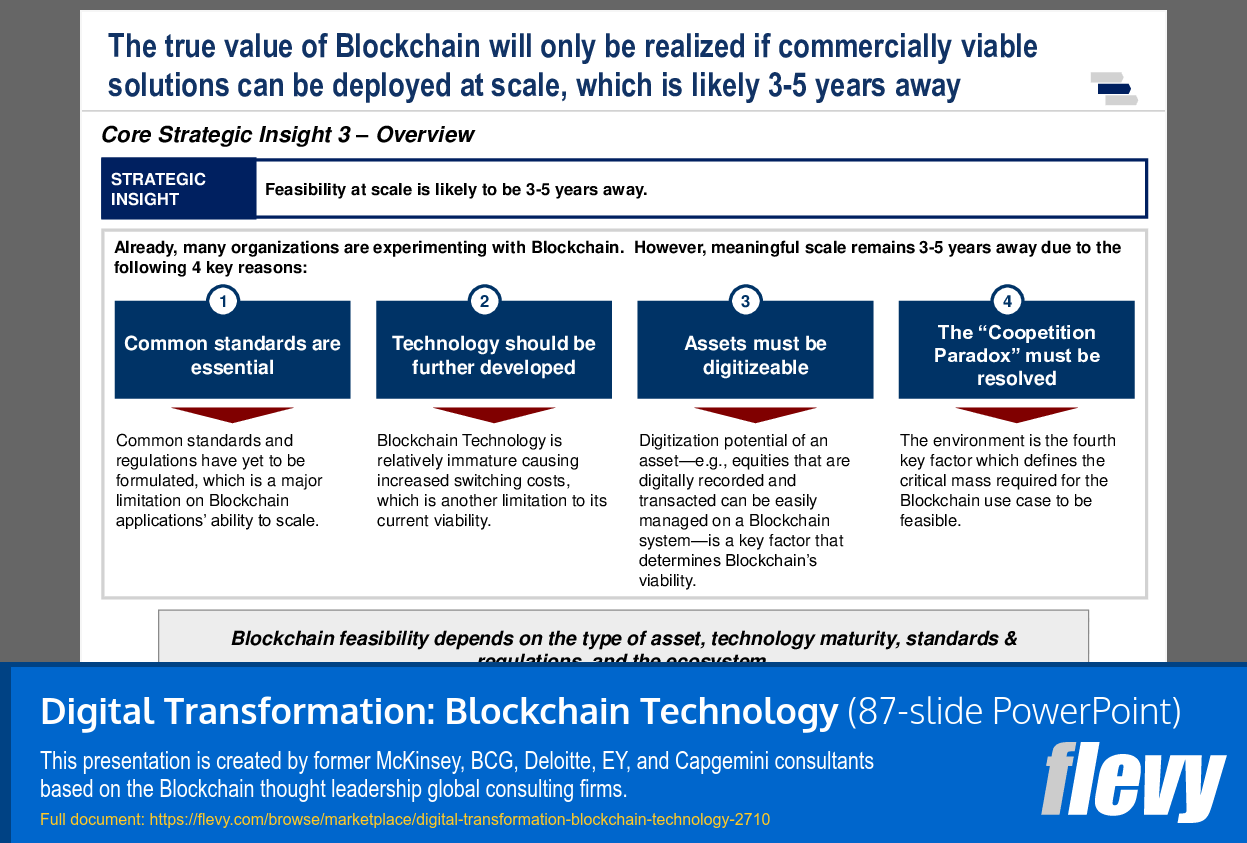
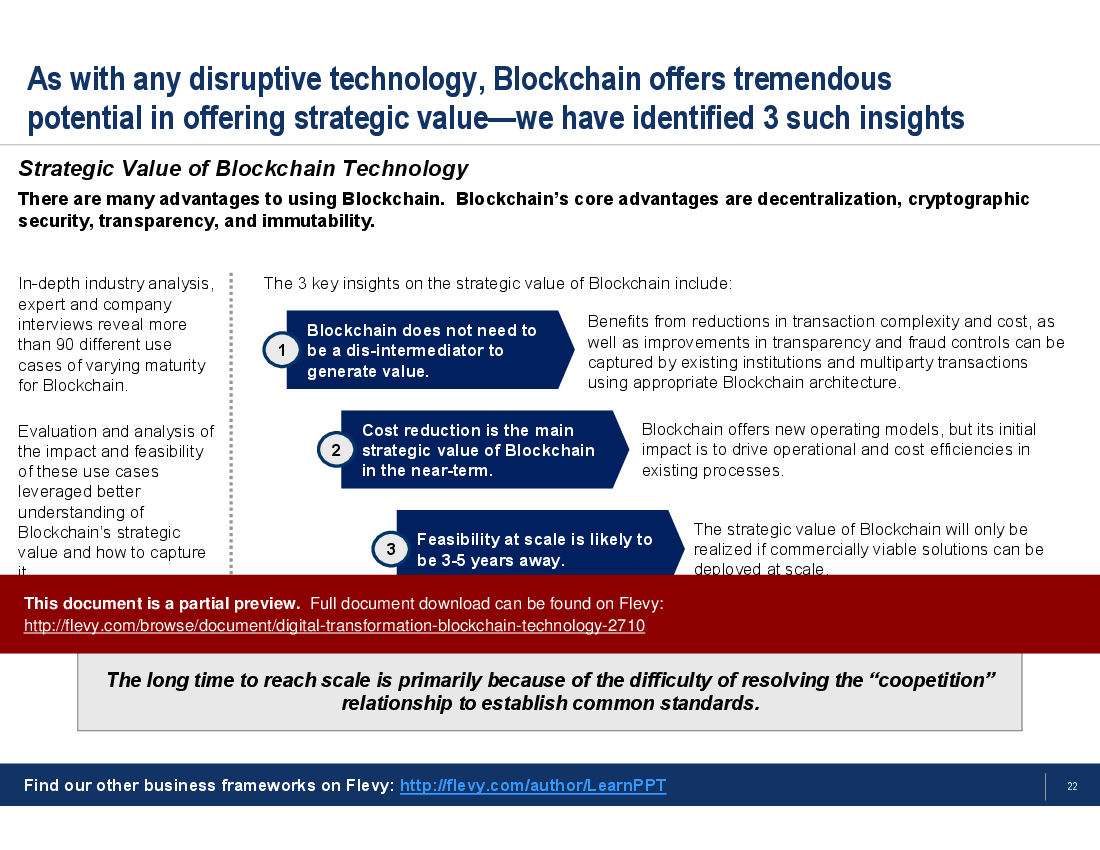
This PPT slide discusses the scalability of blockchain technology, projecting meaningful deployment to be 3-5 years away. Four critical factors must be addressed to unlock blockchain's potential:
1. Common standards are essential; without established regulations, organizations face significant switching costs that hinder adoption.
2. The current immaturity of blockchain technology leads to complexities and costs that limit its practical applications, necessitating further development.
3. Effective blockchain implementation requires the digitization of assets, such as equities, which must be easily recorded and transacted on blockchain systems.
4. The "Coopetition Paradox" highlights the need for collaboration among competitors to create a viable ecosystem for blockchain use cases, defining the critical mass necessary for feasibility.
These hurdles must be overcome for blockchain technology to reach its full potential.
This PPT slide outlines the blockchain transaction process in 3 phases: Encryption, Validation, and Distribution. In the Encryption phase, transactions are added to an online ledger secured by a digital security code, emphasizing data protection and integrity. The Validation phase involves sending the transaction code to a decentralized network for confirmation, eliminating the need for a central authority and enhancing trust among participants. Finally, in the Distribution phase, confirmed transactions are recorded on each participant's ledger, creating a permanent and unchangeable record that ensures transparency and accountability. Understanding this process is essential for grasping the value and functionality of blockchain technology.
This PPT slide presents a comparative analysis of blockchain architecture options, focusing on private, permissioned blockchains for superior scalability. Blockchain architectures are categorized into public and private types, with public blockchains further divided into permissionless and permissioned configurations. Public permissionless blockchains allow unrestricted participation, but have low scalability, while public permissioned blockchains permit only authorized participants, offering medium scalability. Private permissionless blockchains restrict access to authorized users, providing high scalability, and private permissioned blockchains allow only the network operator to write transactions, delivering very high scalability. Organizations must carefully consider these architectural options, as differences in scalability and access can inform strategic blockchain adoption decisions.
This PPT slide outlines 4 primary value drivers of blockchain technology:
1. Decentralized Processing Network eliminates central authorities, enhancing transparency and reducing reliance on intermediaries.
2. Distributed Ledger operates across multiple computers in near real-time, requiring consensus for new blocks, which ensures transaction integrity and auditability.
3. Digital Signatures utilize cryptography for identity verification, ensuring anonymity and immutability, crucial for security-sensitive industries.
4. Programmable Logic enables conditional transactions through embedded instructions, streamlining processes across various applications.
While blockchain complicates altering historical records, it highlights security benefits and challenges in data integrity for organizations considering implementation.
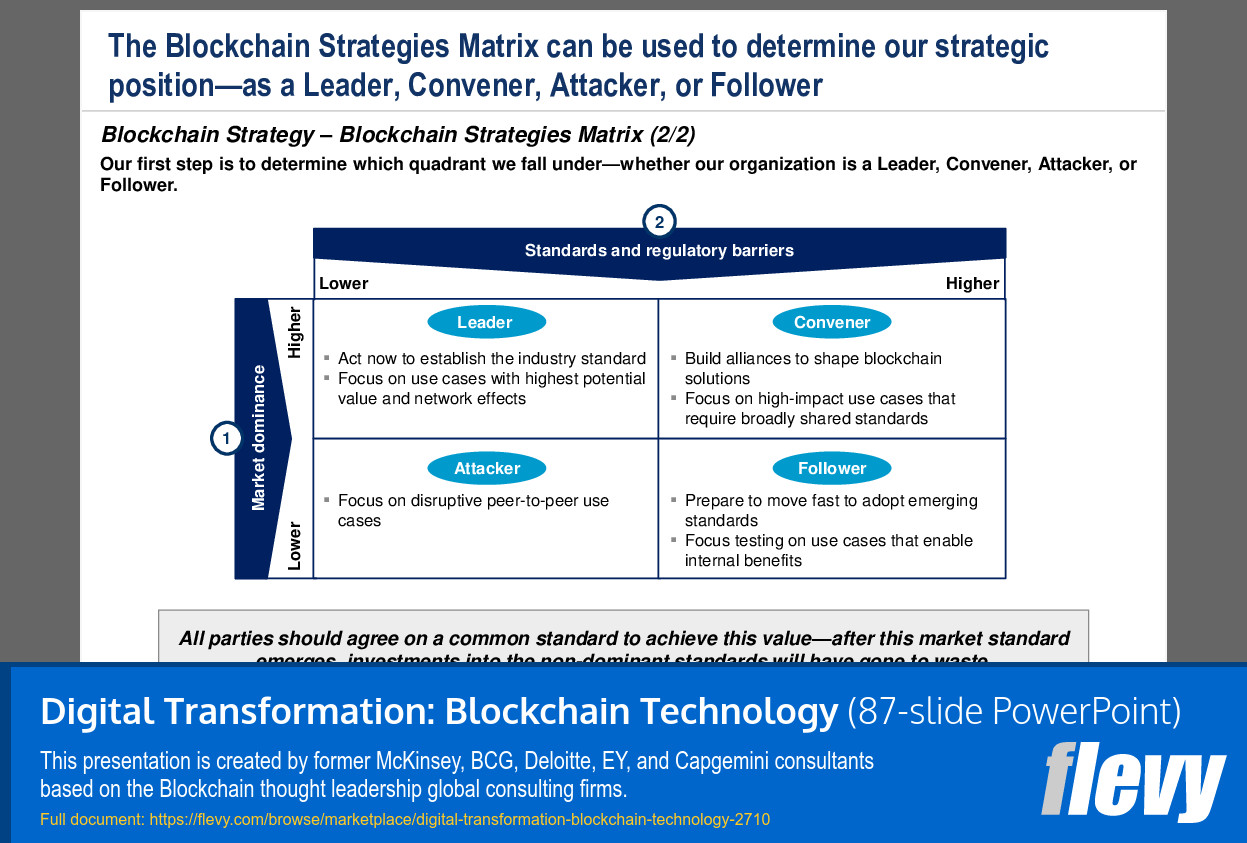
The Blockchain Strategies Matrix categorizes organizations into 4 roles: Leader, Convener, Attacker, and Follower, based on their strategic positioning in the blockchain ecosystem. The Leader quadrant emphasizes proactive engagement to establish industry standards and focus on high-value use cases with network effects. The Convener quadrant advocates for collaboration and forming alliances to influence blockchain solutions, targeting high-impact use cases that require widely accepted standards. The Attacker quadrant promotes a disruptive approach, prioritizing innovative peer-to-peer use cases to challenge existing norms. The Follower quadrant indicates a reactive stance, urging agility in adopting emerging standards and testing use cases that provide internal benefits. This matrix serves as a strategic framework for organizations to assess their positioning and enhance their role in the blockchain ecosystem.
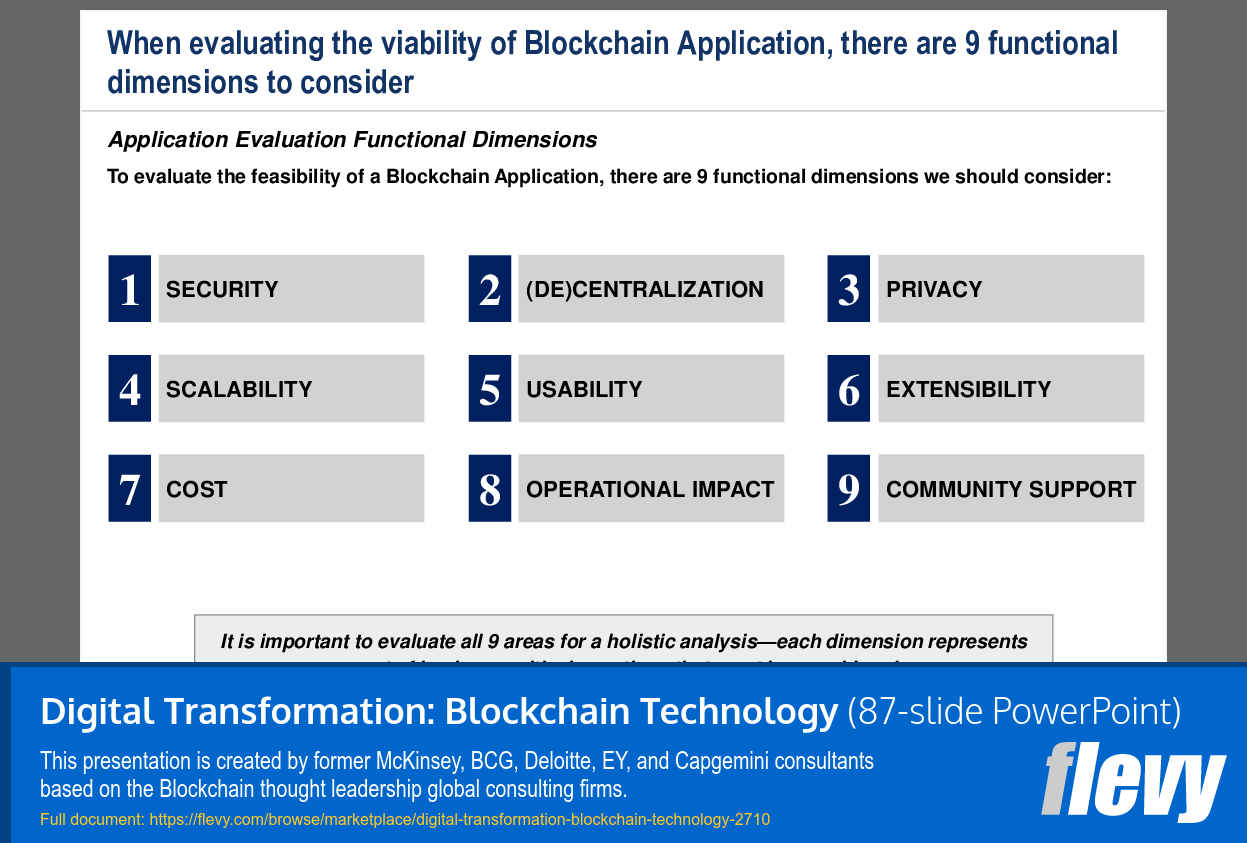
This PPT slide outlines nine critical dimensions for assessing blockchain application viability:
1. Security focuses on safeguarding data from unauthorized access.
2. (De)Centralization examines how control is distributed across the network.
3. Privacy ensures sensitive information remains confidential while accessible to authorized users.
4. Scalability addresses the blockchain's capacity to handle increased loads without performance loss.
5. Usability evaluates user-friendliness, impacting adoption rates.
6. Extensibility refers to the solution's ability to integrate with other systems.
7. Operational Impact assesses effects on existing processes and workflows.
8. Cost considers financial implications of implementation and maintenance.
9. Community Support highlights the importance of a robust ecosystem for innovation and assistance.
All dimensions must be evaluated collectively for a comprehensive analysis, enabling informed blockchain investment decisions.
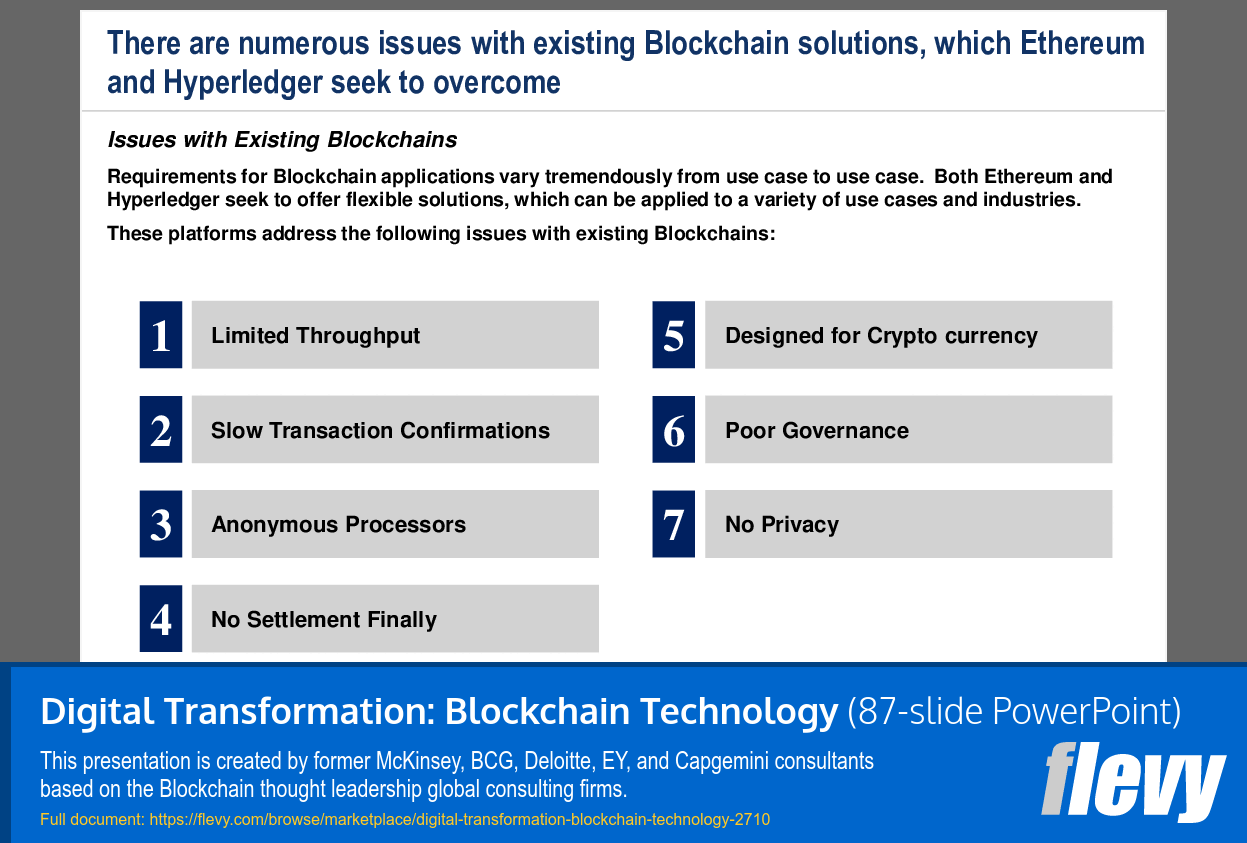
This PPT slide outlines critical issues in blockchain technologies, focusing on challenges addressed by Ethereum and Hyperledger. Key issues include "Limited Throughput," indicating inefficiencies in transaction volume handling; "Slow Transaction Confirmations," which hinder user experience; and "Anonymous Processors," raising transparency concerns in transaction processing. "No Settlement Finality" highlights challenges in achieving transaction finality, leading to potential disputes. Additionally, "Designed for Cryptocurrency" suggests existing blockchains are primarily tailored for digital currencies, while "Poor Governance" points to management difficulties in blockchain networks. Lastly, "No Privacy" indicates inadequate user data protection, a significant concern for organizations. These limitations underscore the need for innovative blockchain solutions.
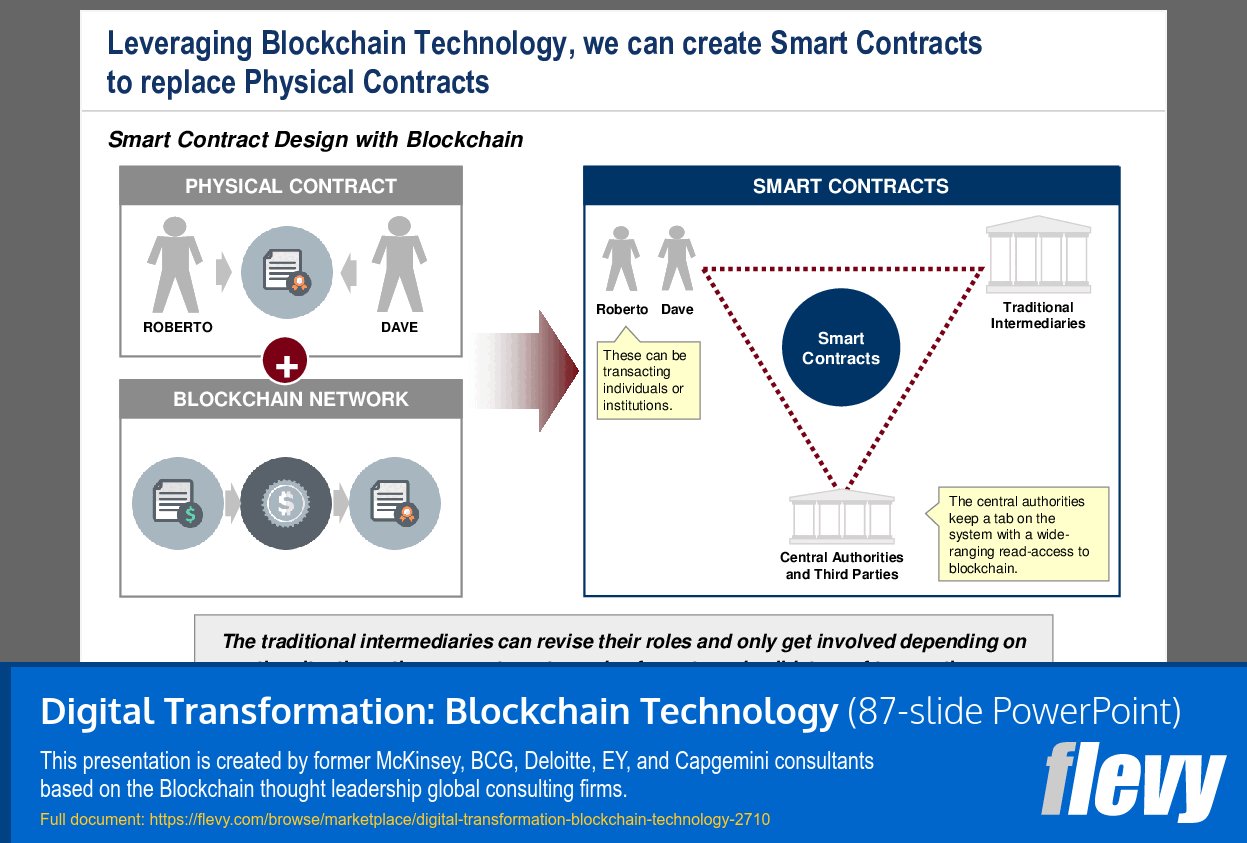
This PPT slide compares traditional physical contracts with smart contracts enabled by blockchain technology. Traditional contracts require intermediaries, leading to inefficiencies and potential disputes. In contrast, smart contracts facilitate direct transactions within a blockchain network, eliminating the need for intermediaries and reducing disputes. While traditional intermediaries may adjust their roles, their involvement is limited, indicating a shift in transaction management. Smart contracts enhance efficiency, transparency, and security in contract management, allowing organizations to reduce transaction costs and improve trust among parties. This transition underscores the advantages of adopting blockchain technology in contract design.
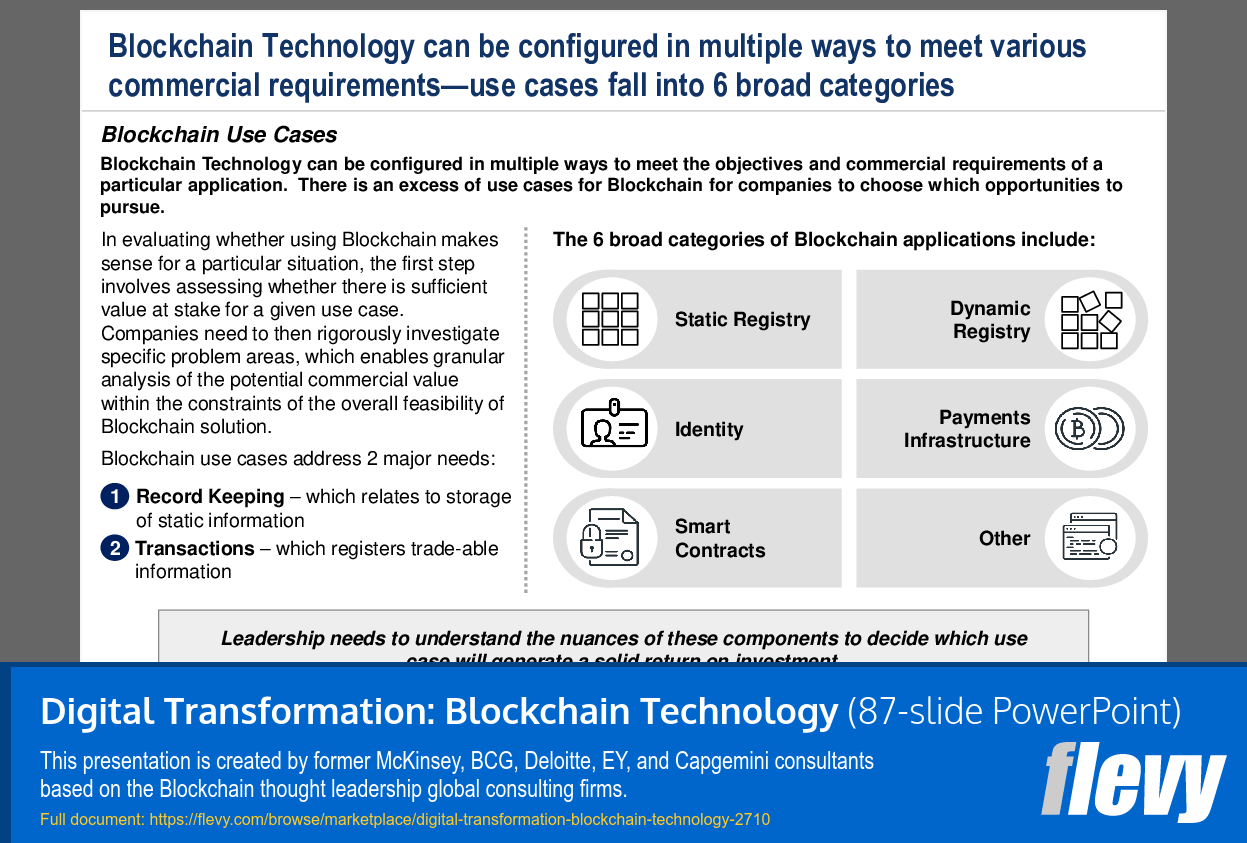
This PPT slide outlines the versatility of blockchain technology across 6 commercial applications: Static Registry, Dynamic Registry, Identity, Payments Infrastructure, Smart Contracts, and Other. Organizations must evaluate the potential value of blockchain for specific situations by investigating relevant problem areas to ensure feasibility and alignment with business objectives. Two primary needs are identified: record keeping, which involves storing static information, and transactions, which pertain to the registration of trade-able information. Leadership must understand the nuances of these categories to make informed decisions about blockchain use cases and assess potential return on investment, guiding strategic evaluation and integration into operations.
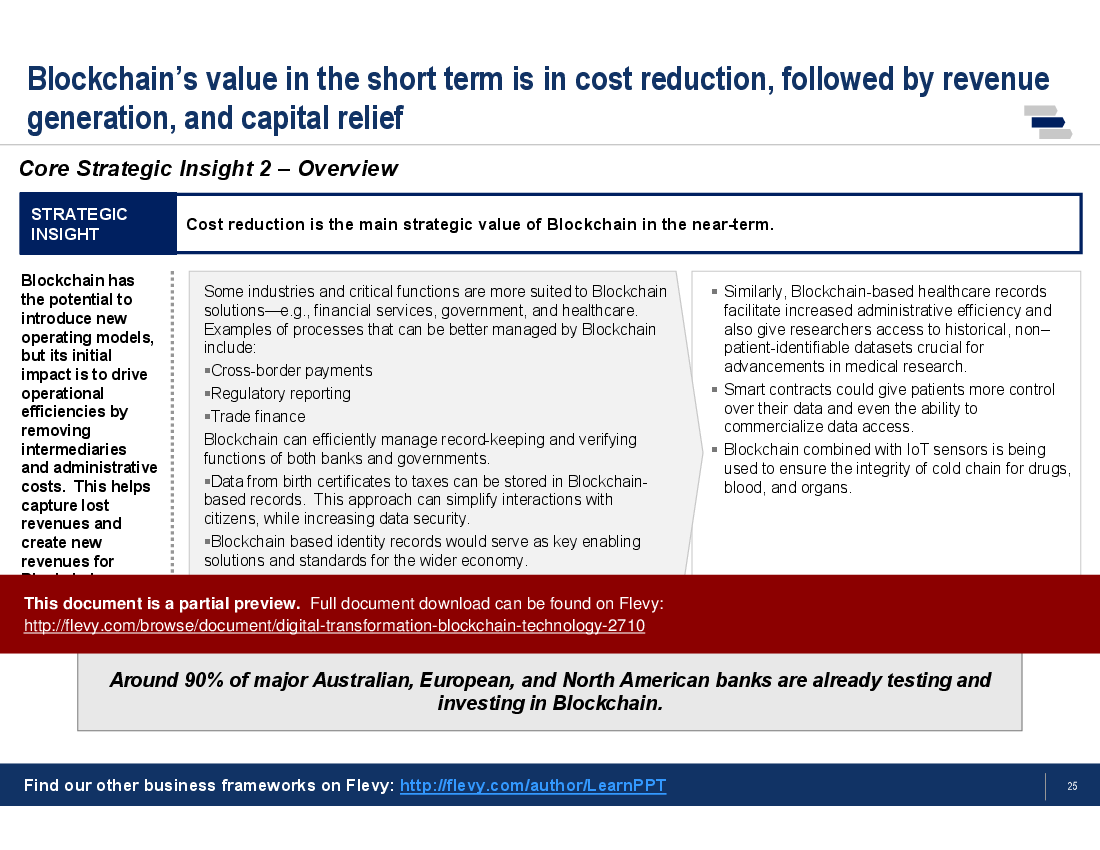
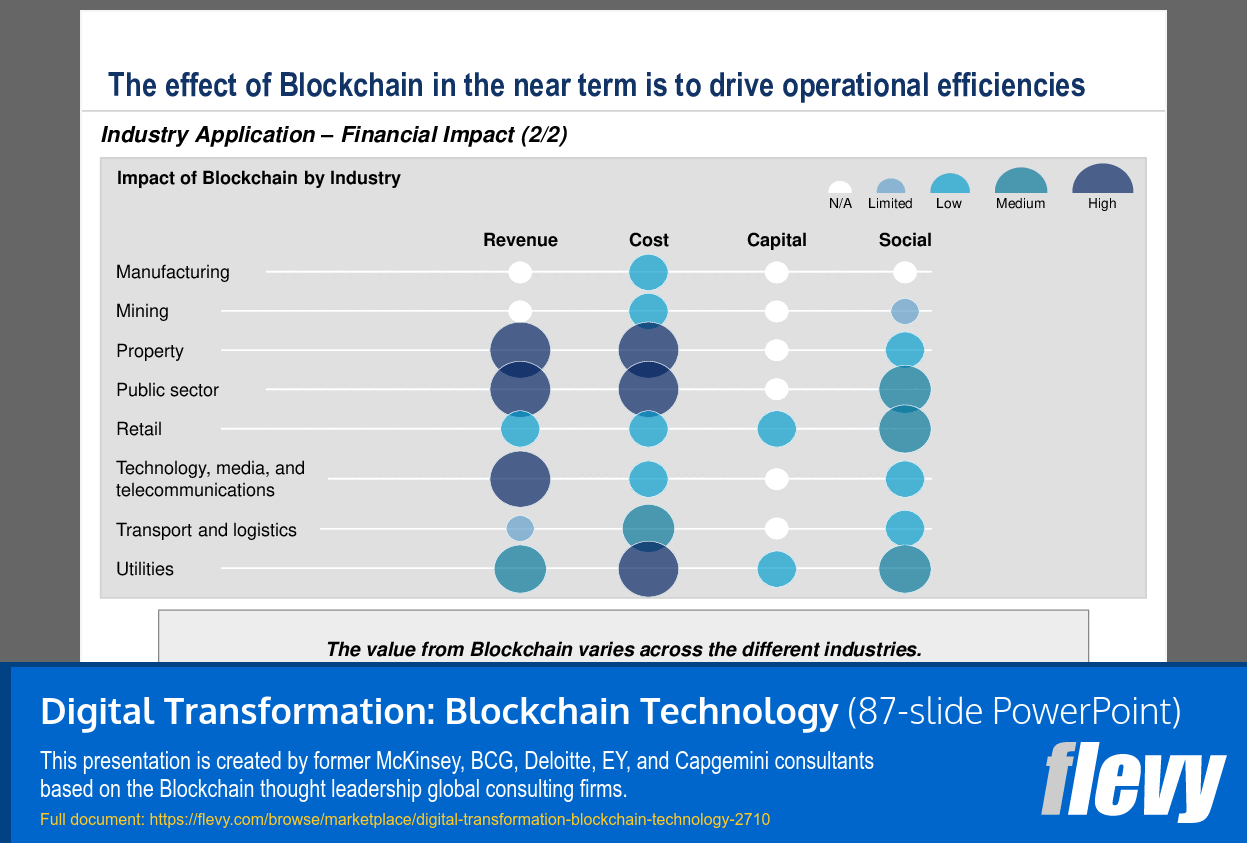
This PPT slide analyzes the financial impact of blockchain technology across industries, categorizing it into 4 dimensions: Revenue, Cost, Capital, and Social. Manufacturing and Mining show significant cost reduction potential, while the Property sector indicates moderate capital impact, suggesting blockchain can enhance transactions and asset management. The Public sector exhibits low to medium impact, possibly due to bureaucratic challenges. Retail demonstrates high social impact through improved customer trust and engagement via transparency. The Technology, Media, and Telecommunications sector shows balanced impact across categories, indicating blockchain's versatility. Transport and logistics highlight high cost savings potential through improved supply chain management. Utilities may benefit from enhanced operational efficiencies despite lower overall impact.
Blockchain technology offers significant cost savings across business functions, particularly in Operations and IT/MIS. In Operations, blockchain enhances data management, streamlines regulatory reporting, and reduces processing cycles, such as collateral tracking, while eliminating redundant infrastructure to lower overhead. The IT/MIS function benefits from improved data management and reduced redundant systems, leading to lower maintenance costs and better data integrity. In Finance, blockchain provides a single source of truth, improving data management and reducing reconciliation processes, crucial for risk management and financial accuracy. Sales and Marketing can utilize blockchain for self-service solutions, enhancing reporting and analytics for data-driven decisions. Additionally, Risk Management sees reduced data handling costs, improving security and compliance while lowering operational expenses.
Source: Best Practices in Digital Transformation, Bitcoin, Blockchain PowerPoint Slides: Digital Transformation: Blockchain Technology PowerPoint (PPT) Presentation Slide Deck, LearnPPT Consulting
This presentation is created by former McKinsey, BCG, Deloitte, EY, and Capgemini consultants based on the Blockchain thought leadership global consulting firms.
We are a team of management consultants trained by top tier global consulting firms (including McKinsey, BCG, Deloitte, EY, Capgemini) with a collective experience of several decades. We specialize in business frameworks based on real-life consulting engagements.
We have served 100s of clients that range from Fortune 500 companies to tech startups to
... [read more] $1B+ private companies.
Utilize our consulting frameworks to apply structured thinking & analysis to address your business challenges, uncover strategic insights, and implement workable solutions. Our PowerPoint presentations follow traditional consulting slide design formats, starting with a clear slide headline. Easily customize and repurpose our slides for your own business presentations.
Beyond business frameworks & methodologies, we also offer PowerPoint templates and other business templates. Our templates are professionally designed and have been used in thousands of deliverables & work products across hundreds of clients.
The average daily rate of a McKinsey consultant is $6,625 (not including expenses). The average price of a Flevy document is $65.
Trusted by over 10,000+ Client Organizations
Since 2012, we have provided business templates to over 10,000 businesses and organizations of all sizes, from startups and small businesses to the Fortune 100, in over 130 countries.
"[Flevy] produces some great work that has been/continues to be of immense help not only to myself, but as I seek to provide professional services to my clients, it gives me a large "tool box" of resources that are critical to provide them with the quality of service and outcomes they are expecting."
– Royston Knowles, Executive with 50+ Years of Board Level Experience
"FlevyPro has been a brilliant resource for me, as an independent growth consultant, to access a vast knowledge bank of presentations to support my work with clients. In terms of RoI, the value I received from the very first presentation I downloaded paid for my subscription many times over! The
quality of the decks available allows me to punch way above my weight – it's like having the resources of a Big 4 consultancy at your fingertips at a microscopic fraction of the overhead.
"
– Roderick Cameron, Founding Partner at SGFE Ltd
"If you are looking for great resources to save time with your business presentations, Flevy is truly a value-added resource. Flevy has done all the work for you and we will continue to utilize Flevy as a source to extract up-to-date information and data for our virtual and onsite presentations!"
– Debbi Saffo, President at The NiKhar Group
"I am extremely grateful for the proactiveness and eagerness to help and I would gladly recommend the Flevy team if you are looking for data and toolkits to help you work through business solutions."
– Trevor Booth, Partner, Fast Forward Consulting
"Last Sunday morning, I was diligently working on an important presentation for a client and found myself in need of additional content and suitable templates for various types of graphics. Flevy.com proved to be a treasure trove for both content and design at a reasonable price, considering the time I
saved. I encountered a download issue during the ordering process. However, a quick email to Flevy's support team, even on a Sunday (!!!), resulted in assistance within less than an hour, allowing me to download the content I needed. Fantastic job, Flevy! I give 5 stars for both content/price and customer service. Thank you!
"
– M. E., Chief Commercial Officer, International Logistics Service Provider
"FlevyPro provides business frameworks from many of the global giants in management consulting that allow you to provide best in class solutions for your clients."
– David Harris, Managing Director at Futures Strategy
"I have used Flevy services for a number of years and have never, ever been disappointed. As a matter of fact, David and his team continue, time after time, to impress me with their willingness to assist and in the real sense of the word. I have concluded in fact
that it is not at all just a repository of documents/resources but, in the way that David and his team manage the firm, it is like dealing with consultants always ready to assist, advise and direct you to what you really need, and they always get it right.
I am an international hospitality accomplished senior executive who has worked and lived during the past 35 years in 23 countries in 5 continents and I can humbly say that I know what customer service is, trust me.
Aside from the great and professional service that Flevy's team provide, their wide variety of material is of utmost great quality, professionally put together and most current.
Well done Flevy, keep up the great work and I look forward to continue working with you in the future and to recommend you to a variety of colleagues around the world.
"
– Roberto Pelliccia, Senior Executive in International Hospitality
"One of the great discoveries that I have made for my business is the Flevy library of training materials.
As a Lean Transformation Expert, I am always making presentations to clients on a variety of topics: Training, Transformation, Total Productive Maintenance, Culture, Coaching, Tools, Leadership Behavior, etc. Flevy
It is well worth the money to purchase these presentations. Sure, I have the knowledge and information to make my point. It is another thing to create a presentation that captures what I want to say. Flevy has saved me countless hours of preparation time that is much better spent with implementation that will actually save money for my clients.
"
– Ed Kemmerling, Senior Lean Transformation Expert at PMG
Download our FREE Digital Transformation Templates
Download our free compilation of 50+ Digital Transformation slides and templates. DX concepts covered include Digital Leadership, Digital Maturity, Digital Value Chain, Customer Experience, Customer Journey, RPA, etc.
Download our FREE Digital Transformation Templates
Get Our FREE Product.
Download our free compilation of 50+ Digital Transformation slides and templates. DX concepts covered include Digital Leadership, Digital Maturity, Digital Value Chain, Customer Experience, Customer Journey, RPA, etc.