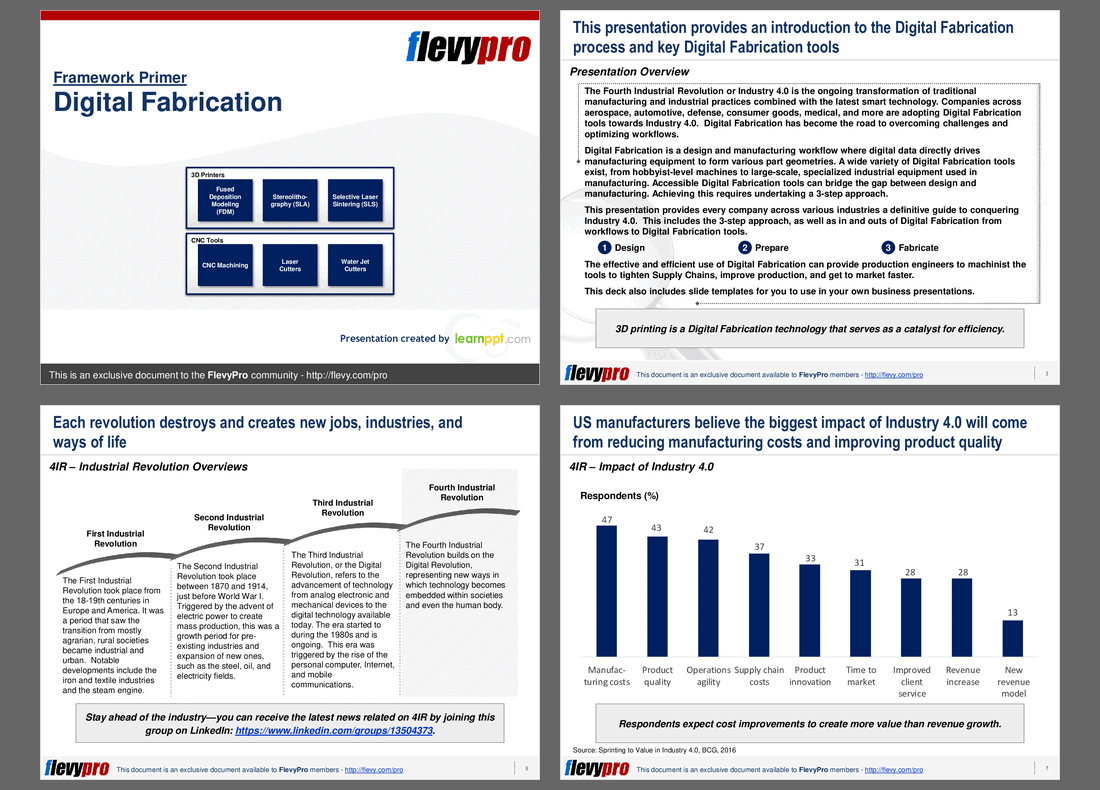
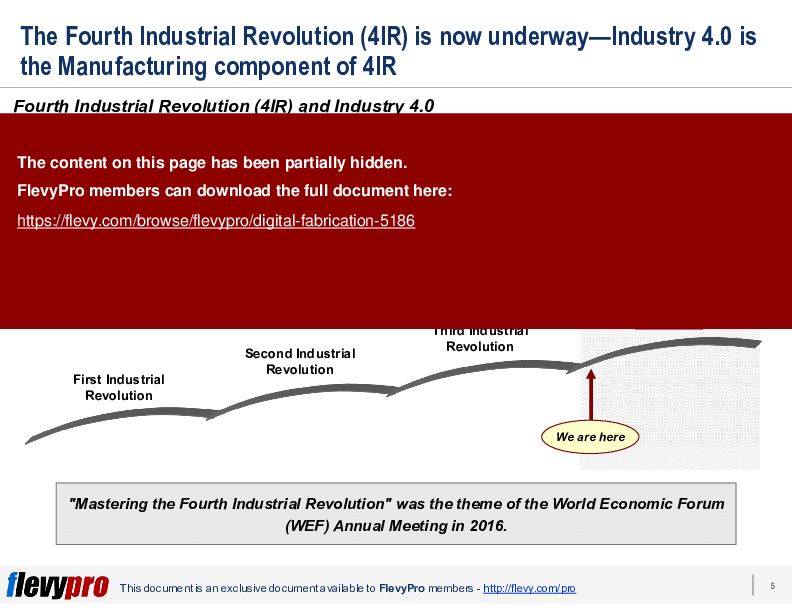
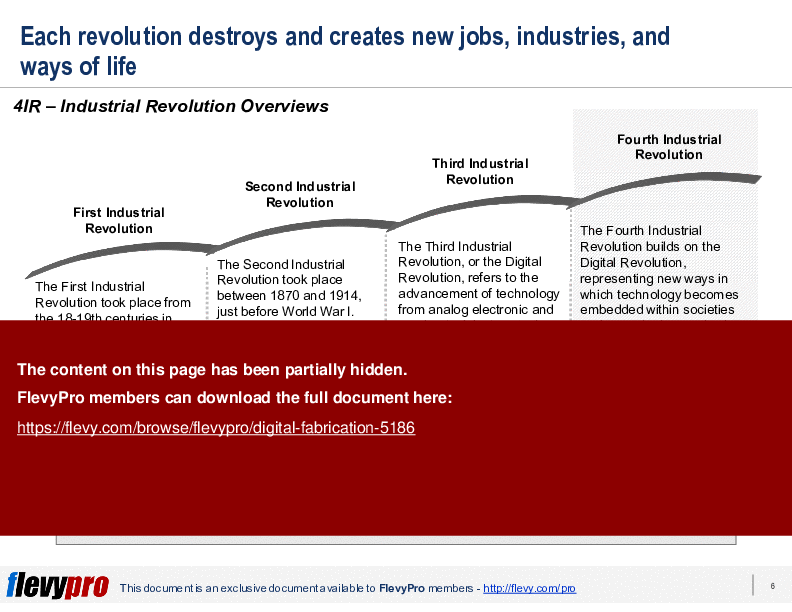

The Fourth Industrial Revolution or Industry 4.0 is the ongoing transformation of traditional manufacturing and industrial practices combined with the latest smart technology. Companies across aerospace, automotive, defense, consumer goods, medical, and more are adopting Digital Fabrication tools towards Industry 4.0. Digital Fabrication has become the road to overcoming challenges and optimizing workflows.
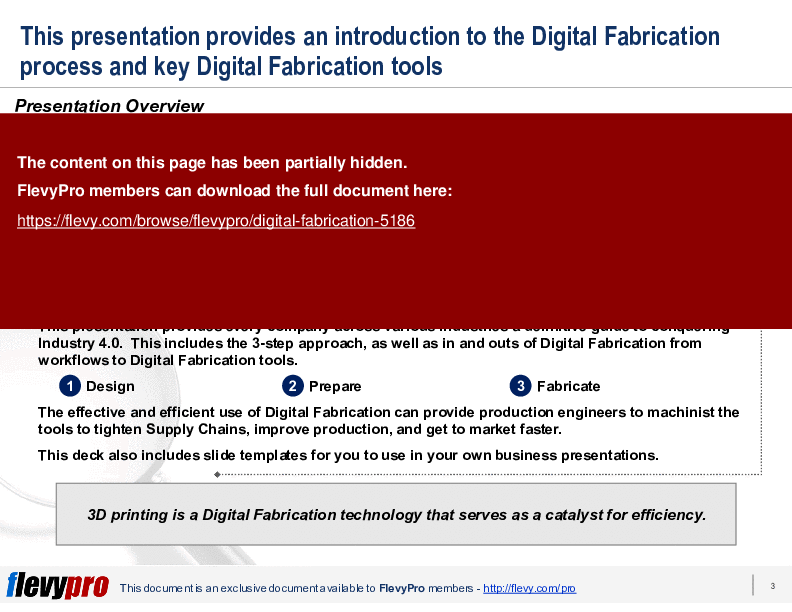
Digital Fabrication is a design and manufacturing workflow where digital data directly drives manufacturing equipment to form various part geometries. A wide variety of Digital Fabrication tools exist, from hobbyist-level machines to large-scale, specialized industrial equipment used in manufacturing. Accessible Digital Fabrication tools can bridge the gap between design and manufacturing. Achieving this requires undertaking a 3-step approach.
This presentation provides every company across various industries a definitive guide to conquering Industry 4.0. This includes the 3-step approach, as well as in and outs of Digital Fabrication from workflows to Digital Fabrication tools.
1. Design
2. Prepare
3. Fabricate
The effective and efficient use of Digital Fabrication can provide production engineers to machinist the tools to tighten Supply Chains, improve production, and get to market faster. 3D printing is a Digital Fabrication technology that serves as a catalyst for efficiency.
This deck also includes slide templates for you to use in your own business presentations.
This comprehensive deck delves into the core components of Digital Fabrication, emphasizing the importance of CAD, mesh preparation, and vector design. It highlights the use of 3D printers and CNC tools, such as Fused Deposition Modeling (FDM), Stereolithography (SLA), and Selective Laser Sintering (SLS). Detailed process descriptions and investment insights are provided for each tool, making it an invaluable resource for decision-makers aiming to streamline production and enhance product quality. This presentation is essential for those looking to stay ahead in the rapidly evolving landscape of Industry 4.0.
Got a question about this document? Email us at flevypro@flevy.com.
Executive Summary
This presentation on Digital Fabrication provides a comprehensive overview of the strategies and tools essential for optimizing workflows in the context of Industry 4.0. Crafted by experienced consultants, it outlines a systematic approach to Digital Fabrication, detailing how digital data drives manufacturing processes. The document serves as a guide for organizations looking to leverage Digital Fabrication technologies to enhance production efficiency, reduce costs, and improve product quality across various industries.
Who This Is For and When to Use
• Product designers and engineers seeking to implement Digital Fabrication techniques
• Manufacturing leaders aiming to optimize production workflows
• Consultants advising organizations on adopting Industry 4.0 practices
• Executives in aerospace, automotive, medical, and consumer goods sectors exploring innovative manufacturing solutions
Best-fit moments to use this deck:
• During strategic planning sessions focused on integrating Digital Fabrication into existing workflows
• When evaluating new technologies for production optimization
• In workshops aimed at training teams on Digital Fabrication tools and methodologies
Learning Objectives
• Define the Digital Fabrication process and its significance in modern manufacturing
• Identify key Digital Fabrication tools and their applications
• Outline the three-phase approach to implementing Digital Fabrication: Design, Prepare, Fabricate
• Analyze the impact of Digital Fabrication on supply chain efficiency and product quality
• Develop a roadmap for adopting Digital Fabrication technologies in various industries
• Create templates for internal presentations on Digital Fabrication strategies
Table of Contents
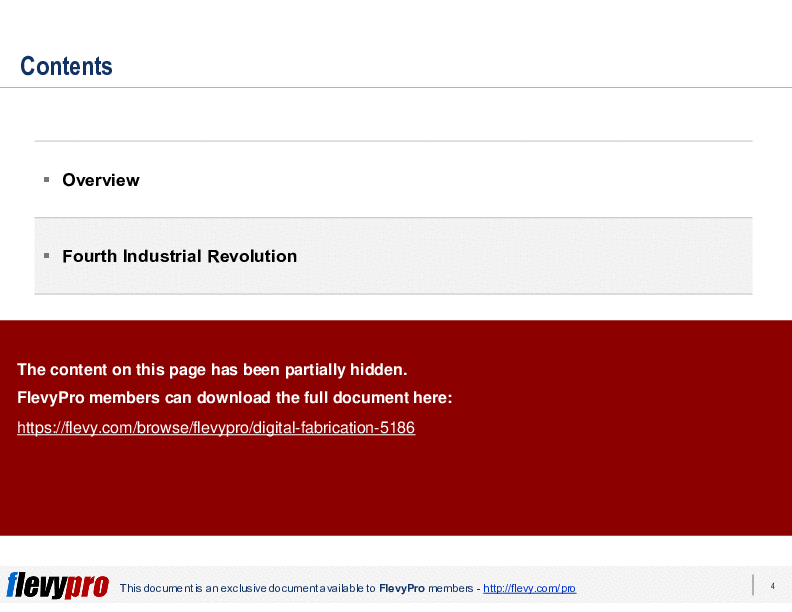
• Overview (page 3)
• Fourth Industrial Revolution (page 5)
• Digital Fabrication (page 9)
• Digital Fabrication Tools (page 14)
• Templates (page 22)
Primary Topics Covered
• Overview of Digital Fabrication - A design and manufacturing workflow that utilizes digital data to drive manufacturing equipment, bridging the gap between design and production.
• Fourth Industrial Revolution - The ongoing transformation of manufacturing practices through smart technology, impacting various industries.
• Digital Fabrication Process - A systematic three-phase approach: Design, Prepare, and Fabricate, essential for effective implementation.
• Digital Fabrication Tools - Overview of key tools including 3D Printers, CNC Machining, Laser Cutters, and Water Jet Cutters.
• Applications of Digital Fabrication - Use cases across industries such as aerospace, automotive, and medical, highlighting efficiency and innovation.
• Impact on Supply Chains - How Digital Fabrication optimizes workflows and enhances product quality, leading to reduced costs and faster time to market.
Deliverables, Templates, and Tools
• Digital Fabrication Process template outlining the three-phase approach
• Overview slides for presenting Digital Fabrication concepts
• Tool comparison charts for different Digital Fabrication technologies
• Implementation roadmap template for integrating Digital Fabrication into existing workflows
• Case study examples showcasing successful Digital Fabrication applications
• Internal training materials for educating teams on Digital Fabrication tools
Slide Highlights
• Introduction to Digital Fabrication and its relevance in Industry 4.0
• Detailed breakdown of the three-phase Digital Fabrication process
• Visual representations of Digital Fabrication tools and their applications
• Comparative analysis of different Digital Fabrication technologies
• Case studies illustrating the impact of Digital Fabrication on manufacturing efficiency
Potential Workshop Agenda
Digital Fabrication Overview Session (60 minutes)
• Introduction to Digital Fabrication and its significance
• Overview of the three-phase approach: Design, Prepare, Fabricate
• Discussion on tools and technologies
Hands-On Tools Workshop (90 minutes)
• Practical demonstrations of key Digital Fabrication tools
• Group activities to explore applications in real-world scenarios
• Q&A session to address specific challenges
Implementation Strategy Session (60 minutes)
• Developing a roadmap for integrating Digital Fabrication
• Identifying potential barriers and solutions
• Setting milestones and tracking progress
Customization Guidance
• Tailor the Digital Fabrication process template to reflect specific organizational workflows
• Adjust tool comparisons based on the unique needs and capabilities of your team
• Incorporate industry-specific examples and case studies relevant to your audience
Secondary Topics Covered
• The role of CAD and CAM in Digital Fabrication
• Best practices for optimizing design for Digital Fabrication
• Challenges and considerations in adopting Digital Fabrication technologies
• Future trends in Digital Fabrication and Industry 4.0
Topic FAQ
Document FAQ
These are questions addressed within this presentation.
What is Digital Fabrication?
Digital Fabrication is a design and manufacturing workflow where digital data directly drives manufacturing equipment, allowing for the creation of various part geometries.
How does Digital Fabrication relate to Industry 4.0?
Digital Fabrication is a critical component of Industry 4.0, representing the integration of smart technologies into manufacturing processes to enhance efficiency and innovation.
What are the key tools used in Digital Fabrication?
Key tools include 3D Printers, CNC Machining, Laser Cutters, and Water Jet Cutters, each serving specific applications in the manufacturing process.
What is the three-phase approach to Digital Fabrication?
The three-phase approach consists of Design, Prepare, and Fabricate, providing a systematic framework for implementing Digital Fabrication.
How can organizations benefit from adopting Digital Fabrication?
Organizations can achieve improved production efficiency, reduced costs, and enhanced product quality by leveraging Digital Fabrication technologies.
What industries can benefit from Digital Fabrication?
Industries such as aerospace, automotive, medical, and consumer goods can all leverage Digital Fabrication to optimize their manufacturing processes.
What challenges might organizations face when implementing Digital Fabrication?
Challenges may include the need for skilled personnel, integration with existing systems, and the upfront investment in technology.
How can organizations measure the success of Digital Fabrication initiatives?
Success can be measured through metrics such as production efficiency, cost savings, and improvements in product quality and time to market.
Glossary
• Digital Fabrication - A manufacturing process that uses digital data to drive equipment for creating parts.
• CAD - Computer-Aided Design, software used for creating precise drawings and models.
• CAM - Computer-Aided Manufacturing, software that translates CAD designs into machine instructions.
• 3D Printing - An additive manufacturing process that creates objects layer by layer.
• CNC Machining - A subtractive manufacturing process controlled by computer software.
• Laser Cutting - A process that uses a focused laser beam to cut materials with high precision.
• Water Jet Cutting - A process that uses high-pressure water mixed with abrasives to cut materials.
• FDM - Fused Deposition Modeling, a type of 3D printing technology.
• SLA - Stereolithography, a 3D printing technology that uses a laser to cure liquid resin.
• SLS - Selective Laser Sintering, a 3D printing technology that fuses powdered materials using a laser.
• Prototype - An early sample or model of a product used to test a concept.
• Supply Chain - The entire system of production, processing, and distribution of goods.
• Industry 4.0 - The current trend of automation and data exchange in manufacturing technologies.
• Digital Transformation - The integration of digital technology into all areas of a business.
• Innovation - The process of translating an idea or invention into a good or service that creates value.
• Efficiency - The ability to achieve maximum productivity with minimum wasted effort or expense.
• Workflow - The sequence of processes through which a piece of work passes from initiation to completion.
• Investment - The action or process of investing money for profit or material result.
• Quality Control - The process of ensuring that products meet certain standards and specifications.
• Manufacturing - The process of converting raw materials into finished goods.
• Design for Digital Fabrication - The practice of designing products with the capabilities and limitations of digital fabrication in mind.
Source: Best Practices in Fourth Industrial Revolution, Manufacturing, 3D Printing PowerPoint Slides: Digital Fabrication PowerPoint (PPTX) Presentation Slide Deck, LearnPPT Consulting
Did you need more documents?
Consider a FlevyPro subscription from $39/month. View plans here.
For $10.00 more, you can download this document plus 2 more FlevyPro documents. That's just $13 each.
|
Receive our FREE presentation on Operational Excellence
This 50-slide presentation provides a high-level introduction to the 4 Building Blocks of Operational Excellence. Achieving OpEx requires the implementation of a Business Execution System that integrates these 4 building blocks. |