 Click main image to view in full screen.
Decision Intelligence Series - Narrative Timing Framework – PowerPoint PPTX Template
PowerPoint (PPTX) 30 Slides


BENEFITS OF THIS DOWNLOADABLE POWERPOINT DOCUMENT
- Provides modular narrative calibration frameworks that identify where dominant market narratives have diverged from underlying reality, enabling earlier detection of drift before correction occurs.
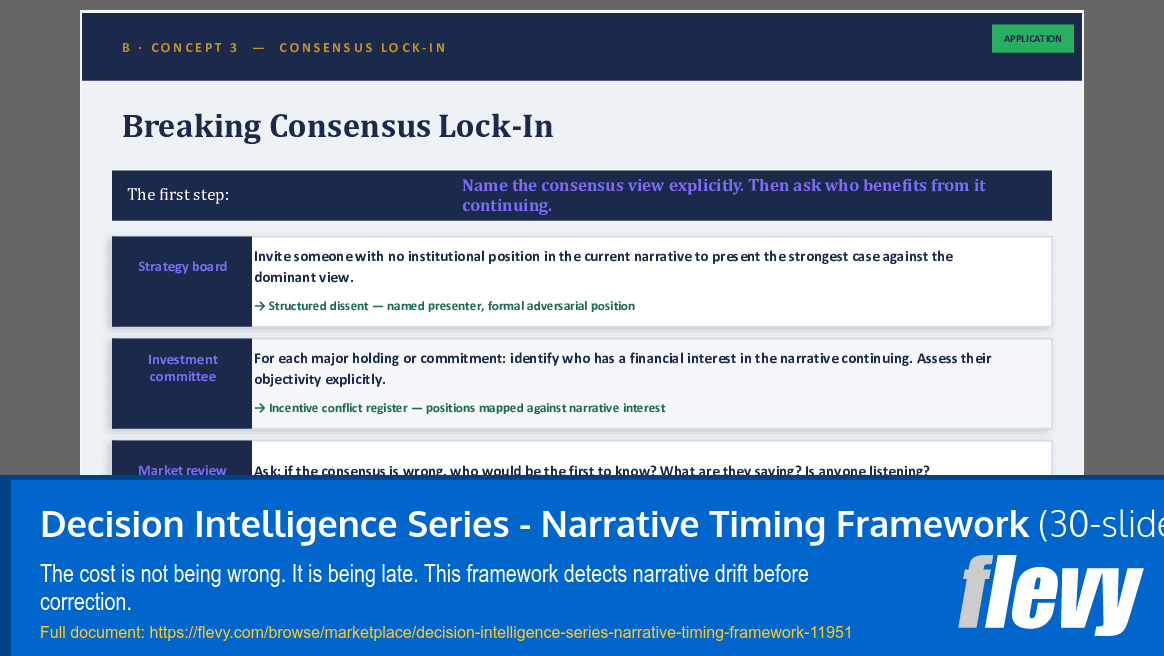
- Delivers structured protocols for strategy, investment, and governance contexts that surface anomalies, counter-signals, and consensus lock-in, with defined outputs ready for immediate use.
- Addresses the timing asymmetry of narrative-driven decisions by mapping exposure against correction speed, reducing the risk of entering, exiting, or allocating capital at peak narrative strength.
DECISION MAKING PPT TEMPLATE DESCRIPTION
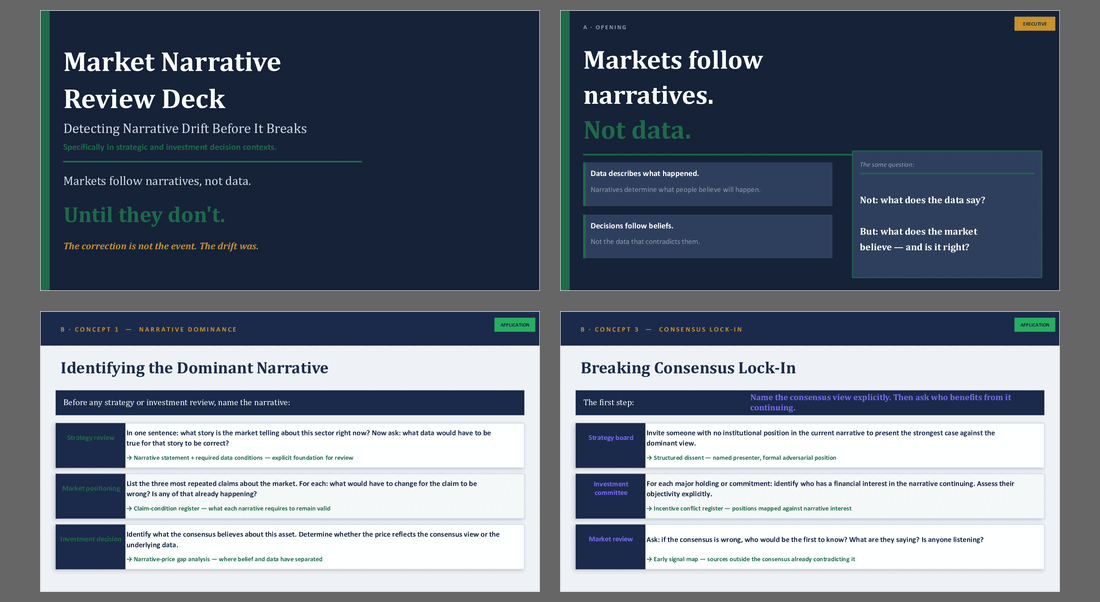
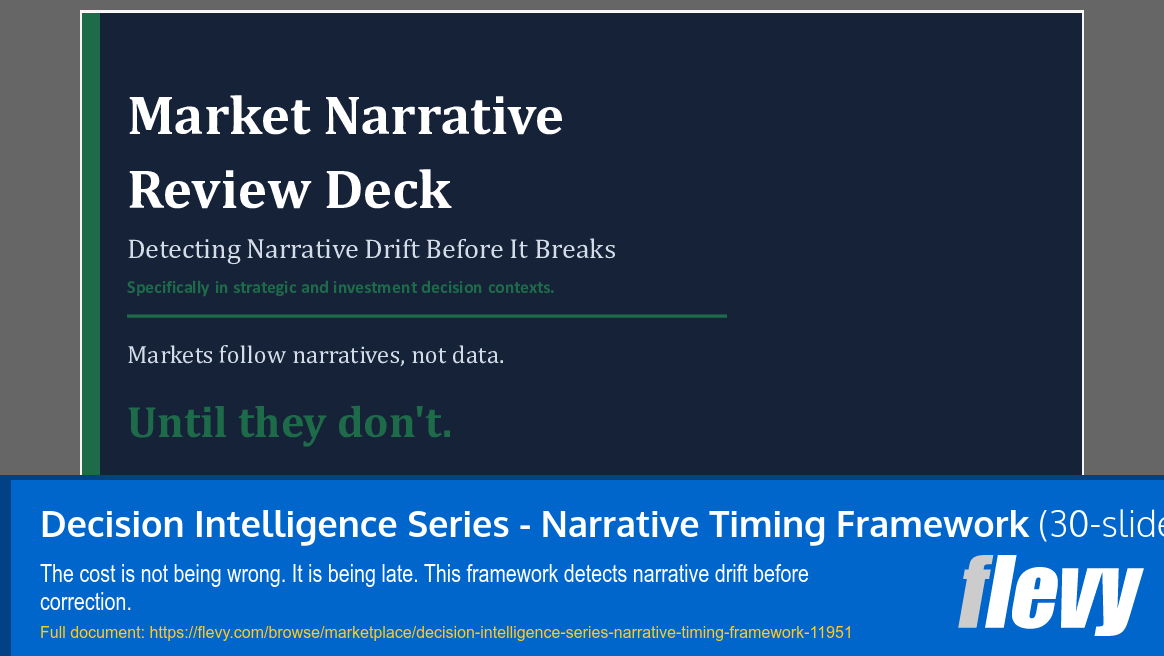
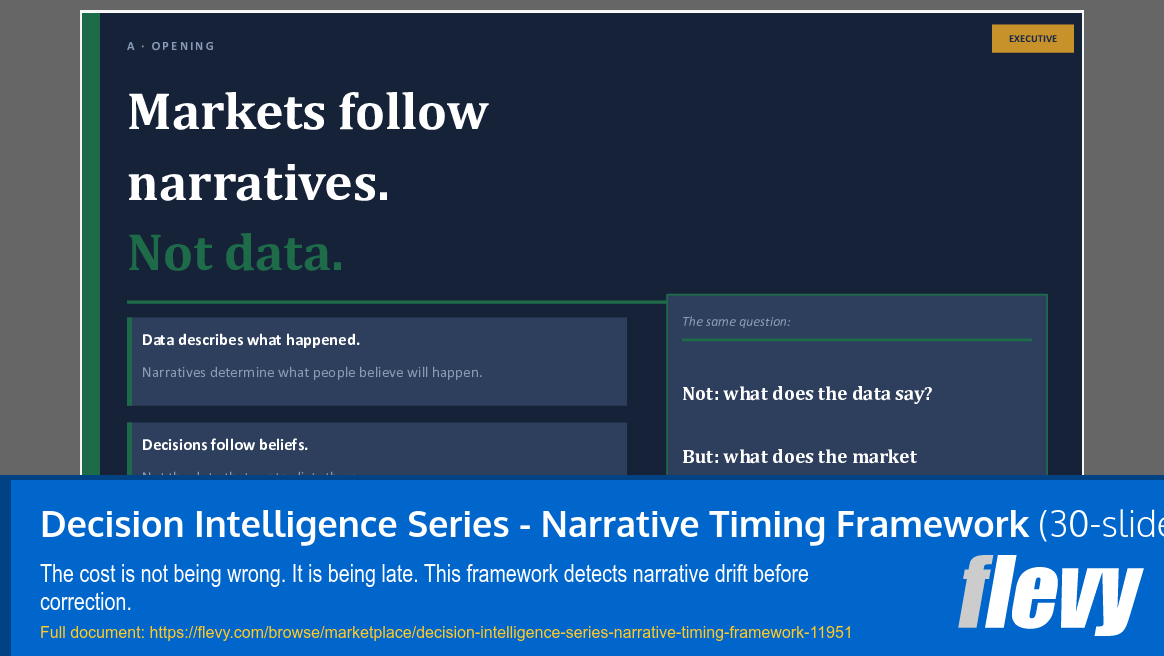
Markets follow narratives, not data. Until they do not.
Strategic and investment decisions are rarely made on raw data alone. They are made on the dominant narrative about what that data means. The failure is not that the narrative is wrong. It is that it is followed too long.
This framework addresses the timing failure embedded in narrative-driven decisions. Organizations enter positions too late, exit too late, and carry maximum exposure at peak narrative strength, precisely when the divergence from underlying reality is largest.
The problem is structural. Narratives determine which data is heard and which is ignored. As narratives strengthen, contradicting signals are explained away, alternative views disappear, and consensus locks in. The gap between narrative and reality grows gradually. The correction, when it comes, is sudden.
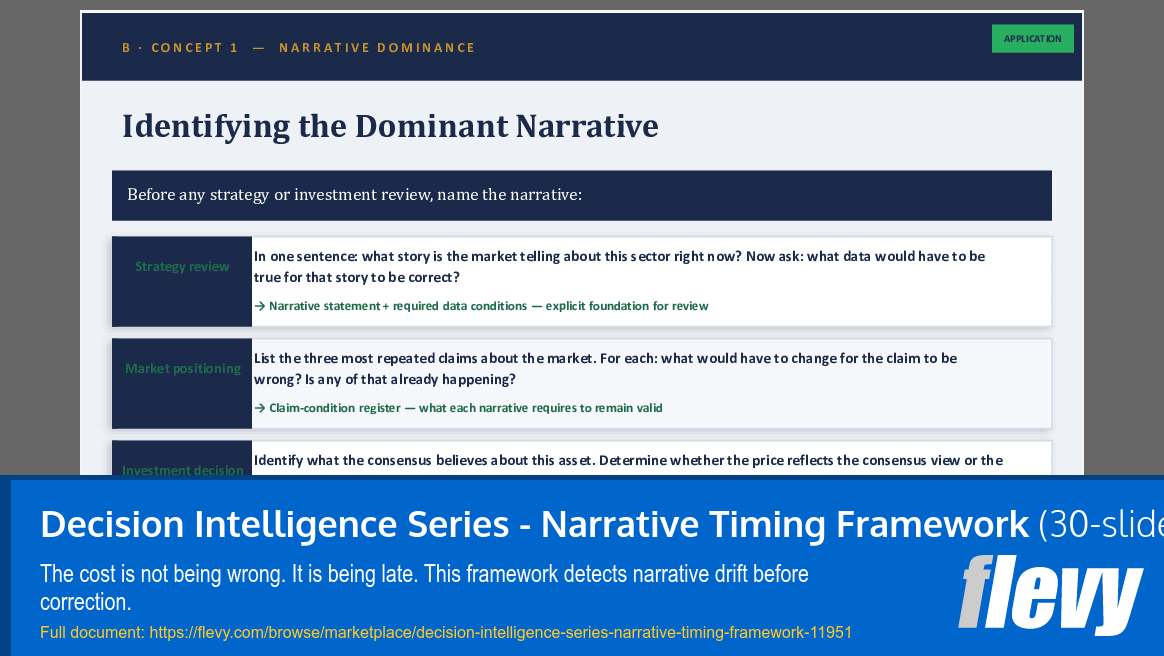
This framework identifies five mechanisms that drive narrative-driven misalignment: narrative dominance, narrative drift, consensus lock-in, signal suppression, and timing asymmetry.
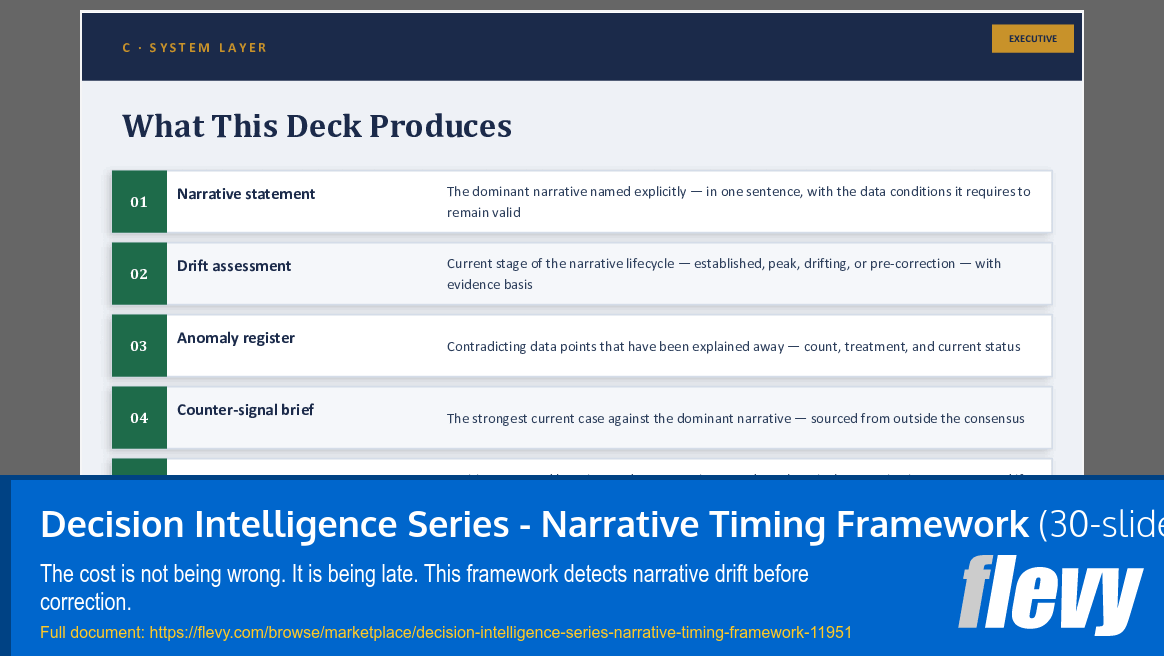
For each mechanism, the framework provides modular calibration protocols with defined outputs: narrative statements, anomaly registers, counter-signal briefs, drift assessments, and timing risk maps.
The protocols are modular by design. A single mechanism – narrative drift or signal suppression – can be applied in isolation to a specific decision context. Applied in sequence, they form a repeatable calibration system that tracks narrative lifecycle from emergence through dominance to correction.
This allows decision-makers to identify where exposure is increasing not because fundamentals are improving, but because narrative strength is peaking – often the point of highest risk rather than highest opportunity.
Application focuses on one core question: not whether the narrative is correct, but where it is in its lifecycle, and how far it has drifted from underlying data.
The framework supports earlier repositioning, more disciplined exit timing, and explicit tracking of narrative-driven exposure across strategy, investment, and governance decisions.
The deck contains 30 slides organized across concept layers, system checkpoints, and full application frameworks across strategy, investment, governance, and competitive contexts.
This is not market analysis. It is narrative calibration.
The cost is not being wrong. It is being late.
Got a question about the product? Email us at support@flevy.com or ask the author directly by using the "Ask the Author a Question" form. If you cannot view the preview above this document description, go here to view the large preview instead.
Source: Best Practices in Decision Making PowerPoint Slides: Decision Intelligence Series - Narrative Timing Framework PowerPoint (PPTX) Presentation Slide Deck, Decision Intelligence Architect
ABOUT THE AUTHOR

I work at the intersection of decision intelligence, strategic analysis, and AI-driven thesis stress-testing, with a focus on improving judgment in high-stakes environments.
The emphasis is not domain expertise, but decision quality - challenging assumptions, identifying blind spots, and exposing hidden risks before capital, time, or reputation is committed.
My frameworks are designed for
... [read more]
Ask the Author a Question
You must be logged in to contact the author.




























