
 Click main image to view in full screen. Unlock all 12 preview images:
Cyber Risk Appetite Statement & Tolerance Framework – PowerPoint PPTX Template
PowerPoint (PPTX) 60 Slides


RISK MANAGEMENT PPT TEMPLATE DESCRIPTION
Cyber Risk Appetite Statement & Tolerance Framework
Cyber Risk Appetite Statement & Tolerance Framework
Outline
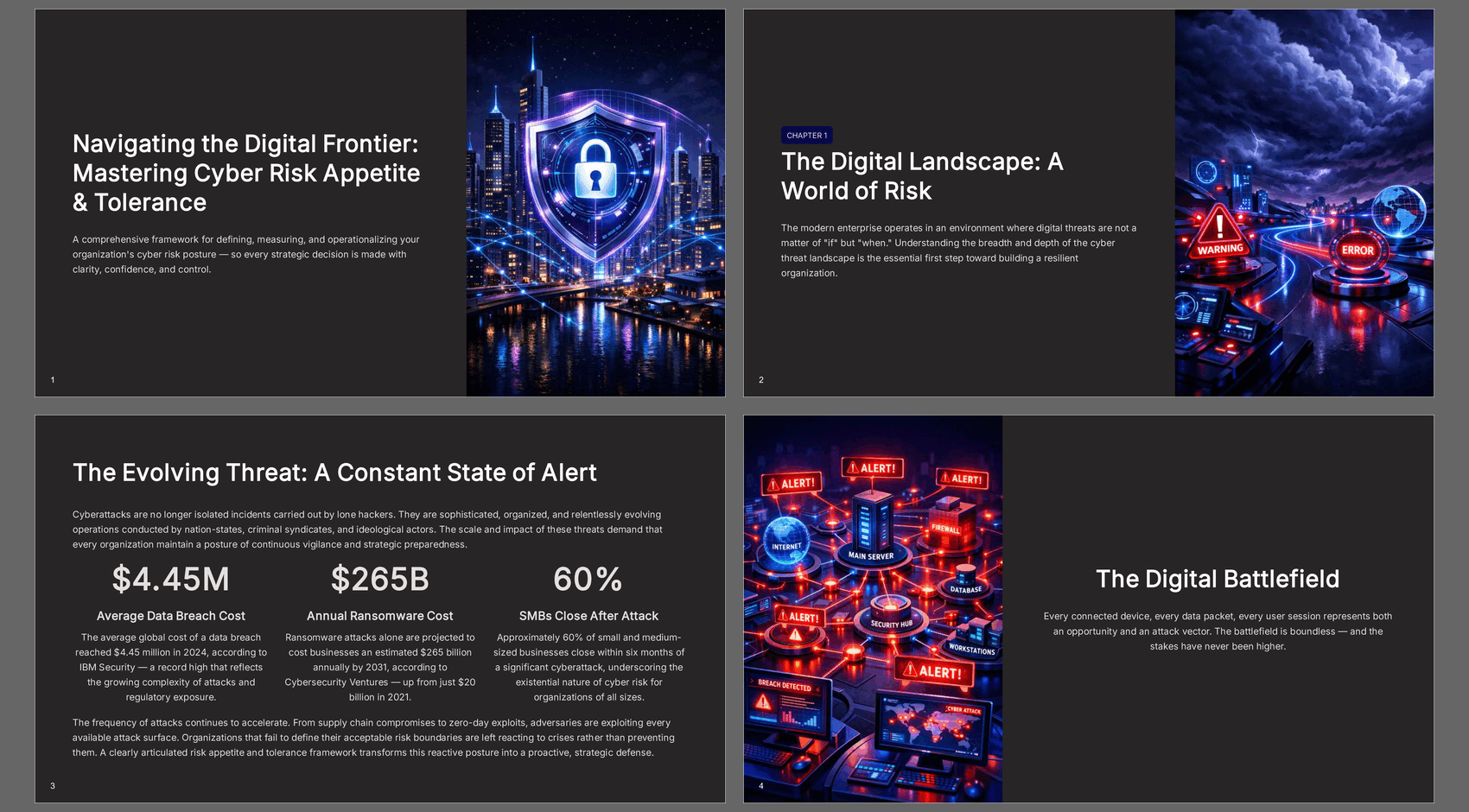
Navigating the Digital Frontier: Mastering Cyber Risk Appetite & Tolerance
Chapter 1: The Digital Landscape – A World of Risk
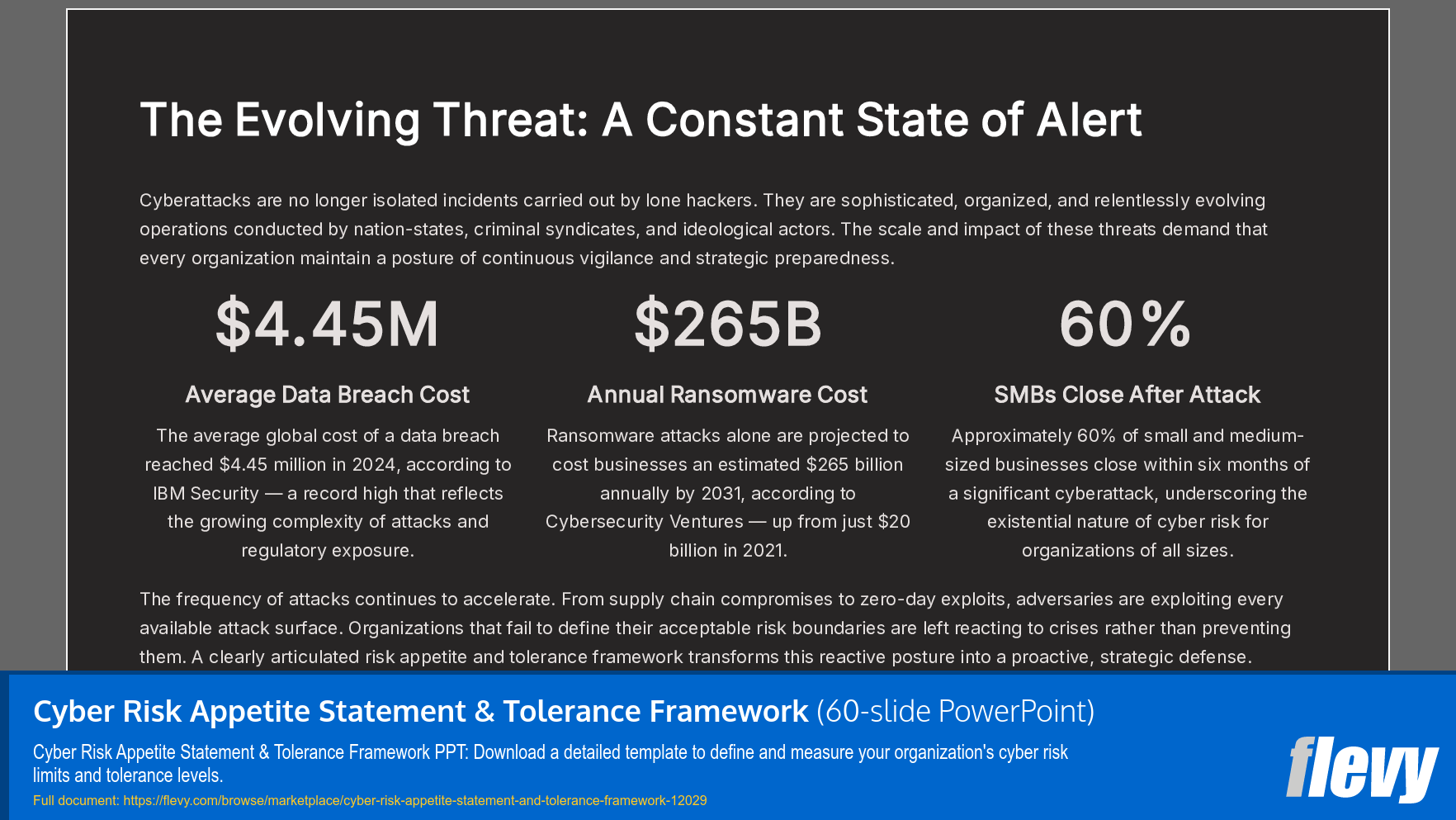
The Evolving Threat: A Constant State of Alert
• Cyberattacks are increasing in frequency and sophistication.
• The average cost of a data breach reached $4.45 million in 2024. (IBM Security)
• Ransomware attacks alone cost businesses an estimated $265 billion annually. (Cybersecurity Ventures)
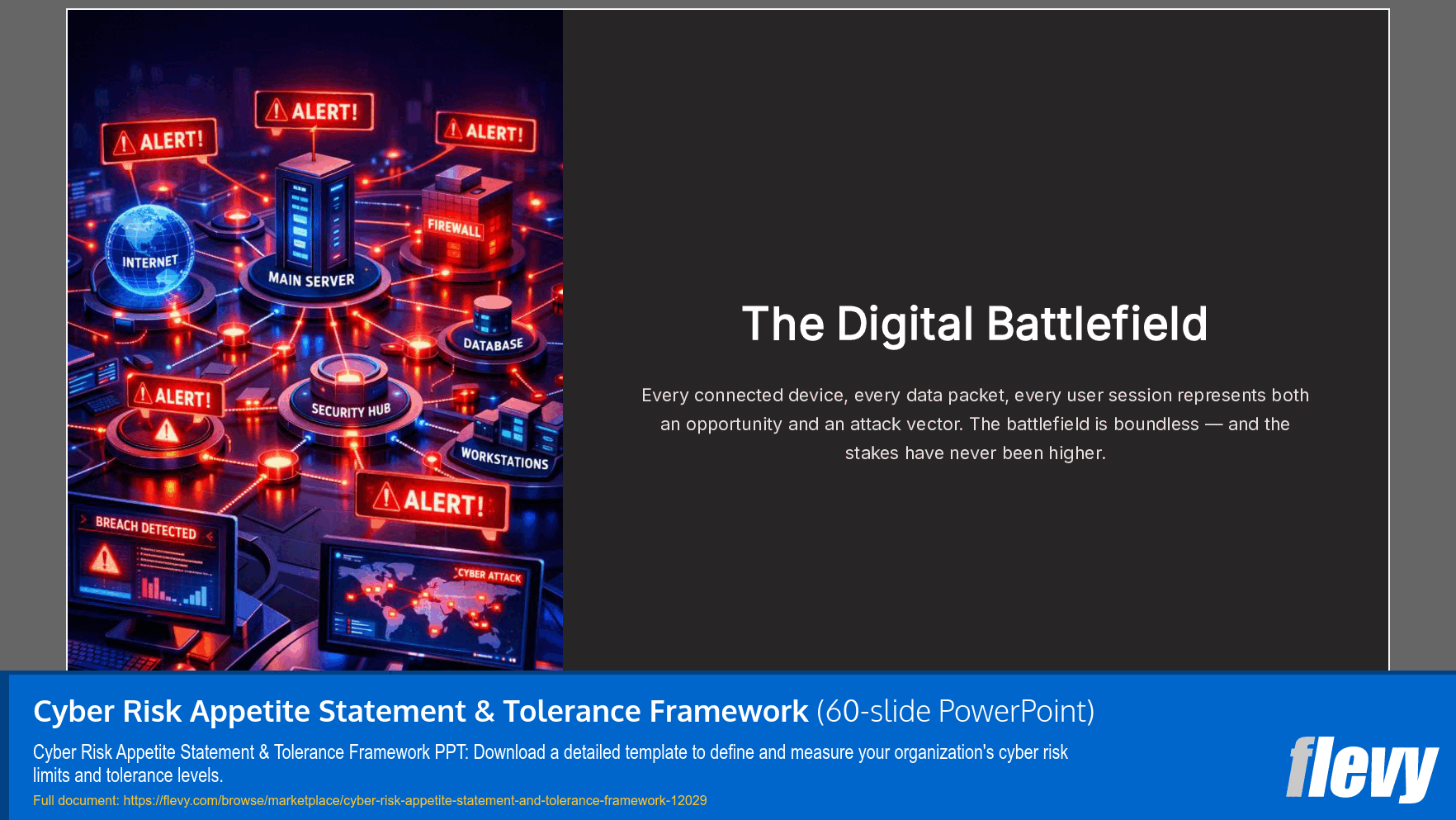
[image] A complex network diagram with red warning lights flashing, text: "The Digital Battlefield"
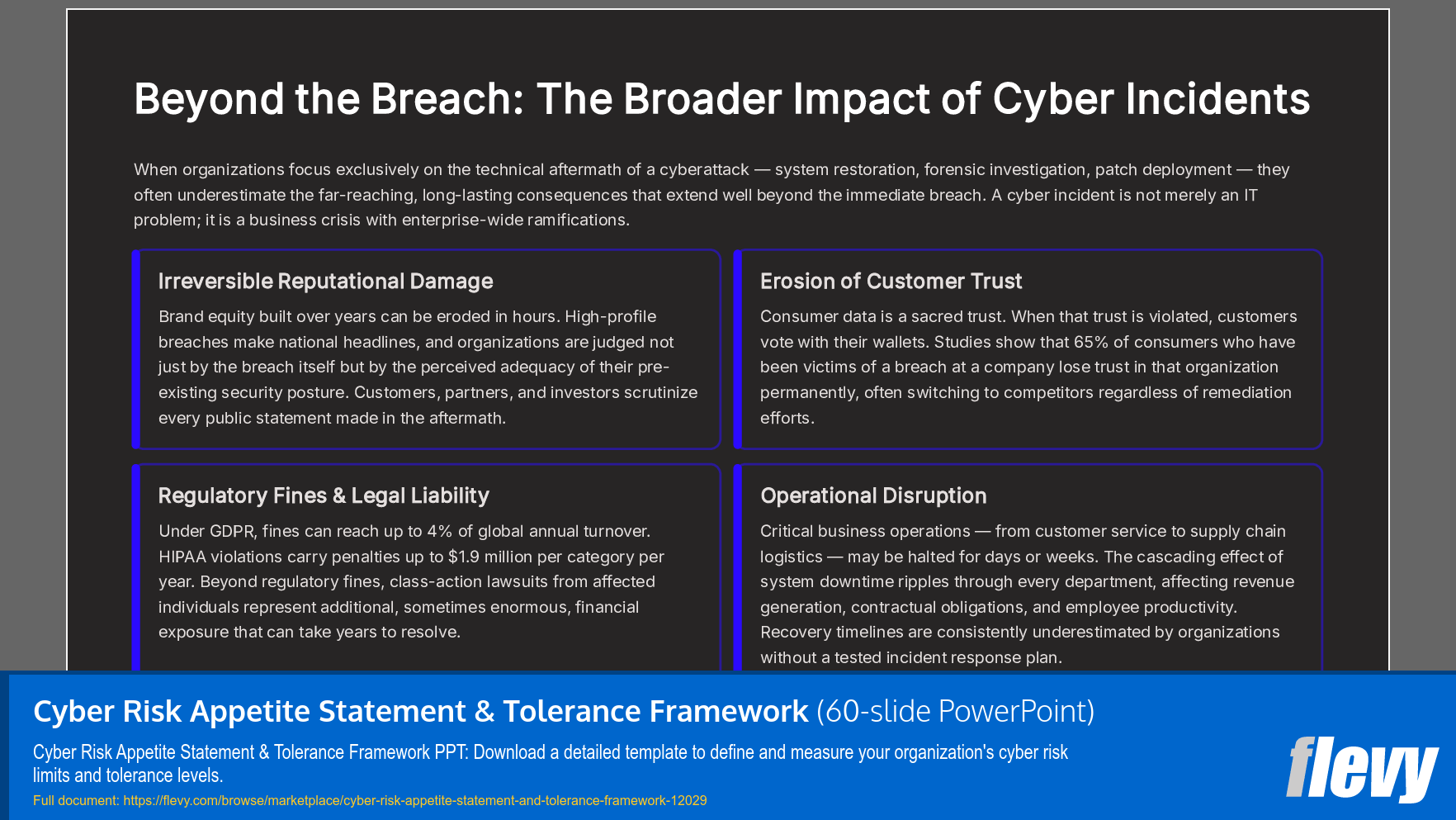
Beyond the Breach: The Broader Impact
• Reputational damage can be irreversible.
• Loss of customer trust.
• Regulatory fines and legal repercussions.
• Disruption of critical business operations.
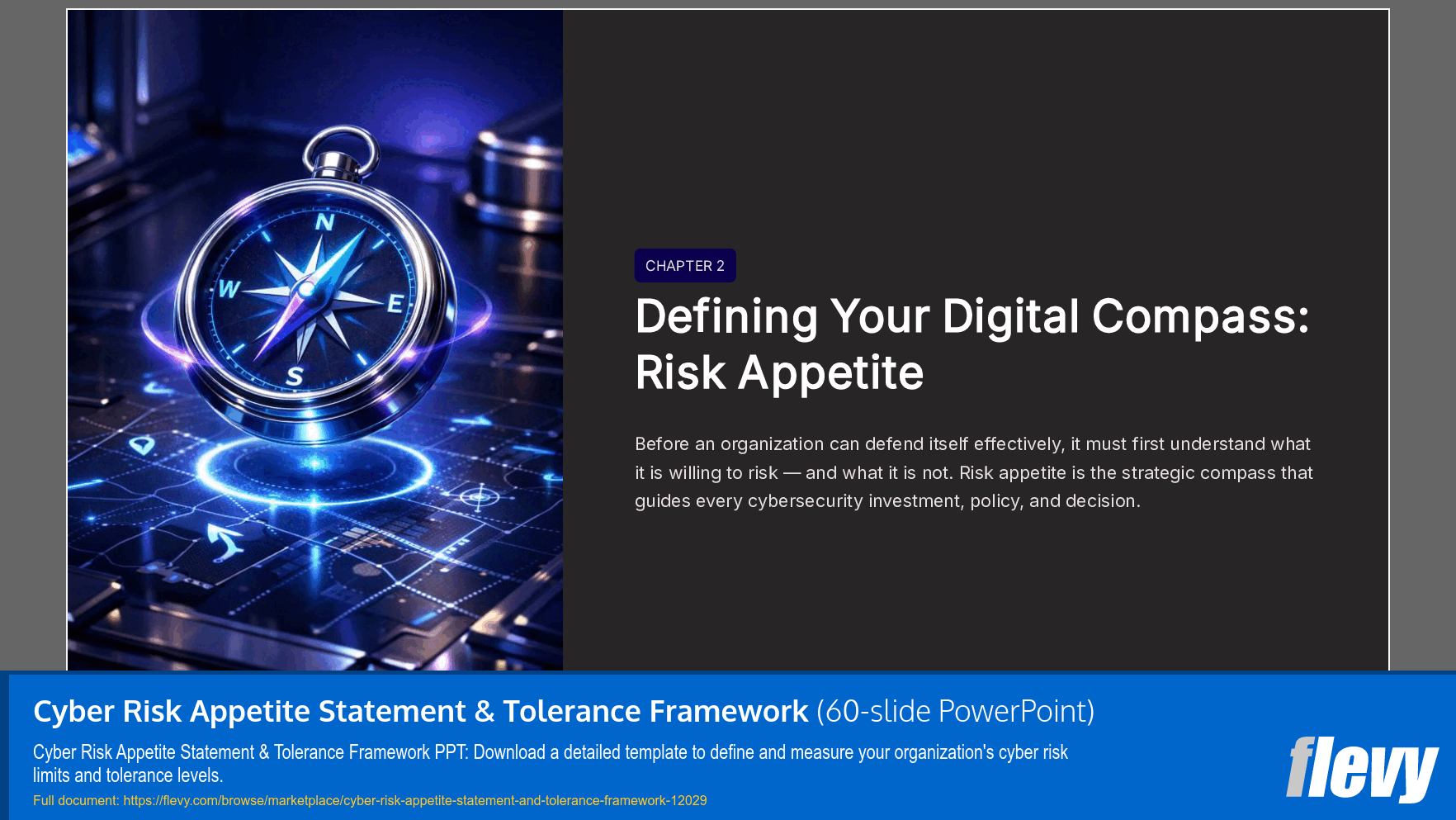
Chapter 2: Defining Your Digital Compass – Risk Appetite
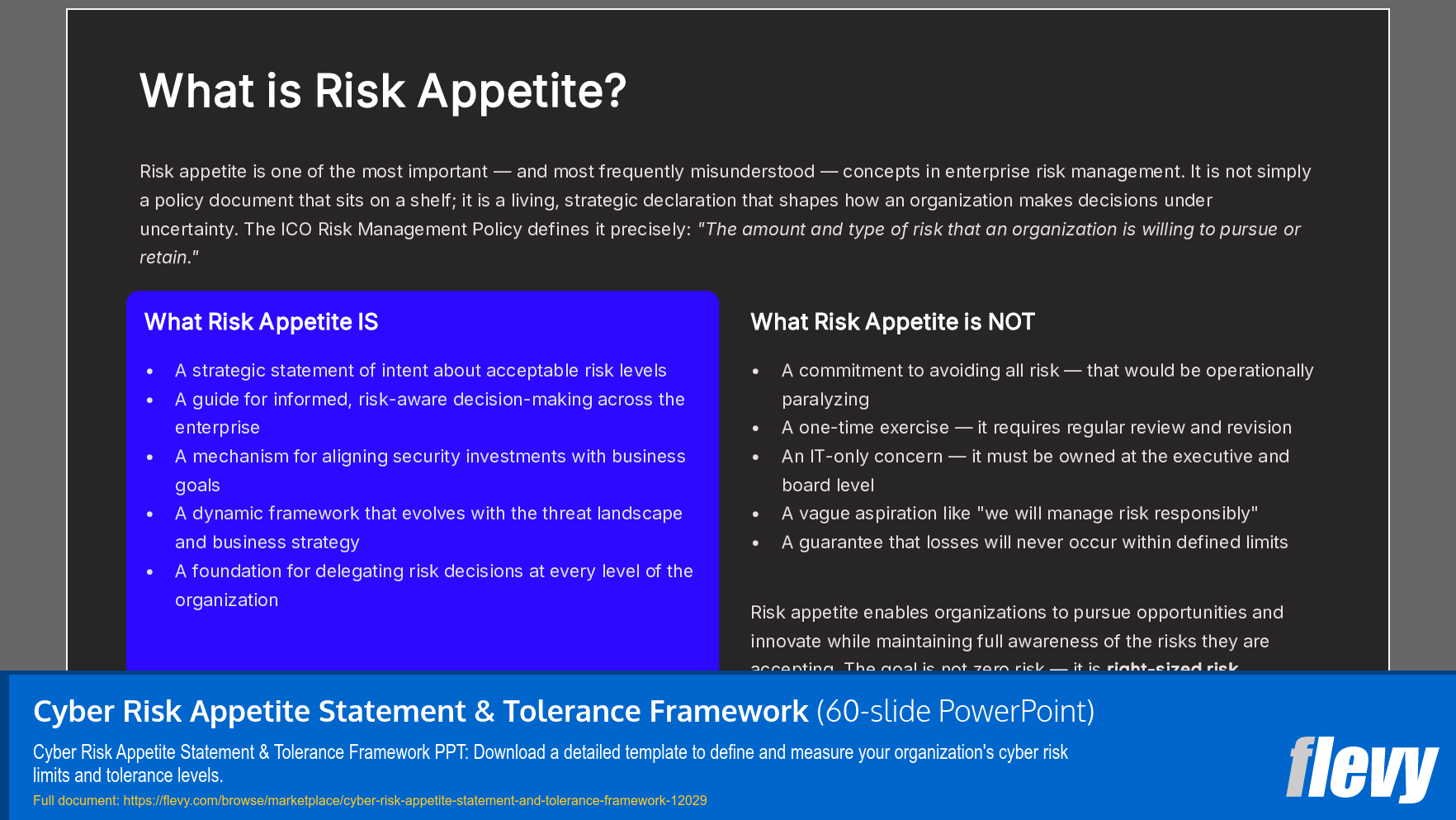
What is Risk Appetite?
• The amount and type of risk an organization is willing to pursue or retain.
• It's about making informed decisions, not avoiding all risk.
• "The amount and type of risk that an organization is willing to pursue or retain." (ICO Risk Management Policy)
Why is Risk Appetite Crucial for Cyber?
• Guides strategic decision-making in a dynamic threat environment.
• Ensures alignment between business objectives and security investments.
• Empowers staff to make risk-aware decisions. (ICO Risk Management Policy)
[image] A compass pointing towards "Strategic Goals" with various risk levels around it.
The ICO's Approach: Setting the Tone
• "The main objective of this policy is to... Set the tone and ethos for the organisation." (ICO Risk Management Policy)
• Risk appetite statements guide and coordinate decisions across the organization.
Chapter 3: Quantifying the Unquantifiable – Risk Tolerance
Defining Risk Tolerance
• The specific maximum risk that an organization is willing to take for a particular objective.
• It's the granular, measurable aspect of risk appetite.
• "The specific maximum risk that an organization is willing to take for a particular objective."
Tolerance vs. Appetite: A Crucial Distinction
• Appetite: The broad willingness to accept risk.
• Tolerance: The specific, measurable limits.
• Think of appetite as the "how much" and tolerance as the "how far."
[image] A tightrope walker with a safety net below, illustrating controlled risk-taking.
UC's Digital Risk Appetite Categories
• Cautious: Preference for safe delivery, limited risk acceptance.
• Minimalist: Extremely conservative, accepting risk only if essential.
• Averse: Risk avoidance is a core objective.
• (Source: UC Digital Risk Appetite Statement)
The Spectrum of Risk Tolerance
• From "Averse" (zero tolerance for certain risks) to "Open" (willing to take justified risks).
• Each level has implications for security investments and operational flexibility.
Chapter 4: Building Your Framework – From Theory to Practice
The Foundation: A Robust Risk Management Policy
• A clear policy is the bedrock of any effective risk framework.
• It should outline the organization's commitment and approach to risk management. (ICO Risk Management Policy)
[image] Blueprint of a secure building, with "Risk Management Policy" as the foundation.
Key Components of a Cyber Risk Appetite Statement
• Scope: What areas of cyber risk are covered? (e.g., data privacy, system availability, third-party risk)
• Principles: Guiding beliefs about risk-taking.
• Levels: Defining the spectrum of acceptable risk.
• Metrics: How will tolerance be measured?
Developing Your Risk Appetite Statement
• Executive Sponsorship: Crucial for buy-in and enforcement.
• Cross-Functional Collaboration: Involve IT, Security, Legal, Business Units.
• Alignment with Business Objectives: Risk appetite must support strategic goals.
[image] Diverse group of professionals collaborating around a table with a digital security theme.
Chapter 5: Operationalizing Tolerance – Setting Measurable Limits
Translating Appetite into Tolerance
• For each risk appetite level, define specific tolerance metrics.
• Example: If appetite for data breach is "minimalist," tolerance might be "zero tolerance for PII breaches."
Key Cyber Risk Tolerance Areas
• Data Privacy: Maximum acceptable number of PII breaches per year.
• System Availability: Maximum acceptable downtime for critical systems.
• Third-Party Risk: Maximum acceptable risk score for vendors.
• Emerging Technologies: Tolerance for adopting new, unproven tech.
[image] A dashboard with various metrics and thresholds clearly displayed.
The UC Model: Tailoring Tolerance
• "Individual UC business units may choose to adopt a lower risk tolerance as appropriate." (UC Digital Risk Appetite Statement)
• Allows for flexibility based on specific operational needs and risk profiles.
Chapter 6: The Risk Appetite Heat Map & Capacity
Visualizing Risk: The Heat Map
• A graphical representation of risks and their alignment with appetite/tolerance.
• Helps identify areas where risk is too high or too low.
• (Referenced in ICO Risk Management Policy)
[image] A heat map with red, yellow, and green zones indicating risk levels.
Understanding Risk Capacity
• The maximum level of risk an organization can absorb without jeopardizing its objectives.
• Risk appetite should always be within risk capacity.
• "Risk Capacity: The maximum level of risk that an organization can absorb..." (ICO Risk Management Policy)
Capacity vs. Appetite: The Safety Buffer
• Appetite is what you want to take.
• Capacity is what you can take.
• A healthy organization has a gap between appetite and capacity.
[image] A diagram showing Risk Capacity as a large circle, Risk Appetite as a smaller circle within it, and Risk Tolerance as specific points on the Appetite circle.
Chapter 7: Continuous Improvement – Staying Ahead of the Curve
Regular Review and Updates
• The threat landscape is constantly changing.
• Risk appetite and tolerance frameworks must be reviewed and updated regularly.
• "UC will regularly review and update its risk management policies and procedures..." (UC Digital Risk Appetite Statement)
[image] A calendar with "Review & Update" marked on multiple dates.
Embedding Risk Culture
• Training and awareness programs for all staff.
• Encourage open communication about risks and concerns.
• "Ensure that the value of effectively managing risk is understood by all." (ICO Risk Management Policy)
The Role of Leadership
• "Management Board have set the risk appetite levels..." (ICO Risk Management Policy)
• Leadership must champion the risk management process.
Chapter 8: Real-World Implications & Case Studies
Case Study 1: The Financial Institution's "Minimalist" Approach
• Challenge: High volume of sensitive financial data.
• Appetite: Minimalist for data breaches, Cautious for system availability.
• Tolerance: Zero tolerance for PII breaches, <1 hour downtime for core banking systems per quarter.
• Outcome: Significant investment in advanced threat detection and robust disaster recovery.
[image] A secure vault with a digital lock, representing strong financial data protection.
Case Study 2: The Healthcare Provider's "Averse" Stance
• Challenge: Protecting patient health information (PHI).
• Appetite: Averse for PHI breaches, Cautious for research data access.
• Tolerance: Zero tolerance for PHI breaches, strict access controls for research data.
• Outcome: Rigorous compliance with HIPAA, extensive encryption, and strict access protocols. (UC's "minimalist" appetite for healthcare enterprise)
[image] A medical cross symbol integrated with a shield, symbolizing protected health data.
Case Study 3: The Tech Startup's "Flexible" Approach
• Challenge: Rapid innovation and market disruption.
• Appetite: Flexible for adopting new technologies, Cautious for customer data.
• Tolerance: Defined acceptable risk levels for new tech pilots, strict controls for customer data.
• Outcome: Agile development with built-in security checks, fostering innovation while maintaining trust.
[image] A rocket launching, symbolizing rapid growth and innovation.
Chapter 9: Common Pitfalls to Avoid
Pitfall 1: Vague or Unmeasurable Statements
• "We will manage cyber risk effectively." – This is not a statement of appetite.
• Statements must be clear, specific, and actionable.
[image] A foggy landscape with a signpost pointing in multiple directions.
Pitfall 2: Lack of Executive Buy-in
• Without leadership support, the framework will fail.
• Risk appetite must be a strategic imperative, not just an IT concern.
Pitfall 3: Static Frameworks
• The digital world is dynamic; your framework must be too.
• Outdated policies lead to outdated security practices.
Pitfall 4: Disconnect Between Appetite and Tolerance
• Having a broad appetite but no clear tolerance levels leads to inconsistent decision-making.
[image] A broken chain link, symbolizing a disconnect in the risk management process.
Chapter 10: The Future of Cyber Risk Management
AI and Automation in Risk Assessment
• AI can help identify threats and vulnerabilities faster.
• Automation can streamline compliance and reporting.
[image] Abstract representation of AI processing data, with security icons.
Zero Trust Architecture
• Shifting from perimeter defense to identity-centric security.
• "Never trust, always verify."
Proactive Threat Hunting
• Moving beyond reactive incident response to actively seeking out threats.
[image] A magnifying glass over a digital network, representing active threat hunting.
Chapter 11: Conclusion – Your Cyber Resilience Roadmap
Embrace Your Risk Appetite: Build a Resilient Future
• Define your appetite, set your tolerance, and build your framework.
• Proactive risk management is the key to navigating the digital frontier.
• Your cyber resilience starts now.
Got a question about the product? Email us at support@flevy.com or ask the author directly by using the "Ask the Author a Question" form. If you cannot view the preview above this document description, go here to view the large preview instead.
Source: Best Practices in Risk Management, Cyber Security PowerPoint Slides: Cyber Risk Appetite Statement & Tolerance Framework PowerPoint (PPTX) Presentation Slide Deck, Mohamed Alshamey
ABOUT THE AUTHOR

Senior Consultant in Cybersecurity GRC, Data Governance, Cybersecurity, Privacy, and Data Management, with over 20 years of experience in information technology, consulting, training, and technical capacity building. holds a PhD. In AI & Data Privacy, he has a master's degree in cybersecurity and is currently pursuing research focused on data privacy. possesses extensive expertise in ... [read more]
Ask the Author a Question
You must be logged in to contact the author.