
 Click main image to view in full screen. Unlock all 12 preview images:
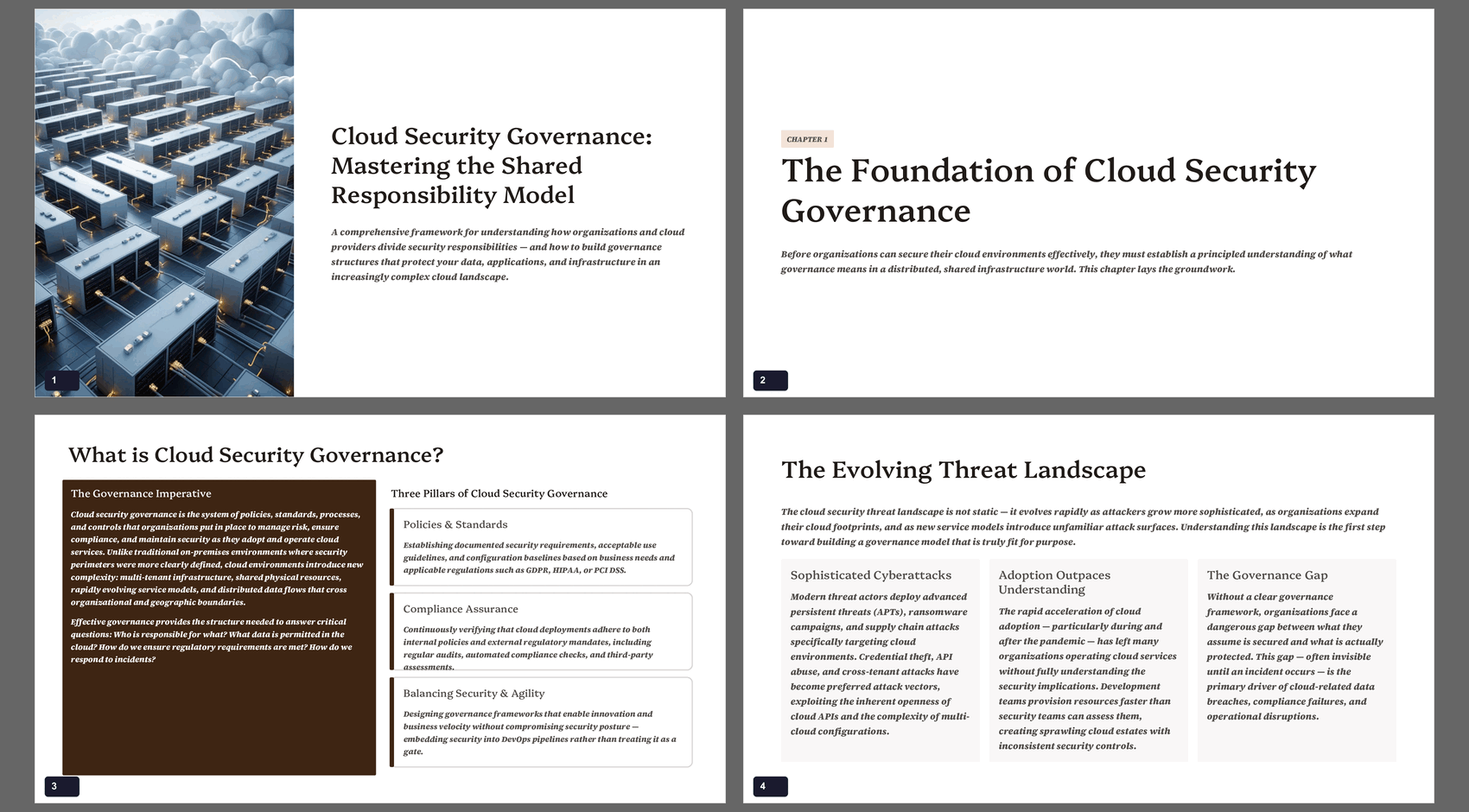
Cloud Security Governance Framework & Shared Responsibility – PowerPoint PPTX Template
PowerPoint (PPTX) 60 Slides


CYBER SECURITY PPT TEMPLATE DESCRIPTION
Chapter 1: The Foundation of Cloud Security Governance
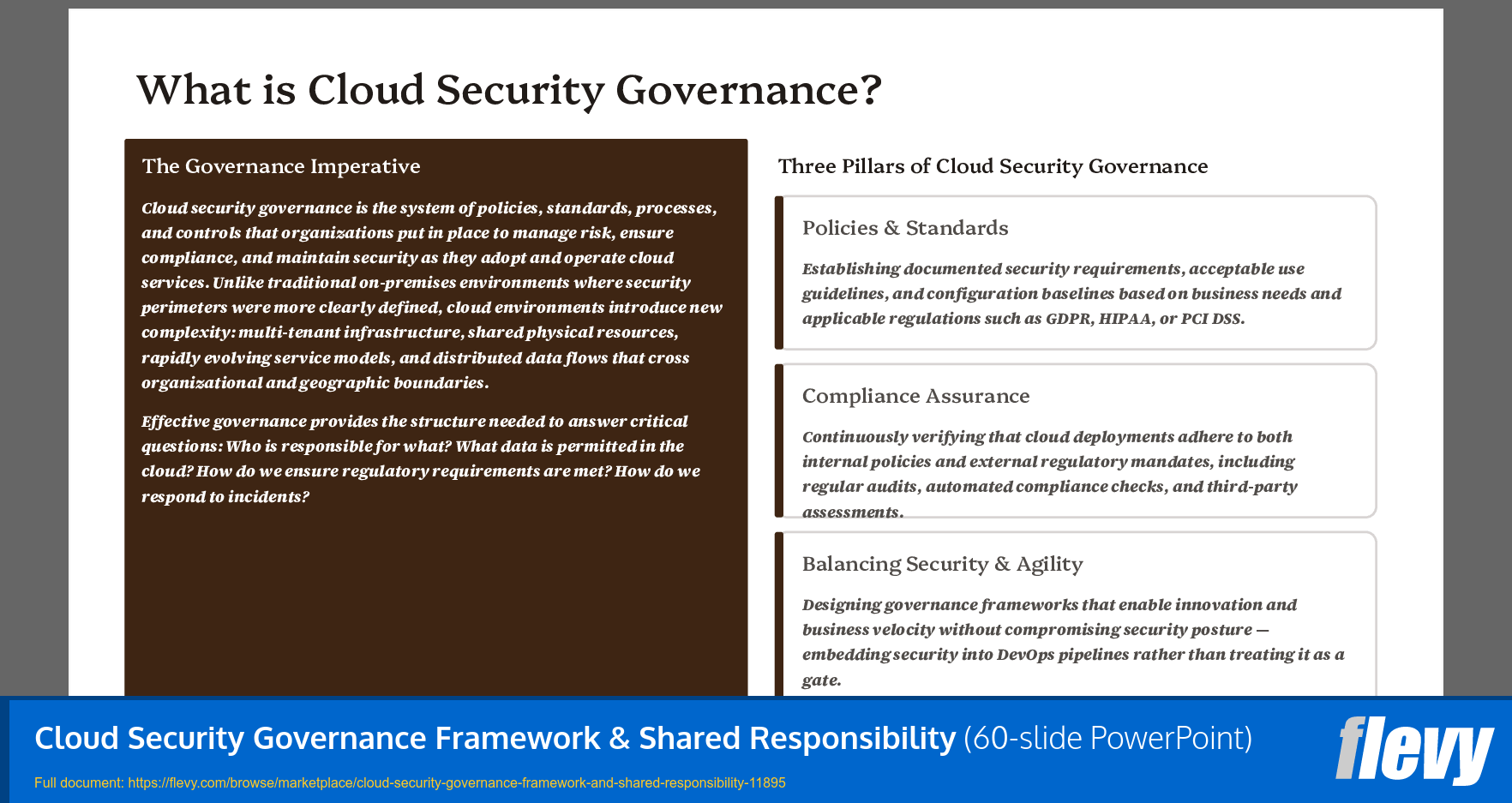
What is Cloud Security Governance?
• Establishing policies, standards, and processes for secure cloud adoption.
• Ensuring compliance with regulations and industry best practices.
• Balancing security needs with business agility and innovation.
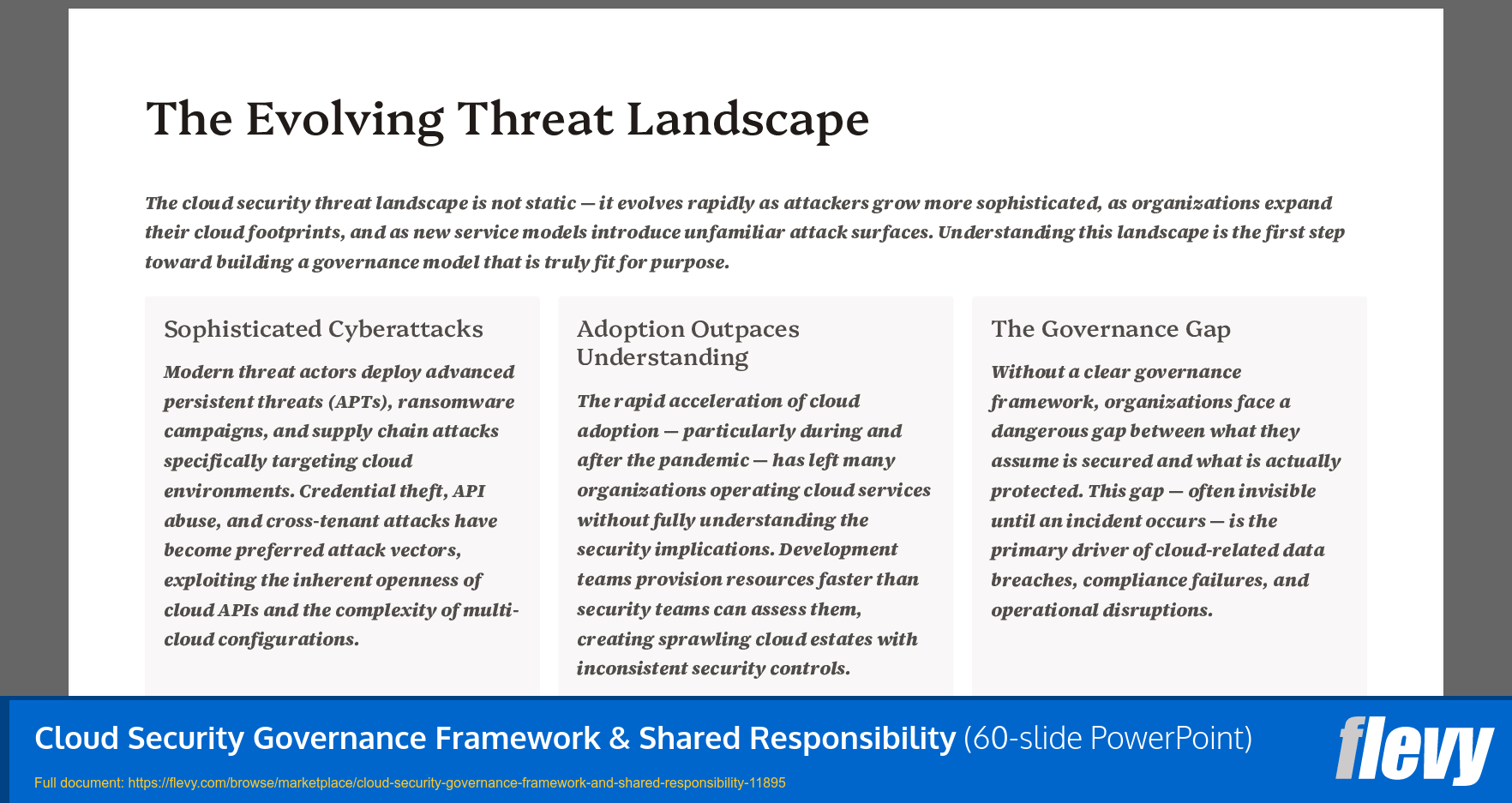
The Evolving Threat Landscape
• Sophisticated cyberattacks targeting cloud environments.
• Rapid adoption of cloud services outpaces security understanding.
• The critical need for a clear governance framework.
[image] A complex network diagram with security icons, text: "Navigating the Cloud Security Maze"
Chapter 2: Understanding the Shared Responsibility Model
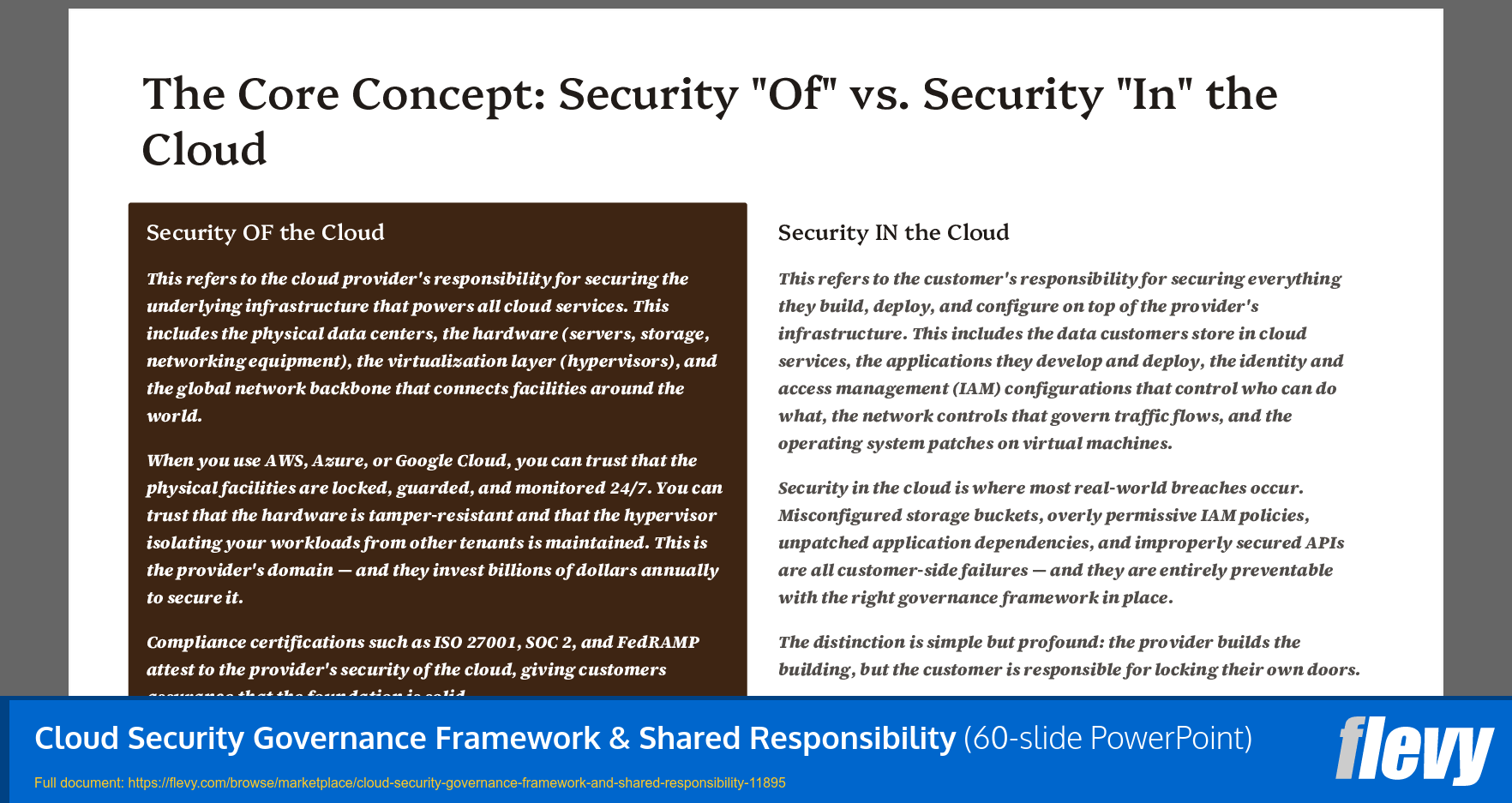
The Core Concept: Security "Of" vs. Security "In" the Cloud
• Security OF the Cloud: The cloud provider's responsibility for the underlying infrastructure.
• Security IN the Cloud: The customer's responsibility for data, applications, and configurations.
Why It Matters: The Cost of Misunderstanding
• Gartner prediction: 99% of cloud security failures through 2025 are customer faults.
• Common root causes: Misconfigurations, unpatched systems, overly permissive access.
• Real-world impact: Data breaches, compliance violations, financial losses.
[image] A split image: one side shows a secure data center, the other shows a user configuring a cloud service, text: "Two Sides of the Same Security Coin"
Chapter 3: Shared Responsibility Across Cloud Models
Infrastructure as a Service (IaaS)
• Provider Responsibility: Physical infrastructure, networking, hypervisor.
• Customer Responsibility: Guest OS, applications, data, identity and access management (IAM), network controls.
• Examples: AWS EC2, Azure Virtual Machines, Google Compute Engine.
Platform as a Service (PaaS)
• Provider Responsibility: Infrastructure, OS, middleware, runtime.
• Customer Responsibility: Applications, data, identity and access management (IAM), network controls.
• Examples: AWS Lambda, Azure App Service, Google App Engine.
Software as a Service (SaaS)
• Provider Responsibility: Infrastructure, OS, applications, data (often).
• Customer Responsibility: Data classification, identity and access management (IAM), endpoint security, user access.
• Examples: Microsoft 365, Google Workspace, Salesforce.
[image] A layered diagram showing IaaS, PaaS, and SaaS with clear divisions of responsibility.
Chapter 4: Deep Dive: AWS Shared Responsibility Model
AWS: Security "Of" the Cloud
• AWS manages: Host OS, virtualization layer, physical security of facilities, hardware, software, networking.
• Ensures the integrity and availability of the AWS global infrastructure.
AWS: Security "In" the Cloud
• Customer manages: Guest OS (updates, patches), application software, IAM, security group firewall configuration, data encryption, asset classification.
• Responsibility varies significantly based on service choice (e.g., EC2 vs. S3).
Case Study: Misconfigured S3 Bucket
• Provider's Role: Secured the S3 infrastructure itself.
• Customer's Failure: Failed to configure bucket policies correctly, leading to public data exposure.
• Outcome: Massive data breach affecting 2.9 billion records (hypothetical example based on real breach causes).
[image] A screenshot of an AWS S3 console with a prominent warning about public access, text: "Your Data, Your Responsibility"
Chapter 5: Deep Dive: Microsoft Azure Shared Responsibility Model
Azure: A Comprehensive Approach
• Microsoft manages: Physical data centers, physical network, operating system (for PaaS/SaaS), physical hosts.
• Customer manages: Data, identities, user access, applications, network controls, client devices.
Azure's Responsibility Matrix
• Always Customer: Data, Identities, Configurations, Client Devices.
• Varies by Service: Applications, Network Controls, Operating System, Physical Hosts, Physical Network, Physical Datacenter.
The "Shared Fate" Concept (Google Cloud)
• Google Cloud's evolution beyond traditional shared responsibility.
• Focus on building a trusted platform and providing best-practice guidance.
• Partnering with customers to address complex security challenges.
[image] A visual representation of Azure's responsibility matrix, highlighting customer ownership.
Chapter 6: Deep Dive: Google Cloud Platform (GCP) Shared Responsibility Model
GCP: Understanding Service-Specific Configurations
• GCP secures the service infrastructure and underlying platform.
• Customers must understand each service's configuration options and security implications.
• Challenges in determining optimal security configurations.
GCP's "Shared Fate" Philosophy
• Acknowledges the complexity and aims for deeper partnership.
• Providing secured, attested infrastructure code.
• Offering solutions that combine services to solve security problems.
IaaS vs. PaaS vs. SaaS on GCP
• IaaS (Compute Engine): Bulk of security responsibilities lie with the customer.
• PaaS (App Engine, GKE): GCP manages more of the stack, customer focuses on applications and data.
[image] A graphic illustrating Google Cloud's "shared fate" concept, emphasizing partnership.
Chapter 7: Key Governance Areas & Best Practices
Identity and Access Management (IAM)
• Customer Responsibility: Defining roles, permissions, and access policies.
• Best Practices: Principle of least privilege, multi-factor authentication (MFA), regular access reviews.
Data Security and Encryption
• Customer Responsibility: Data classification, encryption at rest and in transit, key management.
• Provider Role: Offering encryption services and infrastructure.
Patch Management and Vulnerability Scanning
• Customer Responsibility: Patching guest OS, applications, and container images.
• Provider Role: Securing the underlying infrastructure and hypervisor.
Network Security Controls
• Customer Responsibility: Configuring security groups, firewalls, network segmentation.
• Provider Role: Providing the physical network infrastructure.
[image] A dashboard showing IAM roles and permissions with clear access levels.
Chapter 8: Compliance and Regulatory Considerations
Navigating Compliance Frameworks
• Examples: GDPR, HIPAA, PCI DSS, SOC 2.
• Understanding how shared responsibility impacts compliance audits.
The Role of Cloud Provider Certifications
• AWS, Azure, and GCP provide numerous compliance certifications.
• These attest to the provider's security of the cloud.
• Customers must still demonstrate their own compliance for security in the cloud.
Audit Trails and Logging
• Customer Responsibility: Enabling and configuring logging for security monitoring and incident investigation.
• Provider Role: Offering logging services and infrastructure.
[image] A visual representation of various compliance logos (GDPR, HIPAA, PCI DSS).
Chapter 9: Building a Robust Cloud Security Governance Framework
Step 1: Define Clear Policies and Standards
• Document security requirements based on business needs and regulations.
• Establish clear guidelines for cloud service usage.
Step 2: Implement Strong IAM Controls
• Enforce the principle of least privilege rigorously.
• Automate access reviews and deprovisioning.
Step 3: Prioritize Data Protection
• Implement data classification and encryption strategies.
• Secure sensitive data at rest and in transit.
Step 4: Establish Continuous Monitoring and Auditing
• Utilize cloud-native security tools and third-party solutions.
• Regularly review logs and security alerts.
[image] A flowchart illustrating the steps to build a cloud security governance framework.
Chapter 10: The Future of Cloud Security Governance
Automation and AI in Security
• Leveraging AI for threat detection, anomaly analysis, and automated response.
• Automating compliance checks and policy enforcement.
Serverless and Container Security
• New paradigms require adapted security governance.
• Focus on function-level permissions and container image security.
Zero Trust Architecture
• Shifting from perimeter-based security to identity-centric security.
• "Never trust, always verify" principle applied across cloud environments.
[image] An abstract futuristic graphic representing AI and automation in cybersecurity.
Chapter 11: Real-World Impact and Success Stories
Company A: Streamlined Compliance Post-Cloud Migration
• Implemented a clear shared responsibility model understanding.
• Reduced audit findings by 40% through better IAM and data security.
Company B: Preventing a Major Breach
• Proactive security monitoring and automated patching.
• Identified and remediated a critical vulnerability before exploitation.
[image] A graph showing a significant reduction in security incidents after implementing governance.
Chapter 12: Your Role in the Shared Responsibility Model
Key Takeaways for Customers
• Educate: Understand your responsibilities for each cloud service.
• Implement: Apply robust security controls for data, identity, and configurations.
• Monitor: Continuously assess your security posture.
• Govern: Establish and enforce clear security policies.
The Provider's Commitment
• Continuous investment in infrastructure security.
• Providing tools and services to aid customer security efforts.
• Transparency in security practices and compliance.
[image] A handshake graphic symbolizing partnership between customer and cloud provider.
Conclusion: Secure Your Cloud Future, Together.
• Cloud security is a continuous journey, not a destination.
• A well-defined governance framework and a clear understanding of shared responsibility are paramount.
• Embrace collaboration for a more secure cloud ecosystem.
Got a question about the product? Email us at support@flevy.com or ask the author directly by using the "Ask the Author a Question" form. If you cannot view the preview above this document description, go here to view the large preview instead.
Source: Best Practices in Cyber Security PowerPoint Slides: Cloud Security Governance Framework & Shared Responsibility PowerPoint (PPTX) Presentation Slide Deck, Mohamed Alshamey
ABOUT THE AUTHOR

Senior Consultant in Cybersecurity GRC, Data Governance, Cybersecurity, Privacy, and Data Management, with over 20 years of experience in information technology, consulting, training, and technical capacity building. holds a PhD. In AI & Data Privacy, he has a master's degree in cybersecurity and is currently pursuing research focused on data privacy. possesses extensive expertise in ... [read more]
Ask the Author a Question
You must be logged in to contact the author.




























