
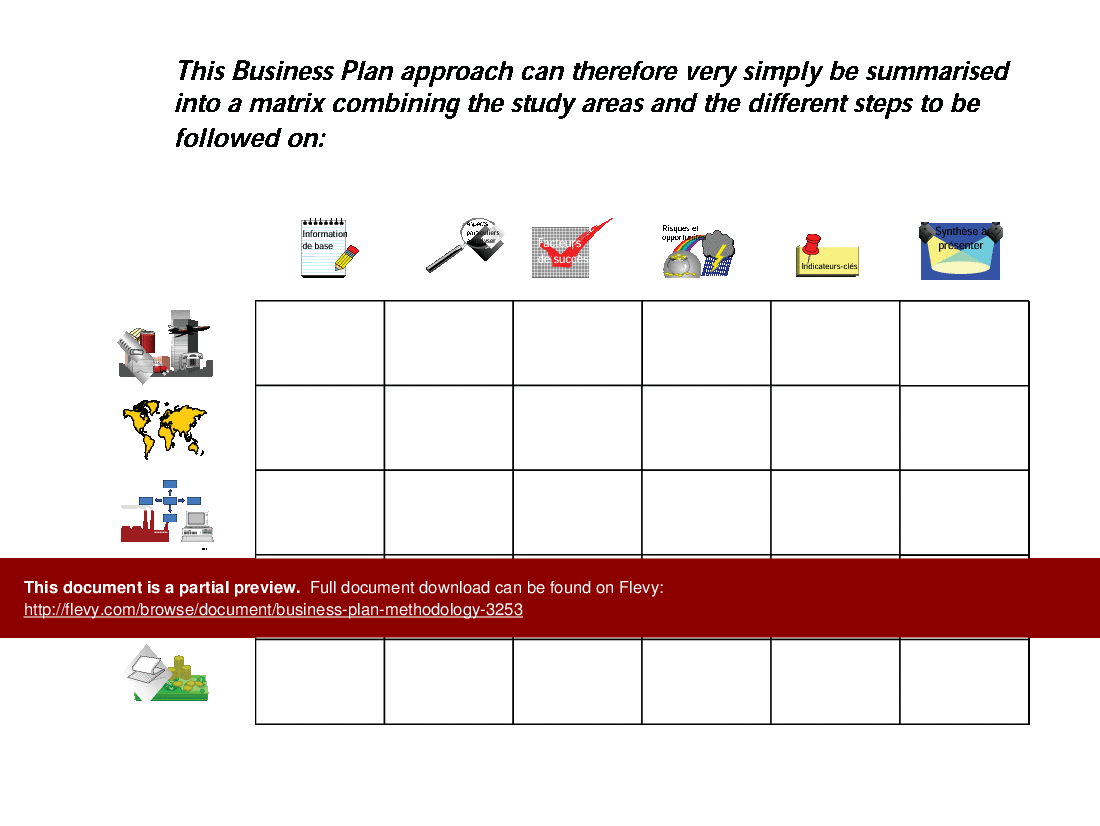







The Business Plan approach to offer a simple and easy solution to prepare a business plan. The approach is divided into 5 different areas. For each area, a 6 step approach has been defined to help collect the information and study the relevant issues. This Business Plan approach can therefore very simply be summarised into a matrix combining the study areas and the different steps to be followed on.
Each page of the survey outline matches with one of the boxes of the matrix and gives the major content of each of these steps for every area. When the overview is completed for each area their assembly will provide the Business Plan.
This document also delves into the intricacies of product and service evaluation. It outlines the essential information to be gathered, such as commercial leaflets, product specifications, and cost assessments. The methodology ensures a comprehensive qualitative and quantitative analysis of your offerings, providing a robust foundation for strategic decisions.
The document doesn't stop at just evaluating products and services. It also addresses the risks and opportunities associated with them. Factors like the emergence of new products, changes in the political and legal environment, and competitor activities are thoroughly examined. This helps in identifying potential threats and opportunities, enabling proactive management.
On top of that, the methodology includes a detailed market survey outline. It covers market potential, growth prospects, and the company's reputation within the market. By understanding these success factors, you can better position your company for market penetration and growth. This holistic approach ensures that every aspect of your business plan is meticulously crafted and aligned with your strategic objectives.
Got a question about the product? Email us at support@flevy.com or ask the author directly by using the "Ask the Author a Question" form. If you cannot view the preview above this document description, go here to view the large preview instead.
Executive Summary
The Business Plan Methodology PDF provides a structured framework for developing a comprehensive business plan. This document outlines a systematic approach divided into 5 key areas: Products/Services, Market, Production and Administrative Facilities, Staff and Management, and Finances. Each area is explored through a six-step process that includes gathering basic information, focusing on special issues, identifying success factors, assessing risks and opportunities, defining key indicators, and summarizing findings. This methodology enables users to create a detailed business plan that effectively addresses the company's offerings, market positioning, operational capabilities, human resources, and financial projections.
Who This Is For and When to Use
• Business executives seeking to create or refine a business plan
• Entrepreneurs launching new ventures or products
• Consultants assisting clients with business strategy development
• Financial analysts evaluating business viability and investment opportunities
Best-fit moments to use this deck:
• During the initial stages of business planning to establish a clear framework
• When conducting market analysis to identify opportunities and threats
• In preparation for investor presentations or funding applications
• For strategic reviews to assess business performance and future direction
Learning Objectives
• Define the core components of a business plan and their significance
• Build a comprehensive business plan using a structured methodology
• Analyze market conditions and customer needs effectively
• Identify and evaluate success factors and potential risks
• Establish key performance indicators to track business progress
• Summarize findings into actionable insights for stakeholders
Table of Contents
• Products/Services Overview (page 6)
• Market Analysis (page 13)
• Production and Administrative Facilities (page 20)
• Staff and Management Assessment (page 27)
• Financial Overview (page 34)
Primary Topics Covered
• Products/Services - This section focuses on the company's offerings, including product specifications, market viability, and customer feedback.
• Market - Analyzes the competitive landscape, market trends, and customer segmentation to position the company effectively.
• Production and Administrative Facilities - Evaluates operational capabilities, efficiency, and resource management to ensure effective production processes.
• Staff and Management - Assesses human resources, management effectiveness, and organizational structure to support business objectives.
• Finances - Provides a financial overview, including historical performance, forecasts, and key financial indicators to evaluate business health.
Deliverables, Templates, and Tools
• Business plan template outlining key sections and required information
• Market analysis framework for assessing competitive positioning
• Financial projection model for budgeting and forecasting
• Risk assessment tool to identify and evaluate potential threats
• Success factors checklist to ensure critical elements are addressed
Slide Highlights
• Overview slide summarizing the 5 key areas of the business plan
• Matrix slide illustrating the relationship between study areas and steps
• Visual representation of market analysis findings and trends
• Key performance indicators slide outlining metrics for success
• Executive summary slide capturing the main conclusions and action plan
Potential Workshop Agenda
Business Plan Development Session (90 minutes)
• Introduce the business plan methodology and its components
• Break down each key area and discuss information requirements
• Collaborate on identifying success factors and risks
Market Analysis Workshop (60 minutes)
• Review market research findings and competitive landscape
• Discuss customer needs and segmentation strategies
• Identify opportunities for market penetration
Financial Planning Session (60 minutes)
• Analyze historical financial performance and forecasts
• Discuss key financial indicators and their implications
• Develop a financial action plan based on insights
Customization Guidance
• Tailor the business plan template to reflect specific industry requirements
• Adjust financial projections based on unique business circumstances
• Incorporate company-specific terminology and metrics for clarity
• Adapt success factors and risks to align with organizational goals
Secondary Topics Covered
• Competitive analysis methodologies
• Customer feedback mechanisms
• Operational efficiency metrics
• Human resource management strategies
• Financial risk management practices
Topic FAQ
Document FAQ
These are questions addressed within this presentation.
What is the purpose of the Business Plan Methodology?
The methodology provides a structured approach to developing a comprehensive business plan that addresses key areas of business operations and strategy.
How is the business plan structured?
The business plan is divided into 5 main areas: Products/Services, Market, Production and Administrative Facilities, Staff and Management, and Finances, each with specific steps for analysis.
What are the key components of a successful business plan?
A successful business plan includes clear definitions of products/services, market analysis, operational capabilities, human resources assessment, and financial projections.
How can I customize the business plan for my industry?
You can tailor the template to reflect industry-specific requirements, adjust financial forecasts, and incorporate relevant terminology.
What tools are included in the methodology?
The methodology includes templates for business planning, market analysis frameworks, financial projection models, and risk assessment tools.
How do I assess market opportunities?
Market opportunities can be assessed through competitive analysis, customer segmentation, and trend analysis to identify areas for growth.
What should I focus on when evaluating financial performance?
Focus on historical performance, forecasts, key financial indicators, and overall financial health to gauge business viability.
How can I identify success factors for my business?
Success factors can be identified through market research, customer feedback, and analysis of competitive advantages.
Glossary
• Business Plan - A formal document outlining a company's goals, strategies, and financial forecasts.
• Market Analysis - The process of assessing market conditions, competition, and customer needs.
• Success Factors - Key elements that contribute to the success of a business or project.
• Financial Projections - Estimates of future financial performance based on historical data and market trends.
• Risk Assessment - The identification and evaluation of potential risks that could impact business operations.
• Key Performance Indicators (KPIs) - Metrics used to measure the success and performance of a business.
• Operational Efficiency - The ability to deliver products or services in the most cost-effective manner.
• Customer Segmentation - The process of dividing a customer base into distinct groups based on characteristics or behaviors.
• Competitive Analysis - The assessment of competitors to identify strengths, weaknesses, and market positioning.
• Organizational Structure - The arrangement of roles, responsibilities, and communication within a company.
• Financial Health - The overall state of a company's financial condition, including profitability and liquidity.
• Market Trends - Patterns or movements in the market that indicate changes in consumer behavior or industry dynamics.
Source: Best Practices in Business Plan Writing PDF: Business Plan Methodology PDF (PDF) Document, Documents & Files
|
Download our FREE Strategy & Transformation Framework Templates
Download our free compilation of 50+ Strategy & Transformation slides and templates. Frameworks include McKinsey 7-S, Balanced Scorecard, Disruptive Innovation, BCG Curve, and many more. |










