
For the first timer, developing a business plan can be daunting. In our simple guide we explain the importance of a bsuiness plan and just as critical the imprtance of having a compelling business idea for your your business in the first point.
We then step by step take you through the 8 key elements of a good business plan and provide you with checklists at the end of each sections. These eight are:
1) Product/ Service – what is it your are providing?
2) The Market and Competition
3) Marketing
4) Business System
5) Organization and HR
6) Opportunities and Risks
7) Implementation Schedule
8) A financial Plan
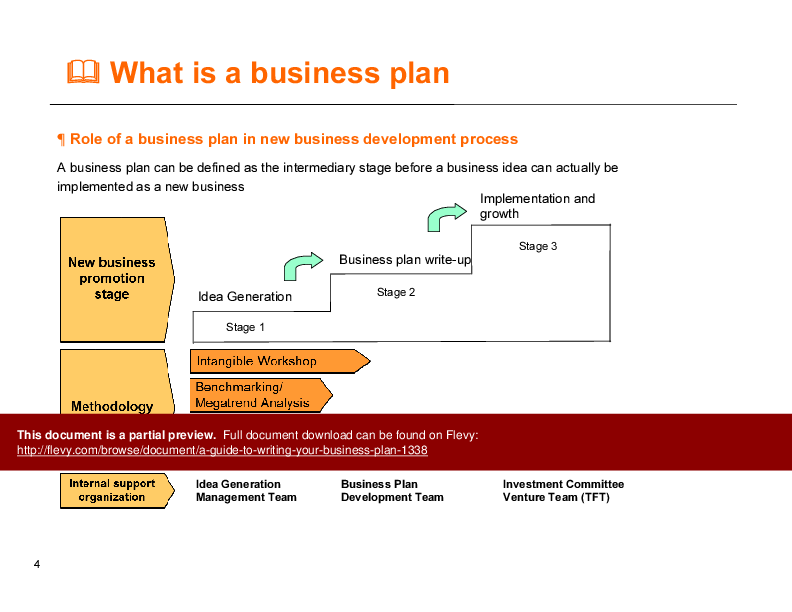
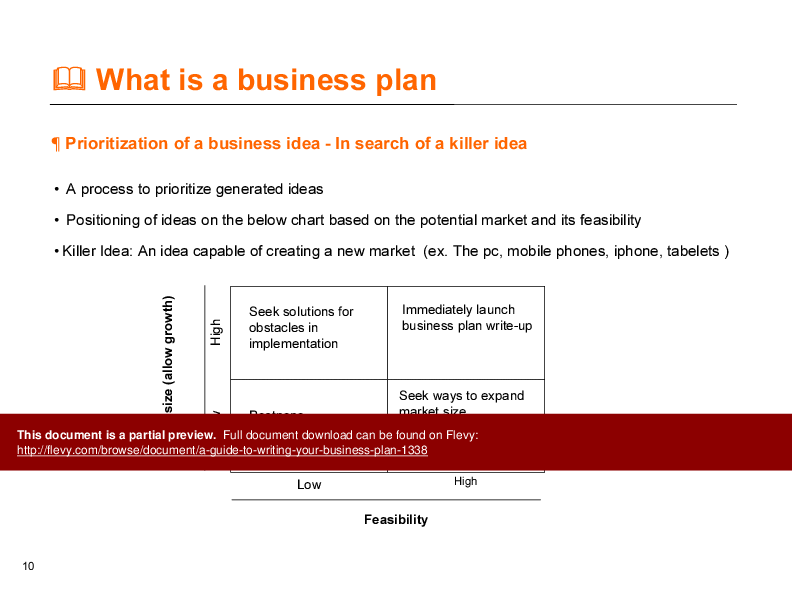
This guide delves into the fundamental aspects of crafting a business plan, starting with a clear definition and the role it plays in new business development. It emphasizes the significance of a compelling business idea and provides a structured approach to developing and prioritizing these ideas. The PPT outlines the intermediary stages from idea generation to implementation and growth, ensuring a comprehensive understanding of the process.
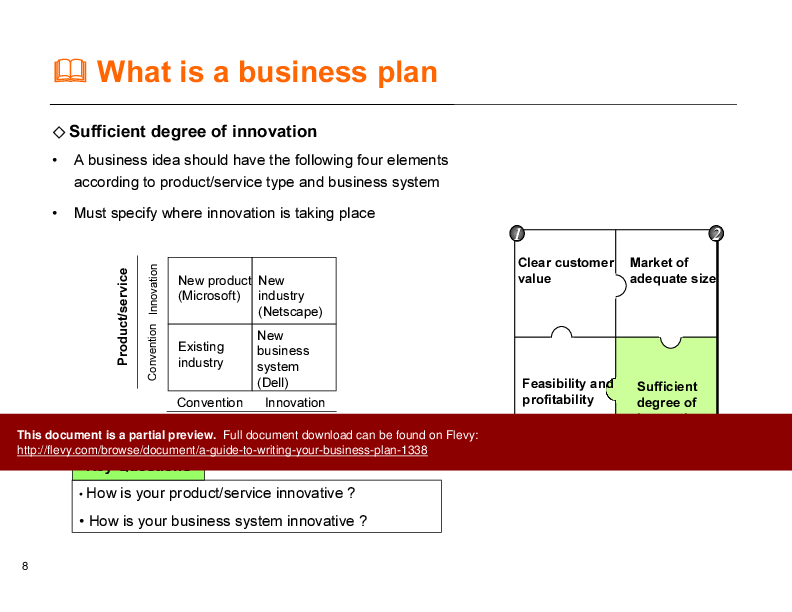
The guide also highlights the importance of clear customer value, market size, feasibility, and innovation. It includes practical examples and key questions to help you evaluate the uniqueness and potential of your business idea. The focus on customer satisfaction and market adequacy ensures that your business idea is not only innovative, but also viable and profitable.
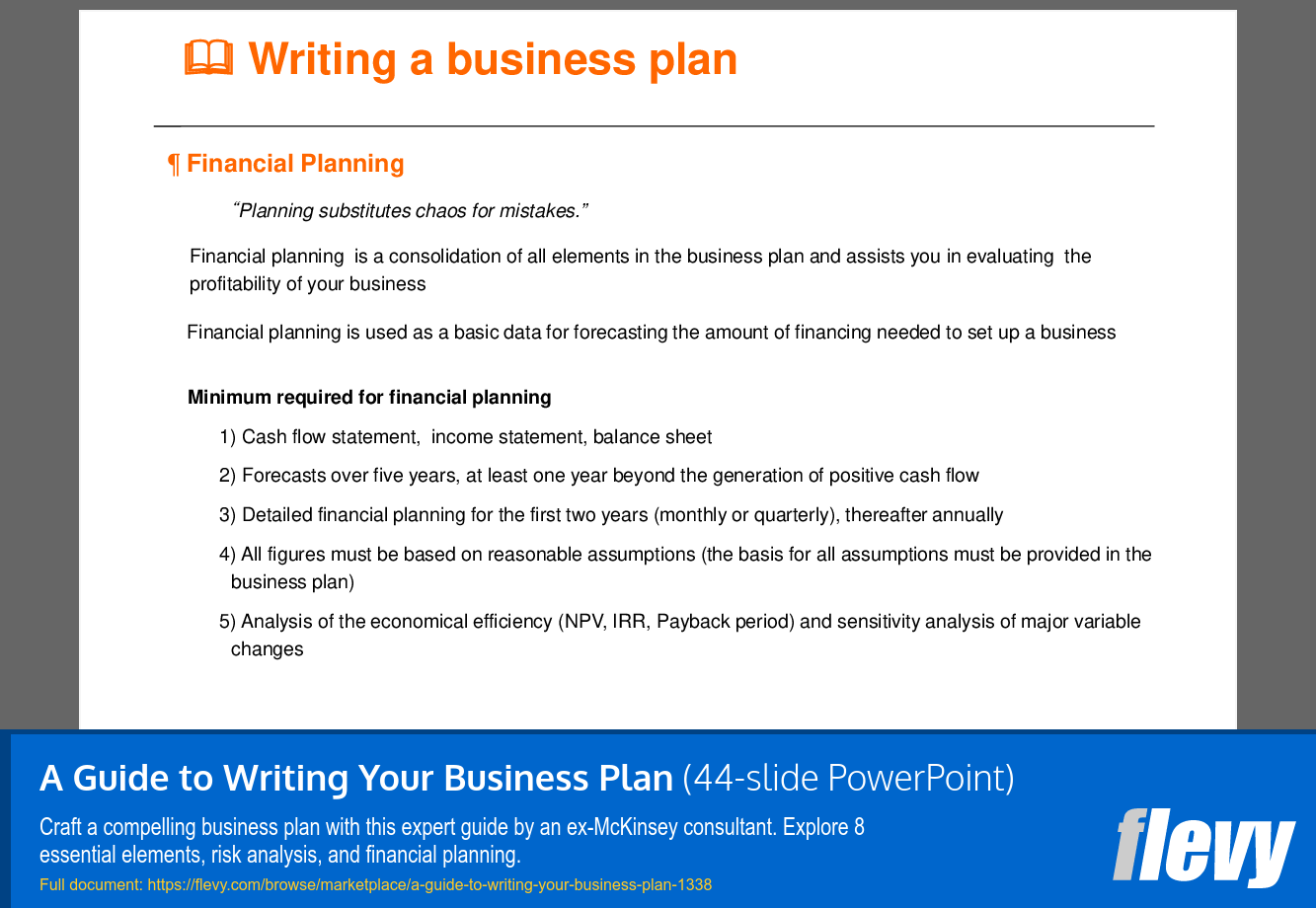
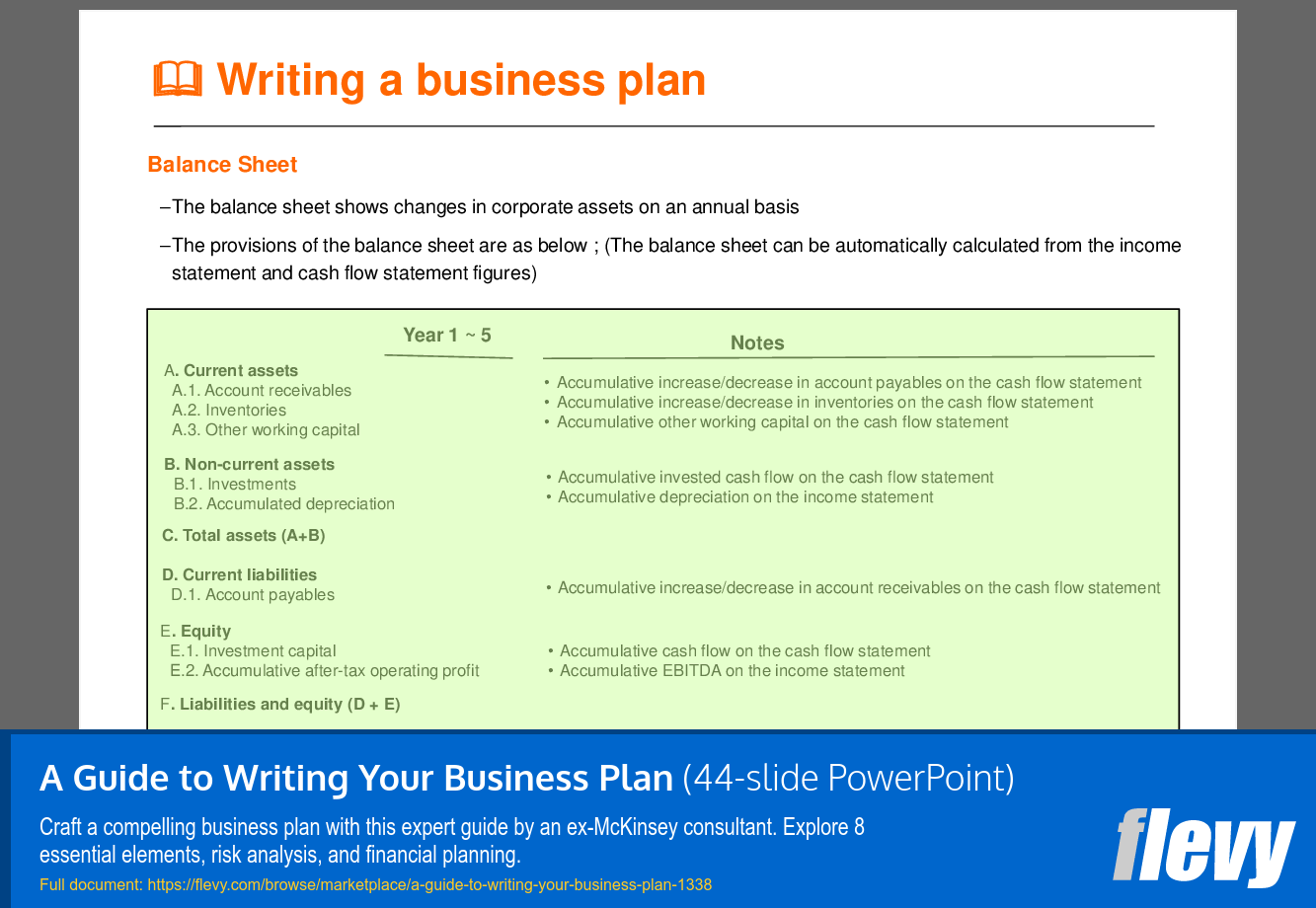
A thorough analysis of risks and opportunities is provided, along with a detailed financial planning section. This includes cash flow statements, income statements, and balance sheets, ensuring that all financial aspects are covered. The guide also includes checklists for each section, ensuring that you have covered all necessary elements in your business plan. This comprehensive approach guarantees that your business plan is well-rounded and ready for implementation.
Got a question about the product? Email us at support@flevy.com or ask the author directly by using the "Ask the Author a Question" form. If you cannot view the preview above this document description, go here to view the large preview instead.
Executive Summary
This presentation, titled "A Guide to Writing Your Business Plan," serves as a comprehensive toolkit for developing a robust business plan. It outlines essential components such as market analysis, financial planning, risk assessment, and implementation strategies. By following this structured framework, users will be equipped to create a detailed business plan that not only articulates their business idea, but also serves as a roadmap for successful execution. This guide is ideal for entrepreneurs and business leaders looking to formalize their business strategies and secure funding.
Who This Is For and When to Use
• Entrepreneurs seeking to launch a new business or product.
• Business leaders looking to refine existing business plans.
• Consultants assisting clients in business development.
• Investors evaluating potential business opportunities.
Best-fit moments to use this deck:
• During the initial stages of business development to outline key strategies.
• When preparing for investor meetings or funding applications.
• As a reference during business plan competitions or workshops.
Learning Objectives
• Define the essential components of a business plan.
• Build a comprehensive market analysis to identify opportunities.
• Establish a financial plan that includes cash flow, income statements, and balance sheets.
• Analyze risks and opportunities associated with the business idea.
• Create a detailed implementation schedule using Gantt charts.
• Develop clear value propositions to attract customers.
Table of Contents
• What Is a Business Plan (page 2)
• Writing a Business Plan (page 12)
• Elements of a Good Business Plan (page 15)
• Market and Competition (page 19)
• Financial Planning (page 36)
• Implementation Schedule (page 33)
Primary Topics Covered
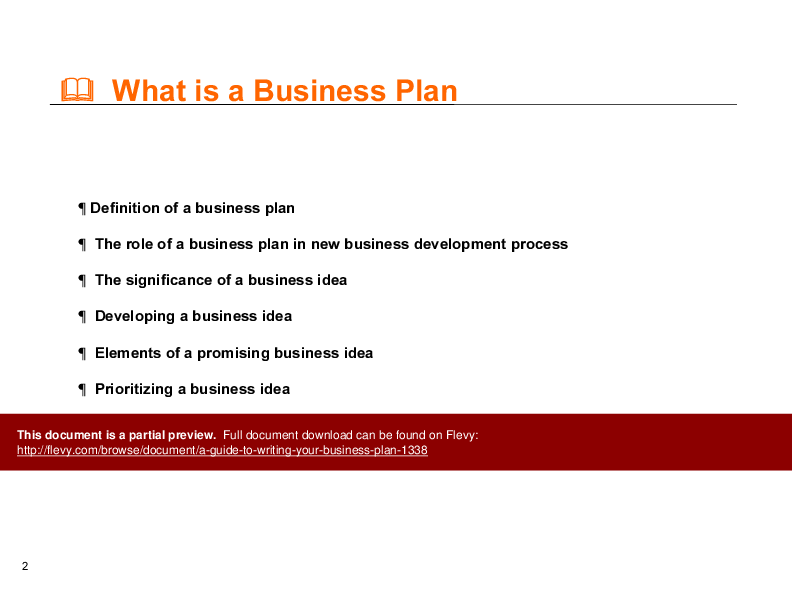
• Definition of a Business Plan - A business plan serves as a detailed roadmap for transforming a business idea into a viable operation, outlining critical factors such as market analysis and financial planning.
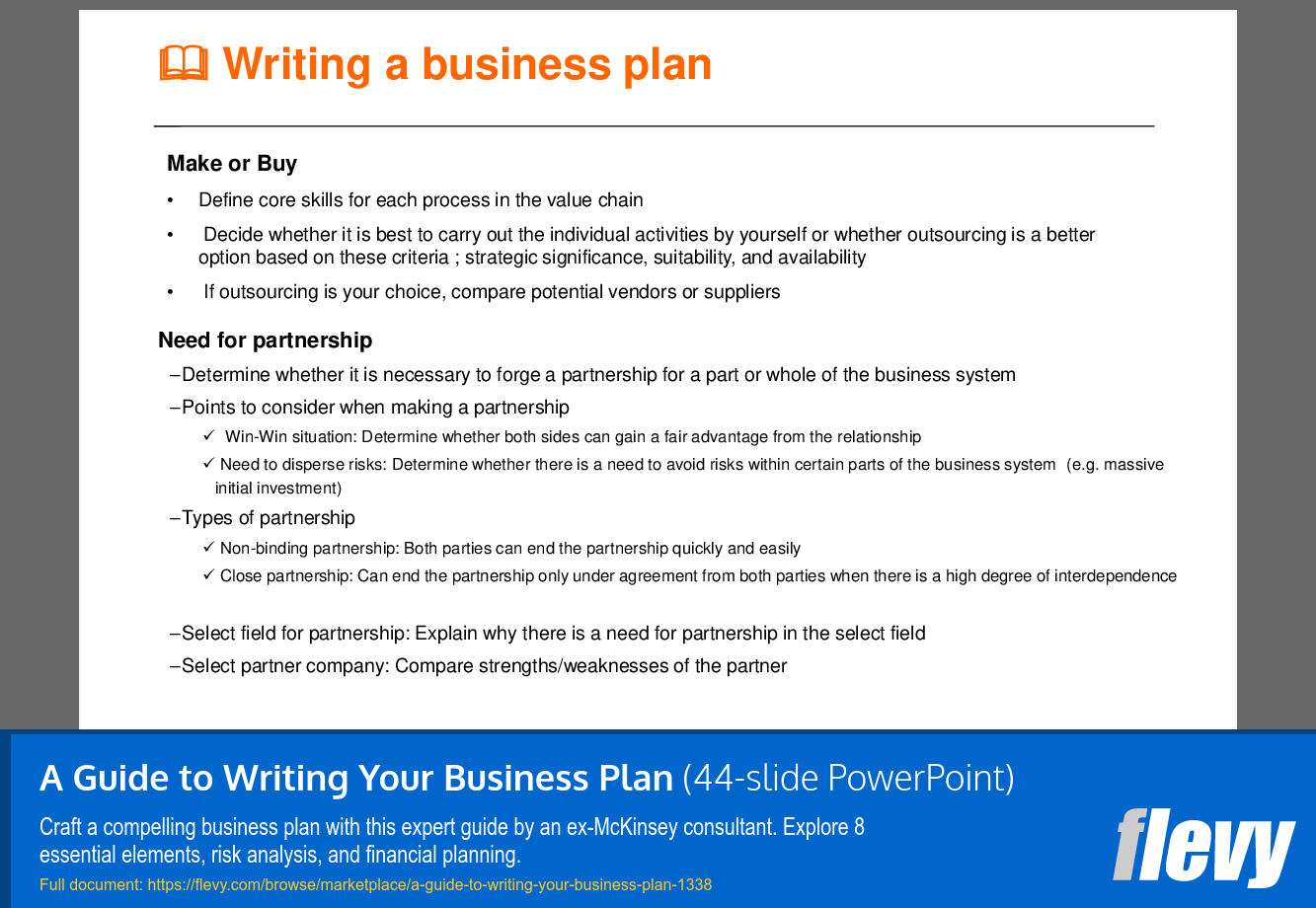
• Elements of a Business Plan - Key components include product/service description, market analysis, marketing strategies, organizational structure, risk assessment, and financial projections.
• Market Analysis - Analyzing market size, growth potential, and competition to identify opportunities and threats in the business landscape.
• Financial Planning - Establishing cash flow statements, income statements, and balance sheets to assess the financial viability of the business.
• Implementation Schedule - Creating a Gantt chart to outline major tasks, milestones, and interdependencies in the business launch process.
• Risk and Opportunity Analysis - Evaluating potential risks and opportunities to develop strategies for managing uncertainties in the business environment.
Deliverables, Templates, and Tools
• Business plan template that includes sections for market analysis, financial planning, and risk assessment.
• Gantt chart template for visualizing the implementation schedule.
• Checklist for evaluating the completeness of the business plan.
• Financial statement templates for cash flow, income, and balance sheets.
• Risk analysis framework to identify and mitigate potential business risks.
Slide Highlights
• Overview of the business plan components, emphasizing the importance of each section.
• Visual representation of market segmentation and competitive analysis.
• Sample Gantt chart illustrating the timeline for business implementation.
• Key questions to consider when defining customer value and market size.
• Checklist for ensuring the business plan meets essential criteria for clarity and objectivity.
Potential Workshop Agenda
Introduction to Business Planning (30 minutes)
• Overview of the business plan structure and its importance.
• Discussion on the role of a business plan in securing funding.
Market Analysis Session (60 minutes)
• Breakout groups to analyze market opportunities and competition.
• Present findings and discuss strategies for market entry.
Financial Planning Workshop (90 minutes)
• Hands-on session to develop financial statements and projections.
• Review of key financial metrics and their implications for the business.
Implementation Planning (60 minutes)
• Collaborative creation of a Gantt chart for the business launch.
• Discussion on task interdependencies and milestone tracking.
Customization Guidance
• Tailor the business plan template to reflect specific industry standards and terminologies.
• Adjust financial projections based on realistic market conditions and assumptions.
• Incorporate unique value propositions that resonate with target customer segments.
Secondary Topics Covered
• Strategies for protecting intellectual property and business ideas.
• Methods for conducting effective market research.
• Approaches to risk management and opportunity identification.
• Best practices for creating compelling marketing strategies.
• Importance of organizational structure and HR considerations in business planning.
Topic FAQ
Document FAQ
These are questions addressed within this presentation.
What is the primary purpose of a business plan?
A business plan serves as a roadmap for turning a business idea into a viable operation, detailing strategies for market entry, financial planning, and risk management.
What key components should be included in a business plan?
Essential components include a description of the product/service, market analysis, marketing strategies, organizational structure, financial projections, and an implementation schedule.
How can I ensure my business plan is effective?
Focus on clarity, objectivity, and simplicity. Use data-driven insights to support your claims and ensure that the plan is comprehensible to stakeholders without prior knowledge of your business.
What is the importance of market analysis in a business plan?
Market analysis helps identify opportunities and threats in the business environment, allowing for informed decision-making and strategy development.
How do I create a financial plan for my business?
Develop cash flow statements, income statements, and balance sheets based on realistic assumptions. Ensure that all figures are supported by data and provide a clear picture of financial viability.
What is a Gantt chart, and how is it used in business planning?
A Gantt chart is a visual representation of the project timeline, outlining major tasks, milestones, and interdependencies, which helps in tracking progress and ensuring timely execution.
How can I assess risks associated with my business idea?
Conduct a risk analysis that evaluates potential market, competition, and technological risks, and develop strategies to mitigate these risks.
What should I consider when defining customer value?
Identify who your customers are, what needs your product/service fulfills, and how it compares to competitors' offerings in terms of unique value.
Glossary
• Business Plan - A detailed document outlining the strategy for a new business, including market analysis and financial planning.
• Market Analysis - The process of evaluating market size, growth potential, and competition.
• Financial Planning - The process of creating financial statements and projections to assess business viability.
• Gantt Chart - A visual tool used to outline project timelines, tasks, and milestones.
• Risk Analysis - The evaluation of potential risks associated with a business idea and strategies for mitigation.
• Value Proposition - A statement that explains how a product/service meets customer needs better than competitors.
• Implementation Schedule - A timeline outlining major tasks and milestones for launching a business.
• Cash Flow Statement - A financial document that shows the inflow and outflow of cash in a business.
• Income Statement - A financial report that summarizes revenues and expenses over a specific period.
• Balance Sheet - A financial statement that provides a snapshot of a company's assets, liabilities, and equity at a specific point in time.
• Market Segmentation - The process of dividing a market into distinct groups of buyers with different needs or characteristics.
• Competitive Analysis - The assessment of competitors' strengths and weaknesses in relation to your business.
Source: Best Practices in Business Plan Writing PowerPoint Slides: A Guide to Writing Your Business Plan PowerPoint (PPT) Presentation Slide Deck, Chloe2013
|
Download our FREE Strategy & Transformation Framework Templates
Download our free compilation of 50+ Strategy & Transformation slides and templates. Frameworks include McKinsey 7-S, Balanced Scorecard, Disruptive Innovation, BCG Curve, and many more. |










