 Click main image to view in full screen.
Best Practice Guide for Financial Services ERM Architecture – PowerPoint PPTX Template
PowerPoint (PPTX) + Word (DOCX) 60 Slides


BENEFITS OF THIS DOWNLOADABLE POWERPOINT DOCUMENT
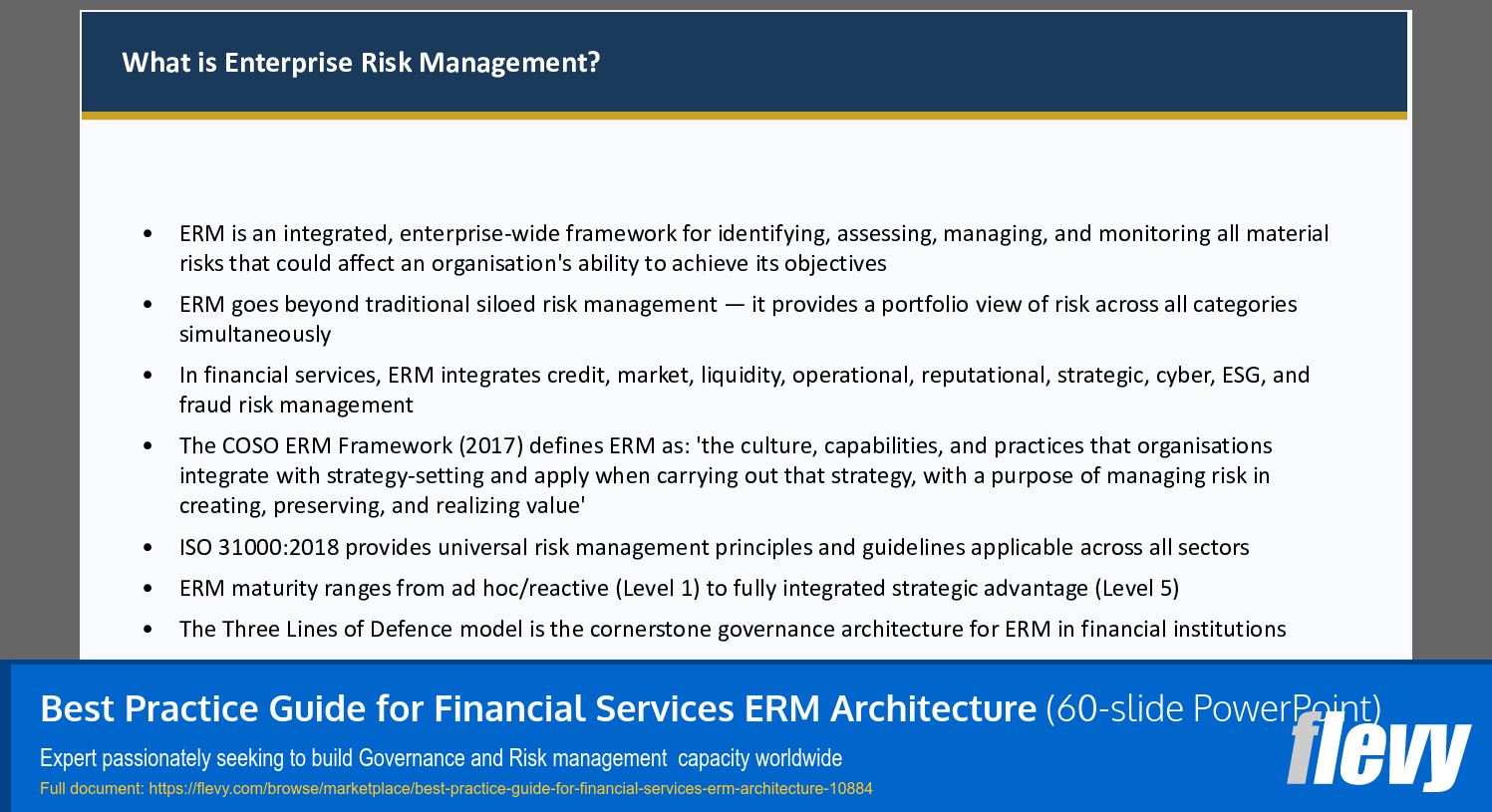
- This guide provides a practical blueprint for building a resilient, regulator-ready Enterprise Risk Management (ERM) program for banks and financial institutions
- The guide translates global best-practice frameworks such ISO 31000, COSO ERM), and Basel standards into clear actionable steps for ease of comprehension and implementation by practitioners
- The guide helps financial institutions strengthen governance, anticipate emerging risks, and build a truly resilient risk culture that protects long-term stability
RISK MANAGEMENT PPT TEMPLATE DESCRIPTION
In an era defined by financial volatility, technological disruption, and intensifying regulatory scrutiny, banks and financial institutions require built on stone Enterprise Risk Management (ERM) frameworks that are not merely compliant but structurally resilient and strategically integrated. The Enterprise Risk Management Best Practice Guide for Financial Services (both in word and ppt) provides a comprehensive reference architecture for designing a "bond-proof" ERM program capable of safeguarding institutional stability, protecting stakeholder trust, and enabling sustainable value creation in an increasingly complex risk environment.
The guide consolidates globally recognised risk management standards—including ISO 31000, COSO ERM, Basel III, NIST Cybersecurity Framework, IFRS S1 & S2, GRI sustainability standards, and the ACFE fraud prevention framework—into a single integrated risk governance model tailored for financial institutions.
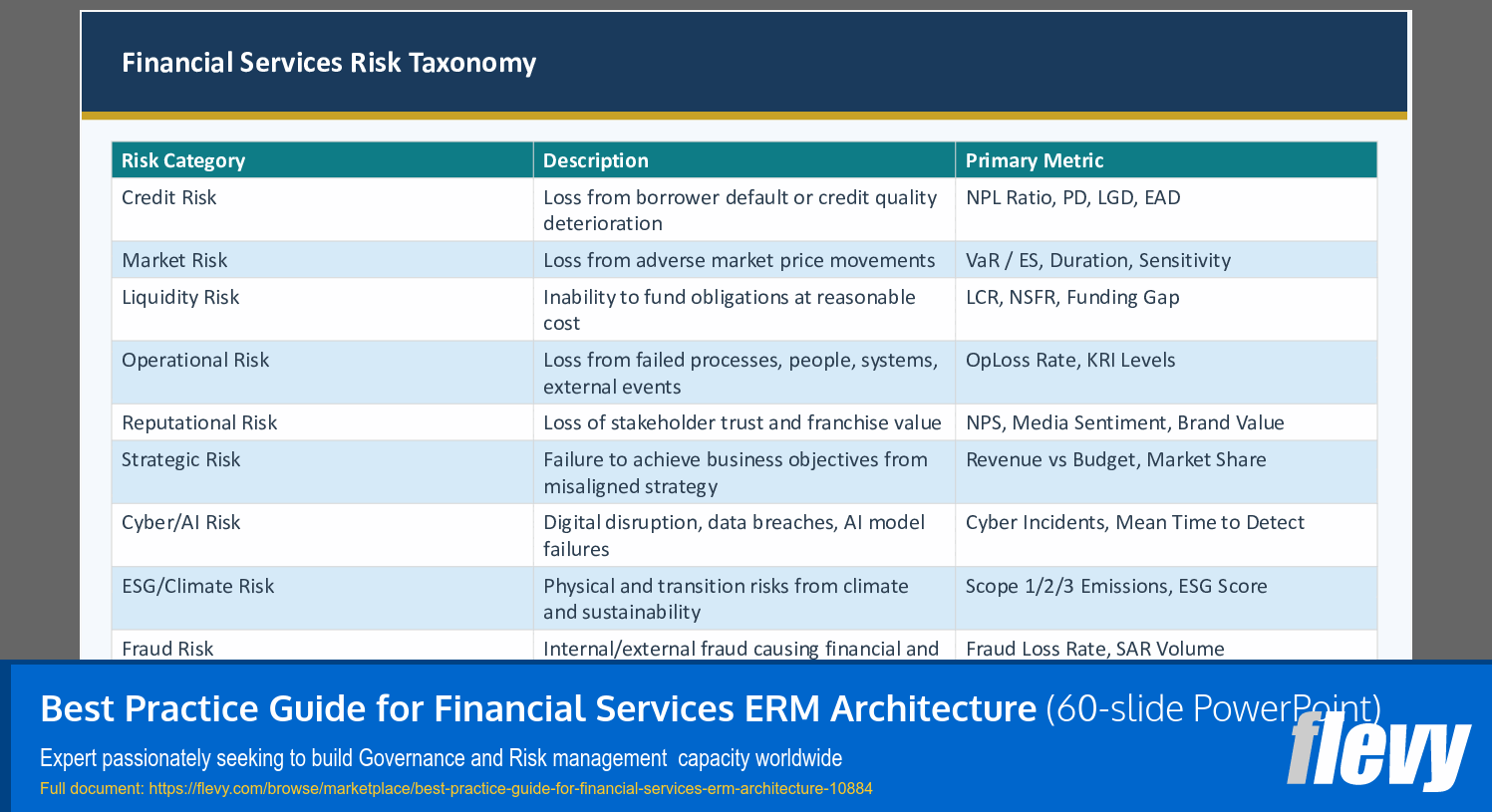
This alignment allows banks and financial services institutions (FIs) to architect ERM programs that simultaneously address regulatory compliance, strategic risk oversight, operational resilience, and emerging threats such as cyber risk, AI risk, climate risk, and financial crime.
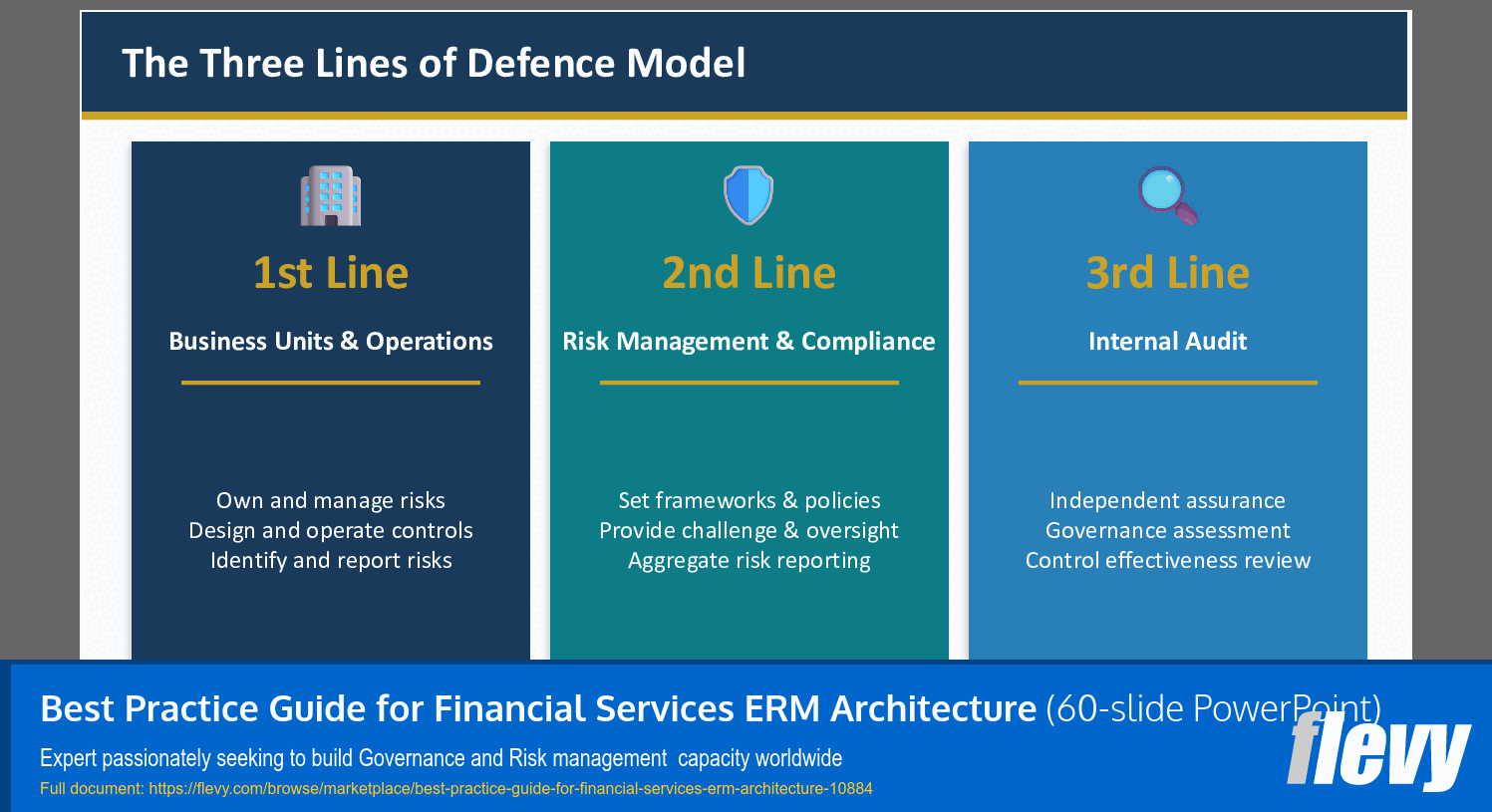
A key value proposition of the guide lies in its practitioner-oriented design. It translates global standards into a simplified practical governance structures, risk measurement methodologies, and decision-making frameworks. These include risk appetite frameworks, risk quantification models such as Value-at-Risk and Expected Shortfall, operational risk tools such as RCSA and KRIs, and governance mechanisms such as the Board Risk Committee and the Three Lines of Defence model.
The guide also draws on real-world case studies—including the failures of Silicon Valley Bank, Barings Bank, and Northern Rock—to demonstrate how weak risk governance can rapidly threaten institutional survival.
By integrating financial, operational, strategic, technological, and reputational risk domains into a unified framework, the reference guide enables institutions to move beyond fragmented risk management toward enterprise-wide risk intelligence and proactive resilience building. Ultimately, adopting this best-practice ERM architecture empowers banks and financial institutions to anticipate emerging risks, optimise capital allocation, strengthen governance, and maintain systemic trust—thereby ensuring long-term stability and competitiveness in the global financial system.
Got a question about the product? Email us at support@flevy.com or ask the author directly by using the "Ask the Author a Question" form. If you cannot view the preview above this document description, go here to view the large preview instead.
Source: Best Practices in Risk Management PowerPoint Slides: Best Practice Guide for Financial Services ERM Architecture PowerPoint (PPTX) Presentation Slide Deck, Patrick Gitau




























