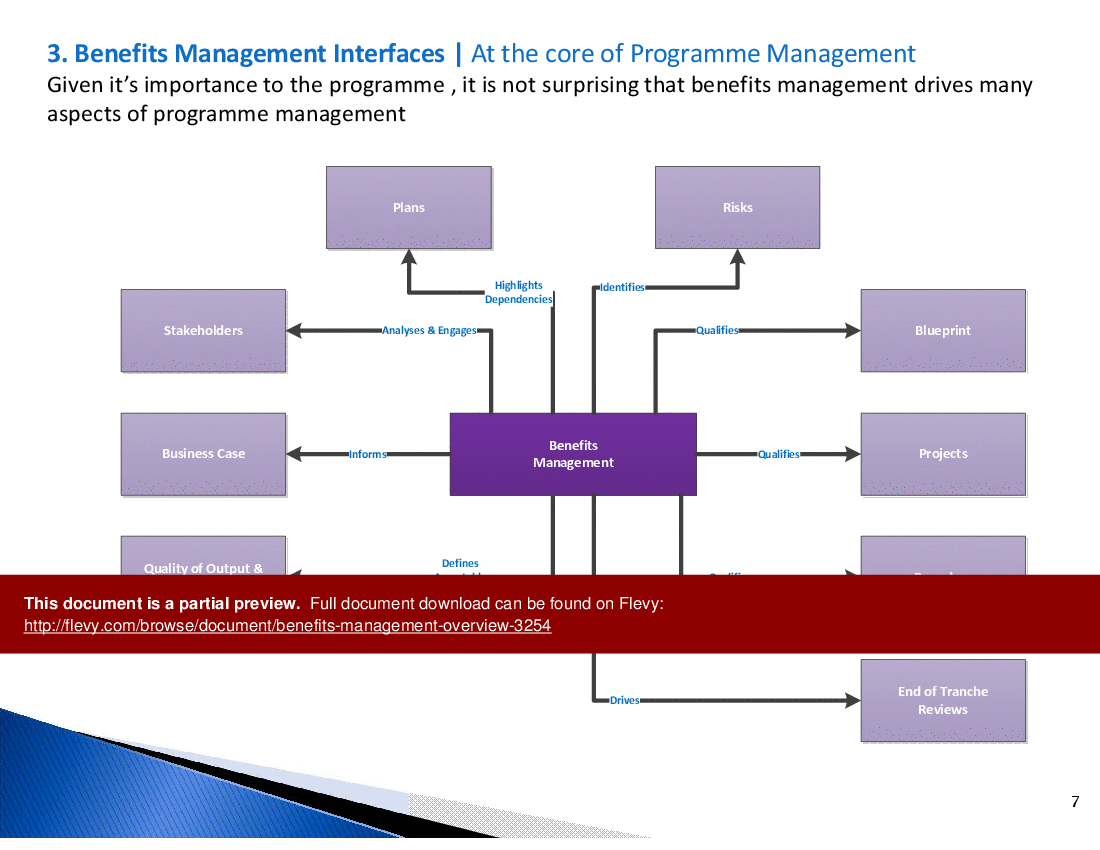

Learn and understand the Benefits Management lifecycle and process. Stakeholder Engagement, Categorisation, developing the Benefits Map, Benefit Profiles and the Benefits Realisation Plan. When and how to conduct Benefit Reviews. How to prepare the business for accepting the changes required to achieve benefit realisation. Key roles and responsibilities at each stage
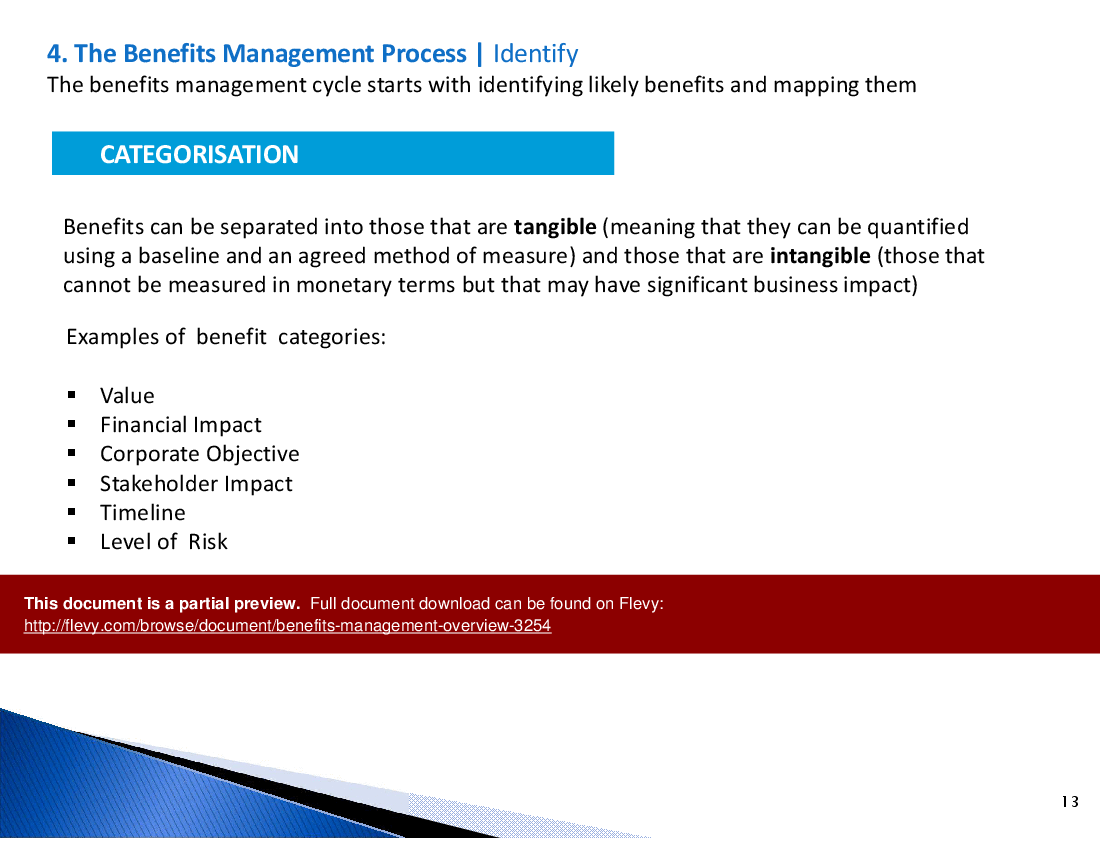
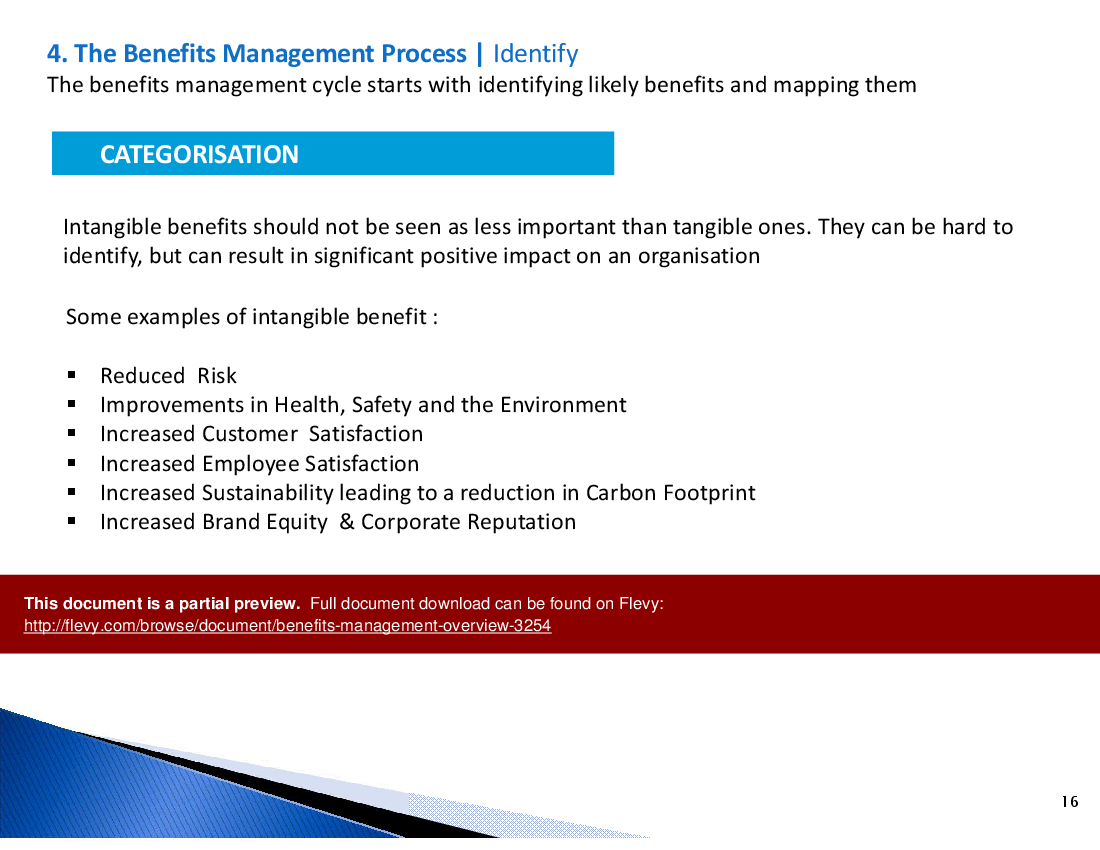
Benefit categorization is essential for understanding the tangible and intangible impacts on your organization. Tangible benefits, such as financial impact and stakeholder influence, can be quantified using agreed methods. Intangible benefits, like increased customer satisfaction and reduced risk, though harder to measure, can significantly affect business performance. This PPT provides a detailed framework for identifying and categorizing these benefits to ensure thorough analysis and strategic alignment.
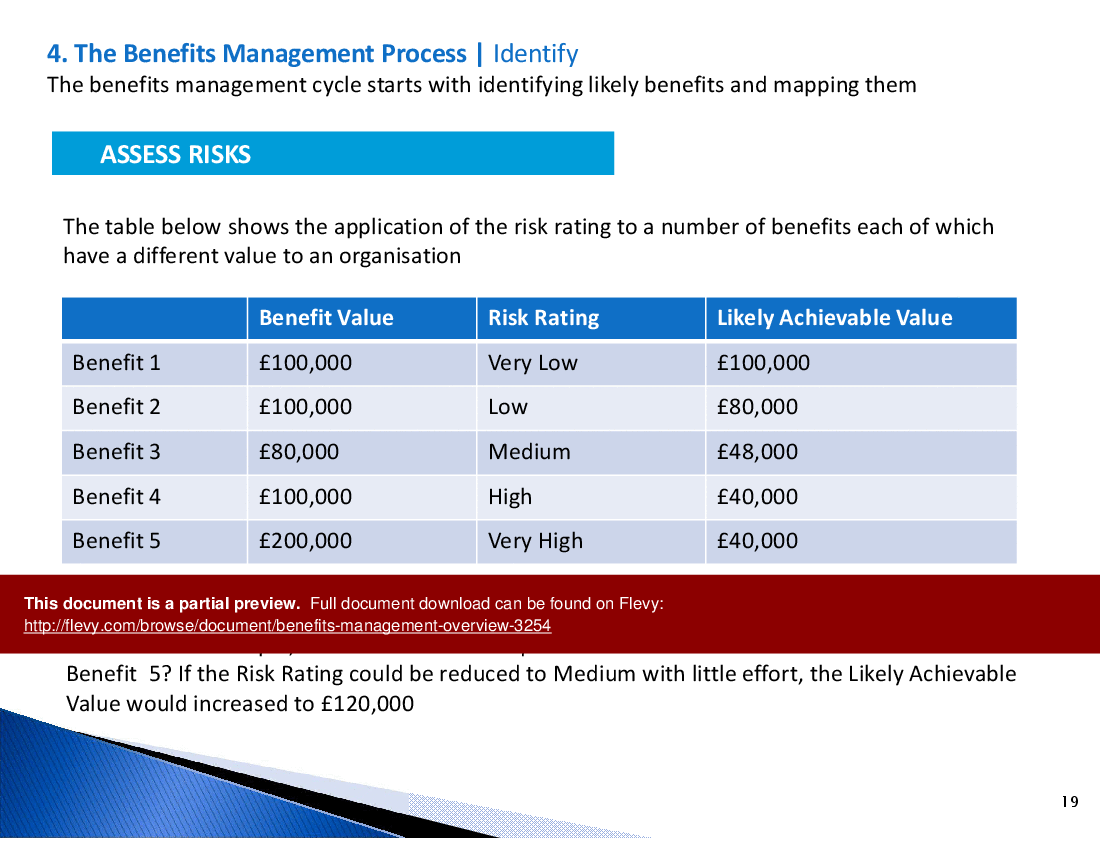
Risk assessment is a critical component of benefits management. The document includes a detailed table illustrating how different risk ratings impact the achievable value of benefits. This helps in prioritizing efforts and resources to mitigate risks effectively. By understanding the potential risks and their implications, you can make informed decisions to maximize benefit realization and ensure project success.
Managing the transition phase is crucial for embedding new working practices and achieving business transformation. The document outlines the responsibilities of the Business Change Manager in ensuring that business areas are stable and ready to adopt changes. It also emphasizes the importance of removing access to legacy systems to prevent regression. This comprehensive guide ensures that all aspects of benefits management are covered, from planning to post-transition, providing a robust roadmap for successful implementation.
Got a question about the product? Email us at support@flevy.com or ask the author directly by using the "Ask the Author a Question" form. If you cannot view the preview above this document description, go here to view the large preview instead.
Executive Summary
The Benefits Management Overview presentation provides a comprehensive framework for understanding and implementing effective benefits management within organizations. It outlines the definition of benefits, the necessity of benefits management, and the structured approach to realizing benefits from change initiatives such as projects and programs. By adopting this framework, organizations can significantly enhance their chances of achieving the intended positive impacts and benefits, ensuring alignment with strategic objectives and maximizing stakeholder value.
Who This Is For and When to Use
• Project Managers overseeing change initiatives
• Program Managers responsible for benefits realization
• Senior Executives focused on strategic alignment
• Change Management Professionals facilitating transitions
• Portfolio Managers coordinating multiple initiatives
Best-fit moments to use this deck:
• During the initiation phase of a new project or program
• When aligning benefits with organizational strategy
• For training sessions on benefits management practices
• In stakeholder engagement workshops to define and quantify benefits
Learning Objectives
• Define what constitutes a benefit and its importance in organizational success
• Establish a structured benefits management framework that aligns with strategic objectives
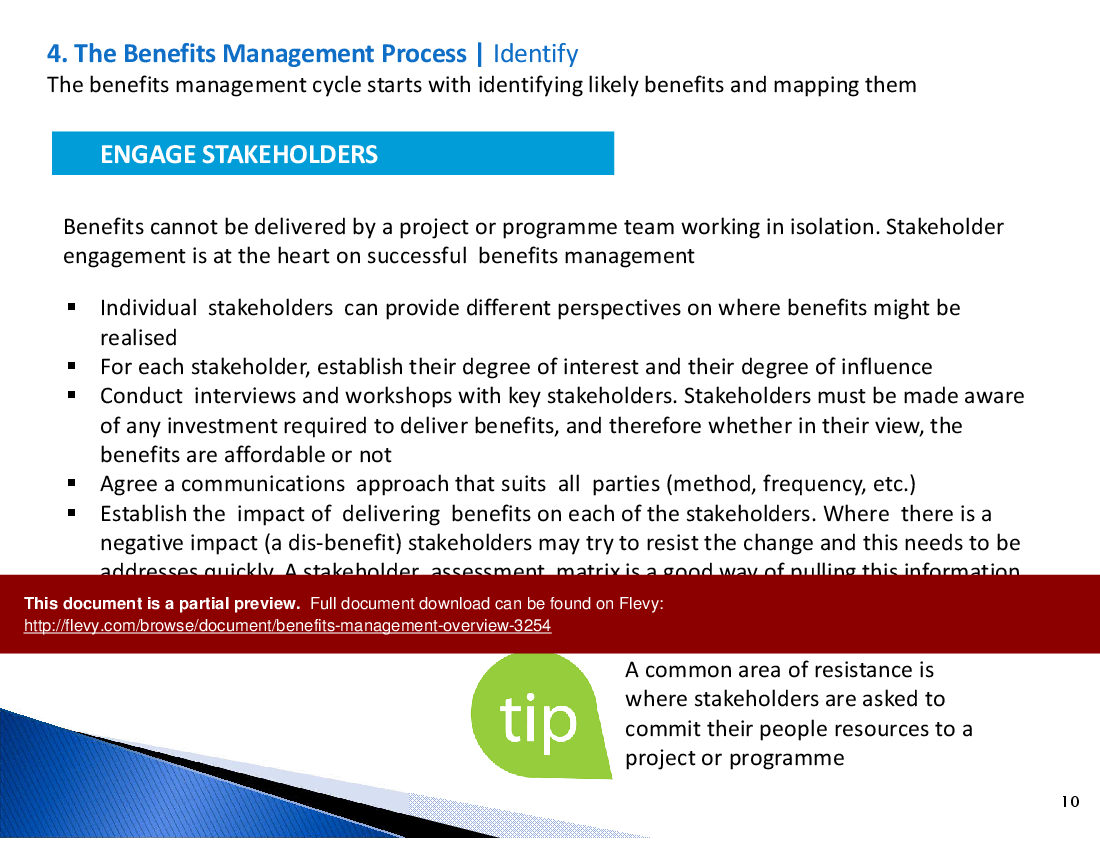
• Identify and quantify potential benefits through stakeholder engagement
• Develop a comprehensive benefits realization plan to track and report on benefits
• Implement effective governance and performance management practices
• Foster a culture that prioritizes value creation and benefits realization
Table of Contents
• What is a Benefit? (page 3)
• What is Benefits Management? (page 4)
• Why Do We Need Benefits Management? (page 5)
• The Benefits Management Framework (page 6)
• The Principles (page 7)
• The Practices (page 24)
• Roles & Responsibilities (page 78)
Primary Topics Covered
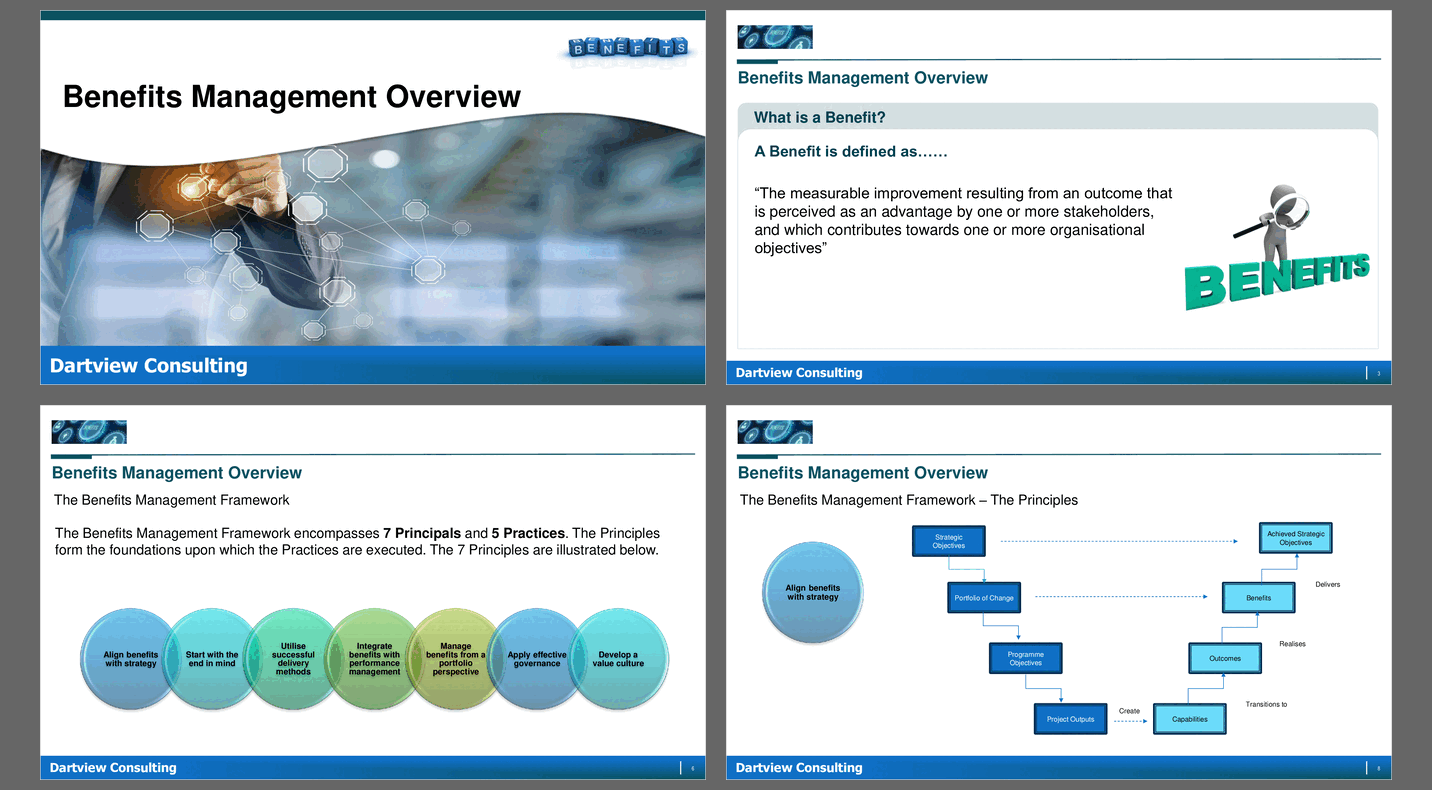
• Definition of Benefit - A measurable improvement perceived as advantageous by stakeholders, contributing to organizational objectives.
• Benefits Management Process - The organized approach to ensuring identified benefits are realized through structured frameworks.
• Benefits Management Framework - A comprehensive model encompassing principles and practices for effective benefits realization.
• Principles of Benefits Management - Seven foundational principles guiding the execution of benefits management practices.
• Benefits Identification Workshop - A structured session for engaging stakeholders to identify and quantify potential benefits.
• Governance in Benefits Management - The policies and processes ensuring accountability and effective management of benefits realization.
Deliverables, Templates, and Tools
• Benefits Map template for visualizing the relationship between benefits and strategic objectives
• Benefits Realization Plan template for tracking and reporting on benefits
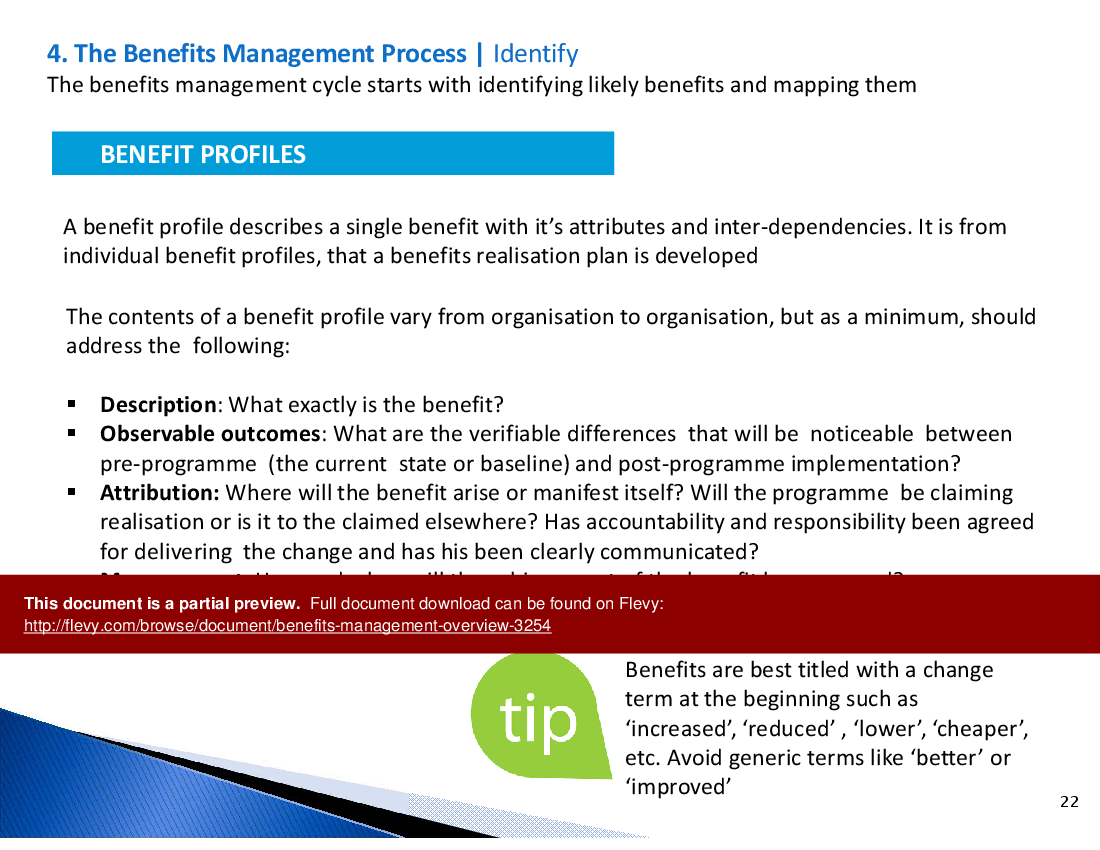
• Benefit Profile document for capturing details of individual benefits
• Governance framework outline for establishing accountability and oversight
• Stakeholder engagement workshop agenda for benefits identification
• Benefits categorization model for consistent evaluation and reporting
Slide Highlights
• Overview of the Benefits Management Framework illustrating key principles and practices
• Definition of a benefit with examples of strategic objectives and their corresponding benefits
• Comparison between activity-centered and benefits-led approaches to change
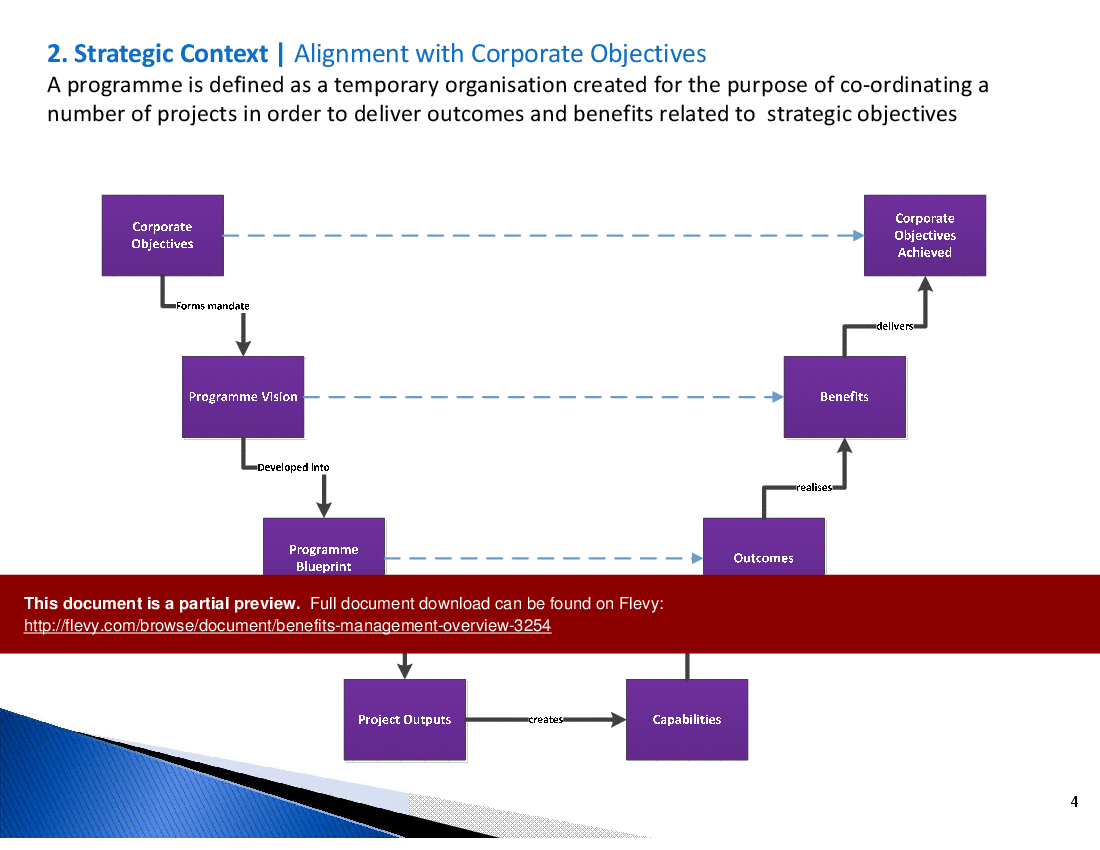
• Visual representation of the Benefits Map showing the benefits chain reaction
• Examples of benefits measurement criteria and categorization models
Potential Workshop Agenda
Benefits Identification Workshop (90 minutes)
• Introductions and purpose of the workshop
• Background briefing on strategic objectives and desired outputs
• Group brainstorming session to identify potential benefits
• Conclusion and assignment of next steps
Benefits Realization Planning Session (60 minutes)
• Review of identified benefits and their alignment with strategic objectives
• Discussion on prioritization of benefits and associated risks
• Development of a draft Benefits Realization Plan
Customization Guidance
• Tailor the Benefits Map to reflect specific organizational strategic objectives and initiatives
• Adapt the Benefits Realization Plan to include unique metrics and timelines relevant to the organization
• Modify the governance framework to align with existing organizational structures and processes
Secondary Topics Covered
• The role of cognitive bias in benefits forecasting
• Strategies for overcoming organizational pressure in benefits realization
• Importance of stakeholder engagement in the benefits management process
• Techniques for effective tracking and reporting of benefits
• Best practices for conducting post-implementation reviews
FAQ
What is the definition of a benefit?
A benefit is a measurable improvement that results from an outcome perceived as advantageous by stakeholders, contributing to organizational objectives.
Why is benefits management important?
Benefits management is crucial to ensure that change initiatives deliver the intended positive impacts and that organizations realize the benefits they aim for.
How can benefits be identified?
Benefits can be identified through structured workshops involving key stakeholders, utilizing techniques such as benefits modeling and stakeholder engagement.
What is a Benefits Map?
A Benefits Map is a graphical representation that illustrates how benefits will be achieved, showing the relationships in the benefits chain reaction.
What are the key principles of benefits management?
The key principles include aligning benefits with strategy, starting with the end in mind, utilizing successful delivery methods, integrating benefits with performance management, managing benefits from a portfolio perspective, applying effective governance, and developing a value culture.
What is the role of the Benefits Manager?
The Benefits Manager develops and maintains the benefits management framework, supports the portfolio manager, and ensures effective tracking and reporting of benefits realization.
How do you measure benefits?
Benefits are measured using specific metrics that assess performance improvements against established baselines, including both financial and non-financial indicators.
What is the purpose of a Benefits Realization Plan?
The Benefits Realization Plan provides a consolidated view of forecasted benefits, timelines for realization, and metrics for assessing success.
Glossary
• Benefit - A measurable improvement perceived as advantageous by stakeholders.
• Benefits Management - The process of organizing and managing to realize identified benefits.
• Benefits Map - A visual representation of how benefits will be achieved.
• Governance - Policies and processes that define the management and control of benefits realization.
• Stakeholder Engagement - Involving stakeholders in the identification and realization of benefits.
• Cognitive Bias - The tendency to overestimate benefits due to optimism.
• Value Culture - An organizational culture that prioritizes value creation and benefits realization.
• Benefits Realization Plan - A document outlining how benefits will be tracked and reported.
• Portfolio Management - The coordinated management of multiple initiatives to achieve strategic objectives.
• Dis-benefit - A negative impact resulting from a change initiative.
• Financial Cashable Benefit - A benefit that can be measured in monetary terms and improves the current cost or revenue base.
• Non-Financial Benefit - A quality improvement that can only be measured through other means.
Source: Best Practices in IT Benefits Management PowerPoint Slides: Benefits Management Overview PowerPoint (PPTX) Presentation Slide Deck, Dartview Consulting
|
Download our FREE Strategy & Transformation Framework Templates
Download our free compilation of 50+ Strategy & Transformation slides and templates. Frameworks include McKinsey 7-S, Balanced Scorecard, Disruptive Innovation, BCG Curve, and many more. |










