
 Click main image to view in full screen. Unlock all 9 preview images:
Auto Repair Shop Acquisition and SBA Underwriting Model – Excel XLSX
Excel (XLSX) + supplemental PDF


BENEFITS OF THIS DOWNLOADABLE EXCEL DOCUMENT
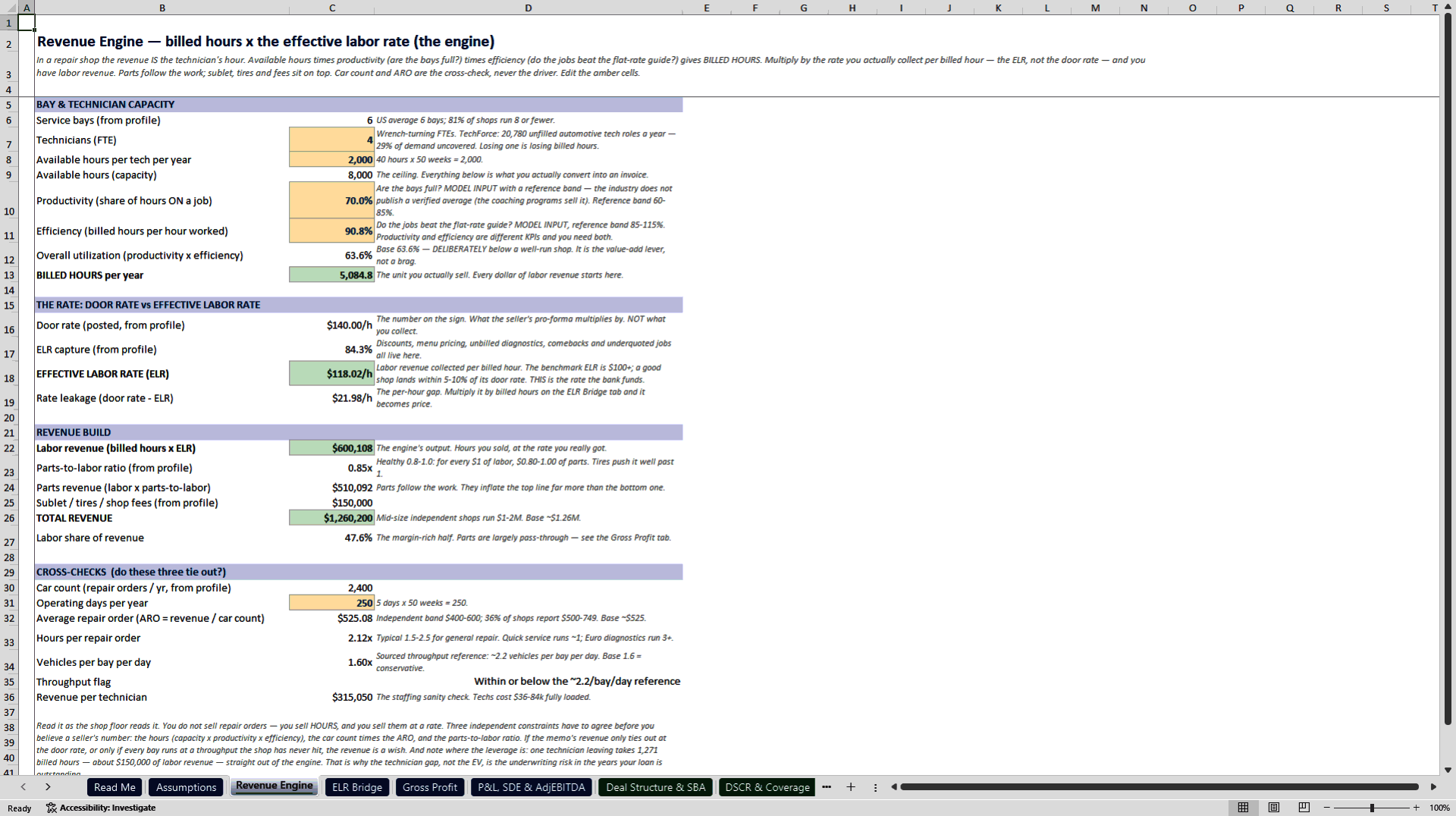
- Labor revenue is built from capacity, not typed in: 4 technicians times 8,000 available hours at 63.6% utilization give 5,085 billed hours, cross-checked against 2,400 repair orders at a $525 average.
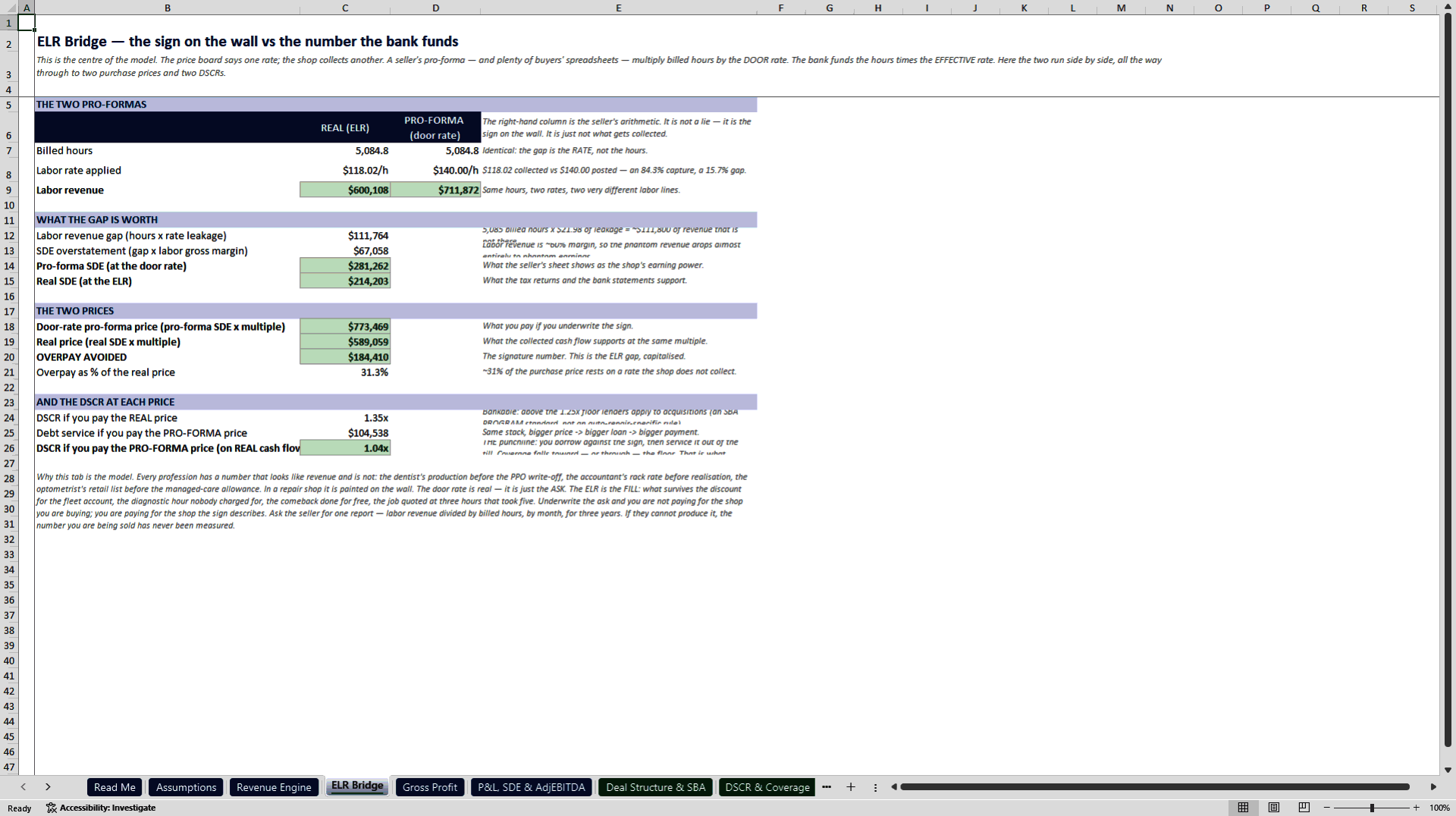
- The effective labor rate replaces the posted door rate, and the two purchase prices print side by side: $589,059 against $773,469, an overpay of $184,410 or 31.3% avoided.
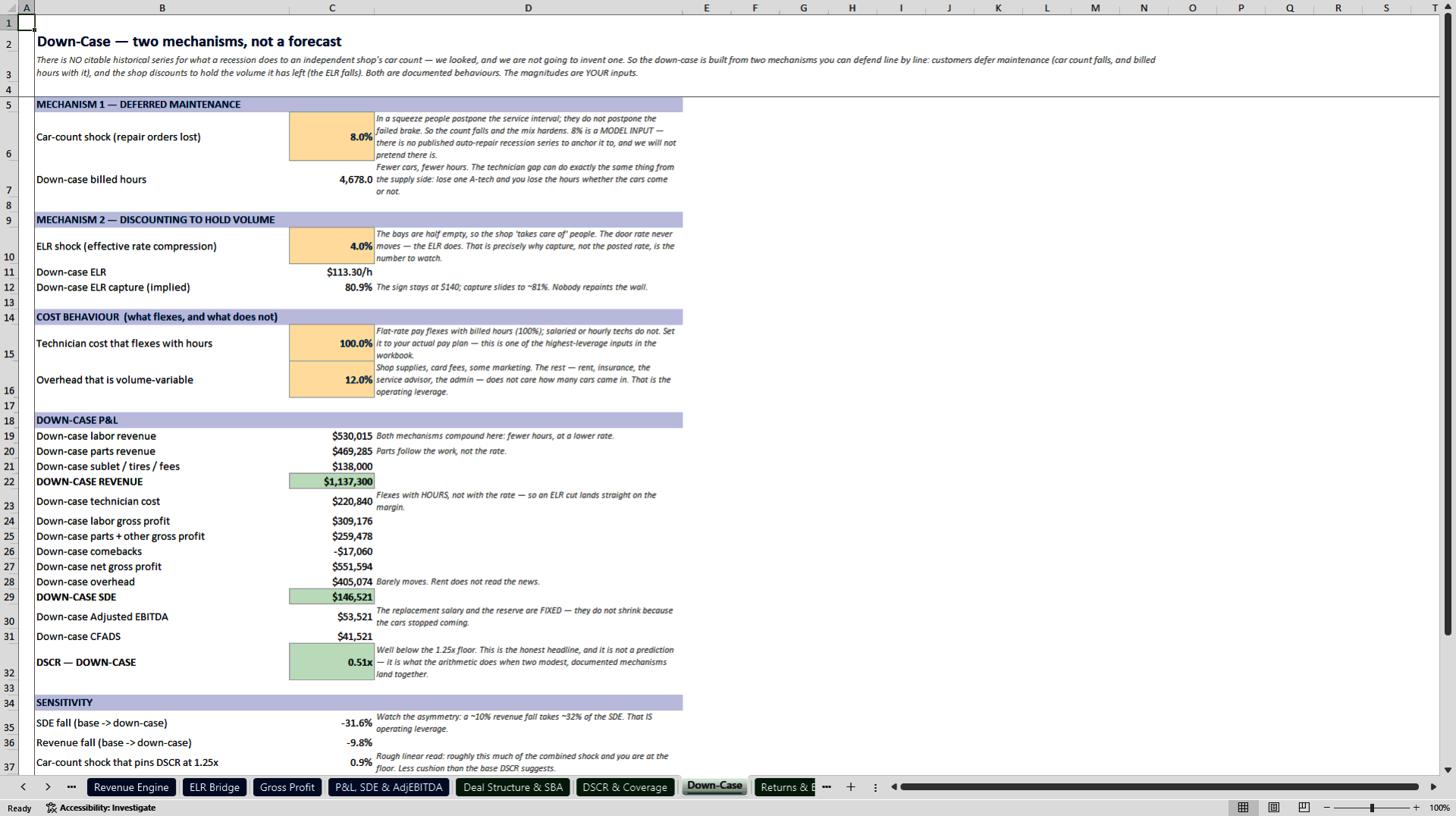
- A declared down case, car count down 8% plus a 4% rate discount, takes DSCR to 0.51x, and the model quantifies what losing one of four technicians costs: 25% of billed hours.
AUTO REPAIR EXCEL DESCRIPTION
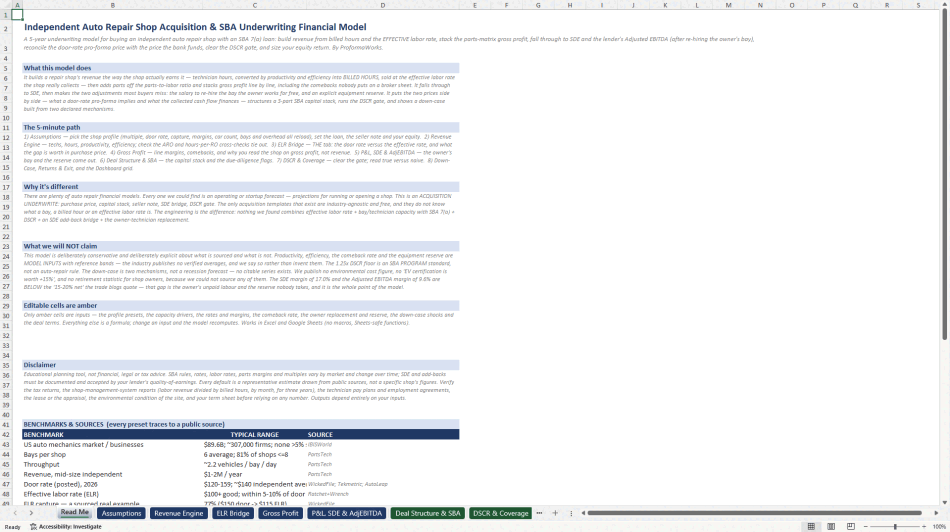
Most auto repair templates are startup or operating forecasts: you type a revenue number and grow it 5% a year. This is an acquisition-underwriting model, written for the searcher, the ETA buyer or the first-time owner-operator who is buying one independent shop with an SBA 7(a) loan and has to show a lender that it services its debt.
Labor revenue is manufactured from physical capacity rather than typed in. Four technicians times 8,000 available hours times a 63.6% overall utilization (productivity multiplied by efficiency) produce 5,085 billed hours, priced at the effective labor rate. Parts run off a parts-to-labor ratio at their own matrix margin. The result is cross-checked two independent ways: 2,400 repair orders at a $525 average repair order, and 2.12 hours per repair order.
The number that decides the deal is the rate the shop actually collects. Discounts, giveaway diagnostics, comebacks and unbilled hours drag a $140 posted door rate down to $118.02, an 84.3% capture. Underwrite at the sign and you overstate labor revenue by $111,870, which at a 60% labor margin drops roughly $67,000 straight onto SDE. Priced at 2.75x, the shop appears to cost $773,469 instead of $589,059. The model prints both prices side by side: the gap is $184,410, or 31.3% of the purchase price.
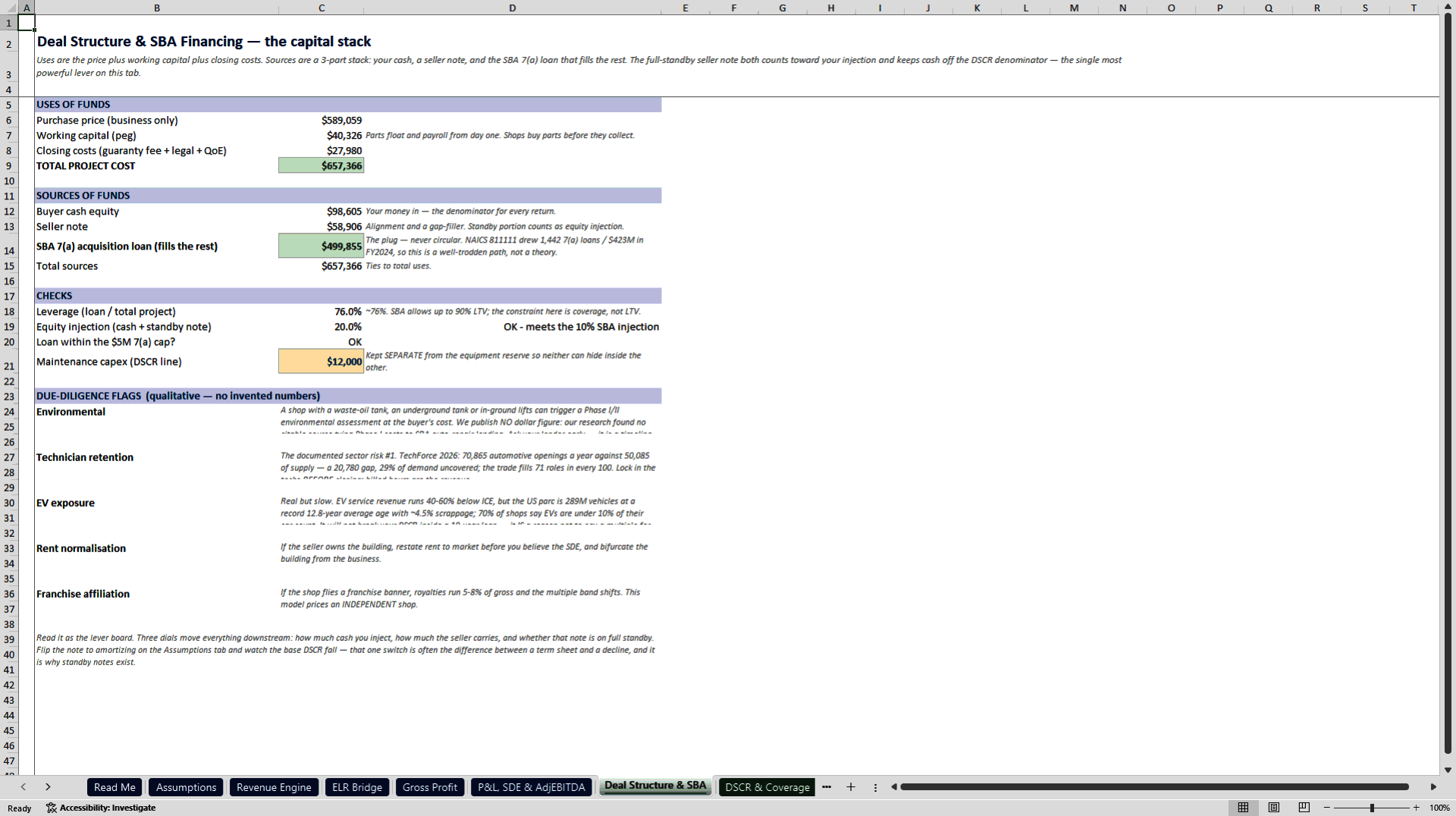
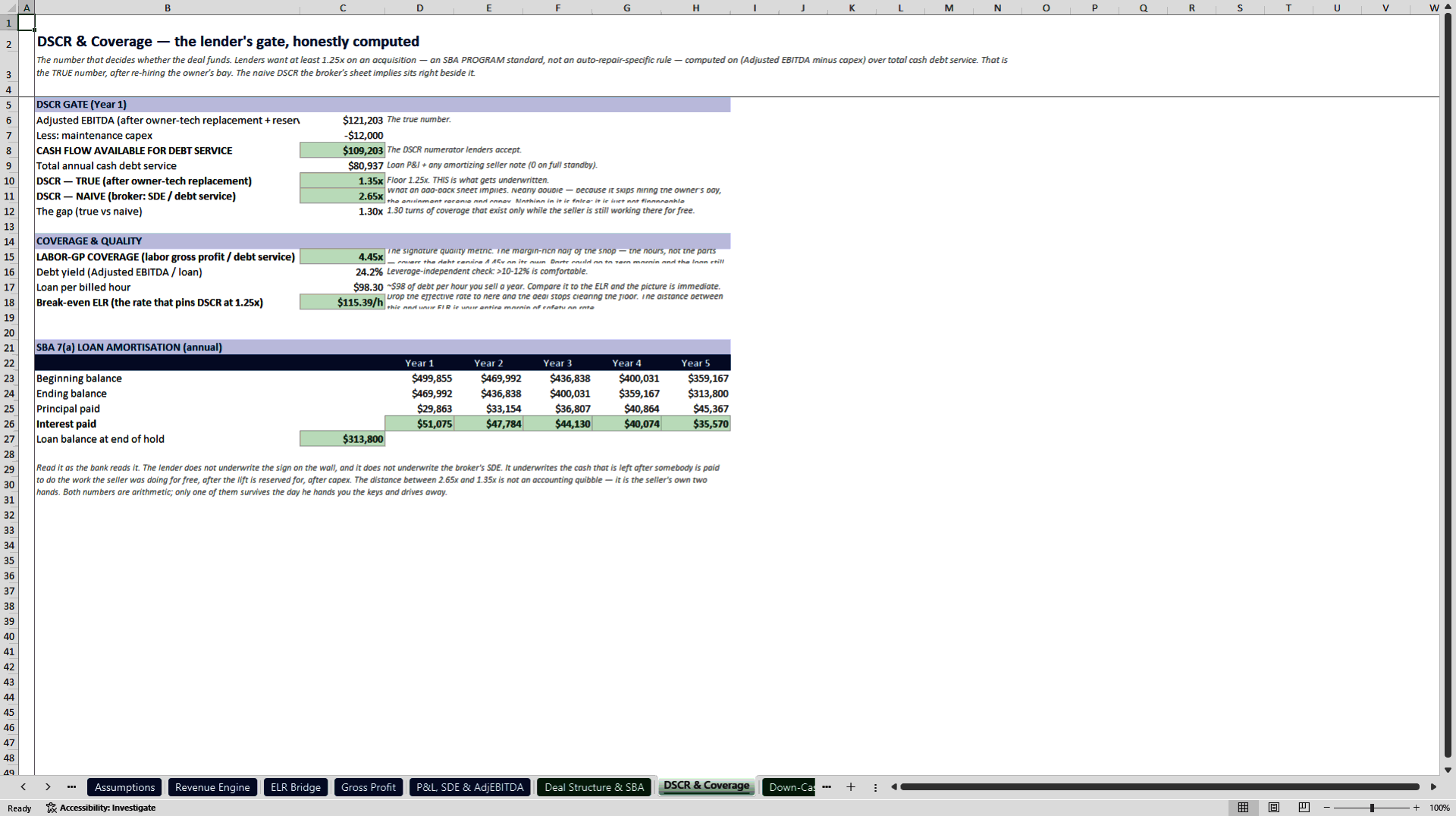
It also books the add-back the seller's sheet skips. In most independent shops the owner is the A-tech on hard diagnostics or the advisor who closes estimates; if you will not stand in that bay, you hire it at $75,000. Deduct that, reserve $18,000 a year for lifts, alignment racks and scan tools, and true DSCR is 1.35x against the 2.65x a broker's add-back sheet implies. The gap is the owner's own labor.
The down case is declared, not decorative. Revenue in this business is a technician's hour, and the industry fills roughly 71% of technician demand (TechForce, about 20,780 needed a year). Car count down 8% plus a 4% rate discount to hold volume takes DSCR to 0.51x, far below the 1.25x SBA program floor, and the model shows what losing one of four technicians does: 25% of billed hours, gone.
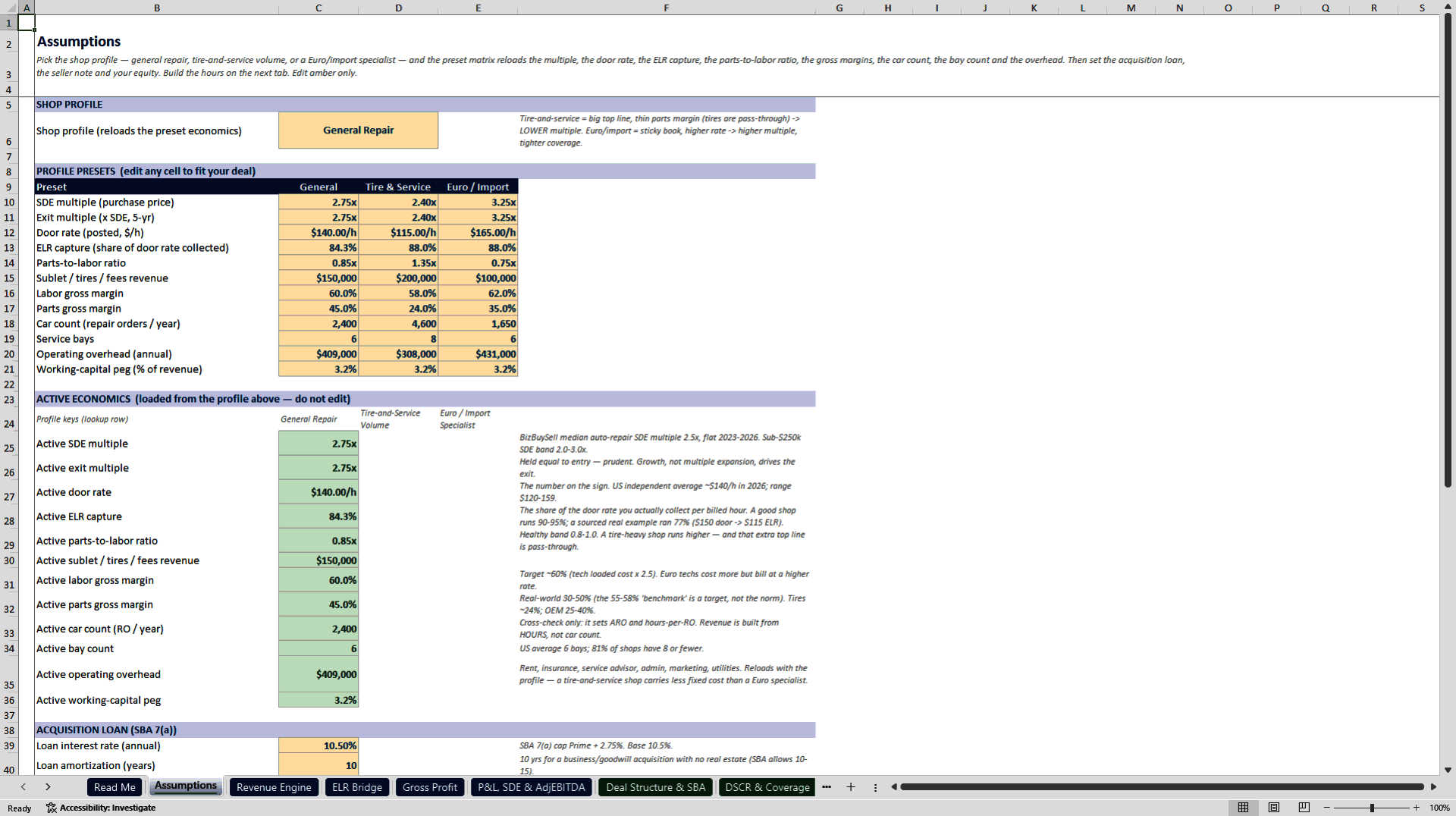
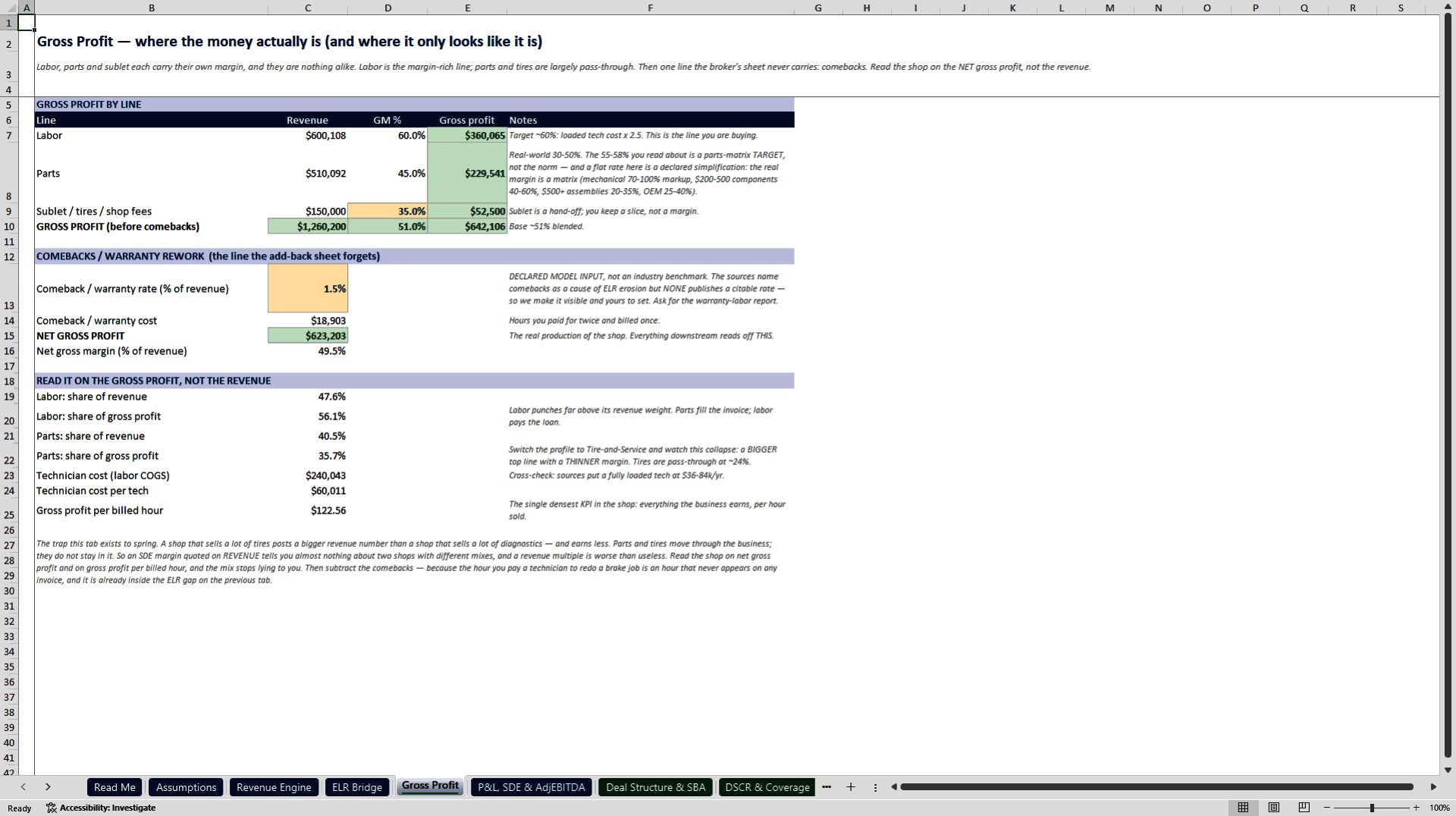
Three profiles ship in one file: Tire-and-Service Volume at 2.40x, General Repair at 2.75x as the base, and Euro/Import Specialist at 3.25x. The tire shop books an 11.8% bigger top line on a thinner SDE margin, because tires are largely pass-through, so the shop is read on gross profit rather than on revenue. Base-case revenue is $1,260,200, SDE $214,203 (17.0%), Adjusted EBITDA $121,203 (9.62%), the SBA loan $499,855 at 76.04% leverage, and labor gross-profit coverage 4.45x.
Margins are held deliberately below the 15-20% net that trade blogs quote, because that is what is left once the owner is paid for. The equity multiple of 3.12x is labelled leverage-amplified, and there is no IRR: on a single small deal it is hostage to the exit multiple. You get an 11-sheet Excel workbook that is Google Sheets compatible with no macros and no add-ins, a PDF guide with sources, and a full sensitivity and stress set. Educational planning tool, not financial, lending or legal advice.
Got a question about the product? Email us at support@flevy.com or ask the author directly by using the "Ask the Author a Question" form. If you cannot view the preview above this document description, go here to view the large preview instead.
Source: Best Practices in Auto Repair, Integrated Financial Model Excel: Auto Repair Shop Acquisition and SBA Underwriting Model Excel (XLSX) Spreadsheet, ProformaWorks
ABOUT THE AUTHOR

ProformaWorks builds acquisition-grade financial models for Main Street and lower-middle-market businesses - the kind of deal financed with an SBA 7(a) loan or a small commercial facility.
Every model answers one question: does this deal pencil at the bank? That means SDE or NOI rebuilt from the seller's own numbers, the add-backs a lender will and will not accept, a debt-service
... [read more]
Ask the Author a Question
You must be logged in to contact the author.




























