 Click main image to view in full screen.


AUTO REPAIR EXCEL DESCRIPTION
A well-structured financial model is essential for any auto repair shop to ensure long-term financial health and sustainability. This Auto Repair Excel Financial Model Template provides a detailed framework covering various aspects of financial planning, from revenue projections to cash flow statements and financial metrics.
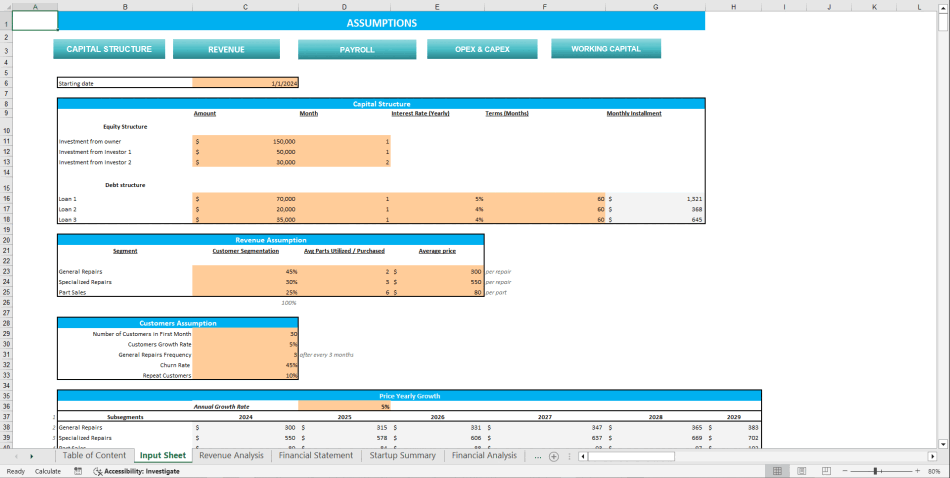
1. Input Sheet
The Input Sheet forms the foundation of this model, allowing auto repair shop managers to set up assumptions that drive all calculations. It includes:
1. Labor Costs: Includes hourly rates, salaries, and assumptions about labor costs.
2. Material Expenses: Covers parts, automotive repair equipment, and supply costs.
3. Pricing Models: Determines the average selling price for different services.
4. Operating Expenses: Lists fixed and variable costs such as rent, utilities, and advertising costs.
5. Market Demand: Analyzes the number of potential customers and projected growth.
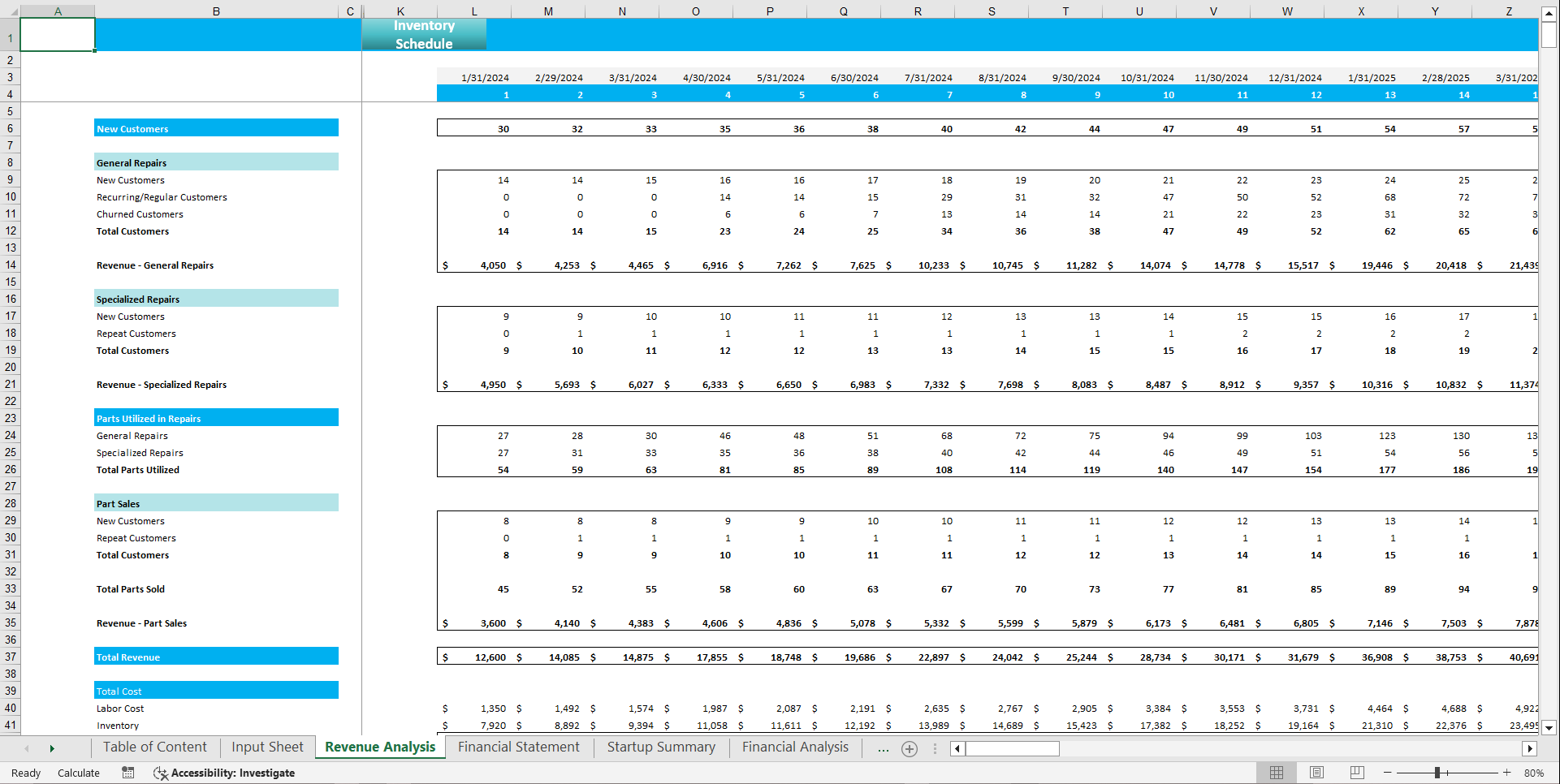
2. Revenue Analysis
Revenue is the core of any auto repair shop business. This section helps analyze revenue streams and forecast future earnings.
1. Income Sources: Breaks down earnings from auto repair services, tire sales, and other related offerings.
2. Customer Details: Tracks the number of customers served and their customer satisfaction levels.
3. Average Cost per Service: Estimates the average cost and variable costs for different repairs.
4. Profit Margins: Helps assess how pricing affects revenue.
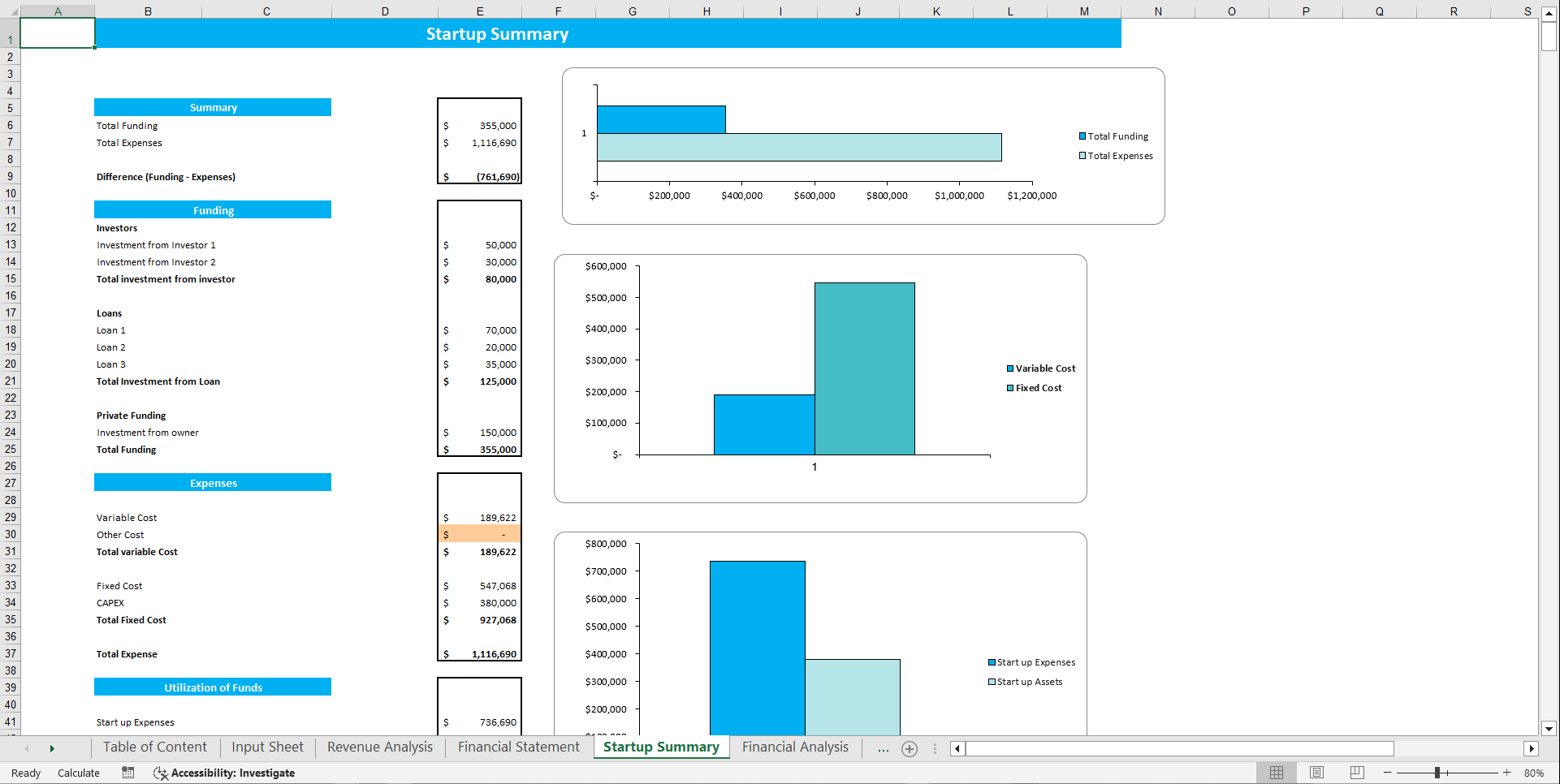
3. Startup Summary
Understanding the initial capital requirements is critical when launching an auto repair venture. This section includes:
1. Initial Investment: Details the cost of tools, lifts, and diagnostic machines.
2. Funding Sources: Includes personal savings, bank loans, and investor funding.
3. Additional Costs: Covers insurance, permits, and accounting software setup.
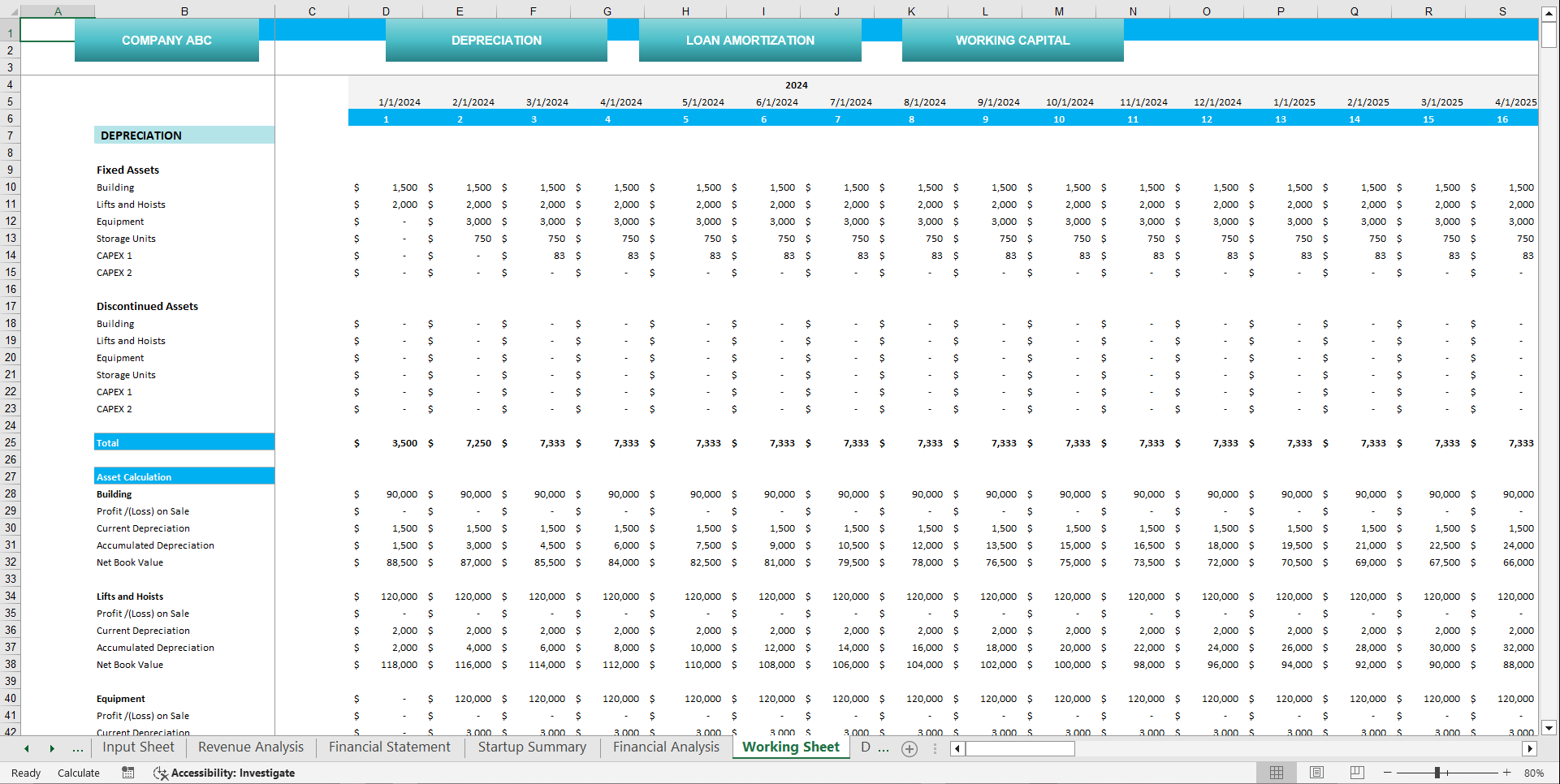
4. Depreciation and Amortization Schedule
This sheet helps track asset values over time, ensuring proper financial planning.
1. Capital Budgeting Analysis: Evaluates long-term investments.
2. Tangible Asset Depreciation: Tracks vehicle lifts, tools, and repair equipment.
3. Intangible Asset Amortization: Includes software and licensing costs.
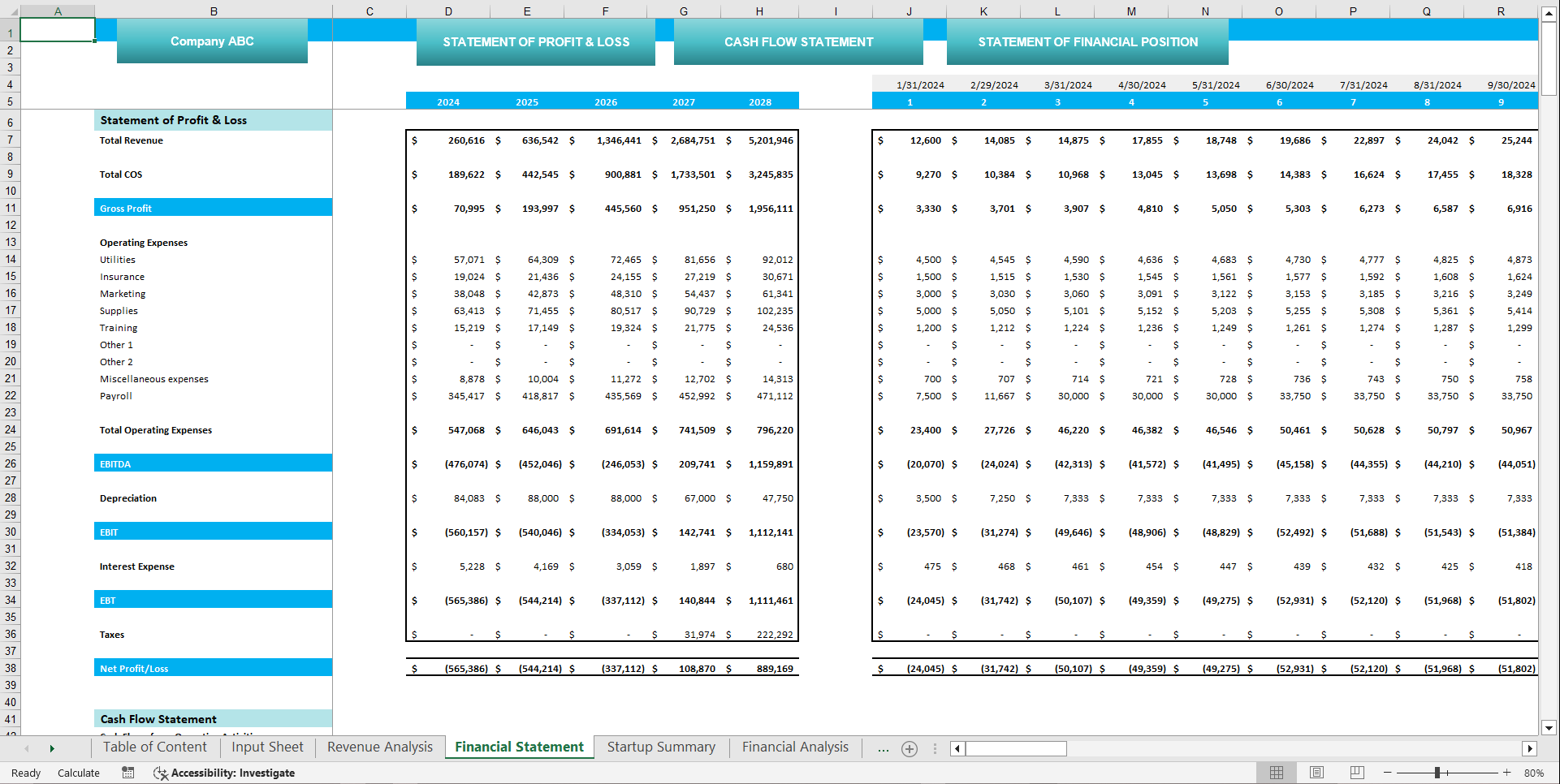
5. Income Statement
A critical financial report that summarizes the financial performance of the auto repair shop.
1. Revenue & Sales: Breaks down earnings by service type.
2. Operating Expenses: Tracks rent, salaries, marketing, and maintenance.
3. Net Profit Calculation: Determines business profitability.
6. Cash Flow Statement
Managing cash flow projections is essential to keep the business running smoothly.
1. Basic Cash Flow Model: Tracks money inflows and outflows.
2. Liquidity Position: Helps maintain a target liquidity ratio.
3. Budget Performance: Assists in managing expenditures effectively.
7. Balance Sheet
A balance sheet template that summarizes financial standing.
1. Assets & Liabilities: Lists what the business owns and owes.
2. Equity Evaluation: Tracks owner investment and retained earnings.
3. Annual Reports: Helps in balance sheet projections and future planning.
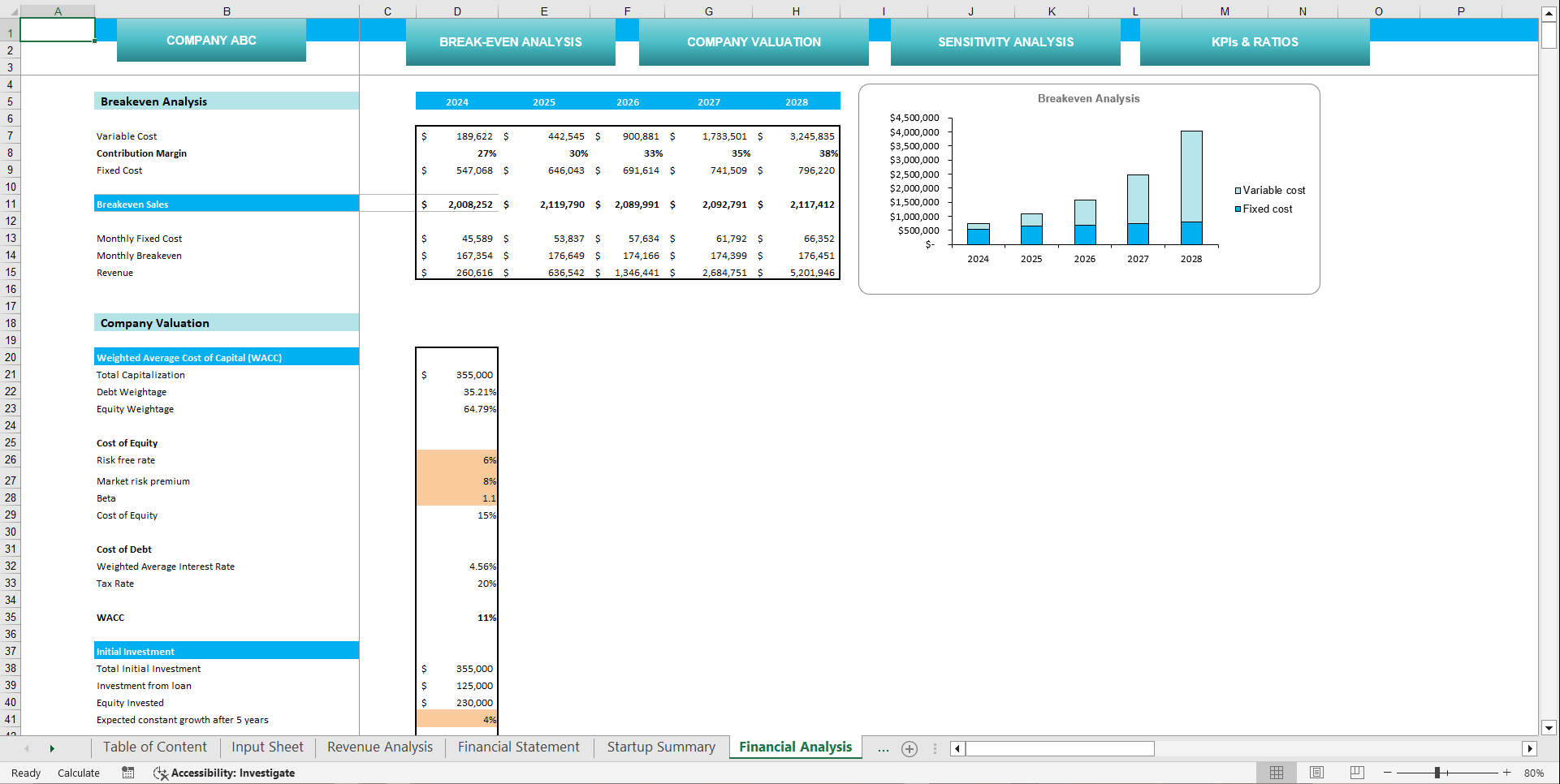
8. Breakeven Analysis
Understanding the break-even analysis ensures businesses know when they'll start making a profit.
1. Fixed vs. Variable Costs: Helps categorize expenses.
2. Break-even Point Calculation: Determines the number of services needed to cover costs.
3. Scenario Analysis: Assesses different business scenarios.
9. Project Evaluation
1. DCF Analysis: Uses discounted cash flow to value the business.
2. Risk Analysis: Identifies financial risks and external economic conditions.
3. Investment Feasibility: Assesses potential expansions and ROI.
10. Sensitivity Analysis
This section evaluates how different factors impact profitability.
1. Market Trends & Demand Changes: Adjusts revenue forecasts based on economic conditions.
2. Cost Savings & Expense Adjustments: Analyzes how reducing labor costs or materials affects profits.
3. Disruptive Innovation Impact: Measures technological advancements in the auto repair industry.
11. KPIs and Financial Ratios
Tracking key financial metrics helps in making informed decisions.
1. Profitability Ratios: Gross margin, net margin, and return on investment.
2. Liquidity Ratios: Measures target liquidity ratio to ensure smooth operations.
3. Operational Performance Graphs: Visual representation of trends.
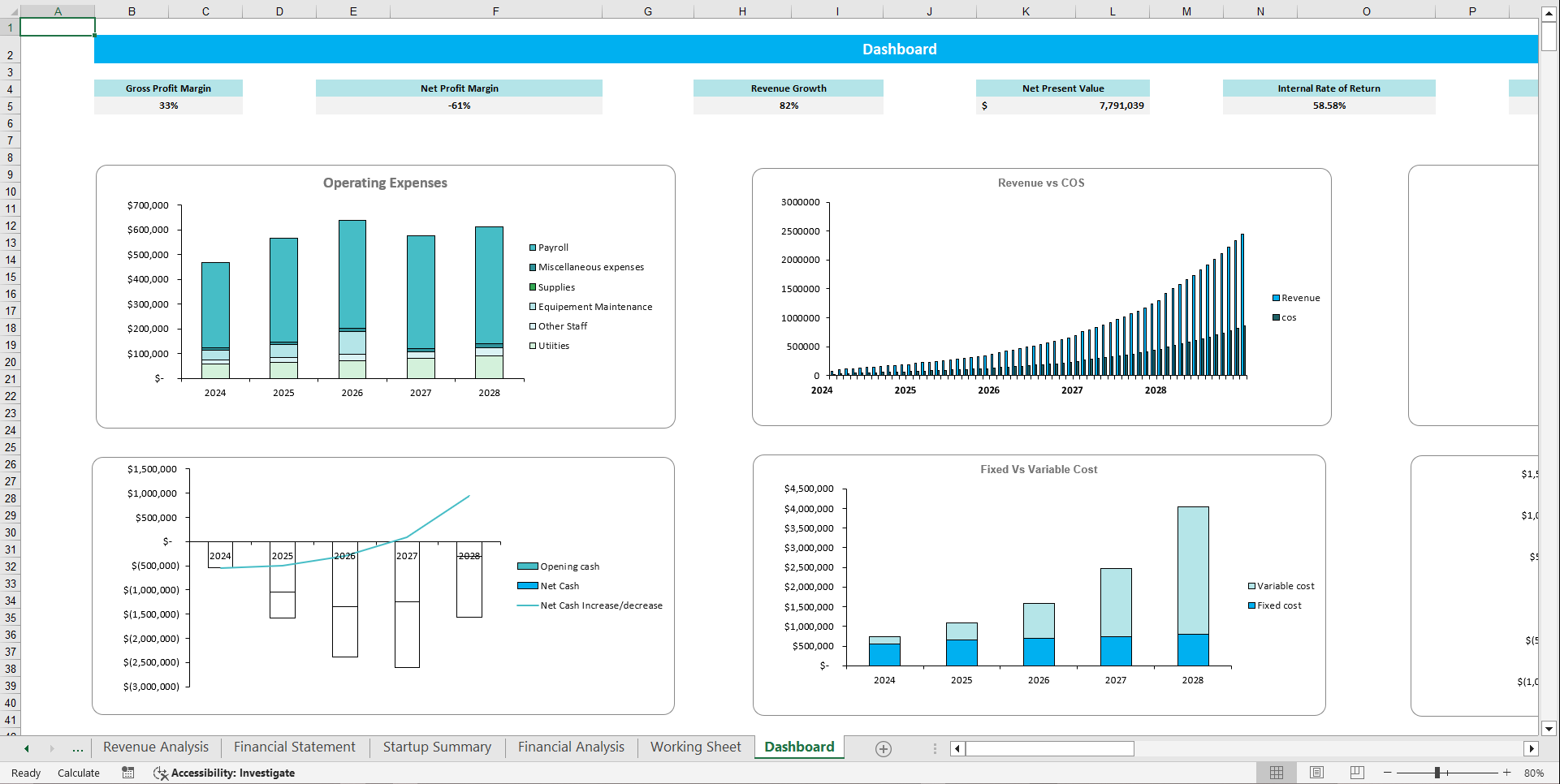
12. Dashboard
A dashboard provides an interactive summary of the financial model.
1. Financial Statements Overview: Quick access to income statements, cash flow statements, and balance sheets.
2. Performance Metrics: Tracks business performance using KPIs.
3. Scenario Analysis: Helps assess different market conditions.
Frequently Asked Questions (FAQs)
1. What is the purpose of the Auto Repair Excel Financial Model Template?
This model helps auto repair shop managers assess financial aspects, set pricing strategies, and manage costs efficiently.
2. How does this model help in financial planning?
It provides tools for cash flow projection, budget tracking, and risk assessment to meet financial goals.
3. Can this model work for new auto repair businesses?
Yes, it includes startup cost analysis, financial considerations, and break-even evaluation.
4. How does the template assess financial risks?
Through sensitivity analysis, cost adjustments, and scenario analysis, it prepares businesses for potential risks.
5. Is this template compatible with Google Sheets?
Yes, it works in both Excel and Google Sheets, making financial modeling easy and accessible.
This financial model serves as a solid foundation for any auto shop looking to streamline its financial planning and improve overall business performance.
Got a question about the product? Email us at support@flevy.com or ask the author directly by using the "Ask the Author a Question" form. If you cannot view the preview above this document description, go here to view the large preview instead.
Source: Best Practices in Auto Repair, Integrated Financial Model Excel: Auto Repair Financial Model Template Excel (XLSX) Spreadsheet, Oak Business Consultant




























