 Click main image to view in full screen.
AI-Enabled Operational Excellence: Target Operating Model – PowerPoint PPTX Template
PowerPoint (PPTX) + Excel (XLSX) 20 Slides


BENEFITS OF THIS DOWNLOADABLE POWERPOINT DOCUMENT
- Diagnoses why AI programmes stall between pilot and production across six operating model dimensions rather than blaming the technology
- Provides an evidence-based maturity assessment you can score honestly, with a working Excel scorecard included
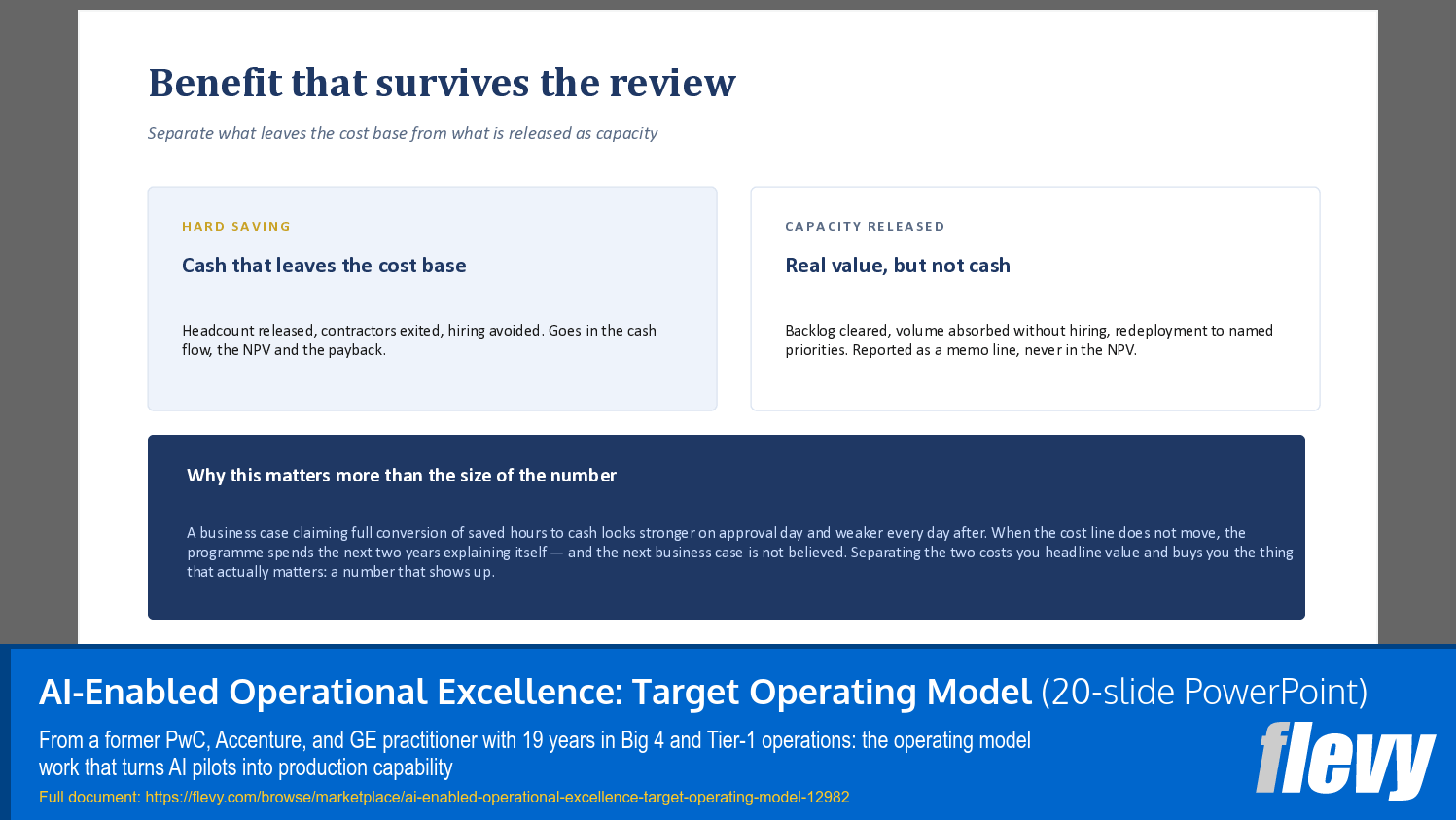
- Separates hard cash saving from released capacity, so the benefit case survives its first post-implementation review
OPERATIONAL EXCELLENCE PPT TEMPLATE DESCRIPTION
Most AI programmes do not fail on model performance. They stall in the gap between a working pilot and a running operation – and the gap is an operating model problem, not a technology one.
A pilot proves the model can do the task. It says nothing about whether the organisation can run that task ten thousand times a month, under audit, when the person who built it has left. Decision rights, exception routing, control ownership and role design are what decide that, and none of them are solved by a better model.
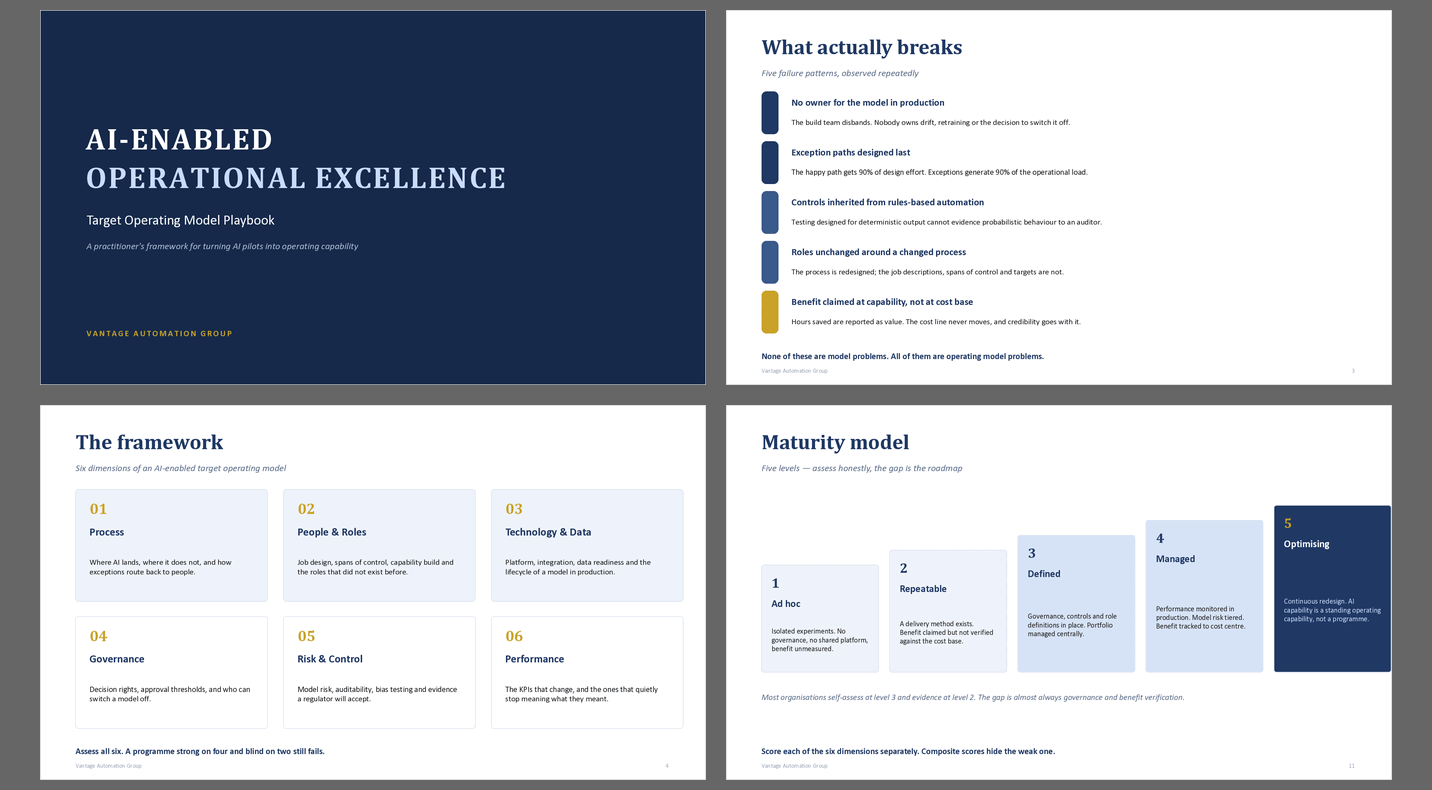
This playbook is the operating model work that turns AI pilots into operating capability.
WHAT YOU GET
A 20-slide PowerPoint playbook in headline-body-bumper consulting format, plus a working Excel maturity assessment.
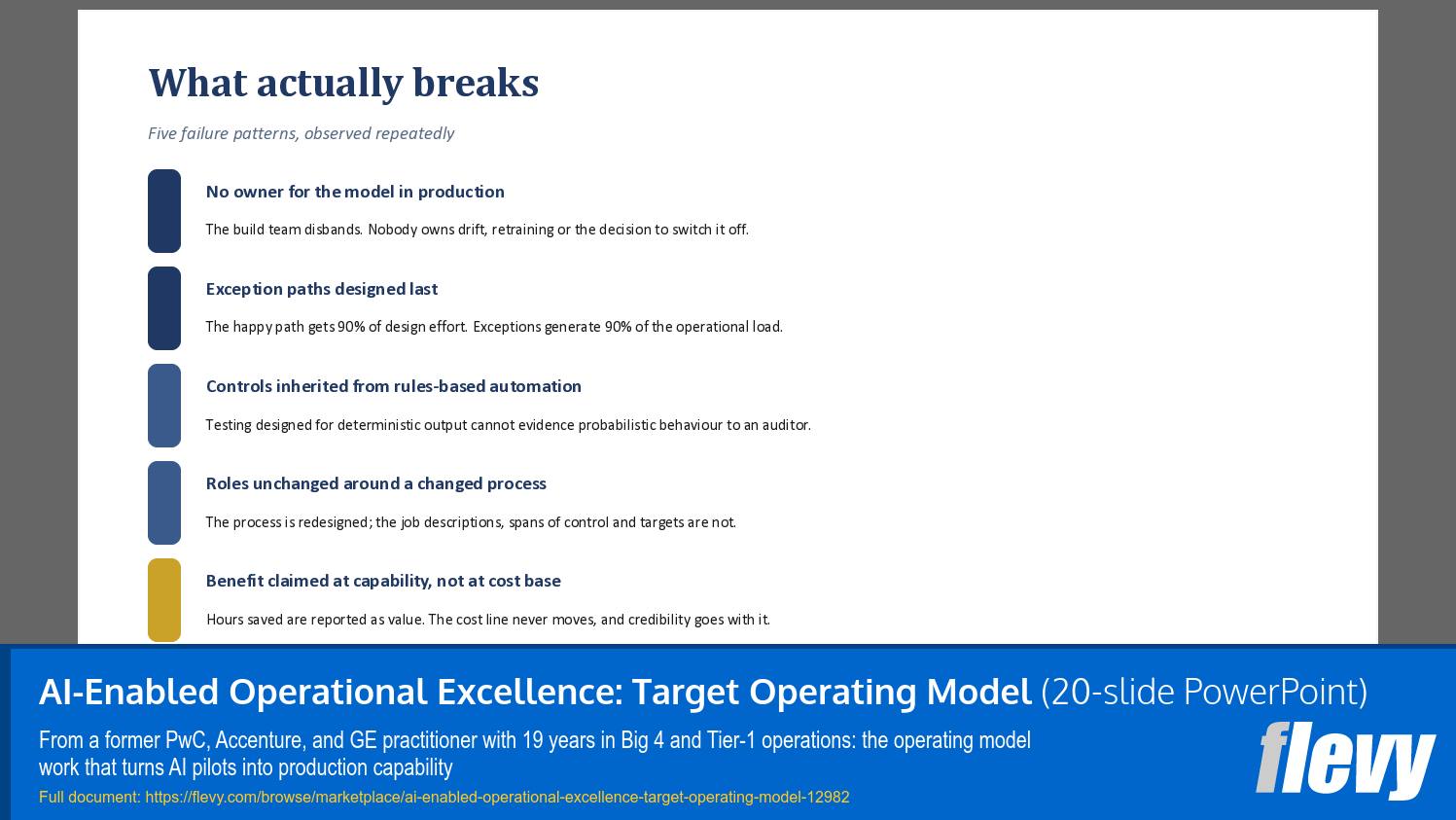
The argument. Why programmes stall between pilot and production, and the five failure patterns observed repeatedly – no owner for the model in production, exception paths designed last, controls inherited from rules-based automation, roles left unchanged around a changed process, and benefit claimed at capability rather than at the cost base.
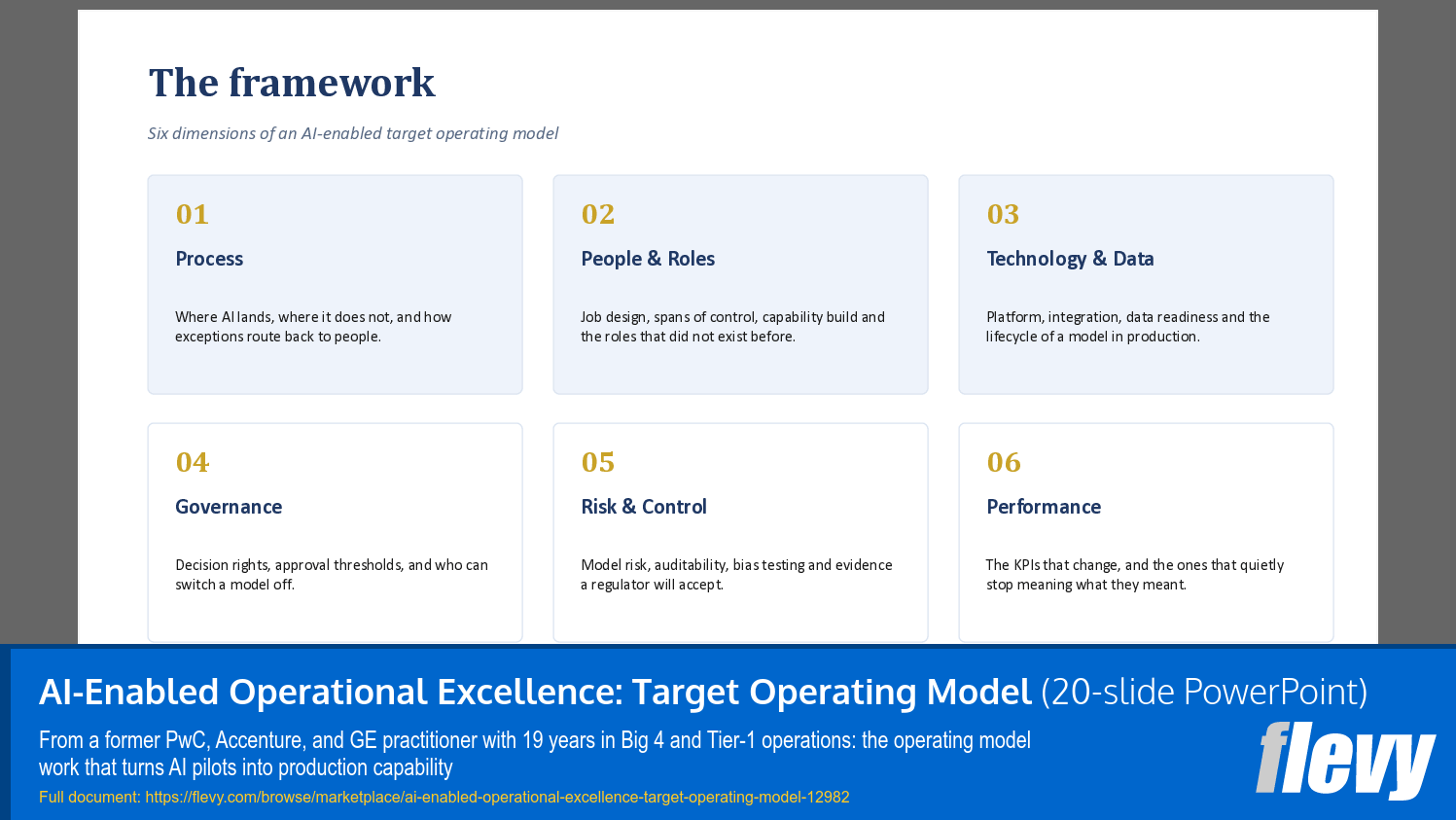
The framework. Six dimensions of an AI-enabled target operating model: Process, People and Roles, Technology and Data, Governance, Risk and Control, and Performance. Each dimension gets a full slide of design decisions, with the specific question that determines whether it is ready.
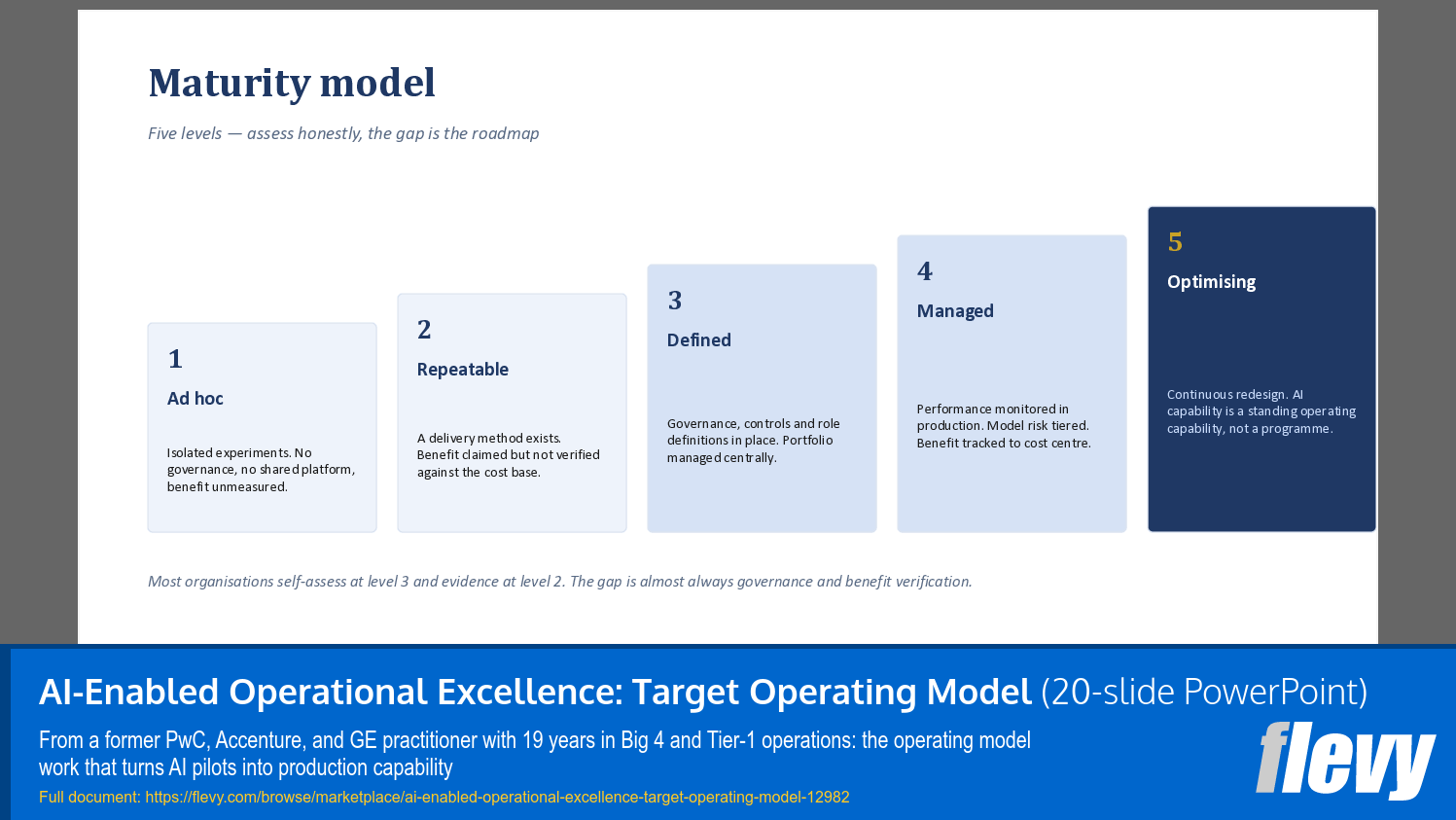
The maturity model. Five levels with evidence descriptors per dimension, so scoring is based on what can be shown rather than what is intended. Most organisations self-assess at level three and evidence at level two.
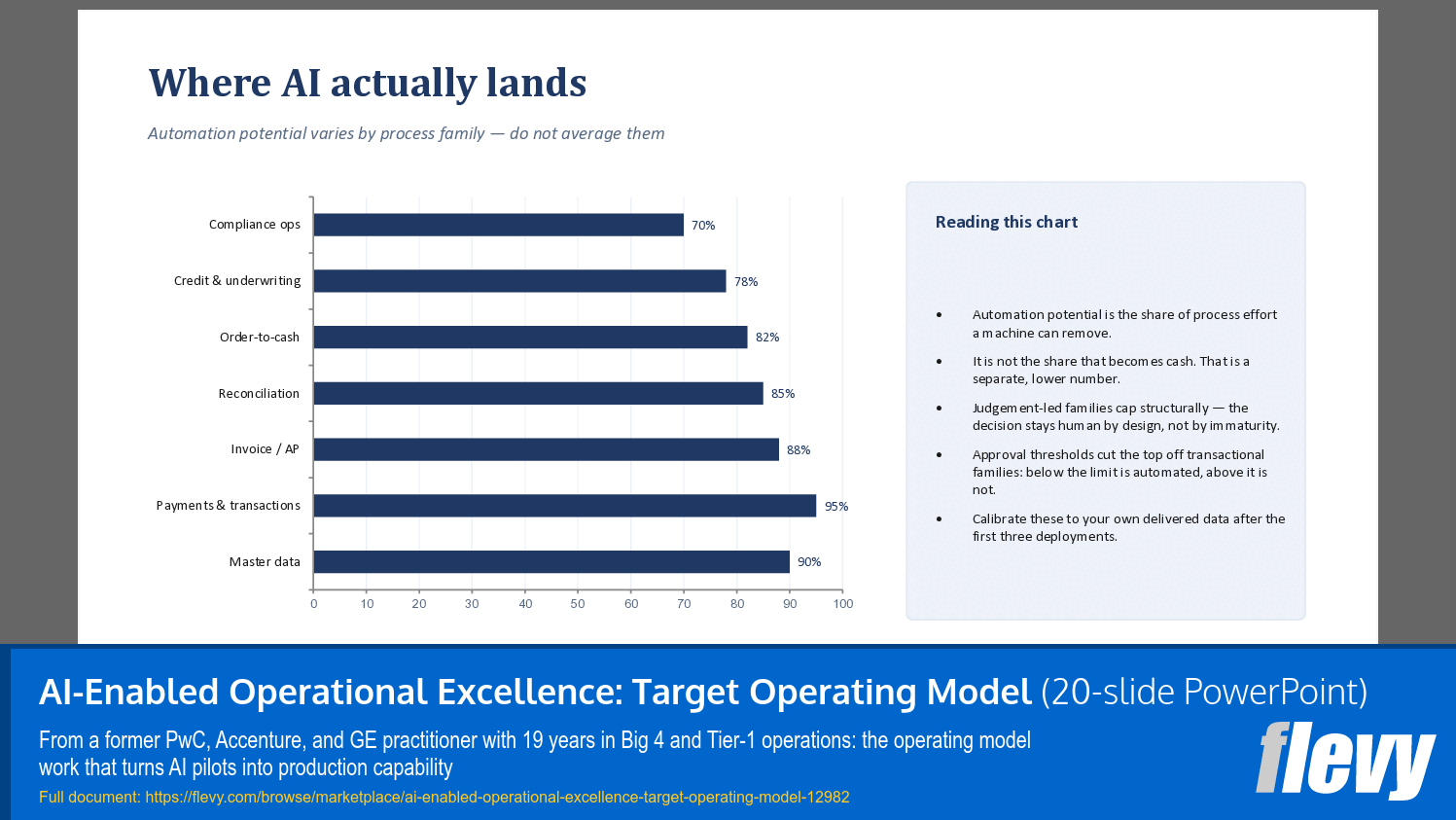
Where AI actually lands. Automation potential by process family – master data, payments and transactions, invoice and accounts payable, reconciliation, order-to-cash, credit and underwriting, compliance operations – with an explanation of why judgement-led families cap structurally and why averaging them produces a number that is wrong for every one of them.
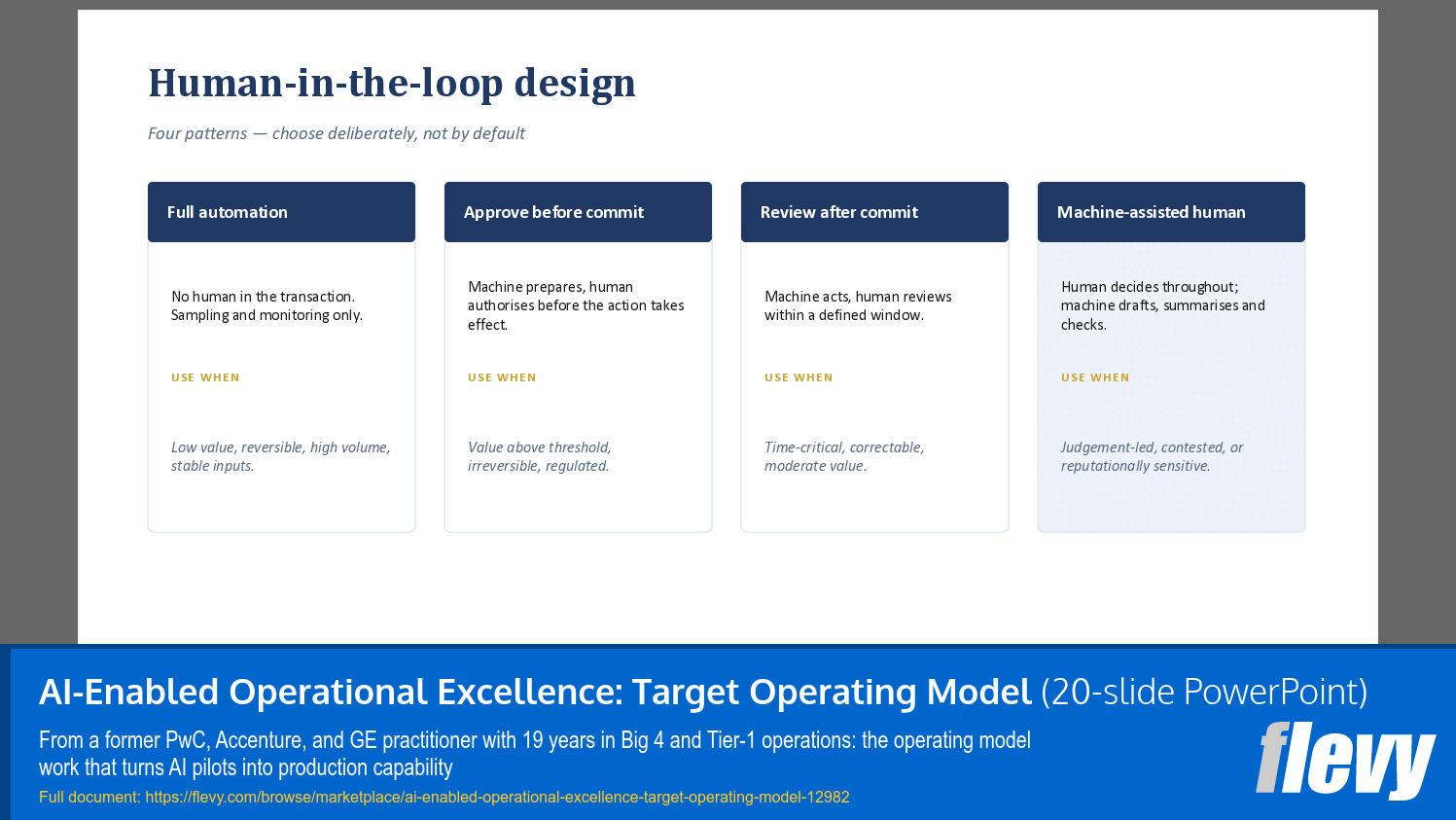
Human-in-the-loop design. Four patterns – full automation, approve before commit, review after commit, machine-assisted human – with the conditions under which each is the correct choice.
From rules-based automation to agentic AI. A direct comparison of what changes in the operating model when the system starts deciding: failure modes, testing approach, change control, ownership, audit evidence and scope of action. Your existing automation control framework is the starting point, not the answer.
Transition roadmap. Three horizons across zero to thirty-six months, with the specific deliverables in each and an argument for why the unglamorous first horizon is non-negotiable.
Benefit that survives the review. The separation of hard cash saving from released capacity, why conflating them costs credibility, and what a defensible benefit mechanism looks like.
The measurement set. Which measures to retire, which to add, and why throughput per FTE stops meaning what it meant.
Readiness checklist. Ten evidence-based checks before scaling beyond the second deployment.
Excel maturity assessment. Six dimensions scored current versus target, gap calculation, weakest dimension and largest gap identified automatically, radar chart, and full evidence descriptors on a second tab. Formula cells are protected; inputs are open.
WHAT MAKES IT DIFFERENT
It is written from delivery, not from theory. The failure patterns are observed ones. The automation potential figures come from delivered programmes rather than vendor material. The benefit discipline – separating cash from capacity – is the assumption that most often discredits an AI or automation programme a year after approval, and it is treated here as a design principle rather than a footnote.
It refuses to average things that should not be averaged. Automation potential varies by process family and by approval threshold. Maturity varies by dimension, and a composite score hides the weak one. The playbook scores each separately and says why.
It takes governance seriously without becoming a compliance document. Kill-switch authority, model risk tiering, prompt change control and retrievable decision rationale are treated as operating design decisions with named owners, not as a policy appendix.
WHO IT IS FOR
Chief operating officers and transformation directors moving AI beyond pilot. Heads of operational excellence and shared services designing the target state. Consultants and advisory firms running AI readiness or operating model engagements. Automation centre of excellence leads whose remit has expanded from rules-based automation into AI. Risk and audit functions being asked to assure systems their existing control framework was not designed for.
FORMAT AND USE
Microsoft PowerPoint (20 slides) and Microsoft Excel. Fully editable and rebrandable. The Excel workbook has formula cells protected against accidental overwrite with no password set, so it can be unprotected in one click if you need to restructure it.
All frameworks, maturity descriptors and automation potential figures are indicative practitioner estimates. Calibrate them to your own delivered data after your first deployments – the playbook explains how
Got a question about the product? Email us at support@flevy.com or ask the author directly by using the "Ask the Author a Question" form. If you cannot view the preview above this document description, go here to view the large preview instead.
Source: Best Practices in Operational Excellence, Target Operating Model PowerPoint Slides: AI-Enabled Operational Excellence: Target Operating Model PowerPoint (PPTX) Presentation Slide Deck, Vantage Automation Group
ABOUT THE AUTHOR

Vantage Automation Group publishes decision-grade frameworks, financial models and operating model blueprints for people running large-scale operations and transformation programmes.
The material is drawn from nineteen years of enterprise delivery -- across global consulting firms and industry -- covering operations transformation, target operating model design, operational resilience and
... [read more]
Ask the Author a Question
You must be logged in to contact the author.




























