AI-DLC Role Transition & Org Design Guide   16-page PDF document
$39.00

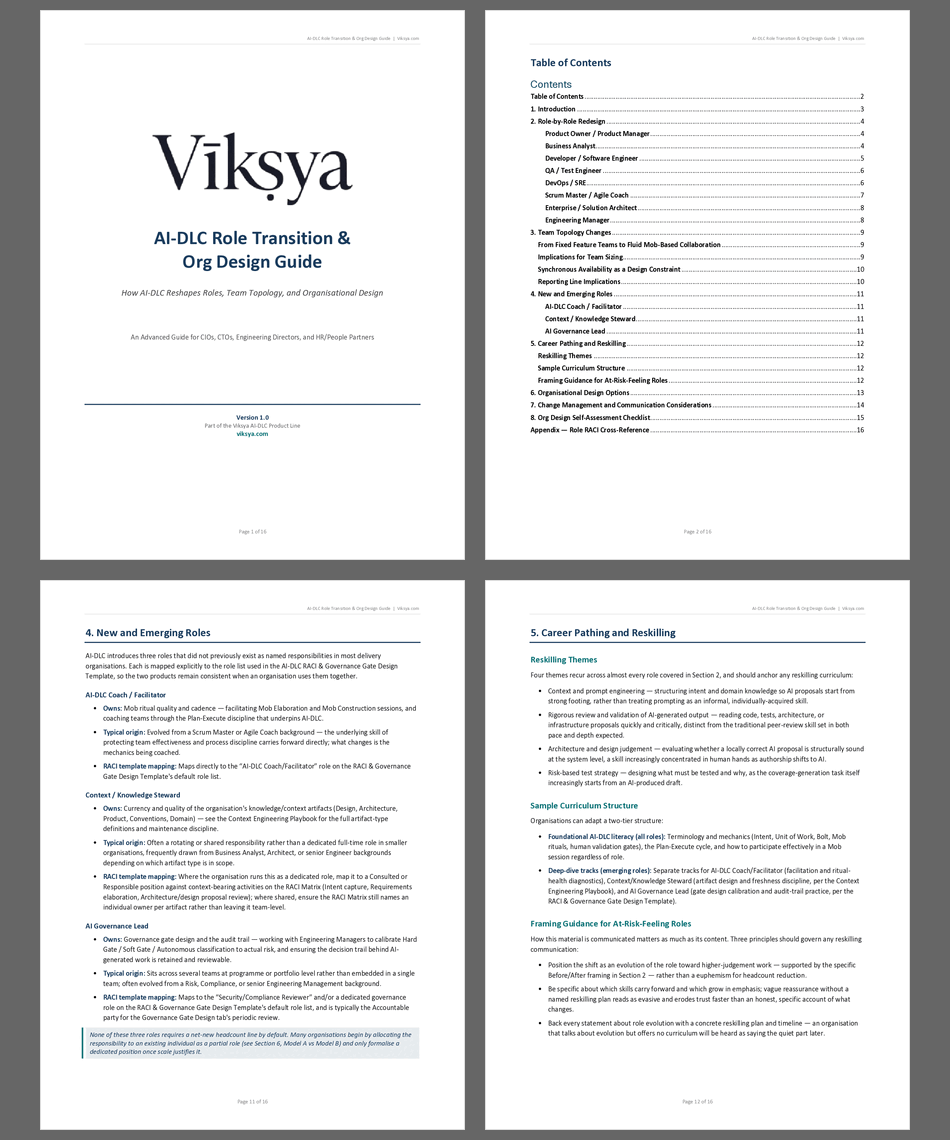
AI-DLC Role Transition & Org Design Guide (16-page PDF document) Preview Image
Flevy is the marketplace for business best practices.
AI-DLC Role Transition & Org Design Guide (16-page PDF document) Preview Image
Arrow   Click main image to view in full screen.

AI-DLC Role Transition & Org Design Guide – PDF

PDF document 16 Pages

$39.00
Developed by a transformation leader with hands-on delivery across $100M+ AI and cloud portfolios in global enterprise healthcare and technology organizations.
Add to Cart


Immediate download
Editable with PDF editor
Free lifetime updates

BENEFITS OF THIS DOWNLOADABLE PDF DOCUMENT

  1. ● Turns an implicit risk into a defensible plan -- Eight roles get a documented, consistent before/after redesign instead of ad hoc reassignment decided team by team.
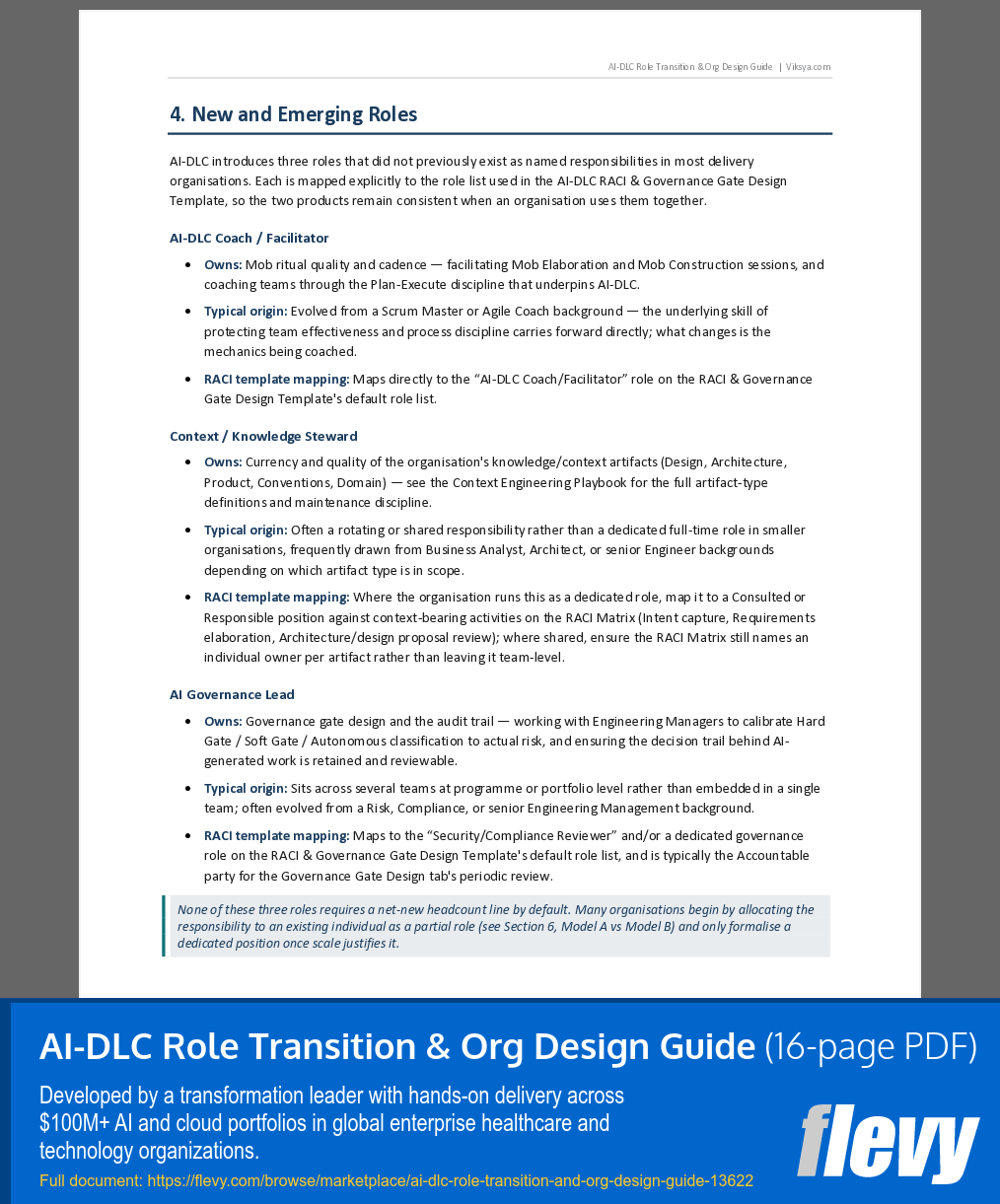
  2. ● Gives the new AI-DLC roles clear ownership -- AI-DLC Coach/Facilitator, Context/Knowledge Steward, and AI Governance Lead each get a defined scope and a RACI-consistent mapping, so responsibility doesn't stay ambiguous.
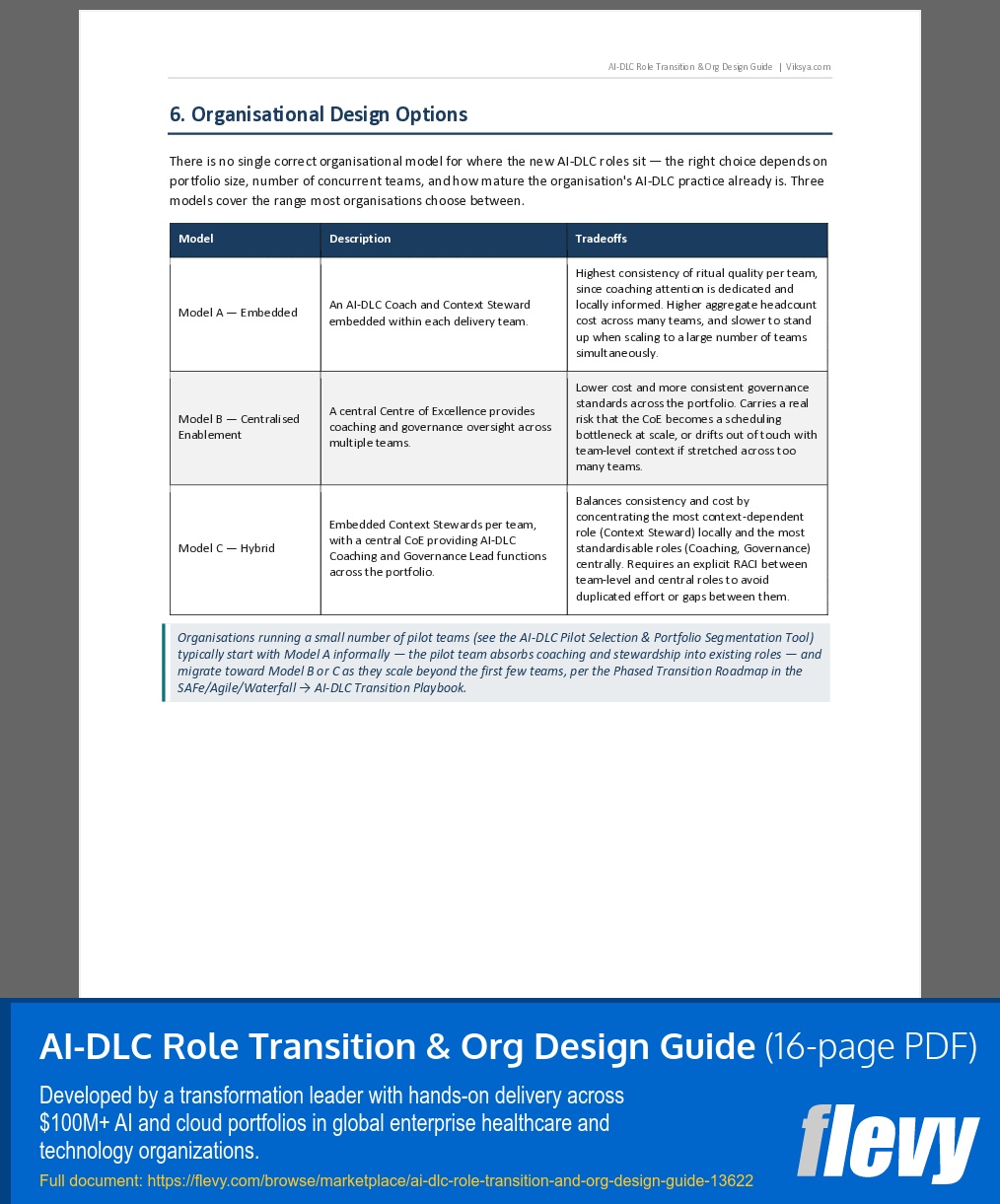
  3. ● Lets leadership choose and defend one org model -- Embedded, Centralised, and Hybrid are compared on explicit tradeoffs, so the structural choice is made once, deliberately -- not left to emerge informally as teams scale.

ORGANIZATIONAL DESIGN PDF DESCRIPTION

AI-DLC Role Transition & Org Design Guide PDF: Learn role redesign, team topology, and org models for AI-driven delivery. Includes Product Owner to AI Governance roles. AI-DLC Role Transition & Org Design Guide is a 16-page PDF document available for immediate download upon purchase.

Most AI-DLC transition planning addresses process – Bolts, Mob rituals, human validation gates – and leaves the organisational question underneath it unspoken. What happens to roles, team shape, and career paths is treated as fallout to be managed after the fact rather than a decision to be made deliberately. Left implicit, that gap tends to resurface later and worse: as role-security anxiety with no named plan behind it, as team restructuring decided informally and team by team, or as new responsibilities nobody has actually been assigned to own.

This PDF guide treats the organisational layer as a first-class design decision, given the same discipline usually reserved for gate design or ritual cadence. It walks eight traditional delivery roles through a consistent before/after redesign – what the role did previously, what it does under AI-DLC, which skills grow in emphasis, which reduce in day-to-day emphasis (always paired with the skill that replaces them, never framed as obsolescence), and an illustrative time-allocation shift for each. It then defines three roles that AI-DLC surfaces as new or emerging, works through the team-topology and sizing consequences of Mob-based delivery, sets out three organisational models with their tradeoffs, and closes with a working-session self-assessment checklist.

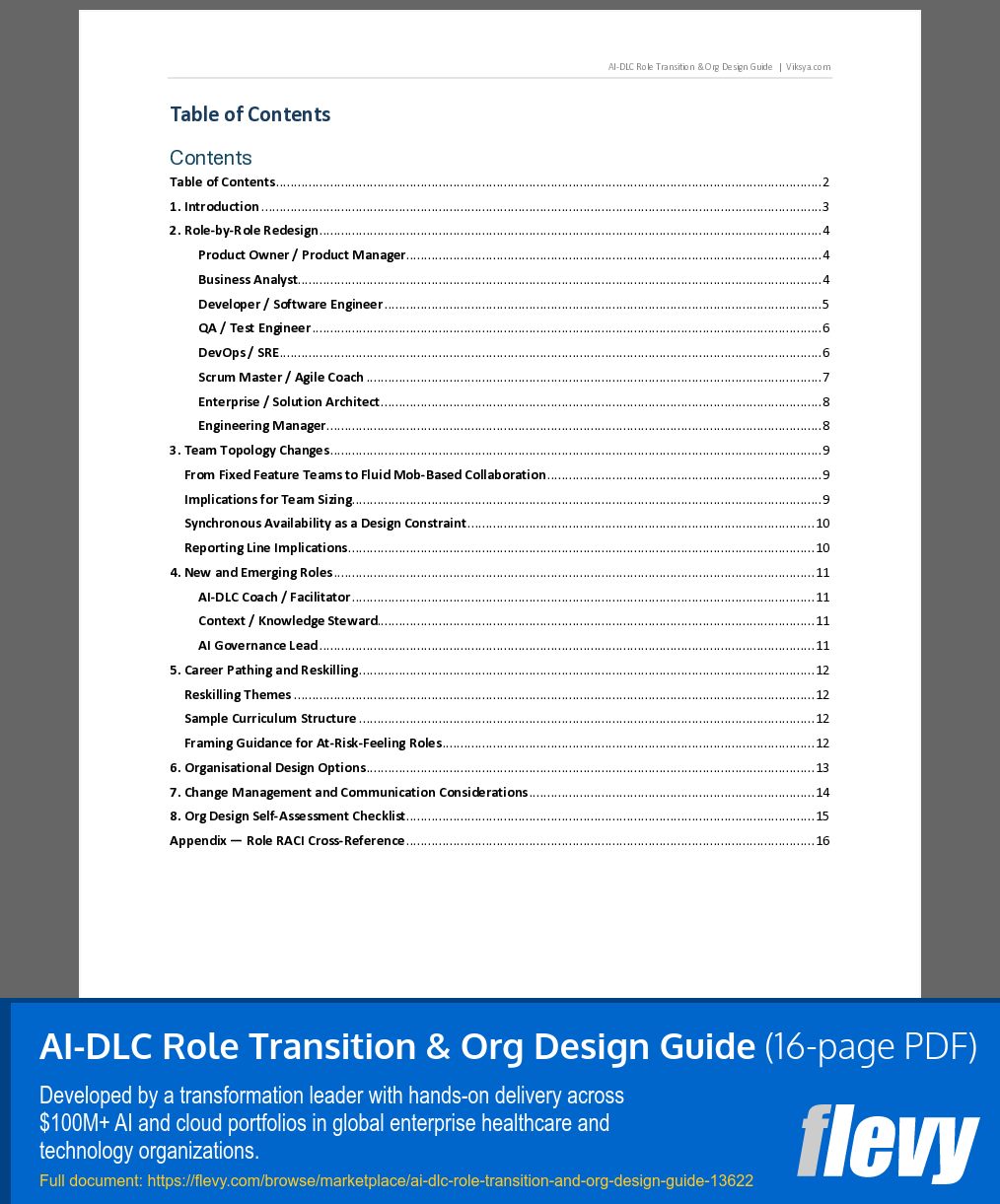
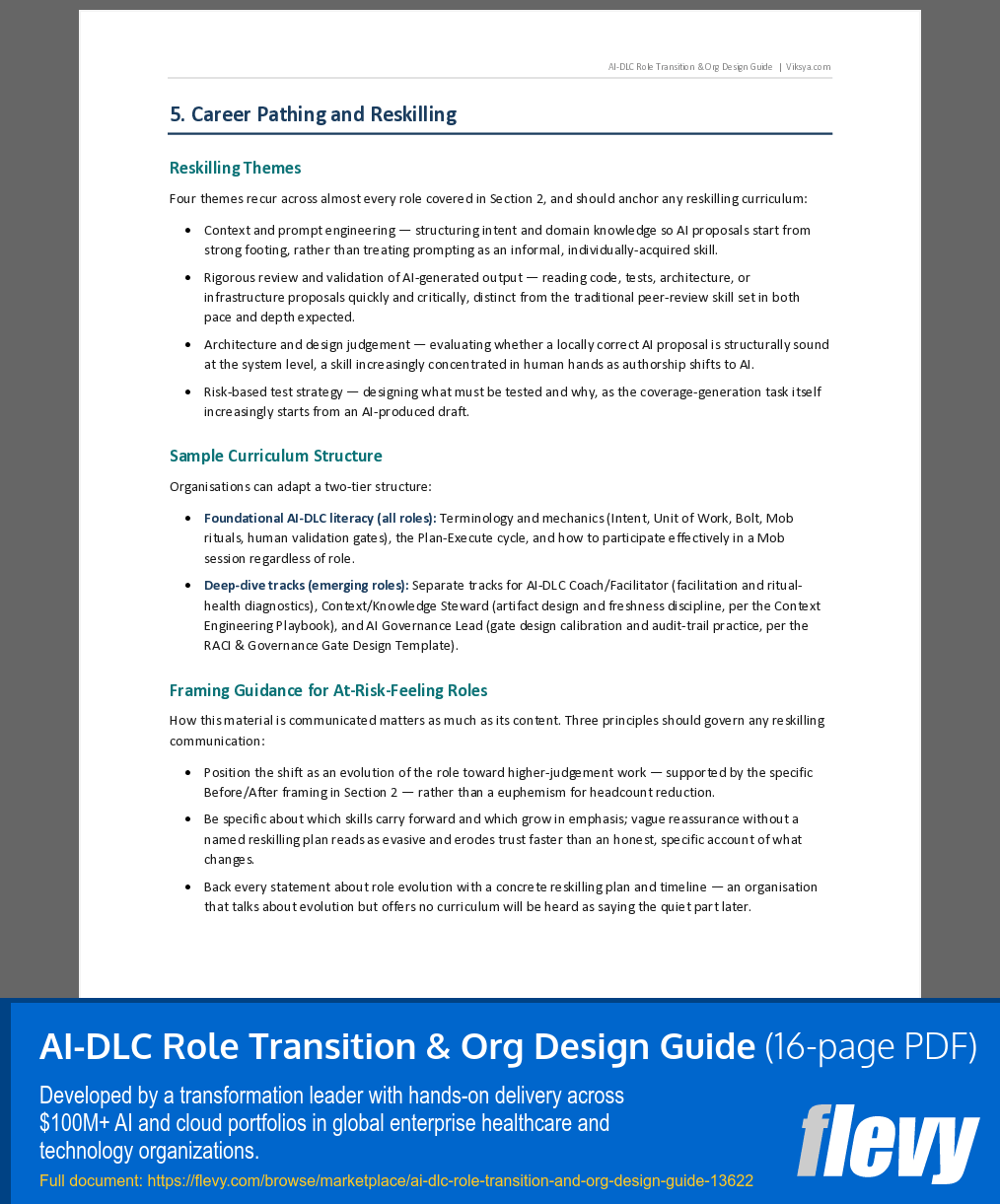
The guide runs eight sections plus two appendices: an introduction framing the organisational question; role-by-role redesign for the Product Owner, Business Analyst, Developer, QA/Test Engineer, DevOps/SRE, Scrum Master/Agile Coach, Enterprise/Solution Architect, and Engineering Manager; team topology changes, including synchronous-overlap planning for distributed teams; the three new/emerging roles – AI-DLC Coach/Facilitator, Context/Knowledge Steward, and AI Governance Lead; career pathing and reskilling themes with a sample two-tier curriculum structure; the three organisational design models – Embedded, Centralised, and Hybrid – compared on their tradeoffs; change-management guidance for sequencing communication ahead of restructuring; and a closing self-assessment checklist. An appendix cross-references all eleven roles covered against a companion RACI template's default role list.

It is written for CIOs, CTOs, engineering directors, and HR/people partners who need to make role and team-structure calls deliberately rather than let them emerge informally, and it is built to be worked through jointly by HR and engineering leadership in the same session, not read in isolation by either function.

Format: PDF, typeset guide, no software required, readable on any device. Every time-allocation figure throughout is explicitly marked as an illustrative planning aid, not a measured benchmark.

Published by Viksya. Seller licence terms are included within the document and take precedence over platform defaults

Got a question about the product? Email us at support@flevy.com or ask the author directly by using the "Ask the Author a Question" form. If you cannot view the preview above this document description, go here to view the large preview instead.

Source: Best Practices in Organizational Design, Artificial Intelligence PDF: AI-DLC Role Transition & Org Design Guide PDF (PDF) Document, Viksya


$39.00
Developed by a transformation leader with hands-on delivery across $100M+ AI and cloud portfolios in global enterprise healthcare and technology organizations.
Add to Cart
  

ABOUT THE AUTHOR

Author image
Author: Viksya
Additional documents from author: 14
Terms of usage (for all documents from this author)

Viksya builds decision frameworks for leaders who answer to a board, not a hunch. Our Excel workbooks and playbooks are developed by a transformation leader with hands-on experience directing $100M+ AI and cloud portfolios inside large enterprises -- the same instruments used to justify, select, estimate, and govern real programmes, productized. The catalog spans three tracks: AI Transformation ... [read more]

Ask the Author a Question

You must be logged in to contact the author.

Click here to log in Click here register

Did you know?
The average daily rate of a McKinsey consultant is $6,625 (not including expenses). The average price of a Flevy document is $65.



Trusted by over 10,000+ Client Organizations
Since 2012, we have provided business templates to over 10,000 businesses and organizations of all sizes, from startups and small businesses to the Fortune 100, in over 130 countries.
AT&T GE Cisco Intel IBM Coke Dell Toyota HP Nike Samsung Microsoft Astrazeneca JP Morgan KPMG Walgreens Walmart 3M Kaiser Oracle SAP Google E&Y Volvo Bosch Merck Fedex Shell Amgen Eli Lilly Roche AIG Abbott Amazon PwC T-Mobile Broadcom Bayer Pearson Titleist ConEd Pfizer NTT Data Schwab


Read Customer Testimonials

 
"I have used FlevyPro for several business applications. It is a great complement to working with expensive consultants. The quality and effectiveness of the tools are of the highest standards."

– Moritz Bernhoerster, Global Sourcing Director at Fortune 500
 
"One of the great discoveries that I have made for my business is the Flevy library of training materials.

As a Lean Transformation Expert, I am always making presentations to clients on a variety of topics: Training, Transformation, Total Productive Maintenance, Culture, Coaching, Tools, Leadership Behavior, etc. Flevy "

– Ed Kemmerling, Senior Lean Transformation Expert at PMG
 
"I like your product. I'm frequently designing PowerPoint presentations for my company and your product has given me so many great ideas on the use of charts, layouts, tools, and frameworks. I really think the templates are a valuable asset to the job."

– Roberto Fuentes Martinez, Senior Executive Director at Technology Transformation Advisory
 
"[Flevy] produces some great work that has been/continues to be of immense help not only to myself, but as I seek to provide professional services to my clients, it gives me a large "tool box" of resources that are critical to provide them with the quality of service and outcomes they are expecting."

– Royston Knowles, Executive with 50+ Years of Board Level Experience
 
"FlevyPro has been a brilliant resource for me, as an independent growth consultant, to access a vast knowledge bank of presentations to support my work with clients. In terms of RoI, the value I received from the very first presentation I downloaded paid for my subscription many times over! The "

– Roderick Cameron, Founding Partner at SGFE Ltd
 
"Flevy is now a part of my business routine. I visit Flevy at least 3 times each month.

Flevy has become my preferred learning source, because what it provides is practical, current, and useful in this era where the business world is being rewritten.

In today's environment where there are so "

– Omar Hernán Montes Parra, CEO at Quantum SFE
 
"I have found Flevy to be an amazing resource and library of useful presentations for lean sigma, change management and so many other topics. This has reduced the time I need to spend on preparing for my performance consultation. The library is easily accessible and updates are regularly provided. A wealth of great information."

– Cynthia Howard RN, PhD, Executive Coach at Ei Leadership
 
"The wide selection of frameworks is very useful to me as an independent consultant. In fact, it rivals what I had at my disposal at Big 4 Consulting firms in terms of efficacy and organization."

– Julia T., Consulting Firm Owner (Former Manager at Deloitte and Capgemini)


Customers Also Like These Documents

Explore Templates on Related Management Topics


Your Recently Viewed Documents
Download our FREE Organization, Change, & Culture, Templates

Download our free compilation of 50+ slides and templates on Organizational Design, Change Management, and Corporate Culture. Methodologies include ADKAR, Burke-Litwin Change Model, McKinsey 7-S, Competing Values Framework, etc.