 Click main image to view in full screen.
AI Agent Governance Kit: Register, Risk Tiers, and Controls – Excel XLSX
Excel (XLSX) + Word (DOCX)


BENEFITS OF THIS DOWNLOADABLE EXCEL DOCUMENT
- Gives you one register of every AI agent, with a named owner, a risk tier, and a review date.
- Scales forty controls to each agent's risk tier, so effort goes where the risk is highest.
- Provides a dashboard and a policy template you can take to your next governance meeting.
GOVERNANCE EXCEL DESCRIPTION
Most AI governance material is a slide deck of principles. This kit is the working file behind them: the place where every AI agent your organization runs is listed, scored, controlled, and reviewed.
It is built for AI agents, meaning AI systems that take actions such as calling tools, changing records, or sending messages with limited human input at each step. Chat assistants that only answer questions are a simpler case. Agents need named owners, limits on what they can touch, a person who can stop them, and a record of what they did. This kit gives you the structure to manage all of that in one place.
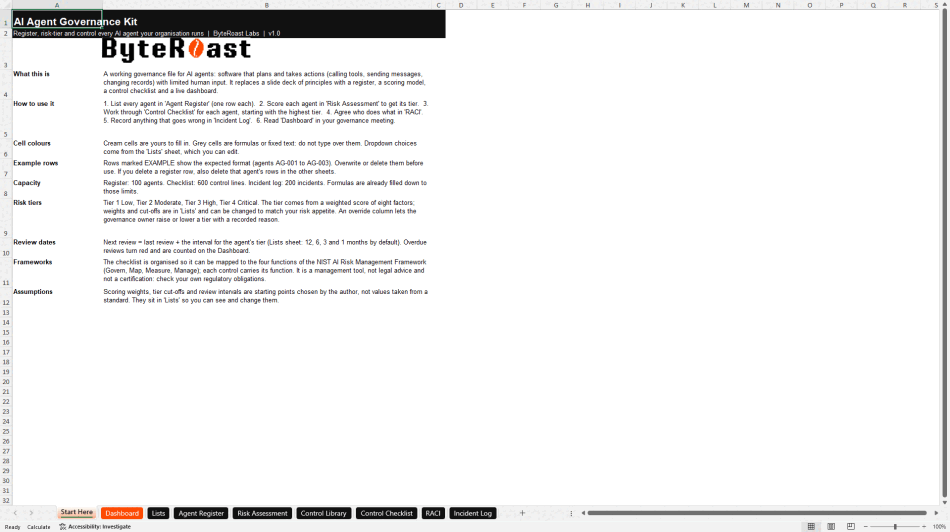
The primary document is an Excel workbook with nine sheets and all formulas already filled in.
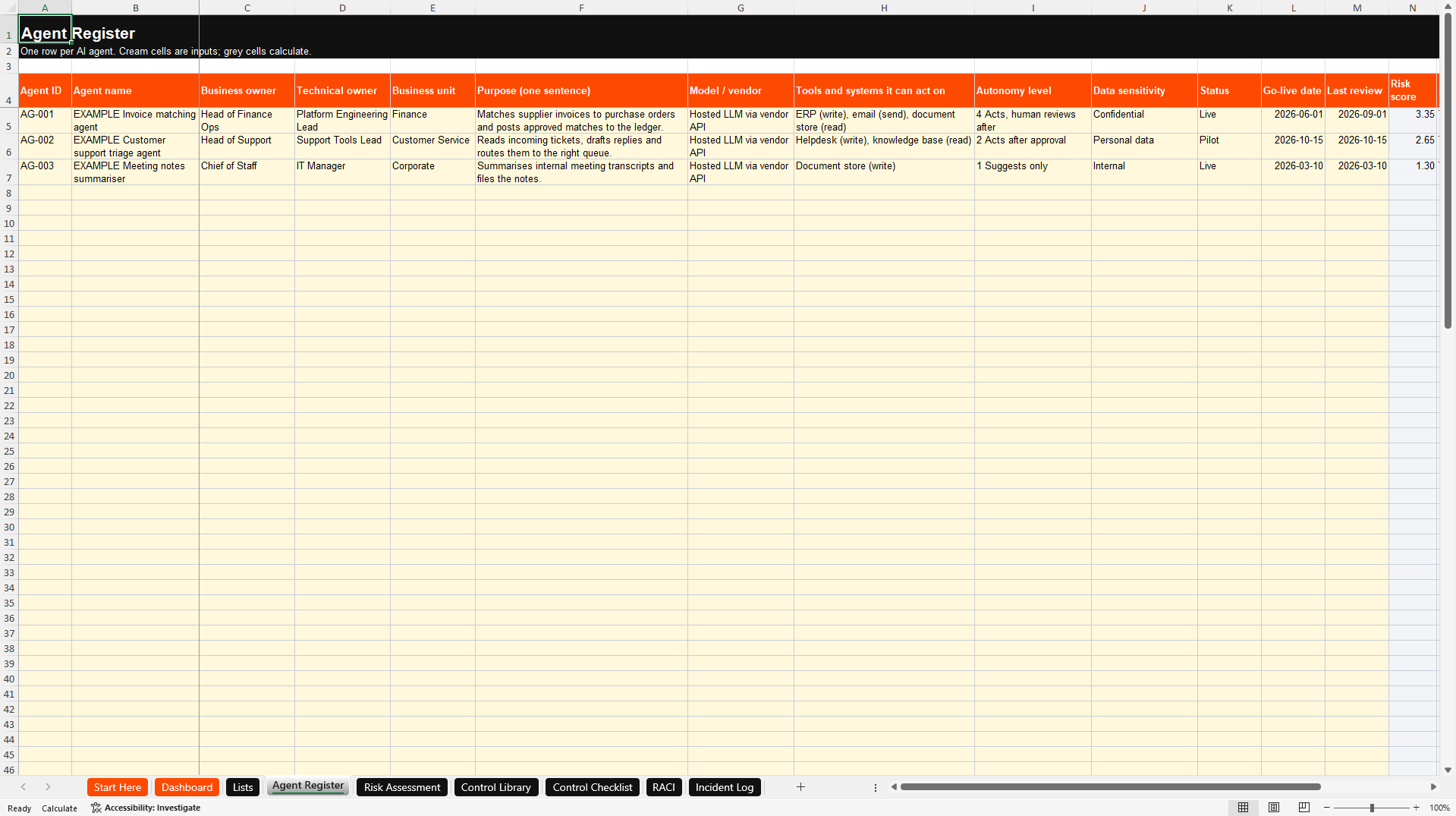
Agent Register. One row per agent, for up to 100 agents: business owner, technical owner, purpose, model or vendor, the tools and systems it can act on, autonomy level, data sensitivity, status, and review dates. The risk tier, next review date, and control completion are calculated for you.
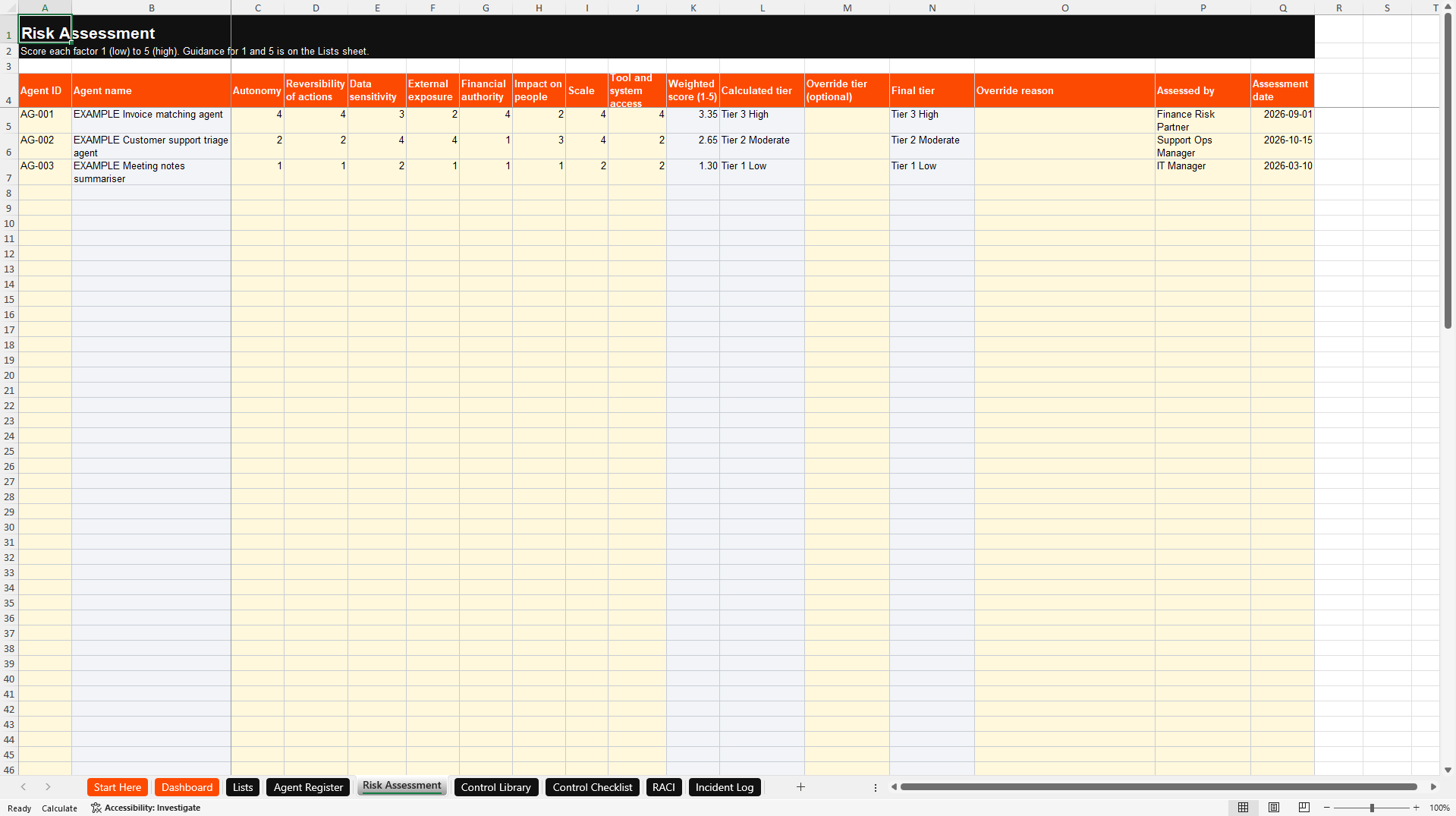
Risk Assessment. Eight weighted factors scored from 1 to 5: autonomy, reversibility of actions, data sensitivity, external exposure, financial authority, impact on people, scale, and tool and system access. The weighted score places each agent in one of four tiers, from Tier 1 Low to Tier 4 Critical. An override column lets the governance lead change a tier with a recorded reason.
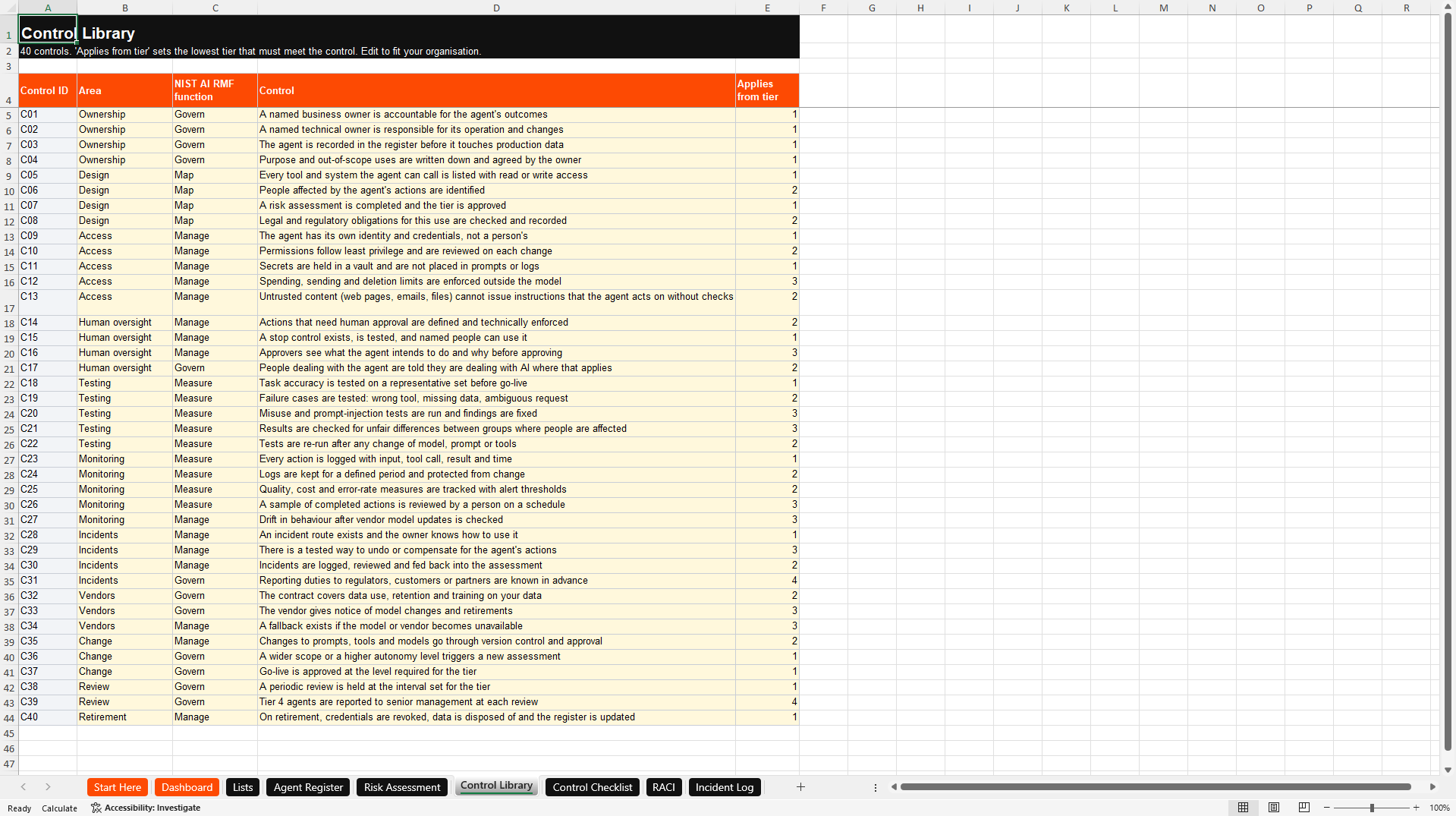
Control Library. Forty controls across ownership, design, access, human oversight, testing, monitoring, incidents, vendors, change, review, and retirement. Each control is tagged to a function of the NIST AI Risk Management Framework (Govern, Map, Measure, Manage) and to the lowest tier it applies to.
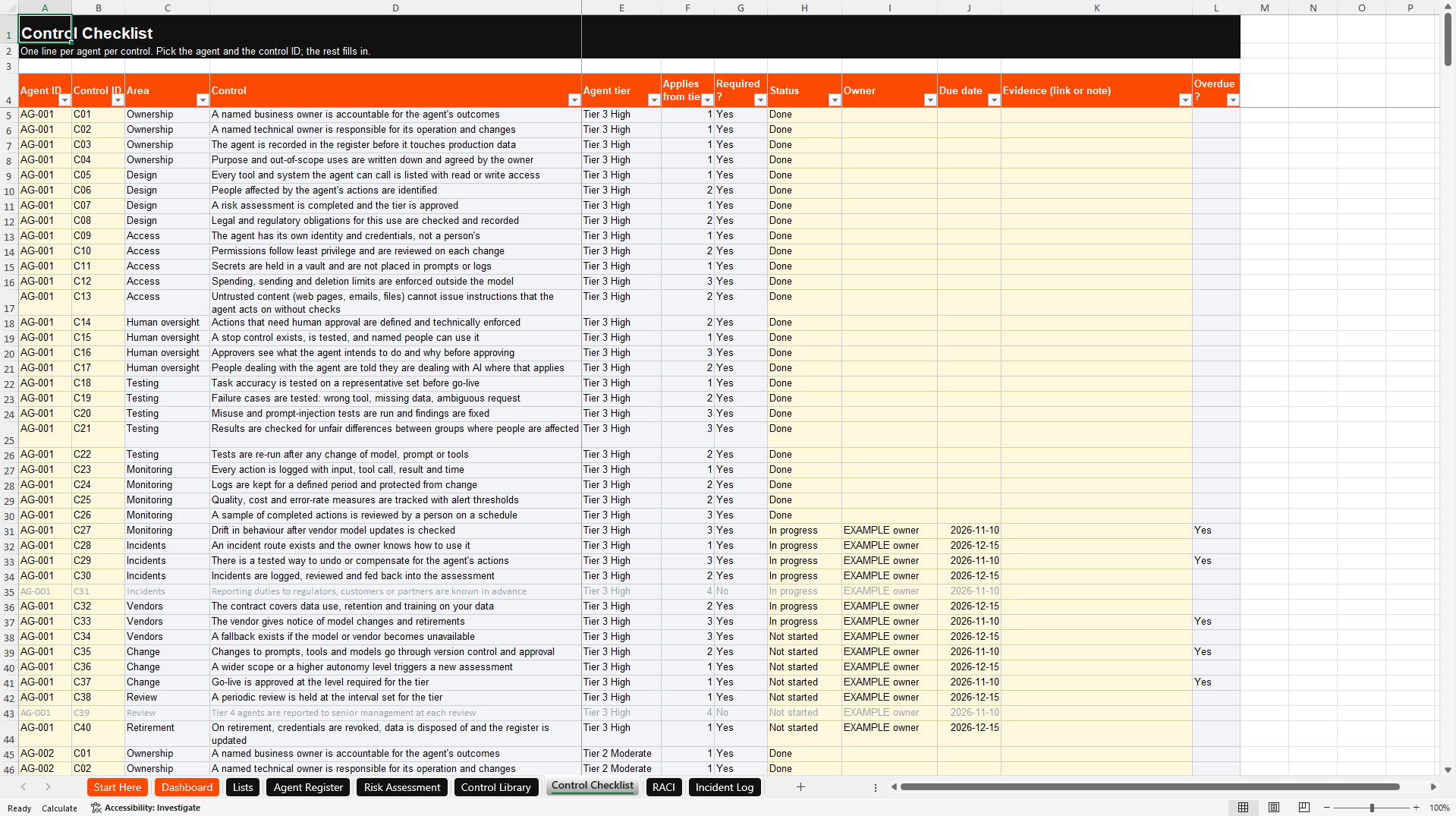
Control Checklist. Pick an agent and a control. The sheet works out whether the control is required for that agent's tier, tracks status, owner, due date, and evidence, and flags overdue items.
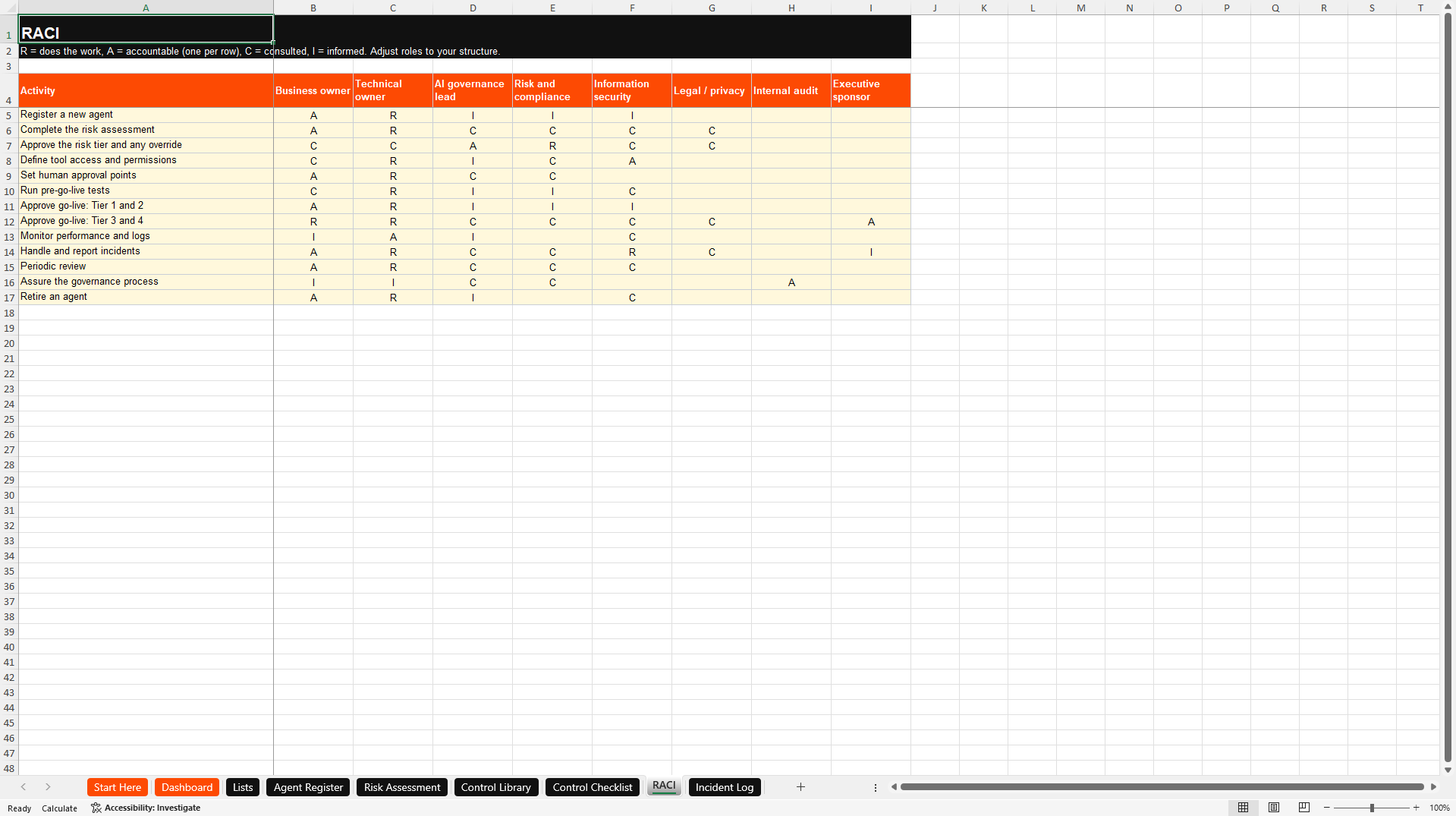
RACI. Thirteen governance activities across eight roles, from registering a new agent to retiring one.
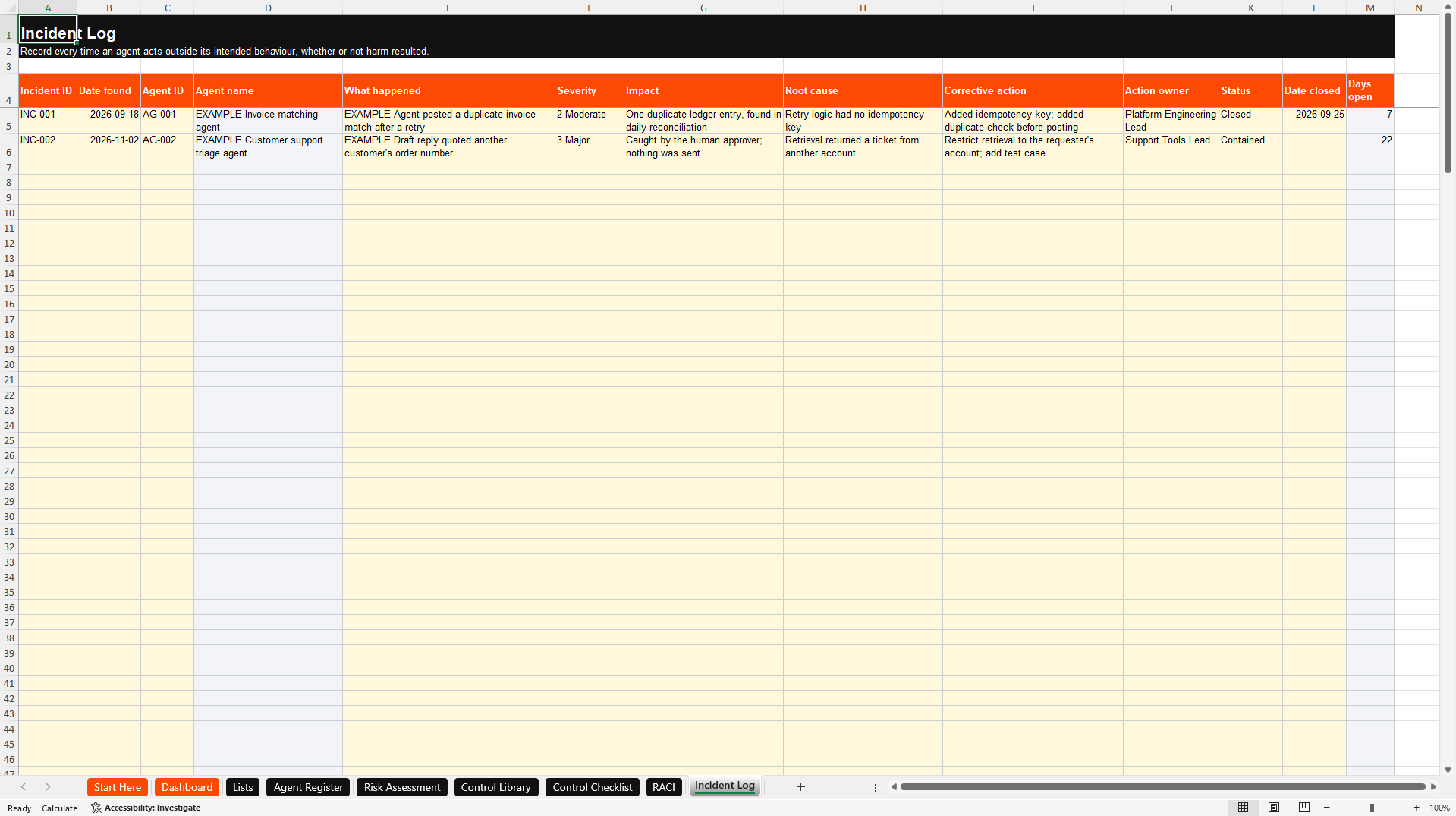
Incident Log. Severity, impact, root cause, corrective action, owner, status, and days open.
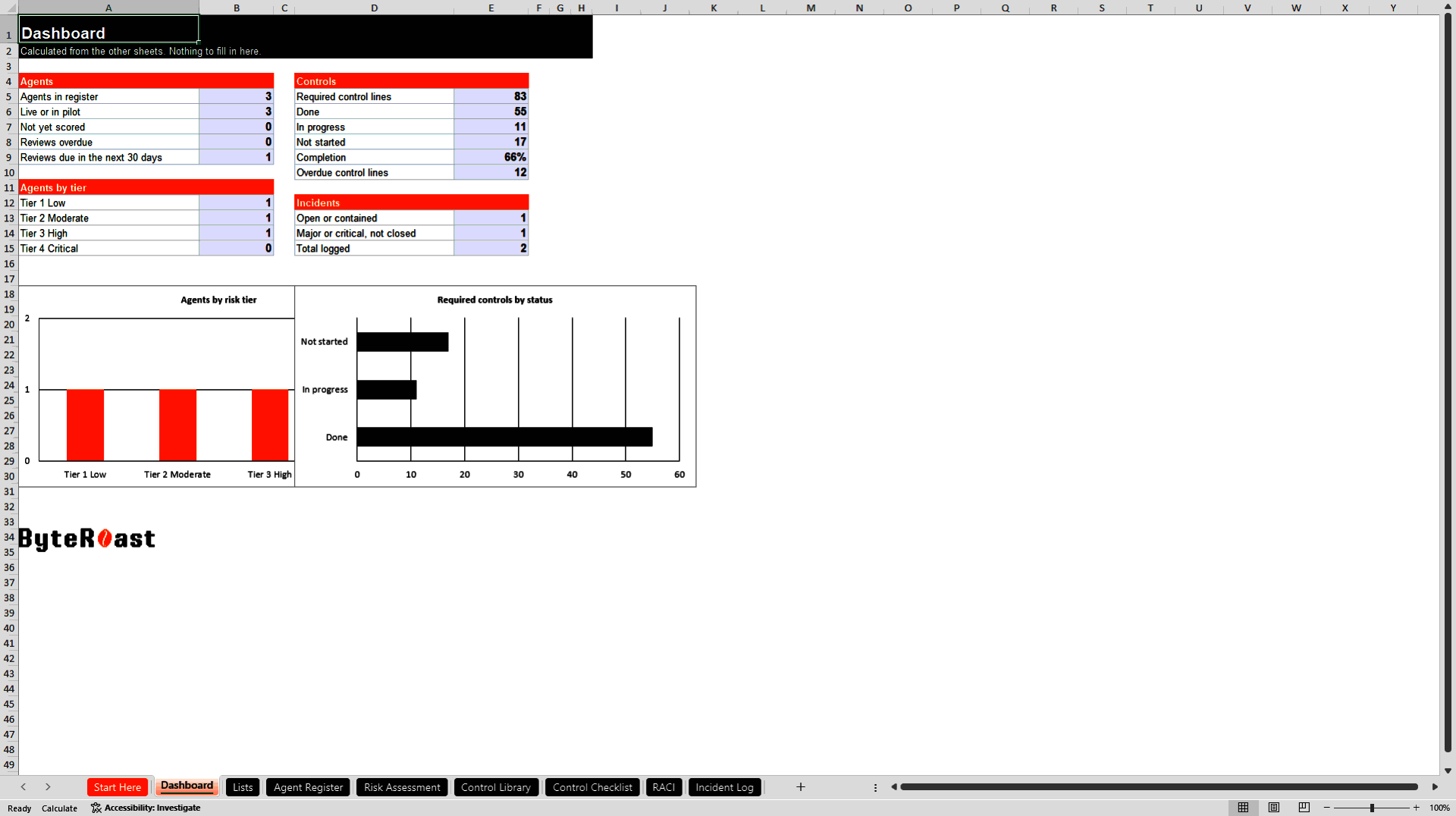
Dashboard. Agents by tier, overdue reviews, control completion, and open incidents, with two charts, ready for a governance meeting.
Lists. Every dropdown value, scoring weight, tier cut-off, and review interval is visible and editable, so you can fit the model to your own risk appetite.
The secondary document is a Word policy template: a ten-section AI Agent Governance Policy covering purpose, scope, principles, risk tiers and approval levels, roles, lifecycle requirements, prohibited uses, incidents, exceptions, and policy review. Placeholders in square brackets mark what to fill in.
Three example agents are included so you can see the workbook working before you enter your own.
Who it is for: heads of AI, risk and compliance leads, CIO and CISO offices, internal audit, and consultants setting up agent governance for a client.
Notes. The workbook works in Excel 2010 or later and contains no macros. The scoring weights, tier cut-offs, and review intervals are the author's starting values and are meant to be adjusted; they are not taken from a standard. This is a management tool, not legal advice or a certification. It was prepared with AI assistance and checked by the author.
Got a question about the product? Email us at support@flevy.com or ask the author directly by using the "Ask the Author a Question" form. If you cannot view the preview above this document description, go here to view the large preview instead.
Source: Best Practices in Governance, Agentic AI Excel: AI Agent Governance Kit: Register, Risk Tiers, and Controls Excel (XLSX) Spreadsheet, ByteRoast Labs