
 Click main image to view in full screen. Unlock all 12 preview images:
5S Alphabet Game – PowerPoint PPTX Template
PowerPoint (PPTX) + Zip archive file (ZIP) 31 Slides


BENEFITS OF THIS DOWNLOADABLE POWERPOINT DOCUMENT
- Zero Setup and No Sourcing Costs: There is absolutely no equipment to build and nothing to source; the exercise is fully scripted, low-difficulty to facilitate, and only requires the slide deck (or worksheets), a stopwatch, and pens.
- Flexible Dual Delivery: The game can be run as a completely digital, paperless simulation projected on a screen (ideal for virtual or in-person groups with no printing required) or as hands-on printed worksheets.
- A Fresh Spin for Repeat Audiences: It serves as a highly effective alternative for teams or participants who have already played the 5S Numbers Game, delivering a fresh experience while preserving the exact same proven mechanics and 5S principles.
EMPLOYEE TRAINING PPT TEMPLATE DESCRIPTION
The 5S Alphabet Game: Complete Lean Training Simulation & Facilitator Toolkit
A high-impact, hands-on Lean simulation designed by Operational Excellence Consulting (OEC) to let teams physically feel the operational benefits of Sort, Set in Order, Shine, Standardize, and Sustain in under 50 minutes.
DOCUMENT OVERVIEW
Are you struggling to get your team to adopt 5S (Workplace Organization)? Do traditional PowerPoint presentations about Lean tools leave your participants disengaged?
The 5S Alphabet Game is a highly interactive, fast-paced classroom simulation that teaches the visual and economic power of 5S through a simple, kinesthetic learning experience. Developed by world-class Lean experts at Operational Excellence Consulting (OEC), this simulation completely eliminates abstract theory, allowing participants to experience first-hand how workplace clutter drives up error rates, increases stress, and destroys operational capacity.
Why Letters Instead of Numbers?
This toolkit is a direct remodel of the 5S Numbers Game. By swapping the traditional 1–50 number search for a continuous alphabetical chain (searching uppercase A through Z followed immediately by lowercase a through z), this game maintains the exact same cognitive load, timing, and 5S mapping.
This makes the 5S Alphabet Game the perfect:
• Fresh alternative for teams or repeat participants who have already played the original Numbers Game.
• Aha-moment generator for opening Lean, Six Sigma, or continuous improvement workshops.
• Low-prep warm-up activity immediately preceding a real-world Gemba walk or physical 5S audit.
CORE LEAN CONCEPTS EXPERIENCED IN EACH ROUND
The simulation guides teams through five rapid, timed rounds (30 seconds each) where the "work area" (a sheet filled with characters) is systematically optimized using 5S principles:
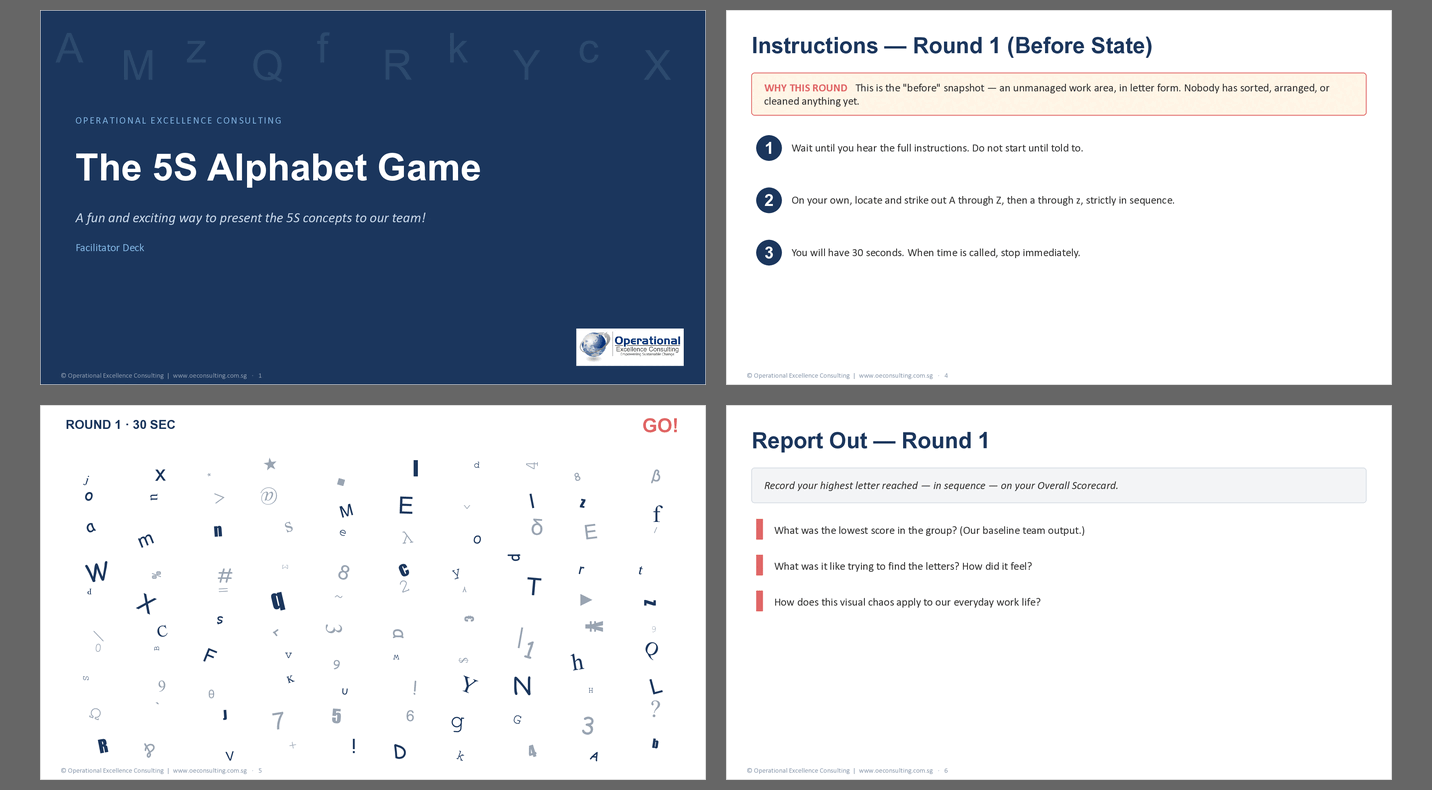
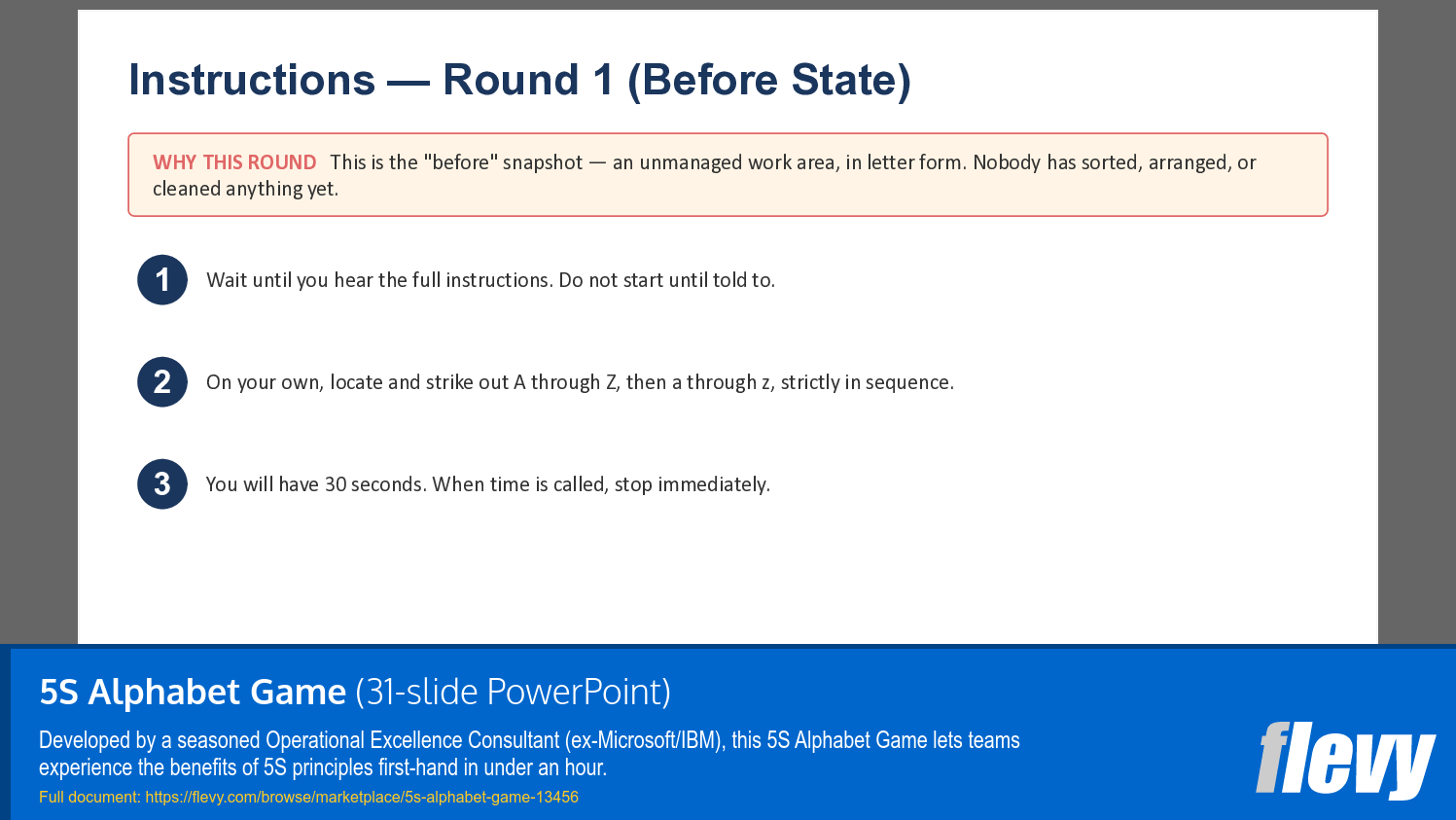
1. Round 1: The Chaotic Workplace (Before State)
• The Scenario: Represents an unmanaged, cluttered work area where nothing has been sorted, arranged, or cleaned.
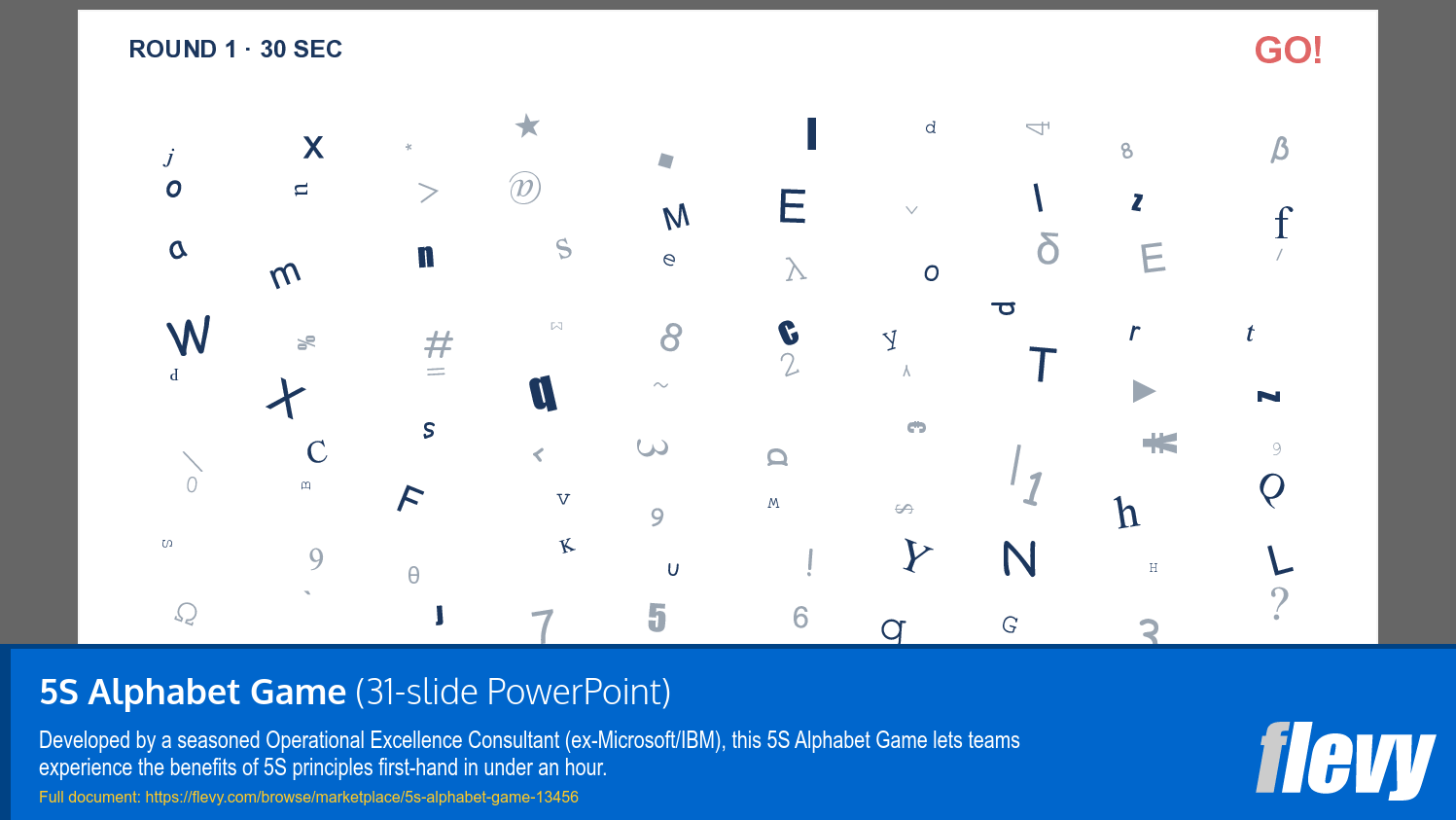
• The Task: Participants must sequentially locate and strike out letters A through Z, then a through z, on a sheet visually choked with 100 characters.
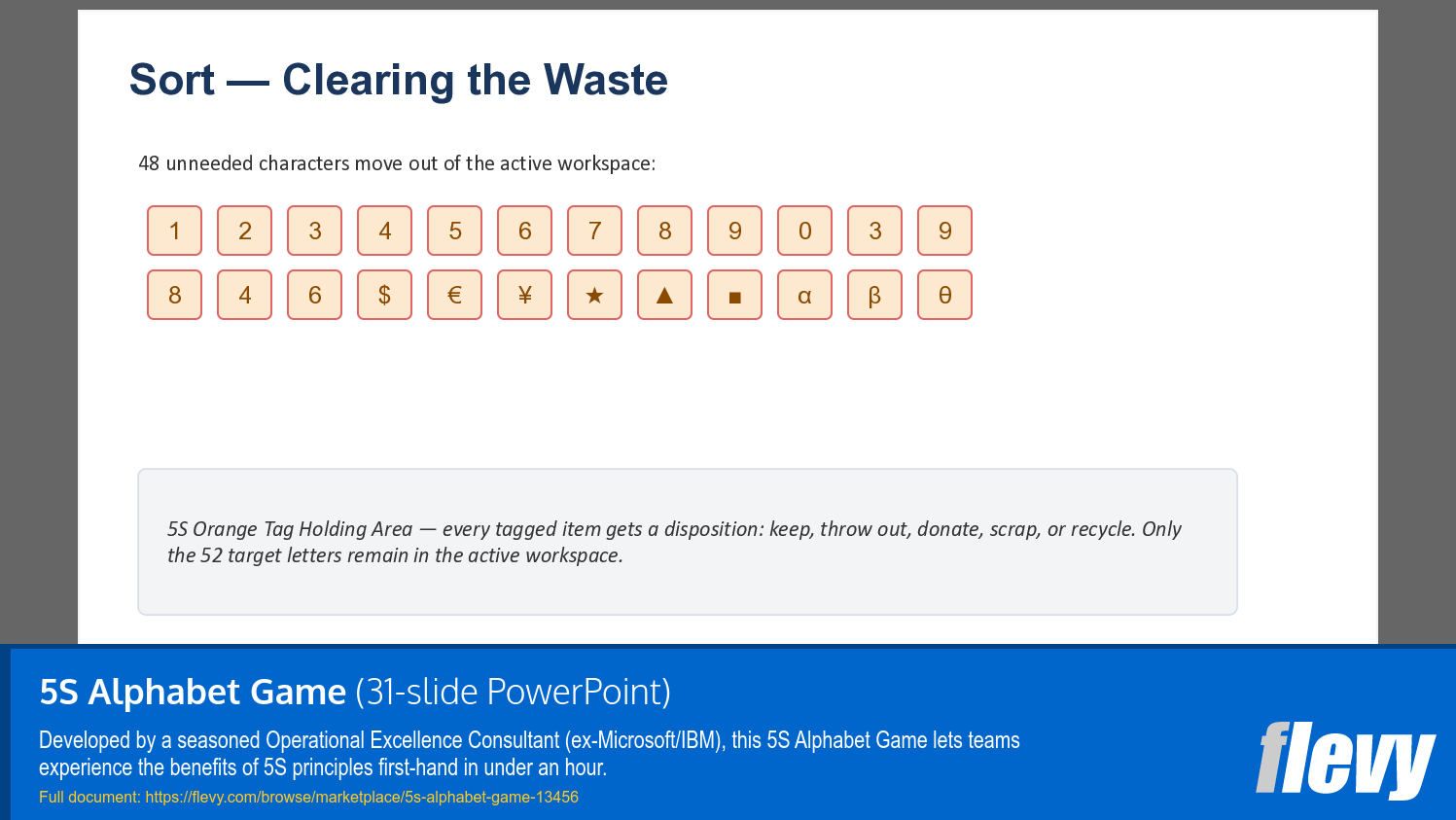
• The Visual Noise: Inconsistent fonts, varying character sizes, rotated letters, and duplicate letters sit alongside 48 "unneeded" waste characters (numbers, Greek letters, and symbols).
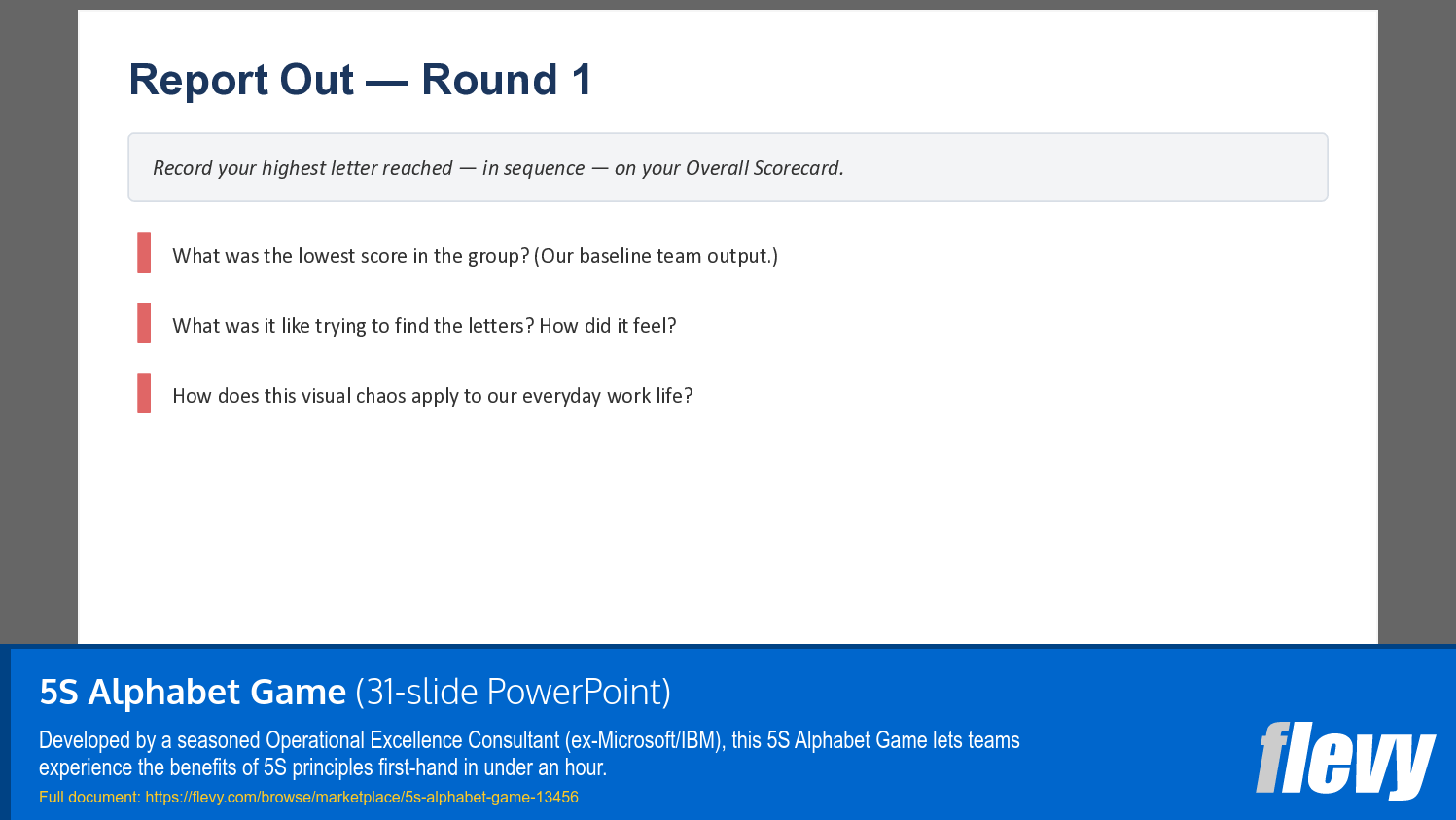
• The Learning: Spotlights how visual chaos leads to frustration, high search times, error-prone performance, and a low baseline of team output.
2. Round 2: 1S – Sort (Clearing the Waste)
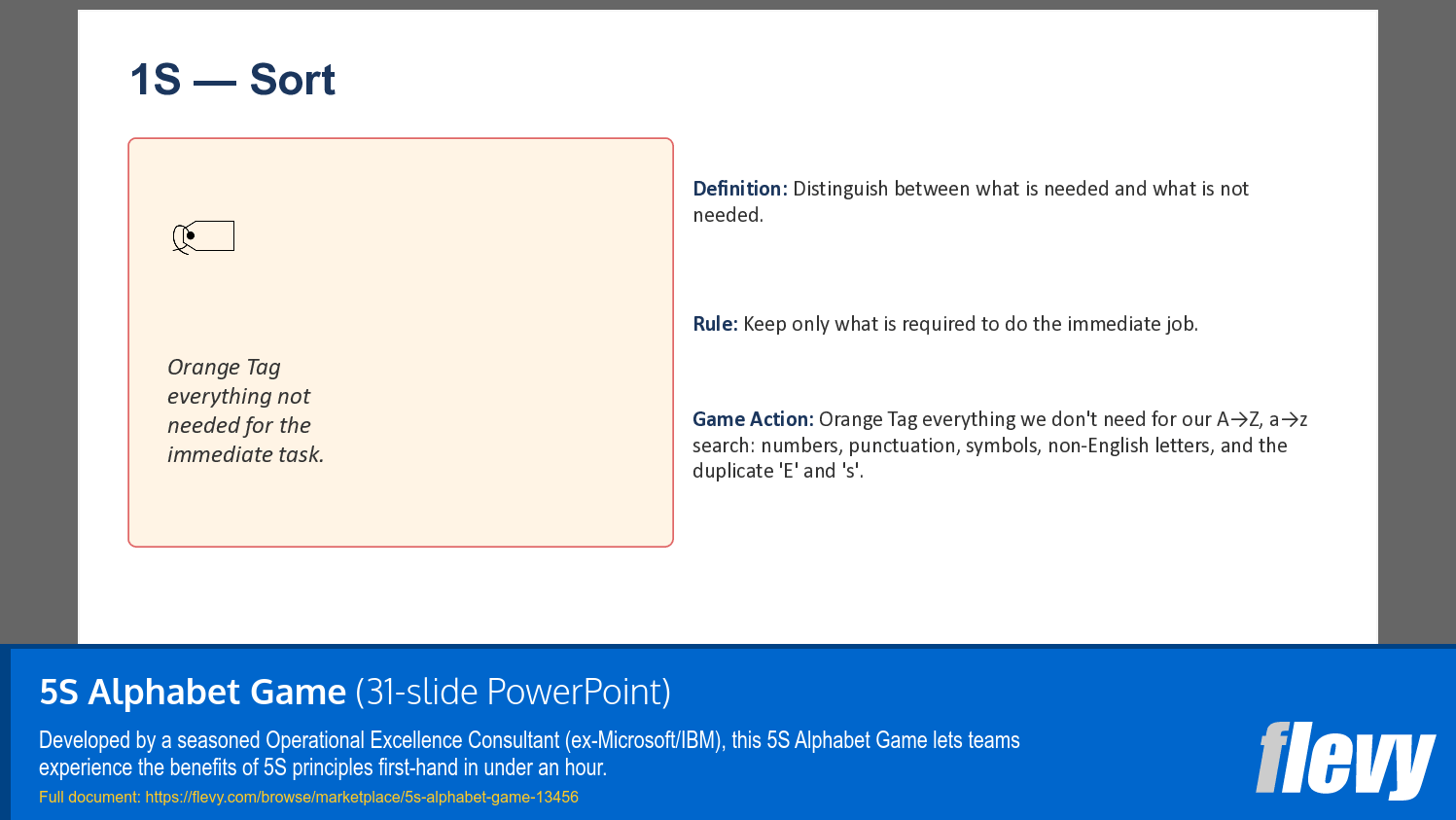
• The 5S Action: All non-essential items are "Orange Tagged" and moved out of the active work zone into a designated holding area.
• The Workspace: The 48 unneeded symbols, numbers, and duplicates are removed, leaving only the 52 target letters.
• The Learning: Demonstrates how simply sorting and removing clutter immediately improves search efficiency and reduces mental fatigue—even before any organization has begun.
3. Round 3: 2S – Set In Order (Organizing the Grid)
• The 5S Action: "A place for everything, and everything in its place". The remaining 52 letters are arranged into a logical 6×9 grid matching the natural flow of work.
• The Constraint: To represent real-world "legacy" bottlenecks and physical constraints, a "Legacy Filing Cabinet" blocks one cell, pushing uppercase T completely out of alphabetical sequence to the bottom-right corner.
• The Learning: Illustrates how standardizing structural layouts makes visual scanning faster. It also teaches the "cost of workarounds"—showing how a single displaced item disrupts workflow and creates subtle, persistent bottlenecks.
4. 3S & 4S: Shine & Standardize
• The 5S Action:
• Shine: Clean and inspect the workspace—standardizing all letters to a single, highly legible, upright sans-serif font of uniform size.
• Standardize: Establish visual controls by segmenting the grid into 4 color-coded horizontal scanning zones (Sage Green, Sky Blue, Pale Yellow, and Peach Orange).
• The Learning: Proves that clean, highly standardized visual controls eliminate search delays and make errors immediately self-evident.
5. Round 4: 5S Audit (Sustain via Auditing)
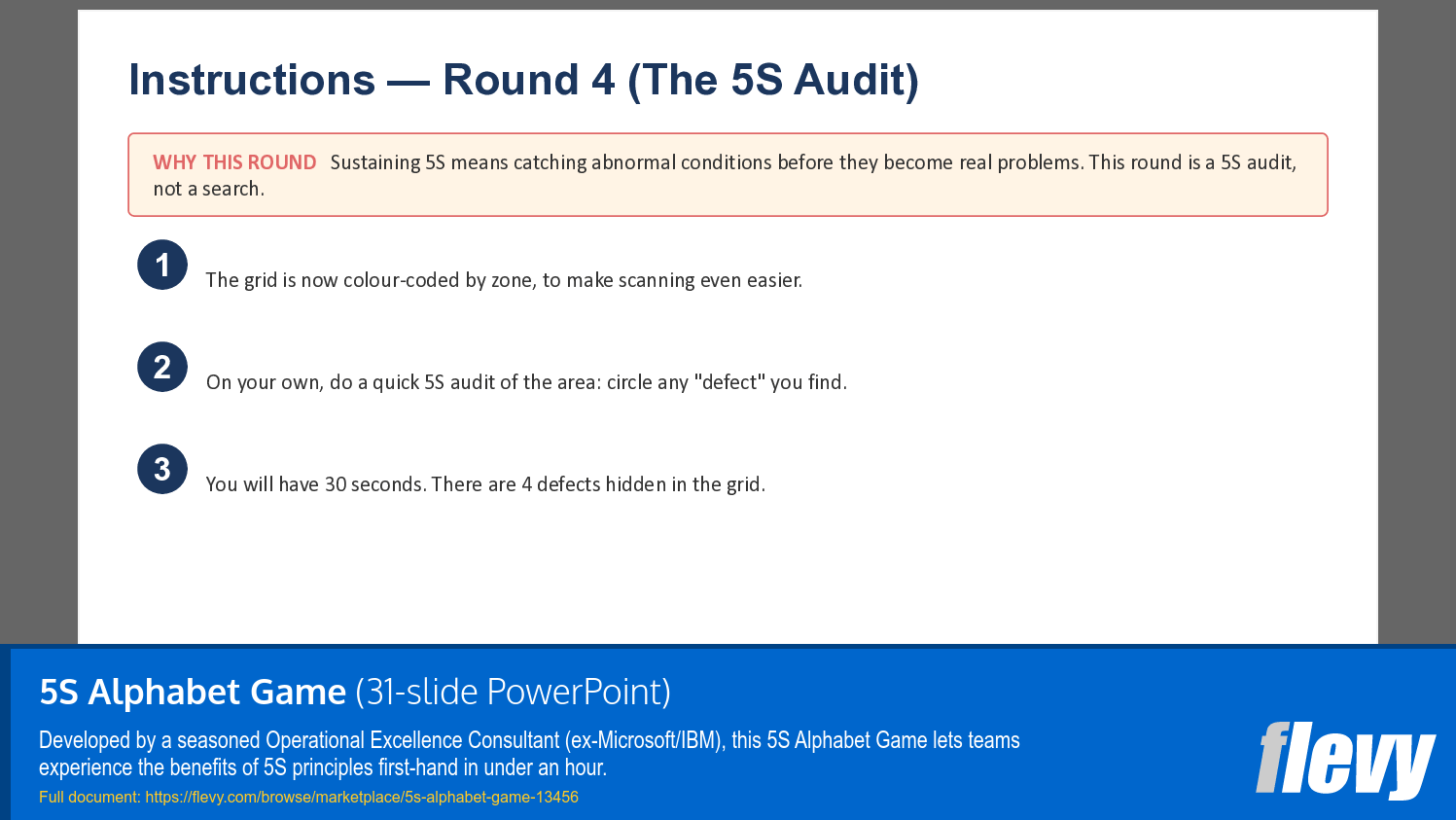
• The Scenario: In a standardized workplace, anomalies must be instantly visible. Instead of a search, this round acts as a 30-second visual audit.
• The Task: Participants inspect a color-coded worksheet to find and circle 4 critical visual defects:
• Missing Item: Uppercase E is completely missing from Row 1.
• Sequence Swap: Lowercase p and q are swapped in Row 5.
• Orientation Issue: Lowercase w is rotated upside down (looking like an m) in Row 6.
• Displaced/Crooked Item: Lowercase y is shrunk, rotated, and sliding out of its home grid box.
• The Learning: Showcases how standard visual management transforms auditing from a tedious inspection into an instant, intuitive, and error-proof process.
6. Round 5: The Optimized Workplace
• The Scenario: The workspace is fully sorted, arranged, cleaned, standardized, and sustained.
• The Task: A final 30-second run on a 100% defect-free, visual grid.
• The Learning: Highlights the ultimate performance gains of 5S—dramatically increased capacity, eliminated errors, minimized lead times, and an organized, stress-free work environment.
KEY BUSINESS BENEFITS OF THE TOOLKIT
By facilitating this simulation, you will help your organization drive improvements across three main operational pillars:
• Quality (Fewer Defects): Teams experience how standardizing font styles, alignments, and visual color zones makes abnormalities instantly recognizable before they escape downstream.
• Cost (Reduced Waste): Participants see how removing unneeded physical or digital "clutter" directly reclaims visual space and unlocks operational capacity.
• Delivery & Service (Predictability): The simulation proves that moving from chaotic search to standardized sequences drastically shortens processing cycles and creates stable, predictable lead times.
PRODUCT SPECIFICATIONS & WHAT'S INCLUDED
This digital download is a comprehensive, turnkey package containing everything required to facilitate an executive-level continuous improvement session:
1. Fully Scripted Facilitator Guide (DOCX):
• Pacing & Timing Cheat Sheet: Seamless 45-minute workshop schedule.
• Verbatim Facilitator Script: Step-by-step "Say" and "Do" prompts for flawless delivery, even for first-time instructors.
• Detailed Debrief Question Bank: Pre-formatted questions targeting Quality, Cost, and Delivery to extract profound, real-world "Aha!" moments.
2. Professional Facilitator Presentation (PPTX/PDF):
• Widescreen slides beautifully designed with clean visual zones.
• Pre-populated, animated slides showing the "Sort" action, grid alignment, visual zoning, and Round 4 audit answers.
• Ideal for projected face-to-face sessions or high-engagement virtual delivery over Teams/Zoom.
3. Print-Ready Participant Worksheets & Scorecard (PPTX):
• High-resolution visual sheets for Rounds 1 through 5.
• Double-sided layout templates (complying with standard strict "do not turn over until told" training guidelines).
• Overall Scorecard template: Allows participants to track their individual progress and plot team baseline improvements.
TARGET AUDIENCE
This tool is highly versatile and requires zero industrial experience, making it universally applicable for:
• Lean, Six Sigma, and Agile Coaches looking for a bulletproof introductory warm-up.
• Operations, Manufacturing, and Logistics Leaders introducing workplace organization.
• Office and Shared Services Managers seeking a simple simulation to explain Digital 5S (cleaning up server folders, shared mailboxes, and intranet drives).
• Human Resources & Training Specialists wanting an engaging, collaborative team-building exercise.
FREQUENTLY ASKED QUESTIONS (FAQs)
How many people can participate in the 5S Alphabet Game?
The game is highly scalable. It is designed for individual work, meaning it can be facilitated for groups of 4 up to 40+ participants in any training room or virtual session. For larger groups, facilitators can easily group tables together and poll table representatives for scoreboards.
Can this simulation be run virtually?
Yes. The facilitator guide includes specific instructions for running the simulation virtually by sharing the slide deck on screen. Remote participants can utilize the digital slides to perform their sequential searches and enter their scores directly into the virtual chat.
How long does the entire 5S Alphabet Game take?
The entire exercise takes approximately 40 to 50 minutes. This includes the initial setup, five 30-second active rounds, intermediate debrief discussions, and the final "Before & After" reflection session.
What materials do I need to prepare as a facilitator?
The game is extremely low-prep. You only need:
1. The provided Facilitator Slide Deck projected on-screen.
2. One timer/stopwatch (on a phone or laptop).
3. Printed worksheets (one set per participant, stapled) or the digital slide equivalent.
4. One pen or pencil per participant.
5. A whiteboard or flip chart to write down baseline scores.
About the Author: Operational Excellence Consulting (OEC)
This training toolkit is published by Operational Excellence Consulting (OEC), a premier management consulting firm specializing in Lean, Six Sigma, and Business Process Re-engineering. With decades of hands-on experience guiding multinational corporations and small-to-medium enterprises through complex operational transformations, OEC's training materials are meticulously vetted for academic rigor, real-world practicality, and maximum training retention.
Secure your toolkit today to transform how your organization learns and sustains Lean 5S.
Got a question about the product? Email us at support@flevy.com or ask the author directly by using the "Ask the Author a Question" form. If you cannot view the preview above this document description, go here to view the large preview instead.
Source: Best Practices in Employee Training, 5S PowerPoint Slides: 5S Alphabet Game PowerPoint (PPTX) Presentation Slide Deck, Operational Excellence Consulting
ABOUT THE AUTHOR

Operational Excellence Consulting, founded in 2009 by Allan Ung, draws from extensive experience at Microsoft, IBM, and Underwriters Laboratories (UL). We specialize in strategy deployment, customer experience design, and operational excellence, applying Design Thinking, Lean, and Systems Thinking to maximize customer value and minimize waste.
Our
... [read more]
Ask the Author a Question
You must be logged in to contact the author.




























