

 Click main image to view in full screen.
Business Impact Analysis (BIA) Questionnaire Templates – Word DOC
Word (DOC) + Word (DOC) 11 Pages


BCP WORD DESCRIPTION
Managing all the aspects of the business to ensure business continuity is referred to as Business Continuity Management. It means being prepared to deal with all forms of disruption of 'Business As Usual.' This could save your organization from potential damage. Damage in lost revenues, unnecessary expenses, claims from clients or third parties, and last but not least our reputation as a solid and reliable company. These disruptions could be caused by anything from a power failure, fire, IT breakdown, to a terrorist attack.
Performing a Business Impact Analysis (BIA) is part of Business Continuity Management. A BIA identifies all key business processes and establishes the recovery priorities, should those processes be disrupted or lost.
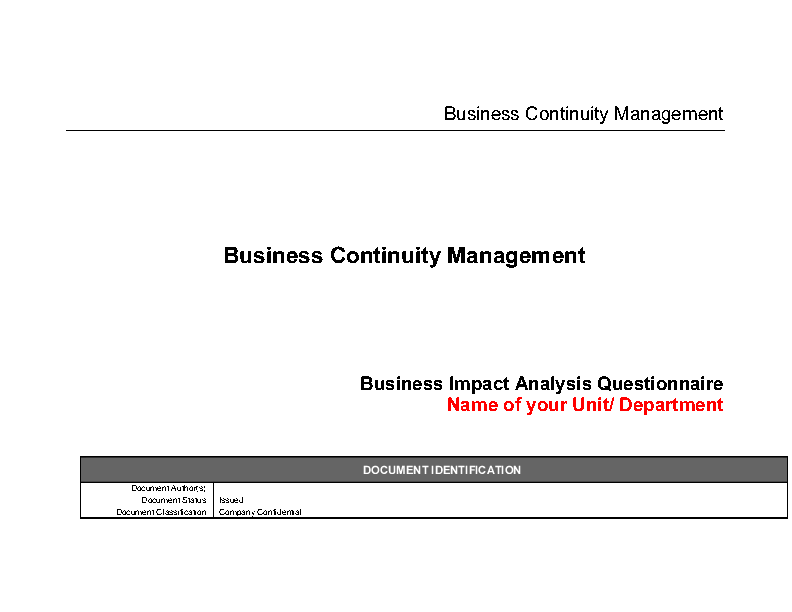
This product includes 2 in-depth questionnaires related to properly and comprehensively conducting Business Impact Analysis across your organization. Both are completely modifiable in MS Word.
The first BIA template is 11 page and previewed above. It captures the following core areas:
• Business function details
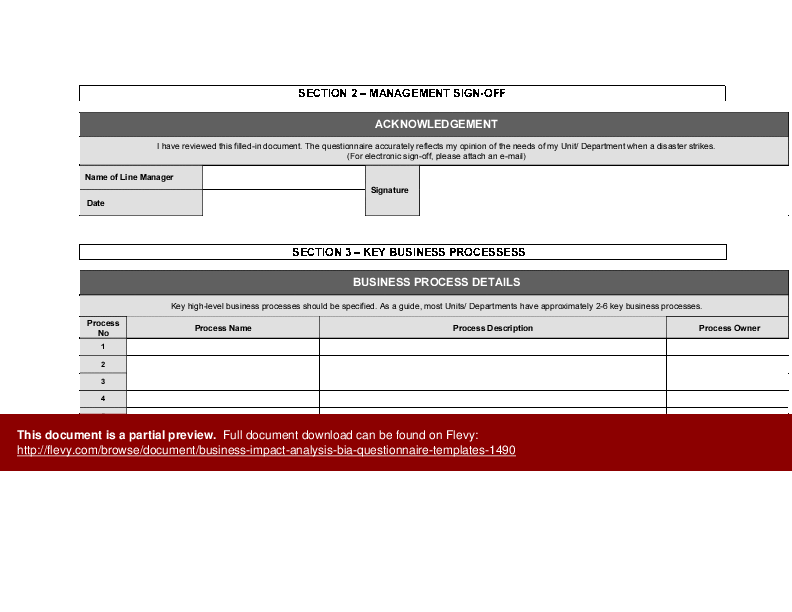
• Key business processes
• Management sign-off
• Impact assessment (financial loss, reputation damage, regulatory/legal non-compliance)
• Dependency analysis
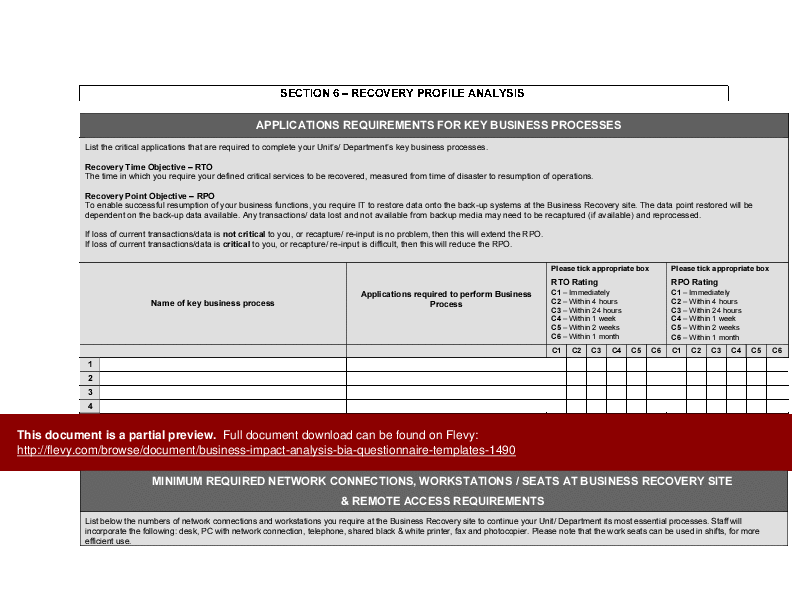
• Recovery profile analysis (application requirements, recovery site and remote access requirements, vital records requirements, etc.)
The second BIA template is 4 pages and included with this purchase.
This Word document also includes sections for Acknowledgement, where line managers can sign off on the accuracy of the information provided, ensuring accountability and thorough review. The Applications Requirements for Key Business Processes section helps delineate critical applications and their respective Recovery Time Objectives (RTO) and Recovery Point Objectives (RPO). This is essential for prioritizing recovery efforts. The Minimum Required Network Connections, Workstations, and Remote Access Requirements section ensures that your team has the necessary infrastructure to maintain operations during a disruption. This comprehensive approach ensures no stone is left unturned in your Business Impact Analysis.
Got a question about the product? Email us at support@flevy.com or ask the author directly by using the "Ask the Author a Question" form. If you cannot view the preview above this document description, go here to view the large preview instead.
TOPIC FAQ
What is a Business Impact Analysis and what outcomes should I expect from it?
A Business Impact Analysis identifies key business processes, their dependencies, and the relative priority for recovery if disrupted. Outcomes include documented impact assessments (financial loss, reputation damage, regulatory/legal non-compliance), dependency mapping, and recovery profiles that support setting recovery priorities and RTO/RPO requirements.How do Recovery Time Objectives (RTO) and Recovery Point Objectives (RPO) influence recovery prioritization?
RTO and RPO define the acceptable downtime and data-loss tolerance for applications, which drives sequencing of recovery efforts and resource allocation. A BIA documents these values per application so teams can prioritize which systems and processes to restore first using application RTO/RPO fields.What sections should a BIA questionnaire include to be useful for business continuity planning?
A useful BIA questionnaire captures business function details, key business processes, impact assessment (financial, reputation, regulatory), dependency analysis, recovery profile analysis (applications requirements, recovery site, remote access), and management sign-off; these are included in the 11-page template.What should I look for when purchasing BIA templates for my organization?
Look for modifiable formats (e.g., MS Word), explicit sections for impact assessment and dependency analysis, application RTO/RPO fields, management sign-off/acknowledgement, and alignment with relevant standards; having editable DOC templates with RTO/RPO sections is a key attribute to check.What team members need to be involved to complete a BIA using a template?
Completing a BIA requires input from process owners (to describe business functions), IT/application owners (to specify application requirements and RTO/RPO), and line managers for acknowledgement and sign-off; those roles map directly to sections like application requirements and management sign-off.How can a BIA template support compliance with standards like SOX, ISO, or FFIEC?
A structured BIA captures impact categories, dependencies, and recovery profiles that demonstrate due diligence and operational resilience. Templates that include regulatory impact assessment and recovery planning fields help document controls aligned to SOX, ITIL, FFIEC, BS25999, and ISO 17799/27001.I’m integrating 2 teams after a merger—how should I use a BIA to map critical processes?
Use the BIA to catalogue each team’s business functions, list key processes, map application and infrastructure dependencies, and assign RTO/RPO to inform prioritization. Management sign-off on entries ensures accountability during integration via dependency analysis and applications requirements sections.Why is management sign-off important in BIA questionnaires and how is it typically recorded?
Management sign-off validates the accuracy of process information, assigns accountability, and supports auditability. BIA templates commonly include an acknowledgement section for line managers to sign off on the accuracy of submitted responses, recorded as a signed acknowledgement field.Source: Best Practices in BCP, Business Impact Analysis Word: Business Impact Analysis (BIA) Questionnaire Templates Word (DOC) Document, Boris Agranovich