
Team Turnaround Strategies   22-slide PPT PowerPoint presentation slide deck (PPT)
$29.00

Team Turnaround Strategies (22-slide PPT PowerPoint presentation slide deck (PPT)) Preview Image
Log in to unlock full preview.
Team Turnaround Strategies (22-slide PPT PowerPoint presentation slide deck (PPT)) Preview Image
Arrow   Click main image to view in full screen.

Team Turnaround Strategies (PowerPoint PPT Slide Deck)

PowerPoint (PPT) 22 Slides FlevyPro Document

Top 1,000 Best Practice $29.00
FlevyPro price: FREE (included in subscription)
This framework is developed by a team of former McKinsey and Big 4 consultants. The presentation follows the headline-body-bumper slide format used by global consulting firms.
Add to Cart


Immediate download
Free lifetime updates

TEAM MANAGEMENT PPT DESCRIPTION

Editor Summary Team Turnaround Strategies is a 22-slide PowerPoint presentation by LearnPPT Consulting that provides frameworks to turn dysfunctional leadership teams into higher-performing units. Read more

The Leadership (and extended) Team is vital to success, as Executives transition to new C-suite roles. Executives are often faced with dysfunctional, non-performing, and poorly organized "team inheritances."

Today, management is increasingly confronted with a volatile, uncertain, complex, and ambiguous (VUCA) business environment. Being able to survive in this volatile time requires a dynamic team that collectively operates towards achieving a common purpose.

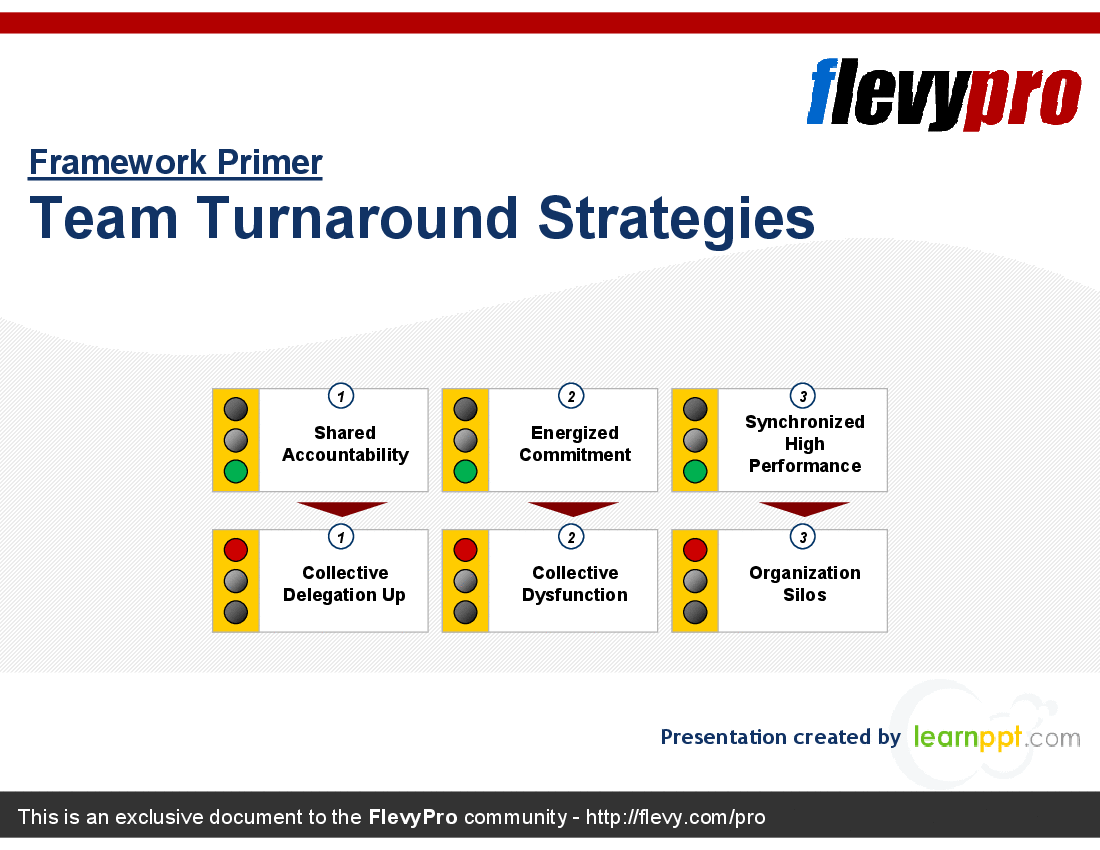
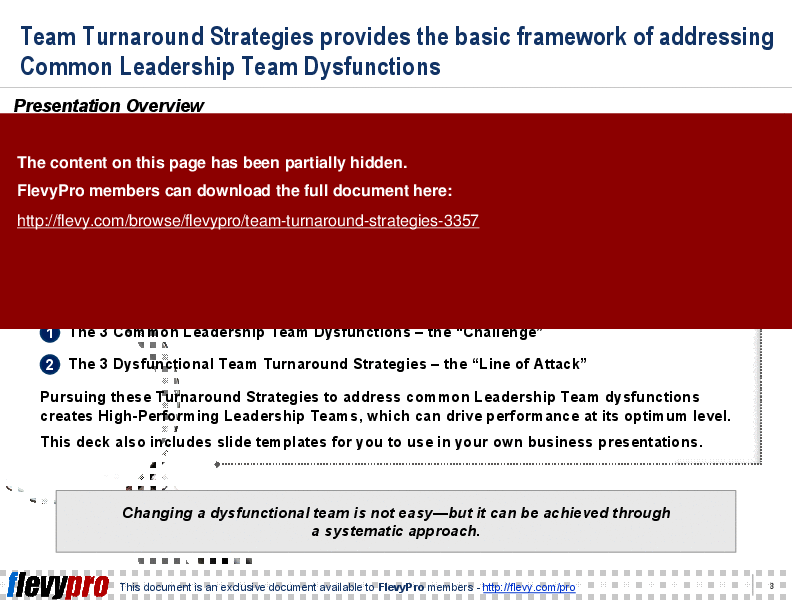
This presentation provides Executives the strategic understanding and approaches to better turn inherited teams into High-Performing Leadership Teams. The key concepts discussed are:

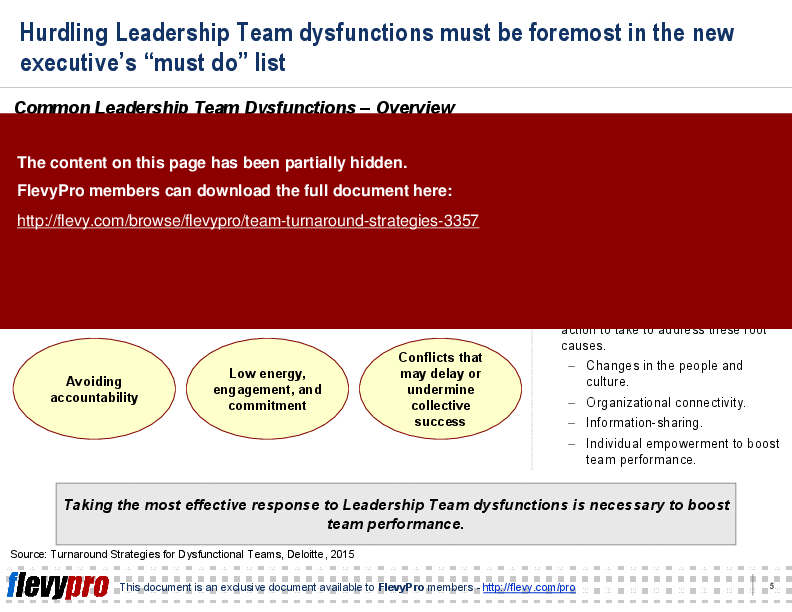
1. The 3 Common Leadership Team Dysfunctions – the "Challenge"
2. The 3 Dysfunctional Team Turnaround Strategies – the "Line of Attack"

Pursuing these Turnaround Strategies to address common Leadership Team dysfunctions creates High-Performing Leadership Teams, which can drive performance at its optimum level. Changing a dysfunctional team is not easy, but it can be achieved through a systematic approach.

This deck also includes slide templates for you to use in your own business presentations.

This comprehensive presentation delves into the root causes of common leadership team dysfunctions, such as avoiding accountability, low energy, and engagement. It provides actionable strategies to address these issues, ensuring that executives can effectively lead their teams through periods of transition and change. The PPT emphasizes the importance of shared accountability, energized commitment, and synchronized high performance as key turnaround strategies.

Executives will find detailed insights on how to diagnose and tackle organizational silos, collective dysfunction, and delegation issues. This resource is designed to equip leaders with the tools needed to foster a high-performing team culture, driving organizational success in a VUCA environment. The included slide templates facilitate easy integration into your own presentations, making it a practical addition to any executive's toolkit.

Got a question about this document? Email us at flevypro@flevy.com.

MARCUS OVERVIEW

This synopsis was written by Marcus [?] based on the analysis of the full 22-slide presentation.


Executive Summary
The "Team Turnaround Strategies" presentation equips executives with essential frameworks to transform dysfunctional teams into high-performing units. In a volatile, uncertain, complex, and ambiguous (VUCA) environment, it is crucial for leaders to effectively manage inherited teams that may lack cohesion and performance. This presentation outlines common leadership team dysfunctions and provides actionable turnaround strategies, including Shared Accountability, Energized Commitment, and Synchronized High Performance. By applying these strategies, executives can foster a culture of collaboration and drive optimal team performance.

Who This Is For and When to Use
•  C-suite executives inheriting leadership teams with performance challenges
•  Integration leaders tasked with improving team dynamics
•  HR professionals focusing on team engagement and performance
•  Consultants specializing in organizational development and team effectiveness

Best-fit moments to use this deck:
•  During leadership transitions to assess and address team dynamics
•  When facing challenges in team performance and engagement
•  In workshops aimed at developing team cohesion and accountability

Learning Objectives
•  Define common leadership team dysfunctions and their impact on performance
•  Diagnose root causes of team dysfunctions and develop targeted strategies
•  Establish a culture of Shared Accountability to empower team members
•  Foster Energized Commitment to enhance motivation and engagement
•  Implement Synchronized High Performance to break down organizational silos
•  Utilize templates and frameworks for effective team presentations

Table of Contents
•  Overview (page 3)
•  Common Leadership Team Dysfunctions (page 5)
•  Dysfunctional Team Turnaround Strategies (page 10)
•  Templates (page 15)

Primary Topics Covered
•  Common Leadership Team Dysfunctions - Identifies 3 key dysfunctions: Collective Delegation Up, Collective Dysfunction, and Organizational Silos that hinder team performance.
•  Shared Accountability - A strategy to combat Collective Delegation Up by promoting decision-making ownership among team members.
•  Energized Commitment - Focuses on addressing Collective Dysfunction by recognizing and rewarding discretionary efforts to boost team motivation.
•  Synchronized High Performance - Aimed at overcoming Organizational Silos by fostering collaboration across teams through a "team of teams" approach.
•  Cultural Change Strategies - Discusses the importance of diagnosing beliefs and behaviors that contribute to dysfunction and implementing gradual changes.
•  Templates for Implementation - Provides practical templates to assist in applying the discussed strategies in real-world scenarios.

Deliverables, Templates, and Tools
•  Template for diagnosing leadership team dysfunctions
•  Framework for developing Shared Accountability practices
•  Guidelines for fostering Energized Commitment within teams
•  Model for implementing Synchronized High Performance
•  Presentation templates for team dynamics workshops
•  Tools for tracking team performance and engagement metrics

Slide Highlights
•  Overview of common leadership team dysfunctions with visual representations
•  Detailed breakdown of Shared Accountability and its implementation steps
•  Strategies for Energized Commitment illustrated with case studies
•  Framework for Synchronized High Performance emphasizing team collaboration
•  Practical templates for immediate application in team settings

Potential Workshop Agenda
Understanding Team Dysfunctions (60 minutes)
•  Discuss the 3 common leadership team dysfunctions
•  Identify specific challenges faced by participants' teams
•  Brainstorm initial strategies for addressing these challenges

Implementing Turnaround Strategies (90 minutes)
•  Explore the concept of Shared Accountability in depth
•  Develop action plans for fostering Energized Commitment
•  Create a roadmap for achieving Synchronized High Performance

Customization Guidance
•  Tailor the templates to reflect specific team dynamics and organizational culture
•  Adjust the terminology used in the presentation to align with internal language
•  Incorporate relevant metrics and KPIs for tracking team performance

Secondary Topics Covered
•  The role of leadership in driving team performance
•  Strategies for effective communication within teams
•  Techniques for fostering trust and collaboration among team members
•  Methods for measuring team engagement and effectiveness

Topic FAQ

What are the common leadership team dysfunctions that typically require a turnaround?

Common leadership team dysfunctions identified are Collective Delegation Up (avoidance of decision ownership), Collective Dysfunction (low energy and engagement), and Organizational Silos (barriers between teams). These dysfunctions impede decision-making, discretionary effort, and cross-team collaboration, captured as 3 core dysfunction categories.

How should I diagnose the root causes of team dysfunction before choosing interventions?

Diagnosis begins with identifying which of the 3 core dysfunctions is present, then uncovering the underlying beliefs and behaviors that sustain them, and finally selecting targeted strategies aligned to those causes. The staged diagnostic approach emphasizes identifying dysfunctions, understanding beliefs, and selecting strategies.

What does Shared Accountability involve and how can leaders implement it?

Shared Accountability promotes decision-making ownership by encouraging team members to make and own decisions rather than deferring upward. Implementation steps include clarifying decision rights, pushing delegated choices back down, and setting expectations for ownership and follow-through, summarized as promoting decision ownership and downward delegation.

What should a buyer look for when choosing a team-turnaround toolkit for leadership teams?

Buyers should seek toolkits that provide a clear diagnostic framework, named turnaround strategies addressing accountability, motivation, and cross-team performance, practical templates for workshops and presentations, and guidance on measurement—specifically frameworks like Shared Accountability, Energized Commitment, and Synchronized High Performance.

Are slide templates and diagnostic tools worth purchasing rather than building them in-house?

Purchasing templates can save time and provide structured diagnostic and implementation formats that are immediately usable in workshops and briefings. Look for deliverables such as a diagnostic template, accountability framework, guidelines for fostering commitment, a synchronized performance model, and presentation templates for rapid use.

How can these turnaround strategies be applied during a leadership transition?

During a transition, leaders can assess inherited team dynamics, run focused workshops to surface dysfunctions, prioritize interventions, and draft action plans using the provided templates. A compact approach pairs a diagnostic session with an implementation workshop—referencing a potential Implementing Turnaround Strategies session of 90 minutes.

What metrics should I track to measure the effectiveness of team-turnaround interventions?

Effectiveness is tracked using team engagement and performance metrics and measures of accountability over time. Relevant measures include engagement scores, performance indicators tied to team objectives, and evidence of decision ownership and cross-team collaboration as part of established KPIs.

What is a practical agenda for a workshop focused on turning around a dysfunctional leadership team?

A practical agenda begins with a diagnostic session to review the 3 dysfunctions and identify team-specific challenges, followed by hands-on work to design Shared Accountability, Energized Commitment, and Synchronized High Performance interventions. An example structure uses Understanding Team Dysfunctions (60 minutes) and Implementing Turnaround Strategies (90 minutes).

Document FAQ
These are questions addressed within this presentation.

What are the main dysfunctions identified in leadership teams?
The main dysfunctions are Collective Delegation Up, Collective Dysfunction, and Organizational Silos, which impede team performance and engagement.

How can Shared Accountability be implemented effectively?
Shared Accountability can be fostered by encouraging team members to make their own decisions and pushing delegated decisions back down for ownership.

What is Energized Commitment and why is it important?
Energized Commitment refers to the motivation and discretionary effort of team members. Recognizing and rewarding these efforts is crucial for enhancing overall team performance.

How does Synchronized High Performance address organizational silos?
Synchronized High Performance promotes collaboration across teams by creating a "team of teams" structure, enhancing trust and shared purpose.

What tools are included in this presentation?
The presentation includes templates for diagnosing dysfunctions, frameworks for accountability, and guidelines for measuring team performance.

How can I customize the templates provided?
Templates can be tailored to fit specific team dynamics, organizational culture, and internal terminology for better alignment with your team’s needs.

What are the key steps for diagnosing team dysfunctions?
Key steps include identifying the dysfunctions, understanding the underlying beliefs, and selecting appropriate strategies for intervention.

How can I track the effectiveness of the implemented strategies?
Tracking can be done through established metrics and KPIs that measure team engagement, performance, and accountability over time.

Glossary
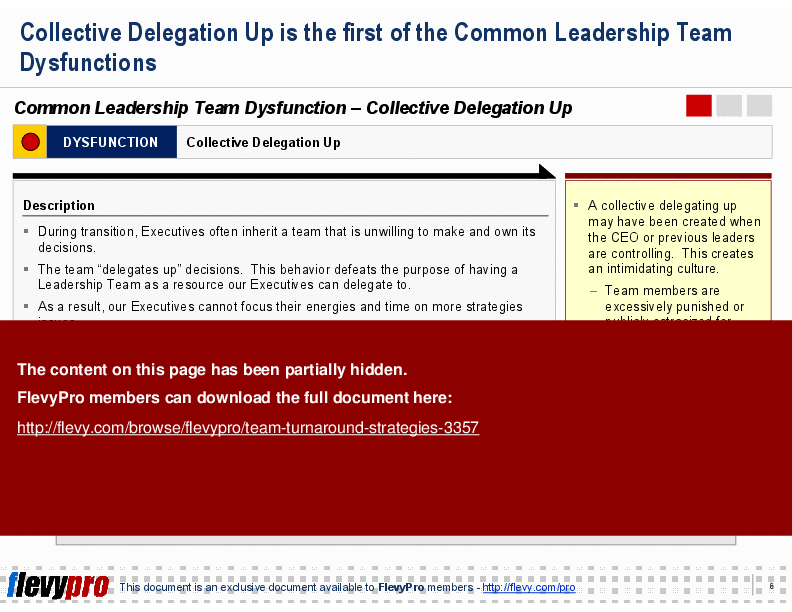
•  Collective Delegation Up - A dysfunction where team members avoid accountability by deferring decisions to higher management.
•  Collective Dysfunction - A state of low energy and engagement within a team, hindering performance.
•  Organizational Silos - Barriers between teams that prevent effective communication and collaboration.
•  Shared Accountability - A culture where team members take ownership of decisions and outcomes.
•  Energized Commitment - The motivation and discretionary effort exhibited by team members.
•  Synchronized High Performance - A collaborative approach that enhances team effectiveness across different functions.
•  VUCA - An acronym for Volatile, Uncertain, Complex, and Ambiguous, describing the modern business environment.
•  Turnaround Strategies - Approaches designed to address and rectify team dysfunctions.
•  Team of Teams - A structure that promotes collaboration and trust among various teams within an organization.
•  Cultural Change - The process of transforming the beliefs and behaviors within an organization to improve performance.
•  Performance Metrics - Quantitative measures used to assess the effectiveness of teams and individuals.
•  Engagement - The emotional commitment of team members to their work and the organization.

TEAM MANAGEMENT PPT SLIDES

Enhancing Team Performance through Synchronized Structures

Addressing Collective Delegation Up in Leadership Teams

Overcoming Leadership Team Silos in VUCA Environments

Source: Best Practices in Leadership, Team Building PowerPoint Slides: Team Turnaround Strategies PowerPoint (PPT) Presentation Slide Deck, LearnPPT Consulting


$29.00
FlevyPro price: FREE (included in subscription)
This framework is developed by a team of former McKinsey and Big 4 consultants. The presentation follows the headline-body-bumper slide format used by global consulting firms.
Add to Cart
  

Did you need more documents?

Consider a FlevyPro subscription from $39/month. View plans here.

For $10.00 more, you can download this document plus 2 more FlevyPro documents. That's just $13 each.

ABOUT FLEVYPRO

This document is part of the FlevyPro Library, a curated knowledge base of documents for our FlevyPro subscribers.

FlevyPro is a subscription service for on-demand business frameworks and analysis tools. FlevyPro subscribers receive access to an exclusive library of curated business documents—business framework primers, presentation templates, Lean Six Sigma tools, and more—among other exclusive benefits.

Click here to learn more about FlevyPro and its benefits.

Did you know?
The average daily rate of a McKinsey consultant is $6,625 (not including expenses). The average price of a Flevy document is $65.


Trusted by over 10,000+ Client Organizations
Since 2012, we have provided business templates to over 10,000 businesses and organizations of all sizes, from startups and small businesses to the Fortune 100, in over 130 countries.
AT&T GE Cisco Intel IBM Coke Dell Toyota HP Nike Samsung Microsoft Astrazeneca JP Morgan KPMG Walgreens Walmart 3M Kaiser Oracle SAP Google E&Y Volvo Bosch Merck Fedex Shell Amgen Eli Lilly Roche AIG Abbott Amazon PwC T-Mobile Broadcom Bayer Pearson Titleist ConEd Pfizer NTT Data Schwab


Read Customer Testimonials

 
"As a consultant requiring up to date and professional material that will be of value and use to my clients, I find Flevy a very reliable resource.

The variety and quality of material available through Flevy offers a very useful and commanding source for information. Using Flevy saves me time, enhances my expertise and ends up being a good decision."

– Dennis Gershowitz, Principal at DG Associates
 
"My FlevyPro subscription provides me with the most popular frameworks and decks in demand in today’s market. They not only augment my existing consulting and coaching offerings and delivery, but also keep me abreast of the latest trends, inspire new products and service offerings for my practice, and educate me "

– Bill Branson, Founder at Strategic Business Architects
 
"Flevy.com has proven to be an invaluable resource library to our Independent Management Consultancy, supporting and enabling us to better serve our enterprise clients.

The value derived from our [FlevyPro] subscription in terms of the business it has helped to gain far exceeds the investment made, making a subscription a no-brainer for any growing consultancy – or in-house strategy team."

– Dean Carlton, Chief Transformation Officer, Global Village Transformations Pty Ltd.
 
"I like your product. I'm frequently designing PowerPoint presentations for my company and your product has given me so many great ideas on the use of charts, layouts, tools, and frameworks. I really think the templates are a valuable asset to the job."

– Roberto Fuentes Martinez, Senior Executive Director at Technology Transformation Advisory
 
"FlevyPro has been a brilliant resource for me, as an independent growth consultant, to access a vast knowledge bank of presentations to support my work with clients. In terms of RoI, the value I received from the very first presentation I downloaded paid for my subscription many times over! The "

– Roderick Cameron, Founding Partner at SGFE Ltd
 
"As a niche strategic consulting firm, Flevy and FlevyPro frameworks and documents are an on-going reference to help us structure our findings and recommendations to our clients as well as improve their clarity, strength, and visual power. For us, it is an invaluable resource to increase our impact and value."

– David Coloma, Consulting Area Manager at Cynertia Consulting
 
"I have used FlevyPro for several business applications. It is a great complement to working with expensive consultants. The quality and effectiveness of the tools are of the highest standards."

– Moritz Bernhoerster, Global Sourcing Director at Fortune 500
 
"As an Independent Management Consultant, I find Flevy to add great value as a source of best practices, templates and information on new trends. Flevy has matured and the quality and quantity of the library is excellent. Lastly the price charged is reasonable, creating a win-win value for "

– Jim Schoen, Principal at FRC Group


Customers Also Bought These Documents


Customers Also Like These Documents

Explore Templates on Related Management Topics


Your Recently Viewed Documents
Download our FREE Organization, Change, & Culture, Templates

Download our free compilation of 50+ slides and templates on Organizational Design, Change Management, and Corporate Culture. Methodologies include ADKAR, Burke-Litwin Change Model, McKinsey 7-S, Competing Values Framework, etc.









