
Tax Implications of Restructuring   22-slide PPT PowerPoint presentation slide deck (PPT)
$29.00

Tax Implications of Restructuring (22-slide PPT PowerPoint presentation slide deck (PPT)) Preview Image
Log in to unlock full preview.
Tax Implications of Restructuring (22-slide PPT PowerPoint presentation slide deck (PPT)) Preview Image
Arrow   Click main image to view in full screen.

Tax Implications of Restructuring (PowerPoint PPT Slide Deck)

PowerPoint (PPT) 22 Slides FlevyPro Document

$29.00
FlevyPro price: FREE (included in subscription)
This framework is developed by a team of former McKinsey and Big 4 consultants. The presentation follows the headline-body-bumper slide format used by global consulting firms.
Add to Cart


Immediate download
Free lifetime updates

RESTRUCTURING PPT DESCRIPTION

Editor Summary A 22-slide PowerPoint presentation titled Tax Implications of Restructuring, developed by LearnPPT Consulting, that outlines tax considerations for corporate restructurings. Read more

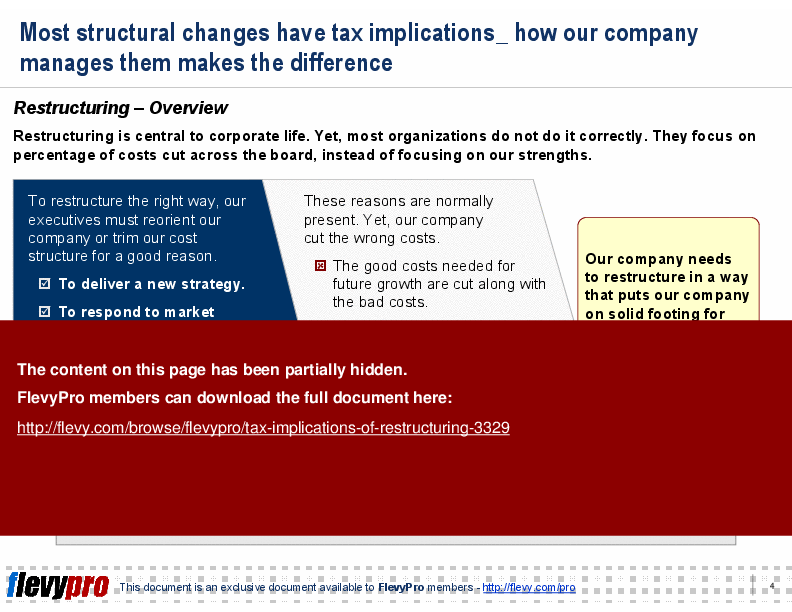
Restructuring is an act of organizing a company, business, or system in a new way to make it operate more effectively. However, in undertaking restructuring, there are tax implications. Restructuring our company requires the right fundamental framework to achieve tax efficiency.

Undertaking restructuring in a tax-savvy approach allows our company to convert tax traps into enhanced reorganization returns. This presentation provides two fundamental frameworks that can serve as our strategic roadmap to efficient restructuring.

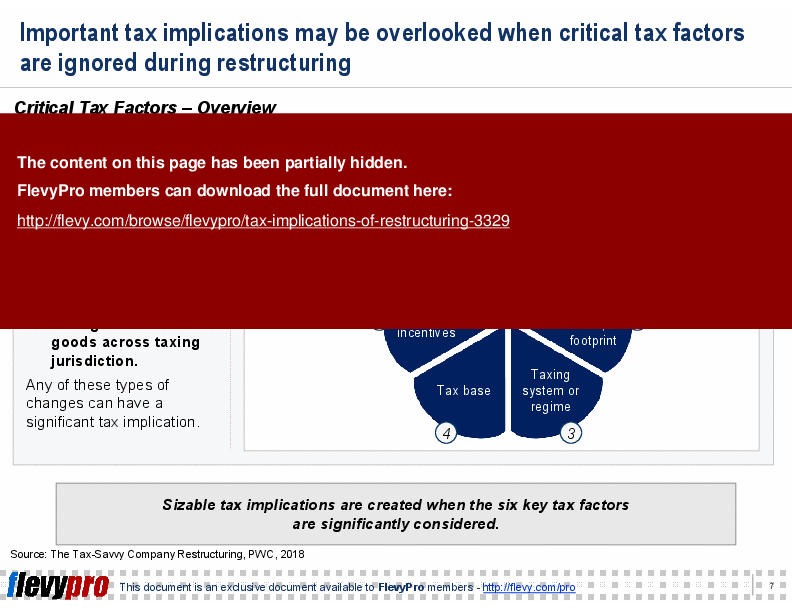
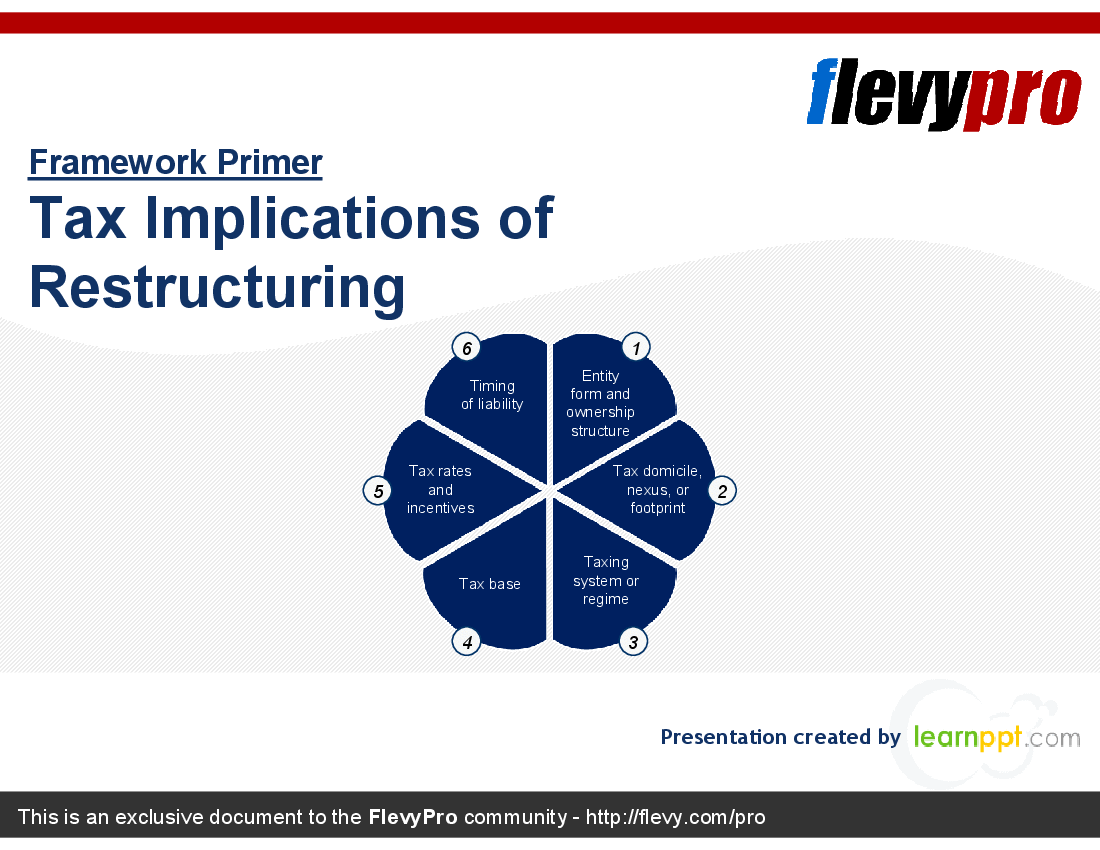
>>> The 6 Critical Factors in Restructuring:

1. Entity form and ownership structure
2. Tax domicile, nexus, or footprint
3. Taxing system or regime
4. Tax base
5. Tax rates and incentives
6. Timing of liability

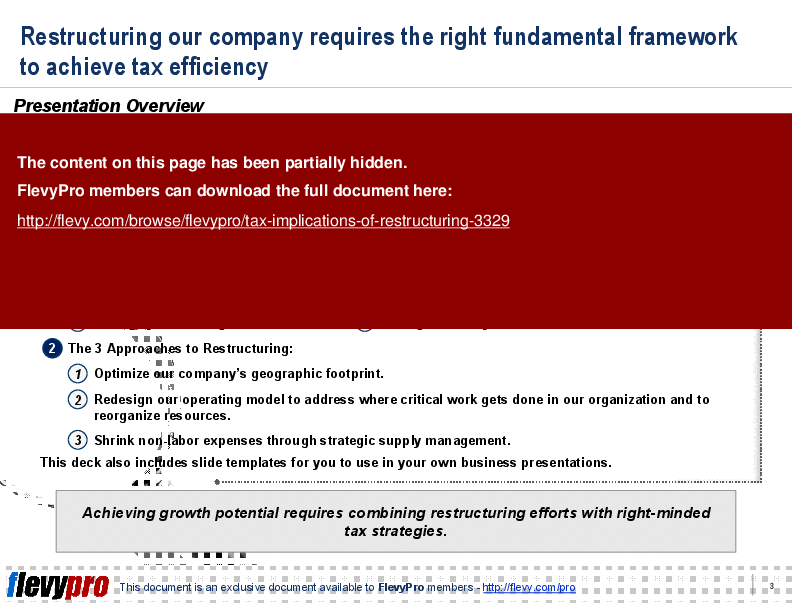
>>> The 3 Approaches to Restructuring:

1. Optimize our company’s geographic footprint
2. Redesign our operating model to address where critical work gets done in our organization and to reorganize resources.
3. Shrink non-labor expenses through strategic supply management

Achieving growth potential requires combining restructuring efforts with right-minded tax strategies.

This deck also includes slide templates for you to use in your own business presentations.

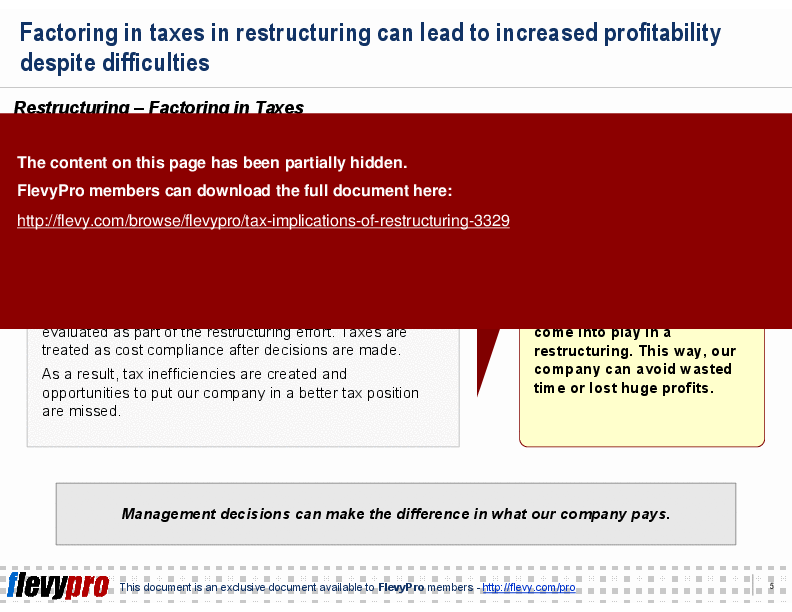
Tax implications are often overlooked during restructuring, leading to missed opportunities for tax efficiency. This PPT highlights the critical tax factors that must be considered, such as entity form, tax domicile, and tax base, to ensure our company is not caught off guard by unexpected tax liabilities. By addressing these factors, our company can navigate the complexities of restructuring with a clear understanding of potential tax impacts.

The presentation also delves into strategic approaches to restructuring, including optimizing our geographic footprint and redesigning our operating model. These strategies are essential for aligning our restructuring efforts with tax efficiency goals. The deck includes practical templates to facilitate the application of these frameworks in our own business context, providing a comprehensive toolkit for effective restructuring.

Got a question about this document? Email us at flevypro@flevy.com.

MARCUS OVERVIEW

This synopsis was written by Marcus [?] based on the analysis of the full 22-slide presentation.


Executive Summary
The "Tax Implications of Restructuring" presentation provides a strategic framework for corporate executives and consultants to navigate the complexities of restructuring while optimizing tax efficiency. This document outlines critical tax factors and approaches to restructuring, enabling organizations to enhance their reorganization returns and avoid costly tax pitfalls. By leveraging insights from experienced consultants, this presentation serves as a roadmap for achieving effective restructuring that aligns with corporate growth strategies.

Who This Is For and When to Use
•  Corporate executives responsible for strategic planning and restructuring initiatives
•  Integration leaders managing organizational change and tax implications
•  Financial consultants advising on tax-efficient restructuring strategies
•  Tax professionals seeking to align tax strategies with business operations

Best-fit moments to use this deck:
•  During strategic planning sessions focused on restructuring initiatives
•  When evaluating the tax implications of significant organizational changes
•  In workshops aimed at aligning operational models with tax efficiency

Learning Objectives
•  Define the 6 critical tax factors that impact restructuring decisions
•  Identify and evaluate the 3 primary approaches to restructuring
•  Analyze the implications of entity form and ownership structure on tax efficiency
•  Assess the impact of geographic footprint optimization on tax liabilities
•  Develop strategies for managing non-labor expenses through supply chain optimization
•  Create actionable templates for implementing tax-savvy restructuring strategies

Table of Contents
•  Overview (page 3)
•  Critical Tax Factors (page 7)
•  Approaches to Restructuring (page 12)
•  Templates (page 16)

Primary Topics Covered
•  Critical Tax Factors - Understanding the 6 key tax factors that influence restructuring decisions is essential for optimizing tax efficiency.
•  Entity Form and Ownership Structure - Evaluating the legal structure of the organization can significantly impact tax liabilities and compliance.
•  Tax Domicile, Nexus, or Footprint - The geographical positioning of assets and operations affects tax obligations and opportunities for savings.
•  Taxing System or Regime - Different jurisdictions impose various tax regimes that can influence operational decisions and costs.
•  Tax Base - The allocation of income and allowable deductions is critical in determining tax liabilities across jurisdictions.
•  Tax Rates and Incentives - Understanding applicable tax rates and available incentives is crucial for effective financial planning.
•  Timing of Liability - Planning for when tax liabilities arise can enhance cash flow management and financial forecasting.

Deliverables, Templates, and Tools
•  Framework for evaluating critical tax factors in restructuring
•  Template for assessing entity form and ownership structure
•  Checklist for optimizing geographic footprint and its tax implications
•  Model for analyzing tax rates and incentives across jurisdictions
•  Guide for timing tax liabilities to improve cash flow management
•  Template for strategic supply management to reduce non-labor expenses

Slide Highlights
•  Overview of the 6 critical tax factors impacting restructuring
•  Detailed analysis of entity form and ownership structure considerations
•  Visual representation of approaches to optimizing geographic footprint
•  Framework for evaluating the timing of tax liabilities and their implications
•  Summary of tax rates and incentives available in various jurisdictions

Potential Workshop Agenda
Understanding Tax Implications (60 minutes)
•  Review the 6 critical tax factors
•  Discuss the impact of entity form on tax efficiency
•  Explore case studies of successful restructuring

Approaches to Restructuring (90 minutes)
•  Identify and evaluate the 3 primary approaches
•  Group discussions on optimizing geographic footprint
•  Develop action plans for implementing strategies

Customization Guidance
•  Tailor the templates to reflect your organization's specific tax considerations and operational structure
•  Adjust the frameworks to align with your strategic goals and growth objectives
•  Incorporate relevant jurisdictional tax rates and incentives into the analysis

Secondary Topics Covered
•  The role of tax professionals in restructuring initiatives
•  Best practices for aligning tax strategies with business operations
•  Case studies of successful tax-efficient restructuring

Topic FAQ

What are the main tax factors to consider when planning a corporate restructuring?

Key tax factors include entity form and ownership structure, tax domicile/nexus, taxing system or regime, tax base allocation, applicable tax rates and incentives, and timing of liability. These 6 critical tax factors should be assessed together to understand combined tax impacts on a restructuring decision.

How can changing my company's legal entity affect tax liabilities during restructuring?

Legal entity choice alters tax residency, compliance obligations, and how income and deductions are recognized across jurisdictions. The presentation includes a template for assessing entity form and ownership structure to quantify potential tax liability changes under alternate entity designs.

What practical restructuring approaches help improve tax efficiency?

Three approaches covered are optimizing the company’s geographic footprint, redesigning the operating model to relocate where critical work is performed, and shrinking non‑labor expenses via strategic supply management. These 3 approaches aim to align operational choices with tax positioning.

How should I evaluate geographic footprint and nexus for cross‑border restructuring?

Evaluation should address tax domicile, nexus thresholds, differing taxing systems, allocation of tax base, and local tax rates and incentives. The deck provides a checklist for footprint optimization and a model for analyzing tax rates and incentives across jurisdictions to support that assessment.

What should I look for when buying a tax‑focused restructuring toolkit for internal workshops?

Buyers should seek frameworks for critical tax factor assessment, templates for entity and footprint analysis, models for tax‑rate comparison, checklists for nexus evaluation, and customization guidance for jurisdictional inputs. Flevy’s Tax Implications of Restructuring supplies those deliverables in a 22‑slide PowerPoint format.

How much time and structure is suggested to run a tax implications workshop?

The presentation recommends a workshop agenda broken into focused sessions, for example a 60‑minute module to review the 6 critical tax factors and a 90‑minute module on approaches to restructuring, including group discussions and action‑planning components.

As a CFO leading post‑merger integration, which tax analyses should I prioritize first?

Prioritize entity form and ownership reconfiguration, tax domicile and nexus implications for new operations, and timing of liability to manage cash flow. Use templates for entity assessment, footprint checklist, and liability‑timing guidance included in the presentation to sequence analyses effectively.

In what ways can strategic supply management reduce tax exposure during restructuring?

Strategic supply management reduces non‑labor external spending and can align procurement and supplier locations with favorable tax treatment, thereby improving overall tax efficiency. The deck includes a template for strategic supply management to evaluate non‑labor expense adjustments.

Document FAQ
These are questions addressed within this presentation.

What are the 6 critical tax factors in restructuring?
The 6 critical tax factors include entity form and ownership structure, tax domicile, nexus, taxing system or regime, tax base, tax rates and incentives, and timing of liability.

How can optimizing the geographic footprint impact tax efficiency?
Reevaluating the geographic footprint can lead to significant cost reductions and improved tax positioning by aligning operations with favorable tax jurisdictions.

What is the importance of entity form in restructuring?
The choice of legal entity can affect tax liabilities and compliance requirements, making it essential to evaluate different structures for optimal tax positioning.

How do tax rates and incentives influence restructuring decisions?
Understanding applicable tax rates and available incentives is crucial for financial planning and can significantly impact the overall cost of restructuring initiatives.

What strategies can be employed to manage non-labor expenses?
Strategic supply management can help reduce total external spending and improve tax efficiency by optimizing procurement processes and leveraging tax incentives.

How can timing of liability affect cash flow management?
Planning for when tax liabilities arise allows organizations to manage cash flow effectively and ensure adequate resources are available for tax obligations.

What templates are included in the presentation?
The presentation includes templates for evaluating critical tax factors, assessing entity forms, and optimizing geographic footprints, among others.

How can I customize the templates for my organization?
Templates can be tailored to reflect your organization's specific tax considerations, operational structure, and strategic goals.

Glossary
•  Entity Form - The legal structure of a business (e.g., corporation, partnership).
•  Tax Domicile - The jurisdiction where a business is considered resident for tax purposes.
•  Nexus - The connection between a business and a taxing jurisdiction that triggers tax obligations.
•  Tax Base - The total amount of income or assets subject to taxation.
•  Tax Rates - The percentage at which income is taxed in a given jurisdiction.
•  Incentives - Tax benefits offered by jurisdictions to encourage business activities.
•  Timing of Liability - The point at which a taxpayer's income becomes subject to tax.
•  Supply Management - The strategic approach to managing procurement and supplier relationships.
•  Geographic Footprint - The locations where a business operates and conducts its activities.
•  Tax Efficiency - The practice of minimizing tax liabilities through strategic planning.
•  Restructuring - The process of reorganizing a company's structure to improve efficiency and effectiveness.
•  Tax Compliance - Adhering to tax laws and regulations in a given jurisdiction.
•  Operational Model - The framework that defines how a business operates and delivers value.
•  Cost Structure - The composition of costs incurred by a business in its operations.
•  Financial Planning - The process of managing finances to achieve organizational goals.
•  Cash Flow Management - The practice of monitoring and optimizing cash inflows and outflows.
•  Tax Treaties - Agreements between countries to avoid double taxation and promote cross-border trade.
•  Value Chain - The series of activities that a company performs to deliver a product or service.
•  Tax Optimization - The process of structuring transactions to minimize tax liabilities.
•  Strategic Planning - The process of defining an organization's direction and making decisions on allocating resources.
•  Consulting - The practice of providing expert advice to organizations in specific areas.
•  Corporate Strategy - The overarching plan that guides a company's direction and decision-making.

RESTRUCTURING PPT SLIDES

Impact of Tax Regimes and Bases on Operations

Key Tax Factors: Entity Structure and Domicile Insights

Strategic Restructuring: Geographic and Operational Insights

Critical Tax Factors in Corporate Restructuring

Source: Best Practices in Restructuring, Tax Management PowerPoint Slides: Tax Implications of Restructuring PowerPoint (PPT) Presentation Slide Deck, LearnPPT Consulting


$29.00
FlevyPro price: FREE (included in subscription)
This framework is developed by a team of former McKinsey and Big 4 consultants. The presentation follows the headline-body-bumper slide format used by global consulting firms.
Add to Cart
  

Did you need more documents?

Consider a FlevyPro subscription from $39/month. View plans here.

For $10.00 more, you can download this document plus 2 more FlevyPro documents. That's just $13 each.

ABOUT FLEVYPRO

This document is part of the FlevyPro Library, a curated knowledge base of documents for our FlevyPro subscribers.

FlevyPro is a subscription service for on-demand business frameworks and analysis tools. FlevyPro subscribers receive access to an exclusive library of curated business documents—business framework primers, presentation templates, Lean Six Sigma tools, and more—among other exclusive benefits.

Click here to learn more about FlevyPro and its benefits.

Did you know?
The average daily rate of a McKinsey consultant is $6,625 (not including expenses). The average price of a Flevy document is $65.


Trusted by over 10,000+ Client Organizations
Since 2012, we have provided business templates to over 10,000 businesses and organizations of all sizes, from startups and small businesses to the Fortune 100, in over 130 countries.
AT&T GE Cisco Intel IBM Coke Dell Toyota HP Nike Samsung Microsoft Astrazeneca JP Morgan KPMG Walgreens Walmart 3M Kaiser Oracle SAP Google E&Y Volvo Bosch Merck Fedex Shell Amgen Eli Lilly Roche AIG Abbott Amazon PwC T-Mobile Broadcom Bayer Pearson Titleist ConEd Pfizer NTT Data Schwab


Read Customer Testimonials

 
"Flevy is our 'go to' resource for management material, at an affordable cost. The Flevy library is comprehensive and the content deep, and typically provides a great foundation for us to further develop and tailor our own service offer."

– Chris McCann, Founder at Resilient.World
 
"Flevy is now a part of my business routine. I visit Flevy at least 3 times each month.

Flevy has become my preferred learning source, because what it provides is practical, current, and useful in this era where the business world is being rewritten.

In today's environment where there are so "

– Omar Hernán Montes Parra, CEO at Quantum SFE
 
"One of the great discoveries that I have made for my business is the Flevy library of training materials.

As a Lean Transformation Expert, I am always making presentations to clients on a variety of topics: Training, Transformation, Total Productive Maintenance, Culture, Coaching, Tools, Leadership Behavior, etc. Flevy "

– Ed Kemmerling, Senior Lean Transformation Expert at PMG
 
"As a consulting firm, we had been creating subject matter training materials for our people and found the excellent materials on Flevy, which saved us 100's of hours of re-creating what already exists on the Flevy materials we purchased."

– Michael Evans, Managing Director at Newport LLC
 
"As an Independent Management Consultant, I find Flevy to add great value as a source of best practices, templates and information on new trends. Flevy has matured and the quality and quantity of the library is excellent. Lastly the price charged is reasonable, creating a win-win value for "

– Jim Schoen, Principal at FRC Group
 
"Last Sunday morning, I was diligently working on an important presentation for a client and found myself in need of additional content and suitable templates for various types of graphics. Flevy.com proved to be a treasure trove for both content and design at a reasonable price, considering the time I "

– M. E., Chief Commercial Officer, International Logistics Service Provider
 
"[Flevy] produces some great work that has been/continues to be of immense help not only to myself, but as I seek to provide professional services to my clients, it gives me a large "tool box" of resources that are critical to provide them with the quality of service and outcomes they are expecting."

– Royston Knowles, Executive with 50+ Years of Board Level Experience
 
"FlevyPro provides business frameworks from many of the global giants in management consulting that allow you to provide best in class solutions for your clients."

– David Harris, Managing Director at Futures Strategy


Customers Also Bought These Documents


Customers Also Like These Documents

Explore Templates on Related Management Topics


Your Recently Viewed Documents
Download our FREE Strategy & Transformation Framework Templates

Download our free compilation of 50+ Strategy & Transformation slides and templates. Frameworks include McKinsey 7-S, Balanced Scorecard, Disruptive Innovation, BCG Curve, and many more.