
Corporate commitment to Sustainability-based Management is strengthening.
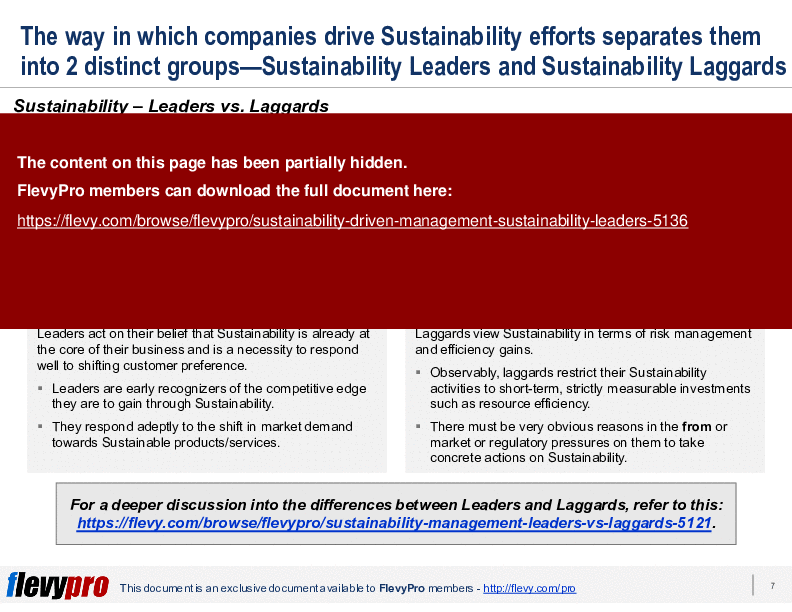
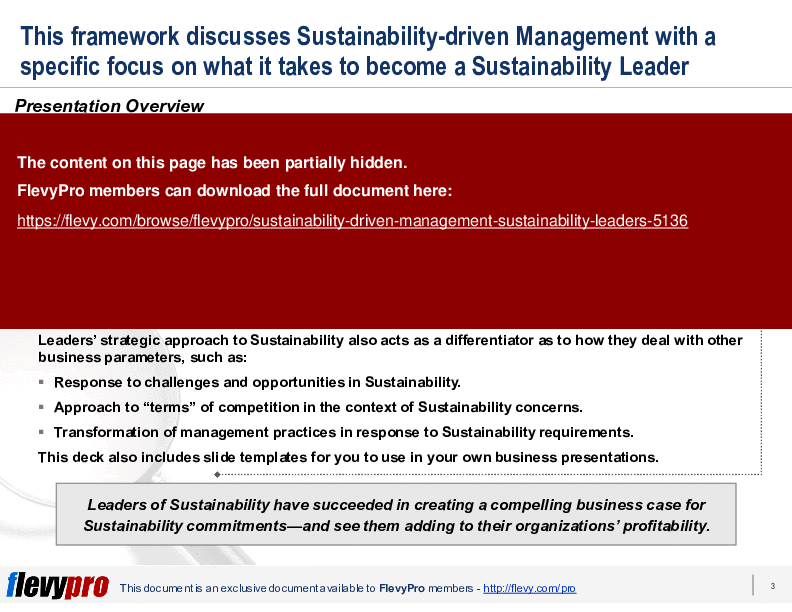
Even as organizations overall are strengthening their commitments to Sustainability, one cohort of organizations is expanding its commitments far more aggressively than others. They have emerged as Sustainability Strategy Leaders.
Studies show strategic approach to Sustainability is the main driver to become a Sustainability Leader. Sustainability Leaders act on their belief that Sustainability is already at the core of their business and is a necessity to respond well to shifting customer preference. The remaining organizations, i.e. Sustainability Laggards, view Sustainability in terms of Risk Management and efficiency gains.
Leaders' strategic approach to Sustainability also acts as a differentiator as to how they deal with other business parameters, such as:
• Response to challenges and opportunities in Sustainability.
• Approach to "terms" of competition in the context of Sustainability concerns.
• Transformation of management practices in response to Sustainability requirements.
Leaders of Sustainability have succeeded in creating a compelling business case for Sustainability commitments. They see these efforts adding to their organizations’ profitability.
This deck also includes slide templates for you to use in your own business presentations.
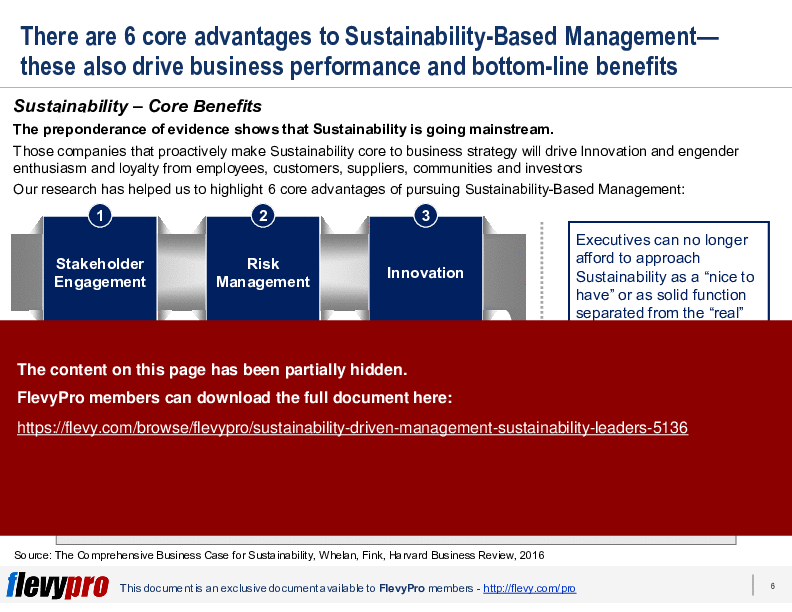
This PPT delves into the core benefits of Sustainability-Based Management, emphasizing its mainstream adoption and the tangible advantages it brings to business performance and profitability. It highlights six key advantages, including stakeholder engagement, risk management, and innovation, which are essential for driving competitive advantage in today's market. Executives are urged to integrate sustainability deeply into their business strategies to foster innovation and build loyalty among employees, customers, and investors.
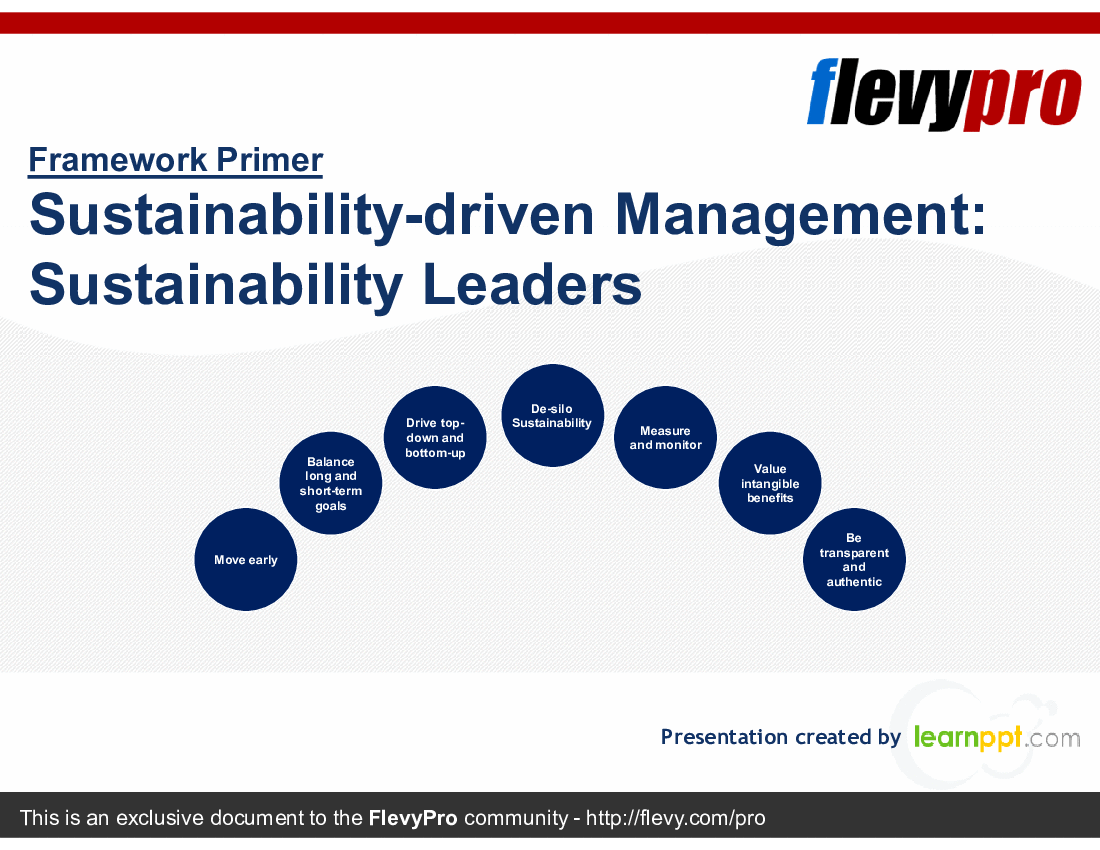
The presentation also outlines seven key practices of Sustainability Leaders, such as balancing long- and short-term goals, driving top-down and bottom-up initiatives, and valuing intangible benefits. These practices are designed to transform the way organizations compete on sustainability, ensuring they remain competitive in the future. The deck includes practical templates and real-world case examples to help you implement these strategies effectively within your organization.
Got a question about this document? Email us at flevypro@flevy.com.
Executive Summary
The "Sustainability-driven Management: Sustainability Leaders" presentation provides a robust framework for organizations aiming to integrate sustainability into their core business strategies. Developed by experts from MIT Sloan Management Review and Boston Consulting Group, this deck outlines the critical practices that distinguish Sustainability Leaders from their counterparts. By adopting a proactive approach to sustainability, organizations can enhance profitability while addressing shifting customer preferences and societal expectations. This resource equips executives with actionable insights and templates to foster a culture of sustainability that drives competitive advantage.
Who This Is For and When to Use
• Corporate executives focused on sustainability strategy and implementation
• Sustainability officers and teams responsible for integrating sustainability into business operations
• Consultants advising organizations on sustainability best practices
• Change management leaders facilitating organizational transformation toward sustainability
Best-fit moments to use this deck:
• During strategic planning sessions to align sustainability initiatives with business goals
• In workshops aimed at fostering a sustainability culture within the organization
• For presentations to stakeholders on sustainability commitments and progress
Learning Objectives
• Define the principles of sustainability-driven management and its relevance to business strategy
• Identify the characteristics that differentiate Sustainability Leaders from Laggards
• Develop actionable sustainability initiatives that align with corporate objectives
• Establish metrics for measuring sustainability performance and impact
• Foster a culture of sustainability through employee engagement and collaboration
• Communicate sustainability challenges and successes transparently to stakeholders
Table of Contents
• Overview (page 3)
• Sustainability (page 5)
• Sustainability Leaders (page 7)
• Key Practices of Sustainability Leaders (page 11)
• Templates (page 21)
Primary Topics Covered
• Overview of Sustainability - An introduction to the concept of sustainability and its importance in modern business practices.
• Sustainability Leaders - Characteristics and strategies that define organizations leading in sustainability efforts.
• Key Practices of Sustainability Leaders - Seven essential practices that Sustainability Leaders adopt to enhance their competitive advantage.
• Templates for Implementation - Practical templates to assist organizations in developing their sustainability strategies.
Deliverables, Templates, and Tools
• Framework for assessing sustainability initiatives and their impact on business performance
• Template for establishing sustainability metrics and baselines
• Guide for integrating sustainability into existing business processes
• Checklist for evaluating sustainability practices within the organization
• Communication framework for reporting sustainability progress to stakeholders
Slide Highlights
• Overview of the Sustainability-driven Management framework
• Comparison of Sustainability Leaders and Laggards
• Visual representation of the 7 key practices for sustainability success
• Case studies illustrating successful sustainability initiatives by leading organizations
Potential Workshop Agenda
Sustainability Strategy Development (90 minutes)
• Discuss the importance of sustainability in business
• Identify key sustainability goals for the organization
• Develop a preliminary action plan for sustainability initiatives
Employee Engagement in Sustainability (60 minutes)
• Explore strategies for fostering employee involvement in sustainability efforts
• Share best practices for encouraging grassroots sustainability initiatives
Sustainability Metrics and Reporting (90 minutes)
• Establish metrics for measuring sustainability performance
• Discuss methods for transparent reporting to stakeholders
Customization Guidance
• Tailor the sustainability framework to align with specific organizational goals and industry standards
• Modify templates to reflect the unique sustainability challenges faced by the organization
• Adjust communication strategies to resonate with different stakeholder groups
Secondary Topics Covered
• The role of corporate governance in sustainability
• Stakeholder engagement strategies for sustainability initiatives
• Risk management associated with sustainability practices
• The impact of sustainability on brand reputation and customer loyalty
Topic FAQ
Document FAQ
These are questions addressed within this presentation.
What defines a Sustainability Leader?
Sustainability Leaders are organizations that integrate sustainability into their core business strategies, viewing it as essential for responding to customer preferences and market demands.
How can we measure our sustainability performance?
Organizations can establish metrics that assess both tangible and intangible benefits of sustainability initiatives, including waste reduction, energy efficiency, and employee engagement.
What are the key practices of Sustainability Leaders?
The 7 key practices include moving early, balancing long- and short-term goals, driving top-down and bottom-up initiatives, de-siloing sustainability, measuring and monitoring progress, valuing intangible benefits, and being transparent and authentic.
How can we engage employees in sustainability efforts?
Engaging employees involves creating incentives for participation, fostering open communication about sustainability challenges, and encouraging collaborative initiatives.
What are the risks of not adopting sustainability practices?
Organizations that neglect sustainability may face reputational damage, decreased customer loyalty, and potential regulatory penalties, ultimately impacting their bottom line.
How can we communicate our sustainability efforts effectively?
Transparency in reporting challenges and successes, along with regular updates to stakeholders, can enhance credibility and foster trust in sustainability initiatives.
What resources are available for implementing sustainability practices?
The presentation includes templates and frameworks that organizations can adapt to their specific needs, along with case studies of successful sustainability initiatives.
Glossary
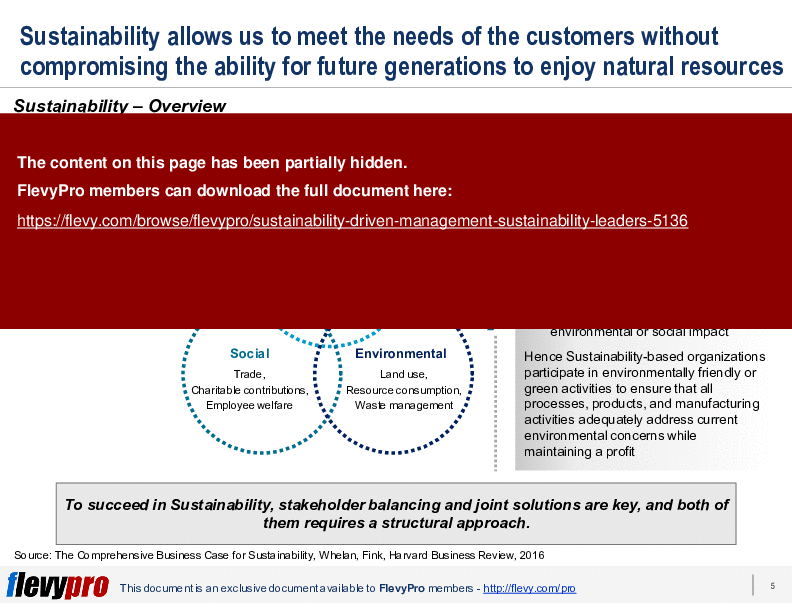
• Sustainability - The ability to meet present needs without compromising the ability of future generations to meet their own needs.
• Sustainability Leaders - Organizations that proactively integrate sustainability into their core strategies.
• Sustainability Laggards - Organizations that view sustainability primarily as a risk management issue.
• Triple Bottom Line (TBL) - An accounting framework that incorporates social, environmental, and financial performance.
• Stakeholder Engagement - The process of involving individuals or groups that have an interest in the organization's sustainability efforts.
• De-siloing - The practice of integrating sustainability into all business processes rather than treating it as a separate initiative.
• Greenwashing - Misleading claims about the environmental benefits of a product or practice.
• Intangible Benefits - Non-quantifiable advantages of sustainability initiatives, such as brand reputation and employee morale.
• Sustainability Metrics - Measurements used to assess the effectiveness of sustainability initiatives.
• Employee Engagement - The level of commitment and involvement an employee has towards their organization and its sustainability goals.
• Risk Management - The identification and assessment of risks associated with sustainability practices.
• Corporate Governance - The system of rules, practices, and processes by which a company is directed and controlled, particularly in relation to sustainability.
• Sustainability Reporting - The practice of disclosing an organization's sustainability performance to stakeholders.
• Sustainability Strategy - A plan that outlines how an organization will integrate sustainability into its operations and decision-making processes.
• Sustainability Initiatives - Specific projects or programs aimed at improving an organization's sustainability performance.
• Stakeholder Expectations - The anticipated demands and requirements of individuals or groups with an interest in the organization's sustainability efforts.
• Sustainability Framework - A structured approach to integrating sustainability into business practices.
• Competitive Advantage - The attributes that allow an organization to outperform its competitors.
• Sustainability Culture - An organizational culture that prioritizes sustainability in its values and practices.
• Sustainability Assessment - The evaluation of an organization's sustainability practices and their impact on performance.
• Sustainability Goals - Specific objectives that an organization aims to achieve in its sustainability efforts.
Source: Best Practices in Leadership, Sustainability PowerPoint Slides: Sustainability-driven Management: Sustainability Leaders PowerPoint (PPTX) Presentation Slide Deck, LearnPPT Consulting
Did you need more documents?
Consider a FlevyPro subscription from $39/month. View plans here.
For $10.00 more, you can download this document plus 2 more FlevyPro documents. That's just $13 each.
|
Download our FREE Organization, Change, & Culture, Templates
Download our free compilation of 50+ slides and templates on Organizational Design, Change Management, and Corporate Culture. Methodologies include ADKAR, Burke-Litwin Change Model, McKinsey 7-S, Competing Values Framework, etc. |