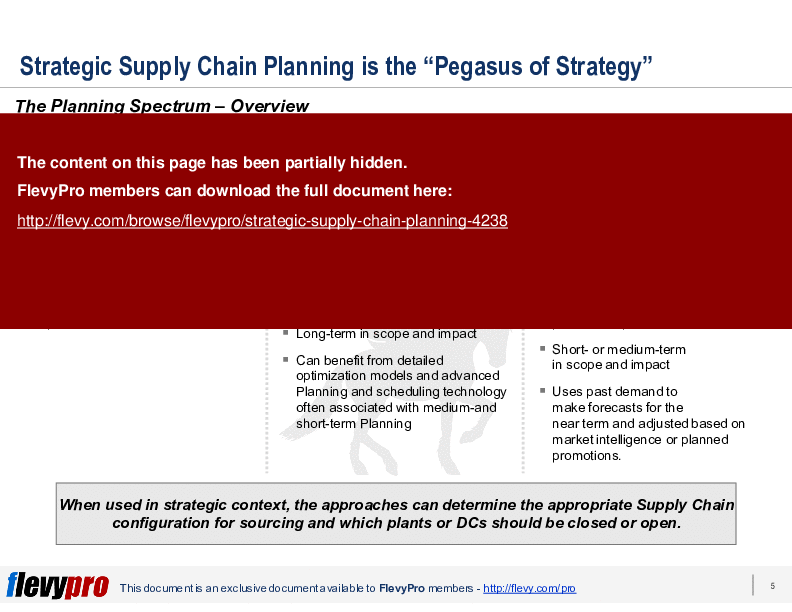

Strategic Supply Chain Planning is the Pegasus of Strategy. It can soar, but it also needs to keep its feet on the ground.
Companies with global Supply Chains now need to introduce its strategic left hand to its operational right hand. To make Planning more valuable, its Strategic Supply Chain Planning needs to combine Strategic Planning with its tactical Supply Chain Planning. The importance of aligning strategic direction to the Supply Chain has become of utmost importance.
Senior Managers formulate strategies to maximize Shareholder Value. Supply Chain planners run optimization models to minimize costs. If Scenario Planning is combined with Supply Chain Planning, the best of both worlds is achieved. The company can expect to achieve long-term Competitive Advantage.
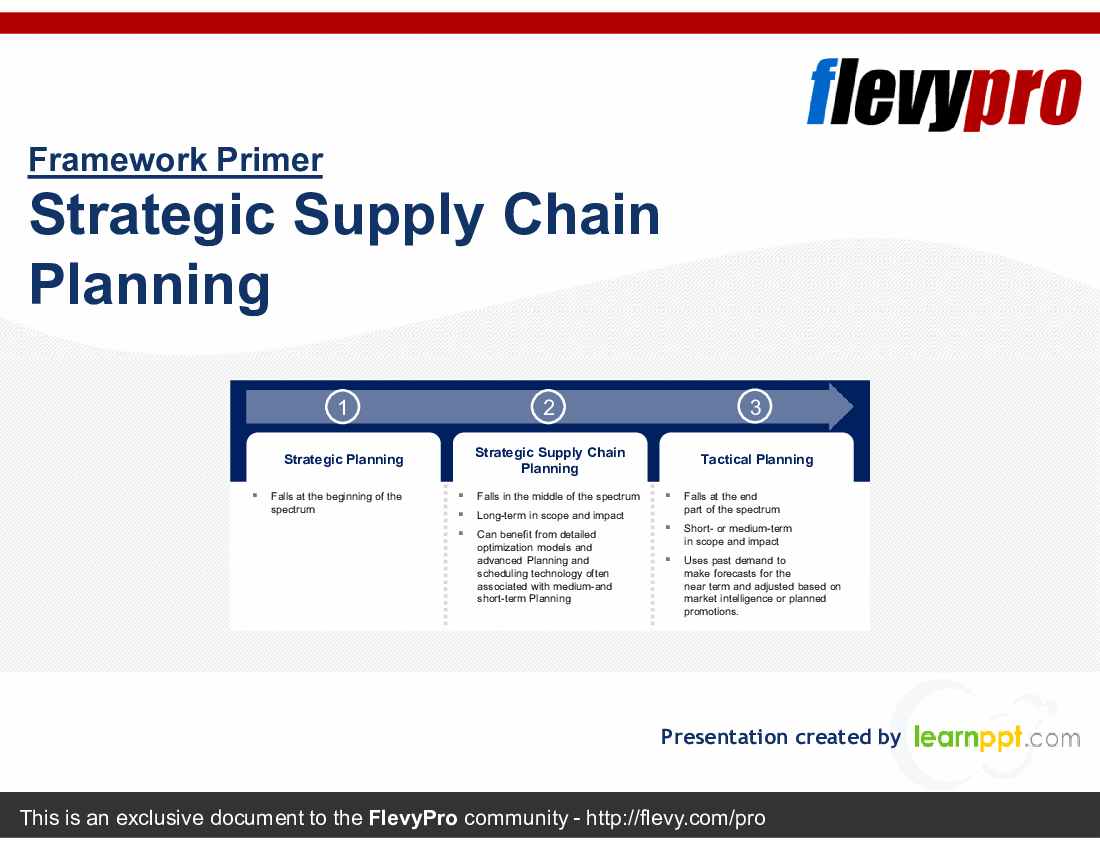
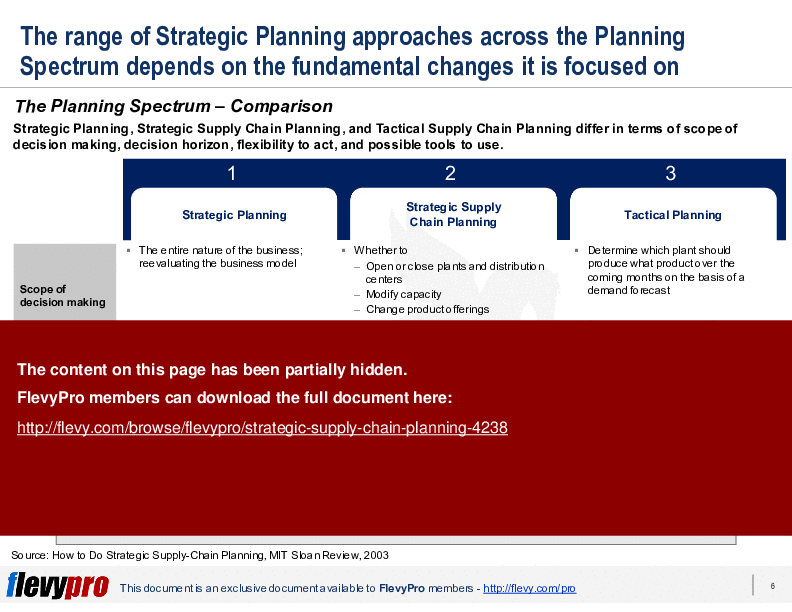
This framework provides managers and planners an in-depth understanding of the Planning Spectrum within which the Strategic Supply Chain Planning plays an essential role. Within the Planning Continuum are 3 decision making models of importance to businesses.
1. Strategic Supply Chain Planning
2. Strategic Planning
3. Tactical Planning
Having a good understanding of Strategic Supply Chain Planning will enable organizations to better determine the appropriate Supply Chain configuration the business needs to keep its competitive edge. Through Strategic Supply Chain Planning, multiple scenarios are created to guide Supply Chain planners in minimizing fixed and variable long-term Supply Chain costs.
This deck also includes slide templates for you to use in your own business presentations.
This comprehensive deck delves into the intricacies of Scenario Planning, offering a structured approach to decision-making under uncertainty. It covers the Larsen, Schwartz, and Schoemaker techniques, providing actionable insights for building robust scenarios. The PPT also includes real-world case studies, demonstrating the successful application of these techniques in optimizing supply chain strategies. With a focus on minimizing costs and maximizing efficiency, this resource is essential for any organization looking to stay ahead in a competitive market.
Got a question about this document? Email us at flevypro@flevy.com.
Executive Summary
The Strategic Supply Chain Planning framework is designed to enhance decision-making and optimize costs through effective scenario planning. This presentation, crafted by experienced consultants, provides a structured approach for aligning strategic objectives with operational execution. By integrating strategic and tactical planning, organizations can minimize long-term supply chain costs while maintaining flexibility in decision-making. This framework empowers managers to select projects that best support supply chain objectives, ultimately leading to a competitive advantage.
Who This Is For and When to Use
• Supply Chain Managers responsible for optimizing costs and improving efficiency
• Senior Executives focused on aligning supply chain strategies with business goals
• Business Analysts tasked with scenario planning and forecasting
• Consultants advising organizations on supply chain strategies
Best-fit moments to use this deck:
• During strategic planning sessions to align supply chain initiatives with business objectives
• When evaluating potential supply chain configurations and their impacts
• In workshops focused on scenario planning and risk assessment
Learning Objectives
• Define the role of Strategic Supply Chain Planning within the planning spectrum
• Build effective scenario planning frameworks to guide decision-making
• Establish methodologies for minimizing fixed and variable supply chain costs
• Identify key performance indicators for monitoring supply chain effectiveness
• Create actionable templates for strategic and tactical planning
• Integrate scenario planning with existing supply chain optimization models
Table of Contents
• Overview (page 1)
• The Planning Spectrum (page 2)
• Scenario Planning (page 10)
• Supply Chain Planning with Scenario Planning (page 15)
• Templates (page 20)
Primary Topics Covered
• Planning Spectrum - A continuum of decision-making models that range from strategic to tactical planning, highlighting the importance of aligning supply chain strategies with business objectives.
• Scenario Planning - A method for decision-making under uncertainty, characterized by creating internally consistent alternative views of future outcomes.
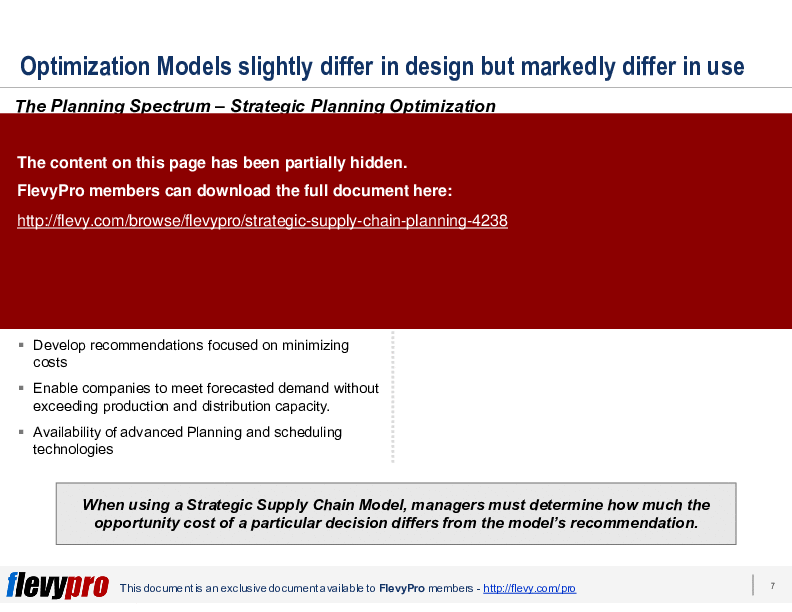
• Optimization Models - Tools that help in minimizing supply chain costs through effective decision-making and resource allocation.
• Integration of Strategic and Tactical Planning - The necessity of combining long-term strategic planning with short-term tactical execution to achieve operational efficiency.
• Case Studies - Examples of successful implementation of strategic supply chain planning in various industries, showcasing practical applications of the framework.
• Templates for Implementation - Ready-to-use slide templates that facilitate the application of the framework in business presentations.
Deliverables, Templates, and Tools
• Scenario planning templates for structuring decision-making processes
• Optimization model frameworks for cost analysis and resource allocation
• Presentation slides for communicating strategic supply chain plans
• Guidelines for integrating scenario planning with existing supply chain models
• Checklists for evaluating supply chain configurations and their impacts
• Performance tracking templates for monitoring supply chain effectiveness
Slide Highlights
• Overview of the Planning Spectrum, illustrating the relationship between strategic and tactical planning
• Detailed explanation of scenario planning techniques, including the Larsen, Schwartz, and Schoemaker methods
• Case study examples demonstrating successful applications of strategic supply chain planning
• Visual representations of optimization models and their impact on cost reduction
• Templates for scenario planning and strategic decision-making
Potential Workshop Agenda
Introduction to Strategic Supply Chain Planning (30 minutes)
• Overview of the framework and its importance
• Discussion on aligning supply chain strategies with business objectives
Scenario Planning Techniques (60 minutes)
• Detailed exploration of various scenario planning methods
• Group exercise to develop scenarios based on real-world data
Optimization Models and Cost Reduction Strategies (45 minutes)
• Presentation on effective optimization models
• Case study analysis of successful implementations
Wrap-Up and Q&A Session (30 minutes)
• Review of key takeaways
• Open floor for questions and discussion
Customization Guidance
• Tailor the framework to reflect specific organizational goals and supply chain configurations
• Adjust scenario planning templates to align with industry-specific challenges and opportunities
• Incorporate company-specific metrics and KPIs for performance tracking
• Modify case studies to reflect relevant industry examples for better engagement
Secondary Topics Covered
• The role of technology in enhancing supply chain planning
• Risk management strategies in supply chain decision-making
• Best practices for integrating supply chain planning with overall business strategy
• Trends in supply chain management and their implications for future planning
Topic FAQ
Document FAQ
These are questions addressed within this presentation.
What is the primary focus of Strategic Supply Chain Planning?
Strategic Supply Chain Planning focuses on aligning supply chain strategies with business objectives to minimize costs and optimize performance.
How does scenario planning enhance decision-making?
Scenario planning allows organizations to create multiple future scenarios, enabling them to prepare for uncertainties and make informed decisions.
What are the key components of the Planning Spectrum?
The Planning Spectrum includes strategic planning, strategic supply chain planning, and tactical planning, each with distinct decision-making scopes and time horizons.
How can organizations implement the templates provided in this framework?
Organizations can customize the templates to fit their specific needs, using them as a foundation for developing their strategic supply chain plans.
What industries can benefit from this framework?
Any industry with complex supply chains, including manufacturing, retail, and logistics, can benefit from the insights and methodologies provided in this framework.
How do optimization models contribute to cost reduction?
Optimization models analyze various decision options and their impacts, helping organizations identify the most cost-effective strategies for their supply chains.
Can this framework be used for both short-term and long-term planning?
Yes, the framework is designed to integrate both short-term tactical planning and long-term strategic planning for comprehensive supply chain management.
What role do senior managers play in scenario planning?
Senior managers are responsible for formulating strategies and ensuring that the scenario planning process aligns with overall business objectives.
How can performance be tracked effectively in supply chain planning?
Performance can be tracked using specific KPIs and metrics outlined in the framework, allowing organizations to monitor progress and make necessary adjustments.
What are the benefits of integrating scenario planning with supply chain optimization models?
Integrating these approaches allows organizations to leverage data-driven insights for better decision-making, ultimately leading to reduced costs and improved efficiency.
Glossary
• Strategic Supply Chain Planning - A framework for aligning supply chain strategies with business objectives.
• Scenario Planning - A method for creating alternative future scenarios to guide decision-making.
• Optimization Models - Analytical tools used to minimize costs and improve resource allocation in supply chains.
• Planning Spectrum - A continuum of decision-making models ranging from strategic to tactical planning.
• Key Performance Indicators (KPIs) - Metrics used to measure the effectiveness of supply chain strategies.
• Tactical Planning - Short-term planning focused on immediate operational decisions.
• Strategic Planning - Long-term planning aimed at aligning business objectives with operational capabilities.
• Supply Chain Configuration - The arrangement of resources and processes within a supply chain to meet business goals.
• Risk Management - Strategies for identifying and mitigating potential risks in supply chain operations.
• Case Study - An analysis of a real-world example to illustrate the application of the framework.
• Templates - Pre-designed documents that facilitate the implementation of strategic planning processes.
• Decision-Making Models - Frameworks that guide organizations in making informed choices regarding their supply chain strategies.
• Performance Tracking - The process of monitoring and evaluating the effectiveness of supply chain initiatives.
• Stakeholder Engagement - Involving key individuals in the planning process to ensure alignment with business objectives.
• Cost Reduction Strategies - Approaches aimed at minimizing expenses within the supply chain.
• Business Objectives - The goals that an organization aims to achieve through its operations.
• Supply Chain Optimization - The process of improving supply chain efficiency and effectiveness.
• Long-Term Competitive Advantage - Sustained superiority over competitors achieved through strategic planning and execution.
• Flexibility in Decision-Making - The ability to adapt strategies based on changing circumstances and new information.
• Resource Allocation - The distribution of resources to various parts of the supply chain to maximize efficiency.
Source: Best Practices in Strategic Planning, Supply Chain Management, Scenario Planning PowerPoint Slides: Strategic Supply Chain Planning PowerPoint (PPTX) Presentation Slide Deck, LearnPPT Consulting
Did you need more documents?
Consider a FlevyPro subscription from $39/month. View plans here.
For $10.00 more, you can download this document plus 2 more FlevyPro documents. That's just $13 each.
|
Download our FREE Strategy & Transformation Framework Templates
Download our free compilation of 50+ Strategy & Transformation slides and templates. Frameworks include McKinsey 7-S, Balanced Scorecard, Disruptive Innovation, BCG Curve, and many more. |