
Shareholder Value Traps   29-slide PPT PowerPoint presentation slide deck (PPTX)
$29.00

Shareholder Value Traps (29-slide PPT PowerPoint presentation slide deck (PPTX)) Preview Image
Log in to unlock full preview.
Shareholder Value Traps (29-slide PPT PowerPoint presentation slide deck (PPTX)) Preview Image
Arrow   Click main image to view in full screen.

Shareholder Value Traps (PowerPoint PPTX Slide Deck)

PowerPoint (PPTX) 29 Slides FlevyPro Document

$29.00
FlevyPro price: FREE (included in subscription)
This framework is developed by a team of former McKinsey and Big 4 consultants. The presentation follows the headline-body-bumper slide format used by global consulting firms.
Add to Cart


Immediate download
Free lifetime updates

STAKEHOLDER MANAGEMENT PPT DESCRIPTION

Editor Summary Shareholder Value Traps is a 29-slide PowerPoint presentation by LearnPPT Consulting that examines 5 common pitfalls that can undermine shareholder value. Read more

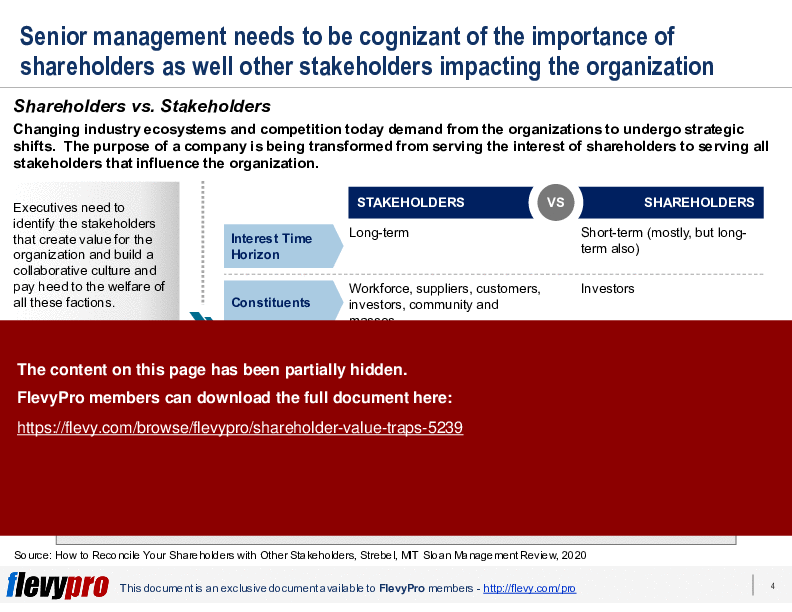
Changing industry ecosystems and competition today demand from the organizations to undergo strategic shifts. The purpose of a company is being transformed from serving the interest of shareholders to serving all stakeholders that influence the organization.

Executives need to identify the stakeholders that create value for the organization, build a collaborative culture, and pay heed to the welfare of all these factions. Likewise, they should be aware of who destroys the organizational value.

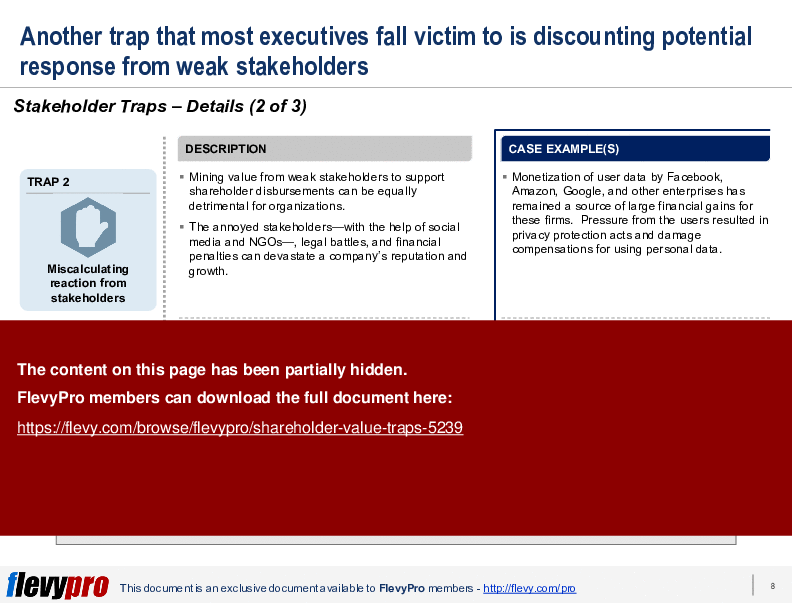
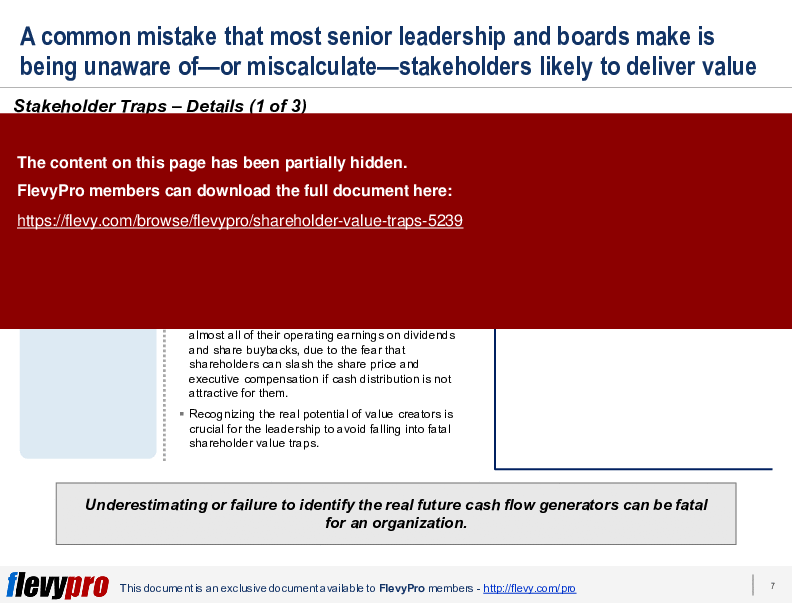
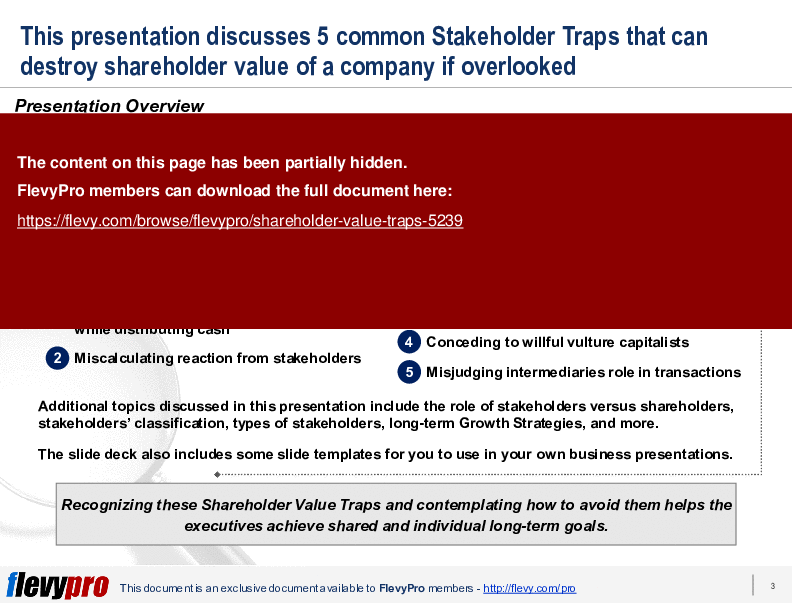
This presentation provides a detailed overview of the 5 common Stakeholder Traps that prevent stakeholders' interests to get integrated with the interests of the organization. Recognizing these traps and contemplating how to avoid them helps the executives achieve shared and individual long-term goals.

Additional topics discussed in this presentation include the role of stakeholders versus shareholders, stakeholders' classification, types of stakeholders, long-term Growth Strategies, and more.

The slide deck also includes some slide templates for you to use in your own business presentations.

This presentation dives into the critical missteps that can erode shareholder value, providing actionable insights for senior executives. It highlights the importance of recognizing and mitigating the impact of value-destroying stakeholders, such as willful vulture capitalists and intermediaries with conflicting interests. The PPT also emphasizes the necessity of maintaining a balanced approach to stakeholder management to safeguard long-term organizational value.

Executives will find detailed strategies to avoid common pitfalls, including blocking value destruction, halting subsidization, and leveraging intermediaries effectively. The presentation is designed to equip leaders with the tools to foster sustainable growth and align stakeholder interests with the company's strategic objectives. This resource is essential for those committed to navigating the complex landscape of stakeholder management and maximizing shareholder value.

Got a question about this document? Email us at flevypro@flevy.com.

MARCUS OVERVIEW

This synopsis was written by Marcus [?] based on the analysis of the full 29-slide presentation.


Executive Summary
The Shareholder Value Traps presentation provides a critical examination of 5 common pitfalls that can undermine shareholder value if not addressed. Created by seasoned consultants from McKinsey and the Big 4, this deck equips corporate executives with the insights necessary to navigate stakeholder management and align strategic objectives for sustainable growth. By recognizing these traps, leaders can foster a collaborative culture that prioritizes long-term value creation over short-term gains, ultimately enhancing organizational resilience and performance.

Who This Is For and When to Use
•  Corporate executives responsible for strategic decision-making and stakeholder engagement
•  Integration leaders overseeing mergers, acquisitions, or organizational transformations
•  Consultants advising on stakeholder management and value creation strategies
•  Finance and operations teams focused on optimizing resource allocation and cash flow management

Best-fit moments to use this deck:
•  During strategic planning sessions to identify and mitigate potential value traps
•  In workshops aimed at enhancing stakeholder engagement and collaboration
•  When preparing for investor relations meetings to communicate long-term value strategies
•  In training sessions for leadership teams on effective stakeholder management

Learning Objectives
•  Define the 5 Shareholder Value Traps and their implications for organizational performance
•  Identify key stakeholders that drive long-term value versus those that extract value
•  Develop strategies to mitigate the risks associated with each value trap
•  Establish frameworks for stakeholder classification and prioritization
•  Create action plans to mobilize value creators and minimize value extraction
•  Implement governance structures that align stakeholder interests with organizational goals

Table of Contents
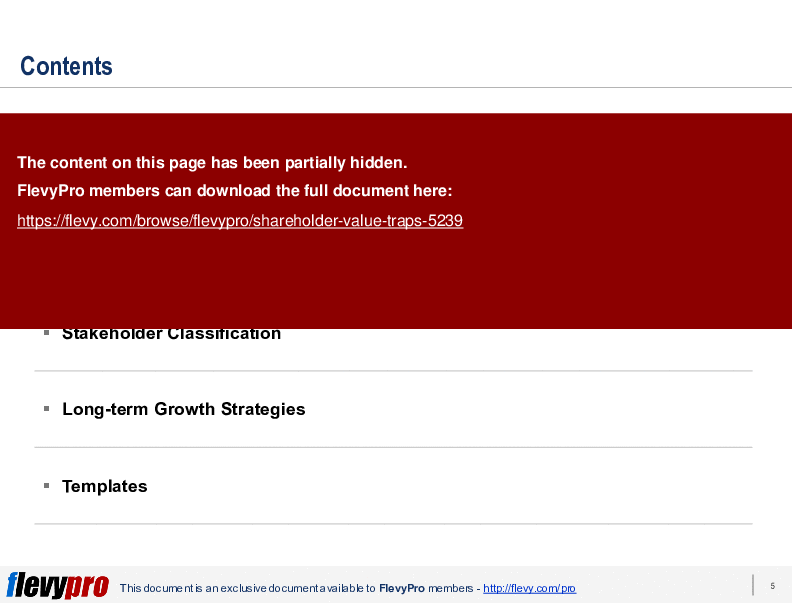
•  Overview (page 3)
•  Stakeholder Traps (page 6)
•  Stakeholder Classification (page 11)
•  Long-term Growth Strategies (page 14)
•  Templates (page 20)

Primary Topics Covered
•  Stakeholder Traps - An overview of 5 common pitfalls that can destroy shareholder value if overlooked, including ignoring cash flow drivers and miscalculating stakeholder reactions.
•  Stakeholder Classification - A framework for categorizing stakeholders into 4 types: Free Riders, Predators, Victims, and Value Creators, based on their impact on organizational value.
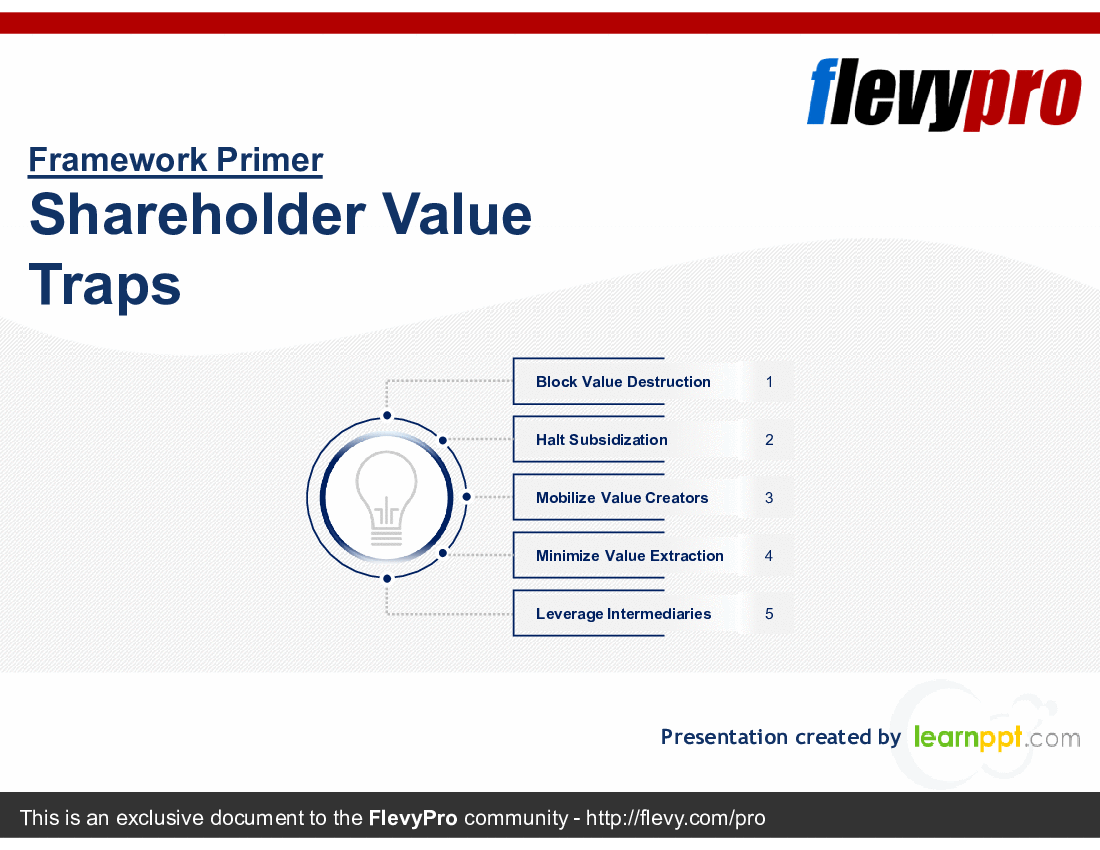
•  Long-term Growth Strategies - Five strategies to avoid stakeholder traps: Block Value Destruction, Halt Subsidization, Mobilize Value Creators, Minimize Value Extraction, and Leverage Intermediaries.
•  Case Examples - Real-world scenarios illustrating the consequences of falling into shareholder value traps and successful strategies for overcoming them.
•  Templates - Ready-to-use slide templates for presenting stakeholder traps and strategies in business settings.

Deliverables, Templates, and Tools
•  Stakeholder classification grid template for assessing stakeholder value generation
•  Action plan template for addressing each of the 5 Shareholder Value Traps
•  Presentation templates for communicating stakeholder strategies to teams and stakeholders
•  Case study examples for illustrating the impact of stakeholder management decisions
•  Frameworks for developing long-term growth strategies that align with stakeholder interests

Slide Highlights
•  Overview of the 5 Shareholder Value Traps with illustrative visuals
•  Detailed stakeholder classification grid showing the impact of different stakeholder types
•  Long-term growth strategies with actionable steps and case examples
•  Templates for stakeholder engagement presentations and strategic planning sessions

Potential Workshop Agenda
Introduction to Shareholder Value Traps (30 minutes)
•  Overview of the presentation and objectives
•  Discussion on the importance of stakeholder management

Identifying Stakeholder Traps (60 minutes)
•  Group activity to identify potential traps within the organization
•  Presentation of case examples and lessons learned

Developing Mitigation Strategies (90 minutes)
•  Breakout sessions to create action plans for each identified trap
•  Sharing of strategies and feedback among groups

Conclusion and Next Steps (30 minutes)
•  Recap of key takeaways
•  Discussion on implementation and follow-up actions

Customization Guidance
•  Tailor the stakeholder classification grid to reflect your organization's specific stakeholders
•  Adjust case examples to align with industry-specific challenges and scenarios
•  Modify action plans based on organizational goals and resource availability
•  Incorporate company-specific metrics and terminology for clarity and relevance

Secondary Topics Covered
•  The evolving role of stakeholders in modern business ecosystems
•  Strategies for building a collaborative culture that prioritizes stakeholder interests
•  The impact of social, environmental, and governance factors on stakeholder relationships
•  Best practices for communicating with stakeholders to enhance engagement

Topic FAQ

What common shareholder value traps should executives watch for?

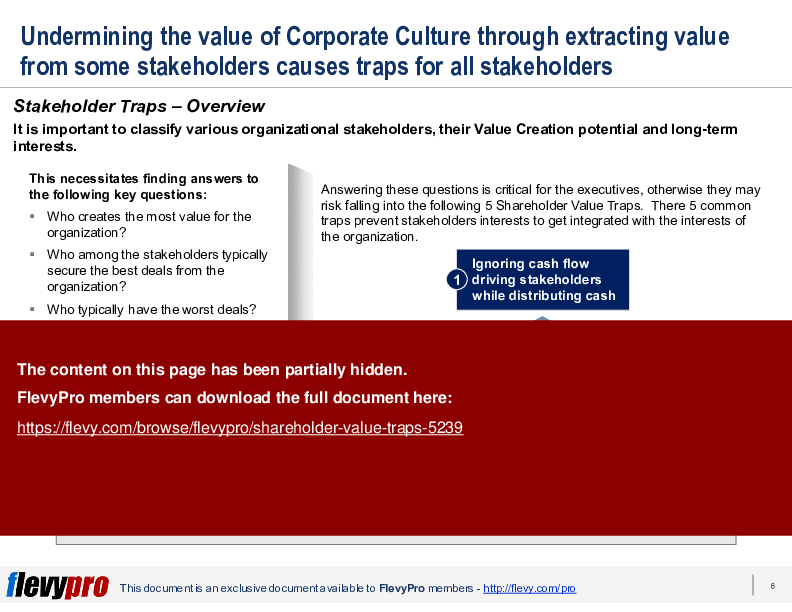
Executives should watch for 5 traps outlined in the literature: ignoring cash-flow-driving stakeholders while distributing cash, miscalculating stakeholder reactions, supporting underperforming units, conceding to willful vulture capitalists, and misjudging intermediaries' roles in transactions — a set defined as 5 traps.

How do you classify stakeholders by their impact on value?

Stakeholders can be classified using a grid that groups them by contribution and extraction impact. The presentation uses 4 types—Free Riders, Predators, Victims, and Value Creators—to help prioritize engagement and resource allocation, as shown in the stakeholder classification grid template.

What strategic options exist to mitigate value-destroying stakeholder behavior?

The documented strategies include blocking value destruction, halting subsidization of free riders, mobilizing value creators, minimizing value extraction, and leveraging intermediaries effectively. These 5 strategies provide distinct interventions to reduce extraction and support long-term growth, as described in the slide deck.

I’m leading a post-merger integration — how can stakeholder analysis help me prioritize actions?

In post-merger integration, stakeholder analysis identifies which internal and external parties create or extract value, guiding decisions on where to allocate resources, which relationships to restructure, and which units to halt subsidizing. The deck provides an action plan template to capture mitigation steps and responsibilities.

What features should I expect from a stakeholder management toolkit when evaluating purchases?

A useful toolkit should include a stakeholder classification framework, templates for action plans and presentations, case examples to illustrate trade-offs, guidance for customizing to industry contexts, and governance structure recommendations — for example, a stakeholder classification grid template.

How can I judge whether slide templates and tools in this category are worth the price?

Evaluate whether the materials map to your needs: do they include stakeholder classification tools, action-plan templates, case examples, customization guidance, and ready-to-use presentation slides; also check slide count and scope against your timeline and budget, such as a 29-slide deck.

How do organizations measure success from stakeholder engagement strategies?

Success is measured by establishing KPIs that reflect stakeholder satisfaction, engagement levels, and the impact on organizational performance; tracking these metrics over time helps assess whether interventions reduced extraction and increased value creation, using defined KPIs.

What role do intermediaries play in stakeholder management and transactions?

Intermediaries can shape perceptions and influence stakeholder reactions; they may align or conflict with organizational objectives. Effective management involves assessing intermediary incentives and leveraging or constraining their role as part of transaction strategy, addressing intermediaries' role in transactions.

Document FAQ
These are questions addressed within this presentation.

What are the 5 Shareholder Value Traps?
The 5 traps are: Ignoring cash flow driving stakeholders while distributing cash, Miscalculating reaction from stakeholders, Supporting underperforming units, Conceding to willful vulture capitalists, and Misjudging intermediaries' role in transactions.

How can I identify value-driving stakeholders?
Use the stakeholder classification grid to assess stakeholders based on their contributions and potential impact on the organization.

What strategies can help mitigate shareholder value traps?
Implement strategies such as blocking value destruction, halting subsidization of free riders, mobilizing value creators, minimizing value extraction, and leveraging intermediaries effectively.

How can I customize the templates provided in this deck?
Adapt the templates by incorporating your organization's specific stakeholders, metrics, and strategic goals to ensure relevance and applicability.

What is the importance of stakeholder classification?
Classifying stakeholders helps organizations prioritize their engagement efforts and allocate resources effectively to maximize long-term value creation.

How can I ensure stakeholder interests align with organizational goals?
Develop governance structures that facilitate communication and collaboration between stakeholders and the organization, ensuring mutual benefits are recognized and pursued.

What role do intermediaries play in stakeholder management?
Intermediaries can influence stakeholder perceptions and actions; thus, it is crucial to manage these relationships carefully to align them with organizational objectives.

How can I measure the success of stakeholder engagement strategies?
Establish key performance indicators (KPIs) that reflect stakeholder satisfaction, engagement levels, and the impact on organizational performance to track progress over time.

Glossary
•  Stakeholder - Any individual or group that can affect or is affected by an organization's actions.
•  Shareholder - An individual or institution that owns shares in a company and has a financial interest in its performance.
•  Value Creator - A stakeholder that contributes positively to the organization's value.
•  Free Rider - A stakeholder that benefits from the organization without contributing to its success.
•  Predator - A stakeholder that seeks to exploit the organization for personal gain, often at the expense of others.
•  Victim - A stakeholder that suffers from the organization's actions or policies.
•  Long-term Growth Strategy - A plan designed to achieve sustainable growth over an extended period.
•  Governance Structure - The framework that outlines how an organization is directed and controlled, including stakeholder engagement processes.
•  Cash Flow - The total amount of money being transferred into and out of a business.
•  Stakeholder Engagement - The process of involving stakeholders in decision-making and fostering relationships to achieve mutual benefits.
•  Social Responsibility - The obligation of an organization to act in the best interests of its environment and society.
•  Value Extraction - The process of taking value from stakeholders without providing adequate returns or benefits.

STAKEHOLDER MANAGEMENT PPT SLIDES

Identifying and Mitigating Stakeholder Value Traps

Strategic Partnerships for Sustainable Growth Initiatives

Managing Stakeholder Risks and Intermediary Dynamics

Stakeholder Classification for Strategic Engagement

Proactive Strategies for Managing External Threats

Source: Best Practices in Shareholder Value, Stakeholder Management PowerPoint Slides: Shareholder Value Traps PowerPoint (PPTX) Presentation Slide Deck, LearnPPT Consulting


$29.00
FlevyPro price: FREE (included in subscription)
This framework is developed by a team of former McKinsey and Big 4 consultants. The presentation follows the headline-body-bumper slide format used by global consulting firms.
Add to Cart
  

Did you need more documents?

Consider a FlevyPro subscription from $39/month. View plans here.

For $10.00 more, you can download this document plus 2 more FlevyPro documents. That's just $13 each.

ABOUT FLEVYPRO

This document is part of the FlevyPro Library, a curated knowledge base of documents for our FlevyPro subscribers.

FlevyPro is a subscription service for on-demand business frameworks and analysis tools. FlevyPro subscribers receive access to an exclusive library of curated business documents—business framework primers, presentation templates, Lean Six Sigma tools, and more—among other exclusive benefits.

Click here to learn more about FlevyPro and its benefits.

Did you know?
The average daily rate of a McKinsey consultant is $6,625 (not including expenses). The average price of a Flevy document is $65.


Trusted by over 10,000+ Client Organizations
Since 2012, we have provided business templates to over 10,000 businesses and organizations of all sizes, from startups and small businesses to the Fortune 100, in over 130 countries.
AT&T GE Cisco Intel IBM Coke Dell Toyota HP Nike Samsung Microsoft Astrazeneca JP Morgan KPMG Walgreens Walmart 3M Kaiser Oracle SAP Google E&Y Volvo Bosch Merck Fedex Shell Amgen Eli Lilly Roche AIG Abbott Amazon PwC T-Mobile Broadcom Bayer Pearson Titleist ConEd Pfizer NTT Data Schwab


Read Customer Testimonials

 
"[Flevy] produces some great work that has been/continues to be of immense help not only to myself, but as I seek to provide professional services to my clients, it gives me a large "tool box" of resources that are critical to provide them with the quality of service and outcomes they are expecting."

– Royston Knowles, Executive with 50+ Years of Board Level Experience
 
"The wide selection of frameworks is very useful to me as an independent consultant. In fact, it rivals what I had at my disposal at Big 4 Consulting firms in terms of efficacy and organization."

– Julia T., Consulting Firm Owner (Former Manager at Deloitte and Capgemini)
 
"My FlevyPro subscription provides me with the most popular frameworks and decks in demand in today’s market. They not only augment my existing consulting and coaching offerings and delivery, but also keep me abreast of the latest trends, inspire new products and service offerings for my practice, and educate me "

– Bill Branson, Founder at Strategic Business Architects
 
"I have used Flevy services for a number of years and have never, ever been disappointed. As a matter of fact, David and his team continue, time after time, to impress me with their willingness to assist and in the real sense of the word. I have concluded in fact "

– Roberto Pelliccia, Senior Executive in International Hospitality
 
"As a young consulting firm, requests for input from clients vary and it's sometimes impossible to provide expert solutions across a broad spectrum of requirements. That was before I discovered Flevy.com.

Through subscription to this invaluable site of a plethora of topics that are key and crucial to consulting, I "

– Nishi Singh, Strategist and MD at NSP Consultants
 
"As a consultant requiring up to date and professional material that will be of value and use to my clients, I find Flevy a very reliable resource.

The variety and quality of material available through Flevy offers a very useful and commanding source for information. Using Flevy saves me time, enhances my expertise and ends up being a good decision."

– Dennis Gershowitz, Principal at DG Associates
 
"Flevy is our 'go to' resource for management material, at an affordable cost. The Flevy library is comprehensive and the content deep, and typically provides a great foundation for us to further develop and tailor our own service offer."

– Chris McCann, Founder at Resilient.World
 
"FlevyPro has been a brilliant resource for me, as an independent growth consultant, to access a vast knowledge bank of presentations to support my work with clients. In terms of RoI, the value I received from the very first presentation I downloaded paid for my subscription many times over! The "

– Roderick Cameron, Founding Partner at SGFE Ltd


Customers Also Bought These Documents


Customers Also Like These Documents

Explore Templates on Related Management Topics


Your Recently Viewed Documents
Download our FREE Organization, Change, & Culture, Templates

Download our free compilation of 50+ slides and templates on Organizational Design, Change Management, and Corporate Culture. Methodologies include ADKAR, Burke-Litwin Change Model, McKinsey 7-S, Competing Values Framework, etc.