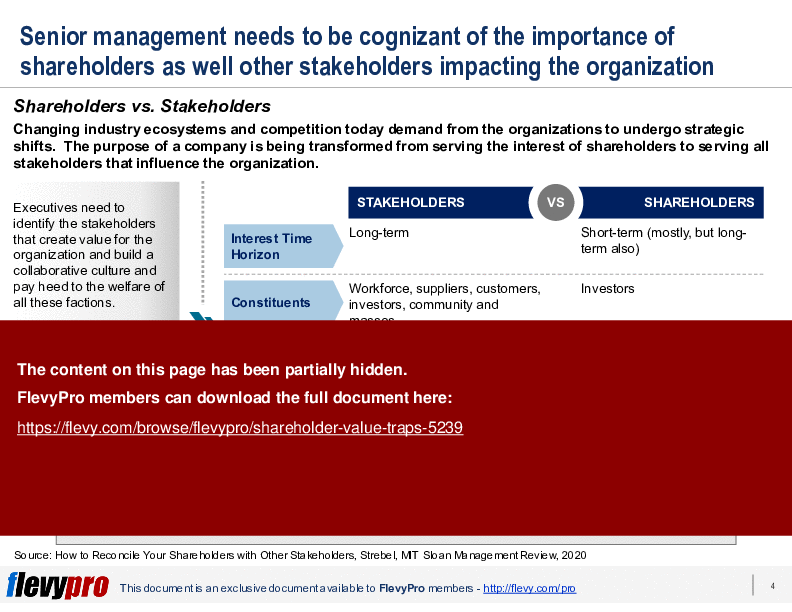

Changing industry ecosystems and competition today demand from the organizations to undergo strategic shifts. The purpose of a company is being transformed from serving the interest of shareholders to serving all stakeholders that influence the organization.
Executives need to identify the stakeholders that create value for the organization, build a collaborative culture, and pay heed to the welfare of all these factions. Likewise, they should be aware of who destroys the organizational value.
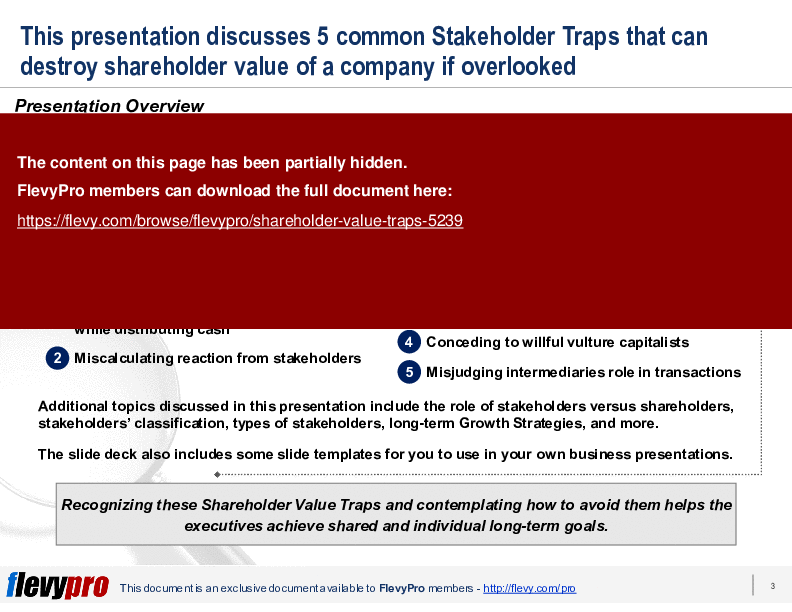
This presentation provides a detailed overview of the 5 common Stakeholder Traps that prevent stakeholders' interests to get integrated with the interests of the organization. Recognizing these traps and contemplating how to avoid them helps the executives achieve shared and individual long-term goals.
Additional topics discussed in this presentation include the role of stakeholders versus shareholders, stakeholders' classification, types of stakeholders, long-term Growth Strategies, and more.
The slide deck also includes some slide templates for you to use in your own business presentations.
This presentation dives into the critical missteps that can erode shareholder value, providing actionable insights for senior executives. It highlights the importance of recognizing and mitigating the impact of value-destroying stakeholders, such as willful vulture capitalists and intermediaries with conflicting interests. The PPT also emphasizes the necessity of maintaining a balanced approach to stakeholder management to safeguard long-term organizational value.
Executives will find detailed strategies to avoid common pitfalls, including blocking value destruction, halting subsidization, and leveraging intermediaries effectively. The presentation is designed to equip leaders with the tools to foster sustainable growth and align stakeholder interests with the company's strategic objectives. This resource is essential for those committed to navigating the complex landscape of stakeholder management and maximizing shareholder value.
Got a question about this document? Email us at flevypro@flevy.com.
Executive Summary
The Shareholder Value Traps presentation provides a critical examination of 5 common pitfalls that can undermine shareholder value if not addressed. Created by seasoned consultants from McKinsey and the Big 4, this deck equips corporate executives with the insights necessary to navigate stakeholder management and align strategic objectives for sustainable growth. By recognizing these traps, leaders can foster a collaborative culture that prioritizes long-term value creation over short-term gains, ultimately enhancing organizational resilience and performance.
Who This Is For and When to Use
• Corporate executives responsible for strategic decision-making and stakeholder engagement
• Integration leaders overseeing mergers, acquisitions, or organizational transformations
• Consultants advising on stakeholder management and value creation strategies
• Finance and operations teams focused on optimizing resource allocation and cash flow management
Best-fit moments to use this deck:
• During strategic planning sessions to identify and mitigate potential value traps
• In workshops aimed at enhancing stakeholder engagement and collaboration
• When preparing for investor relations meetings to communicate long-term value strategies
• In training sessions for leadership teams on effective stakeholder management
Learning Objectives
• Define the 5 Shareholder Value Traps and their implications for organizational performance
• Identify key stakeholders that drive long-term value versus those that extract value
• Develop strategies to mitigate the risks associated with each value trap
• Establish frameworks for stakeholder classification and prioritization
• Create action plans to mobilize value creators and minimize value extraction
• Implement governance structures that align stakeholder interests with organizational goals
Table of Contents
• Overview (page 3)
• Stakeholder Traps (page 6)
• Stakeholder Classification (page 11)
• Long-term Growth Strategies (page 14)
• Templates (page 20)
Primary Topics Covered
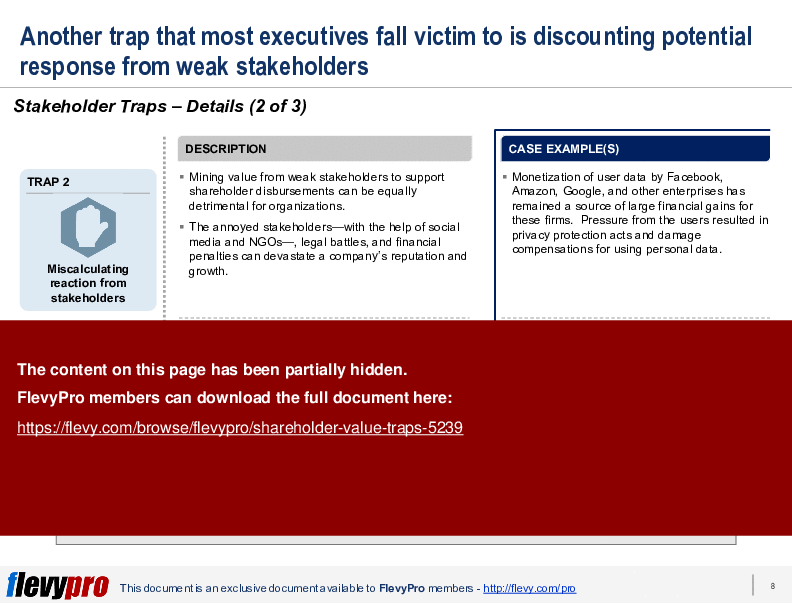
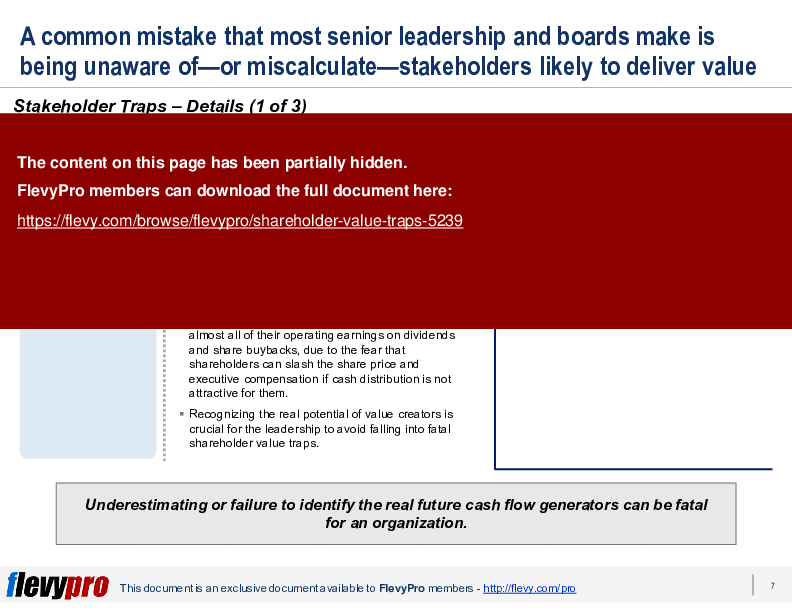
• Stakeholder Traps - An overview of 5 common pitfalls that can destroy shareholder value if overlooked, including ignoring cash flow drivers and miscalculating stakeholder reactions.
• Stakeholder Classification - A framework for categorizing stakeholders into 4 types: Free Riders, Predators, Victims, and Value Creators, based on their impact on organizational value.
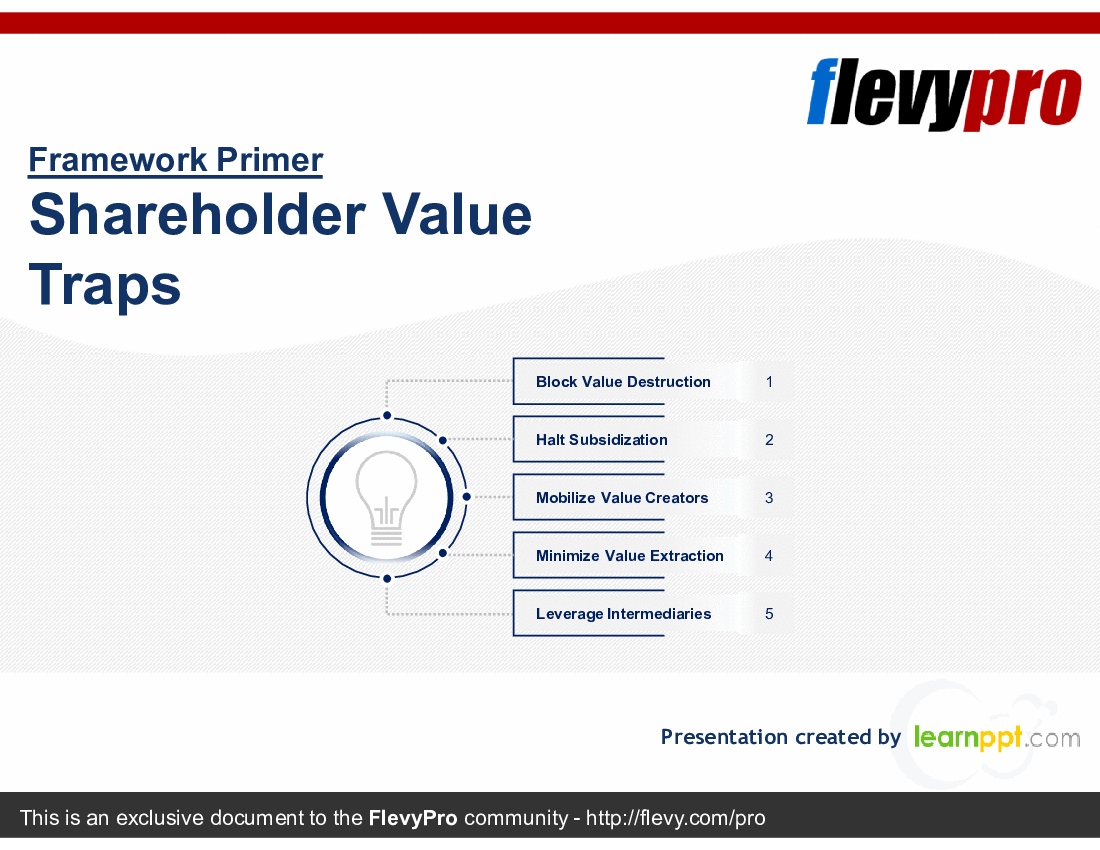
• Long-term Growth Strategies - Five strategies to avoid stakeholder traps: Block Value Destruction, Halt Subsidization, Mobilize Value Creators, Minimize Value Extraction, and Leverage Intermediaries.
• Case Examples - Real-world scenarios illustrating the consequences of falling into shareholder value traps and successful strategies for overcoming them.
• Templates - Ready-to-use slide templates for presenting stakeholder traps and strategies in business settings.
Deliverables, Templates, and Tools
• Stakeholder classification grid template for assessing stakeholder value generation
• Action plan template for addressing each of the 5 Shareholder Value Traps
• Presentation templates for communicating stakeholder strategies to teams and stakeholders
• Case study examples for illustrating the impact of stakeholder management decisions
• Frameworks for developing long-term growth strategies that align with stakeholder interests
Slide Highlights
• Overview of the 5 Shareholder Value Traps with illustrative visuals
• Detailed stakeholder classification grid showing the impact of different stakeholder types
• Long-term growth strategies with actionable steps and case examples
• Templates for stakeholder engagement presentations and strategic planning sessions
Potential Workshop Agenda
Introduction to Shareholder Value Traps (30 minutes)
• Overview of the presentation and objectives
• Discussion on the importance of stakeholder management
Identifying Stakeholder Traps (60 minutes)
• Group activity to identify potential traps within the organization
• Presentation of case examples and lessons learned
Developing Mitigation Strategies (90 minutes)
• Breakout sessions to create action plans for each identified trap
• Sharing of strategies and feedback among groups
Conclusion and Next Steps (30 minutes)
• Recap of key takeaways
• Discussion on implementation and follow-up actions
Customization Guidance
• Tailor the stakeholder classification grid to reflect your organization's specific stakeholders
• Adjust case examples to align with industry-specific challenges and scenarios
• Modify action plans based on organizational goals and resource availability
• Incorporate company-specific metrics and terminology for clarity and relevance
Secondary Topics Covered
• The evolving role of stakeholders in modern business ecosystems
• Strategies for building a collaborative culture that prioritizes stakeholder interests
• The impact of social, environmental, and governance factors on stakeholder relationships
• Best practices for communicating with stakeholders to enhance engagement
Topic FAQ
Document FAQ
These are questions addressed within this presentation.
What are the 5 Shareholder Value Traps?
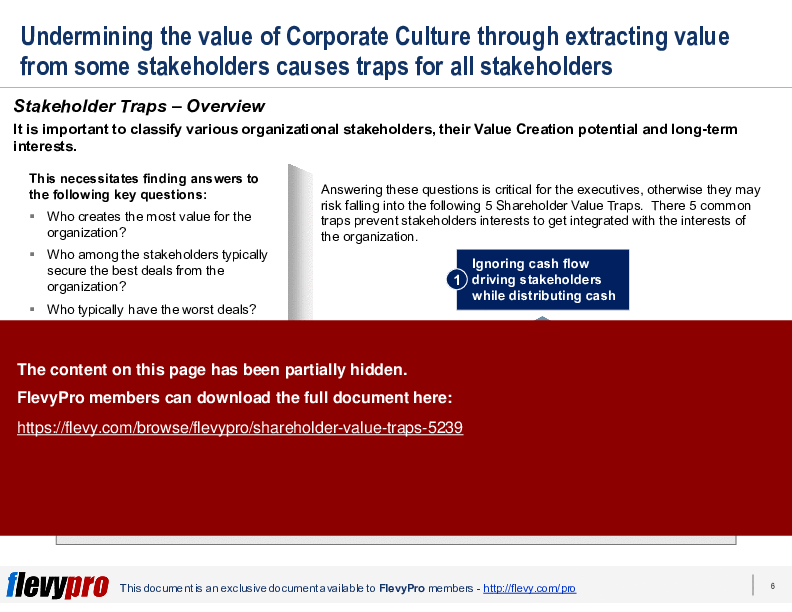
The 5 traps are: Ignoring cash flow driving stakeholders while distributing cash, Miscalculating reaction from stakeholders, Supporting underperforming units, Conceding to willful vulture capitalists, and Misjudging intermediaries' role in transactions.
How can I identify value-driving stakeholders?
Use the stakeholder classification grid to assess stakeholders based on their contributions and potential impact on the organization.
What strategies can help mitigate shareholder value traps?
Implement strategies such as blocking value destruction, halting subsidization of free riders, mobilizing value creators, minimizing value extraction, and leveraging intermediaries effectively.
How can I customize the templates provided in this deck?
Adapt the templates by incorporating your organization's specific stakeholders, metrics, and strategic goals to ensure relevance and applicability.
What is the importance of stakeholder classification?
Classifying stakeholders helps organizations prioritize their engagement efforts and allocate resources effectively to maximize long-term value creation.
How can I ensure stakeholder interests align with organizational goals?
Develop governance structures that facilitate communication and collaboration between stakeholders and the organization, ensuring mutual benefits are recognized and pursued.
What role do intermediaries play in stakeholder management?
Intermediaries can influence stakeholder perceptions and actions; thus, it is crucial to manage these relationships carefully to align them with organizational objectives.
How can I measure the success of stakeholder engagement strategies?
Establish key performance indicators (KPIs) that reflect stakeholder satisfaction, engagement levels, and the impact on organizational performance to track progress over time.
Glossary
• Stakeholder - Any individual or group that can affect or is affected by an organization's actions.
• Shareholder - An individual or institution that owns shares in a company and has a financial interest in its performance.
• Value Creator - A stakeholder that contributes positively to the organization's value.
• Free Rider - A stakeholder that benefits from the organization without contributing to its success.
• Predator - A stakeholder that seeks to exploit the organization for personal gain, often at the expense of others.
• Victim - A stakeholder that suffers from the organization's actions or policies.
• Long-term Growth Strategy - A plan designed to achieve sustainable growth over an extended period.
• Governance Structure - The framework that outlines how an organization is directed and controlled, including stakeholder engagement processes.
• Cash Flow - The total amount of money being transferred into and out of a business.
• Stakeholder Engagement - The process of involving stakeholders in decision-making and fostering relationships to achieve mutual benefits.
• Social Responsibility - The obligation of an organization to act in the best interests of its environment and society.
• Value Extraction - The process of taking value from stakeholders without providing adequate returns or benefits.
Source: Best Practices in Shareholder Value, Stakeholder Management PowerPoint Slides: Shareholder Value Traps PowerPoint (PPTX) Presentation Slide Deck, LearnPPT Consulting
Did you need more documents?
Consider a FlevyPro subscription from $39/month. View plans here.
For $10.00 more, you can download this document plus 2 more FlevyPro documents. That's just $13 each.
|
Download our FREE Organization, Change, & Culture, Templates
Download our free compilation of 50+ slides and templates on Organizational Design, Change Management, and Corporate Culture. Methodologies include ADKAR, Burke-Litwin Change Model, McKinsey 7-S, Competing Values Framework, etc. |