
This framework is developed by a team of former McKinsey and Big 4 consultants. The presentation follows the headline-body-bumper slide format used by global consulting firms.
Explore the Service-Dominant Logic (SDL) framework, crafted by ex-McKinsey and Big 4 consultants. Understand value co-creation and service ecosystems. Service-Dominant Logic (SDL) Primer is a 29-slide PPT PowerPoint presentation slide deck (PPTX) available for immediate download upon purchase.
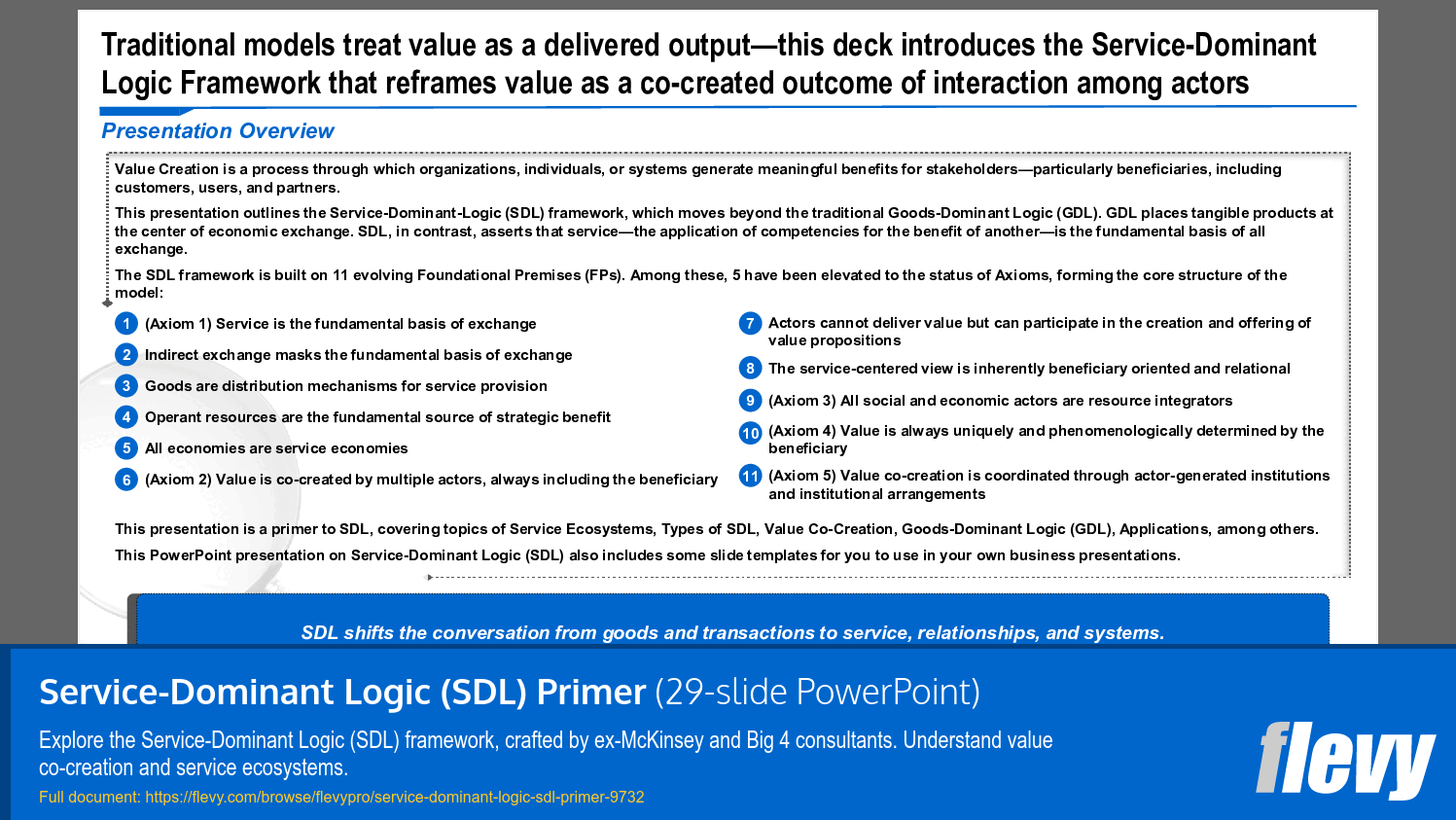
Value Creation is a process through which organizations, individuals, or systems generate meaningful benefits for stakeholders—particularly beneficiaries, including customers, users, and partners.
This presentation outlines the Service-Dominant-Logic (SDL) framework, which moves beyond the traditional Goods-Dominant Logic (GDL). GDL places tangible products at the center of economic exchange. SDL, in contrast, asserts that service—the application of competencies for the benefit of another—is the fundamental basis of all exchange.
SDL shifts the conversation from goods and transactions to service, relationships, and systems.
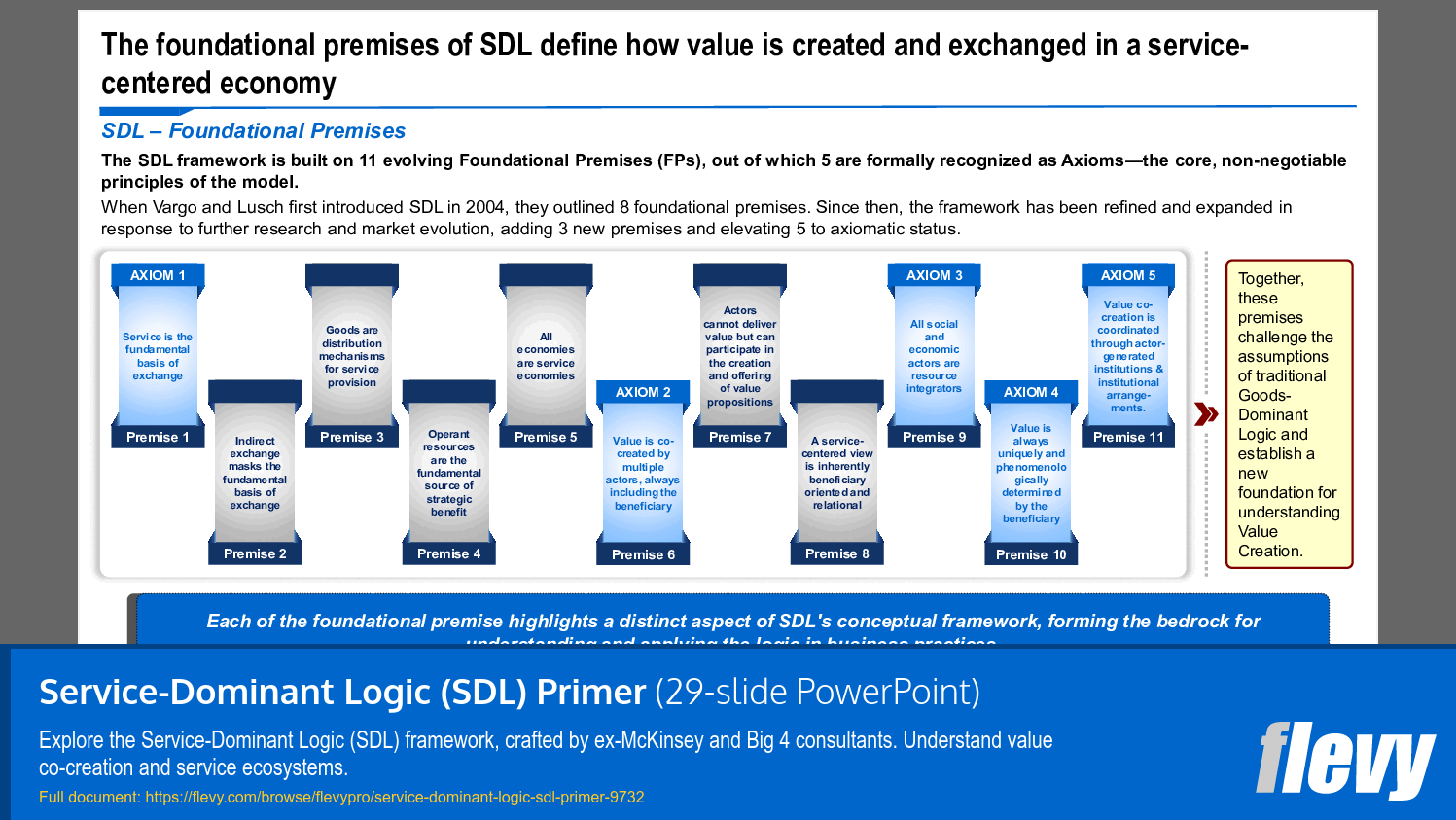
The SDL framework is built on 11 evolving Foundational Premises (FPs). Among these, 5 have been elevated to the status of Axioms, forming the core structure of the model:
1. (Axiom 1) Service is the fundamental basis of exchange
2. Indirect exchange masks the fundamental basis of exchange
3. Goods are distribution mechanisms for service provision
4. Operant resources are the fundamental source of strategic benefit
5. All economies are service economies
6. (Axiom 2) Value is co-created by multiple actors, always including the beneficiary
7. Actors cannot deliver value but can participate in the creation and offering of value propositions
8. The service-centered view is inherently beneficiary oriented and relational
9. (Axiom 3) All social and economic actors are resource integrators
10. (Axiom 4) Value is always uniquely and phenomenologically determined by the beneficiary
11. (Axiom 5) Value co-creation is coordinated through actor-generated institutions and institutional arrangements
This presentation is a primer to SDL, covering topics of Service Ecosystems, Types of SDL, Value Co-Creation, Goods-Dominant Logic (GDL), Applications, among others.
This PowerPoint presentation on Service-Dominant Logic (SDL) also includes some slide templates for you to use in your own business presentations.
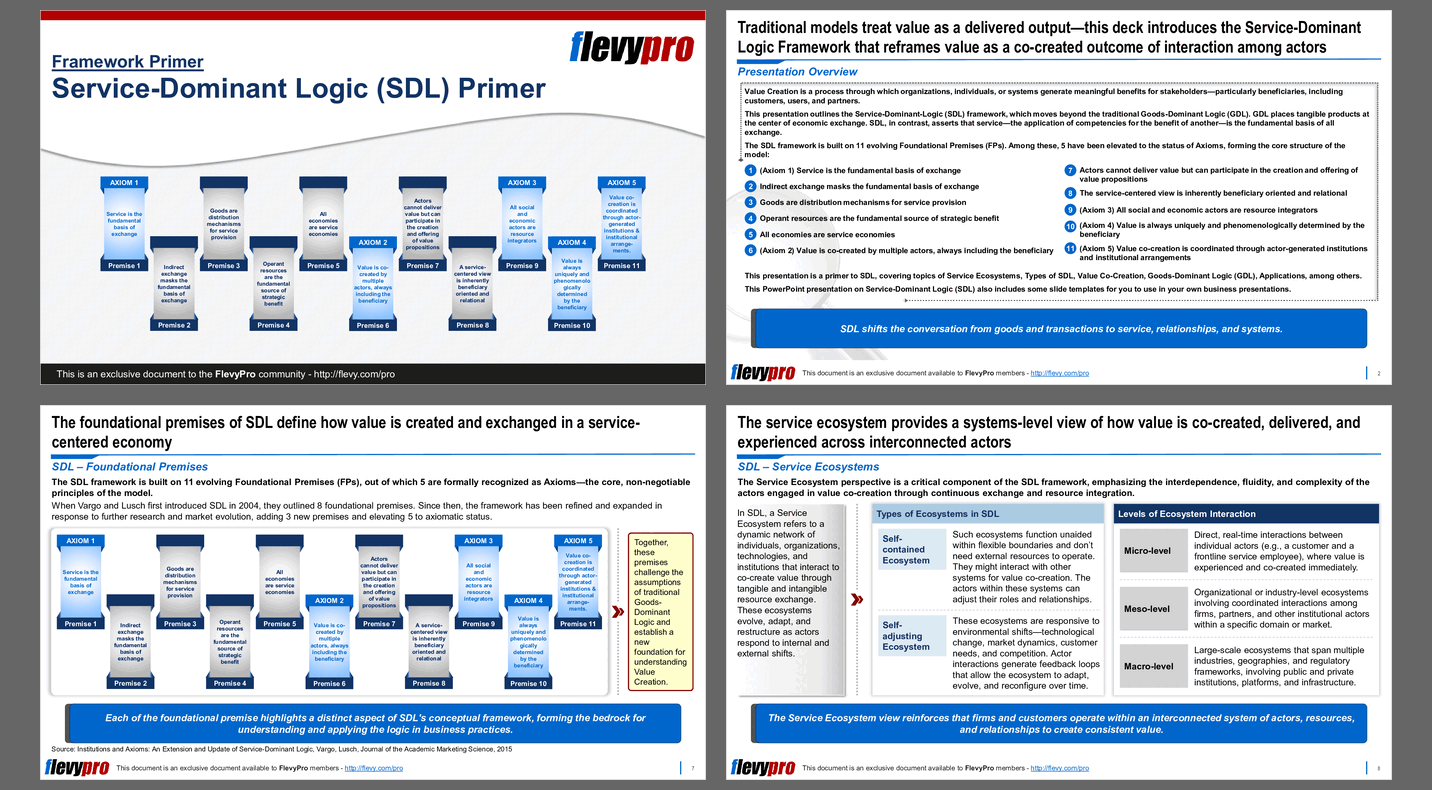
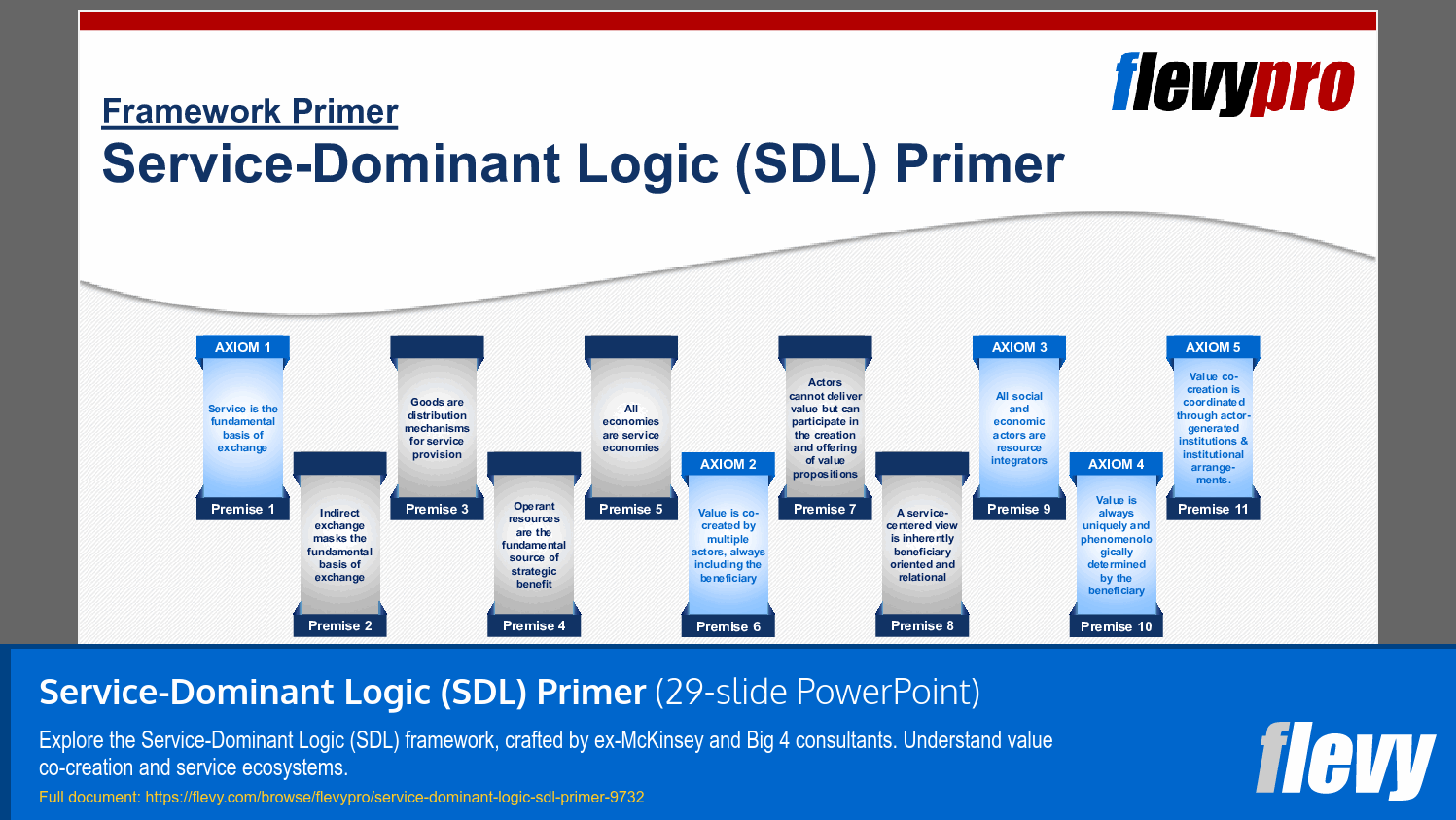
This PPT slide outlines the Service-Dominant Logic (SDL) framework, focusing on value generation and exchange in a service-oriented economy. SDL is based on 11 foundational premises, with 5 axioms recognized as fundamental principles. Axiom 1 states that service is the basis of exchange, framing economic activity as service-centric. Axiom 2 highlights co-creation of value through interactions involving multiple actors, including beneficiaries. Axiom 3 emphasizes that social and economic actors are resource integrators in value creation. Axiom 4 asserts that value is uniquely determined by the beneficiary, while Axiom 5 states that value co-creation is coordinated through institutional arrangements. These premises challenge traditional views of value creation, establishing a foundation rooted in service exchange and stakeholder interaction.
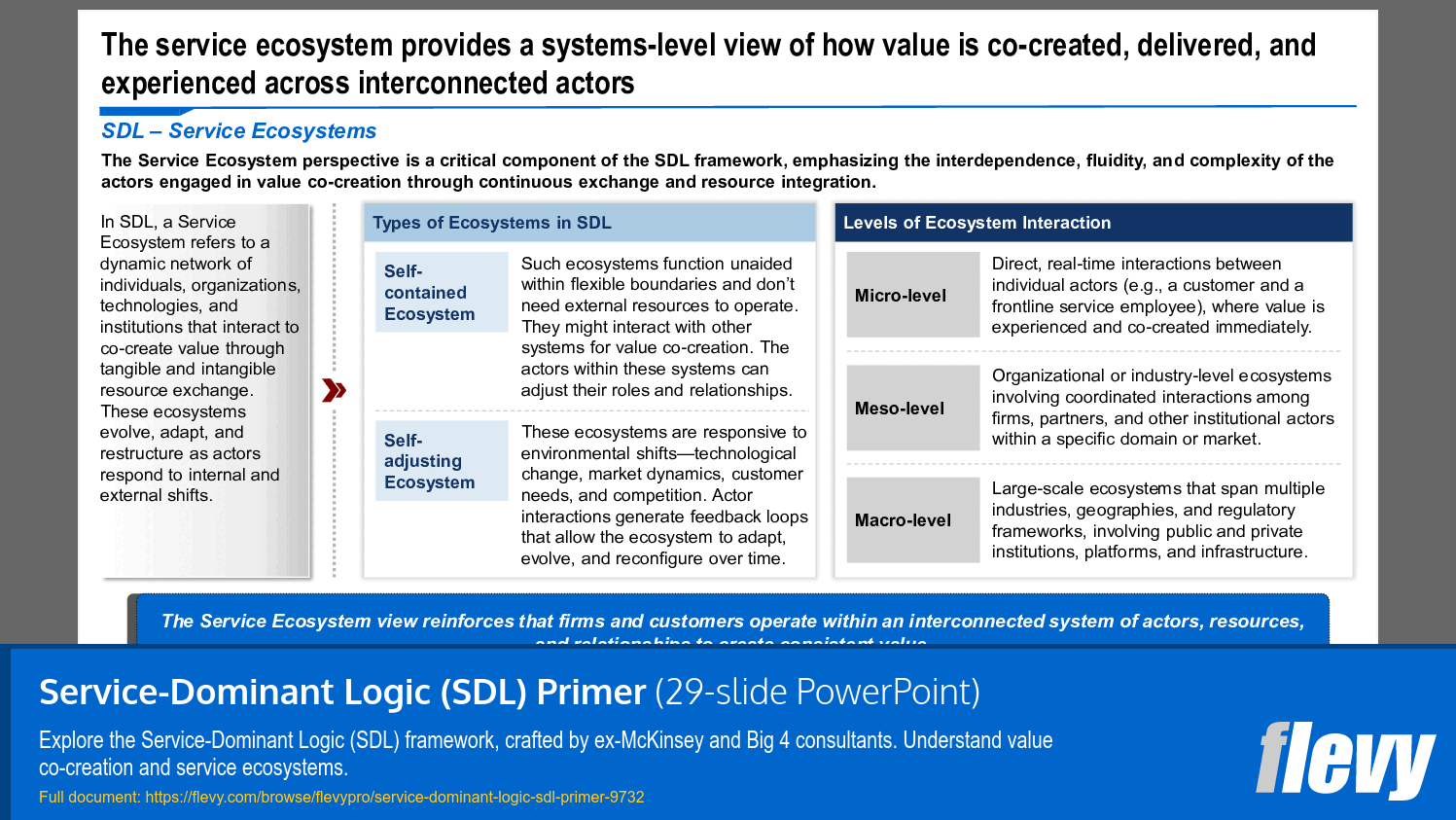
This PPT slide provides an overview of the Service Ecosystem concept within the SDL framework, illustrating how value is co-created, delivered, and experienced through interconnected actors. A Service Ecosystem is defined as a dynamic network of individuals, organizations, and technologies that generate tangible and intangible value. It distinguishes between self-contained ecosystems, which operate within flexible boundaries, and self-adjusting ecosystems that respond to environmental changes. Actors within these ecosystems can modify their roles over time for continuous adaptation. Ecosystem interactions are classified into micro-level (direct exchanges), meso-level (organizational collaborations), and macro-level (large-scale ecosystems across industries). The Service Ecosystem perspective emphasizes the interconnectedness and relationships among actors and resources to generate sustained value.
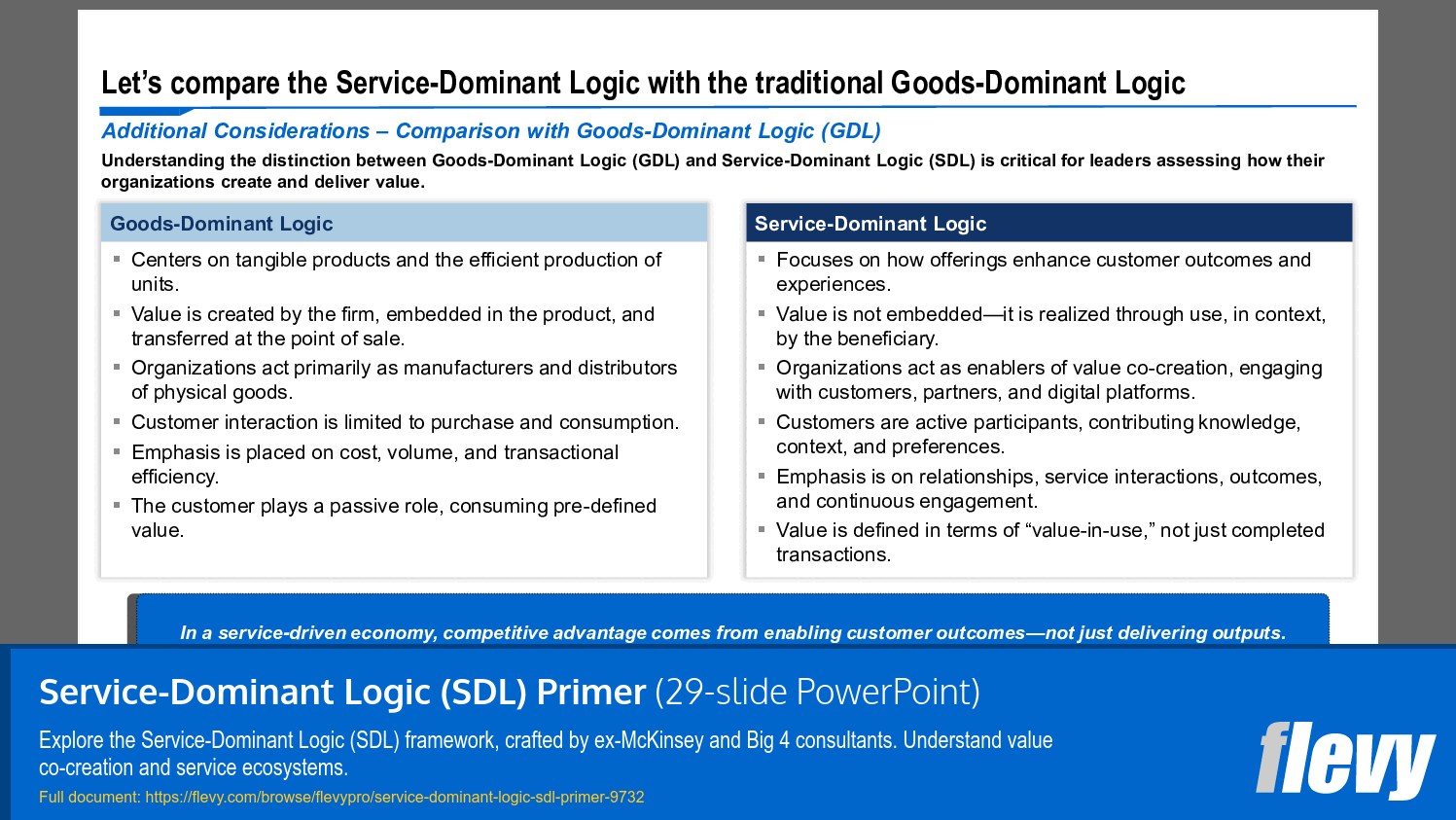
This PPT slide compares Goods-Dominant Logic (GDL) and Service-Dominant Logic (SDL) in value creation and delivery. GDL focuses on tangible products with value embedded in physical goods, emphasizing cost, volume, and transactional efficiency, where customers play a passive role. In contrast, SDL prioritizes customer outcomes and experiences, realizing value through use and ongoing engagement. Organizations enable value co-creation, actively involving customers, partners, and digital platforms, with customers contributing knowledge and preferences. Value is defined as "value-in-use" rather than completed transactions. In a service-driven economy, success depends on fostering customer relationships and shared value creation, guiding organizations to evolve from product-centric to customer-centric approaches.
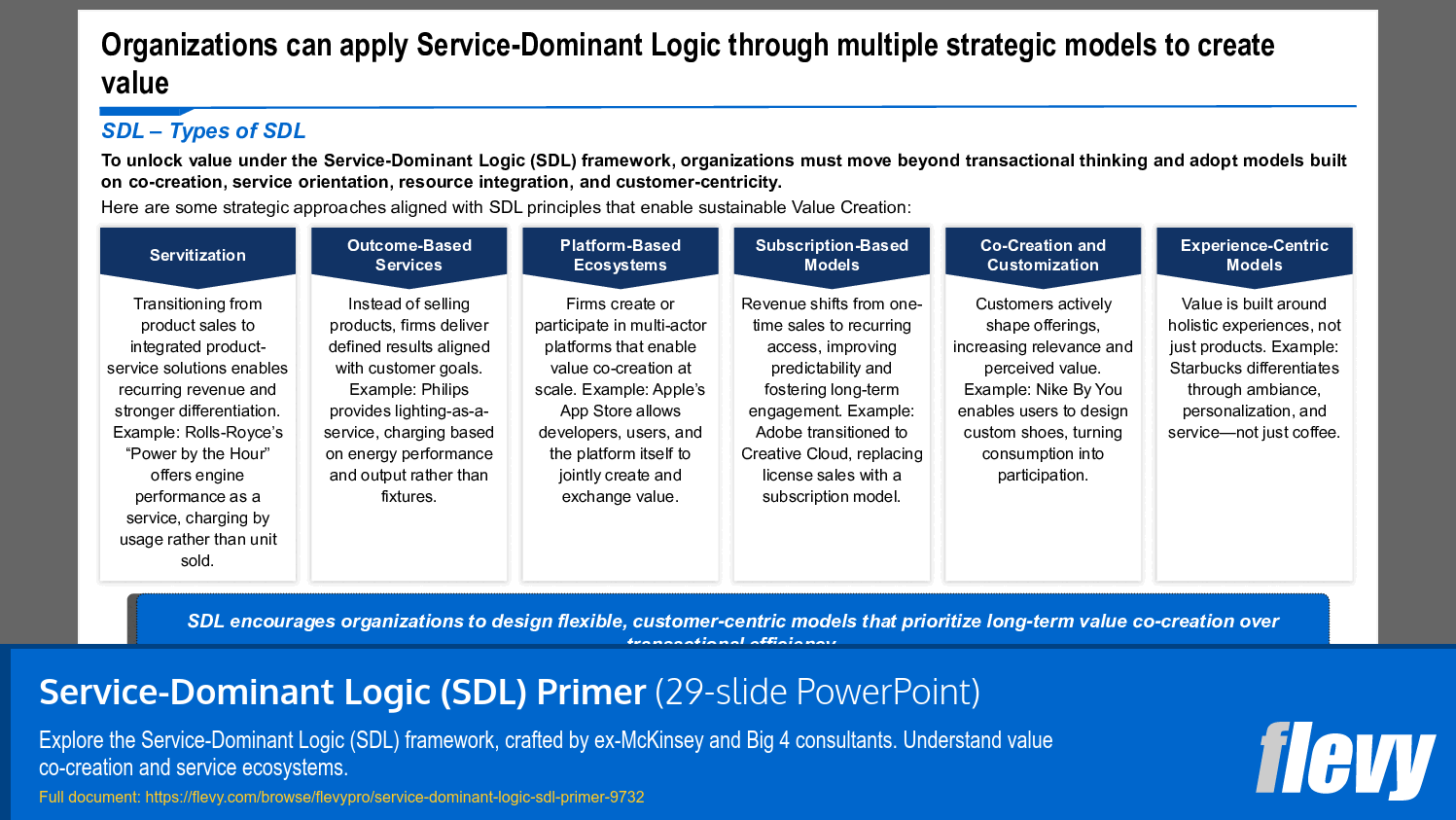
Organizations can leverage multiple strategic models to implement Service-Dominant Logic (SDL) and generate value through co-creation, resource integration, and customer-centricity. Key SDL approaches include:
1. Servitization: Transitioning from product sales to integrated solutions for recurring revenue, exemplified by Rolls-Royce’s engine performance services.
2. Outcome-Based Services: Delivering results aligned with customer goals, like Philips’ lighting-as-a-service.
3. Platform-Based Ecosystems: Creating multi-actor platforms for value co-creation, such as Apple’s App Store.
4. Subscription-Based Models: Shifting from one-time sales to recurring access, illustrated by Adobe’s subscription transition.
5. Co-Creation and Customization: Actively involving customers in shaping offerings, as seen with Nike’s customization options.
SDL promotes flexible, customer-centric models prioritizing long-term value co-creation over transactional efficiency, helping firms unlock sustained value through integrated customer experiences.
Source: Best Practices in Value Creation, Service Design PowerPoint Slides: Service-Dominant Logic (SDL) Primer PowerPoint (PPTX) Presentation Slide Deck, LearnPPT Consulting
This framework is developed by a team of former McKinsey and Big 4 consultants. The presentation follows the headline-body-bumper slide format used by global consulting firms.
For $10.00 more, you can download this document plus 2 more FlevyPro documents. That's just $13 each.
ABOUT FLEVYPRO
This document is part of the FlevyPro Library, a curated knowledge base of documents for our FlevyPro subscribers.

FlevyPro is a subscription service for on-demand business frameworks and analysis tools. FlevyPro subscribers receive access to an exclusive library of curated business documents—business framework primers, presentation templates, Lean Six Sigma tools, and more—among other exclusive benefits.
The average daily rate of a McKinsey consultant is $6,625 (not including expenses). The average price of a Flevy document is $65.
Trusted by over 10,000+ Client Organizations
Since 2012, we have provided business templates to over 10,000 businesses and organizations of all sizes, from startups and small businesses to the Fortune 100, in over 130 countries.
"The wide selection of frameworks is very useful to me as an independent consultant. In fact, it rivals what I had at my disposal at Big 4 Consulting firms in terms of efficacy and organization."
– Julia T., Consulting Firm Owner (Former Manager at Deloitte and Capgemini)
"As an Independent Management Consultant, I find Flevy to add great value as a source of best practices, templates and information on new trends. Flevy has matured and the quality and quantity of the library is excellent. Lastly the price charged is reasonable, creating a win-win value for
the customer, Flevy and the various authors. This is truly a service that benefits the consulting industry and associated clients. Thanks for providing this service.
"
– Jim Schoen, Principal at FRC Group
"I have used FlevyPro for several business applications. It is a great complement to working with expensive consultants. The quality and effectiveness of the tools are of the highest standards."
– Moritz Bernhoerster, Global Sourcing Director at Fortune 500
"One of the great discoveries that I have made for my business is the Flevy library of training materials.
As a Lean Transformation Expert, I am always making presentations to clients on a variety of topics: Training, Transformation, Total Productive Maintenance, Culture, Coaching, Tools, Leadership Behavior, etc. Flevy
It is well worth the money to purchase these presentations. Sure, I have the knowledge and information to make my point. It is another thing to create a presentation that captures what I want to say. Flevy has saved me countless hours of preparation time that is much better spent with implementation that will actually save money for my clients.
"
– Ed Kemmerling, Senior Lean Transformation Expert at PMG
"As a niche strategic consulting firm, Flevy and FlevyPro frameworks and documents are an on-going reference to help us structure our findings and recommendations to our clients as well as improve their clarity, strength, and visual power. For us, it is an invaluable resource to increase our impact and value."
– David Coloma, Consulting Area Manager at Cynertia Consulting
"Flevy is our 'go to' resource for management material, at an affordable cost. The Flevy library is comprehensive and the content deep, and typically provides a great foundation for us to further develop and tailor our own service offer."
– Chris McCann, Founder at Resilient.World
"As a consulting firm, we had been creating subject matter training materials for our people and found the excellent materials on Flevy, which saved us 100's of hours of re-creating what already exists on the Flevy materials we purchased."
– Michael Evans, Managing Director at Newport LLC
"As a consultant requiring up to date and professional material that will be of value and use to my clients, I find Flevy a very reliable resource.
The variety and quality of material available through Flevy offers a very useful and commanding source for information. Using Flevy saves me time, enhances my expertise and ends up being a good decision."
Download our free compilation of 50+ Strategy & Transformation slides and templates. Frameworks include McKinsey 7-S, Balanced Scorecard, Disruptive Innovation, BCG Curve, and many more.