
This framework is developed by a team of former McKinsey and Big 4 consultants. The presentation follows the headline-body-bumper slide format used by global consulting firms.
Explore our Scenario Planning in Crisis PPT, crafted by ex-McKinsey and Big 4 consultants. Equip CFOs with strategic tools for effective crisis management. Scenario Planning in Crisis is a 30-slide PPT PowerPoint presentation slide deck (PPTX) available for immediate download upon purchase.
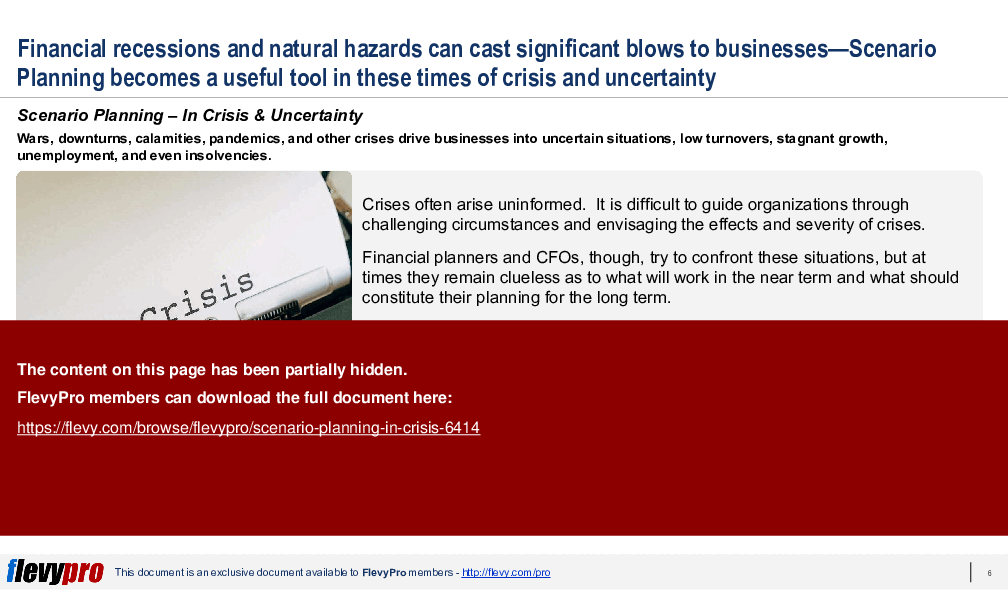
Wars, downturns, calamities, pandemics, and other crises drive businesses into uncertain situations, low turnovers, stagnant growth, unemployment, and even insolvencies.
Financial planners—especially CFOs—though, try to confront these situations, but at times they are clueless as to what will work in the near term and what should constitute their planning for the long term.
Uncertainties caused by downturns and calamities necessitate immediate actions and adjustments in Corporate Strategy. Financial planners should work on gauging the effect of the crisis and revisiting business objectives, but they usually lack the tools or data to strategically model a crisis, recommend strategies, and plan immediate interventions.
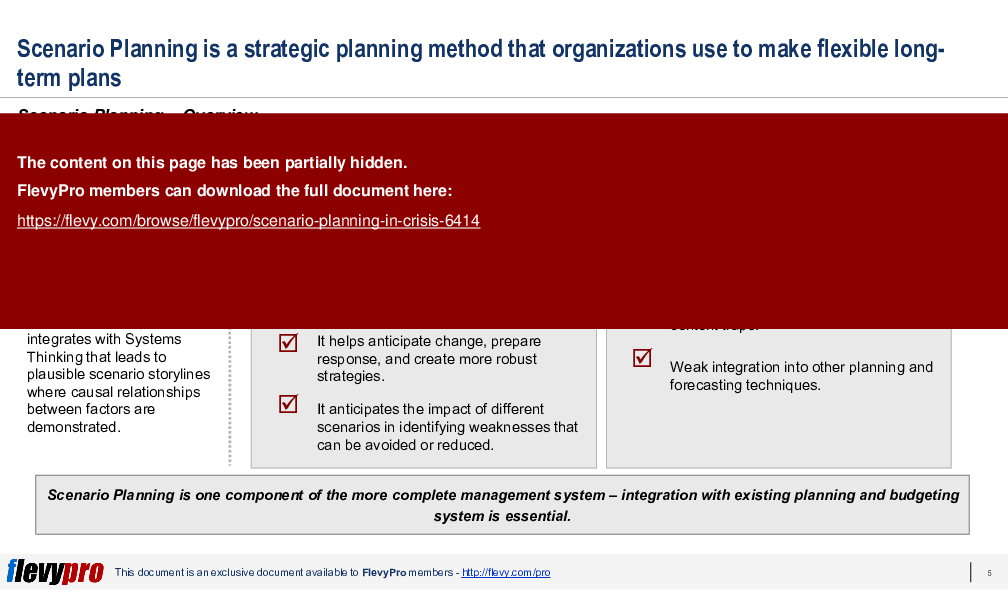
Scenario Planning is a strategic planning method that organizations use to make flexible long-term plans. It can prove be a useful tool in times of crisis and uncertainty. In fact, as part of Crisis Management, it is important to anticipate multiple crisis scenarios and develop action plans for each scenario that the current crisis may present.
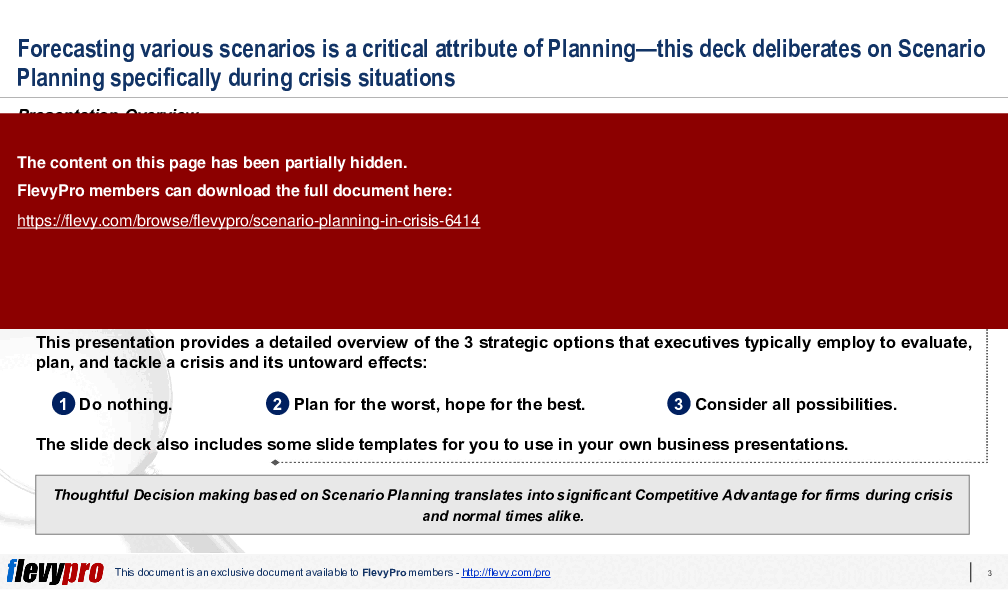
This Scenario Planning PowerPoint presentation provides a detailed overview of the 3 strategic options that executives typically employ to evaluate, plan, and tackle a crisis and its untoward effects:
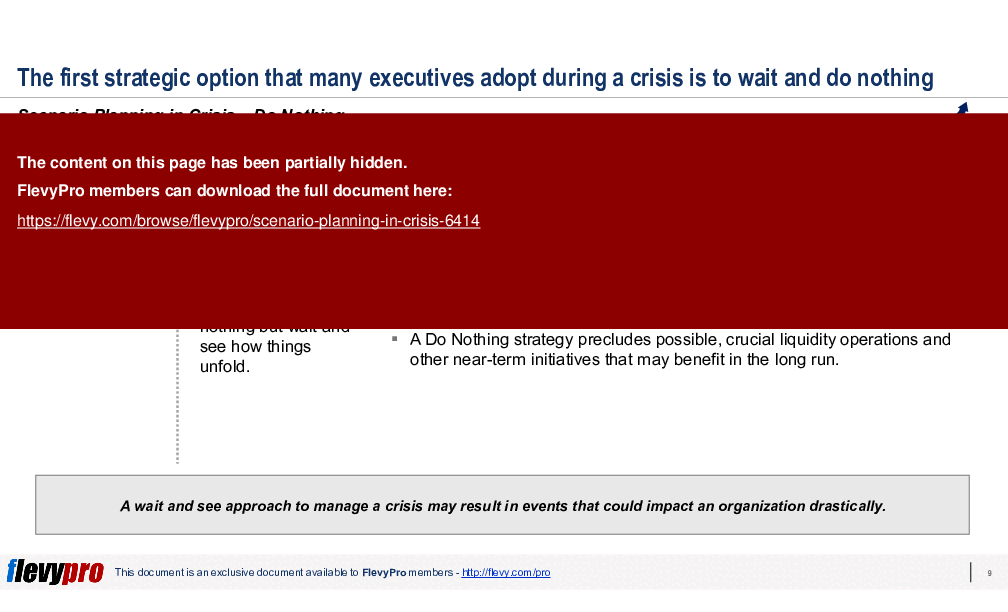
1. Do nothing – This is riskier approach that executives often employ during times of uncertainty, downturns, and calamities is to do nothing but wait and see how things unfold.
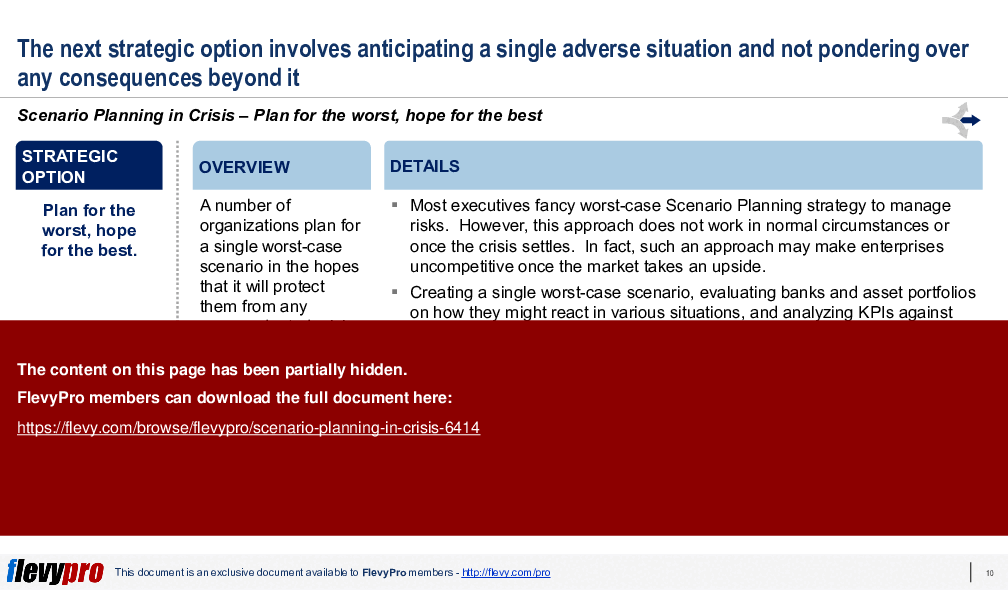
2. Plan for the worst, hope for the best – A number of organizations plan for a single worst-case scenario in the hopes that it will protect them from any unprecedented crisis situation. Such a strategy may lead to disasters.
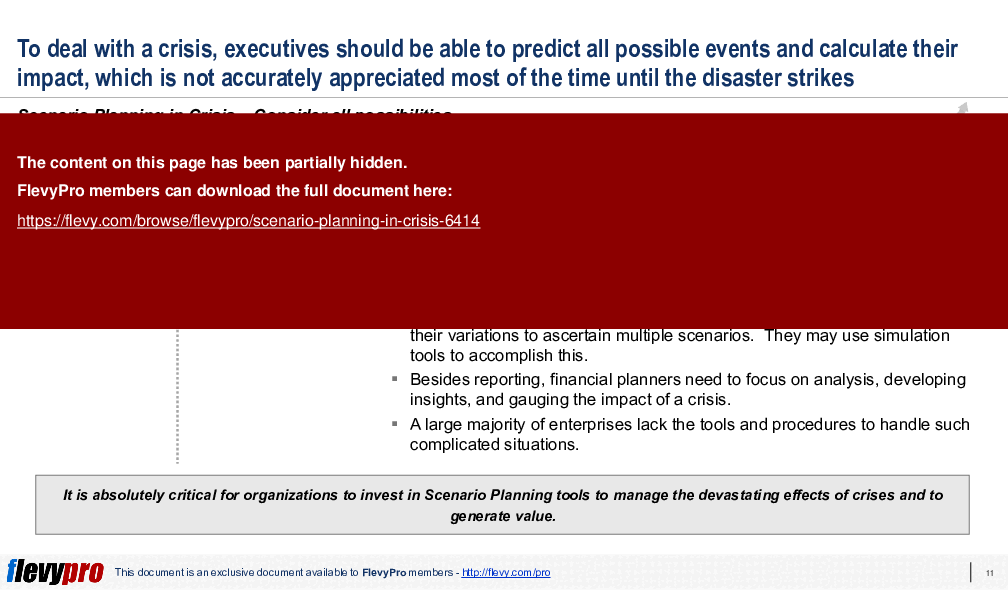
3. Consider all possibilities – Contemplating as much probabilities as possible is necessary to plan for and mitigate the adverse effects of a crisis.
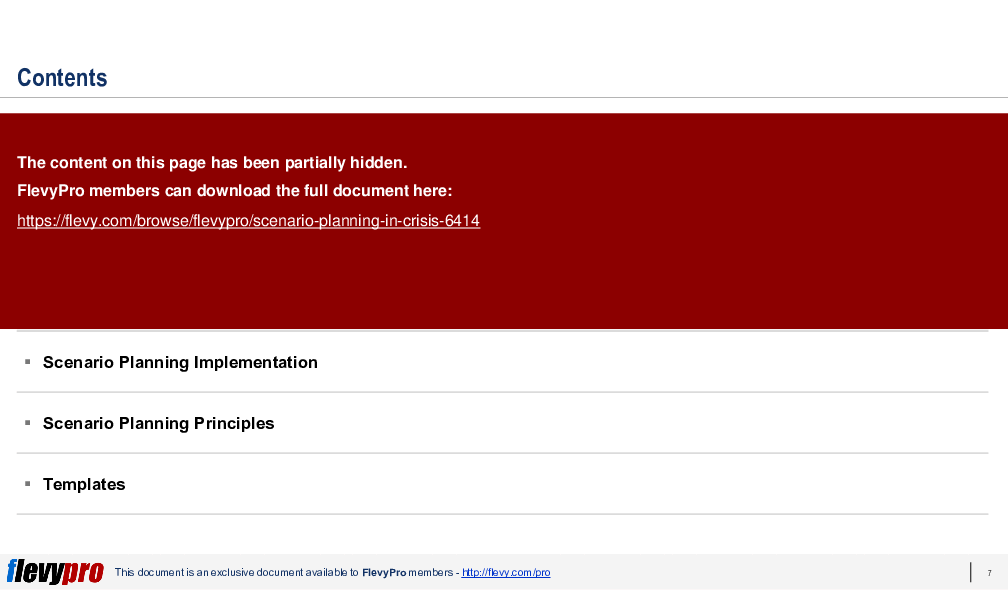
Each of these strategic options is discussed in this presentation. Additional topics covered include Scenario Planning Implementation, Scenario Planning Pitfalls, Scenario Planning Modeling, among other topics.
The Scenario Planning in crisis PPT also includes some slide templates depicting the 3 Strategic Options of Scenario Planning in Crisis, guiding principles of Scenario Planning Implementation, and 6 pitfalls of Scenario Planning for you to use in your own business presentations.
This presentation emphasizes the importance of integrating scenario planning with existing planning and budgeting systems. It also highlights the need for organizations to be agile and involve stakeholders from all relevant departments.
This PPT slide outlines 6 key pitfalls in scenario planning. "Analysis Paralysis" refers to overanalyzing situations, leading to indecision and stalled progress. "Lack of Clear Leadership Vision" highlights the need for strong guidance to align team objectives. The "Narrow Set of Outcomes" warns against limiting potential scenarios, which can result in unpreparedness for unexpected events. "Discarding Extreme Scenarios" emphasizes the risk of overlooking unlikely, but impactful scenarios, creating strategic blind spots. "Discarding Scenarios Too Quickly" suggests that hasty conclusions can miss valuable insights. Finally, "Situations of High Uncertainty" stresses the importance of flexibility in unpredictable environments. Utilizing at least 2 independent variables in scenario construction ensures a comprehensive understanding of potential future states, enhancing strategic decision-making.
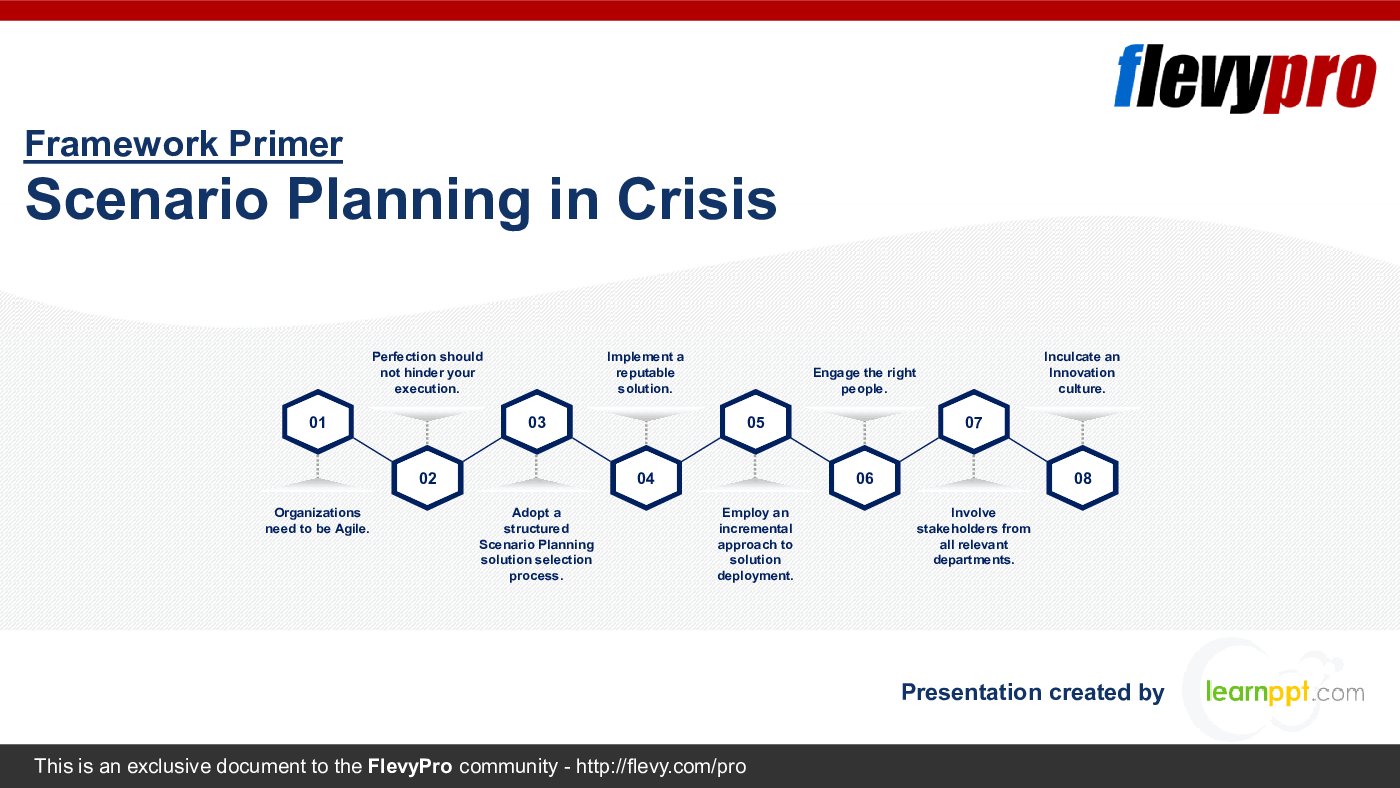
Key principles for effective scenario planning include employing an incremental approach to solution deployment, which allows organizations to gradually develop their capabilities and focus on achieving incremental value. Engaging the right people with skills in data, financials, and risk management is essential for navigating crises effectively. Involving stakeholders from all relevant departments—such as risk management, treasury, and investor relations—enhances the planning process by fostering a comprehensive understanding of the organization's position. Finally, inculcating an innovation culture encourages creativity during crises, leveraging challenges as opportunities for growth and adaptation, leading to more resilient and agile organizations.
This PPT slide outlines critical pitfalls in scenario planning, highlighting the need for a dynamic approach to avoid missteps. The first pitfall is the disregard for extreme scenarios, often seen as unlikely, but potentially impactful. Incorporating these stretch scenarios into planning prepares organizations for unexpected shifts. The second pitfall involves prematurely abandoning scenarios that seem irrelevant, leading to a disconnect with real-world developments; scenarios should be treated as evolving entities requiring ongoing evaluation. The final pitfall is the reluctance to engage with high uncertainty, stemming from the belief that all reasonable scenarios have been accounted for. Maintaining an open mindset and continuous scenario development is essential for effective planning.
This PPT slide addresses the necessity of comprehensive scenario planning for executives during crises. It emphasizes that predicting potential events and their impacts is often underestimated until a crisis occurs. The strategic option "Consider all possibilities" underscores the importance of simulating multiple scenarios to mitigate adverse effects. Organizations must assess various assumptions and utilize simulation tools to understand potential impacts effectively. Financial planners should focus on both reporting and analysis to gauge crisis impacts accurately. Many enterprises lack the necessary tools and procedures for navigating complex situations, hindering their crisis response efforts. Investing in scenario planning tools is essential for enhancing organizational resilience in the face of uncertainty.
This PPT slide critiques the Do Nothing strategy during crises, highlighting its inherent risks amid uncertainty. Executives often adopt a wait-and-see approach,, but this can lead to severe short, medium, and long-term repercussions. A thorough assessment of the crisis and its immediate effects within a 30-day window is essential for informed decision-making. Inaction can impede liquidity operations and hinder initiatives that provide long-term benefits. The slide emphasizes the urgency for executives to act decisively to avoid exacerbating the crisis and underscores the importance of proactive crisis management strategies.
This PPT slide outlines essential principles for implementing Scenario Planning, particularly in crisis situations. Agility is crucial; organizations must be flexible and responsive to changing circumstances. The first principle states that perfection should not impede execution, as striving for flawless solutions can delay necessary actions. Selecting a reputable solution is vital, emphasizing reliability and proven effectiveness. A structured approach to the Scenario Planning solution selection process ensures systematic decision-making. Engaging knowledgeable individuals is critical for success, complemented by an incremental approach to solution deployment, allowing for adjustments based on feedback. Involving stakeholders from all relevant departments reinforces the importance of cross-functional collaboration. Finally, cultivating an innovation culture encourages creative thinking and adaptability, enhancing Scenario Planning efforts and driving better outcomes.
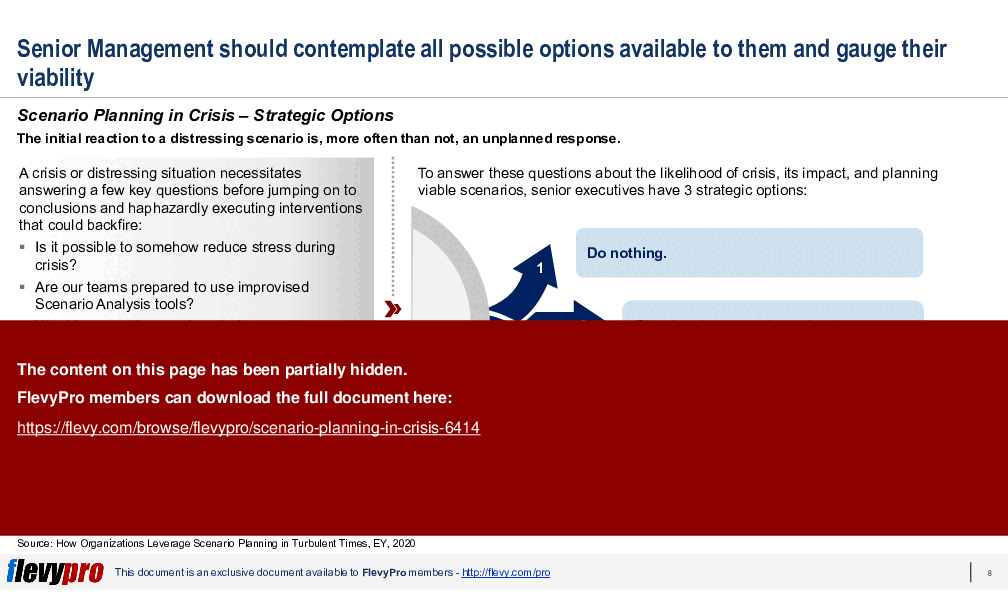
Senior management must evaluate strategic options during a crisis, as unplanned reactions can lead to ineffective interventions. Key questions for executives include assessing the feasibility of stress reduction, team preparedness for scenario analysis, and the ability to quantify uncertainty. Three strategic options are presented: "Do nothing," suggesting a passive approach that risks missed opportunities; "Plan for the worst, hope for the best," which balances risk management with optimism; and "Consider all possibilities," advocating for a comprehensive evaluation of potential scenarios. Executives must carefully weigh the pros and cons of each option to enhance crisis response strategies and align decisions with long-term objectives.
Source: Best Practices in Scenario Planning, Crisis Management PowerPoint Slides: Scenario Planning in Crisis PowerPoint (PPTX) Presentation Slide Deck, LearnPPT Consulting
This framework is developed by a team of former McKinsey and Big 4 consultants. The presentation follows the headline-body-bumper slide format used by global consulting firms.
For $10.00 more, you can download this document plus 2 more FlevyPro documents. That's just $13 each.
ABOUT FLEVYPRO
This document is part of the FlevyPro Library, a curated knowledge base of documents for our FlevyPro subscribers.

FlevyPro is a subscription service for on-demand business frameworks and analysis tools. FlevyPro subscribers receive access to an exclusive library of curated business documents—business framework primers, presentation templates, Lean Six Sigma tools, and more—among other exclusive benefits.
The average daily rate of a McKinsey consultant is $6,625 (not including expenses). The average price of a Flevy document is $65.
Trusted by over 10,000+ Client Organizations
Since 2012, we have provided business templates to over 10,000 businesses and organizations of all sizes, from startups and small businesses to the Fortune 100, in over 130 countries.
"As an Independent Management Consultant, I find Flevy to add great value as a source of best practices, templates and information on new trends. Flevy has matured and the quality and quantity of the library is excellent. Lastly the price charged is reasonable, creating a win-win value for
the customer, Flevy and the various authors. This is truly a service that benefits the consulting industry and associated clients. Thanks for providing this service.
"
– Jim Schoen, Principal at FRC Group
"As a small business owner, the resource material available from FlevyPro has proven to be invaluable. The ability to search for material on demand based our project events and client requirements was great for me and proved very beneficial to my clients. Importantly, being able to easily edit and tailor
the material for specific purposes helped us to make presentations, knowledge sharing, and toolkit development, which formed part of the overall program collateral. While FlevyPro contains resource material that any consultancy, project or delivery firm must have, it is an essential part of a small firm or independent consultant's toolbox.
"
– Michael Duff, Managing Director at Change Strategy (UK)
"I have found Flevy to be an amazing resource and library of useful presentations for lean sigma, change management and so many other topics. This has reduced the time I need to spend on preparing for my performance consultation. The library is easily accessible and updates are regularly provided. A wealth of great information."
– Cynthia Howard RN, PhD, Executive Coach at Ei Leadership
"As a consulting firm, we had been creating subject matter training materials for our people and found the excellent materials on Flevy, which saved us 100's of hours of re-creating what already exists on the Flevy materials we purchased."
– Michael Evans, Managing Director at Newport LLC
"Flevy is our 'go to' resource for management material, at an affordable cost. The Flevy library is comprehensive and the content deep, and typically provides a great foundation for us to further develop and tailor our own service offer."
– Chris McCann, Founder at Resilient.World
"I like your product. I'm frequently designing PowerPoint presentations for my company and your product has given me so many great ideas on the use of charts, layouts, tools, and frameworks. I really think the templates are a valuable asset to the job."
– Roberto Fuentes Martinez, Senior Executive Director at Technology Transformation Advisory
"FlevyPro has been a brilliant resource for me, as an independent growth consultant, to access a vast knowledge bank of presentations to support my work with clients. In terms of RoI, the value I received from the very first presentation I downloaded paid for my subscription many times over! The
quality of the decks available allows me to punch way above my weight – it's like having the resources of a Big 4 consultancy at your fingertips at a microscopic fraction of the overhead.
"
– Roderick Cameron, Founding Partner at SGFE Ltd
"The wide selection of frameworks is very useful to me as an independent consultant. In fact, it rivals what I had at my disposal at Big 4 Consulting firms in terms of efficacy and organization."
– Julia T., Consulting Firm Owner (Former Manager at Deloitte and Capgemini)
Receive our FREE presentation on Operational Excellence
This 50-slide presentation provides a high-level introduction to the 4 Building Blocks of Operational Excellence. Achieving OpEx requires the implementation of a Business Execution System that integrates these 4 building blocks.