
Purpose-driven Analytics   26-slide PPT PowerPoint presentation slide deck (PPTX)
$29.00

Purpose-driven Analytics (26-slide PPT PowerPoint presentation slide deck (PPTX)) Preview Image
Log in to unlock full preview.
Purpose-driven Analytics (26-slide PPT PowerPoint presentation slide deck (PPTX)) Preview Image
Arrow   Click main image to view in full screen.

Purpose-driven Analytics (PowerPoint PPTX Slide Deck)

PowerPoint (PPTX) 26 Slides FlevyPro Document

$29.00
FlevyPro price: FREE (included in subscription)
This framework is developed by a team of former McKinsey and Big 4 consultants. The presentation follows the headline-body-bumper slide format used by global consulting firms.
Add to Cart


Immediate download
Free lifetime updates

ANALYTICS PPT DESCRIPTION

Editor Summary Purpose-driven Analytics is a 26-slide PowerPoint (PPTX) framework developed by former consultants from McKinsey and the Big 4 that outlines a strategic approach to embedding analytics across an organization. Read more

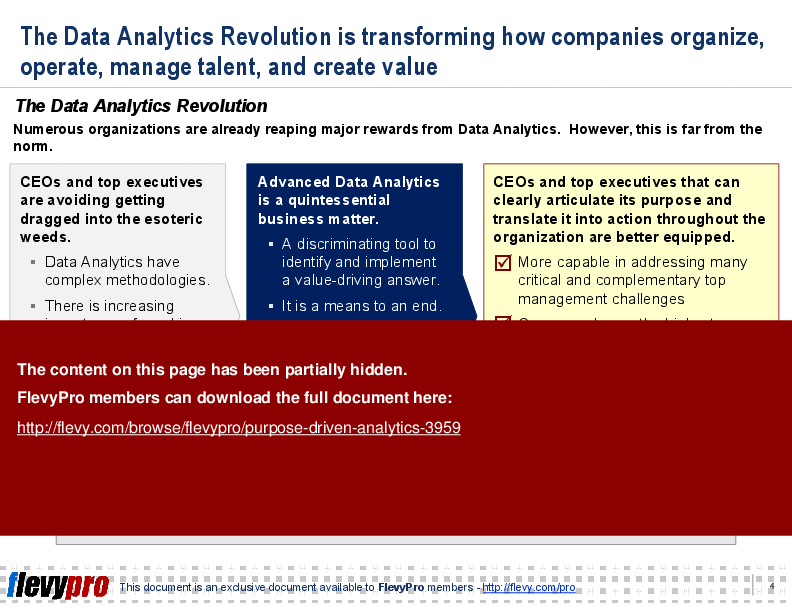
The Data Analytics Revolution is here. It has the potential to transform how companies organize, operate, manage talent, and create value. Advanced Data Analytics is a quintessential business matter. CEOs and top executives must be able to clearly articulate its purpose and translate it into action. Yet, this is not so.

CEOs and top executives are finding it difficult to articulate the clarity of purpose and act on it. It must not just stay in an analytics department but must be embedded throughout the organization where the insights will be used. Leaders with strong intuition do not just become better equipped to kick the tires on their analytics efforts. They can capably address the many critical top management challenges by employing a range of tools, employing the right personnel, applying hard metrics, and asking hard questions.

Data Analytics is a means to an end. It is a discriminating tool to identifying and implementing a value-driving answer. It can unleash insights that could be the very core of your organization’s approach to improving performance. This, however, cannot be achieved if there is no clarity in the purpose of your data.

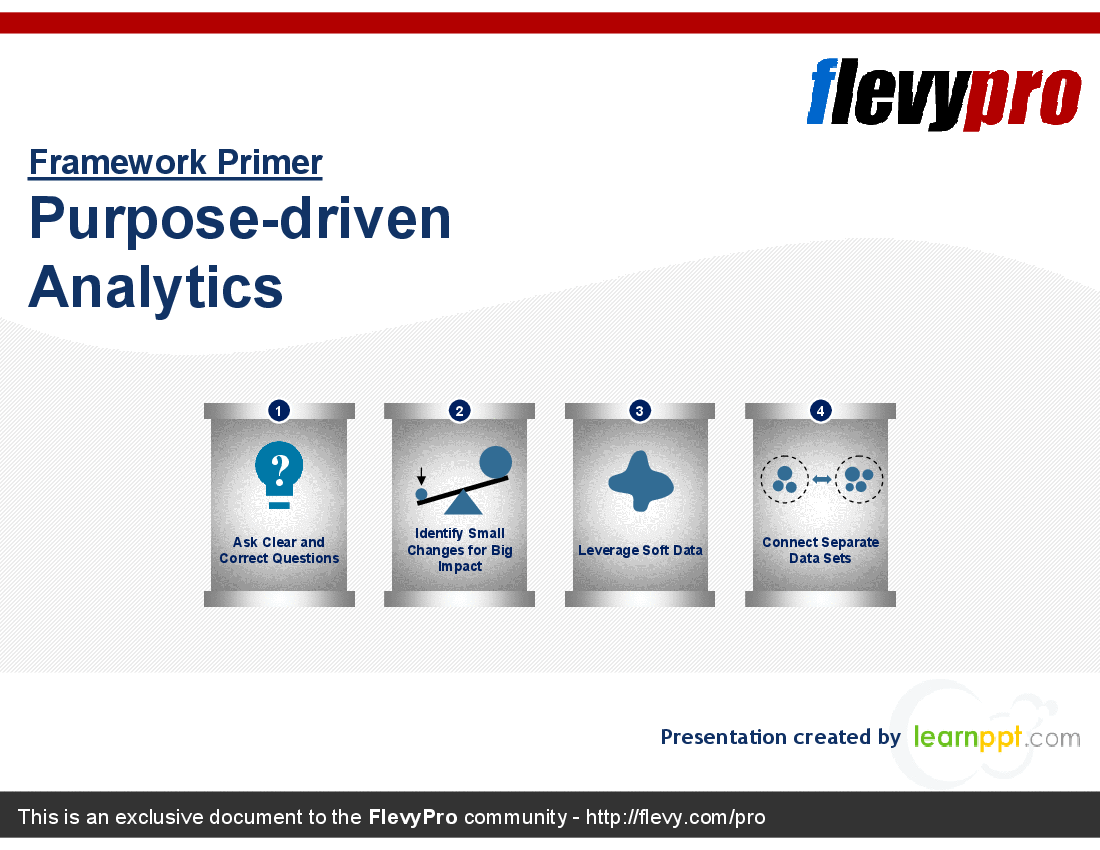
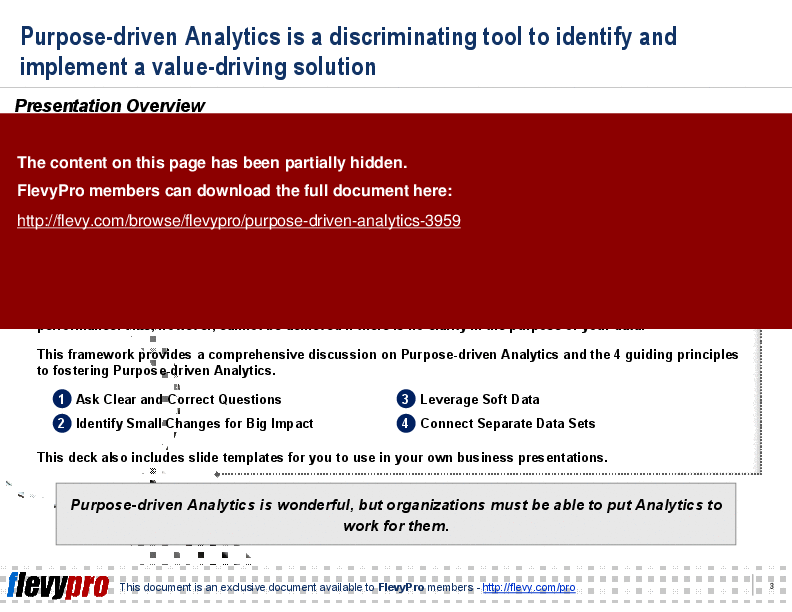
This framework provides a comprehensive discussion on Purpose-driven Analytics and the 4 guiding principles to fostering Purpose-driven Analytics.

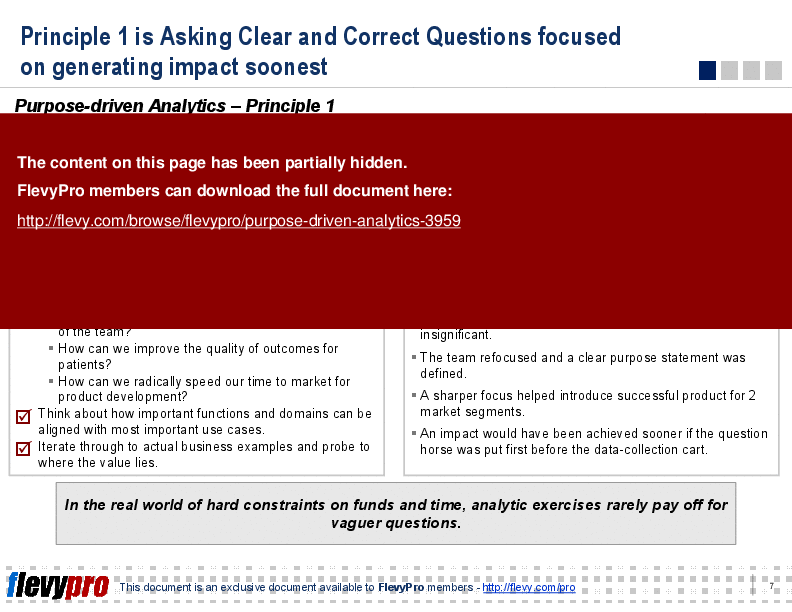
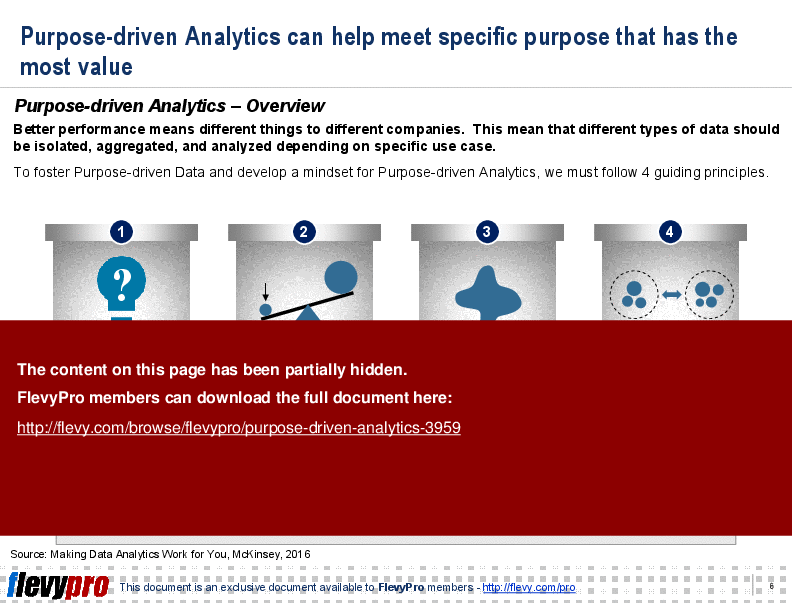
1. Ask Clear and Correct Questions
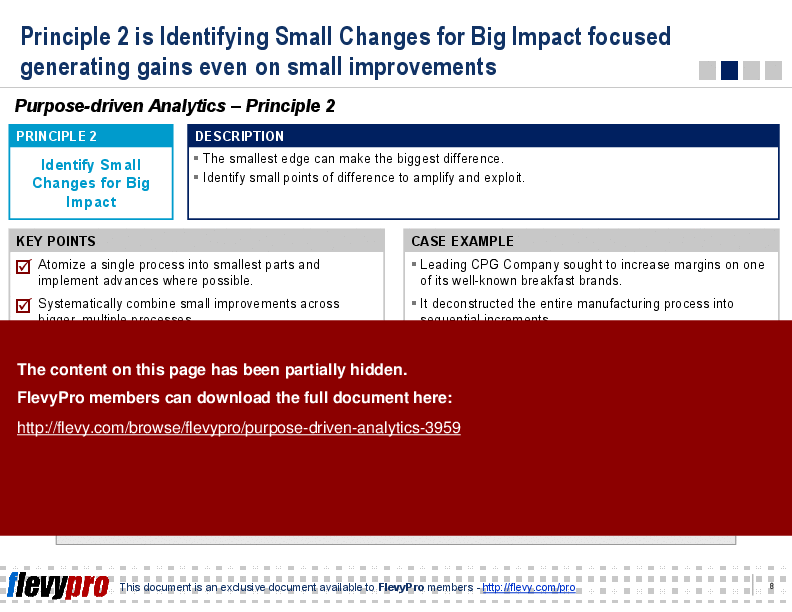
2. Identify Small Changes for Big Impact
3. Leverage Soft Data
4. Connect Separate Data Sets

This deck also includes slide templates for you to use in your own business presentations.

This presentation delves into the practical application of Purpose-driven Analytics, emphasizing the need for a multi-faceted approach to minimize complexity and maximize impact. It outlines the OODA Loop methodology, which helps organizations continuously adapt and refine their data strategies. The PPT also highlights the importance of producing consumable outputs and developing a multi-disciplinary team to drive analytics initiatives. With real-world case examples and actionable insights, this deck is an essential tool for executives looking to harness the full potential of their data analytics programs.

Got a question about this document? Email us at flevypro@flevy.com.

MARCUS OVERVIEW

This synopsis was written by Marcus [?] based on the analysis of the full 26-slide presentation.


Executive Summary
The "Purpose-driven Analytics" presentation is a strategic framework designed to help organizations leverage data analytics to drive value and improve performance. Created by former consultants from McKinsey and the Big 4, this presentation outlines the importance of embedding analytics within the organizational structure rather than confining it to a specific department. It emphasizes the necessity for CEOs and executives to articulate a clear purpose for analytics and translate that into actionable insights. The framework introduces 4 guiding principles aimed at fostering a culture of purpose-driven analytics, ensuring that data is utilized effectively to enhance decision-making and operational efficiency.

Who This Is For and When to Use
•  CEOs and top executives seeking to integrate analytics into their strategic decision-making processes
•  Data analysts and business intelligence teams responsible for implementing analytics initiatives
•  Change management leaders aiming to foster a data-driven culture within their organizations
•  Consultants and advisors working with clients on data strategy and analytics implementation

Best-fit moments to use this deck:
•  During strategic planning sessions to align data initiatives with business objectives
•  In workshops aimed at fostering a data-driven culture across various departments
•  When developing training programs for teams on effective data utilization and analytics practices

Learning Objectives
•  Define the concept of purpose-driven analytics and its significance in organizational performance
•  Build a framework for implementing analytics that aligns with business goals
•  Establish clear metrics for measuring the impact of analytics on decision-making
•  Identify and leverage soft data sources to enhance analytical insights
•  Develop a multi-disciplinary team approach to analytics implementation
•  Commit to embedding analytics into daily operations and workflows

Table of Contents
•  Overview (page 3)
•  Purpose-driven Analytics (page 3)
•  Purpose-driven Analytics Implementation (page 12)
•  Templates (page 18)

Primary Topics Covered
•  Purpose-driven Analytics Overview - An introduction to the concept of purpose-driven analytics and its role in enhancing organizational performance.
•  Guiding Principles - Four key principles that guide the implementation of purpose-driven analytics: asking clear questions, identifying small changes for big impact, leveraging soft data, and connecting separate data sets.
•  OODA Loop - A decision-making framework that emphasizes observation, orientation, decision, and action in analytics processes.
•  Usable Outputs - The importance of producing analytics outputs that are clear and actionable for decision-makers.
•  Multi-disciplinary Team Development - Strategies for building effective teams that integrate diverse skills and perspectives in analytics.
•  Commitment to Adoption - Ensuring analytics are embedded in everyday operations to maximize their impact.

Deliverables, Templates, and Tools
•  Framework for purpose-driven analytics implementation
•  Templates for defining clear analytics objectives and metrics
•  Case studies demonstrating successful analytics initiatives
•  Tools for connecting and analyzing separate data sets
•  Guidelines for developing a multi-disciplinary analytics team
•  Visual models for presenting analytics findings effectively

Slide Highlights
•  Overview of the analytics revolution and its implications for organizational performance
•  Detailed explanation of the 4 guiding principles for purpose-driven analytics
•  Case examples illustrating successful implementation of analytics in various industries
•  Visual representation of the OODA Loop decision-making process
•  Templates for actionable outputs and team development strategies

Potential Workshop Agenda
Introduction to Purpose-driven Analytics (30 minutes)
•  Overview of the analytics landscape and its importance
•  Discussion on the need for clarity in analytics purpose

Guiding Principles of Purpose-driven Analytics (60 minutes)
•  Deep dive into the 4 guiding principles
•  Group activities to identify potential applications in participants' organizations

Implementing the OODA Loop (45 minutes)
•  Explanation of the OODA Loop framework
•  Case studies and examples from leading organizations

Commitment to Adoption (30 minutes)
•  Strategies for embedding analytics into daily operations
•  Discussion on leadership roles in fostering a data-driven culture

Customization Guidance
•  Tailor the framework to align with specific organizational goals and metrics
•  Adapt case examples to reflect industry-specific challenges and solutions
•  Modify templates to include relevant data sources and analytical tools used within the organization

Secondary Topics Covered
•  The role of machine learning in advanced analytics
•  Challenges faced by organizations in implementing analytics
•  Best practices for data governance and management
•  Techniques for fostering a data-driven culture

Topic FAQ

What are the core principles behind purpose-driven analytics?

Purpose-driven analytics rests on 4 guiding principles: ask clear and correct questions, identify small changes that yield big impact, leverage soft (qualitative) data alongside quantitative sources, and connect separate data sets to generate richer insight—summarized as 4 guiding principles.

How does the OODA Loop apply to analytics decision-making?

The OODA Loop structures analytics as an iterative cycle—Observe (gather data), Orient (interpret and combine datasets), Decide (select actions), and Act (implement and gather feedback)—enabling continuous adaptation of analytics strategies; this is presented as the OODA Loop.

How should organizations measure the impact of analytics initiatives?

Organizations should align analytics initiatives to business objectives, define clear performance metrics, and track results over time; the Purpose-driven Analytics deck includes templates to define objectives and metrics for ongoing monitoring, including metric templates.

Why is soft data important in analytics work?

Soft data provides qualitative context that complements quantitative measures, helping explain why patterns occur and improving decision relevance; leveraging soft data is one of the 4 guiding principles emphasized in the framework, called soft data.

What should buyers look for when selecting a purpose-driven analytics toolkit?

Seek a toolkit that helps translate business objectives into analytics questions, includes templates for objectives and metrics, offers guidance on connecting datasets, and supports team-building and iterative decision processes—specifically templates and the OODA Loop.

How can I assess the cost versus value of purchasing slide templates and analytics decks?

Evaluate value by matching deliverables to your needs—presence of implementation frameworks, templates for objectives and metrics, case examples, and team guidance—then compare that to internal build effort; Purpose-driven Analytics provides slide templates, case studies, and tools in a 26-slide deck.

My organization needs to embed analytics after a leadership change—what approach helps?

Start with leaders articulating a clear analytics purpose, form multi-disciplinary teams (analytics, business, IT, design), define measurable objectives, and embed analytics into daily workflows; the Purpose-driven Analytics framework includes implementation guidance and team development content for multi-disciplinary team development.

Our analysts produce insights, but decision-makers don’t act—what practices improve uptake?

Produce consumable, action-oriented outputs tailored to decision-makers, use iterative cycles to refine relevance (OODA Loop), align insights to clear metrics, and build adoption into operations; the deck highlights usable outputs and provides templates for presenting findings and metrics for usable outputs templates.

Document FAQ
These are questions addressed within this presentation.

What is purpose-driven analytics?
Purpose-driven analytics focuses on aligning data initiatives with specific business objectives to drive value and improve performance.

How can organizations implement purpose-driven analytics?
Organizations can implement purpose-driven analytics by following the 4 guiding principles outlined in the framework and ensuring analytics are embedded in daily operations.

What are the key benefits of using the OODA Loop in analytics?
The OODA Loop enhances decision-making by promoting a dynamic and iterative process that incorporates new data and feedback.

Why is it important to leverage soft data?
Soft data provides qualitative insights that can complement quantitative data, leading to more comprehensive analytical conclusions.

How can organizations measure the impact of analytics?
Organizations can measure the impact of analytics by establishing clear metrics and tracking performance against those metrics over time.

What roles should be included in a multi-disciplinary analytics team?
A multi-disciplinary analytics team should include data analysts, business leaders, IT specialists, and design experts to ensure a well-rounded approach.

What challenges might organizations face when adopting analytics?
Common challenges include resistance to change, lack of clarity in analytics purpose, and difficulties in integrating analytics into existing workflows.

How can leadership support the adoption of analytics?
Leadership can support analytics adoption by promoting a data-driven culture, providing necessary resources, and actively engaging in analytics initiatives.

Glossary
•  Purpose-driven Analytics - A framework for aligning data initiatives with business objectives to drive value.
•  OODA Loop - A decision-making process consisting of Observe, Orient, Decide, and Act.
•  Soft Data - Qualitative data that provides insights beyond quantitative measures.
•  Multi-disciplinary Team - A diverse group of individuals with complementary skills working together on analytics initiatives.
•  Data Governance - The management of data availability, usability, integrity, and security.
•  Analytics Outputs - The results produced from data analysis, which should be actionable and clear.
•  Feedback Loop - A process where outputs inform future decisions and actions.
•  Data Integration - The process of combining data from different sources to provide a unified view.
•  Performance Metrics - Standards used to measure the effectiveness of analytics initiatives.
•  Change Management - The approach to transitioning individuals, teams, and organizations to a desired future state.
•  Decision-making Framework - A structured approach to making informed decisions based on data.
•  Data-driven Culture - An organizational culture that prioritizes data in decision-making processes.

ANALYTICS PPT SLIDES

Clarity in Inquiry: Driving Impact through Focused Questions

Implementing the OODA Loop for Effective Decision-Making

Enhancing Decision-Making through Soft Data Integration

Embedding Analytics: The Commitment to Adoption

Framework for Effective Purpose-driven Analytics

Source: Best Practices in Analytics, Purpose PowerPoint Slides: Purpose-driven Analytics PowerPoint (PPTX) Presentation Slide Deck, LearnPPT Consulting


$29.00
FlevyPro price: FREE (included in subscription)
This framework is developed by a team of former McKinsey and Big 4 consultants. The presentation follows the headline-body-bumper slide format used by global consulting firms.
Add to Cart
  

Did you need more documents?

Consider a FlevyPro subscription from $39/month. View plans here.

For $10.00 more, you can download this document plus 2 more FlevyPro documents. That's just $13 each.

ABOUT FLEVYPRO

This document is part of the FlevyPro Library, a curated knowledge base of documents for our FlevyPro subscribers.

FlevyPro is a subscription service for on-demand business frameworks and analysis tools. FlevyPro subscribers receive access to an exclusive library of curated business documents—business framework primers, presentation templates, Lean Six Sigma tools, and more—among other exclusive benefits.

Click here to learn more about FlevyPro and its benefits.

Did you know?
The average daily rate of a McKinsey consultant is $6,625 (not including expenses). The average price of a Flevy document is $65.


Trusted by over 10,000+ Client Organizations
Since 2012, we have provided business templates to over 10,000 businesses and organizations of all sizes, from startups and small businesses to the Fortune 100, in over 130 countries.
AT&T GE Cisco Intel IBM Coke Dell Toyota HP Nike Samsung Microsoft Astrazeneca JP Morgan KPMG Walgreens Walmart 3M Kaiser Oracle SAP Google E&Y Volvo Bosch Merck Fedex Shell Amgen Eli Lilly Roche AIG Abbott Amazon PwC T-Mobile Broadcom Bayer Pearson Titleist ConEd Pfizer NTT Data Schwab


Read Customer Testimonials

 
"As a consultant requiring up to date and professional material that will be of value and use to my clients, I find Flevy a very reliable resource.

The variety and quality of material available through Flevy offers a very useful and commanding source for information. Using Flevy saves me time, enhances my expertise and ends up being a good decision."

– Dennis Gershowitz, Principal at DG Associates
 
"Flevy is our 'go to' resource for management material, at an affordable cost. The Flevy library is comprehensive and the content deep, and typically provides a great foundation for us to further develop and tailor our own service offer."

– Chris McCann, Founder at Resilient.World
 
"One of the great discoveries that I have made for my business is the Flevy library of training materials.

As a Lean Transformation Expert, I am always making presentations to clients on a variety of topics: Training, Transformation, Total Productive Maintenance, Culture, Coaching, Tools, Leadership Behavior, etc. Flevy "

– Ed Kemmerling, Senior Lean Transformation Expert at PMG
 
"Flevy.com has proven to be an invaluable resource library to our Independent Management Consultancy, supporting and enabling us to better serve our enterprise clients.

The value derived from our [FlevyPro] subscription in terms of the business it has helped to gain far exceeds the investment made, making a subscription a no-brainer for any growing consultancy – or in-house strategy team."

– Dean Carlton, Chief Transformation Officer, Global Village Transformations Pty Ltd.
 
"As a niche strategic consulting firm, Flevy and FlevyPro frameworks and documents are an on-going reference to help us structure our findings and recommendations to our clients as well as improve their clarity, strength, and visual power. For us, it is an invaluable resource to increase our impact and value."

– David Coloma, Consulting Area Manager at Cynertia Consulting
 
"My FlevyPro subscription provides me with the most popular frameworks and decks in demand in today’s market. They not only augment my existing consulting and coaching offerings and delivery, but also keep me abreast of the latest trends, inspire new products and service offerings for my practice, and educate me "

– Bill Branson, Founder at Strategic Business Architects
 
"FlevyPro provides business frameworks from many of the global giants in management consulting that allow you to provide best in class solutions for your clients."

– David Harris, Managing Director at Futures Strategy
 
"I have used FlevyPro for several business applications. It is a great complement to working with expensive consultants. The quality and effectiveness of the tools are of the highest standards."

– Moritz Bernhoerster, Global Sourcing Director at Fortune 500


Customers Also Bought These Documents


Customers Also Like These Documents

Explore Templates on Related Management Topics


Your Recently Viewed Documents
Download our FREE Digital Transformation Templates

Download our free compilation of 50+ Digital Transformation slides and templates. DX concepts covered include Digital Leadership, Digital Maturity, Digital Value Chain, Customer Experience, Customer Journey, RPA, etc.