Your AI assistant becomes a Flevy-powered consultant, with direct access to our full library of frameworks, templates, and case studies. Free to connect. No account, sign-in, or API key required.
STEP 1 · CHOOSE YOUR ASSISTANT
STEP 2 · CONNECT
1
No copying needed. Flevy is in the official Claude Connectors Directory.
2
Click the button below, then click Connect on the Flevy listing.
This framework is developed by a team of former McKinsey and Big 4 consultants. The presentation follows the headline-body-bumper slide format used by global consulting firms.
Editor Summary
30-slide PowerPoint presentation Fit for Growth by LearnPPT Consulting presents a framework for assessing whether an organization is positioned to grow and how to realign resources.
Read moreCore deliverables include diagnostic questions to evaluate fit-for-growth, a structured approach to clarify strategic priorities, coverage of cost-structure transformation with 12 core principles, and slide templates for presentations. Targeted at business leaders, managers, and organizational design practitioners for strategic prioritization and cost-restructuring work, sold as a digital download on Flevy.
Use this presentation when leaders must determine if the organization’s strategy, cost base, and structure support future growth amid uncertainty or change.
Business leaders conducting an enterprise-level assessment of whether strategy and resource allocation support growth, using diagnostic questions to identify misalignment.
Cost-transformation leads defining and sequencing cost-reduction initiatives, applying principles that emphasize quick wins and clear savings definitions.
Organizational design practitioners redesigning reporting lines and decision rights to empower managers as business owners, using the included templates to present recommendations.
The three-pillar method—set strategic priorities, transform cost structure, reorganize for growth—ties priorities to capability-focused resource allocation in line with standard consulting practice.
A question faced by many business leaders in today's dynamic, uncertain, and changing business environment is: Is our organization "Fit for Growth?"
In most cases, unfortunately, the answer to this question is "no." Reasons include the manner in which costs are managed and resources deployed.
Positioning the company to be Fit for Growth requires basing it on the 3 pillars of Growth:
1. Set Clear Strategic Priorities
2. Transform Cost Structure
3. Reorganize for Growth
Setting the company on the 3 pillars enables it to direct investments towards the Capabilities that are most crucial and reduce—or eradicate—other costs.
Each of these 3 pillars is discussed in depth. Additional specific topics covered include Investment Opportunities, Cost Transformation Principles, Cost Management Tools, Organizational Design, among others.
The slide deck also includes some slide templates for you to use in your own business presentations.
This presentation delves into the diagnostic questions that help assess if your organization is truly Fit for Growth. It emphasizes the importance of having well-defined strategic priorities and aligning resources accordingly. The PPT provides a structured approach to evaluate and refine your strategic growth priorities, ensuring they are crystal clear and effectively communicated across the organization.
The Fit for Growth model also highlights the critical role of cost structure transformation. It outlines 12 core principles for cost transformation, ensuring that organizations do not lose control during the process. The principles focus on exploring opportunities for prompt successes, defining cost savings clearly, and forming a unified process for cost-cutting initiatives. These measures are designed to help organizations maintain their competitive edge while optimizing their cost structures.
Growth is the final pillar, addressing the need for organizations to review and adapt their structures to remain agile and responsive to market opportunities. The document discusses the importance of organizational design in supporting growth, empowering managers to make decisions like business owners, and aligning goals with the company's larger objectives. By fostering a culture of continuous improvement and strategic alignment, organizations can achieve sustainable growth and long-term success.
What are the core pillars of a Fit for Growth approach?
A Fit for Growth approach centers on 3 pillars: setting clear strategic priorities, transforming the cost structure, and reorganizing the organization to support growth. These pillars orient decisions about investment and cost reduction across the business and are presented as 3 core areas in the model.
What diagnostic questions should I ask to assess if my organization is Fit for Growth?
Diagnostic questions focus on whether strategic priorities are crystal clear, if resources are deployed against those priorities, and whether the cost structure and organizational design enable prioritized capabilities. The Fit for Growth deck organizes diagnostics around these 3 assessment areas.
What do cost-transformation principles typically address?
Cost-transformation principles guide how to manage reductions without losing control: seek prompt successes, define cost savings clearly, and create a unified process for cost initiatives. The Fit for Growth presentation documents twelve core cost-transformation principles for this purpose.
How should investments be aligned to capabilities in a Fit for Growth program?
Investments should be directed toward the capabilities deemed most crucial by strategic priorities while reducing or removing nonessential costs. The approach recommends prioritizing capabilities explicitly so resource allocation follows strategic focus across the 3 pillars.
What should I look for in a Fit-for-Growth PowerPoint toolkit?
Look for explicit coverage of strategic-priority setting, cost-transformation guidance, organizational-design options, diagnostic question sets, and ready-to-use slide templates to communicate findings. The ability to reference documented cost principles—such as twelve core cost-transformation principles—is a useful concrete attribute.
How can slide templates in a Fit-for-Growth deck be used in my presentations?
Slide templates can structure executive briefings and stakeholder workshops by presenting diagnostic findings, prioritized capabilities, cost-transformation plans, and recommended organization changes. They help translate analysis into presentation-ready materials and are intended for reuse in business presentations.
We need to cut costs, but keep strategic focus—what framework helps avoid dismantling critical capabilities?
Use a framework that begins with clarifying strategic priorities, then applies disciplined cost-transformation principles to preserve prioritized capabilities, and finally aligns organization and decision rights to support those capabilities. This sequencing protects core capabilities through focused cost reduction and redesign.
Are ready-made Fit-for-Growth templates worth buying versus building from scratch?
Ready-made templates can accelerate framing, diagnostics, and executive presentation of strategic priorities, cost principles, and organization options; the Fit for Growth product provides a 30-slide PowerPoint by LearnPPT Consulting to support those activities.
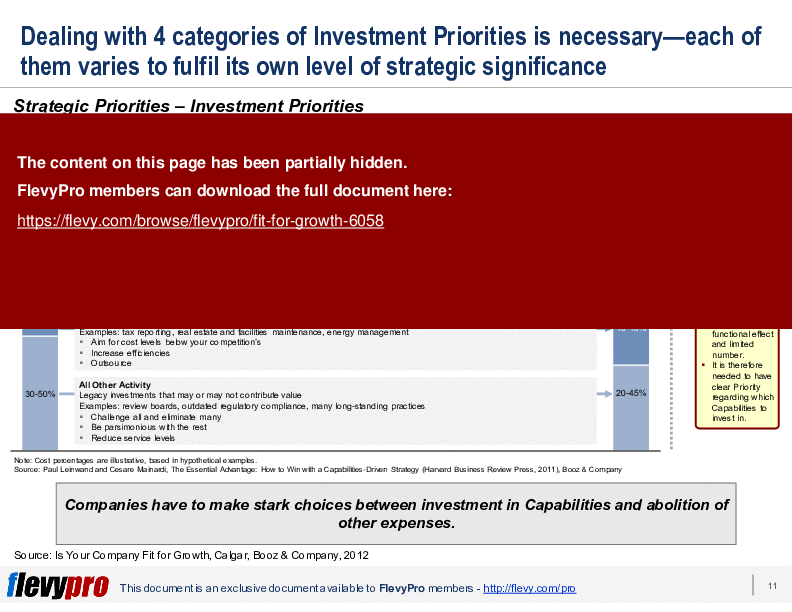
This PPT slide template presents a framework for evaluating investment priorities, categorizing them into 4 types based on strategic significance and cost percentages. "Differentiating Capabilities" requires 20-30% of costs, focusing on unique strengths, innovation, and brand development to maintain a competitive edge. "Competitive Necessities" also demands 20-30% for essential operations like logistics and IT architecture, emphasizing efficiency and cost reduction. "Basic Business Capabilities" requires 10-20% for fundamental operations such as tax reporting and facility maintenance, aiming to minimize costs. "All Other Activity" suggests 30-50% for legacy investments that may not add value, urging critical assessment of unnecessary expenditures. This framework guides organizations in strategically prioritizing investments to drive growth and operational excellence.
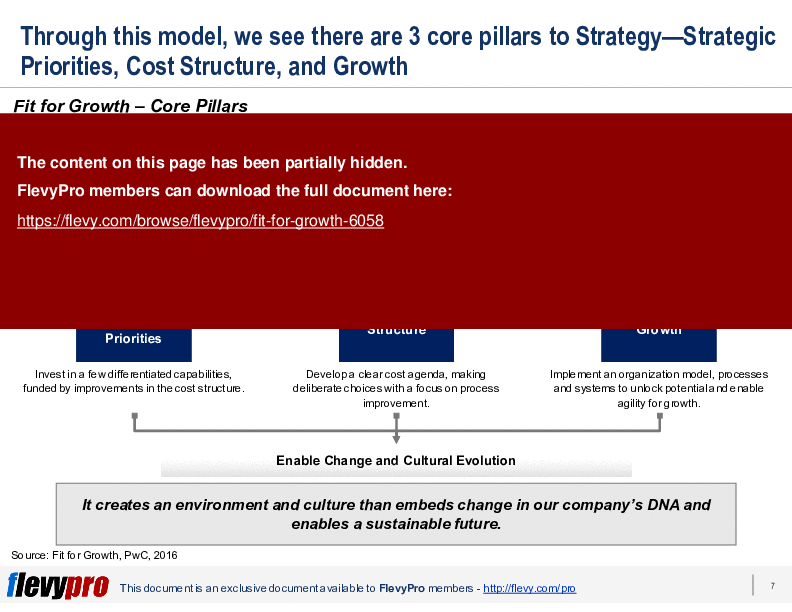
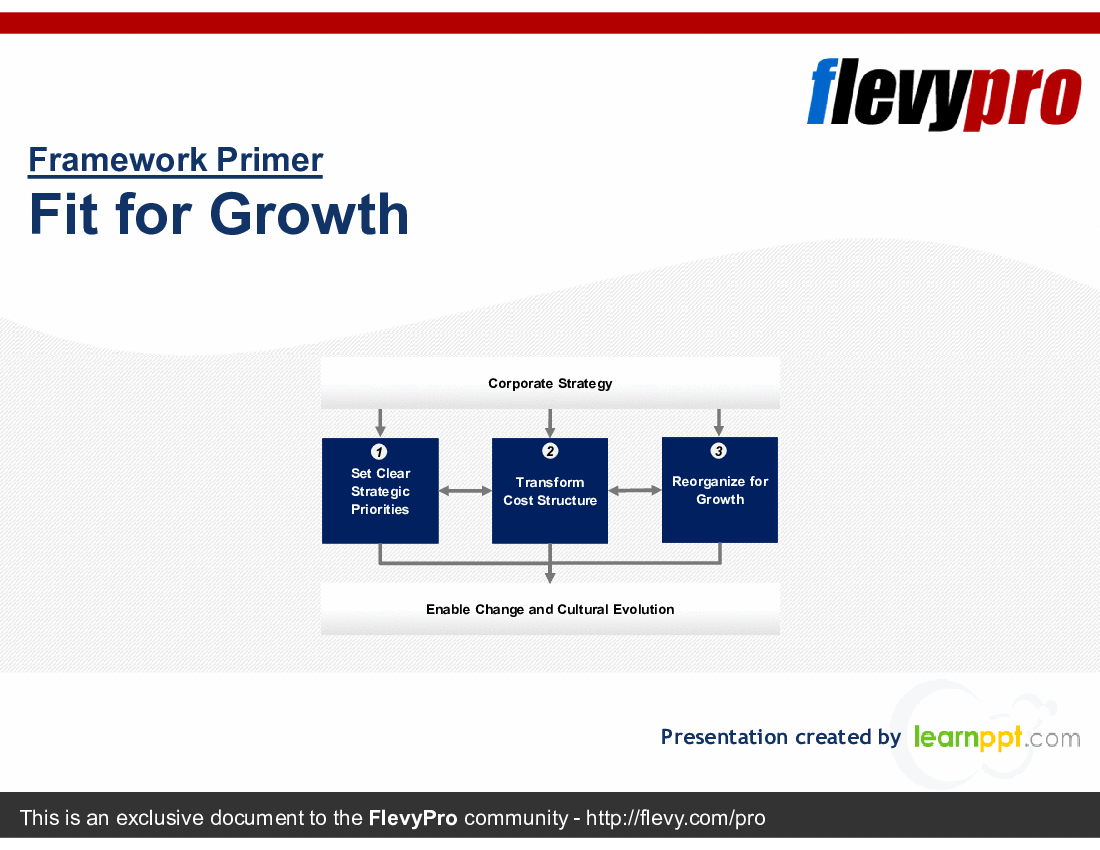
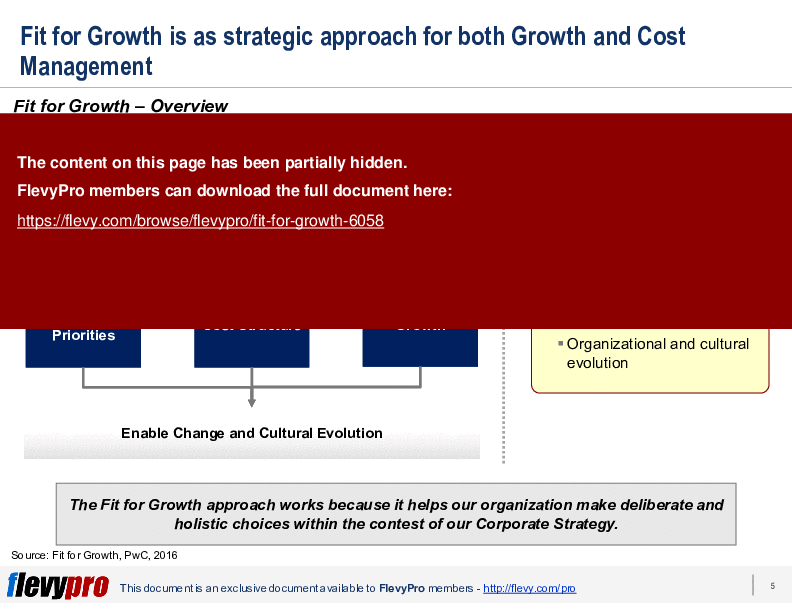
The "Fit for Growth" framework consists of 3 pillars: setting clear strategic priorities, transforming the cost structure, and reorganizing for growth.
The first pillar emphasizes identifying high-value investment areas and concentrating resources on differentiated capabilities, funded through cost structure improvements.
The second pillar advocates for a strategic agenda focused on cost improvement, making deliberate expenditure choices to enhance operational efficiency without sacrificing quality.
The third pillar stresses the need for an adaptable organizational model, implementing agile processes to respond to market changes and unlock growth opportunities.
Embedding new behaviors into the organizational DNA is critical for sustaining these strategic initiatives, ensuring preparedness for immediate challenges and positioning for long-term success.
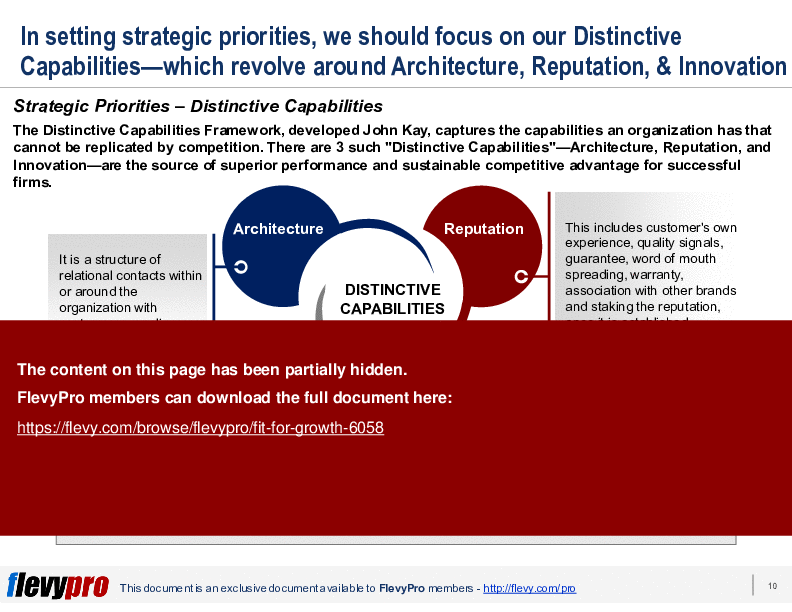
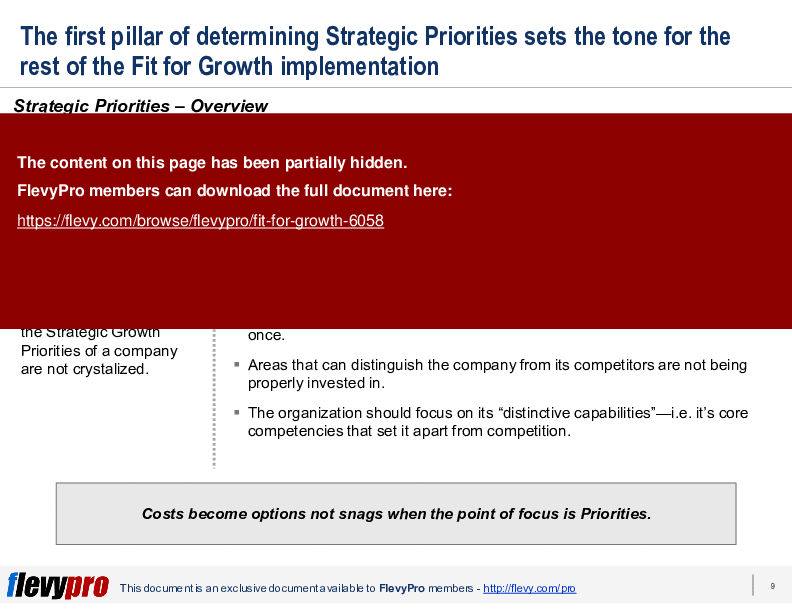
This PPT slide template outlines the foundational element of Strategic Priorities within the Fit for Growth framework. Organizations face challenges when strategic growth priorities are unclear, leading to ineffective management of multiple initiatives. Divergence among executives regarding critical capabilities creates confusion about their connection to strategic objectives. Employee burnout can result from talent being stretched across numerous projects, detracting from productivity and engagement. Companies should focus on distinctive capabilities—core competencies that differentiate them in the market—to ensure effective resource allocation and alignment of strategic initiatives with strengths. Clarity in strategic priorities is essential to avoid misalignment and inefficiency, which can impede growth. A structured approach to defining and prioritizing strategic initiatives is critical for sustainable success.
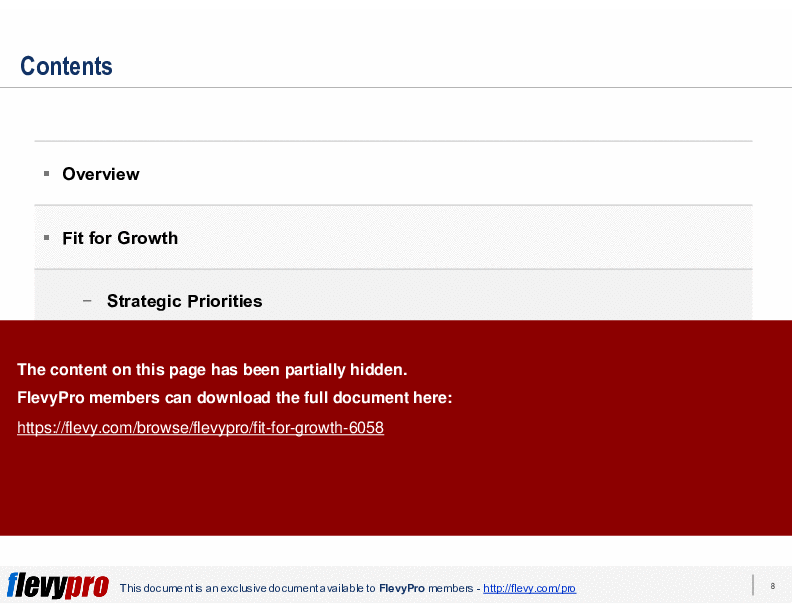
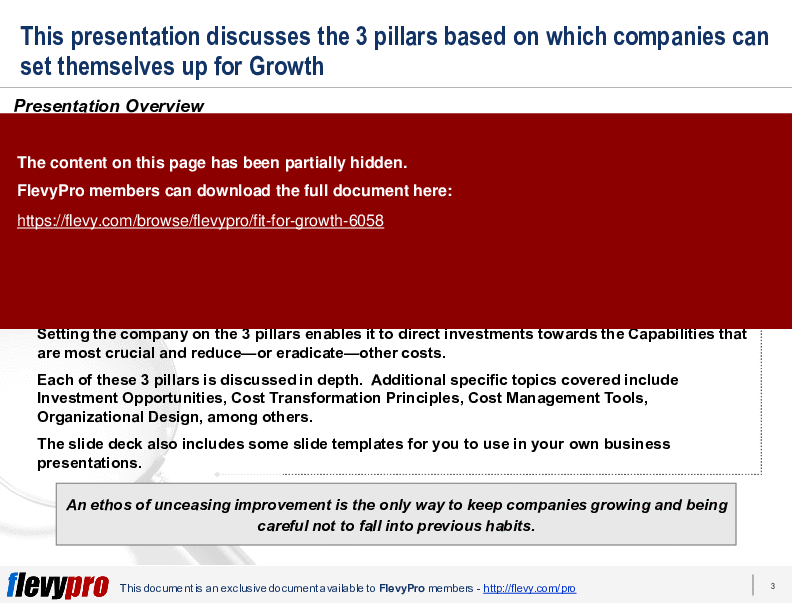
This PPT slide template outlines a framework for assessing organizational readiness for growth in a dynamic business environment, centered on the question: Is the organization "Fit for Growth?" The framework consists of 3 pillars:
1. Setting Strategic Priorities: Identifying key focus areas for effective resource allocation to drive growth.
2. Transforming Cost Structure: Reevaluating cost management practices to direct investments toward critical capabilities while minimizing unnecessary expenditures.
3. Reorganizing for Growth: Aligning organizational structures and processes with strategic objectives to enhance agility and decision-making.
Each pillar will be explored in detail, covering investment opportunities and cost transformation principles, along with slide templates for implementation.
This PPT slide template outlines cost management tools for enhancing operational efficiency and resource allocation, emphasizing the "Fit for Growth" concept. The first category, "What do we do?", focuses on articulating the strategic value proposition, setting growth priorities, and rationalizing product offerings to align core capabilities with market demands. The second category, "Where do we do it?", highlights footprint strategy and shared services, advocating for organizational structure reconsideration and supply chain redesign to enhance efficiency. Key strategies include rationalizing facilities and consolidating tasks in lower-cost locations. The final category, "How (and how well) do we do it?", addresses operational processes, promoting process improvement, automation, and IT infrastructure harmonization to streamline operations and reduce expenditures. The pyramid structure illustrates that fewer people are involved at higher levels, reinforcing the need for strategic alignment in cost management.
This PPT slide template focuses on cost structure and its implications for business priorities. An inappropriate cost structure can indicate misaligned priorities, particularly in expenditures on non-essential areas. Inconsistent staffing levels across departments may signal deeper organizational issues, leading to inefficiencies and resource misallocation. A lack of investment in high-priority initiatives often results in continued funding of legacy programs with minimal benefits, reflecting a disconnect between spending and strategic objectives. Budget increases based on previous allocations rather than current needs can perpetuate inefficiencies. Organizations may also initiate cost-cutting programs without understanding long-term impacts, failing to address root causes of inefficiencies. A thorough evaluation of cost structures is essential for aligning resources with strategic goals and optimizing financial health and operational effectiveness.
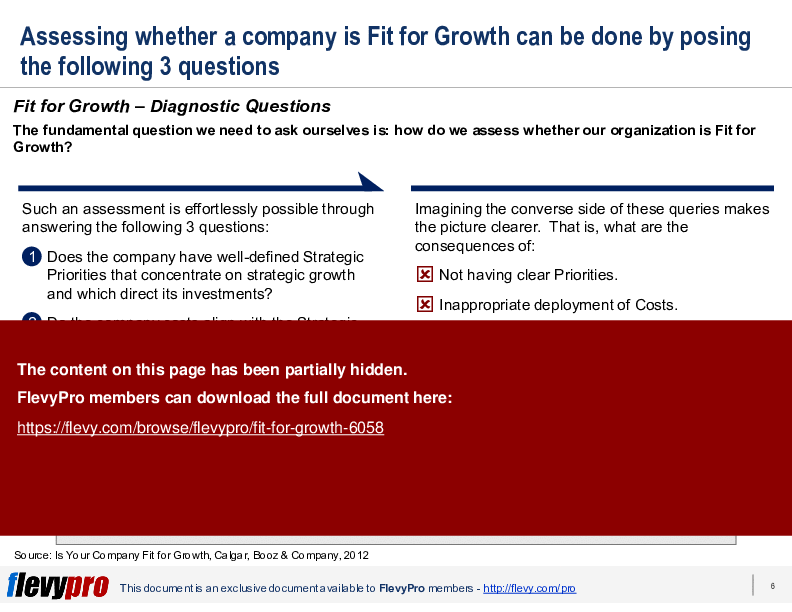
This PPT slide template presents a framework for evaluating organizational growth readiness through 3 diagnostic questions. The first question assesses the clarity of strategic priorities, emphasizing the need for alignment with investment strategies to direct resources effectively. The second question focuses on the alignment of costs with these priorities, highlighting the importance of efficient resource allocation for optimizing operational performance. The third question examines whether the organizational structure supports the defined strategic priorities, as a well-designed organization is essential for executing strategies. Neglecting these areas can lead to confusion, wasted resources, and hindered growth objectives. This framework serves as a diagnostic tool for executives to identify gaps and improve strategic planning for sustainable growth.
This PPT slide template outlines principles for transforming cost structures within an organization. It emphasizes addressing root causes of excessive costs through a comprehensive review of business operations to identify improvement areas. Accountability for specific cost objectives is crucial; without it, achieving savings diminishes. An open pledge to the transformation program informs shareholders of its strategic importance, fostering stakeholder trust. Clearly defining how cost savings will be measured ensures all team members understand the processes, promoting a unified approach. Senior management must lead by example in cost reduction practices, instilling urgency regarding cost management. Establishing a steering committee to oversee cross-functional teams ensures alignment and explicit steps toward desired outcomes, facilitating effective navigation of cost transformation complexities while pursuing growth objectives.
This PPT slide template outlines 2 primary strategies for enhancing growth through Organizational Design (OD). The first strategy focuses on cost reduction and resource optimization by creating suitable organizational structures and adjusting the span of control to lower management overheads and improve resource sharing. Modifying the structure to decrease hierarchical layers can free up essential funds, while rationalizing pay scales aligns remuneration with job complexity. Outsourcing non-critical functions also supports cost reductions. The second strategy empowers managers with decision-making authority akin to business owners by establishing clear financial and operational goals and well-defined decision rights. This decentralization enhances agility and responsiveness, enabling organizations to seize market opportunities effectively. A well-designed OD framework reduces costs and positions the organization for dynamic growth.
Source: Best Practices in Organizational Design, Growth Strategy, Cost Reduction Assessment PowerPoint Slides: Fit for Growth PowerPoint (PPTX) Presentation Slide Deck, LearnPPT Consulting
This framework is developed by a team of former McKinsey and Big 4 consultants. The presentation follows the headline-body-bumper slide format used by global consulting firms.
For $10.00 more, you can download this document plus 2 more FlevyPro documents. That's just $13 each.
ABOUT FLEVYPRO
This document is part of the FlevyPro Library, a curated knowledge base of documents for our FlevyPro subscribers.
FlevyPro is a subscription service for on-demand business frameworks and analysis tools. FlevyPro subscribers receive access to an exclusive library of curated business documents—business framework primers, presentation templates, Lean Six Sigma tools, and more—among other exclusive benefits.
The average daily rate of a McKinsey consultant is $6,625 (not including expenses). The average price of a Flevy document is $65.
Trusted by over 10,000+ Client Organizations
Since 2012, we have provided business templates to over 10,000 businesses and organizations of all sizes, from startups and small businesses to the Fortune 100, in over 130 countries.
"As an Independent Management Consultant, I find Flevy to add great value as a source of best practices, templates and information on new trends. Flevy has matured and the quality and quantity of the library is excellent. Lastly the price charged is reasonable, creating a win-win value for
the customer, Flevy and the various authors. This is truly a service that benefits the consulting industry and associated clients. Thanks for providing this service.
"
– Jim Schoen, Principal at FRC Group
"One of the great discoveries that I have made for my business is the Flevy library of training materials.
As a Lean Transformation Expert, I am always making presentations to clients on a variety of topics: Training, Transformation, Total Productive Maintenance, Culture, Coaching, Tools, Leadership Behavior, etc. Flevy
It is well worth the money to purchase these presentations. Sure, I have the knowledge and information to make my point. It is another thing to create a presentation that captures what I want to say. Flevy has saved me countless hours of preparation time that is much better spent with implementation that will actually save money for my clients.
"
– Ed Kemmerling, Senior Lean Transformation Expert at PMG
"As a niche strategic consulting firm, Flevy and FlevyPro frameworks and documents are an on-going reference to help us structure our findings and recommendations to our clients as well as improve their clarity, strength, and visual power. For us, it is an invaluable resource to increase our impact and value."
– David Coloma, Consulting Area Manager at Cynertia Consulting
"I have found Flevy to be an amazing resource and library of useful presentations for lean sigma, change management and so many other topics. This has reduced the time I need to spend on preparing for my performance consultation. The library is easily accessible and updates are regularly provided. A wealth of great information."
– Cynthia Howard RN, PhD, Executive Coach at Ei Leadership
"My FlevyPro subscription provides me with the most popular frameworks and decks in demand in today’s market. They not only augment my existing consulting and coaching offerings and delivery, but also keep me abreast of the latest trends, inspire new products and service offerings for my practice, and educate me
in a fraction of the time and money of other solutions. I strongly recommend FlevyPro to any consultant serious about success.
"
– Bill Branson, Founder at Strategic Business Architects
"[Flevy] produces some great work that has been/continues to be of immense help not only to myself, but as I seek to provide professional services to my clients, it gives me a large "tool box" of resources that are critical to provide them with the quality of service and outcomes they are expecting."
– Royston Knowles, Executive with 50+ Years of Board Level Experience
"As a young consulting firm, requests for input from clients vary and it's sometimes impossible to provide expert solutions across a broad spectrum of requirements. That was before I discovered Flevy.com.
Through subscription to this invaluable site of a plethora of topics that are key and crucial to consulting, I
have been able to exceed expectations and deliver quality advice and solutions to my clients. The quality and expertise of the authors are exemplary and gives me great confidence to use as part of my service offerings.
I highly recommend this company for any consultant wanting to apply international best practice standards in their service offerings.
"
– Nishi Singh, Strategist and MD at NSP Consultants
"Flevy is our 'go to' resource for management material, at an affordable cost. The Flevy library is comprehensive and the content deep, and typically provides a great foundation for us to further develop and tailor our own service offer."

 Click main image to view in full screen. Unlock all 12 preview images: