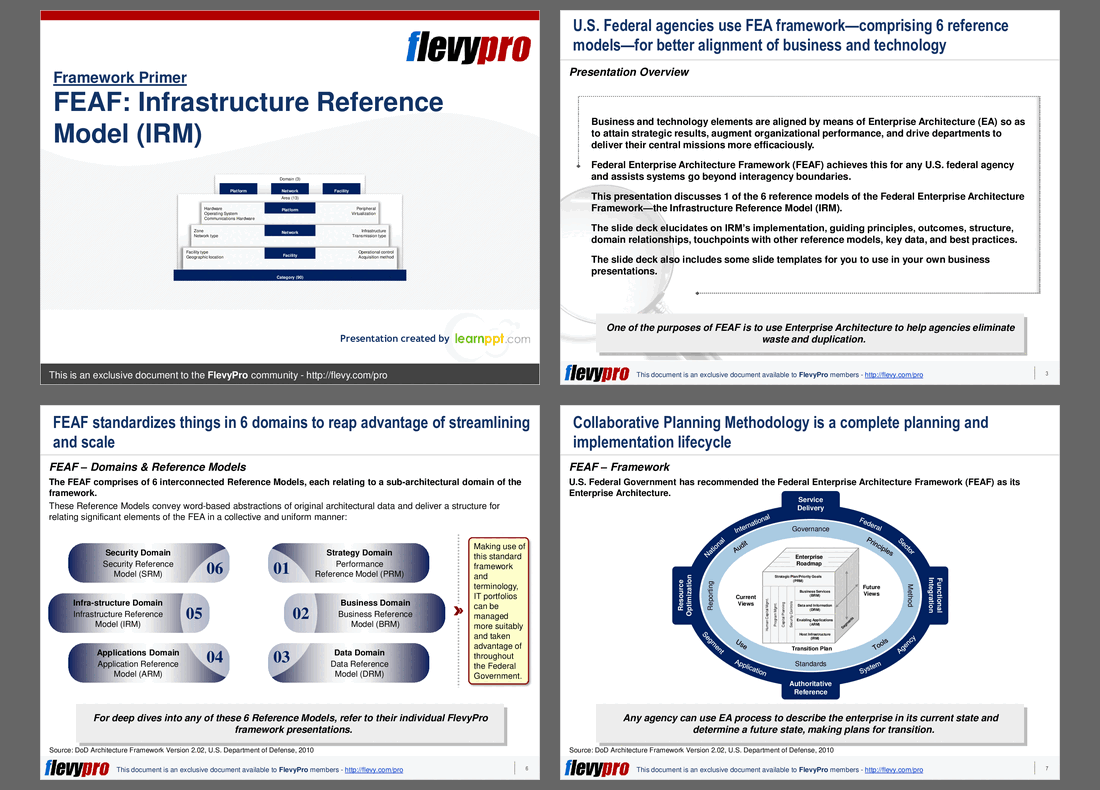

This framework is developed by a team of former McKinsey and Big 4 consultants. The presentation follows the headline-body-bumper slide format used by global consulting firms.
Explore the FEAF: Infrastructure Reference Model (IRM) PPT, crafted by ex-McKinsey & Big 4 consultants, to enhance EA alignment and optimize tech implementations. FEAF: Infrastructure Reference Model (IRM) is a 32-slide PPT PowerPoint presentation slide deck (PPTX) available for immediate download upon purchase.
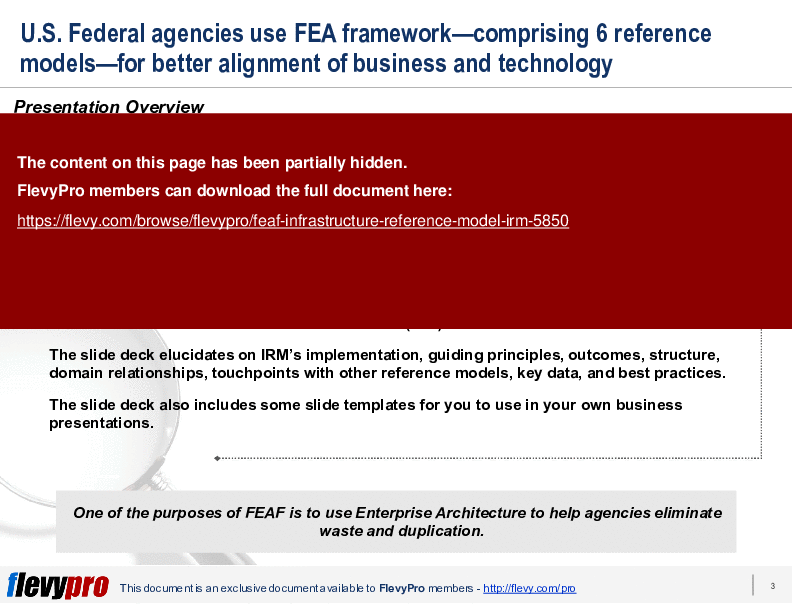
Business and technology elements are aligned by means of Enterprise Architecture (EA) so as to
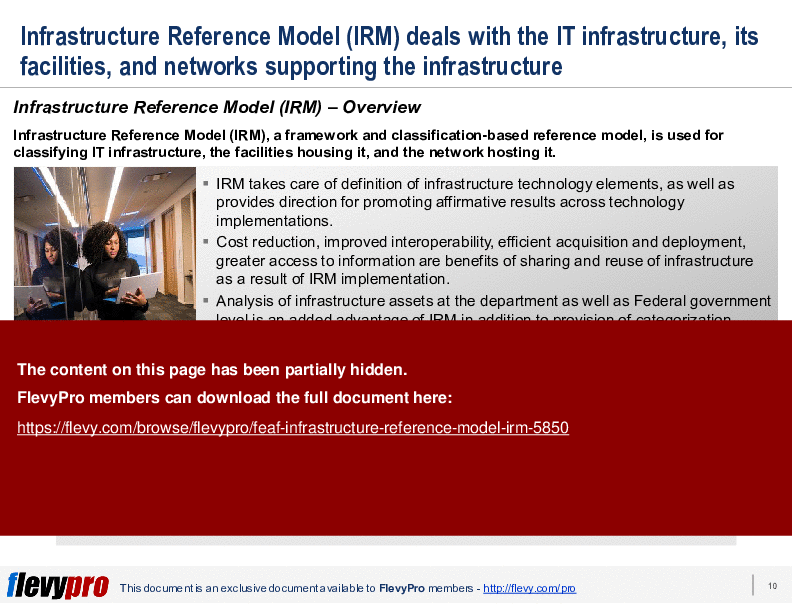
IRM takes care of defining infrastructure technology elements and provides direction for promoting affirmative results across technology implementations. Cost reduction, improved interoperability, efficient acquisition and deployment, and greater access to information are benefits of sharing and reuse of infrastructure as a result of IRM implementation. Analysis of infrastructure assets at the department and Federal government levels is an added advantage of IRM in addition to provision of categorization.
IRM implementation supports efficient acquirement and positioning, enabling added access to information throughout enterprises. The slide deck elucidates on IRM’s implementation, guiding principles, outcomes, structure, domain relationships, touchpoints with other reference models, key data, and best practices. The slide deck also includes some slide templates for you to use in your own business presentations.
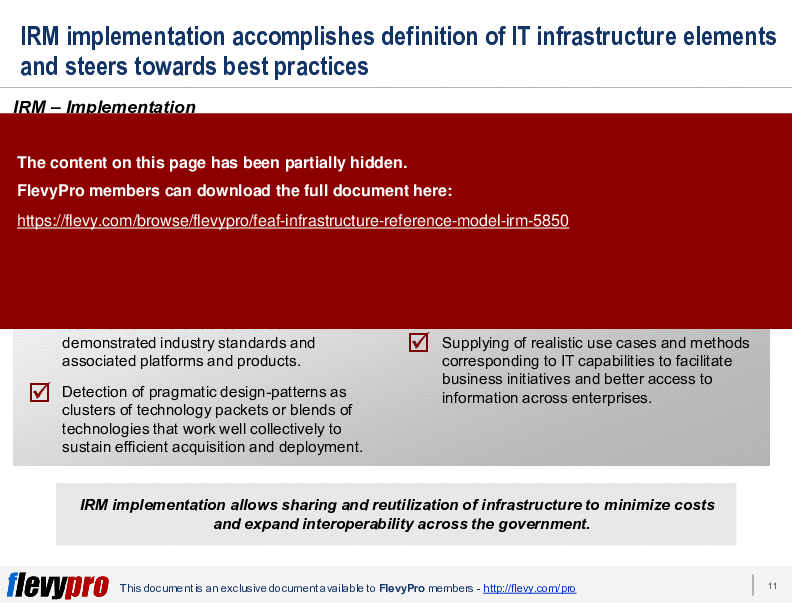
IRM guiding principles are robust enough to fulfill future requirements and adjust to new technologies. IRM must be defined with regard to technology infrastructure services put forward. IRM should simplify interoperability and shared services. IRM ought to be criteria-based, both international and national, concurrence-driven standards organizations, with demonstrated industry standards and associated platforms and products.
The integration of the Infrastructure Reference Model (IRM) and Application Reference Model (ARM) is essential for effective IT Asset Management (ITAM). Understanding both models is crucial for structuring asset inventory, which involves collecting relevant IRM data and categorizing inventory results to ensure accurate representation. Key areas for improvement include service sharing, consolidation, and implementing Commercial Off-The-Shelf (COTS) and Government Off-The-Shelf (GOTS) solutions, optimizing resources and enhancing operational efficiency. Engaging stakeholders through communication and collaboration is vital for aligning efforts and contributing to decision-making. Finally, planning and executing identified strategies is critical for translating insights into actionable outcomes, addressing the physical, financial, and contractual aspects of IT assets throughout their lifecycle. Leveraging IRM and ARM can significantly enhance asset management practices.
This PPT slide provides an overview of IT infrastructure asset inventory using the Infrastructure Reference Model (IRM). The IRM framework enables organizations to create comprehensive inventories of IT assets, leading to opportunities for reuse, cost reductions, and enhanced shared services. Key data points for IRM categorization include asset manufacturer, cost, end-of-life or end-of-support dates, and mapping to the Security Reference Model (SRM). Understanding these elements is essential for assessing lifecycle and financial implications of IT assets. A strong technical definition is necessary for effective classification, allowing for a searchable database that facilitates in-depth mapping of IT resources. A structured approach to asset management in IT improves operational efficiency and strategic alignment, aiding organizations in optimizing their IT infrastructure and asset utilization.
This PPT slide outlines the Infrastructure Reference Model (IRM), highlighting the interconnections among its 3 domains: Platform, Network, and Facility. The Platform domain includes hardware, operating systems, and virtualization, serving as the foundation for network traffic. The Network domain acts as a communication hub, linking various technologies, while the Facility domain provides the physical environment essential for both the Platform and Network. The relationships among these domains are illustrated through arrows, emphasizing their interaction and the complexity of modern IT environments. Implementing the IRM enhances efficient acquisition and positioning, leading to improved strategic decisions regarding IT investments and resource allocation.
This PPT slide outlines key outcomes of implementing an Information Resource Management (IRM) framework for federal agencies. The "Service Delivery" section highlights how the IRM framework enables agencies to clearly view their IT infrastructure assets, which is essential for mission support in resource-constrained environments. It fosters a reliable understanding of both technology and physical infrastructure for effective operations. The "Functional Integration" section emphasizes interoperability as a core element of the Common Approach to Federal Enterprise Architecture, with IRM providing a meta-context for assimilating diverse technology implementations. This integration enhances collaboration among agencies, allowing them to navigate technology evolution and security challenges more effectively. Overall, effective IRM implementation streamlines service delivery and improves technology integration across federal agencies.
Source: Best Practices in Enterprise Architecture, Business Architecture PowerPoint Slides: FEAF: Infrastructure Reference Model (IRM) PowerPoint (PPTX) Presentation Slide Deck, LearnPPT Consulting
This framework is developed by a team of former McKinsey and Big 4 consultants. The presentation follows the headline-body-bumper slide format used by global consulting firms.
For $10.00 more, you can download this document plus 2 more FlevyPro documents. That's just $13 each.
ABOUT FLEVYPRO
This document is part of the FlevyPro Library, a curated knowledge base of documents for our FlevyPro subscribers.

FlevyPro is a subscription service for on-demand business frameworks and analysis tools. FlevyPro subscribers receive access to an exclusive library of curated business documents—business framework primers, presentation templates, Lean Six Sigma tools, and more—among other exclusive benefits.
Since 2012, we have provided business templates to over 10,000 businesses and organizations of all sizes, from startups and small businesses to the Fortune 100, in over 130 countries.
"Flevy is our 'go to' resource for management material, at an affordable cost. The Flevy library is comprehensive and the content deep, and typically provides a great foundation for us to further develop and tailor our own service offer."
– Chris McCann, Founder at Resilient.World
"The wide selection of frameworks is very useful to me as an independent consultant. In fact, it rivals what I had at my disposal at Big 4 Consulting firms in terms of efficacy and organization."
– Julia T., Consulting Firm Owner (Former Manager at Deloitte and Capgemini)
"As a small business owner, the resource material available from FlevyPro has proven to be invaluable. The ability to search for material on demand based our project events and client requirements was great for me and proved very beneficial to my clients. Importantly, being able to easily edit and tailor
the material for specific purposes helped us to make presentations, knowledge sharing, and toolkit development, which formed part of the overall program collateral. While FlevyPro contains resource material that any consultancy, project or delivery firm must have, it is an essential part of a small firm or independent consultant's toolbox.
"
– Michael Duff, Managing Director at Change Strategy (UK)
"If you are looking for great resources to save time with your business presentations, Flevy is truly a value-added resource. Flevy has done all the work for you and we will continue to utilize Flevy as a source to extract up-to-date information and data for our virtual and onsite presentations!"
– Debbi Saffo, President at The NiKhar Group
"My FlevyPro subscription provides me with the most popular frameworks and decks in demand in today’s market. They not only augment my existing consulting and coaching offerings and delivery, but also keep me abreast of the latest trends, inspire new products and service offerings for my practice, and educate me
in a fraction of the time and money of other solutions. I strongly recommend FlevyPro to any consultant serious about success.
"
– Bill Branson, Founder at Strategic Business Architects
"As a young consulting firm, requests for input from clients vary and it's sometimes impossible to provide expert solutions across a broad spectrum of requirements. That was before I discovered Flevy.com.
Through subscription to this invaluable site of a plethora of topics that are key and crucial to consulting, I
have been able to exceed expectations and deliver quality advice and solutions to my clients. The quality and expertise of the authors are exemplary and gives me great confidence to use as part of my service offerings.
I highly recommend this company for any consultant wanting to apply international best practice standards in their service offerings.
"
– Nishi Singh, Strategist and MD at NSP Consultants
"FlevyPro provides business frameworks from many of the global giants in management consulting that allow you to provide best in class solutions for your clients."
– David Harris, Managing Director at Futures Strategy
"As a niche strategic consulting firm, Flevy and FlevyPro frameworks and documents are an on-going reference to help us structure our findings and recommendations to our clients as well as improve their clarity, strength, and visual power. For us, it is an invaluable resource to increase our impact and value."
– David Coloma, Consulting Area Manager at Cynertia Consulting
Save with Bundles
This document is available as part of the following discounted bundle(s):
Download our FREE Digital Transformation Templates
Download our free compilation of 50+ Digital Transformation slides and templates. DX concepts covered include Digital Leadership, Digital Maturity, Digital Value Chain, Customer Experience, Customer Journey, RPA, etc.