
This framework is developed by a team of former McKinsey and Big 4 consultants. The presentation follows the headline-body-bumper slide format used by global consulting firms.
Explore the Dual Innovation Ecosystem Strategy, crafted by ex-McKinsey & Big 4 consultants. Master the 3 Strategic Horizons for optimizing innovation amidst disruption. Dual Innovation Ecosystem Strategy is a 25-slide PPT PowerPoint presentation slide deck (PPTX) available for immediate download upon purchase.
When new technologies and competitors disrupt markets, numerous existing organizations struggle to carry on. Most likely reason is that they are inadequately prepared to cultivate new products and services amidst uncertainty.
Creating the appropriate type of Innovation Ecosystem is crucial for guaranteeing success, as well as identifying and managing sources of conflict.
To frame and understand how to develop a suitable Innovation Ecosystem Strategy, this framework introduces the concept of 3 Strategic Horizons of Innovation. These Strategic Horizons for Innovation are based on the proximity of the Innovation to the core business; and are defined as follows:
Horizon 1 – This strategic horizon relates to optimization of existing business, i.e., optimization of current Business Models and technologies, catering to prevailing markets.
Horizon 2 – This horizon pertains to both the existing business as well as new Business Model. Horizon 2 pertains to growth; i.e., speeding up and enhancing of fresh Business Models and technologies as well as adjustment of prevailing Business Models.
Horizon 3 – This horizon relates to generating new Business Models. The third horizon has to do with the future; i.e., unearthing and proving of novel Business Models and technologies, and determining of future markets.
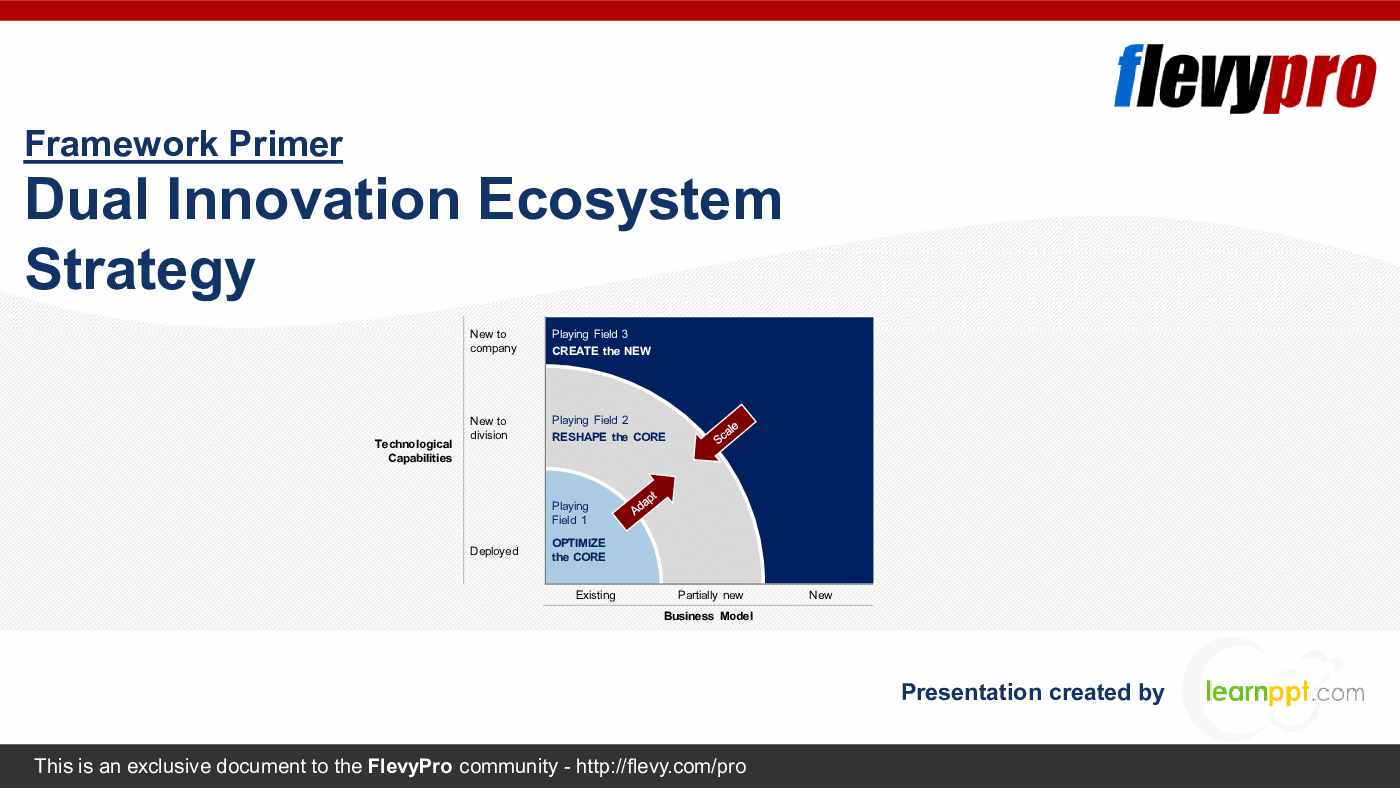
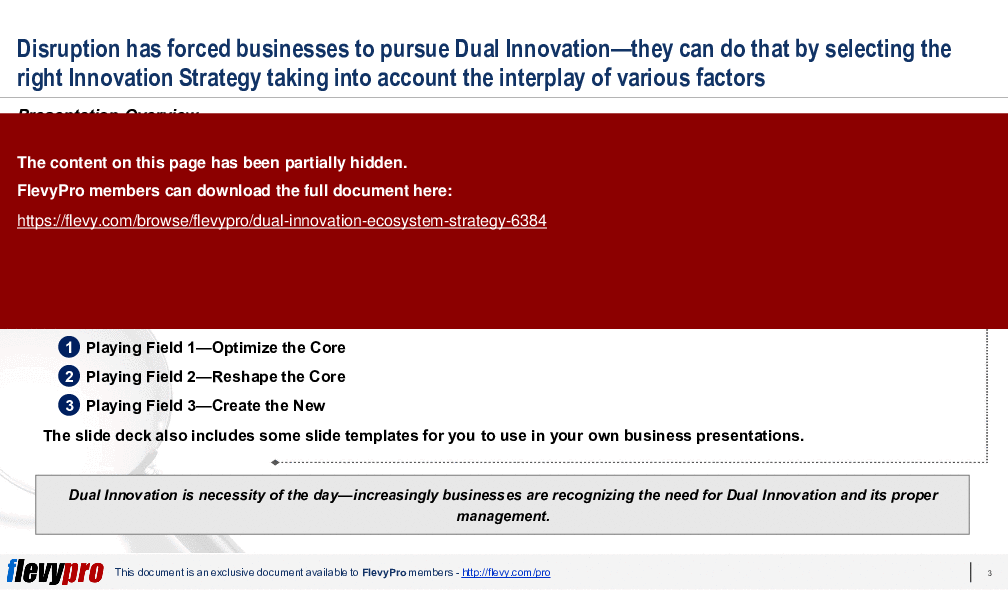
These 3 "Fields of Innovation" that constitute the fundamental building blocks of the Dual Innovation Ecosystem Strategy framework, which presents us 3 strategic options:
Playing Field 1 – Optimize the Core
Playing Field 2 – Reshape the Core
Playing Field 3 – Create the New
Each field has its own unique conditions, which include Business Model, technology capabilities, time scale, accounting, metrics, methods, tools, as well as organizational and personal needs. Each Playing Field requires dedicated Leadership and Management for it to be successful.
Selection of the field to play in depends on the strategic direction our organization decides to take, whether it be:
1. Adapt – Modification of current core business or Operating Models; or
2. Scale – Ramping-up of authenticated, sweeping or even disruptive Innovation ideas, to convert them into substantial business impact.
This PowerPoint presentation on Dual Innovation Ecosystem Strategy also includes some slide templates for you to use in your own business presentations, which convey the concepts of the 3 Horizons of Innovation, the 3 Fields of Innovation, and Dual Innovation Ecosystem Strategy.
The framework also delves into the distinctions between Centralized and Adaptive Innovation Ecosystems, providing insights on their respective advantages. It highlights the importance of aligning innovation strategies with industry life cycles to ensure optimal outcomes.
This PPT slide presents the Dual Innovation Ecosystem Strategy through 3 models: balanced, centralized, and decentralized. The balanced model focuses on both business units (BUs) and corporate initiatives, emphasizing "Create the New," "Reshape the Core," and "Optimize the Core," with a dynamic approach allowing for adaptation and scaling. The centralized model prioritizes corporate initiatives, streamlining decision-making, but potentially stifling BU innovation. The decentralized model empowers BUs to drive innovation, fostering autonomy, but risking misalignment with corporate goals. The framework highlights the need for organizations to assess limitations and adapt strategies for effective innovation structuring.
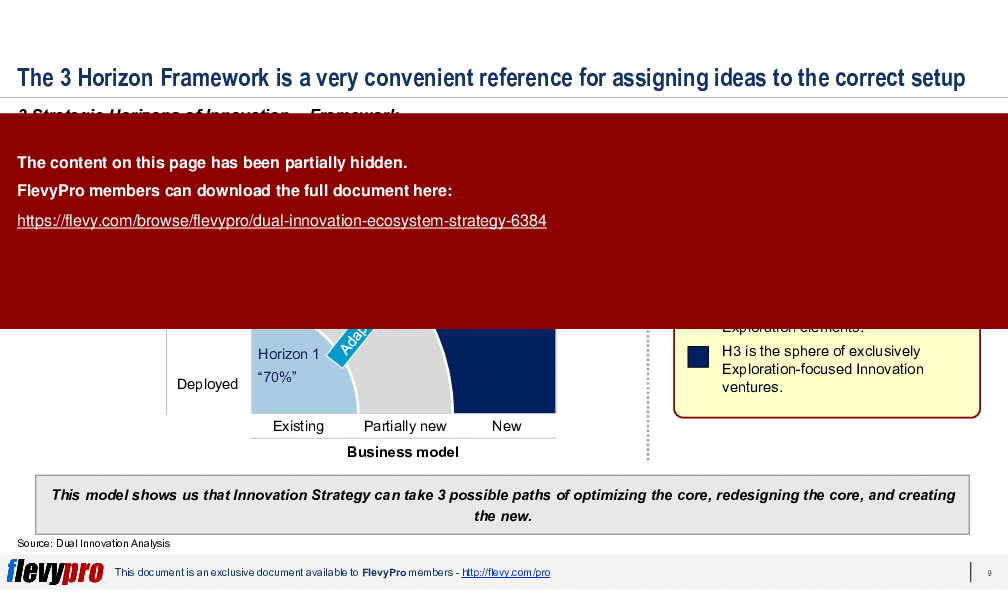
The "3 Strategic Horizons of Innovation" framework categorizes innovation based on its relationship to a company's core business. Horizon 1 (70%) focuses on optimizing existing technologies and business models to enhance performance and profitability. Horizon 2 (20%) represents a transitional phase, exploring new opportunities while leveraging existing capabilities, bridging the core business and innovative ventures. Horizon 3 (10%) is dedicated to entirely new innovations, crucial for long-term growth, involving exploration of uncharted territories and development of new technologies or business models. This framework helps organizations assign ideas to appropriate horizons, balancing exploitation of existing capabilities with exploration of new opportunities for future growth.
This PPT slide outlines the concept of Dual Innovation, highlighting 2 strategic directions: "Adapt" and "Scale." Adapting modifies existing business models, while scaling ramps up innovative ideas for significant impact. It identifies 3 fields of innovation, or "Playing Fields": "Optimize the Core," "Reshape the Core," and "Create the New," each with unique conditions influencing innovation approaches. The proximity of these fields to the core business is affected by the business model, technological capabilities, and implementation time scale. Each Playing Field requires dedicated leadership; adaptation ventures need corporate interventions, while scaling novel ventures demands a dedicated business unit with committed resources. Understanding these distinctions is vital for navigating innovation complexities.
The Strategic Horizons for Innovation framework categorizes innovation into 3 horizons based on proximity to core business operations.
Horizon 1 (H1) focuses on optimizing current business models and technologies through incremental improvements to enhance efficiency and competitiveness.
Horizon 2 (H2) emphasizes growth by exploring new business models while enhancing existing offerings to meet evolving market demands, encouraging a dynamic approach to innovation.
Horizon 3 (H3) is forward-looking, concentrating on generating entirely new business models and identifying novel opportunities that could redefine strategic direction through radical innovation.
This framework enables effective resource allocation and prioritization of innovation initiatives across all 3 horizons to sustain growth and relevance in a changing environment.
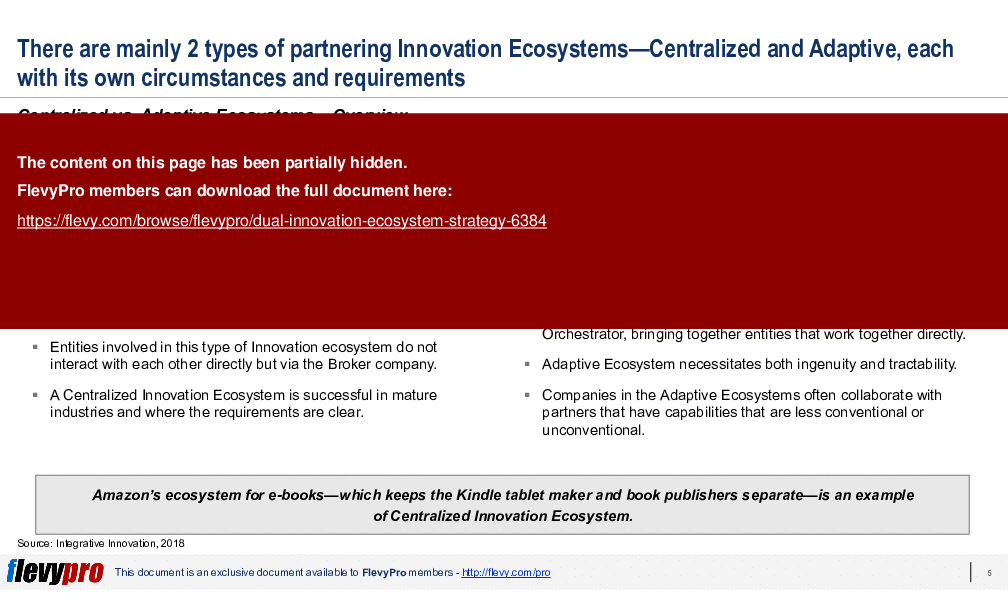
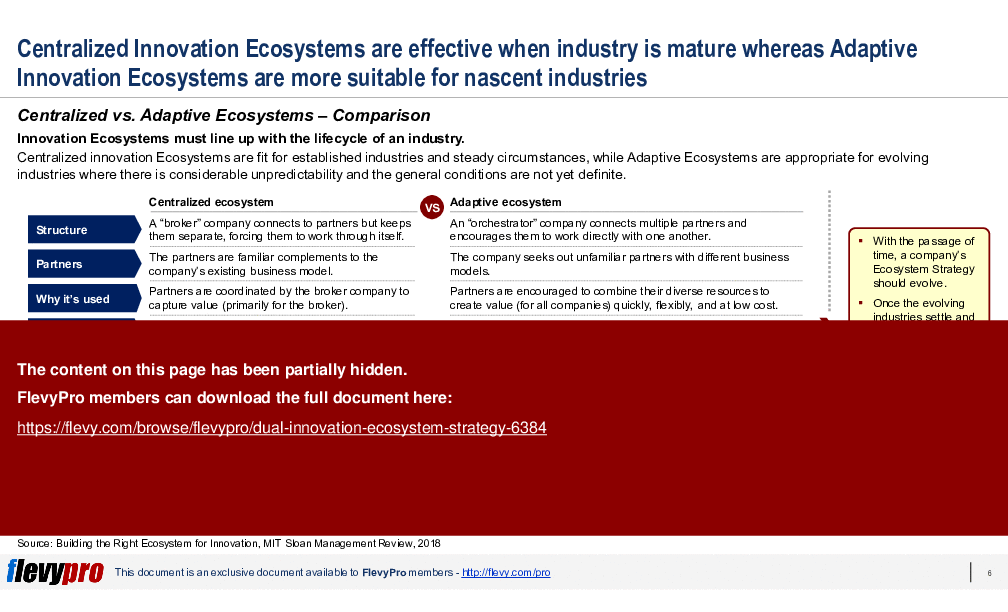
This PPT slide compares 2 types of innovation ecosystems: Centralized and Adaptive. Centralized ecosystems suit established industries with stable conditions, operating through a "broker" company that connects distinct partners, enabling coordinated value capture. In contrast, Adaptive ecosystems are ideal for nascent industries characterized by uncertainty, where an "orchestrator" company facilitates collaboration among diverse partners, fostering innovation through resource combination. Centralized ecosystems maintain arm's-length relationships, while Adaptive ecosystems promote cooperative ties for collective innovation. As industries mature, companies should reassess their ecosystem strategies, potentially transitioning from Adaptive to Centralized systems to stabilize value-creation processes.
Source: Best Practices in Innovation, Business Model Innovation PowerPoint Slides: Dual Innovation Ecosystem Strategy PowerPoint (PPTX) Presentation Slide Deck, LearnPPT Consulting
This framework is developed by a team of former McKinsey and Big 4 consultants. The presentation follows the headline-body-bumper slide format used by global consulting firms.
For $10.00 more, you can download this document plus 2 more FlevyPro documents. That's just $13 each.
ABOUT FLEVYPRO
This document is part of the FlevyPro Library, a curated knowledge base of documents for our FlevyPro subscribers.
FlevyPro is a subscription service for on-demand business frameworks and analysis tools. FlevyPro subscribers receive access to an exclusive library of curated business documents—business framework primers, presentation templates, Lean Six Sigma tools, and more—among other exclusive benefits.
The average daily rate of a McKinsey consultant is $6,625 (not including expenses). The average price of a Flevy document is $65.
Trusted by over 10,000+ Client Organizations
Since 2012, we have provided business templates to over 10,000 businesses and organizations of all sizes, from startups and small businesses to the Fortune 100, in over 130 countries.
"One of the great discoveries that I have made for my business is the Flevy library of training materials.
As a Lean Transformation Expert, I am always making presentations to clients on a variety of topics: Training, Transformation, Total Productive Maintenance, Culture, Coaching, Tools, Leadership Behavior, etc. Flevy
It is well worth the money to purchase these presentations. Sure, I have the knowledge and information to make my point. It is another thing to create a presentation that captures what I want to say. Flevy has saved me countless hours of preparation time that is much better spent with implementation that will actually save money for my clients.
"
– Ed Kemmerling, Senior Lean Transformation Expert at PMG
"I am extremely grateful for the proactiveness and eagerness to help and I would gladly recommend the Flevy team if you are looking for data and toolkits to help you work through business solutions."
– Trevor Booth, Partner, Fast Forward Consulting
"I have found Flevy to be an amazing resource and library of useful presentations for lean sigma, change management and so many other topics. This has reduced the time I need to spend on preparing for my performance consultation. The library is easily accessible and updates are regularly provided. A wealth of great information."
– Cynthia Howard RN, PhD, Executive Coach at Ei Leadership
"As a niche strategic consulting firm, Flevy and FlevyPro frameworks and documents are an on-going reference to help us structure our findings and recommendations to our clients as well as improve their clarity, strength, and visual power. For us, it is an invaluable resource to increase our impact and value."
– David Coloma, Consulting Area Manager at Cynertia Consulting
"If you are looking for great resources to save time with your business presentations, Flevy is truly a value-added resource. Flevy has done all the work for you and we will continue to utilize Flevy as a source to extract up-to-date information and data for our virtual and onsite presentations!"
– Debbi Saffo, President at The NiKhar Group
"As a consulting firm, we had been creating subject matter training materials for our people and found the excellent materials on Flevy, which saved us 100's of hours of re-creating what already exists on the Flevy materials we purchased."
– Michael Evans, Managing Director at Newport LLC
"Flevy is now a part of my business routine. I visit Flevy at least 3 times each month.
Flevy has become my preferred learning source, because what it provides is practical, current, and useful in this era where the business world is being rewritten.

many challenges and there is the need to make the right decisions in a short time, with so much scattered information, we are fortunate to have Flevy. Flevy investigates, selects, and puts at our disposal the best of the best to help us be successful in our work.
"
– Omar Hernán Montes Parra, CEO at Quantum SFE
"FlevyPro has been a brilliant resource for me, as an independent growth consultant, to access a vast knowledge bank of presentations to support my work with clients. In terms of RoI, the value I received from the very first presentation I downloaded paid for my subscription many times over! The
quality of the decks available allows me to punch way above my weight – it's like having the resources of a Big 4 consultancy at your fingertips at a microscopic fraction of the overhead.
Download our free compilation of 50+ Strategy & Transformation slides and templates. Frameworks include McKinsey 7-S, Balanced Scorecard, Disruptive Innovation, BCG Curve, and many more.