
This framework is developed by a team of former McKinsey and Big 4 consultants. The presentation follows the headline-body-bumper slide format used by global consulting firms.
Explore essential design principles for an effective Operating Model, crafted by ex-McKinsey & Big 4 consultants. Enhance strategy execution with clarity. Design Principles for Robust Operating Model is a 30-slide PPT PowerPoint presentation slide deck (PPTX) available for immediate download upon purchase.
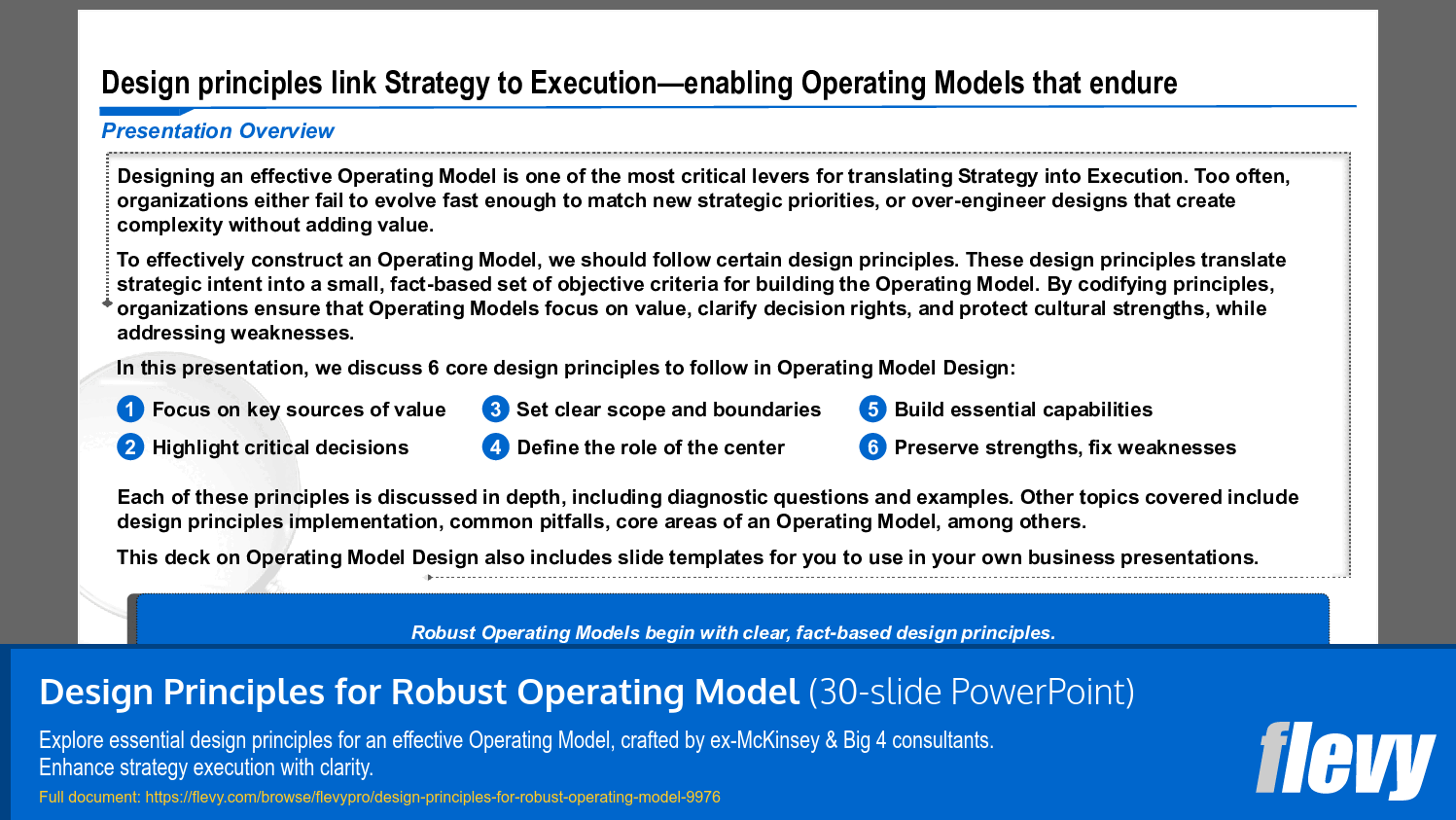
Designing an effective Operating Model is one of the most critical levers for translating Strategy into Execution. Too often, organizations either fail to evolve fast enough to match new strategic priorities, or over-engineer designs that create complexity without adding value.
To effectively construct an Operating Model, we should follow certain design principles. These design principles translate strategic intent into a small, fact-based set of objective criteria for building the Operating Model. By codifying principles, organizations ensure that Operating Models focus on value, clarify decision rights, and protect cultural strengths, while addressing weaknesses.
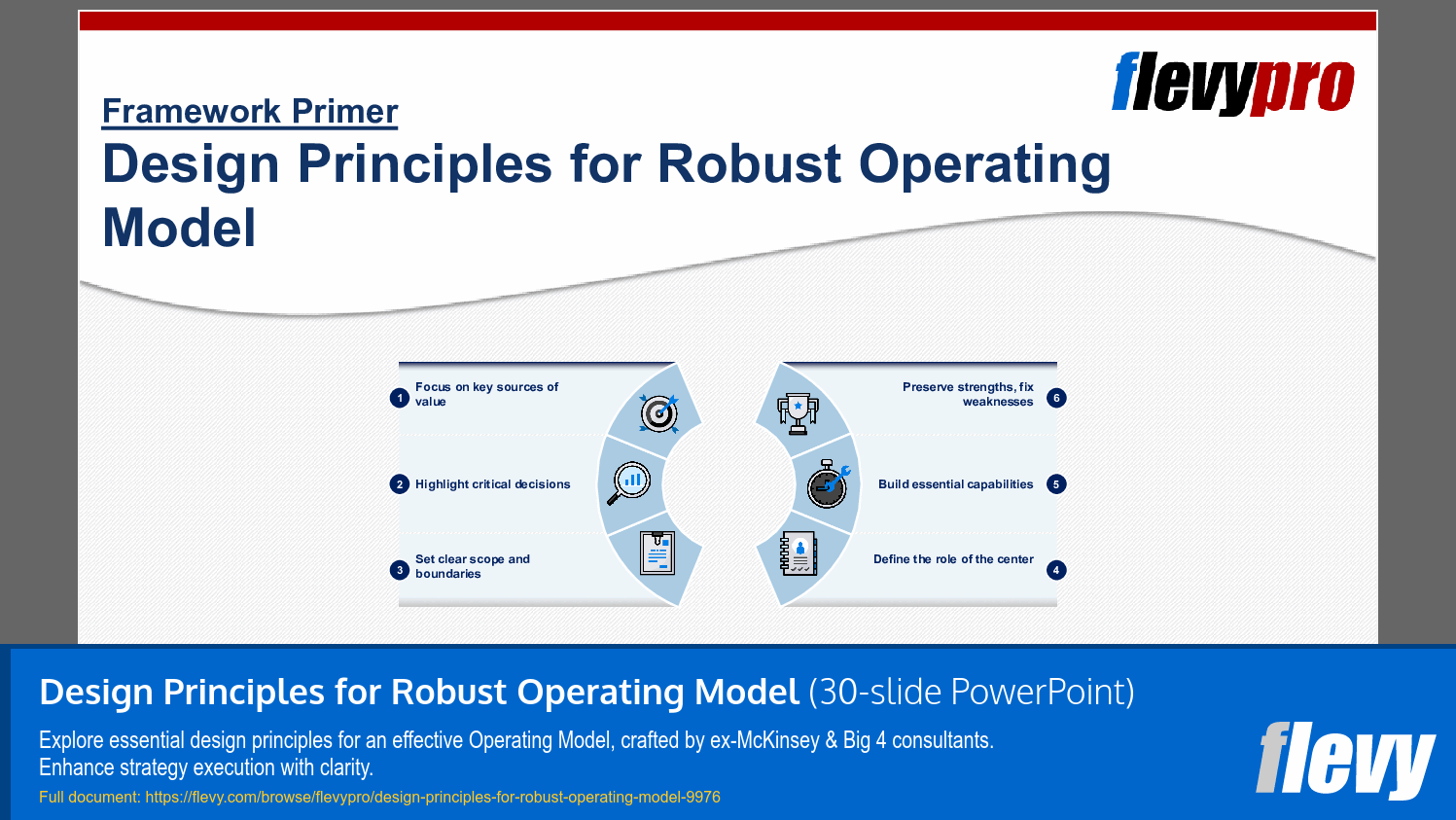
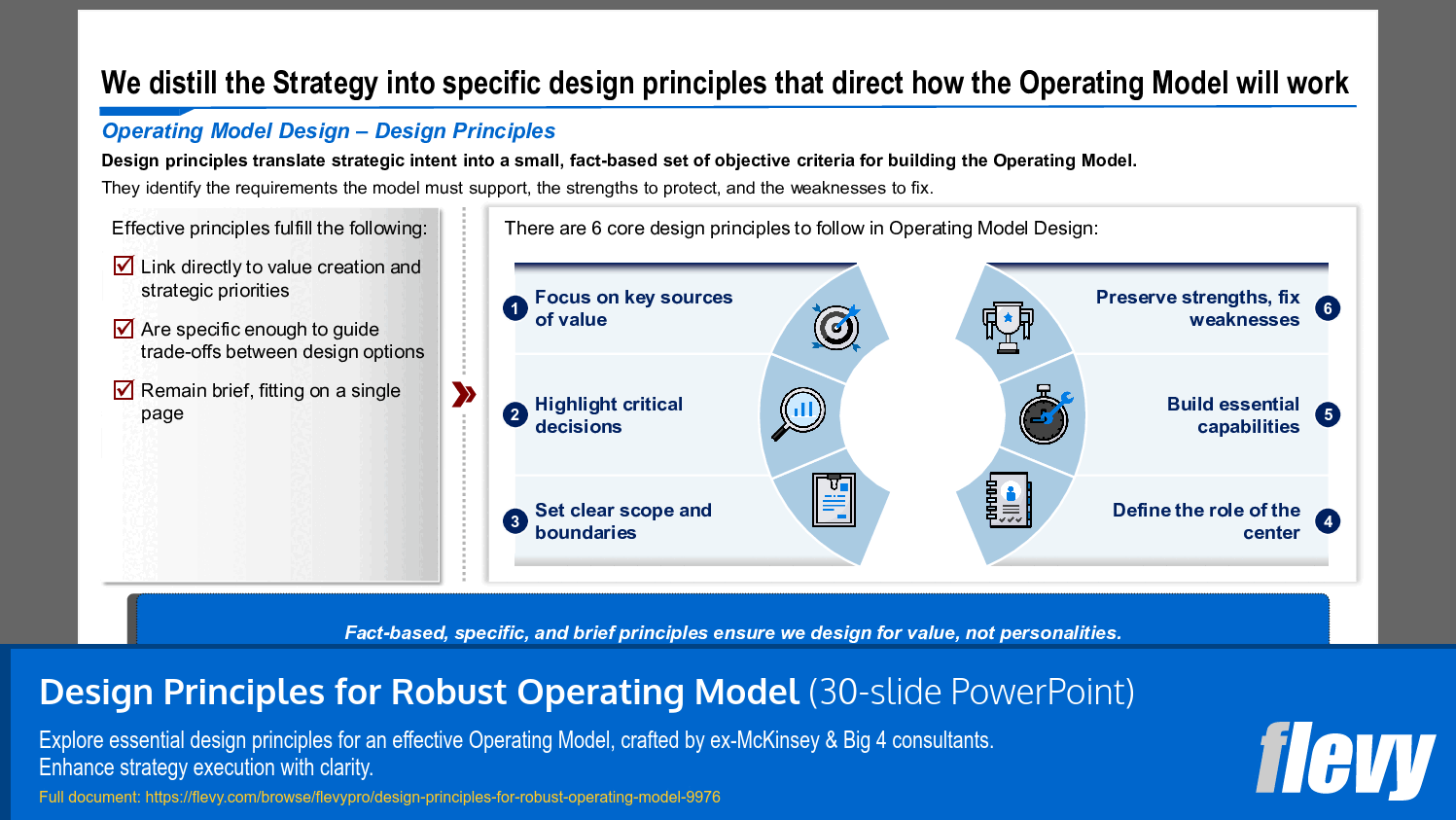
In this PPT presentation, we discuss 6 core design principles to follow in Operating Model Design:
1. Focus on key sources of value
2. Highlight critical decisions
3. Set clear scope and boundaries
4. Define the role of the center
5. Build essential capabilities
6. Preserve strengths, fix weaknesses
Each of these principles is discussed in depth, including diagnostic questions and examples. Other topics covered include design principles implementation, common pitfalls, core areas of an Operating Model, among others.
This deck on Operating Model Design also includes slide templates for you to use in your own business presentations.
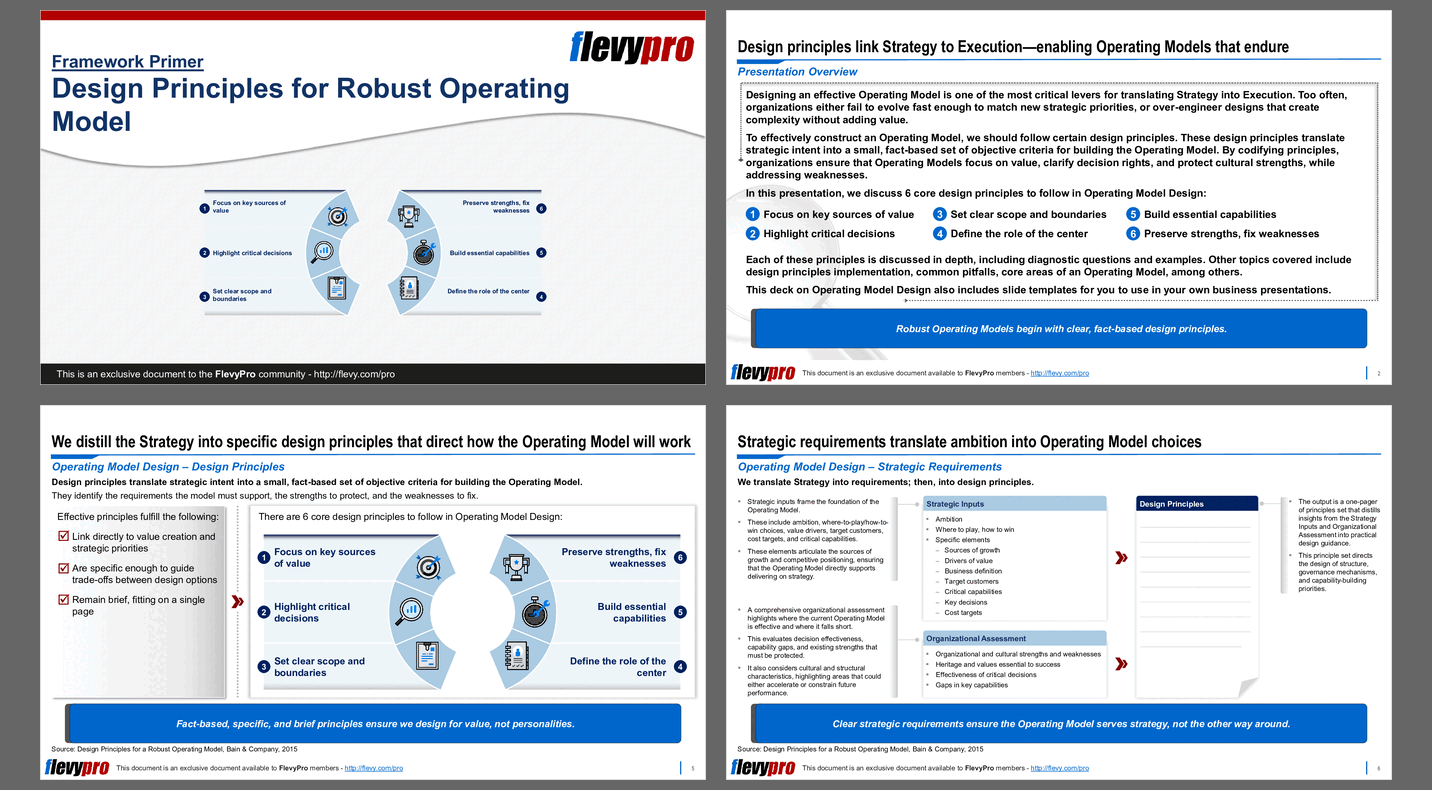
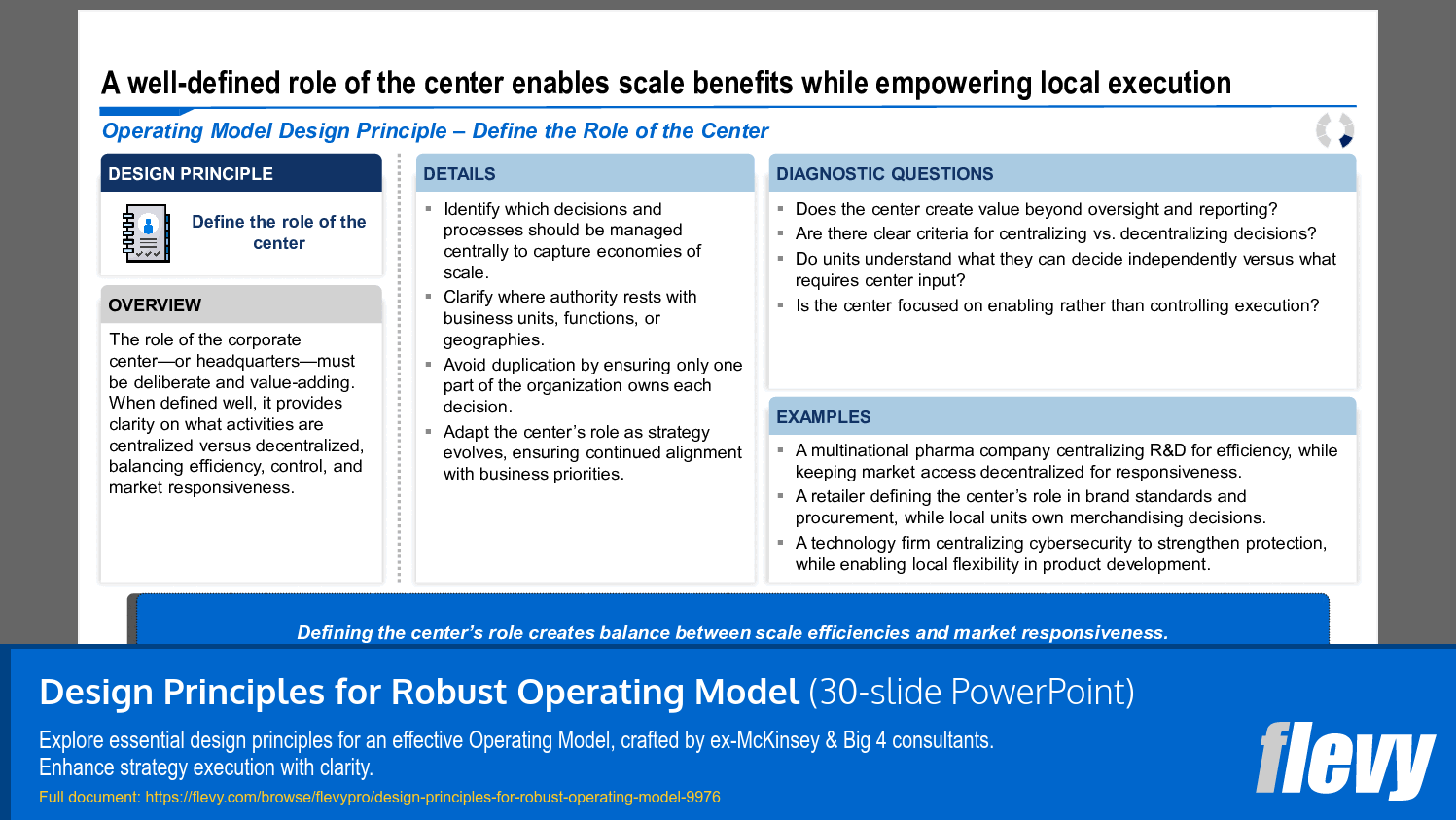
This PPT slide outlines the necessity of a clearly defined central unit within an organization to facilitate scalable growth while empowering local teams. A well-defined center balances efficiency and responsiveness, focusing on decision-making authority and process management. The center's role must clarify centralized versus decentralized activities, decision rights, and avoid duplication. It should evolve from oversight to enabling local execution based on strategic needs. Practical guidance includes identifying decisions for central management to capture economies of scale and ensuring clarity in authority across business units. Diagnostic questions assess whether the setup creates value beyond oversight and if decision-making scopes are understood. Examples from various organizations illustrate centralization in functions like R&D, branding, procurement, and cybersecurity to enhance efficiency while maintaining flexibility. Clarity in the center’s role and ongoing adaptation are key to achieving this balance.
This PPT slide outlines core design principles for an effective Operating Model, bridging strategic intent and operational execution. Design principles must support value creation, guide trade-offs, and remain concise. Key attributes include direct links to value priorities and specificity. Six core principles are illustrated in a circular diagram: focusing on key value sources, highlighting critical decisions, setting clear scope and boundaries, defining the center's role, building essential capabilities, and preserving strengths while addressing weaknesses. These principles serve as a practical checklist for designing a resilient operating structure, ensuring alignment and efficiency across the organization. A disciplined, principle-driven approach enhances strategy execution by anchoring design in value.
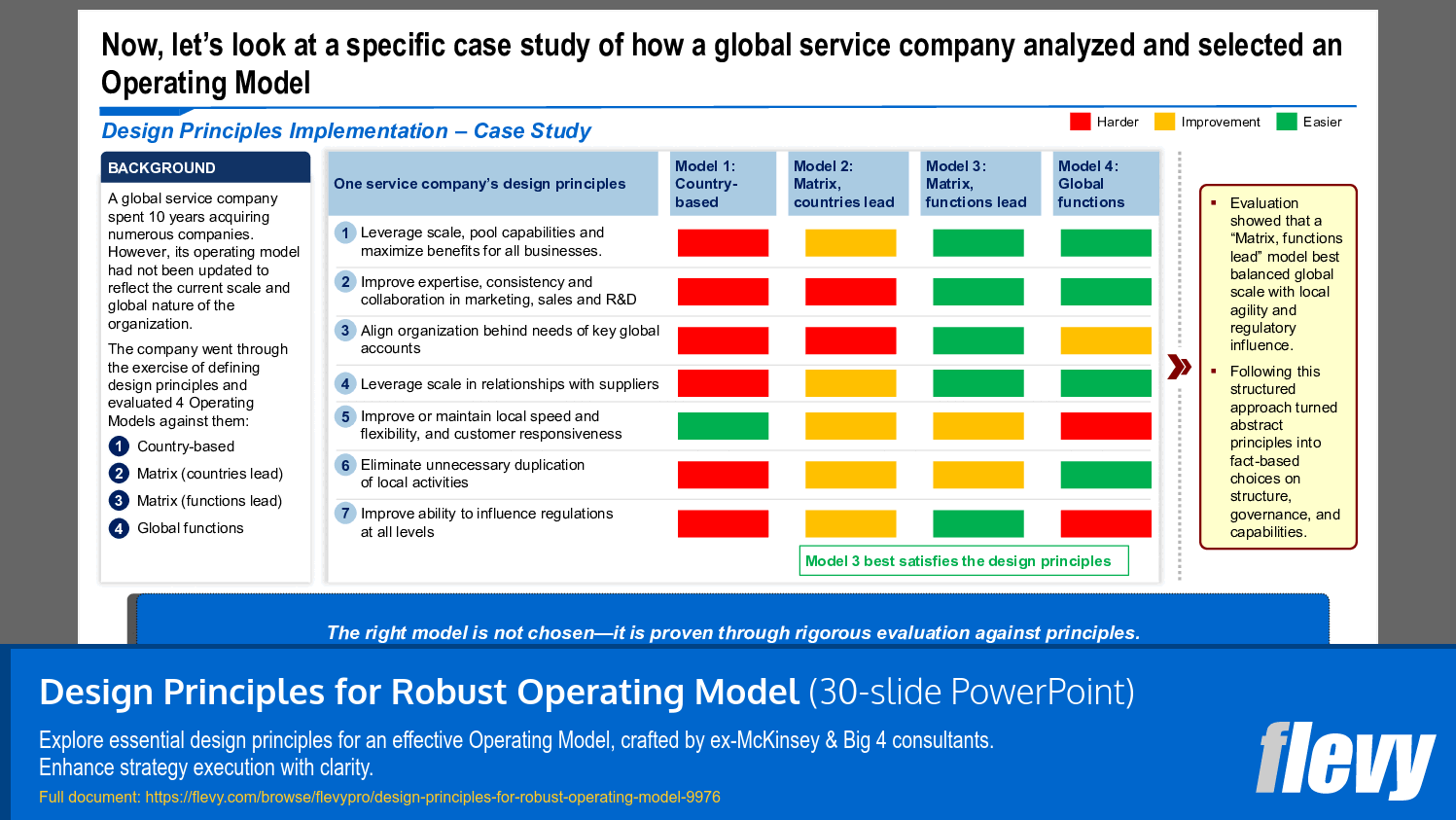
This PPT slide presents a case study on operating model selection for a global service company, focusing on 4 models: country-based, matrix with country leadership, matrix with functions leadership, and global functions. The comparison is based on 7 design principles: leveraging scale, expertise, organizational alignment, supplier relationships, speed, duplication elimination, and regulatory influence. Color coding indicates implementation difficulty, with red for harder, yellow for improvement potential, and green for easier implementation. The analysis reveals that the matrix with functions leadership model best meets the design principles, balancing global scale with local agility. The structured evaluation process emphasizes evidence-based decision-making, highlighting that model choice impacts operational flexibility and regulatory influence, critical for large organizations. This case exemplifies a disciplined approach to model selection in organizational design.
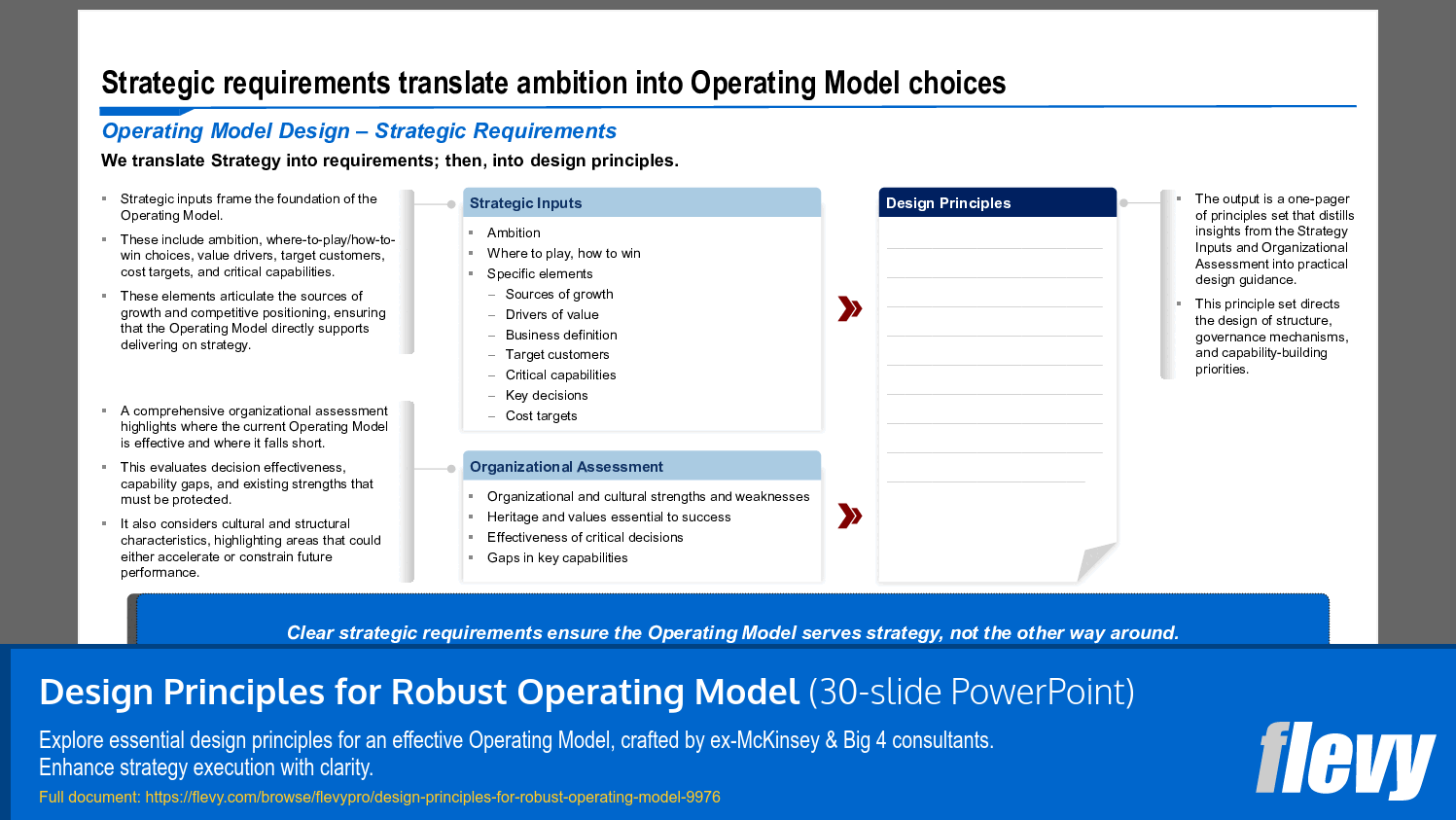
This PPT slide outlines how strategic requirements shape the development of an Operating Model, translating strategy into actionable design principles. Strategic inputs, including ambition, target markets, growth sources, and key value drivers, form the foundation of the Operating Model. Organizational assessment evaluates strengths, weaknesses, cultural traits, and decision points, highlighting internal capabilities and gaps. These elements inform design principles that guide structural choices, governance mechanisms, and capability development priorities. Aligning strategic ambitions with operational design ensures the Operating Model supports strategic goals. Clear strategic requirements are vital for creating an Operating Model that serves the organization’s strategy effectively.
Source: Best Practices in Strategy Development, Operating Model PowerPoint Slides: Design Principles for Robust Operating Model PowerPoint (PPTX) Presentation Slide Deck, LearnPPT Consulting
This framework is developed by a team of former McKinsey and Big 4 consultants. The presentation follows the headline-body-bumper slide format used by global consulting firms.
For $10.00 more, you can download this document plus 2 more FlevyPro documents. That's just $13 each.
ABOUT FLEVYPRO
This document is part of the FlevyPro Library, a curated knowledge base of documents for our FlevyPro subscribers.
FlevyPro is a subscription service for on-demand business frameworks and analysis tools. FlevyPro subscribers receive access to an exclusive library of curated business documents—business framework primers, presentation templates, Lean Six Sigma tools, and more—among other exclusive benefits.
The average daily rate of a McKinsey consultant is $6,625 (not including expenses). The average price of a Flevy document is $65.
Trusted by over 10,000+ Client Organizations
Since 2012, we have provided business templates to over 10,000 businesses and organizations of all sizes, from startups and small businesses to the Fortune 100, in over 130 countries.
"If you are looking for great resources to save time with your business presentations, Flevy is truly a value-added resource. Flevy has done all the work for you and we will continue to utilize Flevy as a source to extract up-to-date information and data for our virtual and onsite presentations!"
– Debbi Saffo, President at The NiKhar Group
"Flevy.com has proven to be an invaluable resource library to our Independent Management Consultancy, supporting and enabling us to better serve our enterprise clients.
The value derived from our [FlevyPro] subscription in terms of the business it has helped to gain far exceeds the investment made, making a subscription a no-brainer for any growing consultancy – or in-house strategy team."
– Dean Carlton, Chief Transformation Officer, Global Village Transformations Pty Ltd.
"Last Sunday morning, I was diligently working on an important presentation for a client and found myself in need of additional content and suitable templates for various types of graphics. Flevy.com proved to be a treasure trove for both content and design at a reasonable price, considering the time I
saved. I encountered a download issue during the ordering process. However, a quick email to Flevy's support team, even on a Sunday (!!!), resulted in assistance within less than an hour, allowing me to download the content I needed. Fantastic job, Flevy! I give 5 stars for both content/price and customer service. Thank you!
"
– M. E., Chief Commercial Officer, International Logistics Service Provider
"I have used FlevyPro for several business applications. It is a great complement to working with expensive consultants. The quality and effectiveness of the tools are of the highest standards."
– Moritz Bernhoerster, Global Sourcing Director at Fortune 500
"As a consultant requiring up to date and professional material that will be of value and use to my clients, I find Flevy a very reliable resource.
The variety and quality of material available through Flevy offers a very useful and commanding source for information. Using Flevy saves me time, enhances my expertise and ends up being a good decision."
– Dennis Gershowitz, Principal at DG Associates
"As a niche strategic consulting firm, Flevy and FlevyPro frameworks and documents are an on-going reference to help us structure our findings and recommendations to our clients as well as improve their clarity, strength, and visual power. For us, it is an invaluable resource to increase our impact and value."
– David Coloma, Consulting Area Manager at Cynertia Consulting
"Flevy is now a part of my business routine. I visit Flevy at least 3 times each month.
Flevy has become my preferred learning source, because what it provides is practical, current, and useful in this era where the business world is being rewritten.

many challenges and there is the need to make the right decisions in a short time, with so much scattered information, we are fortunate to have Flevy. Flevy investigates, selects, and puts at our disposal the best of the best to help us be successful in our work.
"
– Omar Hernán Montes Parra, CEO at Quantum SFE
"Flevy is our 'go to' resource for management material, at an affordable cost. The Flevy library is comprehensive and the content deep, and typically provides a great foundation for us to further develop and tailor our own service offer."
Download our free compilation of 50+ Strategy & Transformation slides and templates. Frameworks include McKinsey 7-S, Balanced Scorecard, Disruptive Innovation, BCG Curve, and many more.