
Crisis Management: 10 First Steps   24-slide PPT PowerPoint presentation slide deck (PPT)
$29.00

Crisis Management: 10 First Steps (24-slide PPT PowerPoint presentation slide deck (PPT)) Preview Image
Log in to unlock full preview.
Crisis Management: 10 First Steps (24-slide PPT PowerPoint presentation slide deck (PPT)) Preview Image
Arrow   Click main image to view in full screen.

Crisis Management: 10 First Steps (PowerPoint PPT Slide Deck)

PowerPoint (PPT) 24 Slides FlevyPro Document

$29.00
FlevyPro price: FREE (included in subscription)
This framework is developed by a team of former McKinsey and Big 4 consultants. The presentation follows the headline-body-bumper slide format used by global consulting firms.
Add to Cart


Immediate download
Free lifetime updates

BCP PPT DESCRIPTION

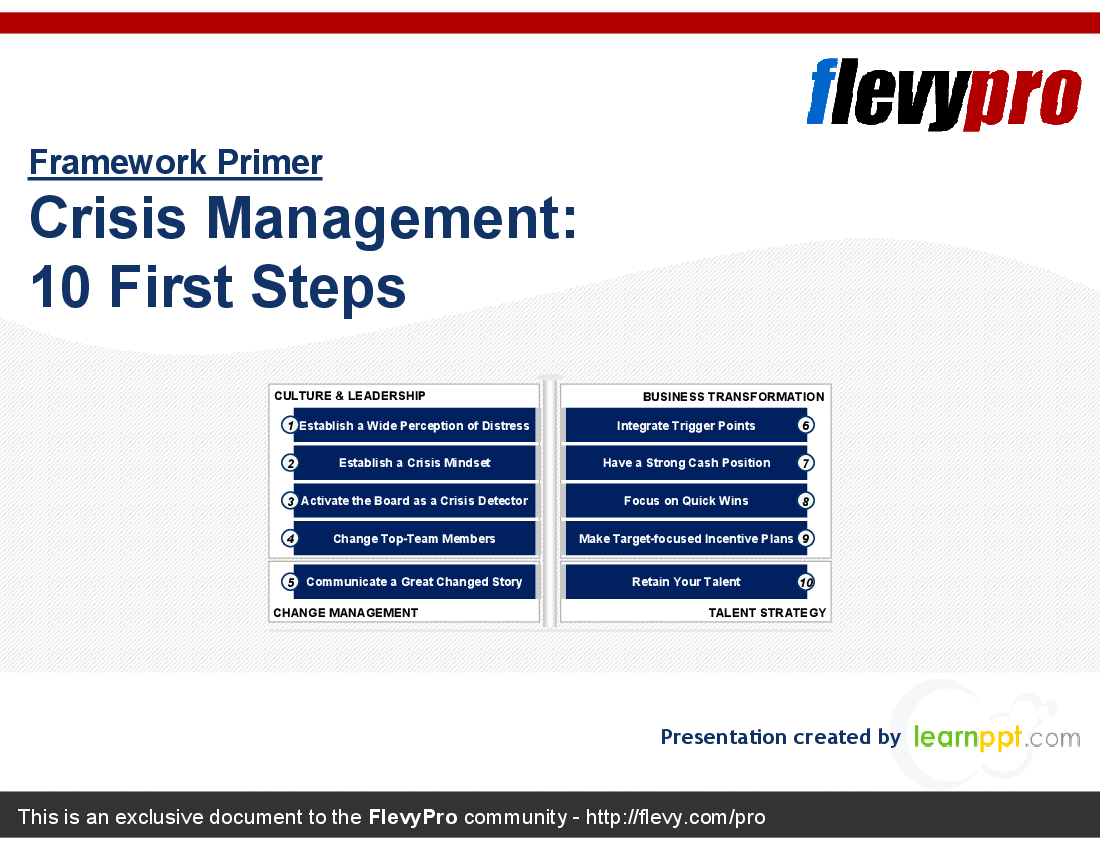
Editor Summary Crisis Management: 10 First Steps is a 24-slide PowerPoint presentation that presents a strategic crisis-response framework organized around 10 actionable steps grouped into 4 areas: Culture and Leadership, Change Management, Business Transformation, and Talent Strategy. Read more

As environments become disruptive and unpredictable (both natural and unnatural), the need for Crisis Management has grown to be increasing more important. An organization is considered to be undergoing crisis when there is a sudden and unexpected event leading to major unrest amongst the individuals at the workplace. It is an emergency situation which disturbs the employees as well as leads to the instability of the organization. When this occurs, organizations are expected to have a Crisis Management Plan in place.

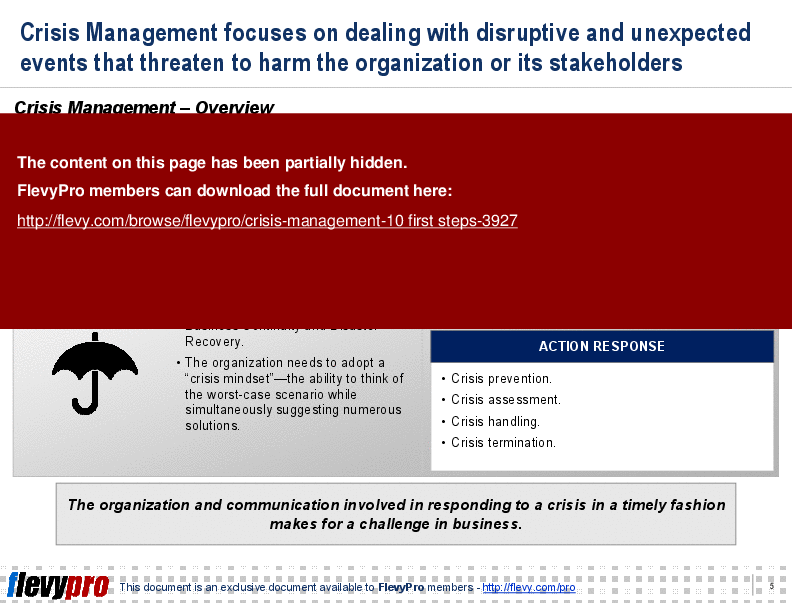
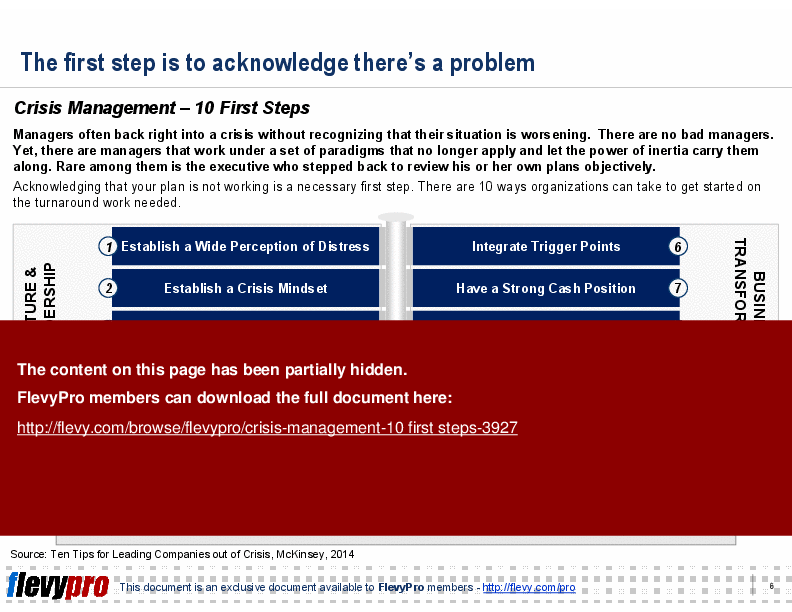
Crisis Management is the art of dealing with these sudden and unexpected events which disturb the employees and organization. Yet, often companies are like the metaphorical frog that doesn't notice the water it's in is warming up until it is too late. There are managers who either do not realize that they are in a crisis or their crisis situation is worsening. The early signs of distress are often missed. While they are not bad managers, these are managers that are under a set of paradigms that no longer apply and just let the power of inertia carry them along.

As a result, organizations in crisis find themselves faced with a potential cost that is greatly significant. This can lead to longer recovery time, a direct impact on downtime, and lost revenue.

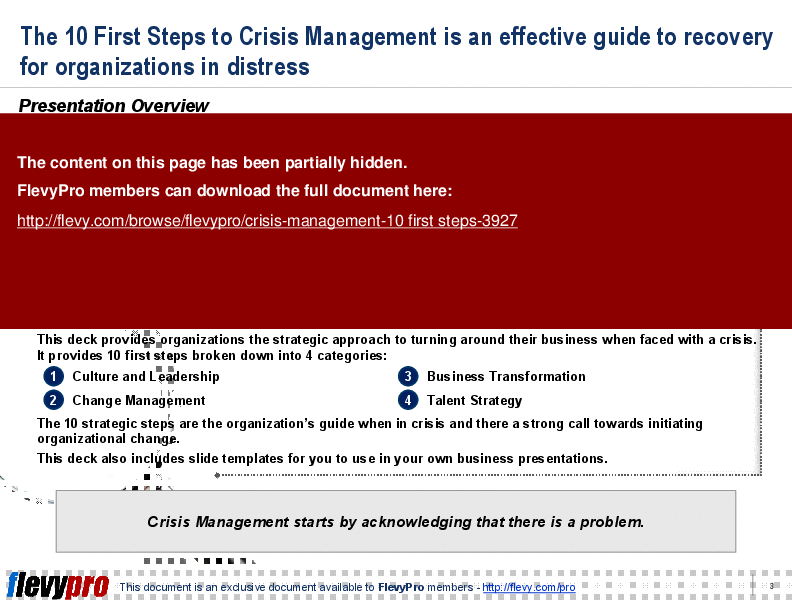
This deck provides organizations the strategic approach to turning around their business when faced with a crisis. It provides 10 first steps broken down into 4 categories:

1. Culture and Leadership
2. Change Management
3. Business Transformation
4. Talent Strategy

The 10 strategic steps are the organization's guide when in crisis and there a strong call towards initiating organizational change.

This deck also includes slide templates for you to use in your own business presentations.

This presentation emphasizes the importance of recognizing distress signals early and adopting a crisis mindset to navigate through turbulent times. It also highlights the necessity of integrating trigger points and focusing on quick wins to maintain momentum.

Got a question about this document? Email us at flevypro@flevy.com.

MARCUS OVERVIEW

This synopsis was written by Marcus [?] based on the analysis of the full 24-slide presentation.


Executive Summary
The "Crisis Management: 10 First Steps" presentation provides a strategic framework for organizations facing crises. It emphasizes the importance of recognizing distress signals and implementing effective management strategies to navigate through turbulent times. This deck outlines ten actionable steps categorized into 4 key areas: Culture and Leadership, Change Management, Business Transformation, and Talent Strategy. By following these steps, executives can foster a crisis-ready culture, enhance communication, and ultimately drive organizational recovery and growth.

Who This Is For and When to Use
•  Corporate executives responsible for crisis management and organizational resilience
•  Change management leaders tasked with implementing turnaround strategies
•  Board members seeking to enhance oversight during crises
•  HR leaders focused on talent retention and engagement during challenging times

Best-fit moments to use this deck:
•  During organizational crises to establish a structured response
•  In preparation for potential disruptions to develop a proactive crisis management plan
•  When assessing current organizational health and identifying distress signals

Learning Objectives
•  Define the key indicators of organizational distress and their implications
•  Build a crisis management framework that includes clear roles and responsibilities
•  Establish a culture that embraces a crisis mindset and encourages proactive measures
•  Communicate effectively with stakeholders to foster trust and engagement during crises
•  Identify and implement quick wins to stabilize operations and boost morale
•  Retain critical talent and recognize their contributions during challenging times

Table of Contents
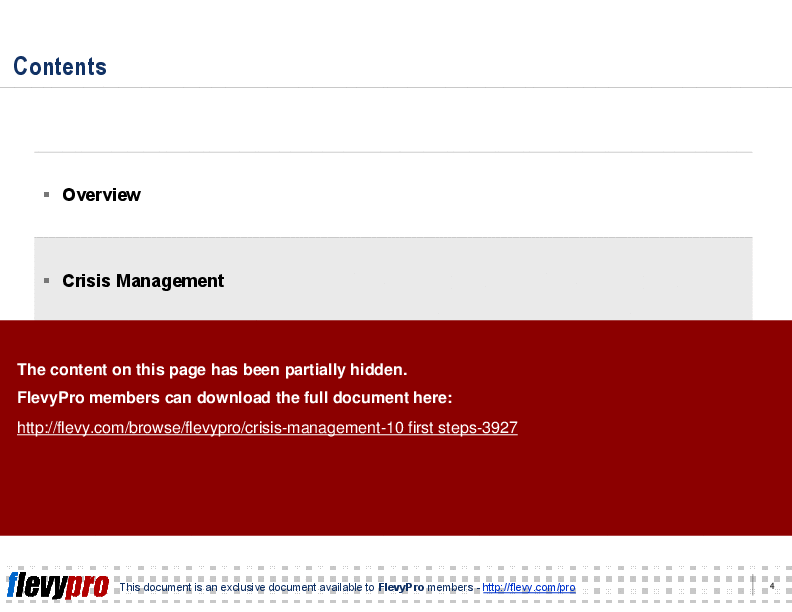
•  Overview (page 3)
•  Crisis Management (page 5)
•  First 10 Steps (page 6)
•  Templates (page 19)

Primary Topics Covered
•  Crisis Management Overview - An introduction to the principles of crisis management, focusing on identifying and mitigating threats to the organization.
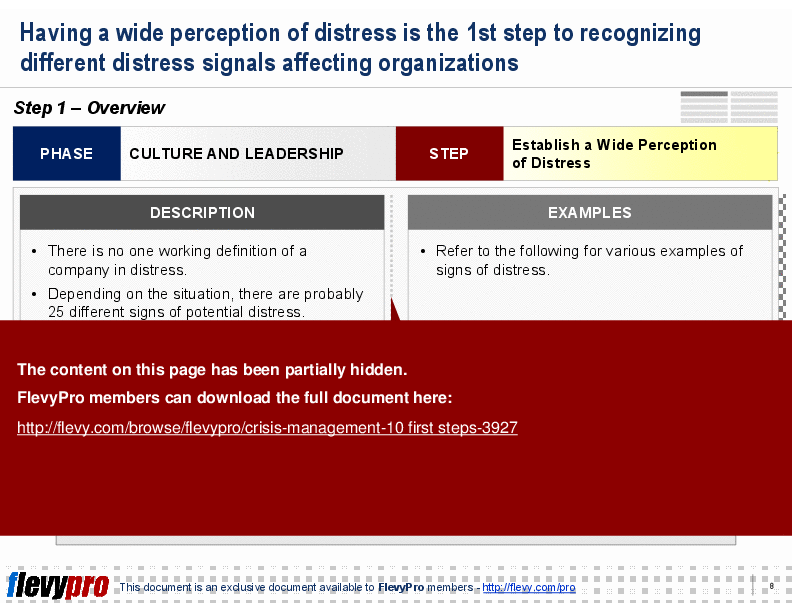
•  Establish a Wide Perception of Distress - Recognizing various signs of distress that may indicate an organizational crisis.
•  Establish a Crisis Mindset - Fostering a culture that encourages proactive thinking and rapid decision-making in crisis situations.
•  Activate the Board as a Crisis Detector - Engaging board members to identify risks and provide oversight during crises.
•  Change Top-Team Members - Making necessary leadership changes to facilitate effective organizational transformation.
•  Communicate a Great Changed Story - Crafting a compelling narrative to motivate and align stakeholders during a crisis.
•  Integrate Trigger Points - Utilizing performance metrics to assess organizational health and inform decision-making.
•  Have a Strong Cash Position - Emphasizing the importance of financial stability during a crisis.
•  Focus on Quick Wins - Identifying immediate actions that can generate positive momentum and support.
•  Make Target-focused Incentive Plans - Aligning incentives with organizational recovery goals to drive performance.
•  Retain Your Talent - Strategies for keeping key personnel engaged and motivated during challenging times.

Deliverables, Templates, and Tools
•  Crisis management framework template for structured response planning
•  Communication plan template for stakeholder engagement
•  Performance metrics dashboard for tracking distress signals
•  Quick wins action plan template to identify and implement immediate improvements
•  Talent retention strategy template to ensure key personnel are supported

Slide Highlights
•  Overview of the 10 First Steps to Crisis Management
•  Visual representation of distress signals and their implications
•  Framework for establishing a crisis mindset within the organization
•  Checklist for activating the board as a crisis detector
•  Strategies for communicating effectively during a crisis

Potential Workshop Agenda
Crisis Management Overview Session (60 minutes)
•  Discuss the importance of crisis management and organizational readiness
•  Review the 10 first steps and their implications for the organization

Crisis Mindset Development Workshop (90 minutes)
•  Engage participants in identifying current distress signals
•  Develop strategies for fostering a crisis-ready culture

Talent Retention Strategy Session (60 minutes)
•  Identify key personnel and their contributions during crises
•  Create a plan for retaining talent and maintaining engagement

Customization Guidance
•  Adapt the crisis management framework to align with your organization's specific needs and context
•  Modify communication templates to reflect your organizational voice and culture
•  Tailor performance metrics to focus on the most relevant indicators for your industry

Secondary Topics Covered
•  Business continuity planning and disaster recovery
•  Risk assessment methodologies and tools
•  Stakeholder engagement strategies during crises
•  Financial management practices for crisis situations

Topic FAQ

What are common early indicators that an organization may be entering a crisis?

Early indicators cited include declining cash flow, increasing management turnover, unresolved debt maturities, and rising employee unrest or operational instability. Recognizing these signs early helps prioritize interventions such as cash preservation and leadership assessment, specifically monitoring declining cash flow, management turnover, and debt maturities.

How can an organization foster a crisis mindset among employees and leaders?

Foster open communication, promote proactive problem-solving, provide targeted crisis-management training, and embed rapid decision-making routines. The goal is cultural readiness so teams escalate and act on distress signals; the approach emphasizes building a crisis mindset through communication and training.

Which performance metrics are useful for detecting organizational distress?

Useful metrics include cash position and cash flow measures, turnover and leadership stability indicators, and operational performance triggers. Integrating trigger points into regular reporting enables earlier detection; a dedicated performance metrics dashboard is recommended to track these indicators.

If revenue drops suddenly, what immediate actions should leadership prioritize?

Leadership should secure a strong cash position, identify and implement quick wins to stabilize operations and morale, communicate a clear changed story to stakeholders, and review top-team composition. Immediate focus areas include cash preservation and a quick wins action plan.

How should HR prioritize talent retention during a crisis with limited budget?

Prioritize retaining critical roles by recognizing contributions, clarifying career and performance expectations, aligning incentives to recovery targets, and offering targeted development or support. Use a focused talent retention strategy that identifies key personnel and links incentives to recovery goals.

What should I look for when buying a crisis-management slide deck for executive use?

Look for a clear crisis framework, templates for communication plans, a performance metrics/dashboard tool, a quick-wins action plan, and guidance on talent retention and board activation. A useful executive deck will include these templates and ready-to-run slides, such as a crisis management framework and communication plan.

Are paid crisis-management templates practical for small teams under time pressure?

Paid templates can accelerate planning by providing ready-made frameworks, communication plans, workshop agendas, and measurable dashboards to adapt quickly. For rapid use, check for slide-ready content and sample workshop agendas; example resources include 60–90 minute workshop agendas and a 24-slide deck.

How can boards practically act as crisis detectors rather than only oversight bodies?

Boards can adopt a checklist for activation, regularly review integrated trigger points and performance metrics, and establish escalation protocols with executives. Practical steps include scheduled trigger reviews and a board activation checklist tied to performance metrics and trigger points.

Document FAQ
These are questions addressed within this presentation.

What are the key indicators of organizational distress?
Indicators include declining cash flow, management turnover, and unresolved debt maturities. Recognizing these signs early can help mitigate potential crises.

How can we foster a crisis mindset within our organization?
Encourage open communication, promote proactive problem-solving, and provide training on crisis management to empower employees at all levels.

What role does the board play in crisis management?
The board serves as an oversight body, identifying risks and ensuring that the organization is prepared to respond effectively to crises.

How can we identify quick wins during a crisis?
Focus on actions that can be implemented rapidly and have an immediate positive impact on operations, morale, or financial stability.

What strategies can we use to retain key talent during a crisis?
Recognize and reward contributions, provide support for professional development, and ensure clear communication about organizational goals and challenges.

How do we assess our current crisis management plan?
Review the plan against industry best practices, gather feedback from stakeholders, and conduct simulations to test its effectiveness.

What financial practices should we prioritize during a crisis?
Maintain a strong cash position, closely monitor cash flow, and prioritize essential expenditures to ensure operational continuity.

How can we effectively communicate during a crisis?
Develop a clear communication plan that outlines key messages, identifies target audiences, and establishes channels for disseminating information.

Glossary
•  Crisis Management - The process of preparing for, responding to, and recovering from crises.
•  Distress Signals - Indicators that an organization may be facing significant challenges.
•  Crisis Mindset - A proactive approach to anticipating and addressing potential crises.
•  Stakeholder Engagement - The process of involving individuals or groups that have an interest in the organization.
•  Quick Wins - Immediate actions that can generate positive outcomes and support.
•  Talent Retention - Strategies aimed at keeping key personnel engaged and motivated.
•  Business Continuity - The ability of an organization to maintain essential functions during and after a crisis.
•  Performance Metrics - Quantitative measures used to assess organizational health and effectiveness.
•  Risk Assessment - The process of identifying and evaluating potential risks to the organization.
•  Communication Plan - A strategic outline for disseminating information to stakeholders during a crisis.
•  Financial Stability - The ability of an organization to maintain sufficient cash flow and manage its financial obligations.
•  Organizational Change - The process of implementing new strategies, structures, or processes within an organization.

BCP PPT SLIDES

Identifying Key Indicators of Corporate Distress

Critical Focus on Cash Management for Stability

Crisis Management: Essential First Steps for Recovery

Creating a Compelling Narrative for Organizational Change

Recognizing Organizational Distress: Initial Insights

Source: Best Practices in Crisis Management PowerPoint Slides: Crisis Management: 10 First Steps PowerPoint (PPT) Presentation Slide Deck, LearnPPT Consulting


$29.00
FlevyPro price: FREE (included in subscription)
This framework is developed by a team of former McKinsey and Big 4 consultants. The presentation follows the headline-body-bumper slide format used by global consulting firms.
Add to Cart
  

Did you need more documents?

Consider a FlevyPro subscription from $39/month. View plans here.

For $10.00 more, you can download this document plus 2 more FlevyPro documents. That's just $13 each.

ABOUT FLEVYPRO

This document is part of the FlevyPro Library, a curated knowledge base of documents for our FlevyPro subscribers.

FlevyPro is a subscription service for on-demand business frameworks and analysis tools. FlevyPro subscribers receive access to an exclusive library of curated business documents—business framework primers, presentation templates, Lean Six Sigma tools, and more—among other exclusive benefits.

Click here to learn more about FlevyPro and its benefits.

Did you know?
The average daily rate of a McKinsey consultant is $6,625 (not including expenses). The average price of a Flevy document is $65.


Trusted by over 10,000+ Client Organizations
Since 2012, we have provided business templates to over 10,000 businesses and organizations of all sizes, from startups and small businesses to the Fortune 100, in over 130 countries.
AT&T GE Cisco Intel IBM Coke Dell Toyota HP Nike Samsung Microsoft Astrazeneca JP Morgan KPMG Walgreens Walmart 3M Kaiser Oracle SAP Google E&Y Volvo Bosch Merck Fedex Shell Amgen Eli Lilly Roche AIG Abbott Amazon PwC T-Mobile Broadcom Bayer Pearson Titleist ConEd Pfizer NTT Data Schwab


Read Customer Testimonials

 
"Flevy is now a part of my business routine. I visit Flevy at least 3 times each month.

Flevy has become my preferred learning source, because what it provides is practical, current, and useful in this era where the business world is being rewritten.

In today's environment where there are so "

– Omar HernĂ¡n Montes Parra, CEO at Quantum SFE
 
"I have found Flevy to be an amazing resource and library of useful presentations for lean sigma, change management and so many other topics. This has reduced the time I need to spend on preparing for my performance consultation. The library is easily accessible and updates are regularly provided. A wealth of great information."

– Cynthia Howard RN, PhD, Executive Coach at Ei Leadership
 
"As a consulting firm, we had been creating subject matter training materials for our people and found the excellent materials on Flevy, which saved us 100's of hours of re-creating what already exists on the Flevy materials we purchased."

– Michael Evans, Managing Director at Newport LLC
 
"Flevy is our 'go to' resource for management material, at an affordable cost. The Flevy library is comprehensive and the content deep, and typically provides a great foundation for us to further develop and tailor our own service offer."

– Chris McCann, Founder at Resilient.World
 
"As a niche strategic consulting firm, Flevy and FlevyPro frameworks and documents are an on-going reference to help us structure our findings and recommendations to our clients as well as improve their clarity, strength, and visual power. For us, it is an invaluable resource to increase our impact and value."

– David Coloma, Consulting Area Manager at Cynertia Consulting
 
"As an Independent Management Consultant, I find Flevy to add great value as a source of best practices, templates and information on new trends. Flevy has matured and the quality and quantity of the library is excellent. Lastly the price charged is reasonable, creating a win-win value for "

– Jim Schoen, Principal at FRC Group
 
"If you are looking for great resources to save time with your business presentations, Flevy is truly a value-added resource. Flevy has done all the work for you and we will continue to utilize Flevy as a source to extract up-to-date information and data for our virtual and onsite presentations!"

– Debbi Saffo, President at The NiKhar Group
 
"I have used Flevy services for a number of years and have never, ever been disappointed. As a matter of fact, David and his team continue, time after time, to impress me with their willingness to assist and in the real sense of the word. I have concluded in fact "

– Roberto Pelliccia, Senior Executive in International Hospitality


Customers Also Bought These Documents


Customers Also Like These Documents

Explore Templates on Related Management Topics


Your Recently Viewed Documents
Receive our FREE presentation on Operational Excellence

This 50-slide presentation provides a high-level introduction to the 4 Building Blocks of Operational Excellence. Achieving OpEx requires the implementation of a Business Execution System that integrates these 4 building blocks.