
The global economy is currently producing nearly 300MM tons of plastic every year. Half of these are for single use. With population growing at a fast rate, we are requiring more resources than ever before. Yet, our finite resources are diminishing
Our economy has been built on the concept of a Linear Economy. This is Extract, Manufacture, Distribute, Use, and Dispose. However, over the past few decades we have transitioned to a disposable society as we generate waste at an unmanageable rate.
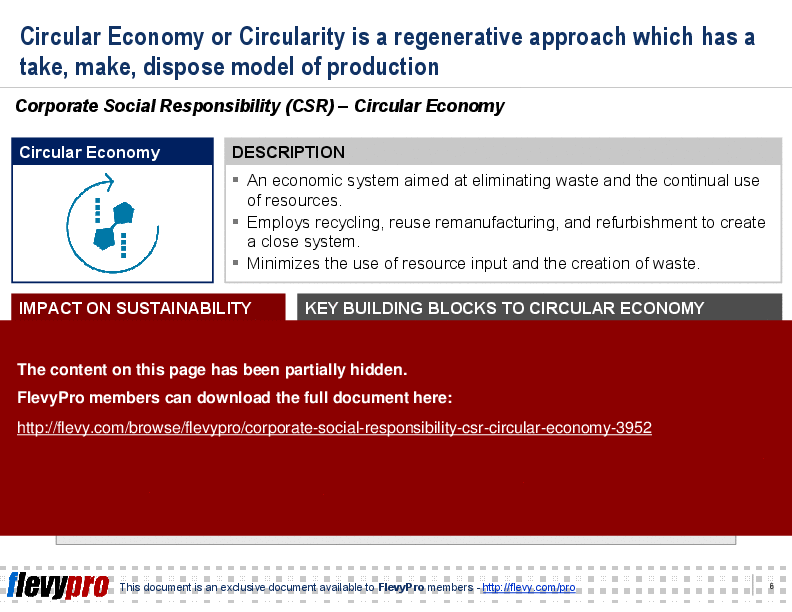
There is a call to shift to a Reuse Economy or the Circular Economy. Moving towards a more Circular Economic activity could deliver benefits such as reducing pressure on the environment, improving the security of the supply of raw materials, increasing competitiveness, stimulating innovation, and others. Moving into a Circular Economy also means that companies are considering sustainable approaches to balance out opportunities for business and the preservation of the environment.
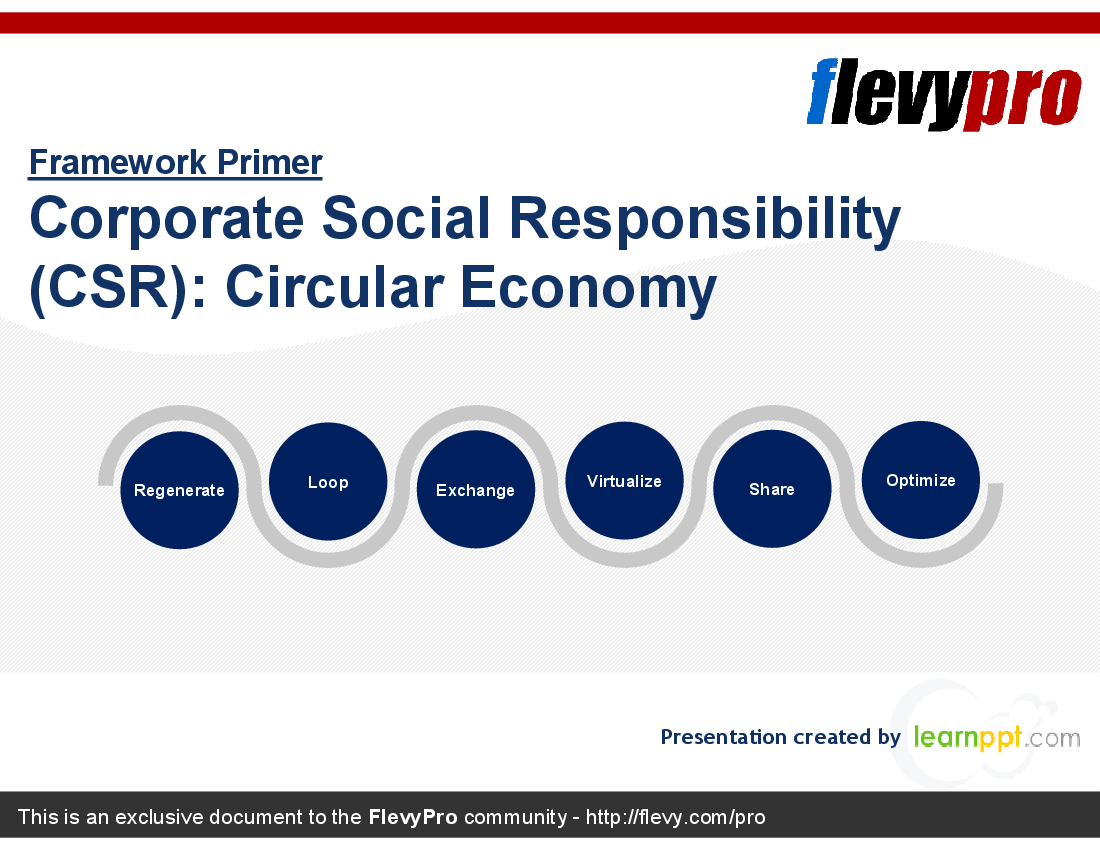
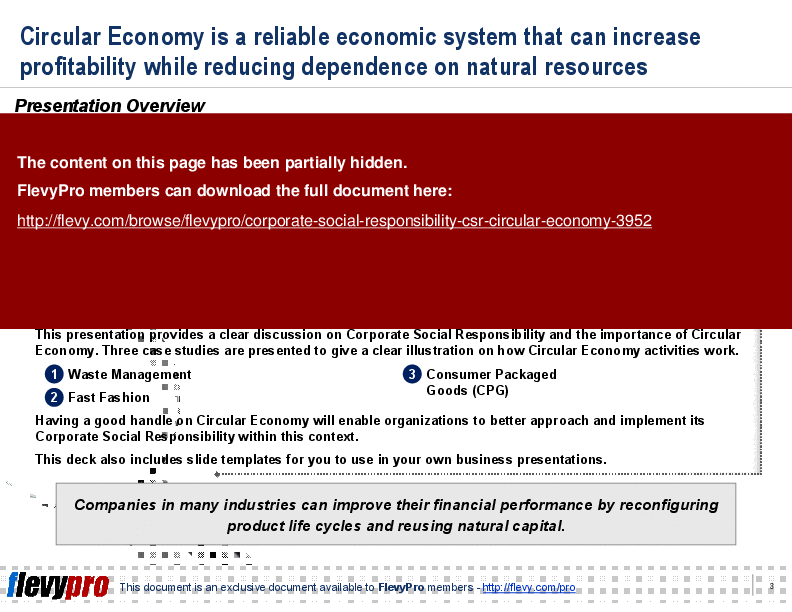
This presentation provides a clear discussion on Corporate Social Responsibility and the importance of Circular Economy. Three case studies are presented to give a clear illustration on how Circular Economy activities work.
Having a good handle on Circular Economy will enable organizations to better approach and implement its Corporate Social Responsibility within this context.
This deck also includes slide templates for you to use in your own business presentations.
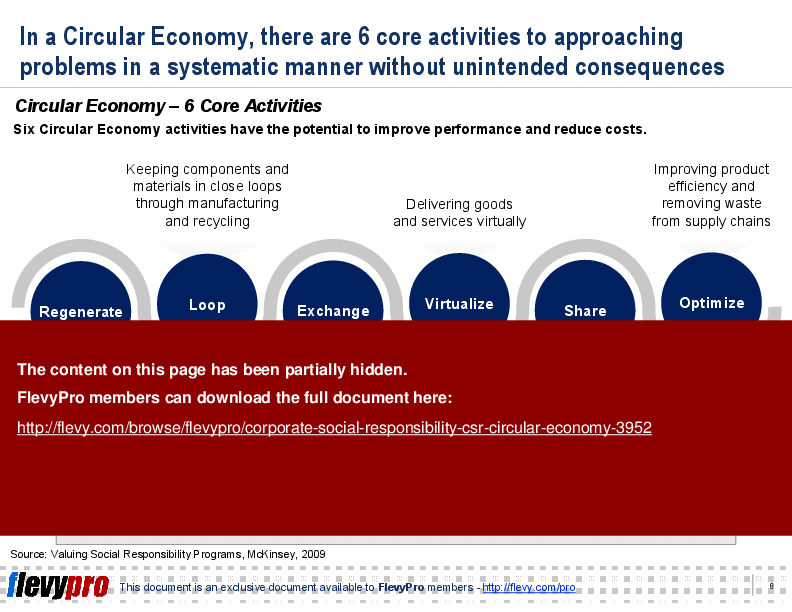
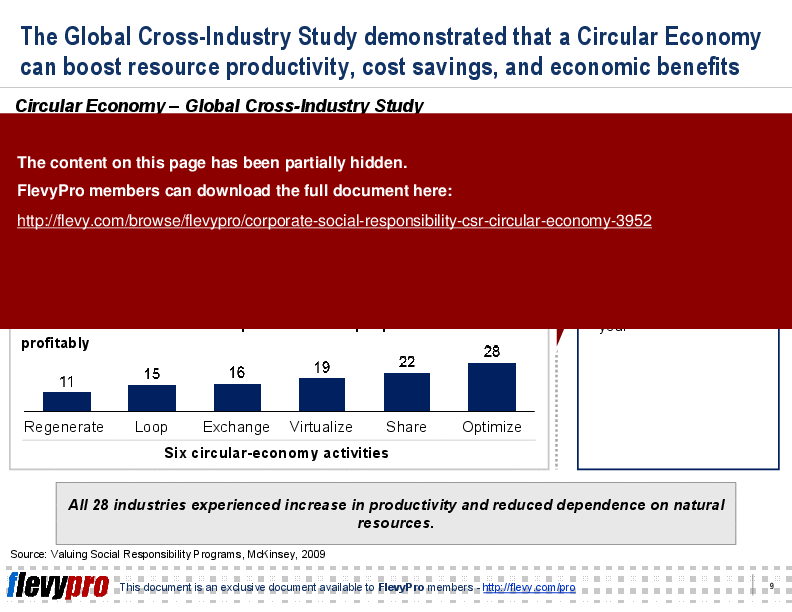
This comprehensive deck delves into six core activities essential for a Circular Economy, offering a systematic approach to problem-solving without unintended consequences. It features a global cross-industry study demonstrating significant boosts in resource productivity and cost savings. The case studies on waste management, fast fashion, and consumer packaged goods provide vivid examples of converting challenges into profitable opportunities. This resource is indispensable for executives aiming to integrate sustainable practices into their business strategies, ensuring long-term viability and competitive advantage.
Got a question about this document? Email us at flevypro@flevy.com.
Executive Summary
The Corporate Social Responsibility (CSR): Circular Economy presentation provides a comprehensive framework for organizations aiming to integrate sustainable practices into their operations. Developed by experienced consultants, this presentation emphasizes the transition from a linear economy to a circular economy, highlighting the importance of reusing resources and minimizing waste. It includes case studies that illustrate successful implementations of circular economy principles across various industries, enabling organizations to enhance their CSR initiatives while improving profitability and environmental impact.
Who This Is For and When to Use
• Corporate executives focused on sustainability and CSR initiatives
• Integration leaders responsible for implementing circular economy practices
• Consultants advising organizations on sustainable business strategies
• Environmental compliance officers seeking frameworks for waste reduction
Best-fit moments to use this deck:
• During strategic planning sessions to align CSR goals with business objectives
• In workshops aimed at educating teams on circular economy principles
• When developing sustainability reports or presentations for stakeholders
• For training sessions on best practices in waste management and resource optimization
Learning Objectives
• Define the principles of Corporate Social Responsibility and the Circular Economy
• Identify key activities that promote a circular economic model
• Analyze case studies to understand successful applications of circular economy principles
• Develop actionable strategies for integrating circular economy practices into business operations
• Assess the impact of CSR initiatives on organizational performance and sustainability
• Create templates for ongoing CSR and circular economy reporting
Table of Contents
• Overview (page 3)
• Corporate Social Responsibility (CSR) (page 5)
• Circular Economy (page 6)
• Case Studies (page 11)
• Templates (page 19)
Primary Topics Covered
• Corporate Social Responsibility (CSR) - CSR encompasses sustainability, social impact, and ethical business practices, holding organizations accountable for their operations and contributions to society.
• Circular Economy - A regenerative economic model focused on eliminating waste and promoting the continual use of resources through recycling and remanufacturing.
• Case Studies - Real-world examples demonstrating the successful application of circular economy principles in waste management, fast fashion, and consumer packaged goods.
• Economic Impact - Analysis of how adopting circular economy practices can lead to increased profitability and reduced resource dependence across various industries.
• Sustainability Metrics - Key performance indicators for measuring the effectiveness of CSR initiatives and circular economy practices.
• Implementation Strategies - Guidelines for integrating circular economy principles into existing business models and operations.
Deliverables, Templates, and Tools
• CSR framework template for assessing organizational impact
• Circular economy assessment tool for evaluating resource use and waste management
• Case study summaries for reference in strategic planning
• Presentation slides for internal training on CSR and sustainability
• Reporting templates for tracking CSR initiatives and outcomes
• Guidelines for stakeholder engagement in CSR activities
Slide Highlights
• Overview of the Circular Economy and its benefits for businesses
• Case study insights showcasing successful CSR implementations
• Visual representations of the transition from linear to circular economic models
• Key statistics on resource productivity and economic benefits of circular practices
• Frameworks for assessing and improving sustainability initiatives
Potential Workshop Agenda
Introduction to CSR and Circular Economy (30 minutes)
• Overview of key concepts and definitions
• Discussion on the importance of sustainability in business
Case Study Analysis (60 minutes)
• Review of case studies in waste management, fast fashion, and consumer packaged goods
• Group discussion on lessons learned and best practices
Developing Action Plans (90 minutes)
• Breakout sessions to create tailored action plans for implementing circular economy practices
• Presentation of group findings and feedback
Customization Guidance
• Adapt the presentation templates to reflect your organization’s specific CSR goals and metrics
• Incorporate industry-specific case studies relevant to your business context
• Modify terminology and frameworks to align with internal language and practices
• Set specific dates and milestones for implementing circular economy initiatives
Secondary Topics Covered
• The role of innovation in promoting circular economy practices
• Challenges and barriers to implementing CSR initiatives
• Stakeholder engagement strategies for effective CSR communication
• Regulatory considerations in sustainability and waste management
Topic FAQ
Document FAQ
These are questions addressed within this presentation.
What is the Circular Economy?
The Circular Economy is an economic model aimed at eliminating waste and promoting the continual use of resources through practices like recycling and remanufacturing.
How does CSR relate to the Circular Economy?
CSR involves an organization’s commitment to positive social impact, while the Circular Economy provides a framework for achieving sustainability goals through resource efficiency.
What are the benefits of adopting Circular Economy practices?
Benefits include improved profitability, reduced resource dependence, enhanced brand reputation, and compliance with environmental regulations.
Can you provide examples of Circular Economy initiatives?
Examples include waste-to-energy programs, product take-back schemes, and the use of recycled materials in manufacturing.
How can organizations measure the success of their CSR initiatives?
Organizations can use sustainability metrics, stakeholder feedback, and performance indicators to assess the impact of their CSR efforts.
What challenges might organizations face when implementing Circular Economy practices?
Challenges include resistance to change, lack of resources, and the need for cross-departmental collaboration.
How can companies engage stakeholders in their CSR efforts?
Companies can engage stakeholders through transparent communication, collaboration on sustainability initiatives, and regular reporting on CSR outcomes.
What resources are available for organizations looking to improve their CSR practices?
Resources include industry reports, case studies, sustainability frameworks, and consulting services specializing in CSR and circular economy strategies.
Glossary
• Corporate Social Responsibility (CSR) - A business model that helps a company be socially accountable to itself, its stakeholders, and the public.
• Circular Economy - An economic system aimed at eliminating waste and the continual use of resources.
• Sustainability Metrics - Measurements used to assess the effectiveness of sustainability initiatives.
• Case Study - A detailed analysis of a specific instance of a practice or strategy in action.
• Stakeholder Engagement - The process of involving individuals or groups who may be affected by or can affect a company's operations.
• Waste Management - The collection, transport, processing, recycling, or disposal of waste materials.
• Resource Productivity - The efficiency with which a company uses resources to produce goods or services.
• Innovation - The process of translating an idea or invention into a good or service that creates value.
• Regenerative Practices - Methods that restore and renew resources, contributing to sustainability.
• Environmental Impact - The effect of a company's actions on the natural environment.
• Ethical Business Practices - Business practices that adhere to accepted moral standards.
• Recycling - The process of converting waste materials into reusable materials.
• Remanufacturing - The process of restoring used products to like-new condition.
• Sustainable Development - Development that meets the needs of the present without compromising the ability of future generations to meet their own needs.
• Greenhouse Gas Emissions - Gases that trap heat in the atmosphere, contributing to climate change.
• Supply Chain - The entire system of production, processing, and distribution of goods.
• Environmental Compliance - Adhering to environmental laws, regulations, and standards.
• Business Ethics - Principles that guide the behavior of individuals and organizations in the business world.
• Waste-to-Energy - The process of generating energy in the form of electricity or heat from the primary treatment of waste.
• Product Take-Back Schemes - Programs that allow consumers to return used products for recycling or proper disposal.
• Recycled Materials - Materials that have been processed to be reused in manufacturing or production.
• Cross-Departmental Collaboration - Cooperation among different departments within an organization to achieve common goals.
Source: Best Practices in Sustainability, Corporate Social Responsibility, Circular Economy PowerPoint Slides: Corporate Social Responsibility (CSR): Circular Economy PowerPoint (PPT) Presentation Slide Deck, LearnPPT Consulting
Did you need more documents?
Consider a FlevyPro subscription from $39/month. View plans here.
For $10.00 more, you can download this document plus 2 more FlevyPro documents. That's just $13 each.
|
Download our FREE Organization, Change, & Culture, Templates
Download our free compilation of 50+ slides and templates on Organizational Design, Change Management, and Corporate Culture. Methodologies include ADKAR, Burke-Litwin Change Model, McKinsey 7-S, Competing Values Framework, etc. |