 Click main image to view in full screen.
CMMI (Capability Maturity Model Integration) Checklist – Excel XLSX
Excel (XLSX) FlevyPro Document
CMMI EXCEL DESCRIPTION
The Capability Maturity Model (CMM) is an organizational model that describes 5 evolutionary stages (or levels), in which the business processes in an organization are managed. The term "maturity" relates to the degree of formality and optimization of processes, from ad hoc practices, to formally defined steps, to managed result metrics, to active optimization of the processes.
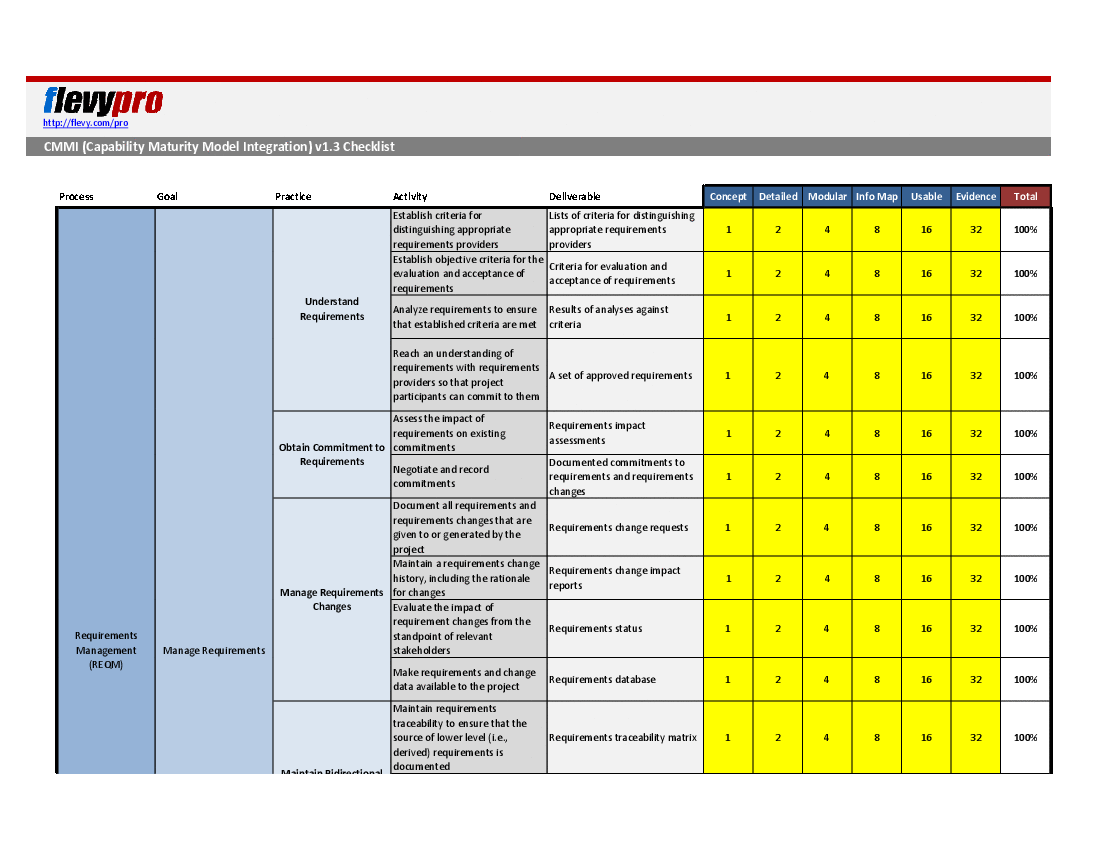
The CMMI (Capability Maturity Model Integration) Checklist is an Excel template that captures specific Activities and Deliverables across the 5 maturity levels:
1. Initial – no activities and deliverables identified
2. Managed – 232 activities and deliverables identified
3. Defined – 412 activities and deliverables identified
4. Quantitatively Managed – 67 activities and deliverables identified
5. Optimizing – 72 activities and deliverables identified
There is also a summary tab that captures percentage complete across all the maturity levels.
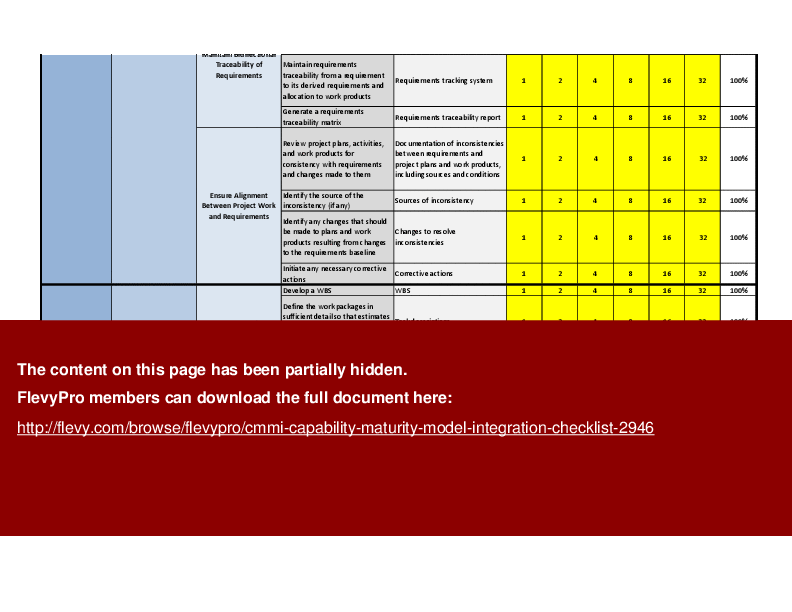
This CMMI Checklist template is meticulously structured to ensure comprehensive coverage of all necessary activities and deliverables. It includes detailed sections on maintaining requirements traceability, ensuring alignment between project work and requirements, and developing a work breakdown structure (WBS). The template also emphasizes the importance of defining work packages in sufficient detail to estimate labor hours and costs accurately.
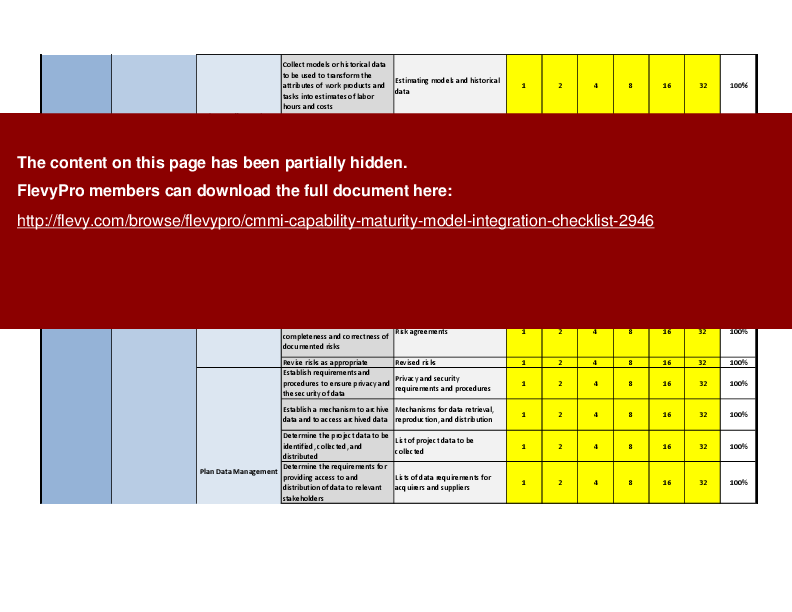
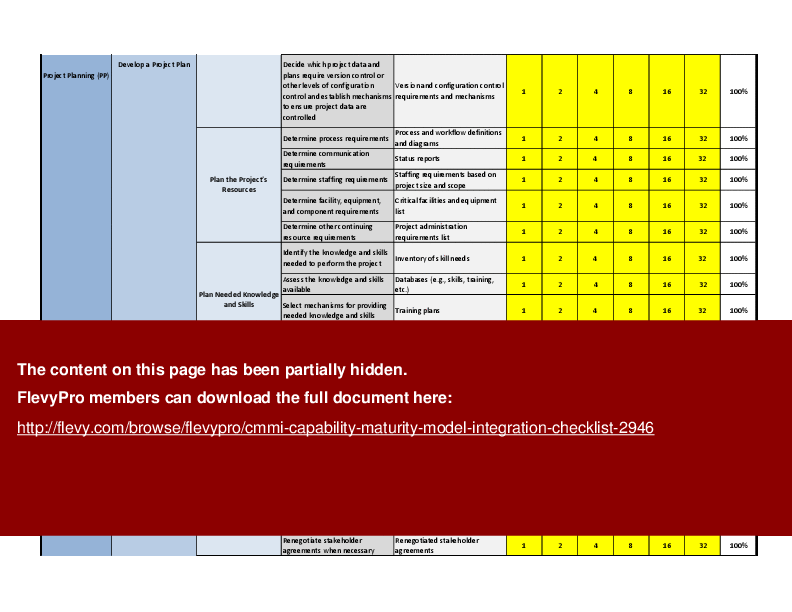
The checklist also covers critical aspects of data management, including establishing privacy and security requirements, mechanisms for data retrieval, and distribution. It outlines the steps for planning project resources, such as determining process requirements, communication needs, and staffing requirements. Additionally, it includes provisions for identifying and managing risks, ensuring that all potential issues are documented and addressed promptly.
This tool is designed to facilitate rigorous project monitoring and control. It includes sections on obtaining commitment to the plan, monitoring project planning parameters, and managing corrective actions. The checklist also provides guidance on managing supplier agreements, ensuring that all supplier-related activities are thoroughly documented and reviewed. This comprehensive approach ensures that all aspects of project management are covered, providing a robust framework for achieving project success.
Got a question about this document? Email us at flevypro@flevy.com.
TOPIC FAQ
What are the 5 maturity levels in CMMI?
The CMMI maturity model describes 5 evolutionary levels: Initial (ad hoc), Managed, Defined, Quantitatively Managed, and Optimizing. These levels represent increasing formality and process optimization across an organization’s practices, organized as a five-level progression.How does CMMI define "maturity" across these levels?
Maturity is defined by the degree of formality and optimization of processes — moving from ad hoc practices to formally defined steps, then to managed result metrics, and finally to active optimization of processes. This progression is structured across 5 maturity levels.What process and project areas does a CMMI checklist usually cover?
A CMMI checklist typically covers requirements traceability, alignment between project work and requirements, work breakdown structure (WBS), work package definitions for estimating labor and costs, data privacy/security and retrieval, resource and communication planning, risk management, monitoring, and supplier agreements, including requirements traceability and WBS.How can CMMI support project monitoring and control?
CMMI-based checklists support monitoring by documenting commitment to the plan, tracking project planning parameters, identifying and managing corrective actions, and ensuring supplier-related activities are reviewed and controlled, with emphasis on commitment to the plan and corrective actions.What should I look for in a CMMI checklist template?
Look for explicit capture of activities and deliverables across all 5 maturity levels, a summary tab showing percent complete, and modules for requirements traceability, WBS and work-package detail, data management, resource planning, risk management, monitoring, and supplier agreements; Flevy's CMMI (Capability Maturity Model Integration) Checklist includes a summary tab showing percent complete.How do I assess the value of buying a CMMI checklist versus building one?
Assess whether a template provides level-specific activities and a progress summary to accelerate gap analysis, plus predefined sections for estimating labor and costs, data and risk practices, and supplier controls; for example, a ready template may include pre-populated activity counts for levels 2–5.I need to improve process maturity after repeated project overruns — where should I start?
Begin by mapping current activities and deliverables to the 5 CMMI maturity levels to identify gaps, then define work packages in sufficient detail to estimate hours and costs, establish requirements traceability, and set monitoring parameters; use a checklist to compare against the 5 maturity levels.How can a CMMI checklist help with supplier management and risk?
A CMMI checklist helps by documenting supplier agreements, enumerating supplier-related activities for review, and including provisions to identify and manage risks so supplier issues and project risks are tracked and addressed within the project control framework, specifically through supplier agreements and risk documentation.Source: Best Practices in Maturity Model, Capability Maturity Model, Capability Maturity Model Integration Excel: CMMI (Capability Maturity Model Integration) Checklist Excel (XLSX) Spreadsheet, Flevy
Add to Cart


Did you need more documents?
Consider a FlevyPro subscription from $39/month. View plans here.
For $10.00 more, you can download this document plus 2 more FlevyPro documents. That's just $13 each.




























