
This framework is developed by a team of former McKinsey and Big 4 consultants. The presentation follows the headline-body-bumper slide format used by global consulting firms.
Editor Summary
Chief Strategy Officer (CSO) Defined is a 23-slide PowerPoint by LearnPPT Consulting that analyzes the CSO role and its evolution across 3 sections: Strategy; CSO Overview and Profile; and CSO Performance Management.
Read moreThe presentation covers the CSO’s core skills, strategic activities, self-perception, KPIs, and introduces a CSO Value Cockpit, plus 4 customizable slide templates (Strategy Organizational Breakdown; CSO Functional Skill Breakdown; CSO Activities & Initiatives Breakdown; CSO Self-perception). Sold as a digital download on Flevy with immediate digital download, intended for Chief Strategy Officers, Heads of Strategy, CEOs, and strategy team leaders.
Use this presentation when an organization needs to review or redefine the CSO role because strategy work is decentralized, value expectations for strategy leadership are shifting, or CSO performance needs formal measurement.
Chief Strategy Officers mapping gaps between current responsibilities and new orchestration duties, using the CSO Functional Skill Breakdown slide.
Heads of Strategy redesigning where strategic tasks sit across the business, using the Strategy Organizational Breakdown template.
CEOs briefing the executive team on how strategy will be managed and measured, using the CSO Value Cockpit and KPI material.
The three-section structure—diagnosis of strategy, capability/profile mapping, and KPI-driven performance management—aligns with standard consulting practice of separating assessment, capability design, and measurement.
The CSO is an executive who directly reports to the CEO; and who's primary responsibility is Strategy Development and Management. This function includes formulating the Corporate Vision and Strategy, overseeing Strategic Planning, and leading strategic initiatives.
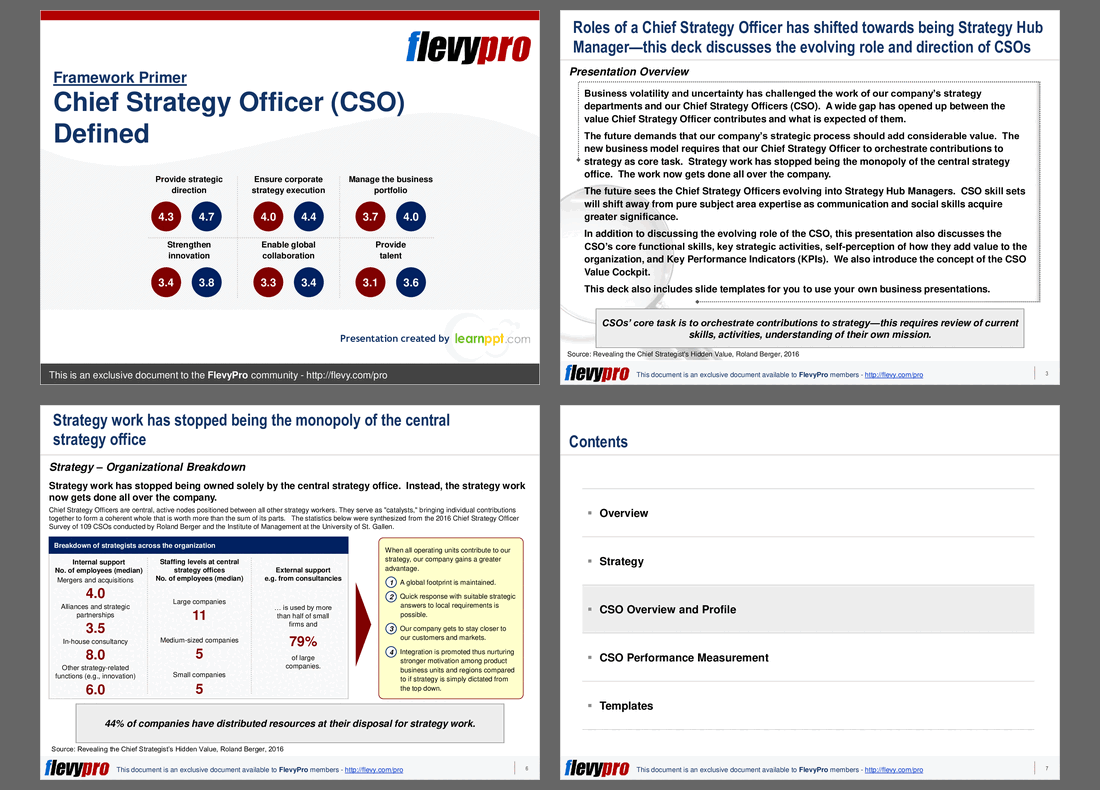
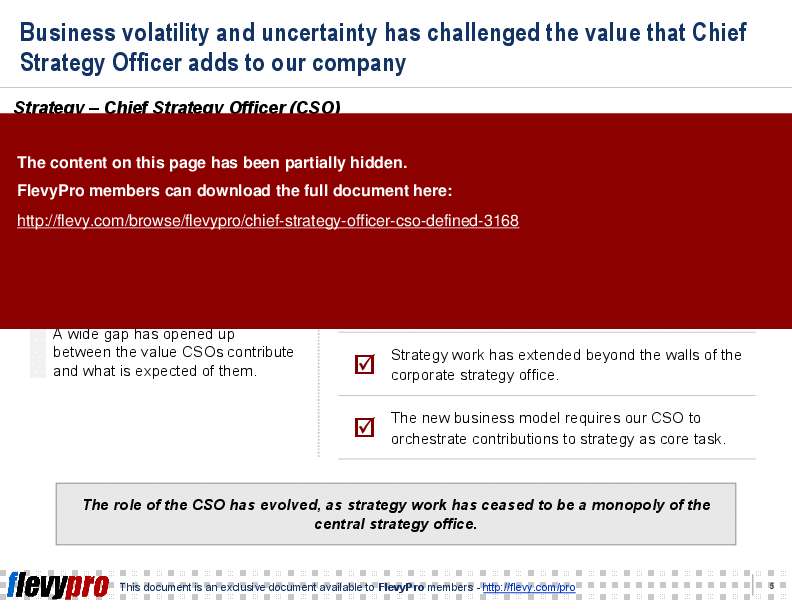
However, this CSO role is evolving. Business volatility and uncertainty has challenged the work of our company's strategy departments and our Chief Strategy Officers. A wide gap has opened up between the value Chief Strategy Officer contributes and what is expected of them.
This PowerPoint presentation discusses the CSO role and its evolution in modern times. This PPT on the Chief Strategy Officer role is organized into 3 main sections:
The future demands that an organization's strategic process should add considerable value. The new business model requires that our Head of Strategy orchestrate contributions to Strategy as core task. Strategy work has stopped being the monopoly of the central strategy office. The work now gets done all over the company.
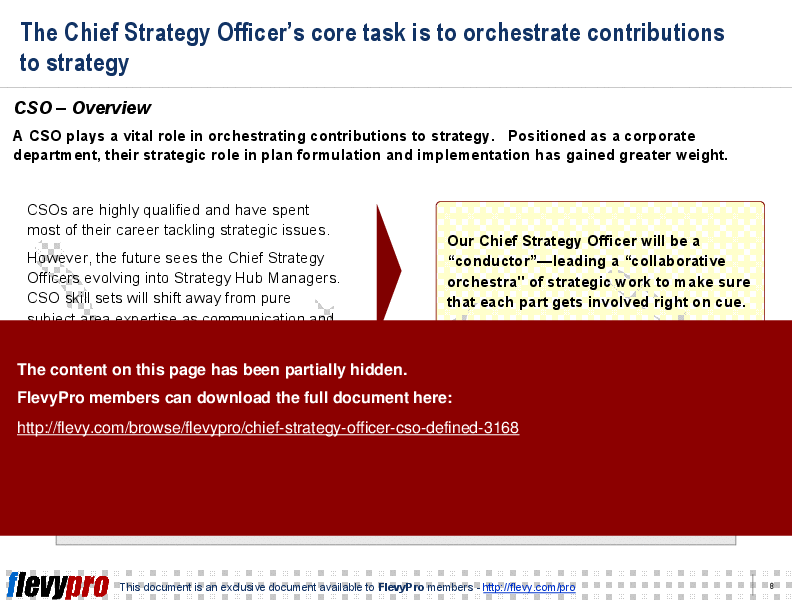
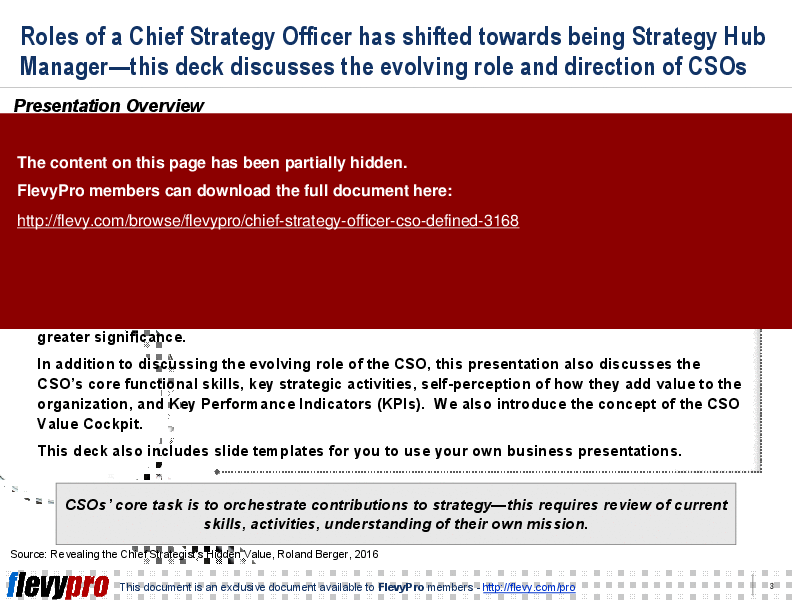
Thus, the future sees the Chief Strategy Officers evolving into Strategy Hub Managers. CSO skill sets will shift away from pure subject area expertise as communication and social skills acquire greater significance. CSOs’ core task is to orchestrate contributions to strategy—this requires review of current skills, activities, understanding of their own mission.
In addition to discussing the evolving role of the CSO, this presentation also discusses the CSO's core functional skills, key strategic activities, self-perception of how they add value to the organization, and Chief Strategy Officer KPIs (Key Performance Indicators). We also introduce the concept of the CSO Value Cockpit.
This PPT also includes slide templates depicting (1) Strategy Organizational Breakdown, (2) CSO Functional Skill Breakdown, (3) CSO Activities & Initiatives Breakdown, and (4) CSO Self-perception, which you can customize and utilize in your own business presentations.
The presentation also covers the decentralized structure of strategy work and the importance of CSO performance measurement. It includes customizable templates for organizational breakdown, functional skills, activities, and self-perception.
What are the core responsibilities of a Chief Strategy Officer today?
The CSO’s primary responsibility is strategy development and management, which includes formulating corporate vision and strategy, overseeing strategic planning, and leading strategic initiatives. The CSO typically reports directly to the CEO and is accountable for those strategy functions as described in the presentation’s opening definition.
How is the CSO role changing in response to business volatility?
The role is evolving from a central subject-matter expert to a Strategy Hub Manager who orchestrates contributions to strategy across the organization. Skill emphasis is shifting away from pure subject expertise toward communication and social skills, as strategy work now gets done all over the company.
What approaches exist to measure CSO performance and value?
Organizations should apply KPI-driven performance measurement and tools that capture how the CSO orchestrates strategic contributions; the presentation introduces the CSO Value Cockpit and discusses Chief Strategy Officer KPIs as part of performance management, including a Value Cockpit concept.
When should a company decentralize strategy work rather than keep it centralized?
Decentralization is indicated when strategic work and initiatives are being generated across business units and require orchestration rather than single-point control; the overview notes that strategy work has stopped being the monopoly of the central office and now gets done across the company.
What slide templates help map a CSO’s activities, skills, and organizational role?
Useful templates include an organizational breakdown to show where strategy sits, a functional skill breakdown to map CSO competencies, an activities and initiatives breakdown to catalog strategic work, and a self-perception slide for the CSO’s view—four customizable templates in total.
How can a CEO leverage a CSO to improve strategic execution?
A CEO can assign the CSO to orchestrate contributions across units, align strategic planning with corporate vision, and require KPI-based performance reporting; the presentation supplies frameworks for orchestration and measurement such as the CSO Value Cockpit and KPI discussion.
What should I look for when buying a CSO role toolkit or PowerPoint?
Look for materials that cover strategy context, a CSO profile and skills assessment, and performance measurement tools, plus editable templates you can reuse; the referenced presentation is organized into 3 sections and includes 4 customizable slide templates.
I’m a new Head of Strategy preparing to brief the CEO — what structure helps organize that briefing?
Structure the briefing into 3 parts: strategic context and vision, the CSO role and capability profile, and how you will measure CSO effectiveness; the presentation follows that three-section structure to guide such briefings.
The 2016 Chief Strategy Officer Survey reveals that 72% of Chief Strategy Officers (CSOs) report directly to the CEO, highlighting their role in strategic decision-making. This direct reporting line enhances communication and alignment on strategic initiatives. Only 20% of CSOs hold a seat on the executive board, indicating limited influence in organizational governance. Notably, no CSOs in sectors like financial services, retail, and consumer goods occupy executive board positions, suggesting a gap in strategic representation. Conversely, the manufacturing sector shows below-average CSO representation in top management, indicating potential development areas. Top-performing companies demonstrate best practices, with one in 4 having a CSO on the management board and one in 3 featuring a dedicated strategy committee, underscoring the importance of CSOs in driving corporate strategy.
The CSO Value Cockpit framework measures Chief Strategy Officers' performance, addressing the limitations of traditional Key Performance Indicators (KPIs) in reflecting their value-added activities. It includes 3 sections: Financial performance, Strategic performance, and CSO performance. Financial metrics such as EBIT, working capital, and return on capital assess financial health and operational efficiency influenced by the CSO. Strategic performance metrics focus on qualitative measures like product readiness, market shares, stakeholder satisfaction, and execution of strategic initiatives, highlighting the CSO's broader impact on organizational strategy. The CSO performance section emphasizes metrics directly related to the CSO's role, including feedback mechanisms and successful project delivery, underscoring the need for continuous evaluation of their contributions.
This PPT slide analyzes the roles of Chief Strategy Officers (CSOs) in organizations, highlighting their limited involvement in implementation and performance measurement. Key activities categorized by importance include: over 75% for strategy formulation, planning, and strategic initiatives; 60-75% for competitive analysis, market research, and new business model development; 50-60% for coordination across businesses and strategy communication; and below 50% for divestments, executive management assistance, and investor relations. The evolving role of CSOs suggests a transition towards Strategy Hub Managers, emphasizing communication and collaboration skills over traditional expertise, reflecting a trend towards integrated strategy management.
The evolving role of the Chief Strategy Officer (CSO) emphasizes their transition into Strategy Hub Managers, broadening their focus from technical expertise to enhanced communication and social skills. The CSO is critical in formulating and implementing strategic plans, necessitating collaboration across departments. Acting as a conductor, the CSO ensures alignment and engagement in the strategic process, facilitating coordination among teams. To adapt, new methods and communication pathways must be developed, highlighting the proactive approach to strategy management. This evolution underscores the need for CSOs to be versatile leaders capable of navigating complex organizational dynamics.
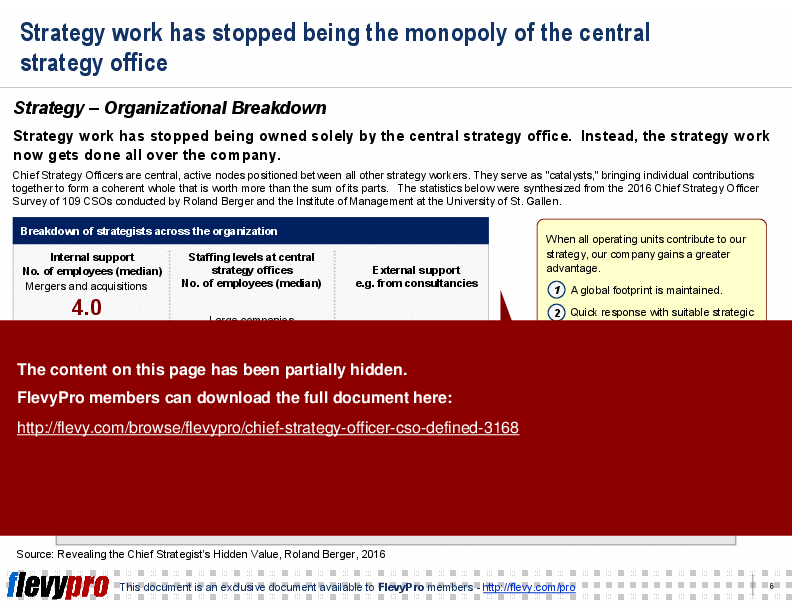
This PPT slide outlines the evolving role of strategy work in organizations, highlighting a shift from centralized control by the strategy office to a collective effort across departments. Chief Strategy Officers (CSOs) act as catalysts, integrating contributions to form cohesive strategies. Data shows that large companies have an average of 11 employees in the central strategy office, while medium and small companies have 5 each. External support from consultancies is utilized by 79% of large firms and over half of smaller firms, indicating reliance on external expertise. Engaging all operational units in strategy formulation enhances global reach, responsiveness to local needs, customer relationships, and integration across business units, motivating teams by involving them in the strategic process.
Source: Best Practices in Strategy Development, Chief Strategy Officer PowerPoint Slides: Chief Strategy Officer (CSO) Defined PowerPoint (PPT) Presentation Slide Deck, LearnPPT Consulting
This framework is developed by a team of former McKinsey and Big 4 consultants. The presentation follows the headline-body-bumper slide format used by global consulting firms.
For $10.00 more, you can download this document plus 2 more FlevyPro documents. That's just $13 each.
ABOUT FLEVYPRO
This document is part of the FlevyPro Library, a curated knowledge base of documents for our FlevyPro subscribers.
FlevyPro is a subscription service for on-demand business frameworks and analysis tools. FlevyPro subscribers receive access to an exclusive library of curated business documents—business framework primers, presentation templates, Lean Six Sigma tools, and more—among other exclusive benefits.
The average daily rate of a McKinsey consultant is $6,625 (not including expenses). The average price of a Flevy document is $65.
Trusted by over 10,000+ Client Organizations
Since 2012, we have provided business templates to over 10,000 businesses and organizations of all sizes, from startups and small businesses to the Fortune 100, in over 130 countries.
"As a consultant requiring up to date and professional material that will be of value and use to my clients, I find Flevy a very reliable resource.
The variety and quality of material available through Flevy offers a very useful and commanding source for information. Using Flevy saves me time, enhances my expertise and ends up being a good decision."
– Dennis Gershowitz, Principal at DG Associates
"As a young consulting firm, requests for input from clients vary and it's sometimes impossible to provide expert solutions across a broad spectrum of requirements. That was before I discovered Flevy.com.
Through subscription to this invaluable site of a plethora of topics that are key and crucial to consulting, I
have been able to exceed expectations and deliver quality advice and solutions to my clients. The quality and expertise of the authors are exemplary and gives me great confidence to use as part of my service offerings.
I highly recommend this company for any consultant wanting to apply international best practice standards in their service offerings.
"
– Nishi Singh, Strategist and MD at NSP Consultants
"Flevy is now a part of my business routine. I visit Flevy at least 3 times each month.
Flevy has become my preferred learning source, because what it provides is practical, current, and useful in this era where the business world is being rewritten.

many challenges and there is the need to make the right decisions in a short time, with so much scattered information, we are fortunate to have Flevy. Flevy investigates, selects, and puts at our disposal the best of the best to help us be successful in our work.
"
– Omar Hernán Montes Parra, CEO at Quantum SFE
"My FlevyPro subscription provides me with the most popular frameworks and decks in demand in today’s market. They not only augment my existing consulting and coaching offerings and delivery, but also keep me abreast of the latest trends, inspire new products and service offerings for my practice, and educate me
in a fraction of the time and money of other solutions. I strongly recommend FlevyPro to any consultant serious about success.
"
– Bill Branson, Founder at Strategic Business Architects
"As a consulting firm, we had been creating subject matter training materials for our people and found the excellent materials on Flevy, which saved us 100's of hours of re-creating what already exists on the Flevy materials we purchased."
– Michael Evans, Managing Director at Newport LLC
"As a niche strategic consulting firm, Flevy and FlevyPro frameworks and documents are an on-going reference to help us structure our findings and recommendations to our clients as well as improve their clarity, strength, and visual power. For us, it is an invaluable resource to increase our impact and value."
– David Coloma, Consulting Area Manager at Cynertia Consulting
"Flevy is our 'go to' resource for management material, at an affordable cost. The Flevy library is comprehensive and the content deep, and typically provides a great foundation for us to further develop and tailor our own service offer."
– Chris McCann, Founder at Resilient.World
"Flevy.com has proven to be an invaluable resource library to our Independent Management Consultancy, supporting and enabling us to better serve our enterprise clients.
The value derived from our [FlevyPro] subscription in terms of the business it has helped to gain far exceeds the investment made, making a subscription a no-brainer for any growing consultancy – or in-house strategy team."
– Dean Carlton, Chief Transformation Officer, Global Village Transformations Pty Ltd.
Download our free compilation of 50+ Strategy & Transformation slides and templates. Frameworks include McKinsey 7-S, Balanced Scorecard, Disruptive Innovation, BCG Curve, and many more.