 Click main image to view in full screen.
Capability Maturity Model (CMM) (PowerPoint PPT Slide Deck)
PowerPoint (PPT) 10 Slides FlevyPro Document


MATURITY MODEL PPT DESCRIPTION
The Capability Maturity Model (CMM) is an organizational model that describes 5 evolutionary stages (or levels), in which the business processes in an organization are managed. The term "maturity" relates to the degree of formality and optimization of processes, from ad hoc practices, to formally defined steps, to managed result metrics, to active optimization of the processes.
It was originally developed for software development and intended to help software organizations improve the maturity of their software processes in terms of an evolutionary path. However, this model can be applied to other business processes, as it describes evolutionary levels of organizations in general. It describes the level of management that an organization has realized or strives for.
This presentation provides a high level overview to the Capability Maturity Model. CMM been used extensively worldwide in government offices, commerce, industry and software-development organizations.
CMM provides a structured approach to process improvement by defining key process areas and exemplary practices that drive disciplined business processes. The model's focus on maturity levels, key practices, and process elements ensures that organizations can systematically enhance their capabilities. This PPT is essential for executives aiming to achieve operational excellence through a clear, evolutionary path.
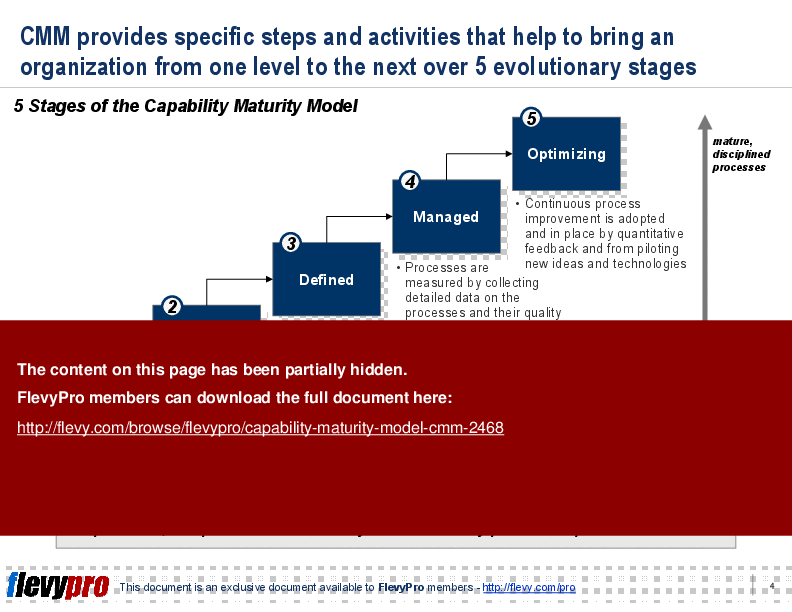
The presentation breaks down the 5 stages of the Capability Maturity Model, detailing the specific steps and activities required to transition from one level to the next. It emphasizes the importance of continuous process improvement and the role of quantitative feedback in optimizing business practices. This resource is invaluable for leaders committed to driving sustainable growth and efficiency.
Got a question about this document? Email us at flevypro@flevy.com.
MARCUS OVERVIEW
This synopsis was written by Marcus [?] based on the analysis of the full 10-slide presentation.
Executive Summary
The Capability Maturity Model (CMM) presentation provides a structured framework for organizations to assess and enhance their process maturity across 5 evolutionary stages. Developed by experts from McKinsey and other leading consulting firms, this model facilitates the transition from ad hoc practices to optimized, disciplined processes. By implementing CMM, organizations can achieve operational excellence, improve process management, and foster continuous improvement across various business functions.
Who This Is For and When to Use
• Corporate executives seeking to enhance operational processes.
• Integration leaders aiming to implement structured process improvements.
• Consultants advising organizations on process optimization strategies.
• Project managers responsible for driving efficiency in business operations.
Best-fit moments to use this deck:
• During strategic planning sessions focused on process improvement initiatives.
• When assessing current process capabilities and identifying areas for enhancement.
• In workshops aimed at training teams on process maturity and best practices.
Learning Objectives
• Define the 5 stages of the Capability Maturity Model and their significance.
• Identify key process areas essential for achieving higher maturity levels.
• Establish metrics for measuring process effectiveness and efficiency.
• Implement best practices for continuous process improvement.
• Develop a roadmap for transitioning from one maturity level to the next.
• Assess organizational readiness for adopting CMM principles.
Table of Contents
• Overview (page 3)
• 5 Stages of the Capability Maturity Model (page 4)
• Structure of the Capability Maturity Model (page 6)
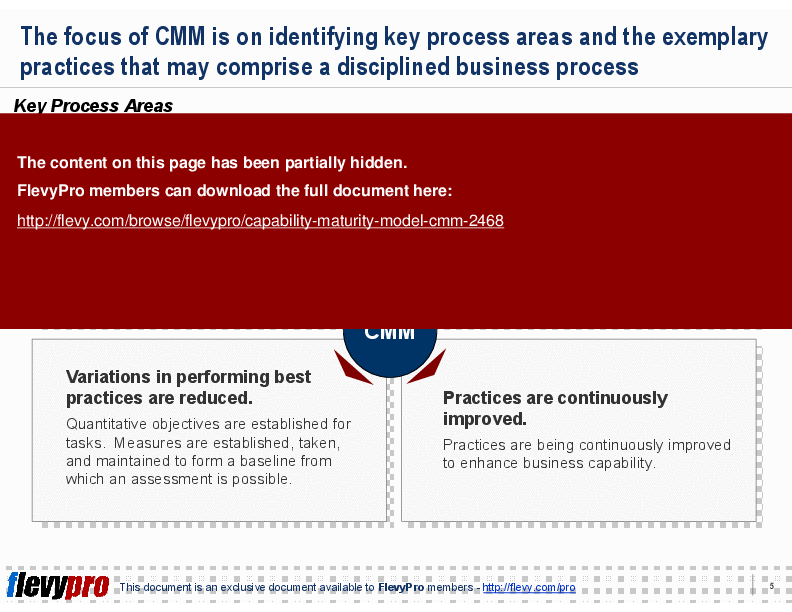
• Key Process Areas (page 5)
• Process Elements (page 8)
Primary Topics Covered
• Overview of CMM - An introduction to the Capability Maturity Model, its origins, and its application across various industries.
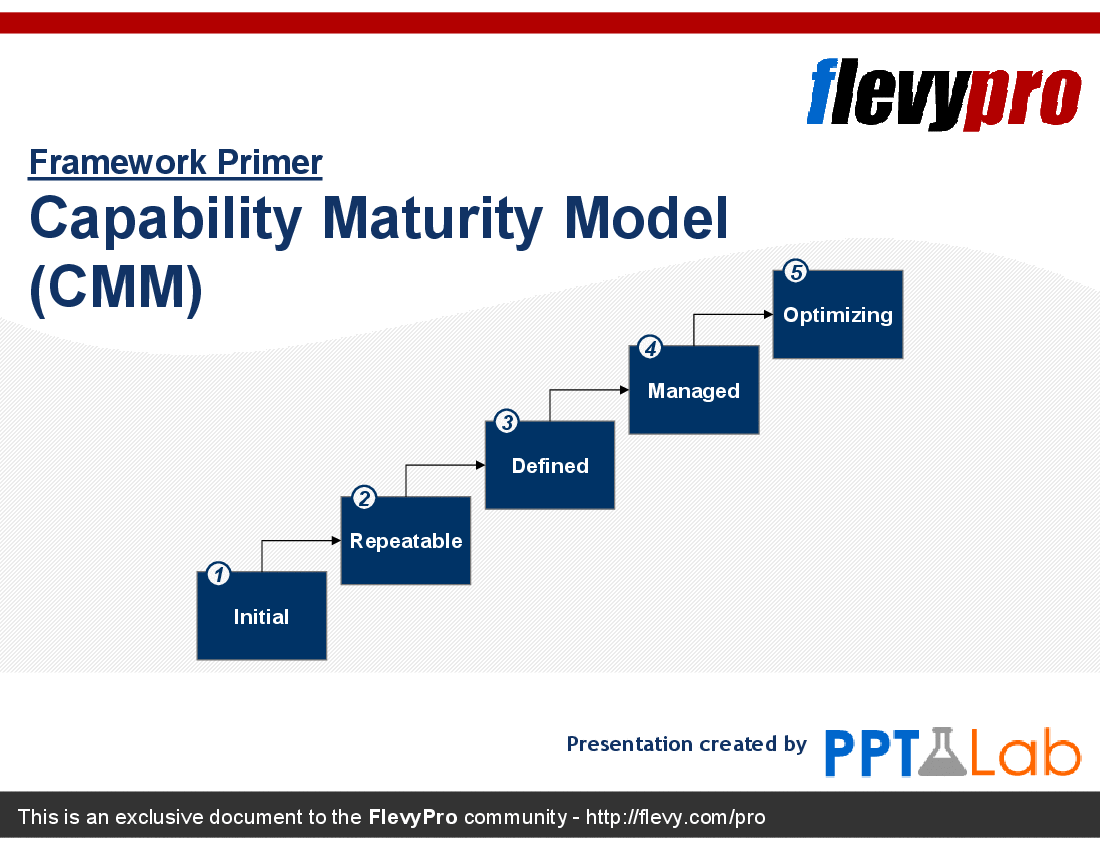
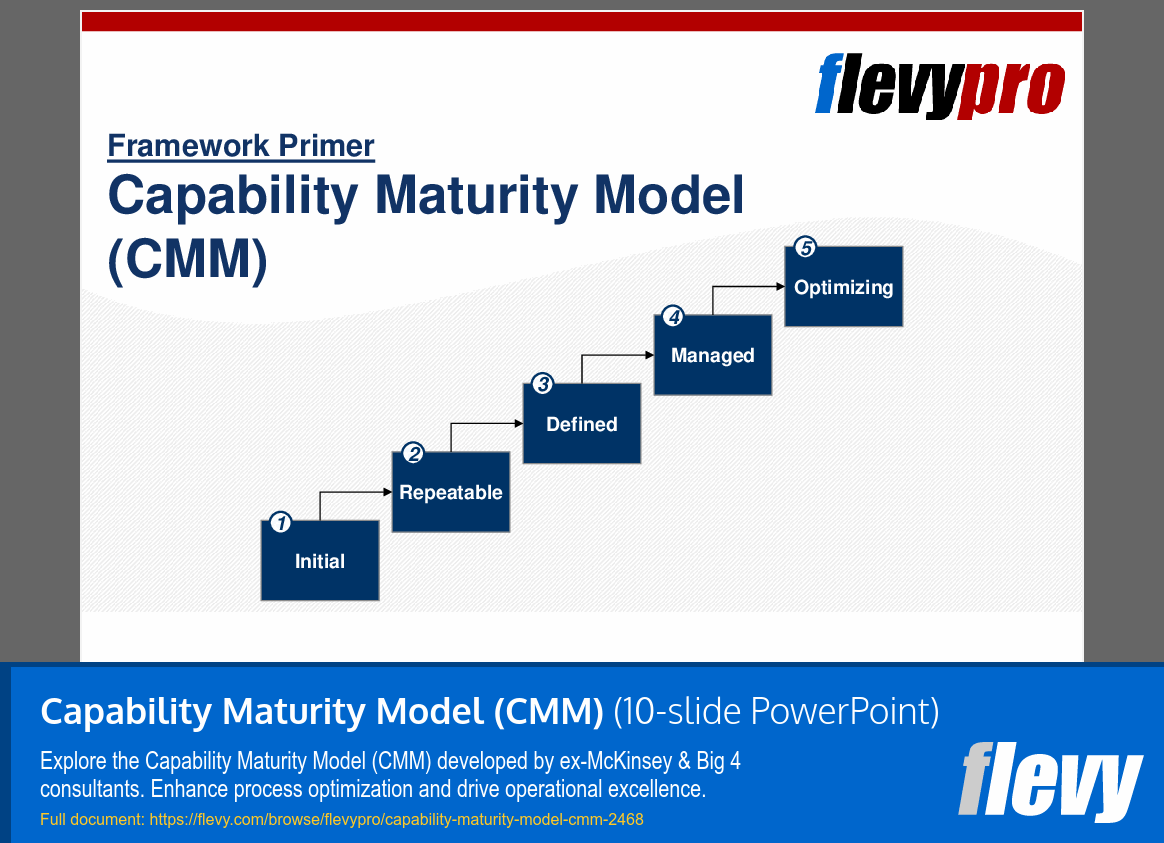
• Five Stages of CMM - Detailed descriptions of the 5 maturity levels: Initial, Repeatable, Defined, Managed, and Optimizing.
• Key Process Areas - Identification of critical process areas that contribute to organizational maturity and effectiveness.
• Process Definition Criteria - Essential elements that define how processes should be structured and documented for optimal performance.
• Continuous Improvement Practices - Strategies for fostering an environment of ongoing process enhancement and innovation.
Deliverables, Templates, and Tools
• Maturity assessment framework to evaluate current process capabilities.
• Process documentation templates to standardize practices across the organization.
• Metrics and KPIs for tracking process performance and improvement.
• Best practice guidelines for implementing CMM principles effectively.
• Roadmap template for transitioning between maturity levels.
Slide Highlights
• Overview slide introducing the Capability Maturity Model and its significance.
• Visual representation of the 5 stages of maturity, illustrating the progression from Initial to Optimizing.
• Key Process Areas slide outlining the essential practices for achieving maturity.
• Process Elements slide detailing the criteria necessary for effective process definition.
• Continuous Improvement Practices slide emphasizing the importance of ongoing enhancement.
Potential Workshop Agenda
Introduction to CMM (30 minutes)
• Overview of the Capability Maturity Model and its relevance.
• Discussion on the 5 stages and their implications for organizations.
Key Process Areas Exploration (60 minutes)
• Identify and analyze key process areas relevant to participants' organizations.
• Group activity to map current processes against CMM stages.
Continuous Improvement Strategies (45 minutes)
• Discuss best practices for fostering a culture of continuous improvement.
• Develop action plans for implementing CMM principles in participants' organizations.
Customization Guidance
• Tailor the maturity assessment framework to align with specific organizational goals.
• Adjust process documentation templates to reflect industry-specific practices and terminology.
• Incorporate organizational metrics and KPIs into the performance tracking guidelines.
Secondary Topics Covered
• Organizational change management in the context of process improvement.
• The role of leadership in driving process maturity initiatives.
• Case studies demonstrating successful CMM implementations across industries.
Topic FAQ
What are the 5 stages of the Capability Maturity Model and what do they represent?
The 5 stages define increasing formality and optimization of processes: Initial (ad hoc practices), Repeatable (basic project management), Defined (standardized processes), Managed (measured and controlled), and Optimizing (continuous improvement and innovation). These stages describe evolutionary levels organizations can map their processes to and improve across 5 stages.How can organizations apply CMM outside of software development?
CMM’s staged framework can be applied to any business process by mapping existing practices to maturity levels, standardizing documentation, defining KPIs, and establishing improvement roadmaps. The model’s focus on process elements and key practices makes it applicable across functions beyond software, enabling assessment against the 5 evolutionary stages.What are Key Process Areas (KPAs) in CMM and why do they matter?
KPAs are clusters of related activities that collectively achieve important organizational goals; they define focus areas for capability building. Identifying and improving KPAs helps organizations move between maturity levels. The presentation includes a dedicated Key Process Areas slide (see page 5) outlining these critical practice clusters.What should I look for when selecting a CMM toolkit or slide deck for my team?
Prioritize materials that include a maturity assessment framework, process documentation templates, measurable metrics/KPIs, a transition roadmap, and guidance on customization. Also consider the methodological pedigree (e.g., McKinsey-originated concepts) and workshop-ready content like agenda suggestions and assessment tools, such as a roadmap template and assessment framework.Are CMM templates and slides cost-effective for small teams with limited resources?
Templates reduce assessment and documentation time by providing structured formats, lowering preparation effort and facilitating consistent measurement. Value depends on scope, timeline, and team capacity; the CMM presentation supplies process documentation templates, metrics and KPIs, and a roadmap template to accelerate implementation.I need to assess current process capabilities after a merger—how can CMM help?
Use CMM to map legacy and target processes against the 5 maturity levels, run a maturity assessment to identify gaps, standardize process documentation, and create a phased roadmap for harmonization. The deck’s maturity assessment framework and roadmap template support gap analysis and transition planning.How should progress be measured when implementing CMM-based improvements?
Progress is measured through quantitative objectives and tracked KPIs that reflect process effectiveness and efficiency. Establish baseline metrics, monitor performance against targets, and use periodic reassessments to confirm movement across maturity levels; the presentation includes suggested metrics and KPIs to support measurement.How customizable are CMM templates for industry-specific needs and terminology?
The materials are intended to be tailored: the maturity assessment framework and process documentation templates can be adjusted to industry-specific practices, terminology, and organizational KPIs. The deck also provides guidance on aligning templates and metrics with organizational goals and change readiness.Document FAQ
These are questions addressed within this presentation.
What is the Capability Maturity Model?
The Capability Maturity Model is a framework that outlines 5 stages of process maturity, helping organizations assess and improve their operational processes.
How can CMM be applied outside of software development?
While originally designed for software processes, CMM can be applied to any business process, providing a structured approach to process optimization.
What are the 5 stages of CMM?
The 5 stages are Initial, Repeatable, Defined, Managed, and Optimizing, each representing a level of process maturity and management.
What are Key Process Areas (KPAs)?
KPAs are clusters of related activities that, when performed collectively, achieve important organizational goals.
How does CMM support continuous improvement?
CMM emphasizes the importance of ongoing process evaluation and enhancement, encouraging organizations to adopt best practices and innovate.
What metrics should be used to measure process maturity?
Organizations should establish quantitative objectives and performance metrics to assess the effectiveness of their processes.
Can CMM be customized for specific industries?
Yes, organizations can tailor the CMM framework and associated tools to fit their unique industry requirements and operational contexts.
What resources are available for implementing CMM?
The presentation includes templates, guidelines, and best practices to assist organizations in adopting the Capability Maturity Model effectively.
Glossary
• Capability Maturity Model (CMM) - A framework for assessing and improving organizational processes across 5 maturity levels.
• Maturity Levels - Stages that describe the degree of process optimization and management.
• Key Process Areas (KPAs) - Clusters of related activities that achieve specific organizational goals.
• Continuous Improvement - Ongoing efforts to enhance processes, products, or services.
• Process Definition Criteria - Elements that define how processes should be structured and documented.
• Metrics - Quantitative measures used to assess process performance.
• Best Practices - Established methods that lead to superior results in process management.
• Organizational Change Management - Strategies for managing the people side of change during process improvements.
• Performance Tracking - Monitoring and evaluating process effectiveness over time.
• Process Documentation - The practice of recording processes to ensure consistency and standardization.
• Action Plan - A detailed strategy outlining steps to achieve specific goals.
• Stakeholders - Individuals or groups with an interest in the outcome of a project or process.
• Innovation - The introduction of new ideas, methods, or products to improve processes.
• Operational Excellence - The execution of the business strategy more consistently and reliably than the competition.
• Framework - A structured approach to solving a problem or achieving a goal.
• Governance - The framework of rules and practices by which an organization is directed and controlled.
• Change Readiness - The state of preparedness of an organization to implement change.
• Process Optimization - The practice of making processes as effective and efficient as possible.
• Stakeholder Engagement - The process of involving individuals or groups in decision-making.
• Training and Development - Programs designed to enhance the skills and knowledge of employees.
• Implementation - The process of putting a plan or decision into effect.
• Assessment - The evaluation of a process or system to determine its effectiveness.
Source: Best Practices in Maturity Model, Capability Maturity Model PowerPoint Slides: Capability Maturity Model (CMM) PowerPoint (PPT) Presentation Slide Deck, PPT Lab
Did you need more documents?
Consider a FlevyPro subscription from $39/month. View plans here.
For $10.00 more, you can download this document plus 2 more FlevyPro documents. That's just $13 each.




























