
Business Process Model & Notation (BPMN) Primer   40-slide PPT PowerPoint presentation slide deck (PPTX)
$29.00

Business Process Model & Notation (BPMN) Primer (40-slide PPT PowerPoint presentation slide deck (PPTX)) Preview Image
Log in to unlock full preview.
Business Process Model & Notation (BPMN) Primer (40-slide PPT PowerPoint presentation slide deck (PPTX)) Preview Image
Arrow   Click main image to view in full screen.

Business Process Model & Notation (BPMN) Primer (PowerPoint PPTX Slide Deck)

PowerPoint (PPTX) 40 Slides FlevyPro Document

Top 1,000 Best Practice $29.00
FlevyPro price: FREE (included in subscription)
This framework is developed by a team of former McKinsey and Big 4 consultants. The presentation follows the headline-body-bumper slide format used by global consulting firms.
Add to Cart


Immediate download
Free lifetime updates

PROCESS MAPS PPT DESCRIPTION

Editor Summary Business Process Model & Notation (BPMN) Primer is a 40-slide PowerPoint (PPTX) deck by LearnPPT Consulting that introduces BPMN and its 4 core diagram types: Process, Collaboration, Choreography, and Conversation Diagrams. Read more

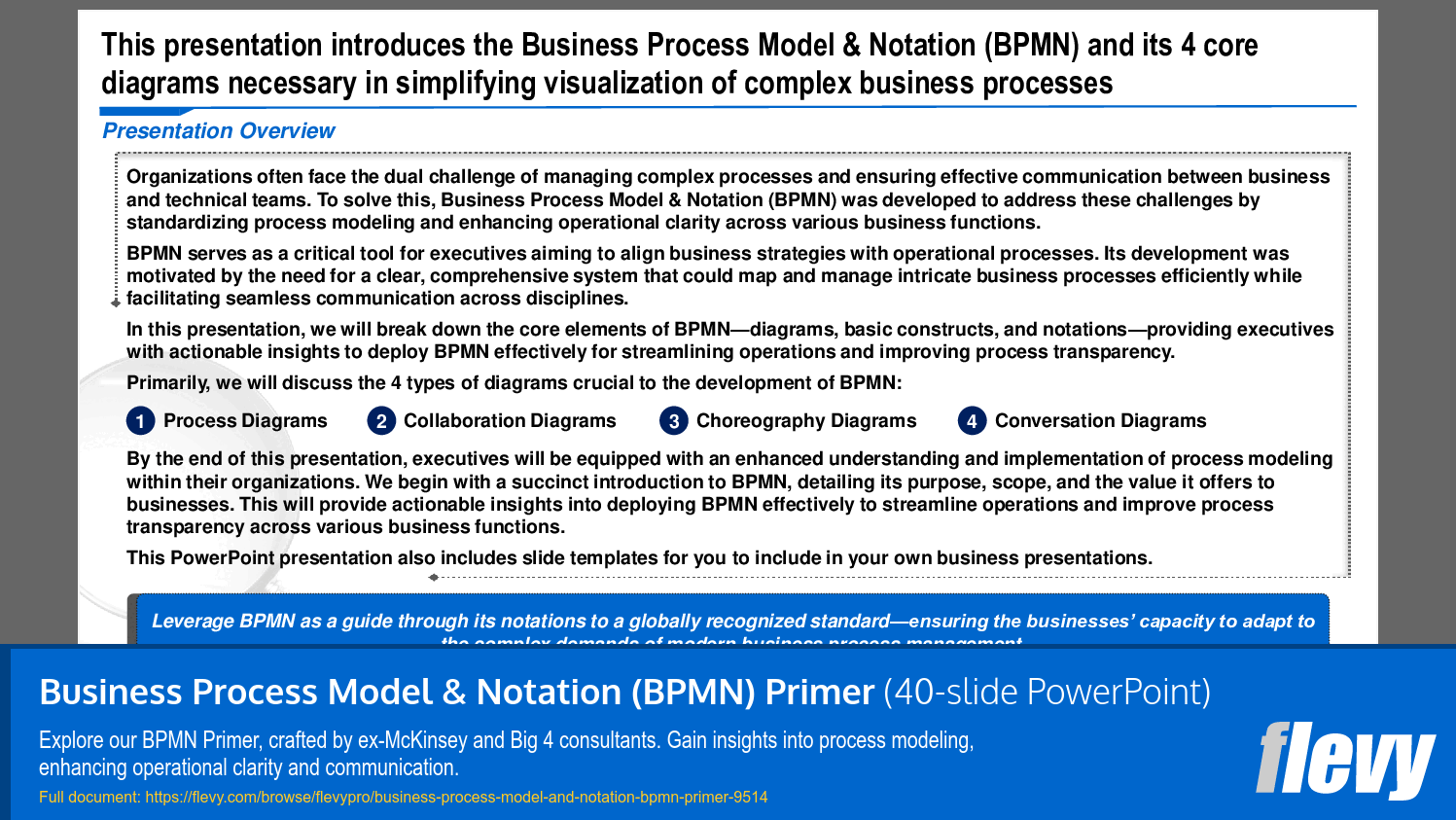
Organizations often face the dual challenge of managing complex processes and ensuring effective communication between business and technical teams. To solve this, Business Process Model & Notation (BPMN) was developed to address these challenges by standardizing process modeling and enhancing operational clarity across various business functions.

BPMN serves as a critical tool for executives aiming to align business strategies with operational processes. Its development was motivated by the need for a clear, comprehensive system that could map and manage intricate business processes efficiently while facilitating seamless communication across disciplines.

In this PPT presentation, we will break down the core elements of BPMN—diagrams, basic constructs, and notations—providing executives with actionable insights to deploy BPMN effectively for streamlining operations and improving process transparency.

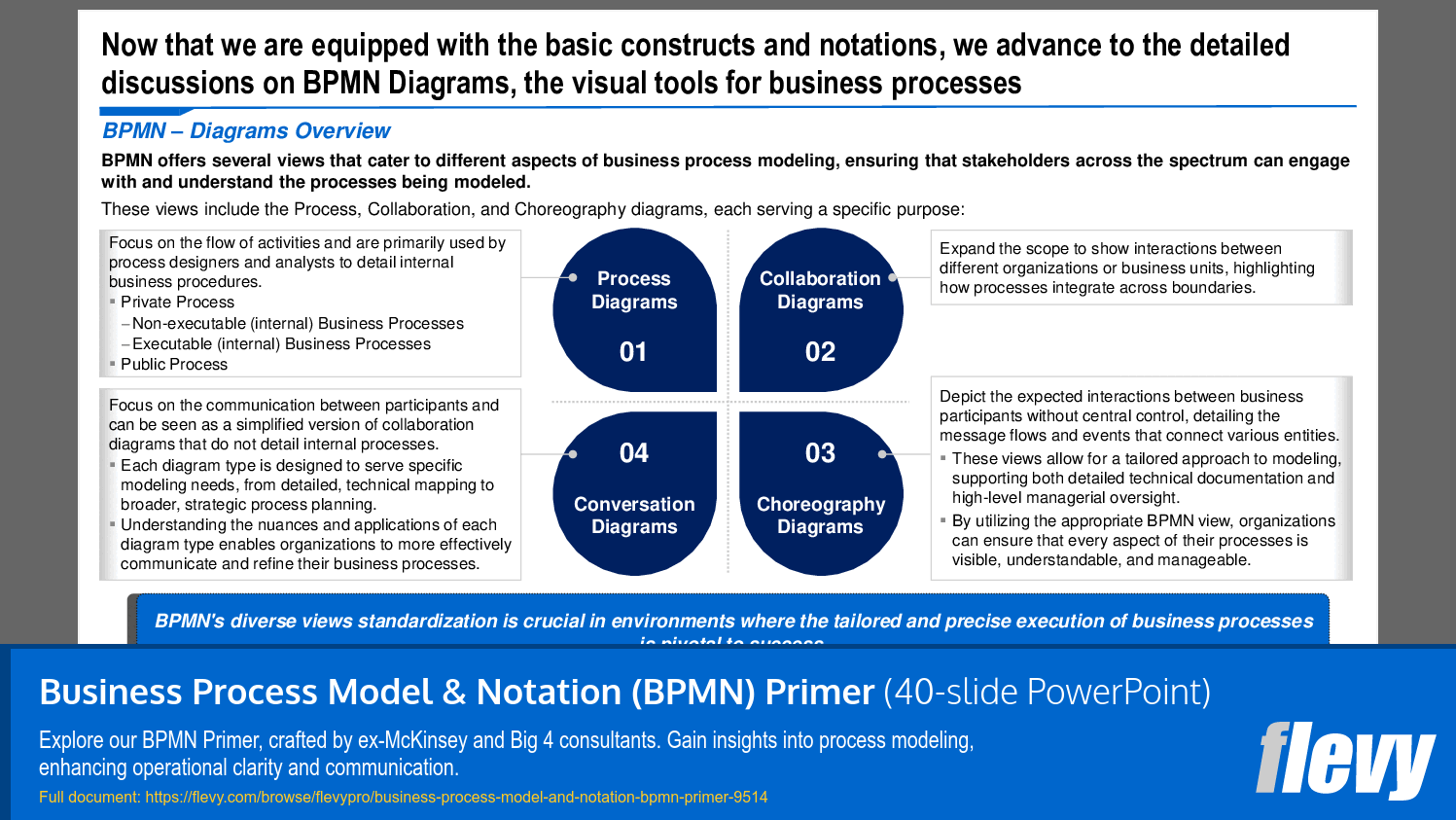
Primarily, we will discuss the 4 types of diagrams crucial to the development of BPMN:

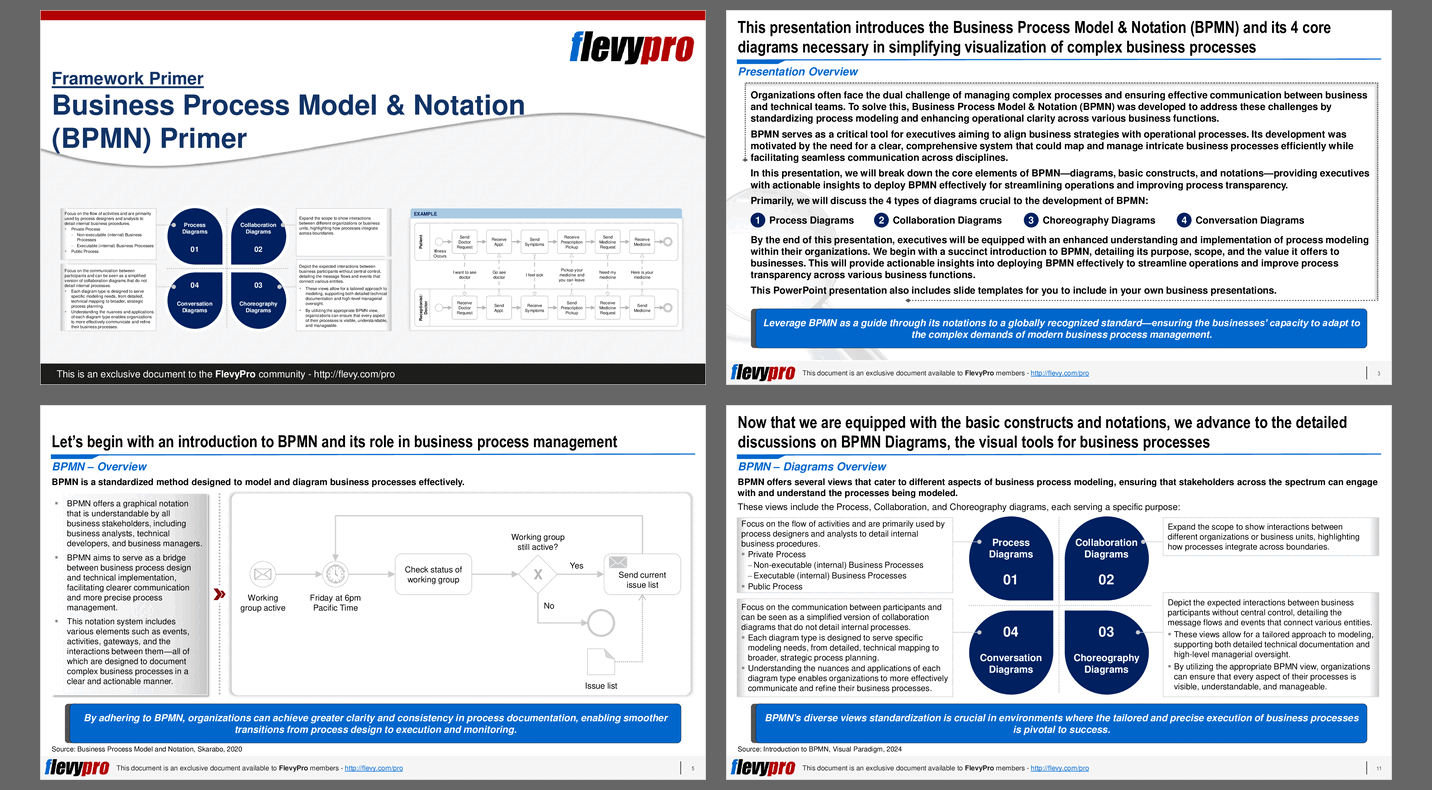
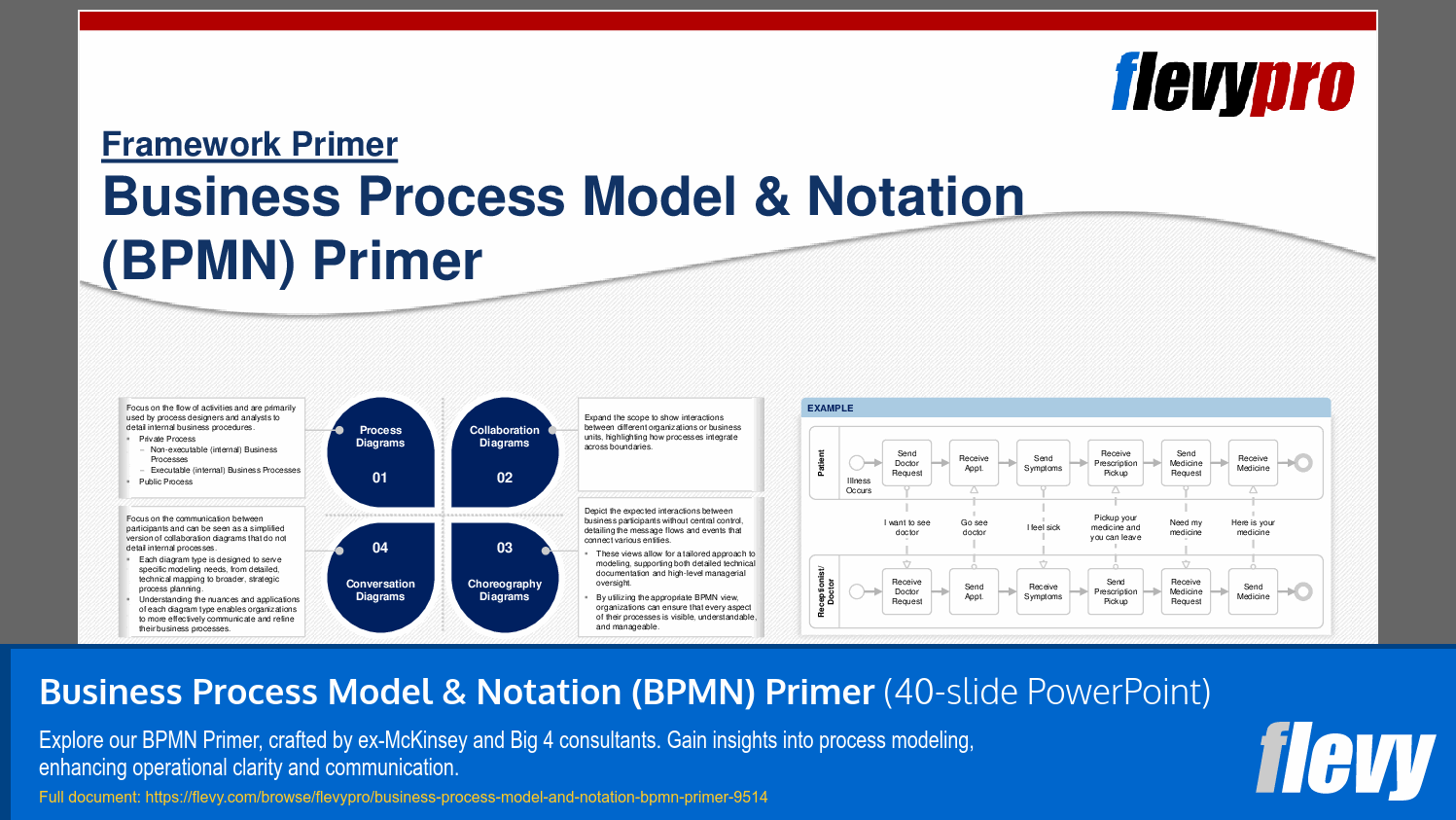
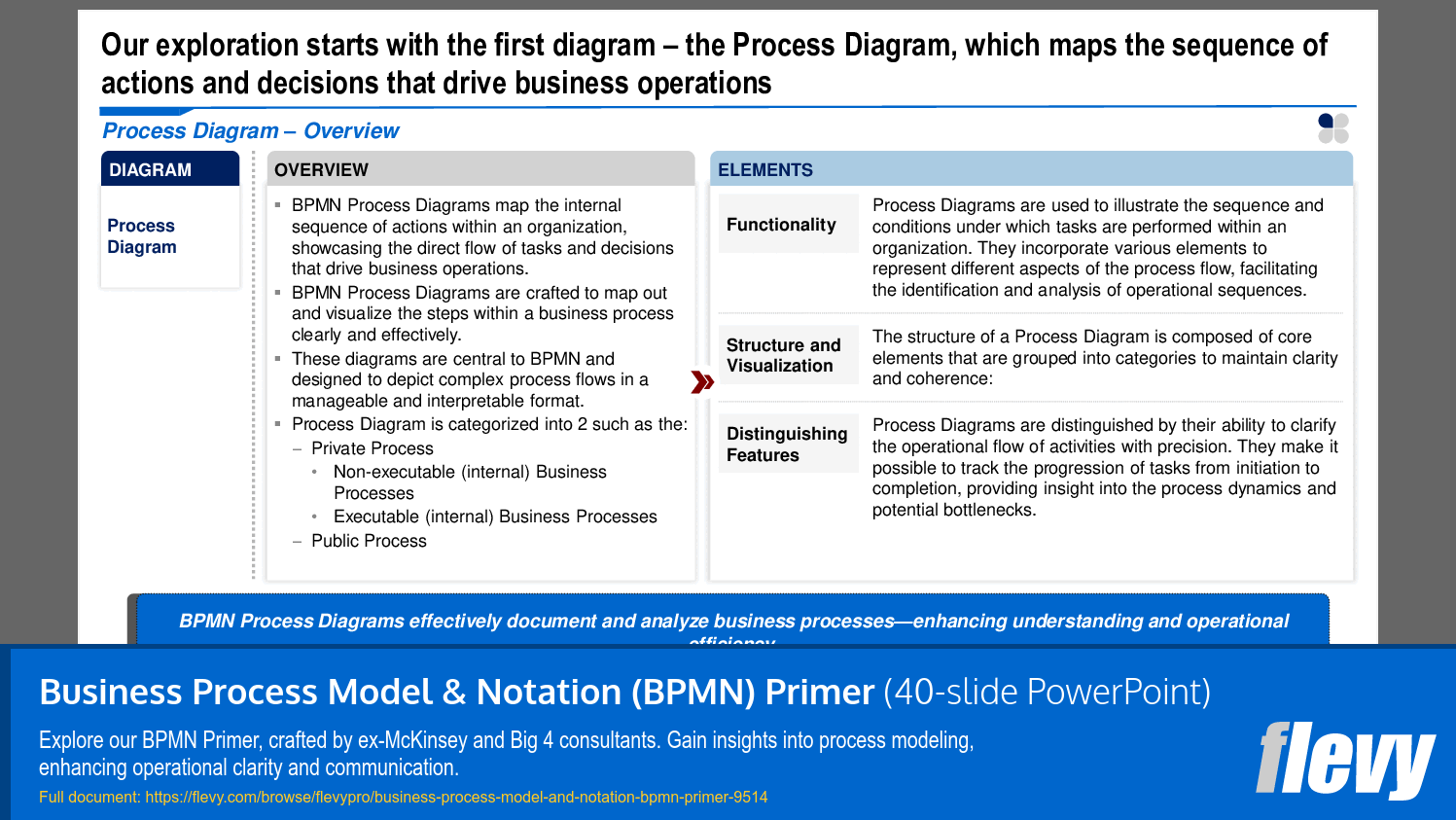
1. Process Diagrams – Focus on the flow of activities and are primarily used by process designers and analysts to detail internal business procedures.

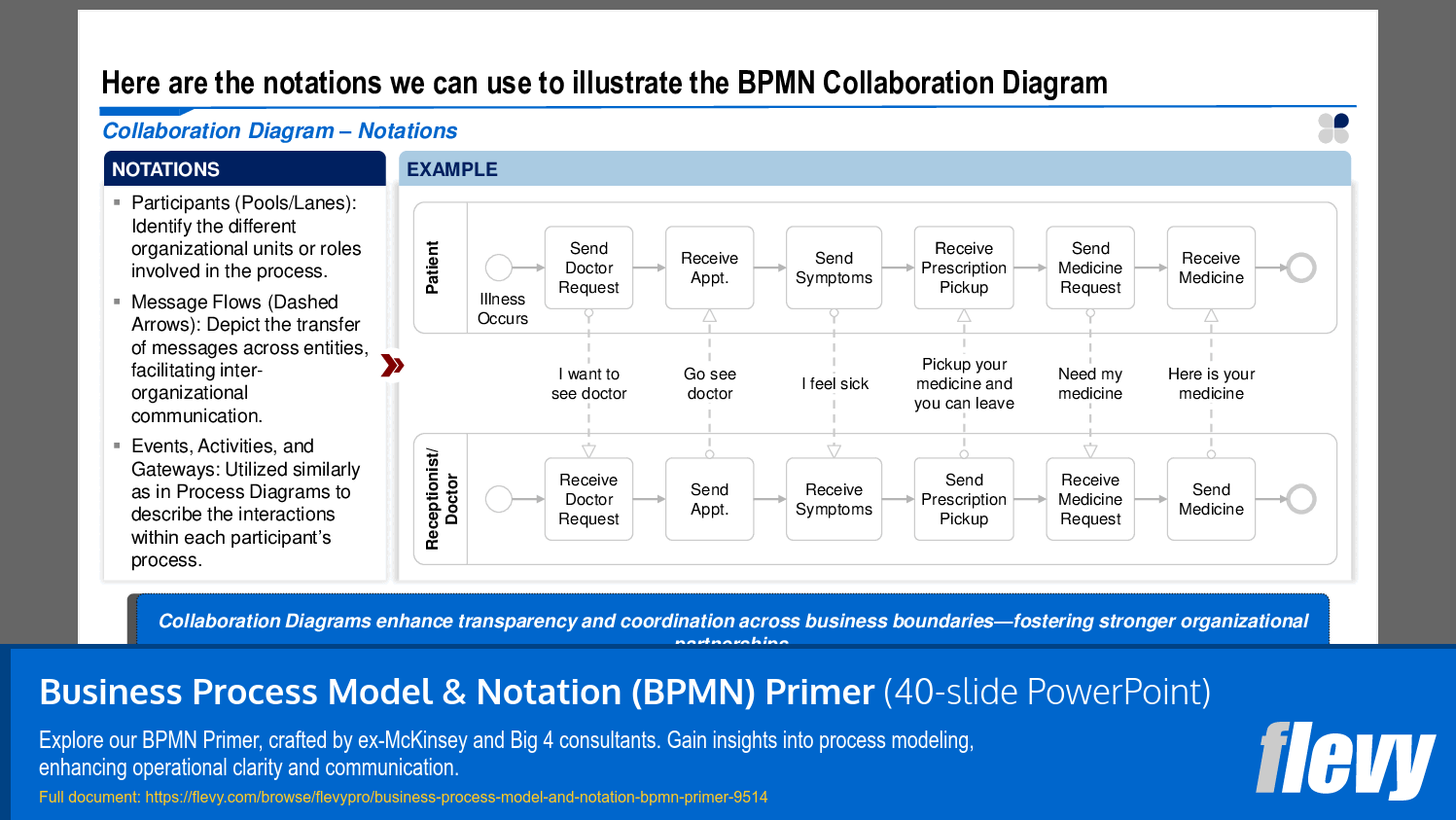
2. Collaboration Diagrams – Expand the scope to show interactions between different organizations or business units, highlighting how processes integrate across boundaries.

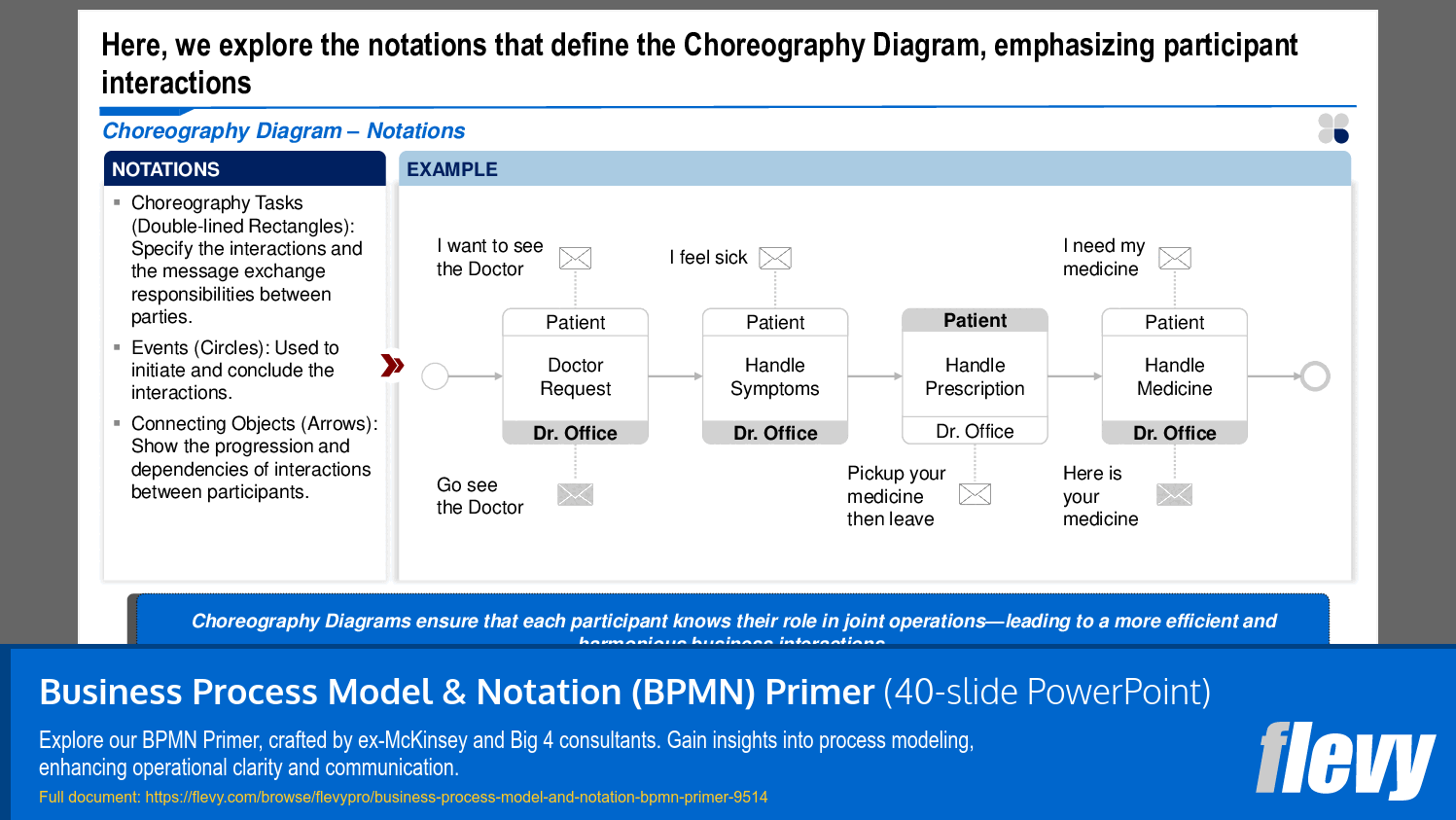
3. Choreography Diagrams – Depict the expected interactions between business participants without central control, detailing the message flows and events that connect various entities.

4. 4. Conversation Diagrams – Focus on the communication between participants and can be seen as a simplified version of collaboration diagrams that do not detail internal processes.

By the end of this PPT presentation, executives will be equipped with an enhanced understanding and implementation of process modeling within their organizations. We begin with a succinct introduction to BPMN, detailing its purpose, scope, and the value it offers to businesses. This will provide actionable insights into deploying BPMN effectively to streamline operations and improve process transparency across various business functions.

This PowerPoint on BPMN presentation also includes slide templates for you to include in your own business presentations.

Got a question about this document? Email us at flevypro@flevy.com.

MARCUS OVERVIEW

This synopsis was written by Marcus [?] based on the analysis of the full 40-slide presentation.


Executive Summary
The Business Process Model & Notation (BPMN) Primer is an essential resource for executives and consultants seeking to enhance operational clarity and streamline communication across business functions. This presentation, crafted by experienced consultants, introduces BPMN as a standardized method for modeling business processes. It covers 4 core diagram types—Process, Collaboration, Choreography, and Conversation Diagrams—each designed to address specific modeling needs. By utilizing BPMN, organizations can effectively document, analyze, and optimize their business processes, ensuring alignment between strategy and execution.

Who This Is For and When to Use
•  Executives aiming to align business strategies with operational processes
•  Process designers and analysts responsible for detailing internal business procedures
•  Integration leaders coordinating cross-functional teams and processes
•  Consultants facilitating process improvement initiatives for clients

Best-fit moments to use this deck:
•  During process improvement workshops to establish a common language
•  When introducing BPMN to teams unfamiliar with process modeling
•  In strategy sessions to visualize and refine operational workflows

Learning Objectives
•  Define BPMN and its significance in business process management
•  Identify the 4 core BPMN diagram types and their specific applications
•  Develop skills to create and interpret BPMN diagrams effectively
•  Enhance communication between business and technical teams using BPMN
•  Apply BPMN to document and analyze complex business processes
•  Utilize BPMN to streamline operations and improve process transparency

Table of Contents
•  Overview (page 3)
•  Business Process Model & Notation (BPMN) (page 4)
•  Process Diagrams (page 13)
•  Collaboration Diagrams (page 19)
•  Choreography Diagrams (page 23)
•  Conversation Diagrams (page 27)
•  Slide Design Structure & Templates (page 31)

Primary Topics Covered
•  BPMN Overview - BPMN serves as a standardized method for modeling business processes, facilitating clearer communication and precise management.
•  Process Diagrams - These diagrams illustrate the sequence of actions within an organization, showcasing task flows and decision points.
•  Collaboration Diagrams - Focus on interactions between multiple business entities, enhancing clarity through visual representation of message flows.
•  Choreography Diagrams - Detail the expected interactions between participants without a central controller, emphasizing peer-to-peer coordination.
•  Conversation Diagrams - Provide a high-level view of interactions, focusing on the exchange of messages between business entities.
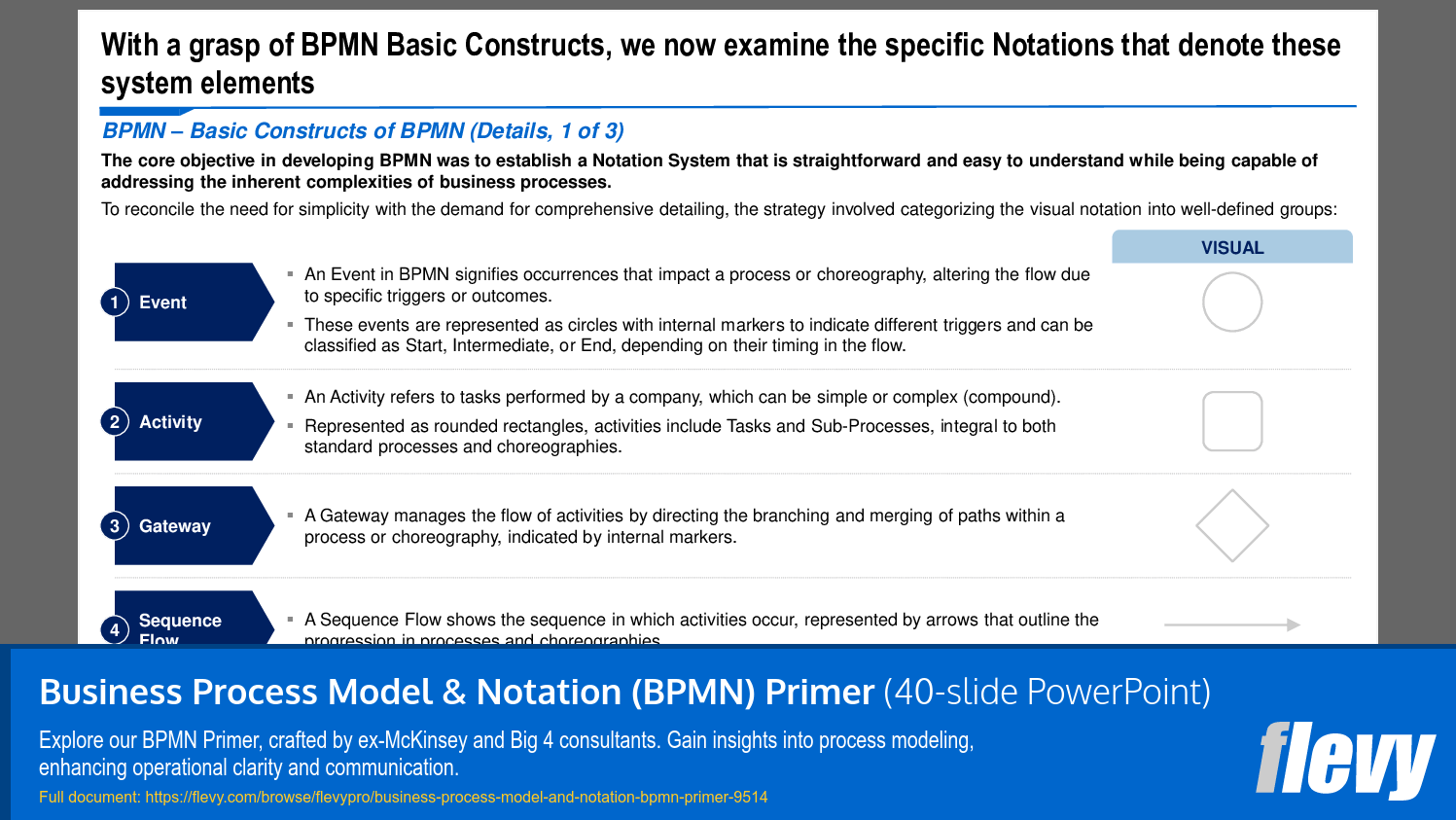
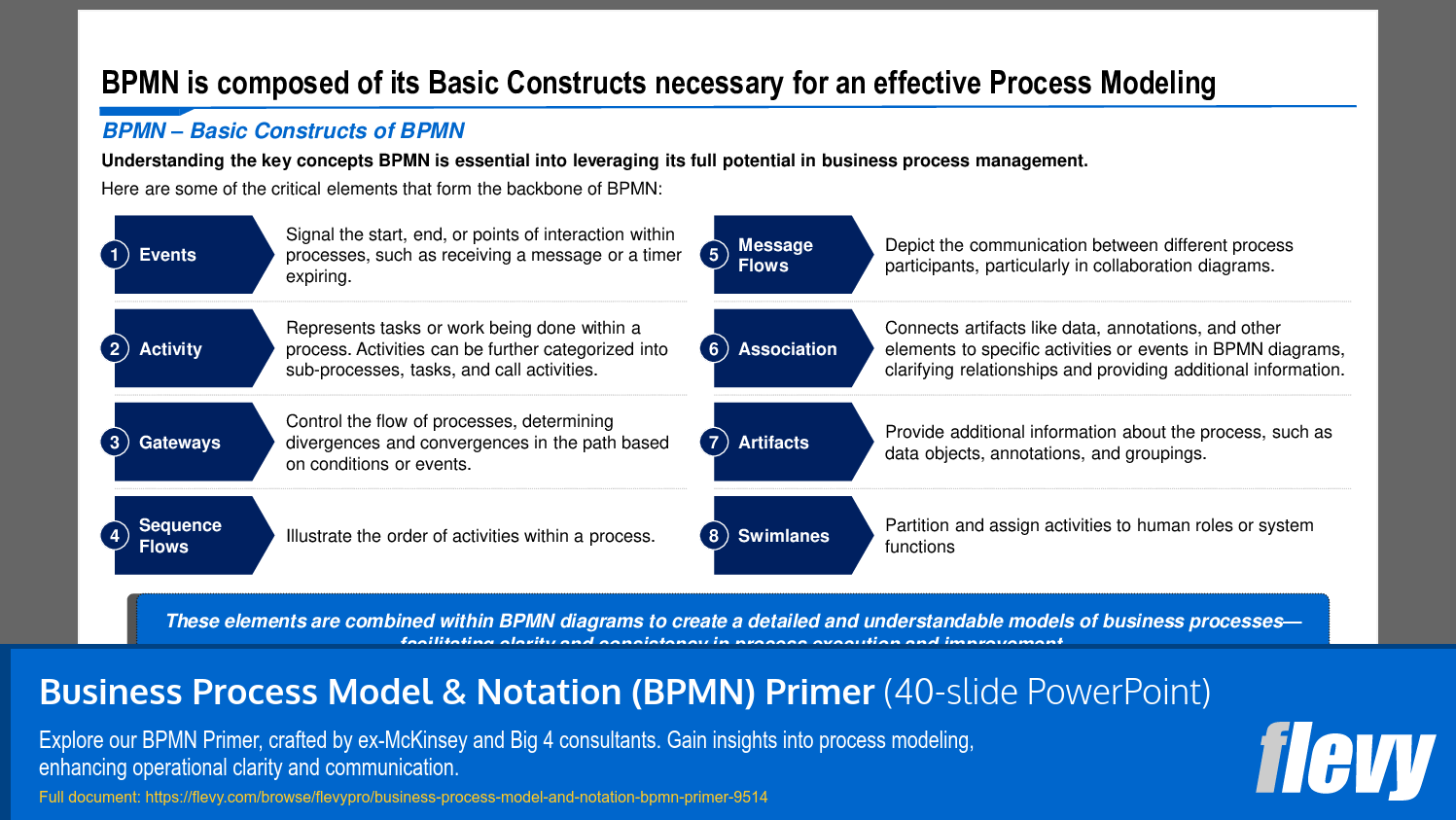
•  BPMN Notations - Key elements such as events, activities, gateways, and message flows that form the backbone of BPMN diagrams.

Deliverables, Templates, and Tools
•  BPMN Process Diagram template for mapping internal workflows
•  Collaboration Diagram template for visualizing interactions between entities
•  Choreography Diagram template for detailing participant interactions
•  Conversation Diagram template for high-level communication mapping
•  Slide design templates following the Headline-Body-Bumper structure
•  Best practice guidelines for effective BPMN implementation

Slide Highlights
•  Overview slide introducing BPMN and its significance in process management
•  Detailed breakdown of BPMN diagram types with visual examples
•  Notation slides explaining key BPMN constructs and their applications
•  Application scenarios illustrating the use of BPMN in various industries
•  Slide design structure guide for creating effective presentations

Potential Workshop Agenda
BPMN Introduction Session (60 minutes)
•  Overview of BPMN and its importance
•  Discussion on the 4 core diagram types
•  Hands-on activity: Creating a simple Process Diagram

BPMN Application Workshop (90 minutes)
•  Group exercise: Developing Collaboration and Choreography Diagrams
•  Review and feedback session on created diagrams
•  Strategies for integrating BPMN into existing processes

Customization Guidance
•  Tailor the BPMN templates to reflect specific organizational processes and terminology
•  Adjust the workshop agenda to align with team availability and objectives
•  Incorporate organizational metrics and KPIs into BPMN diagrams for enhanced relevance

Secondary Topics Covered
•  Historical evolution of BPMN and its role in business process management
•  Best practices for effective BPMN implementation
•  Common challenges in process modeling and how to overcome them
•  Case studies showcasing successful BPMN applications in various industries

Topic FAQ

What are the main BPMN diagram types and when should each be used?

BPMN defines 4 core diagram types: Process Diagrams for sequencing internal activities and decision points, Collaboration Diagrams to show interactions between organizations or units, Choreography Diagrams to detail participant-to-participant interactions without a central controller, and Conversation Diagrams for high-level message exchanges — 4 core diagram types.

Which BPMN notations are essential for creating readable process maps?

Essential BPMN notations include events (triggers or outcomes), activities (tasks performed), gateways (decision points controlling flow), message flows (communication between participants), swimlanes (organize responsibilities), and sequence flows (order of activities), with examples and explanations provided in the notation slides.

How does BPMN help bridge business and technical teams in process work?

BPMN provides a standardized visual language that both business and technical stakeholders can reference, reducing ambiguity in requirements and design. Using consistent notation and templates enables clearer handoffs and discussion between roles, improving alignment via shared diagrams and templates.

What should I look for when choosing a BPMN training deck or template set?

Look for content that explains core diagram types and notations, includes ready-to-use templates for Process, Collaboration, Choreography, and Conversation diagrams, offers workshop agendas or hands-on exercises, and provides customization guidance for your terminology and metrics.

How much time should I budget to introduce BPMN to a team new to process modeling?

A typical introduction can be run as a 60-minute BPMN overview session covering notation and diagram types, followed by a 90-minute application workshop for hands-on diagram creation and review, plus additional time for tailoring templates to organizational processes.

Are paid BPMN templates worth buying versus free online resources?

Paid decks often package notation guidance, visual examples, workshop agendas, and editable templates to accelerate adoption; for example, Flevy's Business Process Model & Notation (BPMN) Primer bundles Process, Collaboration, Choreography, and Conversation templates in a 40-slide PowerPoint.

I need to document cross-functional message flows after a merger — which BPMN view should I use?

Use Collaboration Diagrams to visualize interactions and message flows between business units or organizations, and Conversation Diagrams for a higher-level view of communication; the BPMN Primer includes Collaboration and Conversation Diagram templates to support this work.

How can executives use BPMN in strategy sessions to align operations with objectives?

Executives can use Process Diagrams to map core operational workflows tied to strategic objectives, leverage Conversation Diagrams for stakeholder communication views, and present findings using the deck’s slide design templates and workshop agenda to facilitate decision discussions.

Document FAQ
These are questions addressed within this presentation.

What is BPMN?
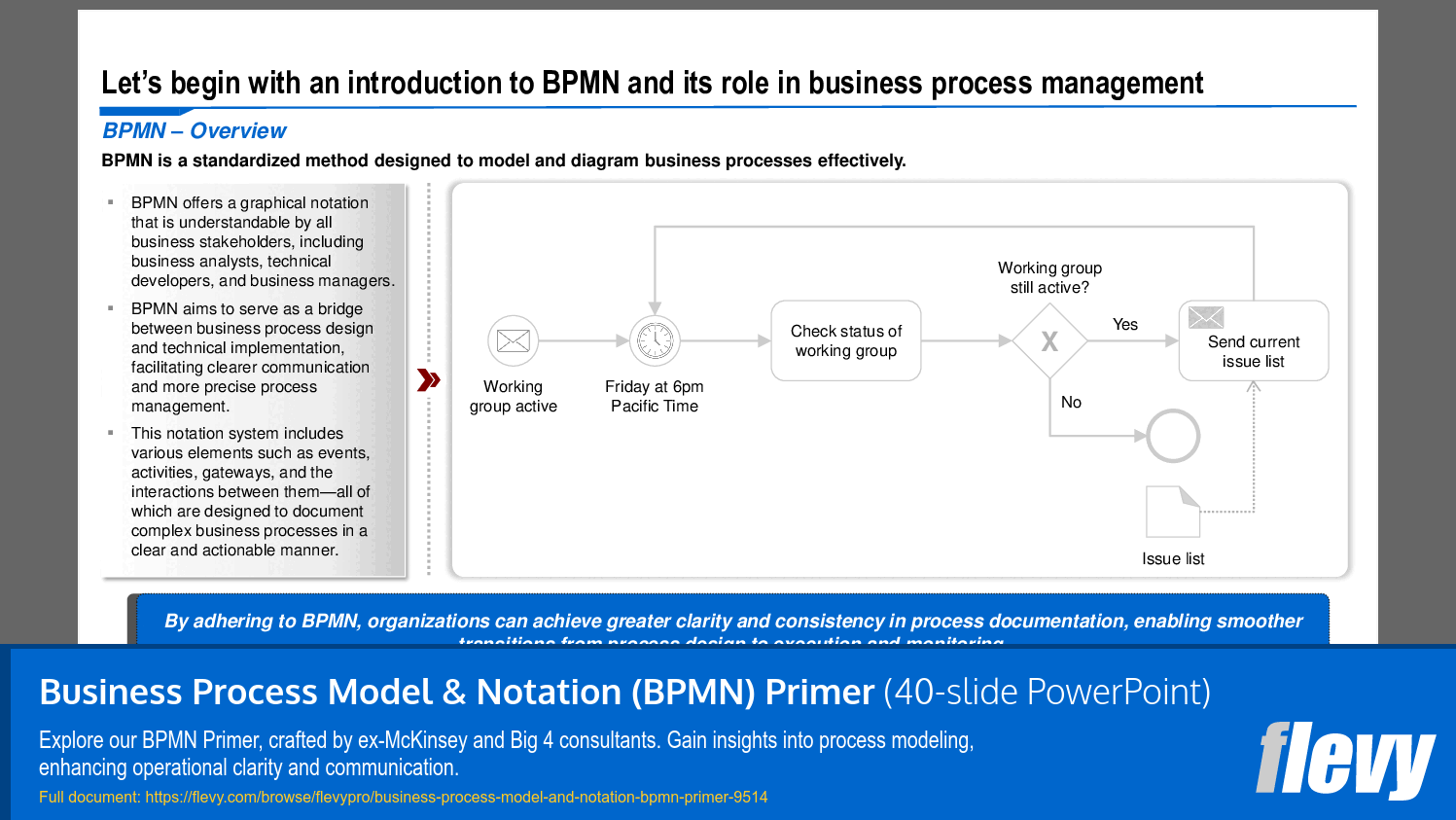
BPMN stands for Business Process Model and Notation, a standardized method for modeling business processes that enhances clarity and communication among stakeholders.

What are the core diagram types in BPMN?
The 4 core diagram types are Process Diagrams, Collaboration Diagrams, Choreography Diagrams, and Conversation Diagrams, each serving specific modeling needs.

How can BPMN improve process transparency?
By providing a clear visual representation of processes, BPMN allows stakeholders to understand workflows and interactions, leading to better decision-making and operational efficiency.

Who should use BPMN?
BPMN is beneficial for executives, process designers, integration leaders, and consultants involved in process improvement and operational alignment.

Can BPMN be customized for specific organizations?
Yes, BPMN templates can be tailored to reflect organizational processes, terminology, and metrics, ensuring relevance and applicability.

What are the benefits of using BPMN?
BPMN enhances communication, improves process documentation, facilitates analysis, and supports better alignment between business strategy and operations.

How does BPMN facilitate collaboration between teams?
BPMN provides a common language and visual framework that helps bridge the gap between business and technical teams, fostering better collaboration.

What resources are available for learning BPMN?
The BPMN Primer presentation includes templates, examples, and guidelines for effective BPMN implementation, making it a valuable resource for learning.

Glossary
•  BPMN - Business Process Model and Notation, a standardized method for modeling business processes.
•  Process Diagram - A diagram that maps the sequence of actions within an organization.
•  Collaboration Diagram - A diagram that illustrates interactions between multiple business entities.
•  Choreography Diagram - A diagram detailing interactions between participants without a central controller.
•  Conversation Diagram - A high-level diagram focusing on the exchange of messages between entities.
•  Event - A trigger that starts, ends, or alters the flow of a process.
•  Activity - A task or work being performed within a process.
•  Gateway - A decision point that controls the flow of processes.
•  Message Flow - A depiction of communication between participants in a process.
•  Swimlane - A visual element that organizes activities by grouping related tasks into lanes.
•  Artifact - Additional information in BPMN diagrams that provides context to processes.
•  Association - A link that connects annotations and artifacts to BPMN elements.
•  Sequence Flow - An arrow indicating the order of activities in a process.

PROCESS MAPS PPT SLIDES

Understanding Key Elements of BPMN Notation

Core Elements of BPMN for Effective Process Modeling

Understanding Choreography Diagram Notations for Interactions

BPMN Diagram Types: Enhancing Business Process Clarity

BPMN Process Diagrams: Mapping Operational Sequences

BPMN Collaboration Diagram Notations Explained

BPMN Overview: Standardizing Business Process Modeling

Source: Best Practices in Process Improvement, Business Process Management, Process Mapping PowerPoint Slides: Business Process Model & Notation (BPMN) Primer PowerPoint (PPTX) Presentation Slide Deck, LearnPPT Consulting


$29.00
FlevyPro price: FREE (included in subscription)
This framework is developed by a team of former McKinsey and Big 4 consultants. The presentation follows the headline-body-bumper slide format used by global consulting firms.
Add to Cart
  

Did you need more documents?

Consider a FlevyPro subscription from $39/month. View plans here.

For $10.00 more, you can download this document plus 2 more FlevyPro documents. That's just $13 each.

ABOUT FLEVYPRO

This document is part of the FlevyPro Library, a curated knowledge base of documents for our FlevyPro subscribers.

FlevyPro is a subscription service for on-demand business frameworks and analysis tools. FlevyPro subscribers receive access to an exclusive library of curated business documents—business framework primers, presentation templates, Lean Six Sigma tools, and more—among other exclusive benefits.

Click here to learn more about FlevyPro and its benefits.

Did you know?
The average daily rate of a McKinsey consultant is $6,625 (not including expenses). The average price of a Flevy document is $65.


Trusted by over 10,000+ Client Organizations
Since 2012, we have provided business templates to over 10,000 businesses and organizations of all sizes, from startups and small businesses to the Fortune 100, in over 130 countries.
AT&T GE Cisco Intel IBM Coke Dell Toyota HP Nike Samsung Microsoft Astrazeneca JP Morgan KPMG Walgreens Walmart 3M Kaiser Oracle SAP Google E&Y Volvo Bosch Merck Fedex Shell Amgen Eli Lilly Roche AIG Abbott Amazon PwC T-Mobile Broadcom Bayer Pearson Titleist ConEd Pfizer NTT Data Schwab


Read Customer Testimonials

 
"As a small business owner, the resource material available from FlevyPro has proven to be invaluable. The ability to search for material on demand based our project events and client requirements was great for me and proved very beneficial to my clients. Importantly, being able to easily edit and tailor "

– Michael Duff, Managing Director at Change Strategy (UK)
 
"FlevyPro provides business frameworks from many of the global giants in management consulting that allow you to provide best in class solutions for your clients."

– David Harris, Managing Director at Futures Strategy
 
"As an Independent Management Consultant, I find Flevy to add great value as a source of best practices, templates and information on new trends. Flevy has matured and the quality and quantity of the library is excellent. Lastly the price charged is reasonable, creating a win-win value for "

– Jim Schoen, Principal at FRC Group
 
"One of the great discoveries that I have made for my business is the Flevy library of training materials.

As a Lean Transformation Expert, I am always making presentations to clients on a variety of topics: Training, Transformation, Total Productive Maintenance, Culture, Coaching, Tools, Leadership Behavior, etc. Flevy "

– Ed Kemmerling, Senior Lean Transformation Expert at PMG
 
"I have used Flevy services for a number of years and have never, ever been disappointed. As a matter of fact, David and his team continue, time after time, to impress me with their willingness to assist and in the real sense of the word. I have concluded in fact "

– Roberto Pelliccia, Senior Executive in International Hospitality
 
"Flevy is now a part of my business routine. I visit Flevy at least 3 times each month.

Flevy has become my preferred learning source, because what it provides is practical, current, and useful in this era where the business world is being rewritten.

In today's environment where there are so "

– Omar Hernán Montes Parra, CEO at Quantum SFE
 
"Flevy.com has proven to be an invaluable resource library to our Independent Management Consultancy, supporting and enabling us to better serve our enterprise clients.

The value derived from our [FlevyPro] subscription in terms of the business it has helped to gain far exceeds the investment made, making a subscription a no-brainer for any growing consultancy – or in-house strategy team."

– Dean Carlton, Chief Transformation Officer, Global Village Transformations Pty Ltd.
 
"My FlevyPro subscription provides me with the most popular frameworks and decks in demand in today’s market. They not only augment my existing consulting and coaching offerings and delivery, but also keep me abreast of the latest trends, inspire new products and service offerings for my practice, and educate me "

– Bill Branson, Founder at Strategic Business Architects


Customers Also Bought These Documents


Customers Also Like These Documents

Explore Templates on Related Management Topics


Your Recently Viewed Documents
Receive our FREE presentation on Operational Excellence

This 50-slide presentation provides a high-level introduction to the 4 Building Blocks of Operational Excellence. Achieving OpEx requires the implementation of a Business Execution System that integrates these 4 building blocks.