
Business Process Maturity Model (BPMM) Series: Standardized   31-slide PPT PowerPoint presentation slide deck (PPTX)
$29.00

Business Process Maturity Model (BPMM) Series: Standardized (31-slide PPT PowerPoint presentation slide deck (PPTX)) Preview Image
Log in to unlock full preview.
Business Process Maturity Model (BPMM) Series: Standardized (31-slide PPT PowerPoint presentation slide deck (PPTX)) Preview Image
Arrow   Click main image to view in full screen.

Business Process Maturity Model (BPMM) Series: Standardized (PowerPoint PPTX Slide Deck)

PowerPoint (PPTX) 31 Slides FlevyPro Document

$29.00
FlevyPro price: FREE (included in subscription)
This framework is developed by a team of former McKinsey and Big 4 consultants. The presentation follows the headline-body-bumper slide format used by global consulting firms.
Add to Cart


Immediate download
Free lifetime updates

MATURITY MODEL PPT DESCRIPTION

Editor Summary Business Process Maturity Model (BPMM) Series: Standardized is a 31-slide PowerPoint presentation that deep dives into level 3 (Standardized) of the five-level BPMM maturity framework. Read more

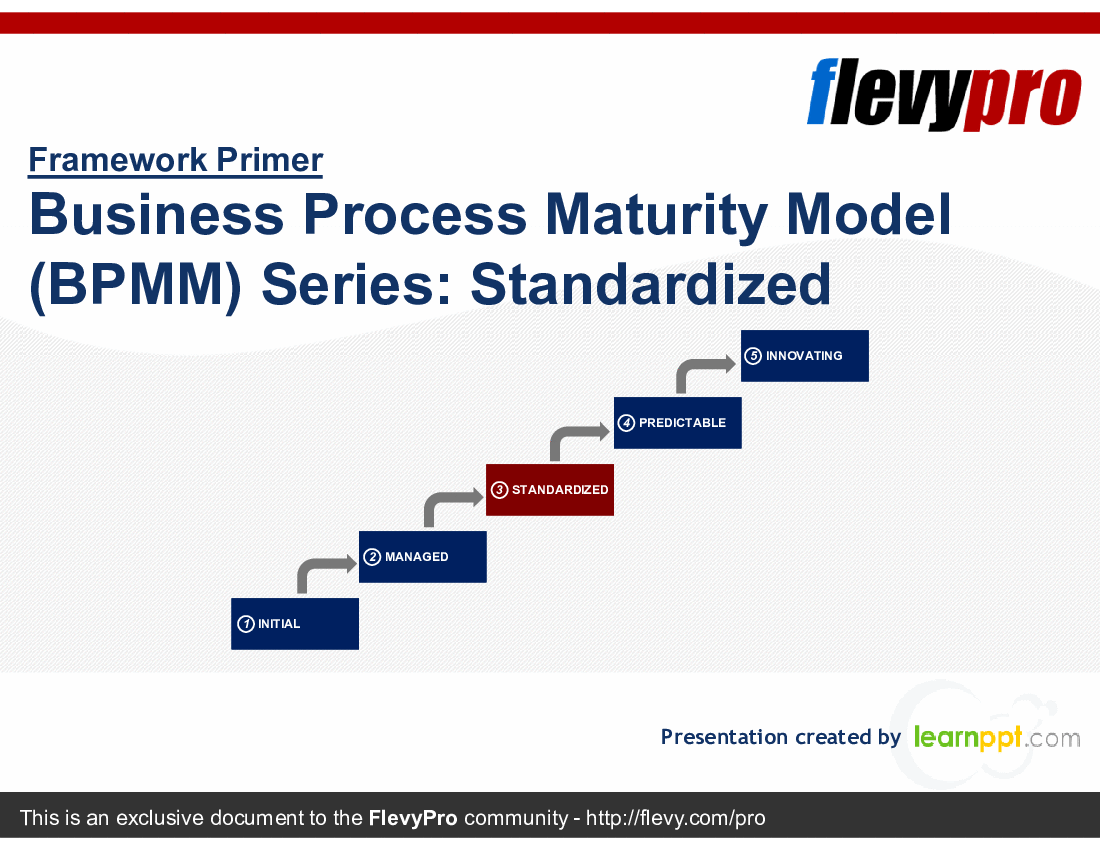
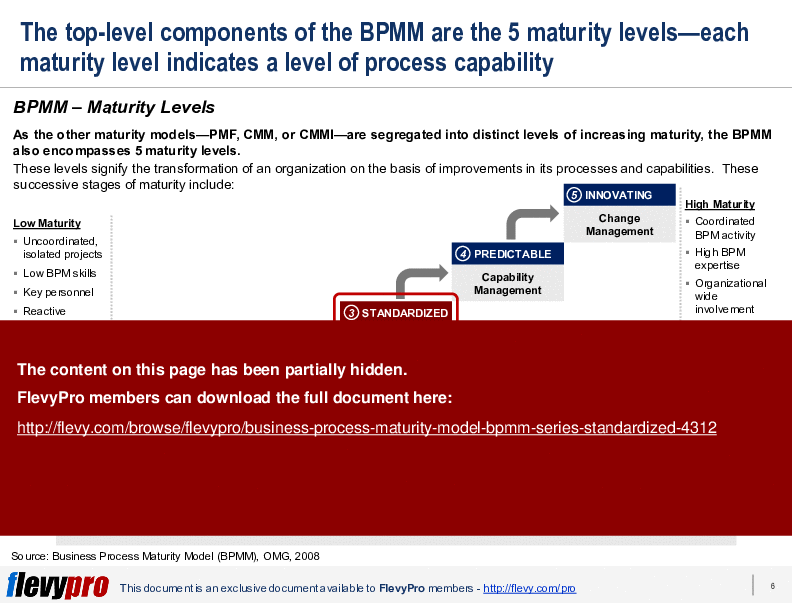
The Business Process Maturity Model (BPMM) captures a 5-level evolutionary improvement path that guides organizations as they move from immature, inconsistent business activities (level 1) to mature, disciplined processes (level 5). BPMM orders these stages so that improvements at each stage provide a foundation on which to build improvements undertaken at the following stage.

Therefore, we can leverage BPMM to provide a roadmap for Continuous Process Improvement. BPMM also helps identify process deficiencies and guides the improvements in logical, incremental steps.

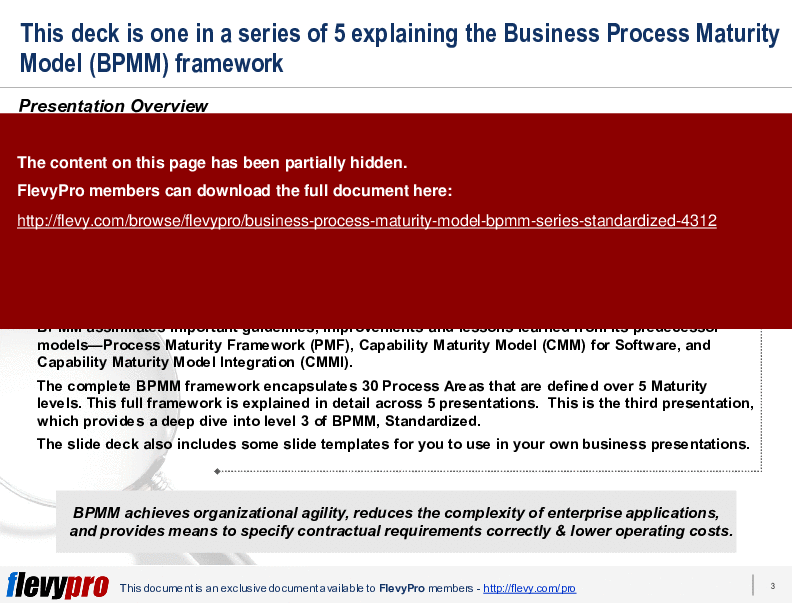
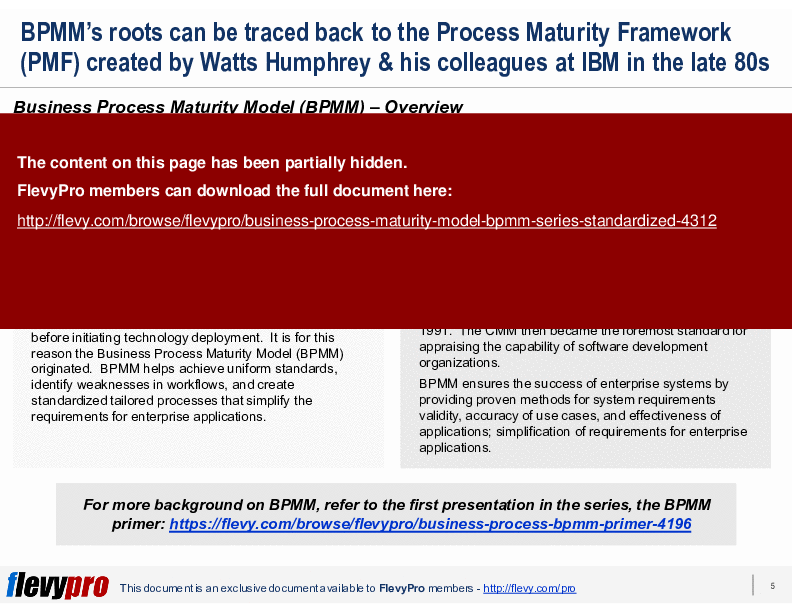
BPMM originally was developed to ensure organizational readiness prior to initiating technology deployment. BPMM helps achieve uniform standards, identify weaknesses in workflows, and create standardized tailored processes that simplify the requirements for enterprise applications. BPMM achieves organizational agility, reduces the complexity of enterprise applications, and provides means to specify contractual requirements correctly and lower operating costs.

BPMM assimilates important guidelines, improvements and lessons learned from its predecessor models—Process Maturity Framework (PMF),
Capability Maturity Model (CMM) for Software, and Capability Maturity Model Integration (CMMI).

The complete BPMM framework encapsulates 30 Process Areas that are defined over 5 Maturity levels. This full framework is explained in detail across 5 presentations. This is the second presentation, which provides a deep dive into level 3 of BPMM, Standardized.

The slide deck also includes some slide templates for you to use in your own business presentations.

This presentation delves into the intricacies of Level 3, Standardized, within the BPMM framework. It outlines the establishment of standard processes and assets crucial for consistent performance. The PPT covers various process areas, including Organizational Process Management, Competency Development, and Resource Management. It provides actionable insights into managing configurations, analyzing market needs, and ensuring effective product and service deployment. This comprehensive guide is essential for organizations aiming to streamline operations and achieve higher maturity levels.

Got a question about this document? Email us at flevypro@flevy.com.

MARCUS OVERVIEW

This synopsis was written by Marcus [?] based on the analysis of the full 31-slide presentation.


Executive Summary
The Business Process Maturity Model (BPMM) Series: Standardized presentation offers a structured approach to enhancing organizational processes through a five-level maturity framework. Developed by experts from McKinsey and Big 4 consulting firms, this presentation provides actionable insights for achieving operational excellence. By leveraging BPMM, organizations can identify process deficiencies and implement improvements incrementally, ensuring a solid foundation for continuous process improvement. This presentation focuses specifically on the Standardized level, detailing ten critical process areas essential for developing and deploying effective business processes.

Who This Is For and When to Use
•  Corporate executives seeking to enhance operational efficiency and process maturity
•  Business process managers responsible for implementing standardized processes
•  Consultants advising organizations on process improvement strategies
•  Change management leaders focused on aligning processes with strategic goals

Best-fit moments to use this deck:
•  During strategic planning sessions aimed at process optimization
•  When assessing current process maturity and identifying gaps
•  In workshops focused on training teams in standardized process implementation
•  For guiding technology deployment initiatives aligned with process improvements

Learning Objectives
•  Define the Business Process Maturity Model (BPMM) and its significance in process improvement
•  Identify the ten process areas within the Standardized level of BPMM
•  Develop and deploy standard processes and process assets effectively
•  Evaluate the strengths and weaknesses of existing processes
•  Create action plans to address identified process deficiencies
•  Implement continuous improvement practices based on appraisal and experience

Table of Contents
•  Overview (page 3)
•  Business Process Maturity Model (BPMM) (page 5)
•  Process Areas (page 7)
•  Templates (page 25)

Primary Topics Covered
•  BPMM Overview - An introduction to the Business Process Maturity Model, outlining its 5 maturity levels and their significance in enhancing organizational processes.
•  Standardized Level Focus - A deep dive into the Standardized level of BPMM, emphasizing the establishment of standard processes and assets.
•  Process Areas - Detailed descriptions of the ten process areas within the Standardized level, including Organizational Process Management and Product and Service Support.
•  Continuous Improvement - Strategies for implementing continuous improvement practices based on process evaluations and stakeholder feedback.

Deliverables, Templates, and Tools
•  Standardized process templates for various organizational functions
•  Action plan templates for addressing process deficiencies
•  Evaluation frameworks for assessing process strengths and weaknesses
•  Guidelines for developing and deploying process assets
•  Tools for continuous process improvement tracking and reporting

Slide Highlights
•  Overview of BPMM and its 5 maturity levels
•  Detailed breakdown of the ten process areas within the Standardized level
•  Visual representations of process management frameworks
•  Actionable insights for implementing standardized processes
•  Templates for process evaluation and improvement

Potential Workshop Agenda
Introduction to BPMM (30 minutes)
•  Overview of BPMM and its importance
•  Discussion on the 5 maturity levels

Deep Dive into Standardized Level (60 minutes)
•  Exploration of the ten process areas
•  Group activity to identify current process gaps

Action Planning Session (90 minutes)
•  Develop action plans for addressing identified deficiencies
•  Assign responsibilities and set timelines

Customization Guidance
•  Tailor the process templates to fit specific organizational needs and terminology
•  Adjust the action plans based on unique process evaluations and stakeholder feedback
•  Incorporate organizational metrics to measure process improvement success

Secondary Topics Covered
•  Change management strategies related to process standardization
•  Best practices for continuous process improvement
•  Integration of BPMM with existing organizational frameworks

Topic FAQ

What are the 5 maturity levels in BPMM and how do they relate to improvement planning?

BPMM defines an evolutionary path from inconsistent, immature activities at level 1 to disciplined, mature processes at level 5. Improvements are staged so each level builds a foundation for the next, with level 3 (Standardized) focusing on establishing common processes and assets across the organization and a five-level roadmap.

What process areas are addressed at the Standardized (level 3) stage?

The Standardized level includes ten process areas that support establishing and deploying standard processes and assets. Examples named in the material include Organizational Process Management, Organizational Competency Development, and Product and Service Support; the deck describes all ten process areas in detail.

How does BPMM improve readiness for technology deployment?

BPMM promotes uniform standards, identifies workflow weaknesses, and simplifies enterprise application requirements so technology aligns with existing processes. By sequencing improvements, BPMM reduces application complexity and clarifies contractual and functional requirements using its five-level approach.

What should I look for in a BPMM toolkit when budgeting for a process-improvement initiative?

Prioritize toolkits that include structured assessment frameworks, templates for standardized processes, action-plan formats, and continuous-improvement tracking. Flevy’s Business Process Maturity Model (BPMM) Series: Standardized supplies those elements along with a slide deck and evaluation frameworks in a 31-slide PPTX.

Are premade templates and evaluation frameworks worth purchasing instead of building them in-house?

Premade templates can save time and provide a repeatable structure for assessments and action plans; building in-house allows tighter tailoring. Buyers should weigh timeline and expertise—Flevy’s BPMM Series: Standardized offers ready-to-use templates, action plans, and guidance in a 31-slide presentation.

After a merger, how can BPMM help prioritize which processes to standardize first?

Use BPMM to assess current process maturity, identify deficiencies across the ten Standardized-level process areas, and sequence remediation by impact and readiness. The model supports creating targeted action plans and assigning responsibilities using the deck’s templates and evaluation frameworks covering ten process areas.

Which roles are typically responsible for running BPMM-based continuous improvement cycles?

Business process managers, change management leaders, consultants, and sponsoring executives commonly lead BPMM cycles—activities include maturity assessment, template deployment, training, and governance. Regular assessments are recommended (quarterly or bi‑annually) to track progress and adjust action plans.

How do "process assets" and Organizational Process Management fit into the Standardized level?

At Standardized level, process assets are the documented templates, guidelines, and reusable artifacts that enable consistent execution; Organizational Process Management governs their development, deployment, and maintenance. The presentation includes guidelines for developing and deploying process assets and templates.

Document FAQ
These are questions addressed within this presentation.

What is the Business Process Maturity Model (BPMM)?
BPMM is a framework that outlines a five-level evolutionary path for improving business processes, guiding organizations from immature to mature processes.

How can BPMM help my organization?
BPMM helps identify process deficiencies, provides a roadmap for improvements, and ensures organizational readiness for technology deployment.

What are the ten process areas in the Standardized level?
The ten process areas include Organizational Process Management, Organizational Competency Development, and Product and Service Support, among others.

How do I implement the insights from this presentation?
Utilize the provided templates and action plans to assess current processes, identify gaps, and develop strategies for improvement.

Can this model be applied to any industry?
Yes, BPMM is adaptable across various industries, making it a versatile tool for process improvement.

What resources are included in this presentation?
The presentation includes templates, action plans, and evaluation frameworks to facilitate process improvement initiatives.

How often should we assess our processes using BPMM?
Regular assessments, ideally quarterly or bi-annually, are recommended to ensure continuous improvement and alignment with organizational goals.

What is the significance of the Standardized level?
The Standardized level focuses on establishing consistent processes and assets, which are crucial for operational efficiency and effectiveness.

Glossary
•  BPMM - Business Process Maturity Model, a framework for process improvement.
•  Process Areas - Specific domains within BPMM that address different aspects of process management.
•  Standardized Level - The third level of BPMM, focusing on establishing standard processes.
•  Continuous Improvement - Ongoing efforts to enhance products, services, or processes.
•  Organizational Process Management - The practice of managing and improving organizational processes.
•  Action Plan - A detailed strategy outlining steps to achieve specific goals.
•  Stakeholders - Individuals or groups with an interest in the organization's processes and outcomes.
•  Process Assets - Resources and templates used to support process execution.
•  Evaluation Framework - A structured approach for assessing process performance.
•  Change Management - The discipline of managing the transition of individuals, teams, and organizations to a desired future state.
•  Deficiencies - Areas where processes fail to meet established standards or expectations.
•  Metrics - Quantitative measures used to assess performance and progress.
•  Governance - The framework of rules and practices by which an organization is directed and controlled.
•  Tailoring - The process of customizing templates and processes to fit specific organizational needs.
•  Workforce Competencies - Skills and knowledge required for employees to perform their roles effectively.
•  Deployment - The process of implementing a product or service in an operational environment.
•  Support - Assistance provided to users during and after the deployment of a product or service.
•  Infrastructure - The underlying foundation or framework that supports processes and services.
•  Business Continuity Plans - Strategies to ensure that critical business functions continue during and after a disaster.
•  Disaster Recovery - The process of restoring systems and operations after a disruption.
•  Customer Needs - Requirements and expectations of customers that drive product and service offerings.

MATURITY MODEL PPT SLIDES

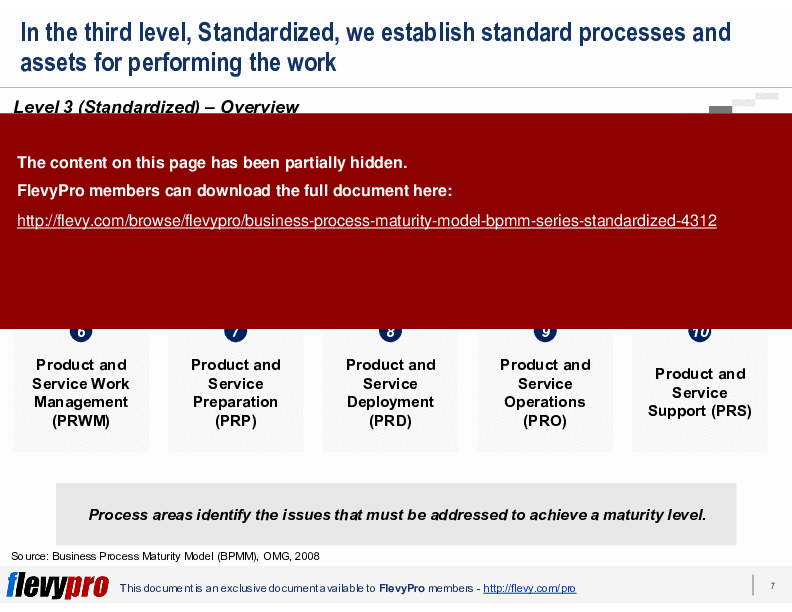
Framework for Standardized Business Process Management

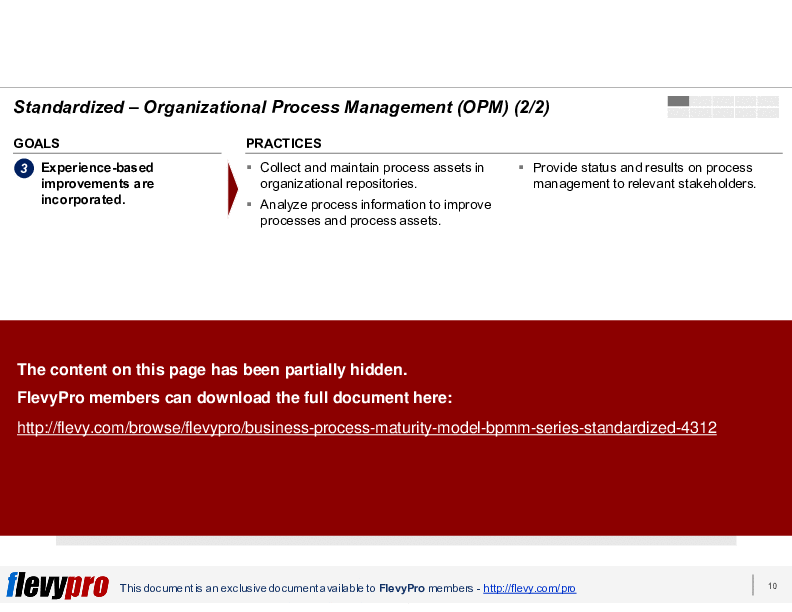
Framework for Organizational Competency Development

Framework for Effective Organizational Configuration Management

Ensuring Operational Continuity in Product and Service Support

Source: Best Practices in Maturity Model, Process Improvement, Capability Maturity Model, BPMM PowerPoint Slides: Business Process Maturity Model (BPMM) Series: Standardized PowerPoint (PPTX) Presentation Slide Deck, LearnPPT Consulting


$29.00
FlevyPro price: FREE (included in subscription)
This framework is developed by a team of former McKinsey and Big 4 consultants. The presentation follows the headline-body-bumper slide format used by global consulting firms.
Add to Cart
  

Did you need more documents?

Consider a FlevyPro subscription from $39/month. View plans here.

For $10.00 more, you can download this document plus 2 more FlevyPro documents. That's just $13 each.

ABOUT FLEVYPRO

This document is part of the FlevyPro Library, a curated knowledge base of documents for our FlevyPro subscribers.

FlevyPro is a subscription service for on-demand business frameworks and analysis tools. FlevyPro subscribers receive access to an exclusive library of curated business documents—business framework primers, presentation templates, Lean Six Sigma tools, and more—among other exclusive benefits.

Click here to learn more about FlevyPro and its benefits.

Did you know?
The average daily rate of a McKinsey consultant is $6,625 (not including expenses). The average price of a Flevy document is $65.
Bundle and save! You can save up to % with bundles!

View bundle(s)


Trusted by over 10,000+ Client Organizations
Since 2012, we have provided business templates to over 10,000 businesses and organizations of all sizes, from startups and small businesses to the Fortune 100, in over 130 countries.
AT&T GE Cisco Intel IBM Coke Dell Toyota HP Nike Samsung Microsoft Astrazeneca JP Morgan KPMG Walgreens Walmart 3M Kaiser Oracle SAP Google E&Y Volvo Bosch Merck Fedex Shell Amgen Eli Lilly Roche AIG Abbott Amazon PwC T-Mobile Broadcom Bayer Pearson Titleist ConEd Pfizer NTT Data Schwab


Read Customer Testimonials

 
"I have used Flevy services for a number of years and have never, ever been disappointed. As a matter of fact, David and his team continue, time after time, to impress me with their willingness to assist and in the real sense of the word. I have concluded in fact "

– Roberto Pelliccia, Senior Executive in International Hospitality
 
"[Flevy] produces some great work that has been/continues to be of immense help not only to myself, but as I seek to provide professional services to my clients, it gives me a large "tool box" of resources that are critical to provide them with the quality of service and outcomes they are expecting."

– Royston Knowles, Executive with 50+ Years of Board Level Experience
 
"As a young consulting firm, requests for input from clients vary and it's sometimes impossible to provide expert solutions across a broad spectrum of requirements. That was before I discovered Flevy.com.

Through subscription to this invaluable site of a plethora of topics that are key and crucial to consulting, I "

– Nishi Singh, Strategist and MD at NSP Consultants
 
"Flevy.com has proven to be an invaluable resource library to our Independent Management Consultancy, supporting and enabling us to better serve our enterprise clients.

The value derived from our [FlevyPro] subscription in terms of the business it has helped to gain far exceeds the investment made, making a subscription a no-brainer for any growing consultancy – or in-house strategy team."

– Dean Carlton, Chief Transformation Officer, Global Village Transformations Pty Ltd.
 
"Flevy is our 'go to' resource for management material, at an affordable cost. The Flevy library is comprehensive and the content deep, and typically provides a great foundation for us to further develop and tailor our own service offer."

– Chris McCann, Founder at Resilient.World
 
"FlevyPro provides business frameworks from many of the global giants in management consulting that allow you to provide best in class solutions for your clients."

– David Harris, Managing Director at Futures Strategy
 
"The wide selection of frameworks is very useful to me as an independent consultant. In fact, it rivals what I had at my disposal at Big 4 Consulting firms in terms of efficacy and organization."

– Julia T., Consulting Firm Owner (Former Manager at Deloitte and Capgemini)
 
"As a niche strategic consulting firm, Flevy and FlevyPro frameworks and documents are an on-going reference to help us structure our findings and recommendations to our clients as well as improve their clarity, strength, and visual power. For us, it is an invaluable resource to increase our impact and value."

– David Coloma, Consulting Area Manager at Cynertia Consulting


Save with Bundles

This document is available as part of the following discounted bundle(s):


Customers Also Bought These Documents


Customers Also Like These Documents

Explore Templates on Related Management Topics


Your Recently Viewed Documents
Download our FREE Organization, Change, & Culture, Templates

Download our free compilation of 50+ slides and templates on Organizational Design, Change Management, and Corporate Culture. Methodologies include ADKAR, Burke-Litwin Change Model, McKinsey 7-S, Competing Values Framework, etc.