
Large-scale financial models are time-consuming. Financial models are an integral part of the business decision-making process, enabling organizations to assess the financial implications of commercial decisions with confidence.
The construction of a robust financial model is the cornerstone of accurate, informed, and timely commercial decision making and forecasting. Company boards, CFO's, and financiers want to ensure they are dealing with fair and accurate financial information.
By reviewing the detail of the assumptions and formula, and undertaking a high-level review of outputs, we are able to provide assurance on the flow of data from initial assumptions through to output schedules. In addition, we analyze key sensitivities to provide further assurance on the integrity of the model and to identify any potential funding issues or covenant breaches.
This letter presents the template to report findings of a financial model review in the context of your clients' requirements, which may include a summary of errors identified during the review with recommendations on ways to improve the structure of the model.
It will enable you to communicate the findings of the financial model for your business, project, or investment reviewed or audited to provide comfort that the right information to make an informed business decision is available to key stakeholders.
In addition to the financial model review template, a general three statement financial model developed in accordance with best practice is attached.
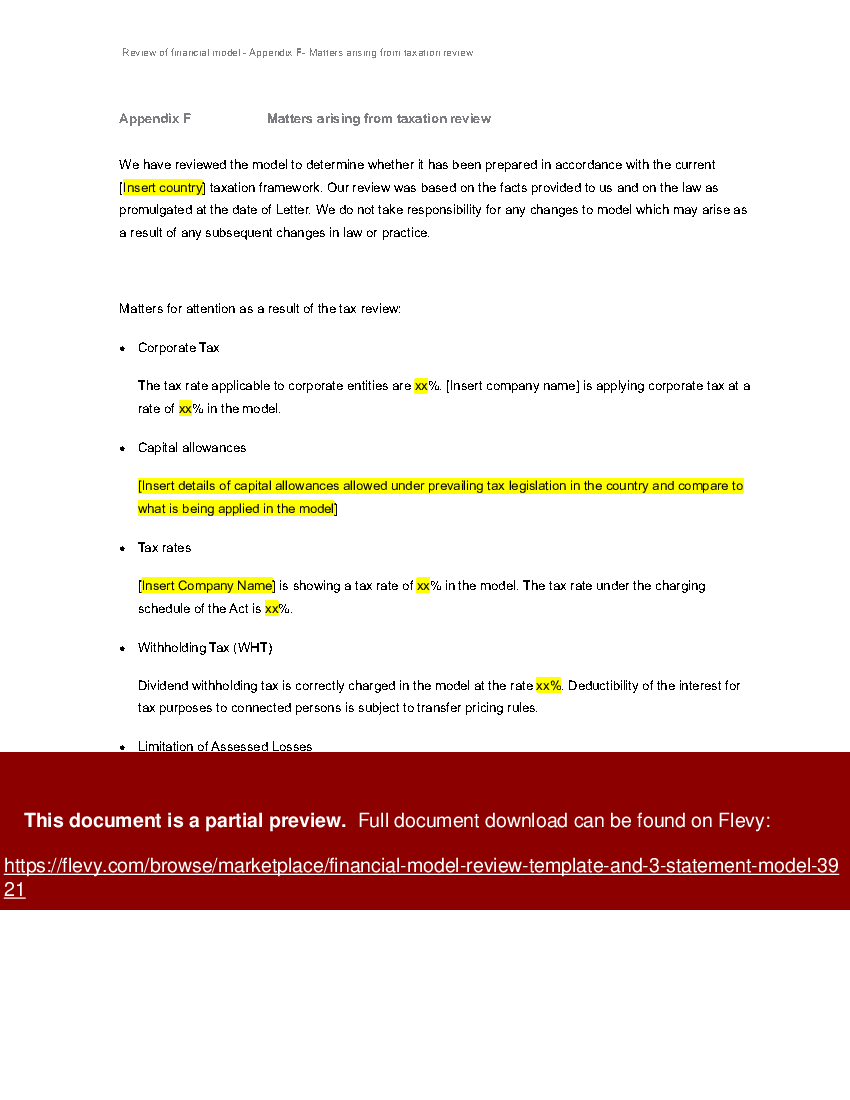
The Word document includes detailed appendices covering major input assumptions, accounting reviews, and taxation reviews. These sections are designed to ensure comprehensive coverage of all critical aspects of the financial model. The appendices allow for the identification and analysis of base case inputs, accounting treatments, and tax implications, providing a thorough examination of the model's robustness. This meticulous approach ensures that all potential issues are identified and addressed, giving stakeholders confidence in the financial model's accuracy and reliability.
Got a question about the product? Email us at support@flevy.com or ask the author directly by using the "Ask the Author a Question" form. If you cannot view the preview above this document description, go here to view the large preview instead.
Executive Summary
The Financial Model Review Template and 3 Statement Model is designed to facilitate a comprehensive review of financial models, ensuring accuracy and compliance with relevant standards. This template aids in generating key outputs such as projected profit and loss accounts, balance sheets, and cash flow statements. It is structured to provide a clear framework for assessing the integrity of financial forecasts and reporting, enabling informed decision-making for stakeholders.
Who This Is For and When to Use
• Financial analysts and consultants conducting model reviews
• Corporate finance teams responsible for financial forecasting
• Project managers overseeing financial modeling for projects
• Compliance officers ensuring adherence to financial regulations
Best-fit moments to use this deck:
• Prior to presenting financial models to stakeholders
• During financial audits or compliance checks
• When updating financial models based on new assumptions or data
Learning Objectives
• Define the key components of a financial model and their purposes
• Assess the logical integrity and arithmetic accuracy of financial models
• Identify compliance with International Financial Reporting Standards (IFRS)
• Evaluate the appropriateness of assumptions used in financial projections
• Recognize potential risks and issues in financial modeling
• Develop a structured approach to reviewing financial models
Table of Contents
• Introduction (page 2)
• Scope of Work (page 2)
• Objective of the Financial Model (page 3)
• Opinion on the Financial Model (page 3)
• Duty of Care (page 4)
• Distribution of the Report (page 4)
• Appendices Overview (page 5)
• Appendix A: Base Case Model Outputs (page 6)
• Appendix B: Major Input Assumptions (page 7)
• Appendix C: Project Agreements and Financing Documents (page 8)
• Appendix D: Matters Arising from Model Review (page 9)
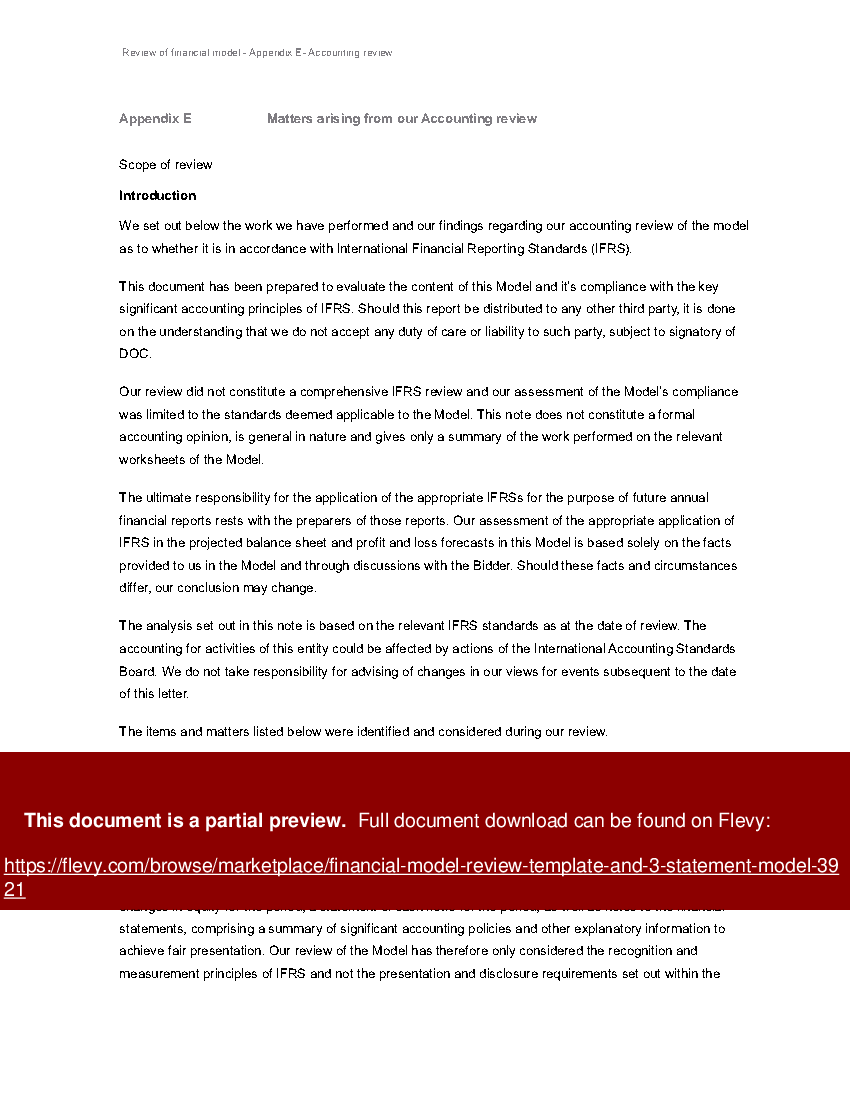
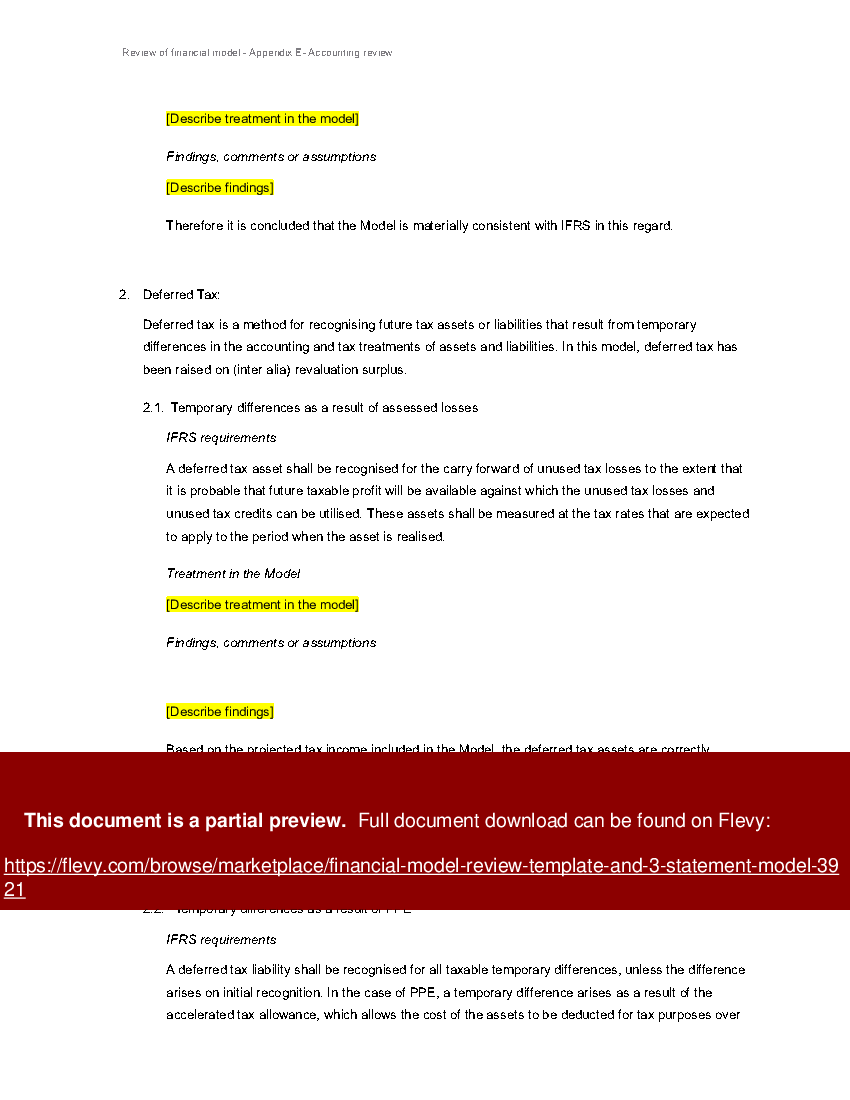
• Appendix E: Accounting Review Findings (page 10)
• Appendix F: Taxation Review Matters (page 16)
Primary Topics Covered
• Scope of Work - Details the engagement letter and the context of the financial model review, outlining the limitations and responsibilities involved.
• Objective of the Financial Model - Describes the expected outputs, including profit and loss accounts, balance sheets, and cash flow statements based on chosen assumptions.
• Opinion on the Financial Model - Summarizes the findings regarding the model's construction, compliance with IFRS, and alignment with tax frameworks.
• Duty of Care - Clarifies the intended audience for the report and the limitations of liability for reliance beyond the defined scope.
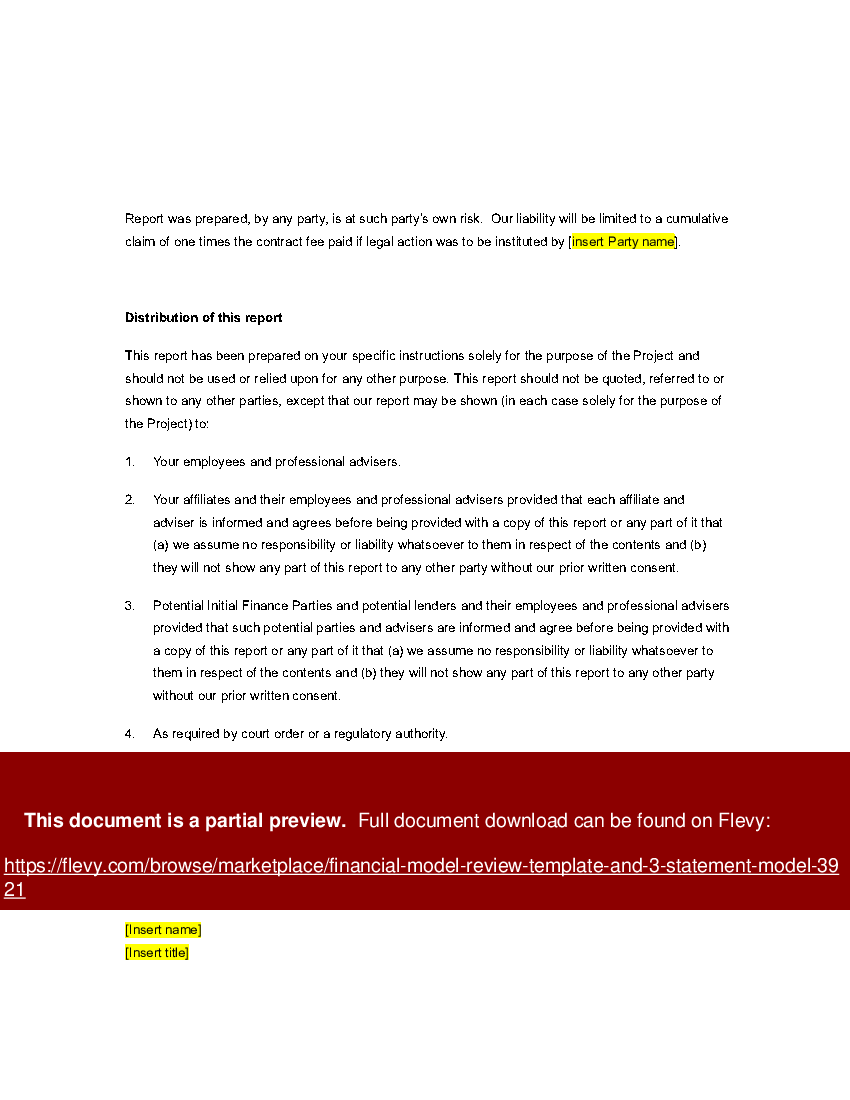
• Distribution of the Report - Outlines the conditions under which the report can be shared with third parties and the responsibilities associated with its use.
• Appendices Overview - Provides a summary of the appendices that contain detailed findings and supporting documentation.
Deliverables, Templates, and Tools
• Financial Model Review Template for structured assessments
• Base Case Model Outputs for identification purposes
• Major Input Assumptions documentation for clarity on model inputs
• Project Agreements and Financing Documents checklist
• Matters Arising from Model Review for tracking issues
• Accounting Review Findings template for compliance checks
Slide Highlights
• Overview of the Financial Model Review process
• Key outputs generated by the financial model
• Opinion summary regarding model integrity and compliance
• Appendices detailing major findings and assumptions
Potential Workshop Agenda
Financial Model Review Overview (60 minutes)
• Introduce the purpose and structure of the financial model review
• Discuss key outputs and their importance in decision-making
• Review the scope of work and limitations
Model Assessment Session (90 minutes)
• Evaluate the logical integrity and arithmetic of the financial model
• Discuss compliance with IFRS and tax regulations
• Identify and document any issues or risks
Customization Guidance
• Insert specific company details and model names where indicated
• Adjust the scope of work based on the specific engagement letter
• Tailor the opinion section to reflect findings from the model review
Secondary Topics Covered
• Compliance with International Financial Reporting Standards
• Assessment of assumptions and judgments in financial modeling
• Review of project agreements and their implications on the model
• Identification of potential risks in financial projections
• Taxation considerations relevant to the financial model
Topic FAQ
Document FAQ
These are questions addressed within this presentation.
What is the purpose of the Financial Model Review Template?
The template is designed to provide a structured approach for reviewing financial models, ensuring accuracy and compliance with relevant standards.
Who should use this template?
It is intended for financial analysts, corporate finance teams, and compliance officers involved in financial modeling and forecasting.
What are the key outputs generated by the financial model?
The model generates projected profit and loss accounts, balance sheets, cash flow statements, and key financial ratios.
How does the template ensure compliance with IFRS?
The template includes sections for assessing compliance with IFRS and highlights areas where the model may not meet the required standards.
Can this template be customized for specific projects?
Yes, users can insert specific company details, model names, and adjust the scope of work as needed.
What are the limitations of the report?
The report is prepared based on the defined scope of work, and reliance beyond this scope is at the user's own risk.
How are assumptions evaluated in the financial model?
The template includes sections for documenting and assessing the validity of assumptions used in the model.
What should be included in the appendices?
Appendices should contain detailed findings, major input assumptions, project agreements, and any issues identified during the review.
Glossary
• Financial Model - A quantitative representation of a company's financial performance.
• IFRS - International Financial Reporting Standards, a set of accounting standards.
• Base Case Model - The primary financial model used for projections.
• Profit and Loss Account - A financial statement summarizing revenues and expenses.
• Balance Sheet - A financial statement showing a company's assets, liabilities, and equity.
• Cash Flow Statement - A financial statement detailing cash inflows and outflows.
• Assumptions - Key inputs used in financial modeling to project future performance.
• Compliance - Adherence to established standards and regulations.
• Taxation Framework - The legal structure governing tax obligations.
• Engagement Letter - A document outlining the scope and terms of a consulting engagement.
• Appendix - Supplementary material providing additional context or details.
• Risk Assessment - The process of identifying and evaluating potential risks.
• Model Review - An evaluation of a financial model's accuracy and integrity.
• Project Agreements - Contracts outlining the terms of a project.
• Findings - Conclusions drawn from the model review process.
• Output - The results generated by the financial model.
• Stakeholders - Individuals or groups with an interest in the financial model's outcomes.
• Financial Ratios - Metrics used to evaluate a company's financial performance.
• Tax Rate - The percentage at which income is taxed.
• Capital Allowances - Tax deductions available for certain capital expenditures.
Source: Best Practices in Financial Modeling Word: Financial Model Review Template and 3 Statement Model Word (DOCX) Document, Corporate Finance 101
This document is available as part of the following discounted bundle(s):
Save %!
Transaction Advisory/ Corporate Finance (M&A) Toolkit
This bundle contains 8 total documents. See all the documents to the right.
|
Download our FREE Strategy & Transformation Framework Templates
Download our free compilation of 50+ Strategy & Transformation slides and templates. Frameworks include McKinsey 7-S, Balanced Scorecard, Disruptive Innovation, BCG Curve, and many more. |










