
McKinsey 3 years on staff, 15 years freelance trainer & coach | Barbara Minto Approved | BCG training designer | Coaches at FX10 and ASX 10 | Startup founder | Author | C-suite Coach.
A three-step process for creating your next powerful board report
24 case studies for the most common board paper types
Checklists to help you both think through your logic and manage your stakeholders
BOARD OF DIRECTORS PPT DESCRIPTION
Editor Summary
56-slide PowerPoint "Preparing Powerful Board Papers" is a board-report training deck by Clarity First (Davina Stanley) that teaches a three-step process and structured thinking techniques including the Pyramid Principle, plus 24 case studies across 6 report types (alerts, business cases, change stories, compliance stories, options stories, progress updates).
Read moreIncludes templates and examples in PowerPoint and Word and one-page message maps. Developed by an author with McKinsey training and Barbara Minto approval; sold as a digital download on Flevy with immediate digital download.
This deck is for situations where leaders must produce clear board reports quickly—prior to a board meeting, to explain strategic recommendations, to report compliance or to communicate major change.
Corporate executives preparing a concise agenda and decision-focused briefing for an upcoming board meeting.
Integration leaders drafting a change story that summarizes impacts, risks, and recommended decisions for the board.
Consultants synthesizing complex analysis into a short business case or options paper for client boards.
Team members producing compliance or performance updates that must be pared to key messages and metrics.
The approach uses structured thinking and the Pyramid Principle to move from audience diagnosis through synthesis to a formatted board report, consistent with McKinsey/Bain/BCG-style consulting practice.
Writing board papers is a challenging task often completed under pressure: pressure to submit a report on time (any report!) and pressure to do yourself and your position justice.
The challenge is further complicated when we are too familiar with the content – and potentially too intimidated by the Board – to fully recognise what they need from us.
The Board's needs are superficially simple: robust messaging conveyed so that an insight-hungry, time-poor group of people can come to terms with the content quickly. This is, however, difficult to achieve any time but particularly under pressure.
Having helped executives at hundreds of companies prepare board reports over the past 25+ years, I have come to firmly believe that structured thinking techniques provide the best results.
I have distilled this experience into providing you with a three-step process as well as 24 case studies to help guide your own board paper preparation.
This pack will help you clarify and present your report to your Board by helping you do three things:
• UNDERSTAND YOUR BOARD'S REQUIREMENTS. Do you know what you really need from them now, and in the future regarding your issue? Who are the most critical people on the Board in relation to your issue?
• SYNTHESISE YOUR MESSAGE CLEARLY AND CONCISELY. Learn the basics of structured thinking and then see it applied to 24 case studies covering six common types of board report: alerts, business cases, change stories, compliance stories, options stories and updates.
• CONVERT YOUR MESSAGING INTO AN EFFECTIVE BOARD REPORT. You will often need to use a template, so I offer an extra case study three ways. A one-page message map, an annotated overview for a PowerPoint and a Word version of a Board Report (in a basic template).
This deck was prepared by Davina Stanley of Clarity First. Davina specialises in helping executives get to the point, using the Pyramid Principle. She learned the techniques at McKinsey. Barbara Minto reviewed and approved her training in 2009 and she has used them to help executives globally ever since.
I wish you all the very best in preparing your next powerful board report.
Got a question about the product? Email us at support@flevy.com or ask the author directly by using the "Ask the Author a Question" form. If you cannot view the preview above this document description, go here to view the large preview instead.
MARCUS OVERVIEW
This synopsis was written by Marcus [?] based on the analysis of the full 56-slide presentation.
Executive Summary
This presentation, "Preparing Powerful Board Papers," is designed to equip corporate leaders and consultants with the skills necessary to create impactful board reports. Drawing on insights from Davina Stanley, a former McKinsey consultant and communication coach, this deck employs structured thinking techniques to enhance clarity and effectiveness in board communications. The methodology presented is comparable to McKinsey, Bain, or BCG-quality standards (consulting-grade; not affiliated). By mastering these techniques, users will be able to engage their boards effectively, synthesize complex messages, and deliver concise, actionable reports that drive decision-making.
Who This Is For and When to Use
• Corporate executives responsible for presenting to the board
• Integration leaders managing organizational changes
• Consultants preparing reports for client boards
• Team members tasked with drafting board communications
Best-fit moments to use this deck:
• Preparing for an upcoming board meeting
• Communicating significant organizational changes or updates
• Presenting strategic recommendations or business cases
• Reporting on compliance or performance metrics
Learning Objectives
• Define the specific requirements and expectations of your board
• Build a clear and concise message tailored to board members
• Establish a structured approach to synthesizing complex information
• Create a powerful board report that engages and informs
• Identify the right structure for different types of board communications
• Utilize case studies to inspire and guide report preparation
Table of Contents
• Understanding Your Board's Requirements (page 3)
• Synthesizing Your Message (page 6)
• Creating a Powerful Report (page 44)
• Common Patterns for Alerts (page 14)
• Common Patterns for Business Cases (page 19)
• Common Patterns for Change Stories (page 24)
• Common Patterns for Compliance Stories (page 29)
• Common Patterns for Options Stories (page 34)
• Common Patterns for Progress Updates (page 39)
Primary Topics Covered
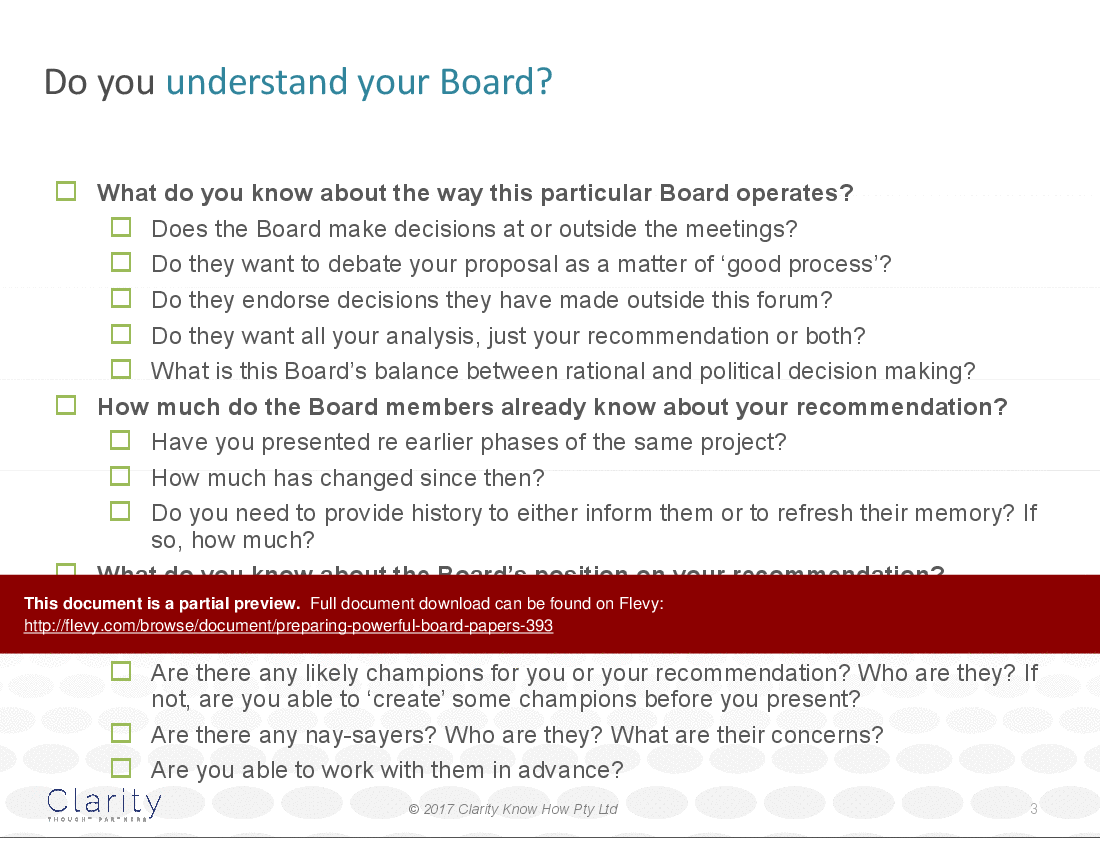
• Understanding Your Board - Gain insights into the board's decision-making processes, preferences, and knowledge levels to tailor your report effectively.
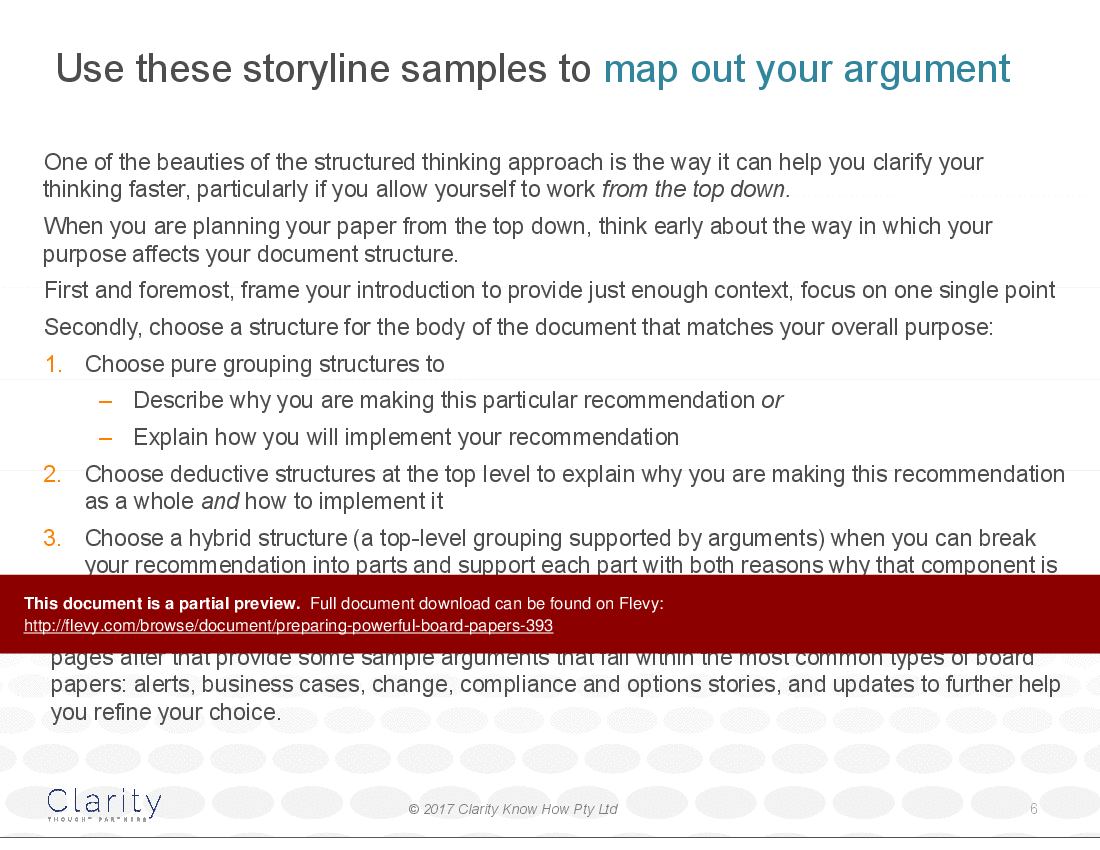
• Synthesizing Your Message - Learn structured thinking techniques to clarify and organize your messaging for maximum impact.
• Creating a Powerful Report - Transform your structured message into a polished board report that meets organizational standards.
• Common Patterns for Alerts - Explore various frameworks for presenting urgent issues and recommendations.
• Common Patterns for Business Cases - Understand how to structure business cases to persuade the board effectively.
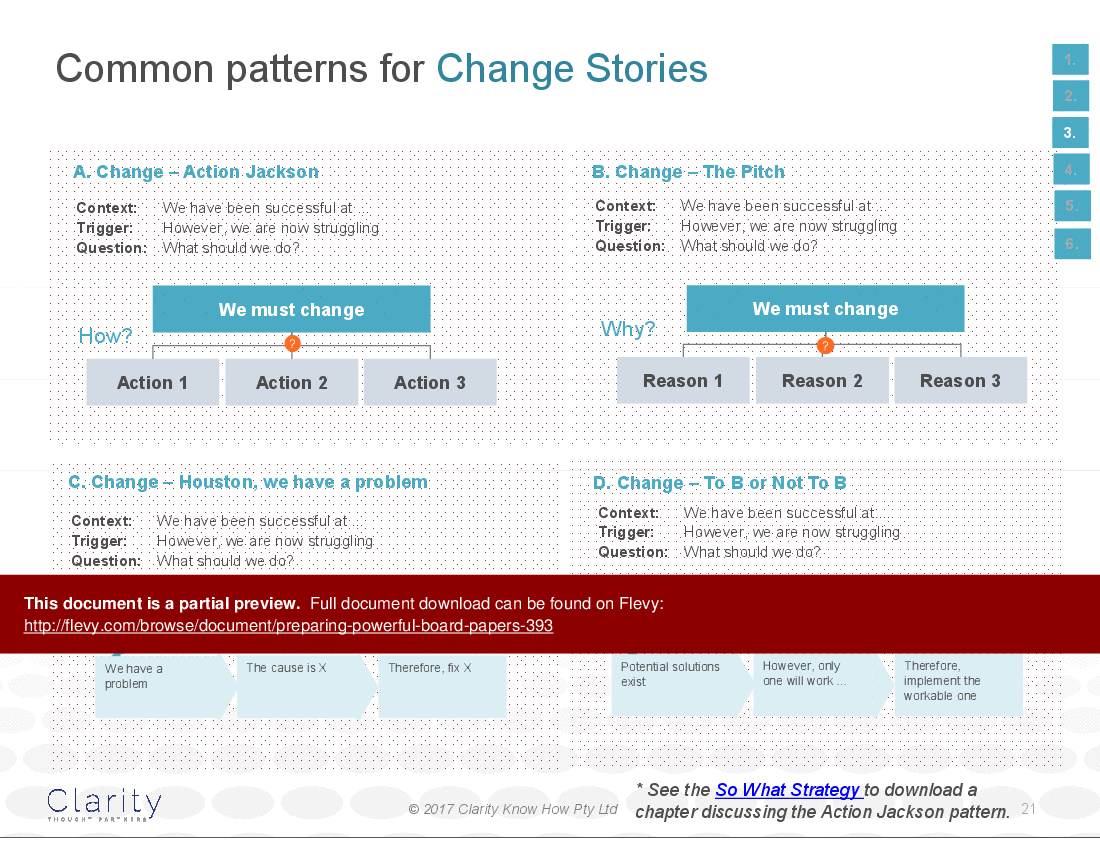
• Common Patterns for Change Stories - Learn to communicate necessary changes and their implications clearly.
Deliverables, Templates, and Tools
• Structured templates for board reports tailored to specific types of communications
• Examples of successful board papers for reference and inspiration
• Frameworks for synthesizing complex information into clear messages
• Guidelines for engaging board members effectively during presentations
Slide Highlights
• Introduction to structured thinking techniques for board communications
• Case studies illustrating successful board reports
• Visual frameworks for organizing messages and recommendations
• Examples of common patterns for alerts, business cases, and compliance stories
Potential Workshop Agenda
Understanding Your Board (60 minutes)
• Discuss board dynamics and decision-making processes
• Identify key objectives for upcoming reports
Synthesizing Your Message (90 minutes)
• Explore structured thinking techniques
• Practice synthesizing complex information into clear messages
Creating Powerful Reports (120 minutes)
• Review templates and frameworks for board reports
• Work in groups to draft and critique sample reports
Customization Guidance
• Tailor the report structure to fit your organization’s specific requirements and preferences
• Adjust the language and tone to align with board expectations
• Incorporate relevant data and metrics to support your recommendations
Secondary Topics Covered
• Techniques for managing board member expectations
• Strategies for addressing potential objections or concerns
• Best practices for visual presentation of data in reports
Topic FAQ
What are the core steps for preparing an effective board paper?
Effective board papers follow a three-step approach: understand the board’s requirements, synthesise your message clearly and concisely, and convert that messaging into a formatted board report. This sequence is the central process presented in the deck and is referred to as the three-step process.
How does the Pyramid Principle help when writing for a board?
The Pyramid Principle structures ideas so conclusions lead and supporting arguments follow logically, which helps time-poor boards grasp the main point quickly. The author teaches structured thinking techniques built on the Pyramid Principle she learned at McKinsey, cited as a core method in the materials.
What types of board reports should I be able to prepare using standard patterns?
Common board-report patterns include alerts, business cases, change stories, compliance stories, options stories, and progress updates. The deck presents these 6 report types as distinct templates and example patterns to guide message structure and recommendation framing.
How should I choose a toolkit or template when I have limited time to prepare a board paper?
Select a toolkit that helps you diagnose the board’s expectations, guides synthesis of complex material, and offers ready-to-use templates and examples to accelerate drafting. Flevy's Preparing Powerful Board Papers explicitly provides templates, frameworks, and 24 case studies to shorten preparation time and support rapid drafting.
What will a short internal workshop on board papers typically teach my team?
A concise workshop should cover diagnosing board needs, structured thinking for message synthesis, and converting messages into a report format with templates and practice. The deck’s proposed agenda includes modules on understanding the board, synthesising messages, and creating reports, supported by 24 case studies.
I need to present a business case to my board—what structure should I use?
Begin by clarifying the board’s decision requirement and concise recommendation, then present supporting arguments and risks in descending order of importance. The deck includes a specific section on Common Patterns for Business Cases and an example layout referenced in the Table of Contents on page 19.
How can I make a compliance report concise for a time-poor board?
Focus on what the board needs to decide or be assured about, summarise key compliance facts and gaps up front, and include recommended actions with clear metrics. The materials provide a Common Patterns for Compliance Stories section and templates to convert the synthesis into a report, located on page 29.
Are paid board-paper templates worth the cost and what value do they provide?
Paid templates can save time under deadline pressure by providing tested structures, example language, and formatting guidance so authors can focus on content rather than layout. The deck offers reusable templates including a one-page message map plus PowerPoint and Word report formats as concrete tools.
Document FAQ
These are questions addressed within this presentation.
What is the primary goal of this presentation?
The goal is to equip leaders with the skills to create impactful board reports that engage and inform board members effectively.
How can I ensure my report meets board expectations?
Understand your board's preferences and decision-making processes, and tailor your messaging accordingly.
What are structured thinking techniques?
These techniques help clarify and organize your messaging, ensuring that complex information is presented logically and concisely.
Can I use these techniques for other types of reports?
Yes, the principles of structured thinking and clear messaging can be applied to various business communications beyond board reports.
How do I handle differing opinions among board members?
Engage with board members individually before the meeting to understand their perspectives and address any concerns in your report.
What types of reports can I create using this framework?
You can create alerts, business cases, change stories, compliance reports, options stories, and progress updates.
How can I practice these techniques?
Consider participating in workshops or utilizing the provided templates and case studies for hands-on practice.
What resources are available for further learning?
Explore Davina Stanley's books and online courses for more in-depth insights into effective communication strategies.
Glossary
• Board Paper - A formal document presented to the board for review and decision-making.
• Structured Thinking - A method of organizing thoughts and information logically to enhance clarity.
• Case Study - An example used to illustrate a particular approach or methodology.
• Compliance Report - A document detailing adherence to regulations and standards.
• Business Case - A justification for a proposed project or initiative, outlining benefits and costs.
• Change Story - A narrative explaining the need for organizational change and its implications.
• Alert - A communication highlighting urgent issues requiring board attention.
• Options Story - A report presenting various alternatives for decision-making.
• Progress Update - A summary of advancements and challenges related to ongoing projects.
• Engagement - The process of involving board members in discussions and decision-making.
• Synthesis - The combination of ideas to form a coherent message.
• Recommendation - A suggested course of action based on analysis and insights.
• Template - A pre-designed format for creating documents efficiently.
• Stakeholder - An individual or group with an interest in the outcome of a project or decision.
• Feedback - Responses or reactions to a report or presentation, used for improvement.
• Objective - A specific goal or outcome intended to be achieved through a report.
• Framework - A structured approach to organizing information or ideas.
• Presentation - The act of delivering information to an audience, often using visual aids.
• Decision-Making - The process of making choices or reaching conclusions based on available information.
• Audience - The group of individuals who will receive and review the report.
• Engagement Strategy - A plan for involving stakeholders in discussions and decision-making processes.
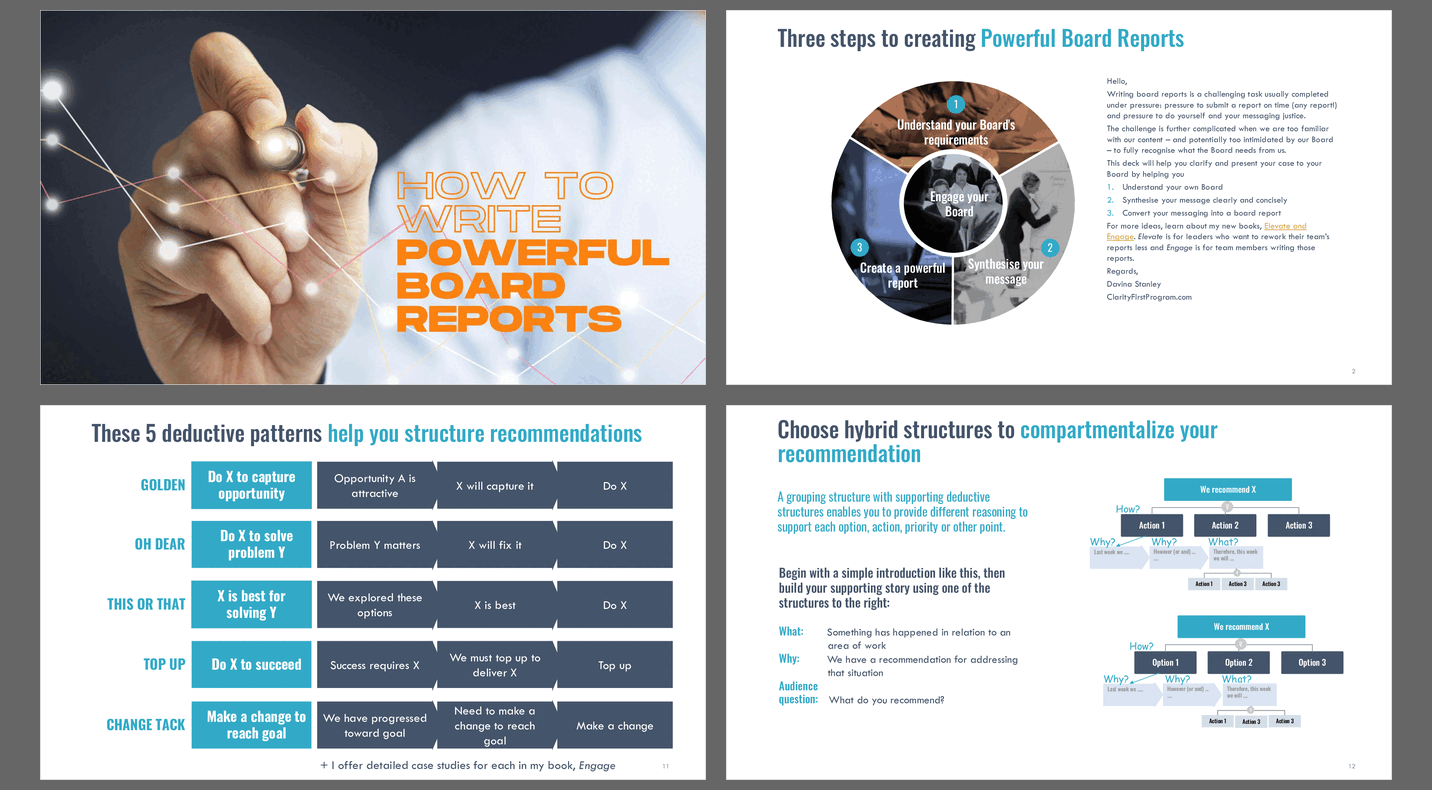
This PPT slide outlines 5 deductive patterns for structuring recommendations in decision-making. The "GOLDEN" pattern focuses on capturing opportunities by taking action "X." The "OH DEAR" pattern emphasizes problem-solving, addressing "Problem Y" with a straightforward recommendation to do "X" for resolution. The "THIS OR THAT" pattern encourages comparative analysis, guiding the audience to select "X" as the superior solution among alternatives. The "TOP UP" pattern highlights the need for additional resources or efforts, indicating success relies on doing "X." Lastly, the "CHANGE TACK" pattern advocates for strategic pivots, reminding that adaptability is essential for achieving desired outcomes. These patterns provide a structured framework for executives to formulate actionable recommendations based on varying circumstances.
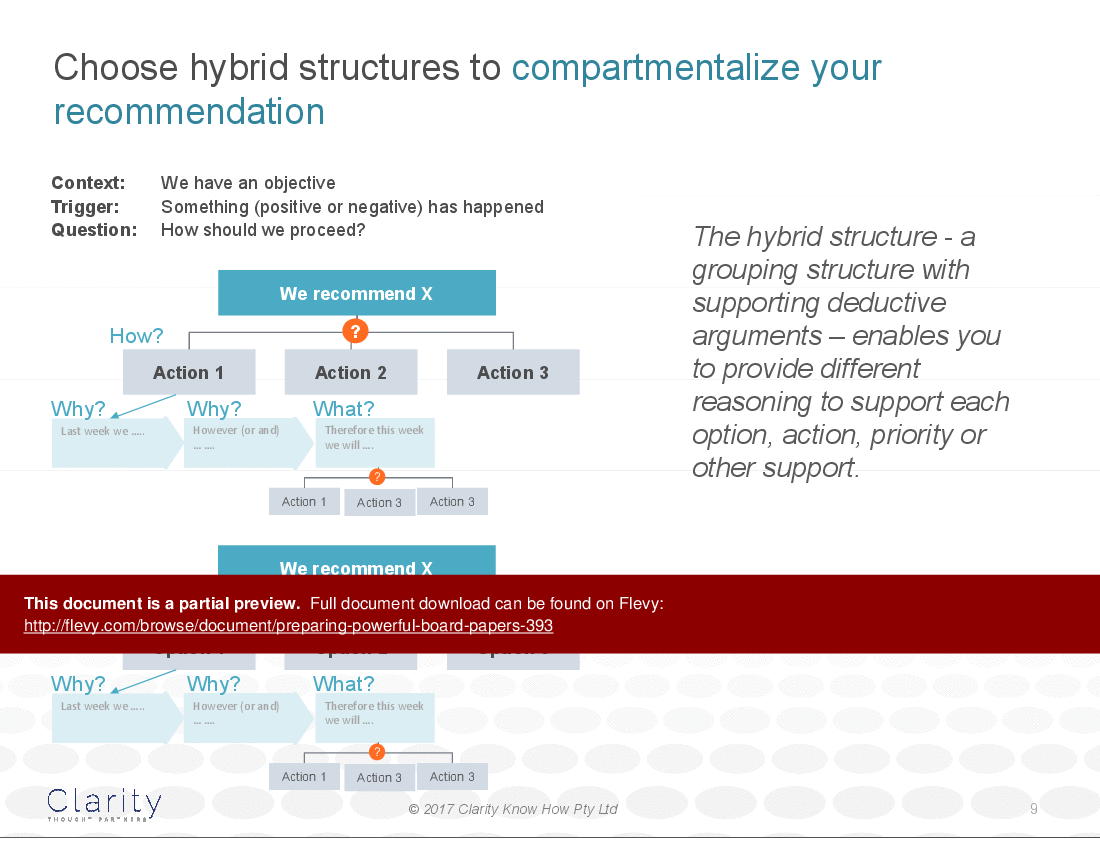
This PPT slide discusses the use of hybrid structures to compartmentalize recommendations effectively. A systematic approach enhances clarity in presenting information, utilizing a grouping structure with supporting deductive frameworks to strengthen reasoning behind each option. Key elements include defining the "What," "Why," and addressing the audience's question, "What do you recommend?" The visual representation illustrates breaking down recommendations into actionable components linked to specific actions and reasons, facilitating audience engagement and understanding. This hybrid structure ensures recommendations are compelling and logically sound, serving as a guide for executives to refine presentation skills in high-stakes environments like board meetings.
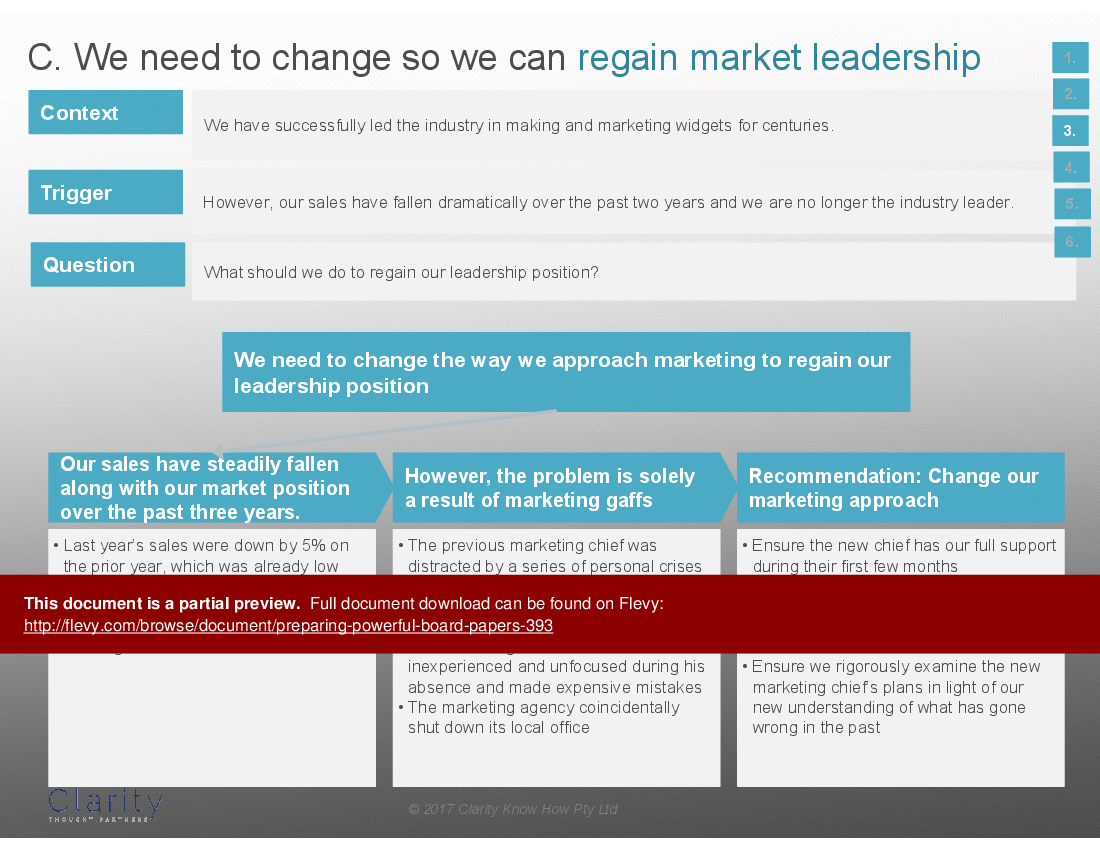
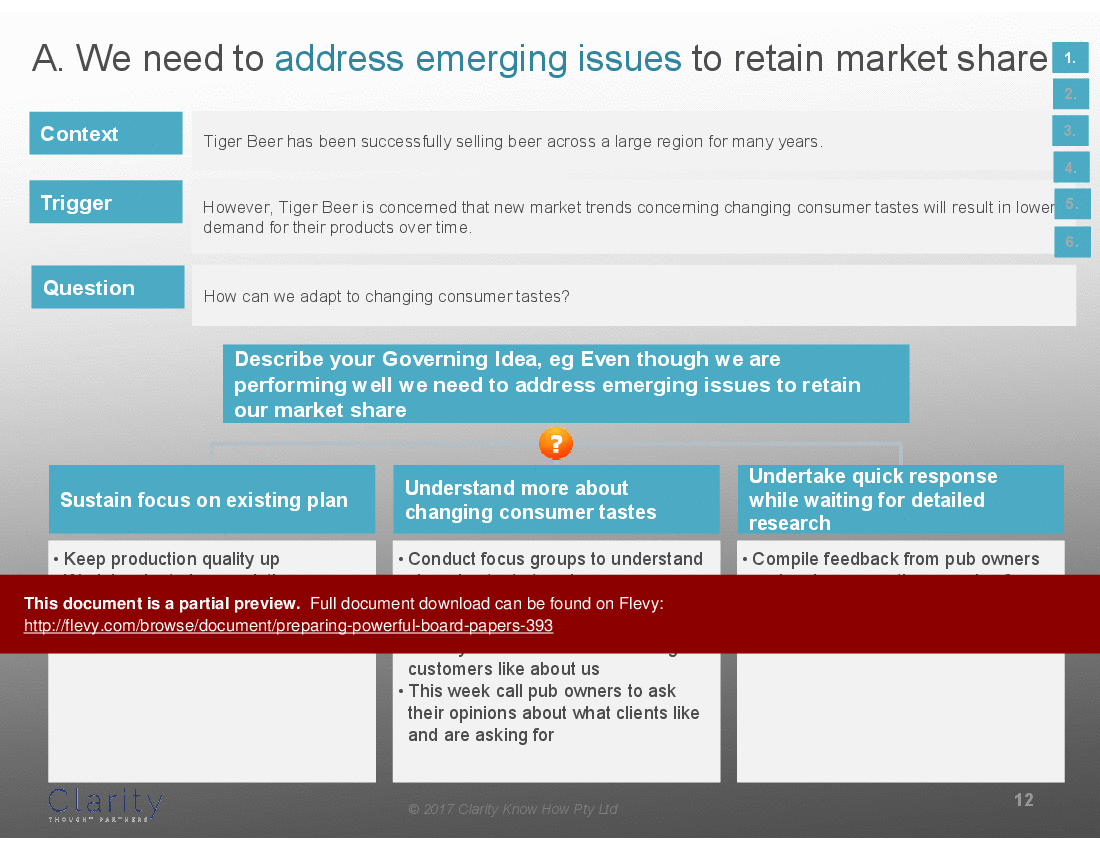
This PPT slide analyzes Tiger Beer’s operational shortcomings in comparison to industry peers, focusing on distribution costs, production costs, and marketing efforts. Tiger Beer’s distribution costs are 40% higher than competitors like Giraffe Co and Zebra Co, indicating inefficiencies in logistics and supply chain management. Production costs are also a concern, at least 30% higher than leading companies, suggesting issues with production efficiency or scale. In marketing, Giraffe Co spends twice as much and has a larger team, while Zebra Co also invests heavily, raising questions about Tiger Beer’s marketing strategy effectiveness. A thorough review of these operational strategies is essential for enhancing performance and regaining market positioning.
This PPT slide presents a framework for evaluating the logical structure of board papers. A central question prompts assessment of the overall logical soundness, crucial for effective communication of the main message. The framework emphasizes a top-down question-and-answer flow, posing 3 fundamental questions: How? Why? What? These guide the audience in evaluating logical progression and support for the main message. A hierarchical structure illustrates how the main message is reinforced by supporting ideas, enhancing clarity and coherence. A checklist evaluates whether ideas are logically ordered and maintain consistent abstraction levels, ensuring audience comprehension in high-stakes environments like board meetings.
This PPT slide addresses a significant increase in customer complaints, particularly from major clients, indicating a potential risk to customer satisfaction and retention. The complaints are of a type not previously encountered, suggesting a unique issue that requires immediate attention. There are currently no immediate solutions available, highlighting the need for realistic expectations among stakeholders. A new complaints team has been established, though it may lack the experience to manage the sudden influx of issues. The IT team will investigate root causes, while the Sales team focuses on maintaining customer relationships. The Operations team will ensure smooth implementation of necessary upgrades or fixes. Collaboration across departments is essential to effectively resolve customer complaints and restore client confidence.
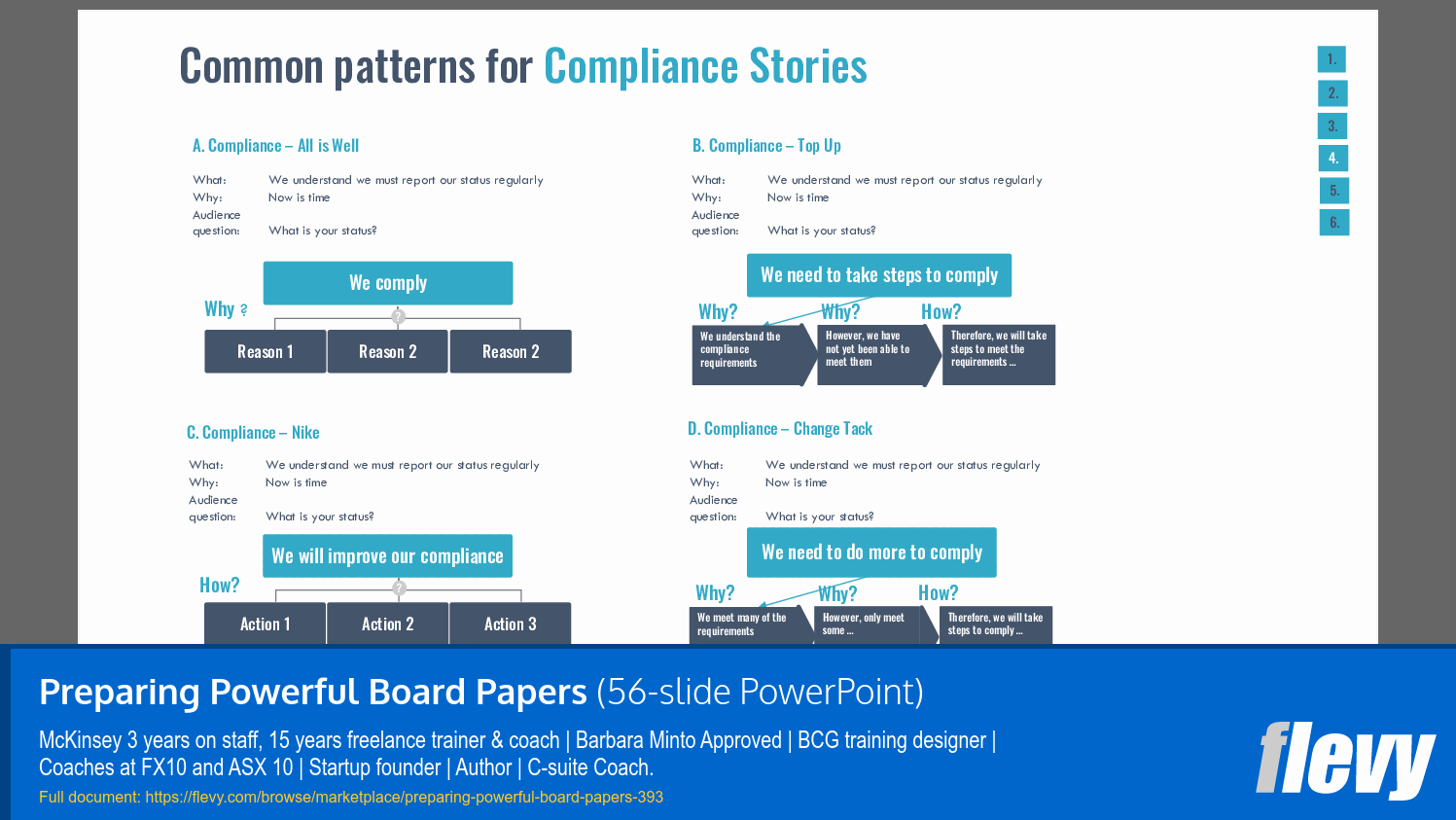
This PPT slide outlines 4 sections for communicating compliance stories:
Section A, "Compliance – All is Well," indicates a positive compliance status and emphasizes transparency in reporting with 2 reasons for compliance.
Section B, "Compliance – Top Up," encourages proactive measures to meet compliance requirements, prompting reflection on current status and action steps.
Section C, "Compliance – Nike," focuses on enhancing compliance with 3 actionable steps, promoting a commitment to improvement.
Section D, "Compliance – Change Tack," acknowledges current compliance levels while identifying additional steps necessary for enhancement.
This structured approach guides organizations in assessing compliance and taking actionable steps for improvement.
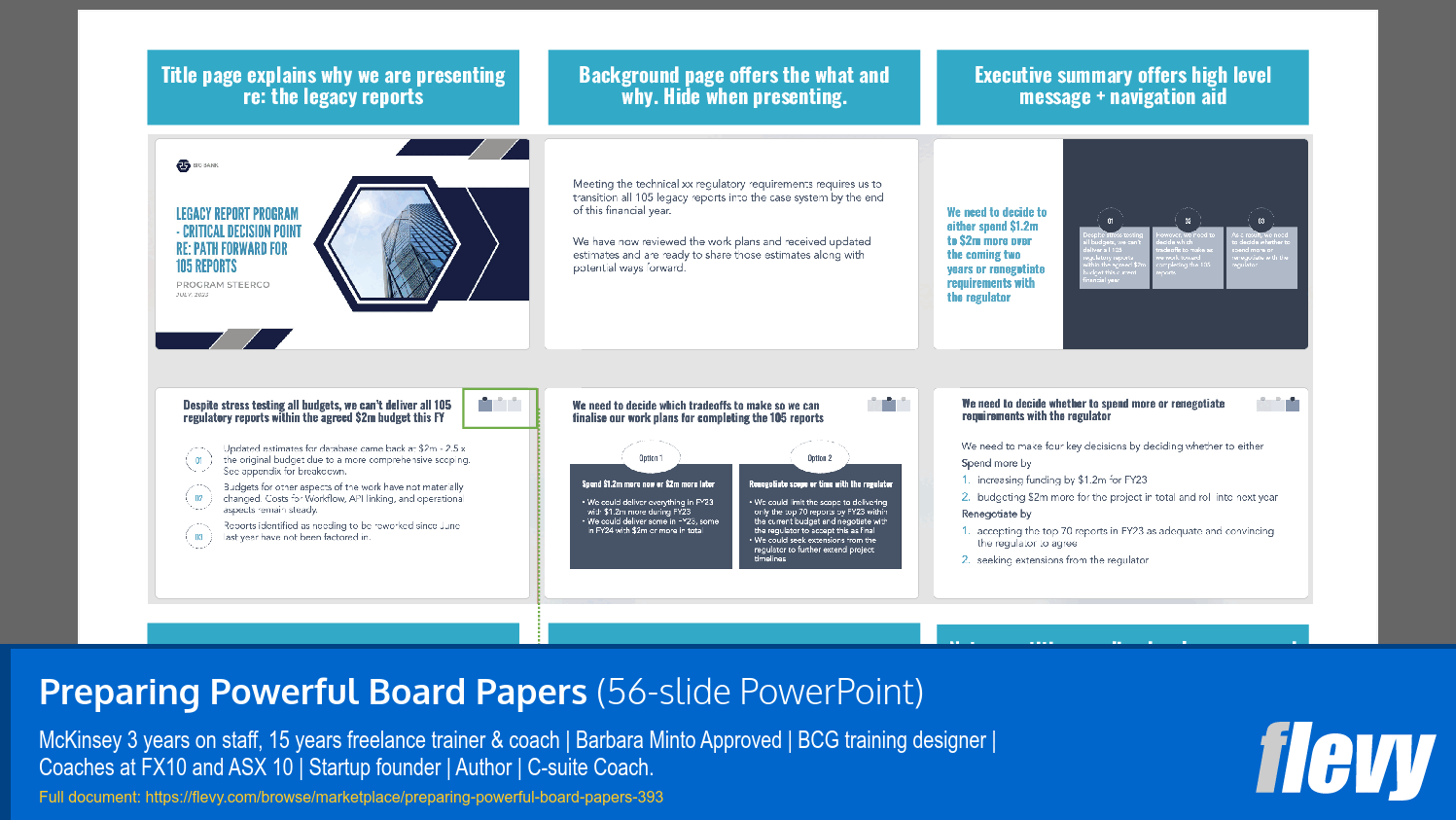
This PPT slide evaluates the transition of 105 legacy reports into a new case system, requiring a budget decision. Regulatory compliance mandates completion by the end of the financial year, with updated estimates indicating a total transition cost of around $2 million, exceeding the original budget. The executive team faces 2 options: allocate an additional $1.2 million to $2 million over 2 years or renegotiate requirements with regulators. The urgency stems from the infeasibility of completing the transition within the agreed budget. Recommendations include full delivery in the current fiscal year or a phased approach over 2 years, with potential renegotiation involving a reduced number of reports or extensions. The decision involves trade-offs between additional funding and regulatory negotiations.
This PPT slide outlines the challenges of completing 105 regulatory reports within a $2 million budget. Despite thorough budget assessments, the team cannot deliver all reports within the fiscal year. Two options are proposed to address the budget shortfall: spending an additional $1.2 million to $2 million over 2 years, with specific fund allocations, or renegotiating the scope of work with the regulator for flexibility in timelines and deliverables. Four key decisions must be made, including increasing funding, budgeting additional resources, and engaging with the regulator on report prioritization. This decision-making framework is essential for stakeholders to understand strategic choices and their implications.
Source: Best Practices in Board of Directors PowerPoint Slides: Preparing Powerful Board Papers PowerPoint (PPTX) Presentation Slide Deck, Clarity First
McKinsey 3 years on staff, 15 years freelance trainer & coach | Barbara Minto Approved | BCG training designer | Coaches at FX10 and ASX 10 | Startup founder | Author | C-suite Coach.
Clarity First helps ambitious professionals communicate complex ideas with compelling clarity and less rework.
These documents emerge from 25+ years' of helping execs globally across consulting and industry. Author, Davina Stanley ...
• was approved by Barbara Minto to teach the Pyramid Principle in 2009.
• coached and trained McKinsey consultants globally for
... [read more] 15+ years
• helped design the structured thinking program at BCG in Australia
• has coached and trained professionals from graduates to the C-suite to lift the quality of their communication while cutting rework for 25+ years.
• wrote three books for ...
... everyday business communication - the So What Strategy, with Gerard Castles (2017).
... leading teams that need to present to senior leaders and boards - Elevate (2024)
... writing papers and presentations for senior leaders and boards - Engage (mid 2024)
The average daily rate of a McKinsey consultant is $6,625 (not including expenses). The average price of a Flevy document is $65.
Trusted by over 10,000+ Client Organizations
Since 2012, we have provided business templates to over 10,000 businesses and organizations of all sizes, from startups and small businesses to the Fortune 100, in over 130 countries.
"Flevy is now a part of my business routine. I visit Flevy at least 3 times each month.
Flevy has become my preferred learning source, because what it provides is practical, current, and useful in this era where the business world is being rewritten.

many challenges and there is the need to make the right decisions in a short time, with so much scattered information, we are fortunate to have Flevy. Flevy investigates, selects, and puts at our disposal the best of the best to help us be successful in our work.
"
– Omar Hernán Montes Parra, CEO at Quantum SFE
"The wide selection of frameworks is very useful to me as an independent consultant. In fact, it rivals what I had at my disposal at Big 4 Consulting firms in terms of efficacy and organization."
– Julia T., Consulting Firm Owner (Former Manager at Deloitte and Capgemini)
"I have used Flevy services for a number of years and have never, ever been disappointed. As a matter of fact, David and his team continue, time after time, to impress me with their willingness to assist and in the real sense of the word. I have concluded in fact
that it is not at all just a repository of documents/resources but, in the way that David and his team manage the firm, it is like dealing with consultants always ready to assist, advise and direct you to what you really need, and they always get it right.
I am an international hospitality accomplished senior executive who has worked and lived during the past 35 years in 23 countries in 5 continents and I can humbly say that I know what customer service is, trust me.
Aside from the great and professional service that Flevy's team provide, their wide variety of material is of utmost great quality, professionally put together and most current.
Well done Flevy, keep up the great work and I look forward to continue working with you in the future and to recommend you to a variety of colleagues around the world.
"
– Roberto Pelliccia, Senior Executive in International Hospitality
"[Flevy] produces some great work that has been/continues to be of immense help not only to myself, but as I seek to provide professional services to my clients, it gives me a large "tool box" of resources that are critical to provide them with the quality of service and outcomes they are expecting."
– Royston Knowles, Executive with 50+ Years of Board Level Experience
"If you are looking for great resources to save time with your business presentations, Flevy is truly a value-added resource. Flevy has done all the work for you and we will continue to utilize Flevy as a source to extract up-to-date information and data for our virtual and onsite presentations!"
– Debbi Saffo, President at The NiKhar Group
"My FlevyPro subscription provides me with the most popular frameworks and decks in demand in today’s market. They not only augment my existing consulting and coaching offerings and delivery, but also keep me abreast of the latest trends, inspire new products and service offerings for my practice, and educate me
in a fraction of the time and money of other solutions. I strongly recommend FlevyPro to any consultant serious about success.
"
– Bill Branson, Founder at Strategic Business Architects
"I am extremely grateful for the proactiveness and eagerness to help and I would gladly recommend the Flevy team if you are looking for data and toolkits to help you work through business solutions."
– Trevor Booth, Partner, Fast Forward Consulting
"As a young consulting firm, requests for input from clients vary and it's sometimes impossible to provide expert solutions across a broad spectrum of requirements. That was before I discovered Flevy.com.
Through subscription to this invaluable site of a plethora of topics that are key and crucial to consulting, I
have been able to exceed expectations and deliver quality advice and solutions to my clients. The quality and expertise of the authors are exemplary and gives me great confidence to use as part of my service offerings.
I highly recommend this company for any consultant wanting to apply international best practice standards in their service offerings.
"
– Nishi Singh, Strategist and MD at NSP Consultants
Download our free compilation of 50+ Strategy & Transformation slides and templates. Frameworks include McKinsey 7-S, Balanced Scorecard, Disruptive Innovation, BCG Curve, and many more.