
There is little more embarrassing in business than communicating poorly to your boss – or your boss's boss. We have all experienced moments early in our careers where we have had to communicate with important people and not known how to go about it.
We marvel at those around us who can get to the right point quickly in so many circumstances and yet so often muff it ourselves.
Mostly, experience teaches us how to communicate clearly with aplomb, but sometimes that experience comes at a cost of embarrassment that we would prefer to avoid.
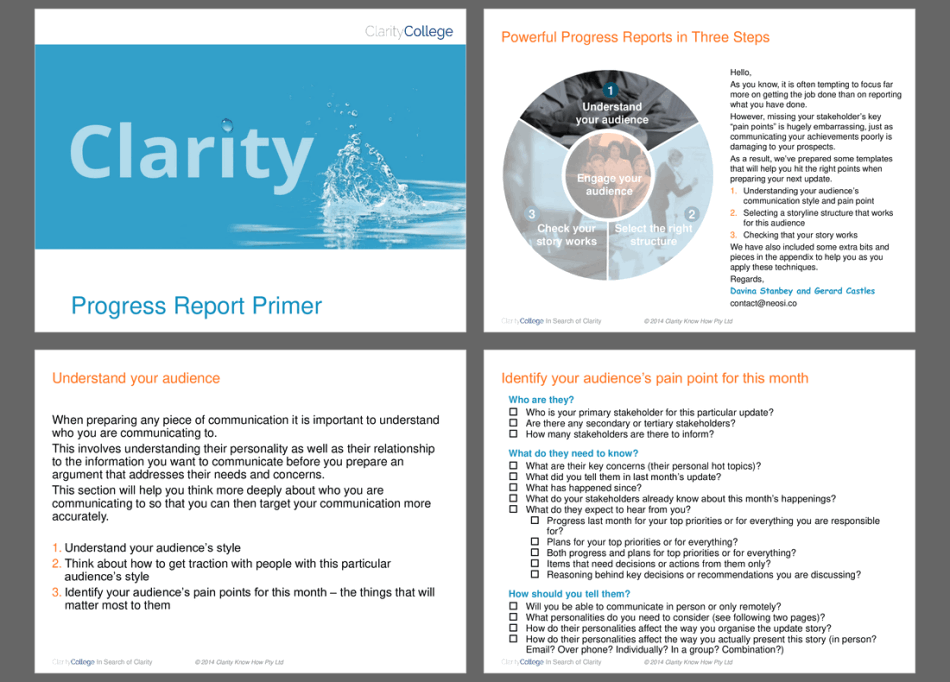
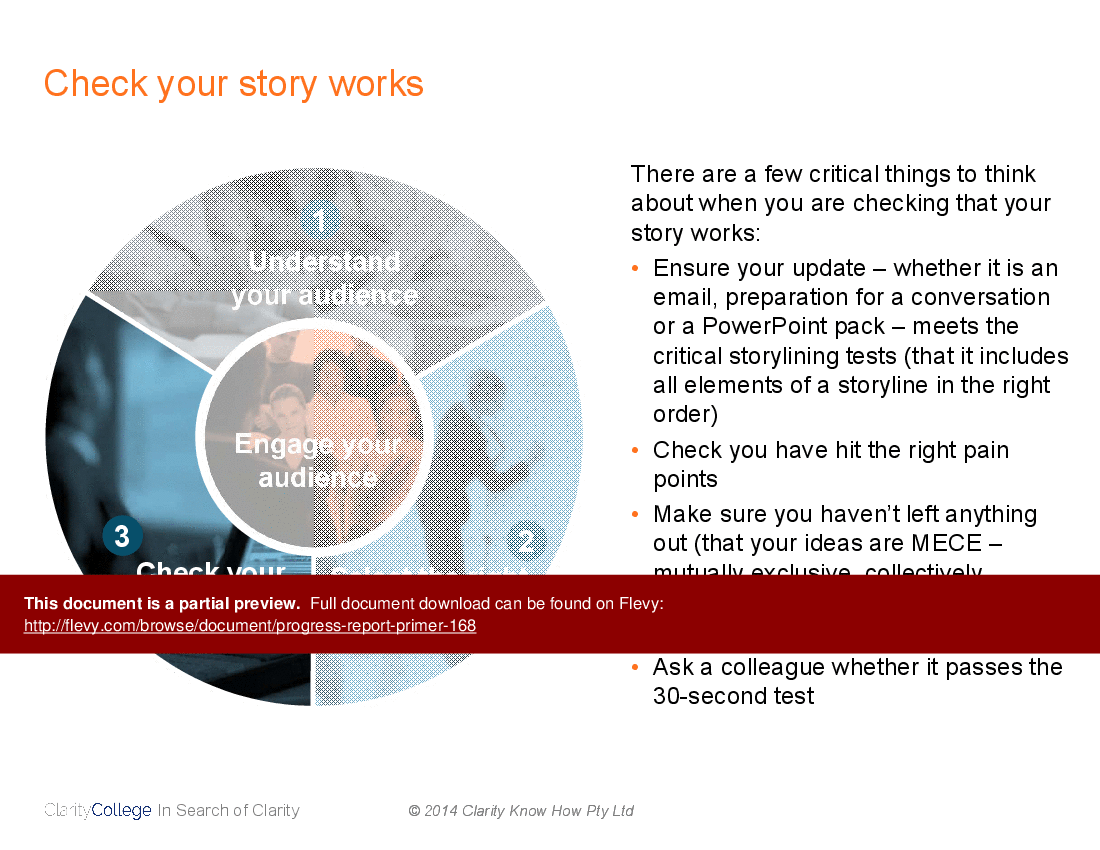
We have collated our experience of more than 40 years' of communicating and teaching others to communicate to provide you with this easy-to-use primer full of principles and templates to help you prepare your next progress report, or management update in three steps:
• Understand your audience
• Select the right argument structure
• Check your story works
We have also thrown in a link to a video that provides a quick snapshot of the structured thinking techniques that underpin the approach we have used to prepare the examples and templates in this pack.
The newly expanded pack is 31 pages in total and is separated into these three sections plus an appendix with some extra resources:
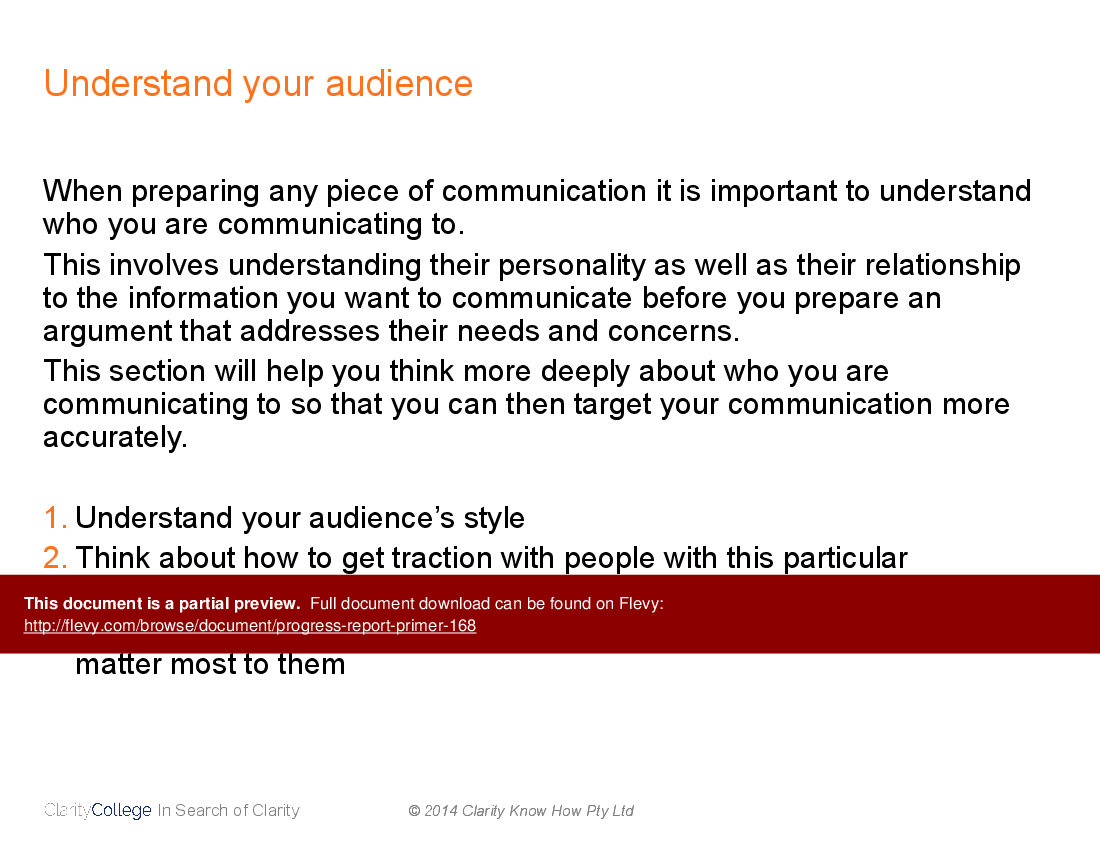
Understanding your audience
• Some simple and practical thoughts about tailoring your progress report for different types of people based on the Bolton and Bolton Work Styles approach
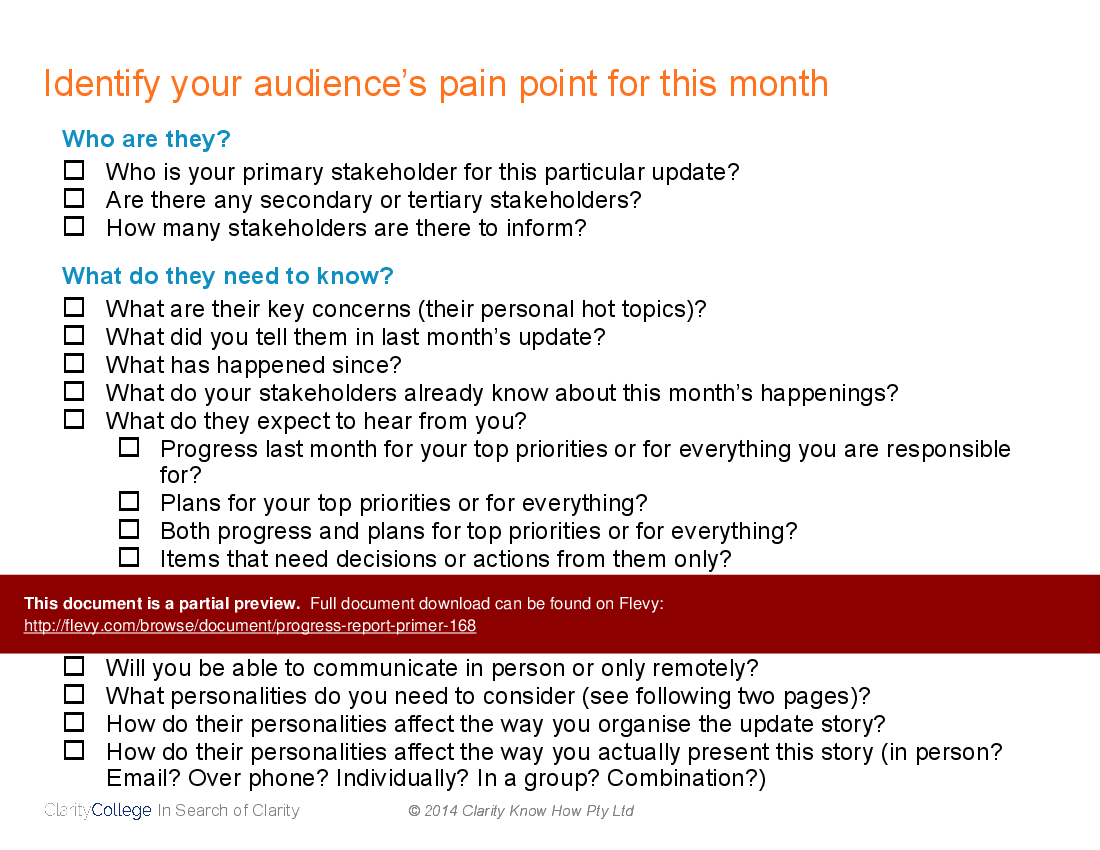
• A checklist to help you think about your audience before you start communicating (some questions to ask sorted into three categories, which focus on: who you audience really is, what they need from you and how you should tell them)
Selecting the right argument structure
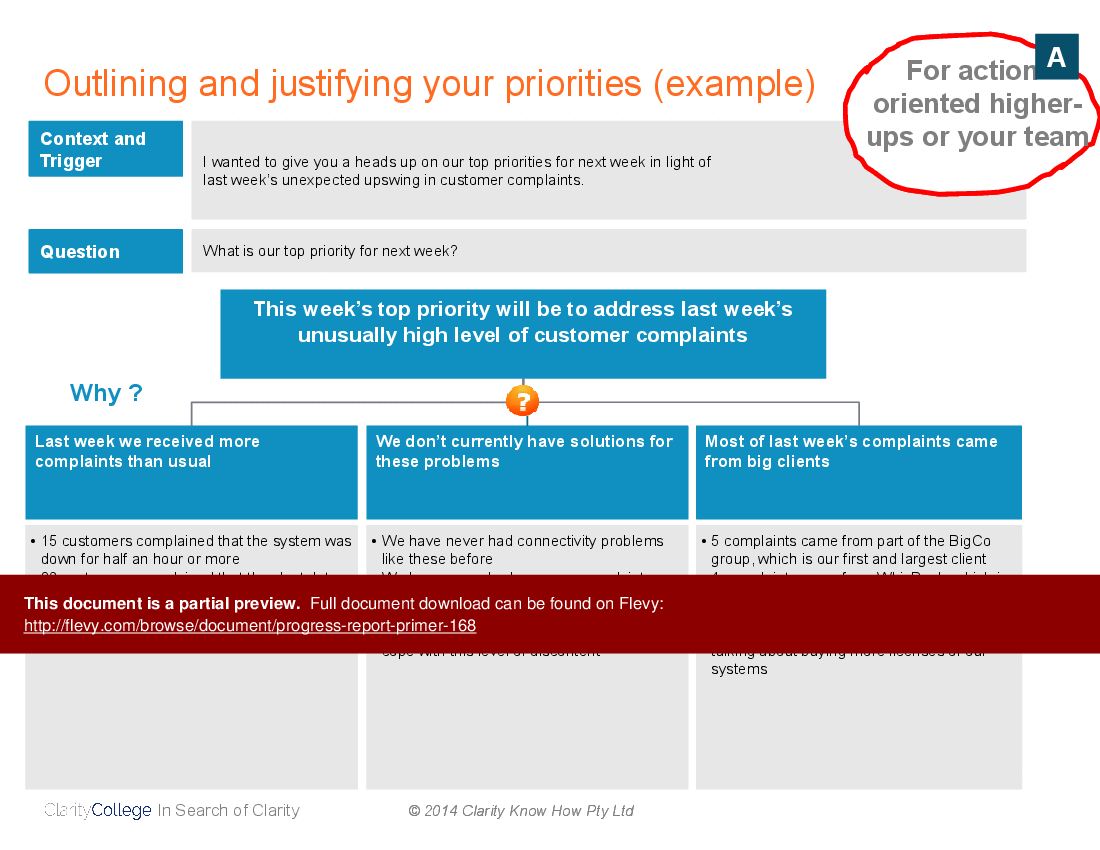
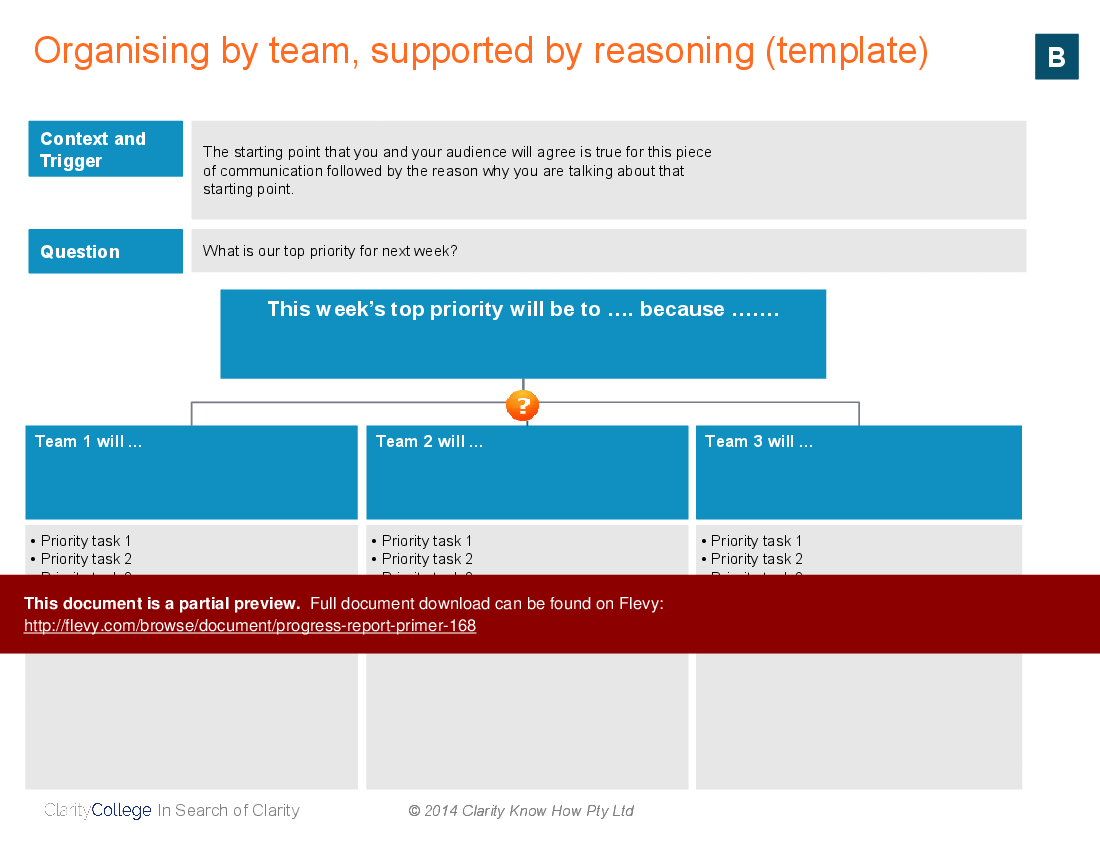
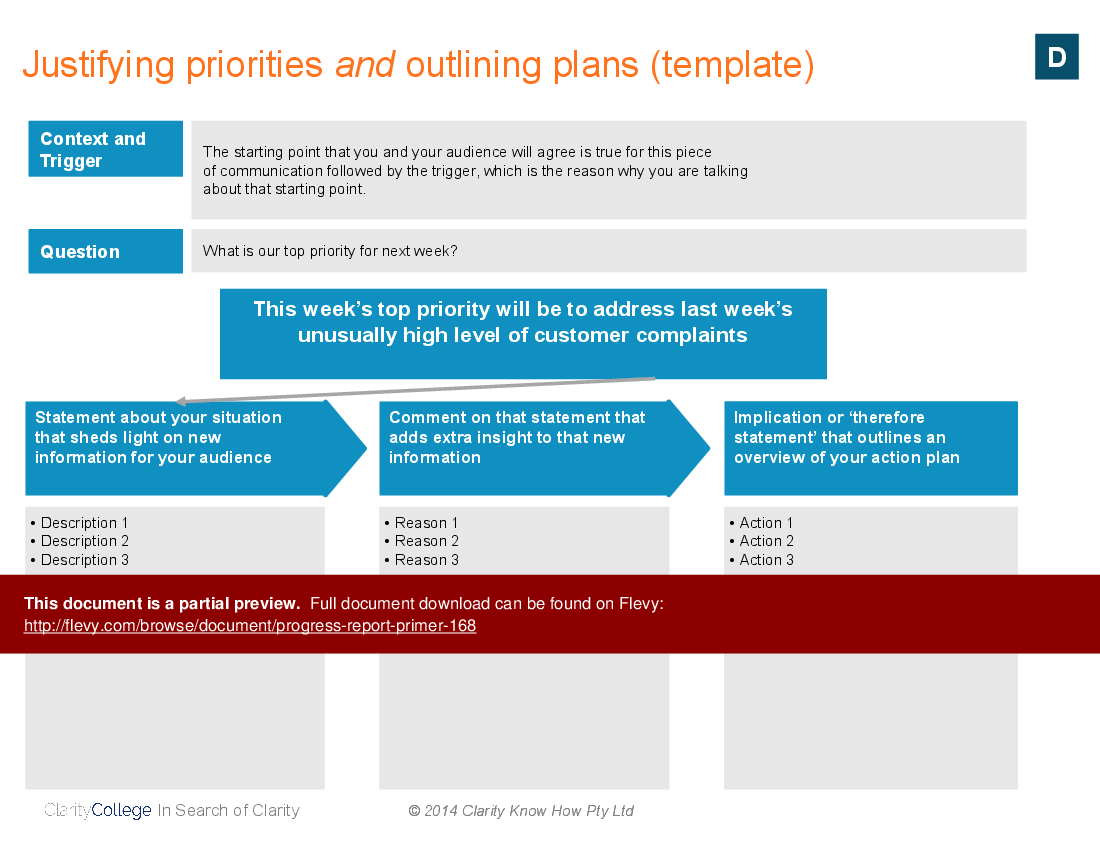
• Five of the most commonly used storyline patterns, each accompanied by notes on when to use each one as well as a detailed example and a one-page neosi storyline template. The templates can be used to create your own one-pagers when you plan for your next update meeting or plan an email or more formal progress report.
Checking your story works
• An annotated example that demonstrates how you can convert your update from storyline form into an email
• A checklist to help you check whether you think your communication 'hits the right spot' for this particular audience this time
Extras
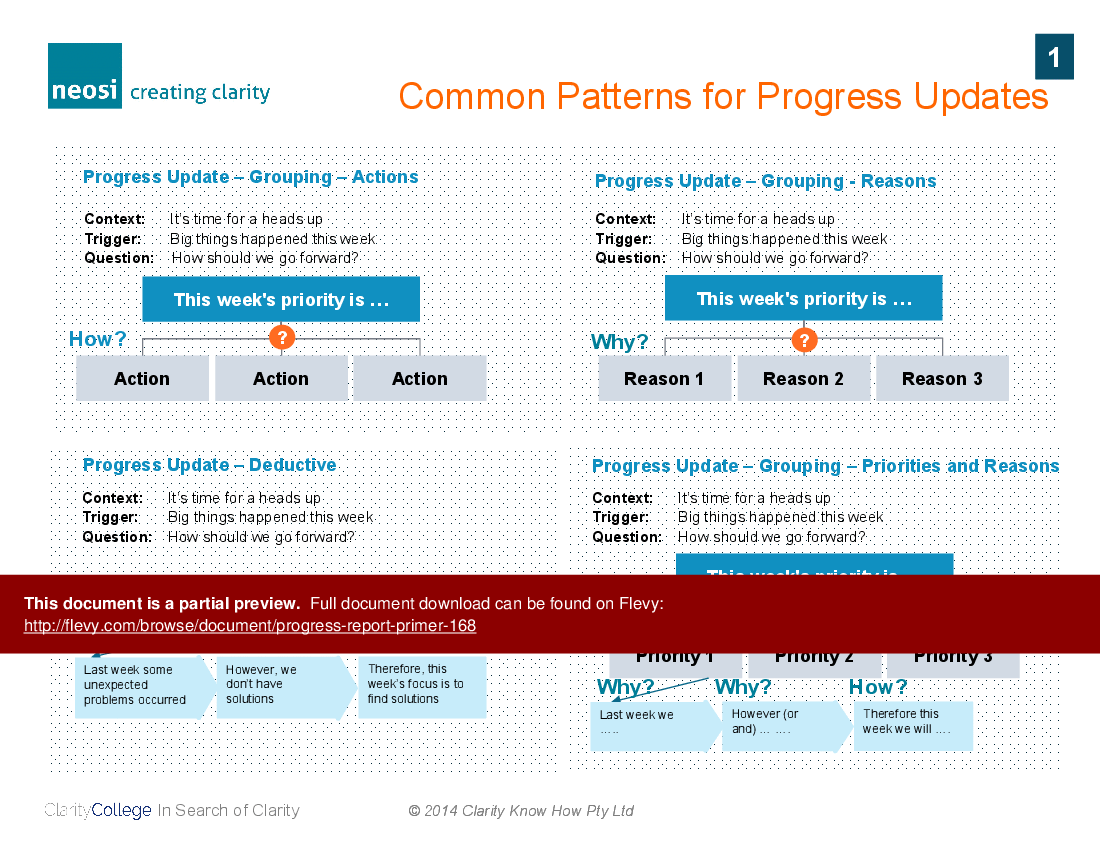
• A handy one-pager with the four most commonly used progress update storyline patterns
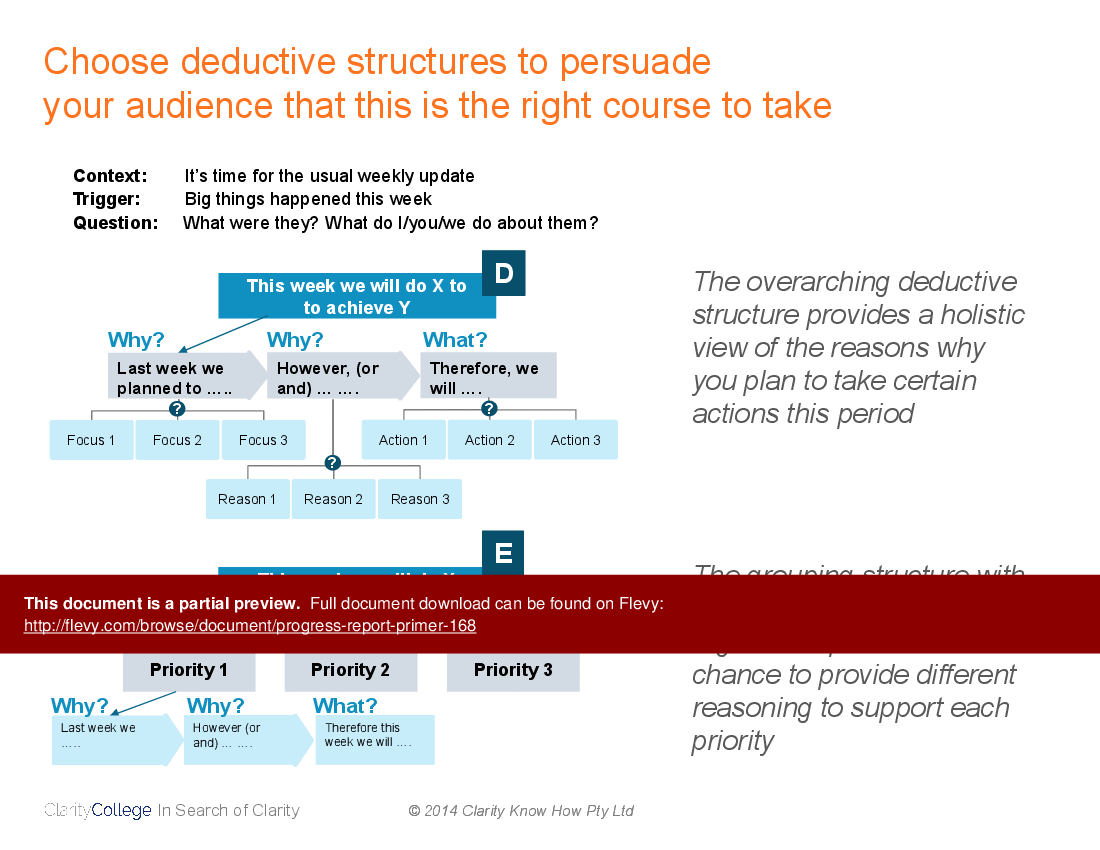
• Another bonus one-pager with five deductive storyline examples (given deductive structures are the hardest ones to get right)
• Access to a short online clarity module that provides an overview to the structured thinking theory that underpins this approach.
It was prepared by Clarity College, a group of communication specialists who were initially trained by McKinsey & Company and who now consult to a wide range of corporate, consulting and government clients globally.
Gain insights into identifying your audience's pain points and tailoring your communication to address their specific concerns. Utilize practical templates for outlining and justifying priorities, ensuring your updates are both clear and compelling.
Got a question about the product? Email us at support@flevy.com or ask the author directly by using the "Ask the Author a Question" form. If you cannot view the preview above this document description, go here to view the large preview instead.
Executive Summary
The Progress Report Primer is a meticulously crafted guide designed to enhance the effectiveness of progress reporting, ensuring clarity and engagement. Developed by communication specialists with backgrounds at McKinsey and other leading consultancies, this resource offers a structured approach to crafting impactful updates. It empowers users to understand their audience, select appropriate structures, and check the coherence of their narratives. By utilizing this primer, corporate executives and consultants can master the art of progress reporting, addressing stakeholder pain points and delivering concise, actionable insights.
Who This Is For and When to Use
• Corporate executives responsible for stakeholder communication
• Project managers needing to report on progress and plans
• Consultants advising clients on effective communication strategies
• Team leaders aiming to improve internal reporting processes
Best-fit moments to use this deck:
• Preparing for monthly or quarterly stakeholder updates
• Structuring team progress reports for clarity and engagement
• Conducting training sessions on effective communication strategies
Learning Objectives
• Define key audience characteristics to tailor communications effectively
• Build structured progress reports that resonate with stakeholders
• Establish clarity in reporting by identifying and addressing pain points
• Engage audiences through tailored storytelling techniques
• Check the effectiveness of reports against established communication standards
• Utilize templates for various reporting scenarios to streamline preparation
Table of Contents
• Understanding Your Audience (page 3)
• Selecting the Right Structure (page 10)
• Engaging Your Audience (page 15)
• Checking Your Story Works (page 20)
• Progress Reports Checklist (page 25)
• Common Patterns for Progress Updates (page 30)
• Resources for Further Learning (page 35)
Primary Topics Covered
• Audience Understanding - Grasping the communication styles and pain points of stakeholders to tailor messages effectively.
• Story Structure Selection - Choosing between grouping and deductive structures to enhance clarity and persuasion in reports.
• Engagement Techniques - Strategies to captivate audiences and ensure that key messages are communicated succinctly.
• Coherence Checks - Methods for verifying that reports meet storytelling criteria and address stakeholder needs.
• Progress Reporting Templates - Ready-to-use templates for various reporting scenarios to facilitate efficient communication.
• Feedback Mechanisms - Incorporating audience feedback to refine future reports and improve overall communication effectiveness.
Deliverables, Templates, and Tools
• Audience analysis template to identify key stakeholder characteristics
• Progress report structure templates for grouping and deductive formats
• Checklist for ensuring reports meet clarity and engagement standards
• Sample progress report examples for various contexts
• Feedback collection tools to gauge audience response and improve future reports
• Resources for further learning on effective communication strategies
Slide Highlights
• Visual aids illustrating audience communication styles and preferences
• Flowcharts detailing the selection of report structures
• Examples of effective progress report templates
• Checklists for assessing report clarity and engagement
• Case studies demonstrating successful application of the primer's techniques
Potential Workshop Agenda
Understanding Your Audience (60 minutes)
• Discuss audience characteristics and communication styles
• Identify stakeholder pain points for effective reporting
• Engage in group exercises to analyze audience needs
Selecting the Right Structure (45 minutes)
• Review grouping vs. deductive structures
• Practice structuring reports using provided templates
• Share examples and receive peer feedback
Engaging Your Audience (30 minutes)
• Explore techniques for captivating stakeholders
• Discuss the importance of clarity and conciseness
• Role-play scenarios to practice engagement strategies
Customization Guidance
• Tailor audience analysis templates to fit specific stakeholder groups
• Adjust report structures based on the unique context of updates
• Incorporate company-specific terminology and metrics into templates
Secondary Topics Covered
• Communication styles and their impact on reporting
• The role of storytelling in effective progress updates
• Techniques for soliciting and incorporating audience feedback
• The importance of clarity in corporate communications
• Strategies for continuous improvement in reporting practices
FAQ
What is the purpose of the Progress Report Primer?
The primer aims to enhance the clarity and effectiveness of progress reporting, ensuring that updates resonate with stakeholders and address their key concerns.
Who should use this primer?
It is designed for corporate executives, project managers, and consultants who need to communicate progress effectively to various stakeholders.
How can I tailor my reports using this primer?
Utilize the audience analysis and structure selection templates to customize your reports based on stakeholder needs and preferences.
What types of structures are recommended for progress reports?
The primer suggests using grouping structures for action-oriented updates and deductive structures for persuasive communication.
How do I check if my report is effective?
Employ the provided checklist to ensure your report meets clarity standards and addresses the audience's pain points.
Can I use the templates for different reporting scenarios?
Yes, the templates are versatile and can be adapted for various contexts and audiences.
What are the common pitfalls in progress reporting?
Common pitfalls include lack of audience understanding, unclear messaging, and failure to address stakeholder concerns.
How can I improve my audience engagement during updates?
Focus on tailoring your message to the audience's communication style and using storytelling techniques to make your updates more relatable.
Glossary
• Audience Analysis - The process of understanding the characteristics and needs of stakeholders to tailor communication.
• Grouping Structure - A report format that organizes information by themes or categories.
• Deductive Structure - A report format that presents conclusions first, followed by supporting arguments.
• Engagement Techniques - Strategies used to captivate and maintain the audience's interest during presentations.
• Clarity Standards - Criteria used to evaluate the effectiveness and coherence of communication.
• Feedback Mechanism - Tools or processes for gathering audience responses to improve future communications.
• Progress Report - A document that summarizes the status of a project or initiative, highlighting achievements and future plans.
• Storytelling - The art of conveying information through narratives to enhance understanding and engagement.
• Templates - Pre-designed formats that facilitate the creation of reports and presentations.
• Communication Styles - The preferred ways individuals convey and interpret information.
• Pain Points - Specific issues or concerns that stakeholders prioritize and need addressed in communications.
• 30-Second Test - A method for evaluating whether a report communicates its key messages within the first 30 seconds of review.
• CTQ (Critical to Quality) - Elements of a report that are essential for meeting stakeholder expectations.
• MECE (Mutually Exclusive, Collectively Exhaustive) - A principle ensuring that information is organized without overlaps or gaps.
• Action-Oriented - A communication style focused on delivering actionable insights and recommendations.
• Persuasive Communication - The practice of influencing stakeholders through compelling arguments and evidence.
• Status Update - A report that provides current information on project progress and future actions.
• Stakeholder - An individual or group with an interest in the outcome of a project or initiative.
• Narrative Structure - The framework used to organize and present information in a coherent story format.
• Reporting Standards - Guidelines that dictate how progress updates should be structured and delivered.
Source: Best Practices in Communications Strategy, Progress Report PowerPoint Slides: Progress Report Primer PowerPoint (PPTX) Presentation Slide Deck, Clarity First
|
Download our FREE Organization, Change, & Culture, Templates
Download our free compilation of 50+ slides and templates on Organizational Design, Change Management, and Corporate Culture. Methodologies include ADKAR, Burke-Litwin Change Model, McKinsey 7-S, Competing Values Framework, etc. |