
Developed by a Senior Executive and Operational Excellence Coach with experience at organizations including NOKIA, MICROVENTION, and MAGELLAN, this presentation covers the Net-Promoter-Score (NPS) and 10 Deployment Best Practices.

True loyalty clearly affects profitability. While regular Customers are not always profitable, their choice to stick with a product or service typically reduces a company's Customer acquisition costs.
Loyal Customers talk up a company to their friends, family, and colleagues.
The tendency of loyal Customers to bring in new Customers at no charge to the company is particularly beneficial as a company grows.
CUSTOMER SATISFACTION PPT DESCRIPTION
Editor Summary
47-slide PowerPoint presentation on the Net Promoter Score (NPS) and 10 Deployment Best Practices, developed by a Senior Executive and Operational Excellence Coach with experience at NOKIA, MICROVENTION, and MAGELLAN.
Read moreCovers NPS definition, history, calculation (Promoters/Passives/Detractors), correlation between NPS and growth, and statistical tracking. Includes deliverables: NPS survey template, best practices checklist, service recovery process framework, customer journey mapping template, and recognition/rewards guidelines. Targeted at Customer Experience leaders, Operational Excellence teams, Marketing/Sales, and executives; sold as a digital download on Flevy.
Use this deck when an organization needs to measure and operationalize customer loyalty — for example when launching or revitalizing a feedback program, embedding NPS into daily operations, or designing a service recovery capability.
Customer Experience leaders designing feedback programs and aligning survey design to key touchpoints using the NPS survey template.
Operational Excellence teams integrating real-time NPS tracking and service recovery into workflows and escalation paths.
Marketing and Sales teams mapping promoters to referral and advocacy initiatives using the customer journey mapping template.
Senior executives reviewing the link between promoter percentages and growth to inform strategic planning.
The approach treats NPS as an operational management metric with structured survey design, benchmarking, and service-recovery processes consistent with the Reichheld/Bain emphasis on linking NPS to growth.
This presentation covers the Net-Promoter-Score (NPS) and 10 Deployment Best Practices to ensure a successful implementation.
The Net Promoter Score is a customer loyalty metric developed by (and a registered trademark of) Fred Reichheld, Bain & Company, and Satmetrix Systems.
It was introduced by Reichheld in his 2003 Harvard Business Review article "One Number You Need to Grow".
Today, the Net Promoter Score has been widely adopted with more than two-thirds of Fortune 1000 companies using the metric.
"After you have downloaded the material, you can change any part of the training material and remove all logos and references to Operational Excellence Consulting. You can share the material with your colleagues and clients, and re-use it as you need. The only restriction is that you cannot publicly re-distribute, sell, rent, or license the material as though it is your own. Thank you."
If you are interested in introducing your organization to the Net Promoter Score approach, you can use and customize this presentation.
Let us know if you need any support in deploying the Net Promoter Score (NPS) in your organization.
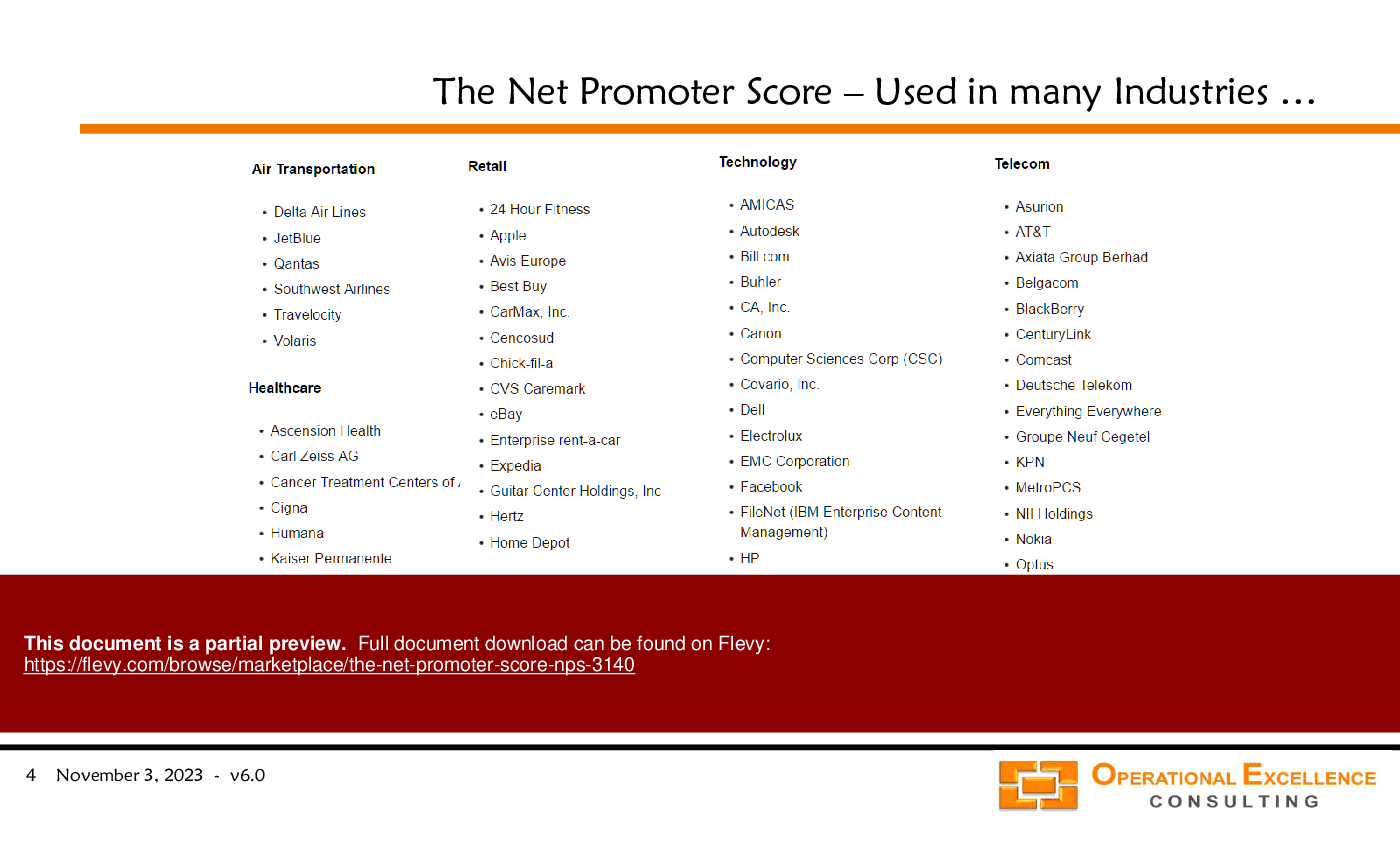
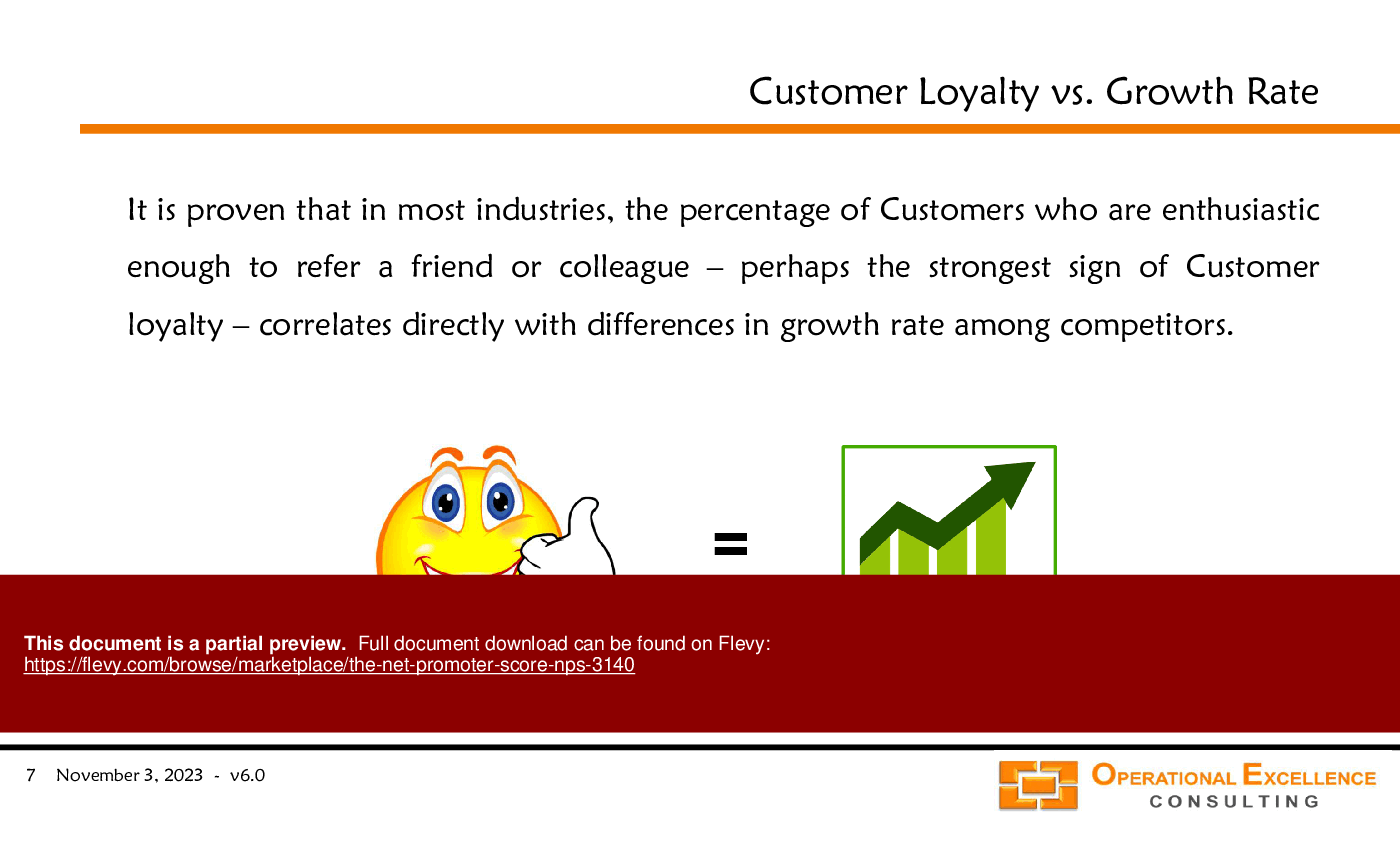
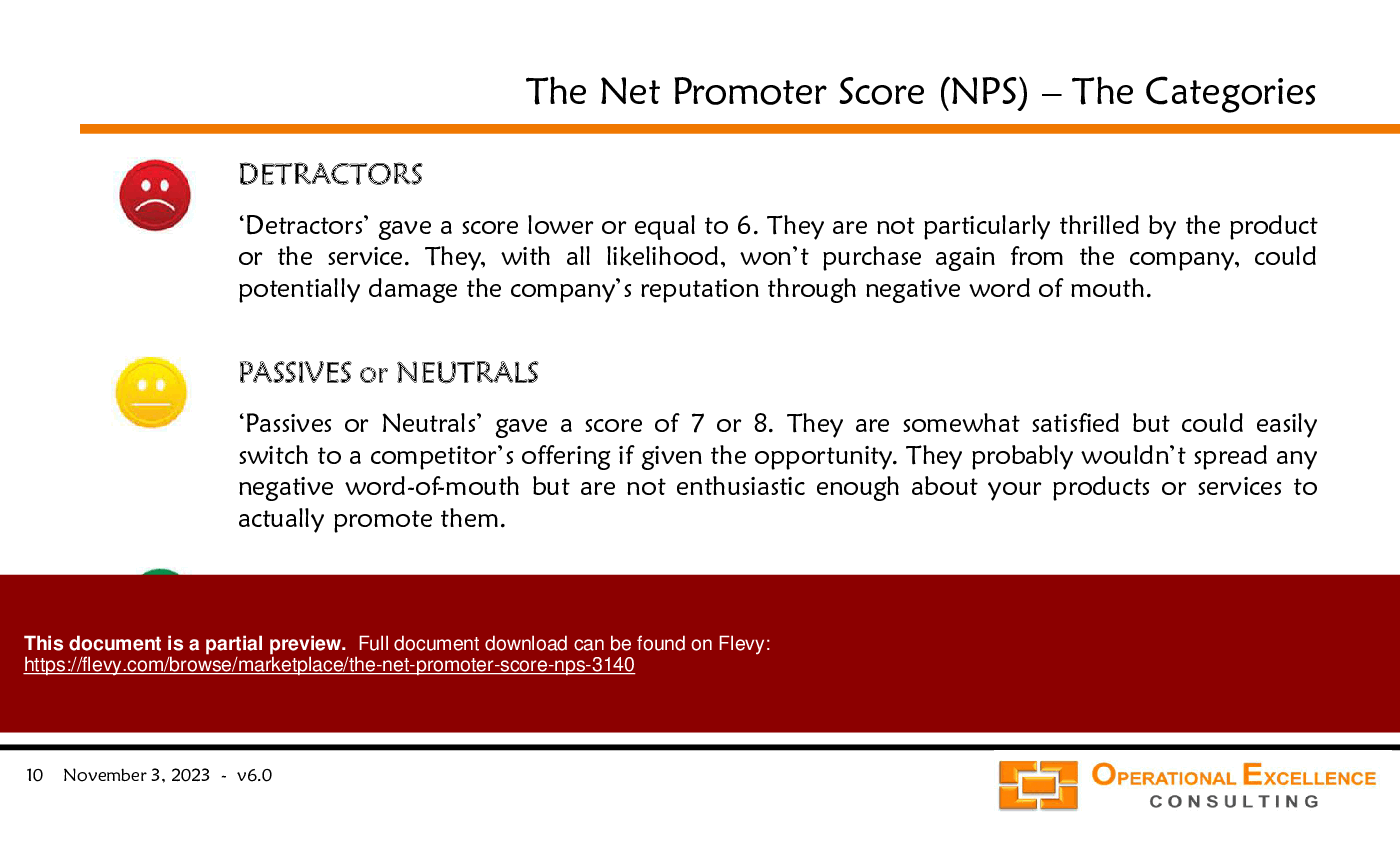
The PPT provides practical insights into how the Net Promoter Score is utilized across various industries, including Air Transportation, Retail, Technology, and Telecom. It highlights the direct correlation between customer loyalty and growth rate, emphasizing that enthusiastic customers who refer others are a key driver of competitive advantage. The presentation categorizes customers into Detractors, Passives, and Promoters, detailing their potential impact on your business.
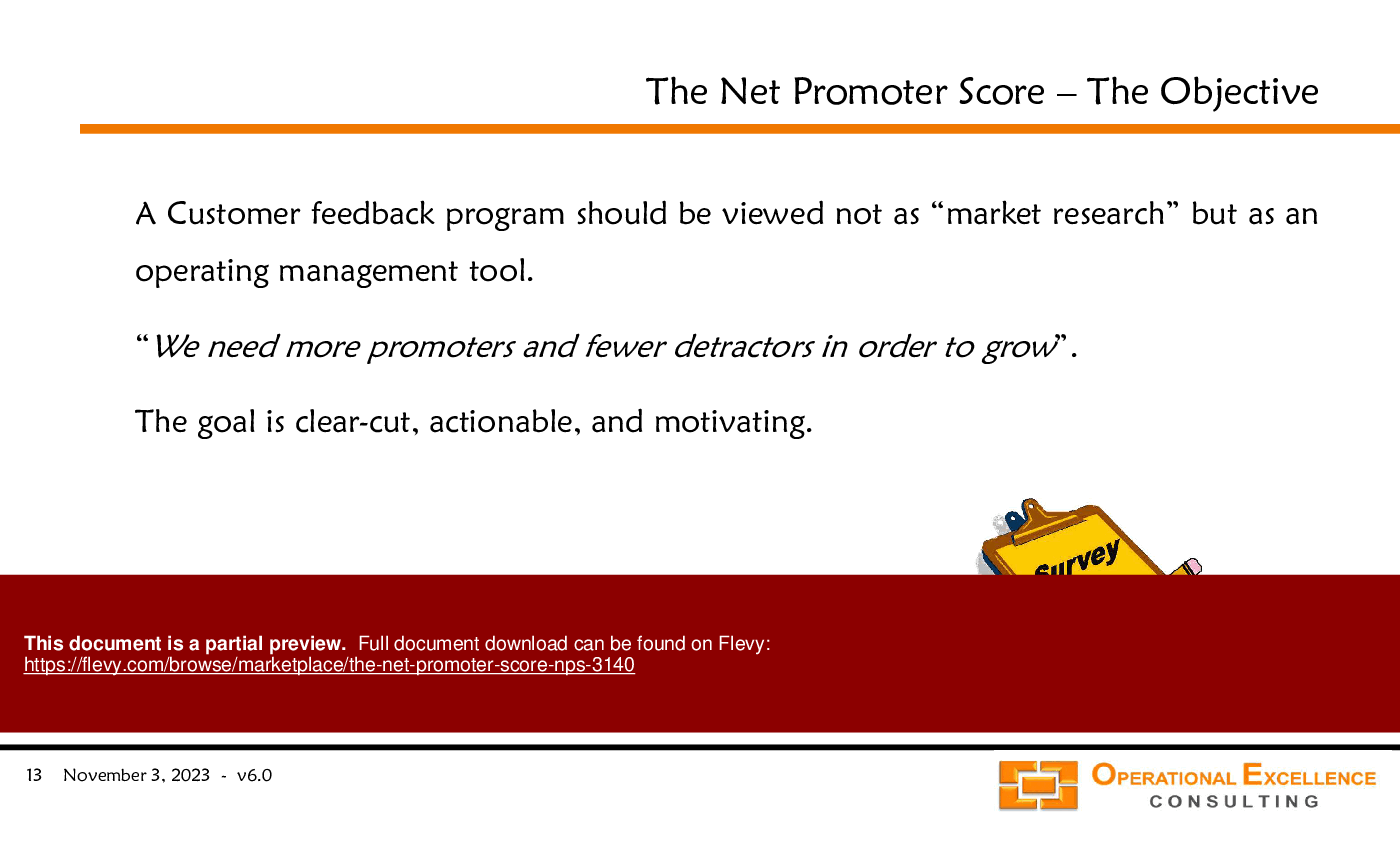
The material also covers the importance of viewing the Net Promoter Score as an operational management tool rather than mere market research. It stresses the need for real-time data collection and the implementation of a service recovery process to win back customers and demonstrate program effectiveness. The document outlines best practices for survey design, customer journey mapping, and the creation of a cross-functional NPS improvement team. This comprehensive approach ensures you can drive meaningful change and enhance customer experience.
Got a question about the product? Email us at support@flevy.com or ask the author directly by using the "Ask the Author a Question" form. If you cannot view the preview above this document description, go here to view the large preview instead.
MARCUS OVERVIEW
This synopsis was written by Marcus [?] based on the analysis of the full 47-slide presentation.
Executive Summary
This presentation on the Net Promoter Score (NPS) serves as a comprehensive guide for measuring and improving customer loyalty. Developed by an experienced Operational Excellence Coach, the deck provides actionable insights into leveraging NPS as an operational management tool rather than merely a market research metric. By implementing the strategies outlined, organizations can enhance customer experience, drive loyalty, and ultimately foster sustainable growth.
Who This Is For and When to Use
• Customer Experience Leaders focused on enhancing customer loyalty metrics
• Operational Excellence teams aiming to integrate NPS into daily operations
• Marketing and Sales teams looking to leverage customer feedback for growth
• Executives interested in understanding the correlation between NPS and business performance
Best-fit moments to use this deck:
• During strategic planning sessions to integrate NPS into the operational framework
• When launching or revitalizing a customer feedback program
• In workshops aimed at improving customer experience and loyalty initiatives
Learning Objectives
• Define the Net Promoter Score and its significance in measuring customer loyalty
• Identify the categories of respondents: Promoters, Passives, and Detractors
• Analyze the relationship between NPS and business growth rates
• Implement best practices for launching and maintaining an effective NPS program
• Establish a service recovery process to address customer feedback
• Utilize statistical methods to track NPS changes and measure improvement
Table of Contents
• Introduction to NPS (page 3)
• History of NPS (page 3)
• Definition of Customer Loyalty (page 5)
• Benefits of Loyal Customers (page 6)
• NPS Metrics and Calculation (page 11)
• NPS Benchmarking Study (page 14)
• Best Practices for NPS Implementation (page 28)
• Service Recovery Process (page 34)
• Customer Experience Management (page 38)
• Recognition and Rewards (page 44)
Primary Topics Covered
• NPS Definition and History - The Net Promoter Score is a customer loyalty metric introduced by Fred Reichheld, widely adopted by Fortune 1000 companies to gauge customer loyalty and drive operational improvements.
• Customer Loyalty - Loyalty is defined as the willingness of customers to invest in a relationship, often leading to increased profitability and reduced acquisition costs.
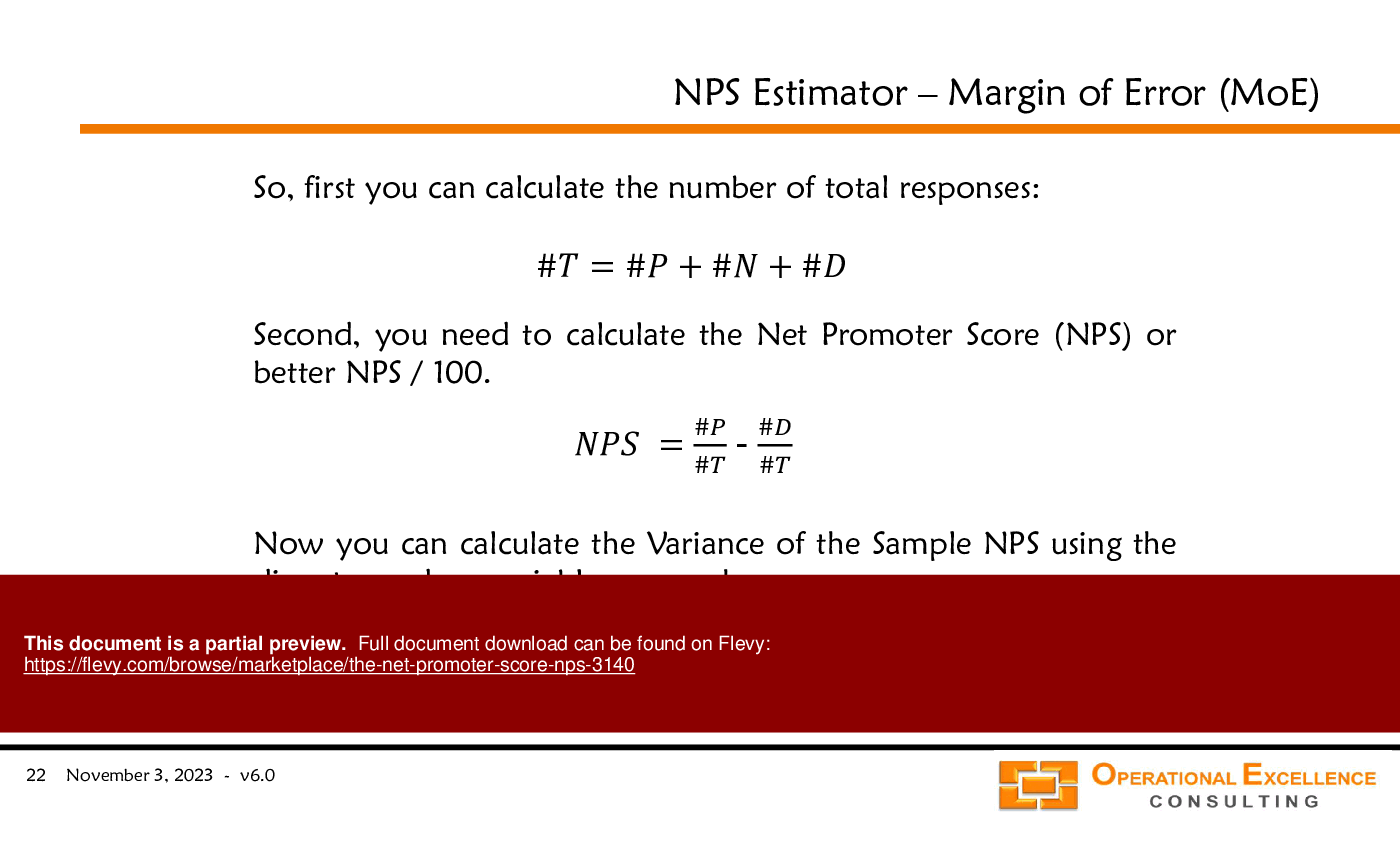
• NPS Calculation - The NPS is calculated by subtracting the percentage of Detractors from the percentage of Promoters, providing a clear metric for customer loyalty.
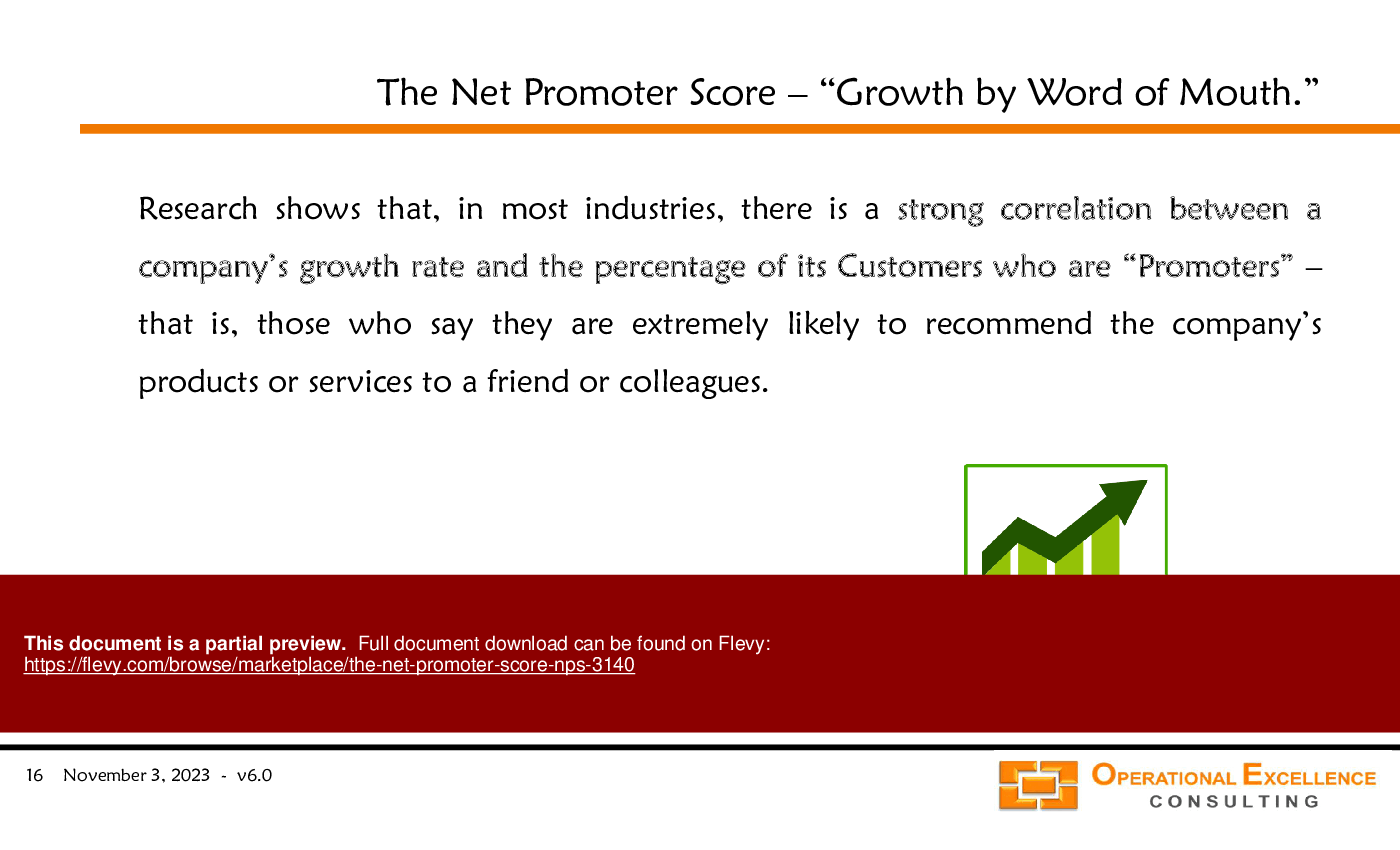
• Correlation Between NPS and Growth - Research indicates a strong correlation between a company's growth rate and the percentage of customers who are Promoters, emphasizing the importance of customer advocacy.
• Best Practices for NPS Programs - Effective implementation of NPS requires a structured approach, including consistent survey design, cross-functional teams, and a focus on actionable insights.
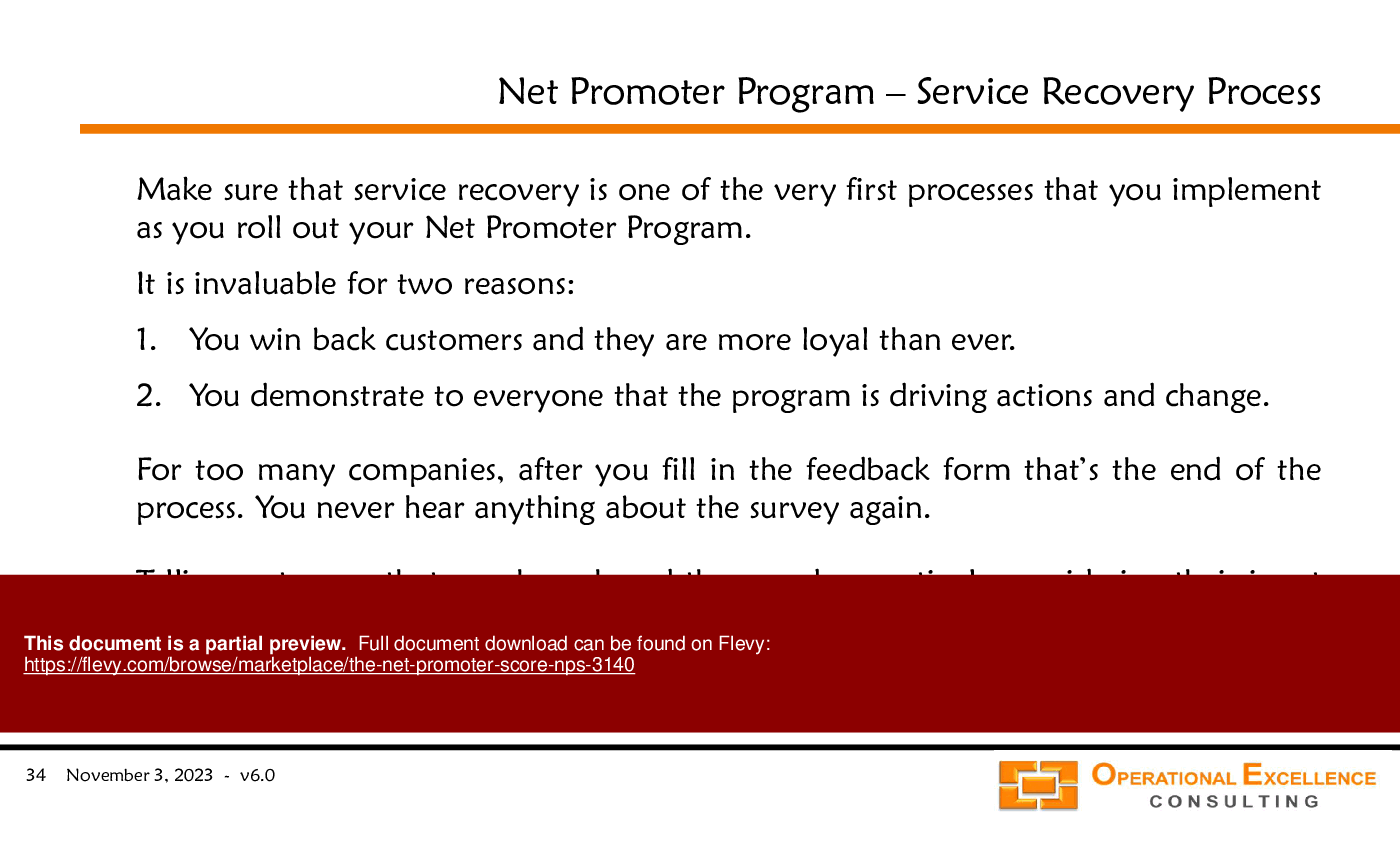
• Service Recovery - Establishing a service recovery process is essential for winning back dissatisfied customers and demonstrating the effectiveness of the NPS program.
Deliverables, Templates, and Tools
• NPS survey template designed for consistency and clarity
• Best practices checklist for launching an NPS program
• Service recovery process framework for addressing customer feedback
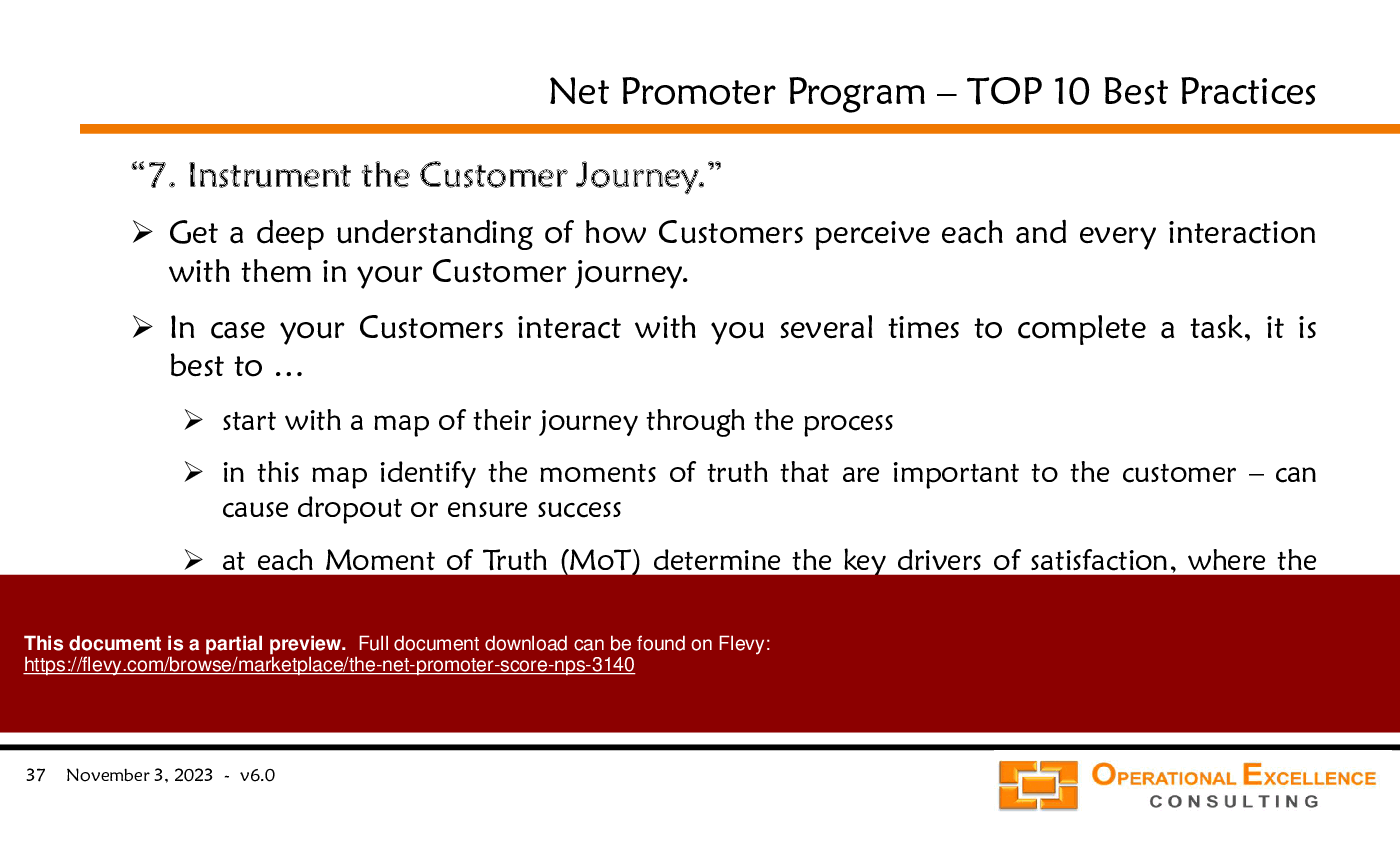
• Customer journey mapping template to identify key moments of truth
• Recognition and rewards program guidelines to reinforce desired behaviors
Slide Highlights
• Overview of the NPS calculation and its significance in measuring loyalty
• Visual representation of the correlation between NPS and growth rates across industries
• Best practices for implementing an NPS program effectively
• Examples of service recovery processes that can be integrated into customer feedback loops
Potential Workshop Agenda
NPS Fundamentals Workshop (90 minutes)
• Introduction to NPS and its importance
• Overview of the NPS calculation and categories
• Discussion on customer loyalty and its impact on growth
NPS Implementation Best Practices (60 minutes)
• Review of best practices for launching an NPS program
• Group activity to design a service recovery process
• Q&A session to address specific challenges
Customization Guidance
• Tailor the NPS survey questions to align with your organization's specific customer interactions
• Adjust the service recovery process to fit your operational structure and customer touchpoints
• Incorporate industry-specific benchmarks into the NPS benchmarking study for more relevant insights
Secondary Topics Covered
• The role of employee engagement in driving customer loyalty
• Techniques for analyzing qualitative feedback from NPS surveys
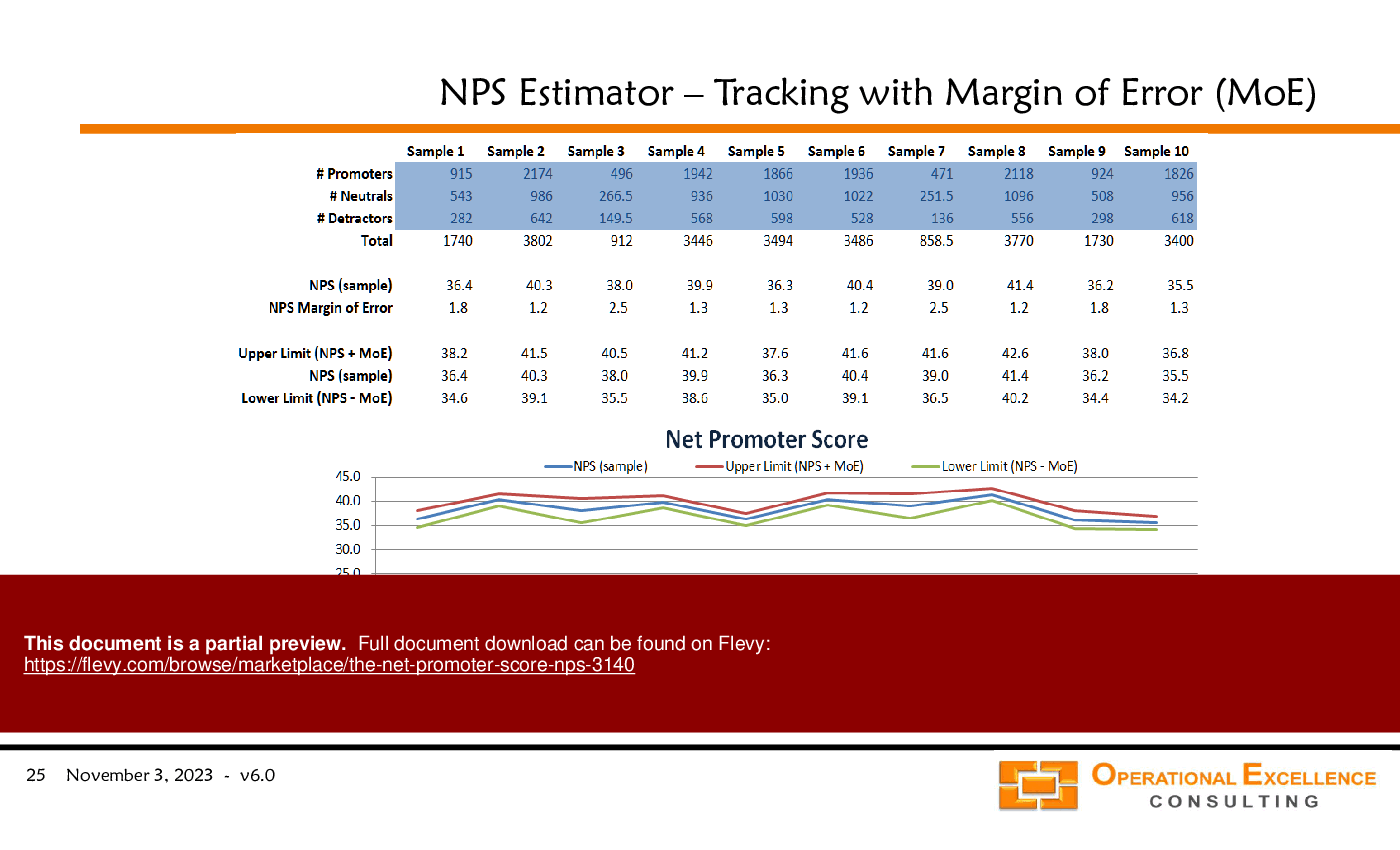
• Understanding sample size and margin of error in NPS calculations
• The importance of internal communication regarding NPS findings
Topic FAQ
What is the Net Promoter Score and how is it calculated?
Net Promoter Score (NPS) measures customer loyalty by asking likelihood to recommend and categorizing responses into Promoters, Passives, and Detractors. NPS equals the percentage of Promoters minus the percentage of Detractors, with Promoters scoring 9–10, Passives 7–8, and Detractors 0–6.
What are common best practices when implementing an NPS program?
Best practices include consistent survey design, cross-functional teams for actioning feedback, benchmarking against industry peers, real-time data collection, and a formal service recovery process. Practically, teams often use tools like an NPS survey template and a best practices checklist to guide rollout and governance.
How often should organizations conduct NPS surveys to track change?
The material recommends running NPS surveys regularly to monitor trends and the impact of improvements, with common cadences such as quarterly or biannually to balance timeliness and survey fatigue, for example quarterly or biannually.
How does NPS correlate with business growth?
Research summarized in the presentation indicates a strong correlation between higher percentages of Promoters and faster company growth, implying that increasing promoter share can be linked to improved growth rates driven by advocacy and referrals.
What should I look for when buying an NPS toolkit or template?
Look for a toolkit that provides a consistent survey template, benchmarking data, a service recovery framework, customer journey mapping tools, and guidance on statistical tracking. A useful example is Flevy's Net Promoter Score (NPS) deck, which includes an NPS survey template.
How much time and what team resources are typically needed to run initial NPS workshops?
The presentation outlines practical workshop formats such as a 90-minute NPS fundamentals session and a 60-minute implementation best-practices workshop, implying an initial investment of a few hours and a small cross-functional team to kick off the program.
I need to integrate NPS into daily operations — what should I prioritize first?
Prioritize consistent survey design, establishing real-time data collection and reporting, creating a service recovery process to address detractors, and forming a cross-functional improvement team to act on feedback; start with a documented service recovery process framework.
How should qualitative feedback from NPS surveys be used across the organization?
Qualitative comments should be analyzed to identify root causes, shared with relevant teams to inform improvements, and used to enrich customer journey mapping and recognition programs; practical support includes a customer journey mapping template for capturing key touchpoints.
Document FAQ
These are questions addressed within this presentation.
What is the Net Promoter Score?
The Net Promoter Score (NPS) is a metric used to measure customer loyalty by asking customers how likely they are to recommend a company’s products or services to others.
How is NPS calculated?
NPS is calculated by subtracting the percentage of Detractors from the percentage of Promoters, providing a score that reflects overall customer loyalty.
Why is NPS important for businesses?
NPS is crucial because it correlates with business growth; companies with higher NPS scores tend to grow faster than their competitors.
What are the categories of NPS respondents?
Respondents are categorized into 3 groups: Promoters (scores 9-10), Passives (scores 7-8), and Detractors (scores 0-6).
How can we improve our NPS?
Improving NPS involves addressing feedback from customers, enhancing the customer experience, and implementing best practices for customer engagement.
What is a service recovery process?
A service recovery process involves steps taken to address and rectify customer complaints, aiming to win back their loyalty.
How often should we conduct NPS surveys?
It is recommended to conduct NPS surveys regularly, such as quarterly or biannually, to track changes and gather timely feedback.
What should we do with qualitative feedback from NPS surveys?
Qualitative feedback should be analyzed and shared across the organization to inform improvements and recognize areas of success.
Glossary
• Net Promoter Score (NPS) - A metric for measuring customer loyalty based on their likelihood to recommend a company.
• Promoters - Customers who score 9 or 10 and are likely to recommend the company.
• Detractors - Customers who score 6 or lower and may discourage others from engaging with the company.
• Passives - Customers who score 7 or 8 and are satisfied, but not enthusiastic.
• Service Recovery - The process of addressing customer complaints to regain their loyalty.
• Customer Journey - The complete experience a customer has with a company, from initial contact to post-purchase interactions.
• Feedback Loop - A process where customer feedback is continuously collected and used to improve services.
• Margin of Error (MoE) - A statistical measure that indicates the potential error in survey results.
• Benchmarking - Comparing performance metrics against industry standards or competitors.
• Customer Experience Management - Strategies and practices for managing customer interactions to enhance satisfaction and loyalty.
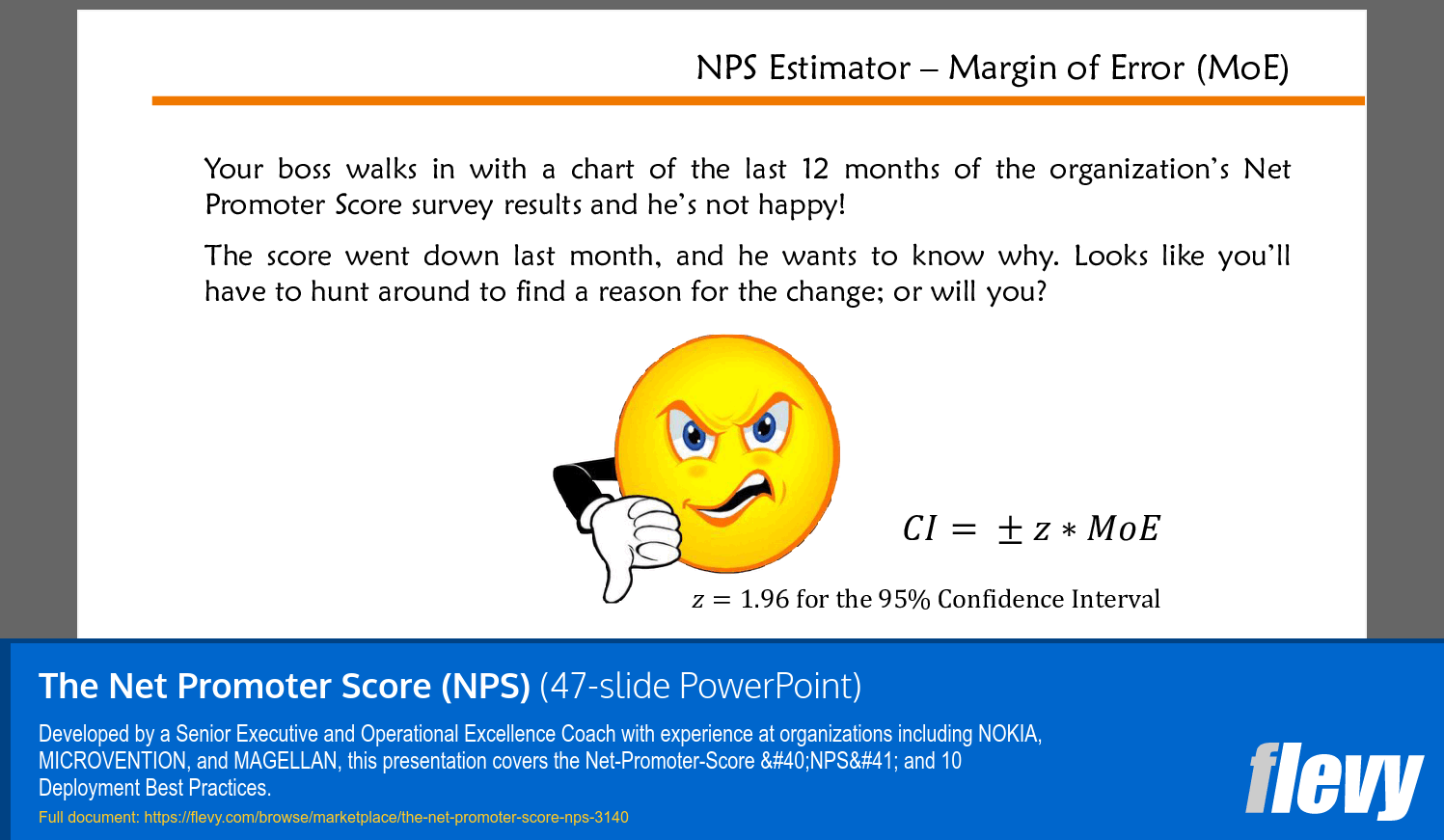
The organization's Net Promoter Score (NPS) has declined, necessitating an investigation into the causes. Understanding the Margin of Error (MoE) is critical for interpreting survey results, as NPS fluctuations can occur naturally without indicating significant issues. The Confidence Interval (CI) formula, incorporating a z-value of 1.96 for a 95% confidence level, is essential for assessing the reliability of NPS results. Misinterpretation of data without thorough analysis may overlook critical insights. Contextualizing the NPS within its statistical boundaries is vital for informed decision-making, as deeper data analysis may reveal actionable insights to guide strategic adjustments.
This PPT slide details the Net Promoter Score (NPS) methodology, a key metric for measuring customer loyalty and satisfaction. The NPS question asks, "On a scale of 0 to 10, how likely are you to recommend this company’s product or service to a friend or colleague?" Respondents are categorized as follows: scores 0-6 are "Not likely to Recommend," 7-8 are neutral, and 9-10 are "Extremely likely to Recommend." NPS is calculated by subtracting the percentage of detractors (scores 0-6) from promoters (scores 9-10). In an example with 100 total responses, 28 are detractors, 55 are neutral, and 17 are promoters, resulting in an NPS of -11%. This negative score indicates areas for improvement in customer experience and satisfaction.
This PPT slide outlines a framework for managing customer experience through the Net Promoter Program, focusing on measuring customer loyalty via the Relationship NPS Survey with up to ten questions to gauge sentiment. The customer journey is segmented into stages: Research, Purchase, Delivery, Pay Bill, Usage, and Get Help, each identifying moments of truth for customer interactions. Functional accountability spans departments—Sales & Legal, Warehouse & Shipping, Finance & Collections, Product Engineering, and Customer Support—highlighting the distributed responsibility for customer satisfaction. Key operational metrics include Google Analytics, Time to Close, Fulfillment Lead Time, Aging, Usage Statistics, and Employee Engagement, providing a quantitative basis for performance evaluation and improvement. This integration of data underscores the necessity of a data-driven approach to enhance service delivery and operational efficiency.
This PPT slide outlines key principles of the Net Promoter Score (NPS) as an operational management tool rather than just a market research metric. It emphasizes the need for a broader operational focus beyond traditional Sales and Marketing departments to leverage NPS insights effectively. Real-time NPS data collection is essential for driving immediate improvements in customer experience. Integrity in the NPS process is critical; manipulating figures for superficial gains undermines genuine customer engagement. The slide advises treating the NPS initiative as a significant change program, requiring strategic planning, resource allocation, and leadership commitment. Effective NPS utilization necessitates a cultural shift towards valuing customer feedback as a driver of operational excellence.
This PPT slide outlines a structured approach to managing customer experience through the Net Promoter Program, segmenting the customer journey into stages: Research, Purchase, Delivery, Pay Bill, Usage, and Get Help. This segmentation identifies key touchpoints for targeted improvements. Functional accountability is defined, with departments like Website Marketing and Sales & Legal assigned roles at specific stages, promoting clarity in execution. Leadership roles, including Marketing Leader and Sales Leader, ensure coordinated management of customer interactions, with the Executive Leadership & Steering Team providing strategic oversight. The Cross-Functional NPS Improvement Team collaborates across departments to enhance customer satisfaction, focusing on feedback analysis and continuous improvement. The layout serves as a practical guide for organizations to enhance customer experience management.
Source: Best Practices in Customer Satisfaction, Customer Loyalty, NPS PowerPoint Slides: Net Promoter Score (NPS) PowerPoint (PPTX) Presentation Slide Deck, Operational Excellence Consulting LLC
Developed by a Senior Executive and Operational Excellence Coach with experience at organizations including NOKIA, MICROVENTION, and MAGELLAN, this presentation covers the Net-Promoter-Score (NPS) and 10 Deployment Best Practices.
Operational Excellence Consulting LLC provides assessments, training solutions, kaizen event facilitation, and implementation support to enable our clients to achieve superior performance through Operational Excellence - Strategy Deployment & Hoshin Planning, Performance Management & Balanced Scorecards, Process Excellence & Lean Six Sigma, and High
... [read more] Performance Work Teams.
Frank Adler co-founded OEC LLC in 2009 to follow his passion for Operational Excellence and to be able to work with individuals and organizations that share this passion.
He is an accomplished and recognized Operational Excellence, Lean Management, and Six Sigma coach, with over 20 years of domestic and international executive leadership experience in General Management, multi-site Operations & Supply Chain Management, and Quality & Customer Support Management.
Frank is a certified and experienced Lean Six Sigma Master Black Belt with a proven track record of implementing these methods, concepts, and tools in various organizations and industries.
He holds a Master of Science in Mathematics & Physics from the Freie University of Berlin (Germany) and a Doctor of Philosophy in Applied Mathematics & Industrial Economics from the Helsinki University of Technology (Finland).
The average daily rate of a McKinsey consultant is $6,625 (not including expenses). The average price of a Flevy document is $65.
Trusted by over 10,000+ Client Organizations
Since 2012, we have provided business templates to over 10,000 businesses and organizations of all sizes, from startups and small businesses to the Fortune 100, in over 130 countries.
"As an Independent Management Consultant, I find Flevy to add great value as a source of best practices, templates and information on new trends. Flevy has matured and the quality and quantity of the library is excellent. Lastly the price charged is reasonable, creating a win-win value for
the customer, Flevy and the various authors. This is truly a service that benefits the consulting industry and associated clients. Thanks for providing this service.
"
– Jim Schoen, Principal at FRC Group
"If you are looking for great resources to save time with your business presentations, Flevy is truly a value-added resource. Flevy has done all the work for you and we will continue to utilize Flevy as a source to extract up-to-date information and data for our virtual and onsite presentations!"
– Debbi Saffo, President at The NiKhar Group
"FlevyPro provides business frameworks from many of the global giants in management consulting that allow you to provide best in class solutions for your clients."
– David Harris, Managing Director at Futures Strategy
"As a consultant requiring up to date and professional material that will be of value and use to my clients, I find Flevy a very reliable resource.
The variety and quality of material available through Flevy offers a very useful and commanding source for information. Using Flevy saves me time, enhances my expertise and ends up being a good decision."
– Dennis Gershowitz, Principal at DG Associates
"I have used FlevyPro for several business applications. It is a great complement to working with expensive consultants. The quality and effectiveness of the tools are of the highest standards."
– Moritz Bernhoerster, Global Sourcing Director at Fortune 500
"FlevyPro has been a brilliant resource for me, as an independent growth consultant, to access a vast knowledge bank of presentations to support my work with clients. In terms of RoI, the value I received from the very first presentation I downloaded paid for my subscription many times over! The
quality of the decks available allows me to punch way above my weight – it's like having the resources of a Big 4 consultancy at your fingertips at a microscopic fraction of the overhead.
"
– Roderick Cameron, Founding Partner at SGFE Ltd
"The wide selection of frameworks is very useful to me as an independent consultant. In fact, it rivals what I had at my disposal at Big 4 Consulting firms in terms of efficacy and organization."
– Julia T., Consulting Firm Owner (Former Manager at Deloitte and Capgemini)
"Flevy is our 'go to' resource for management material, at an affordable cost. The Flevy library is comprehensive and the content deep, and typically provides a great foundation for us to further develop and tailor our own service offer."
Download our FREE Digital Transformation Templates
Download our free compilation of 50+ Digital Transformation slides and templates. DX concepts covered include Digital Leadership, Digital Maturity, Digital Value Chain, Customer Experience, Customer Journey, RPA, etc.
Download our FREE Digital Transformation Templates
Get Our FREE Product.
Download our free compilation of 50+ Digital Transformation slides and templates. DX concepts covered include Digital Leadership, Digital Maturity, Digital Value Chain, Customer Experience, Customer Journey, RPA, etc.