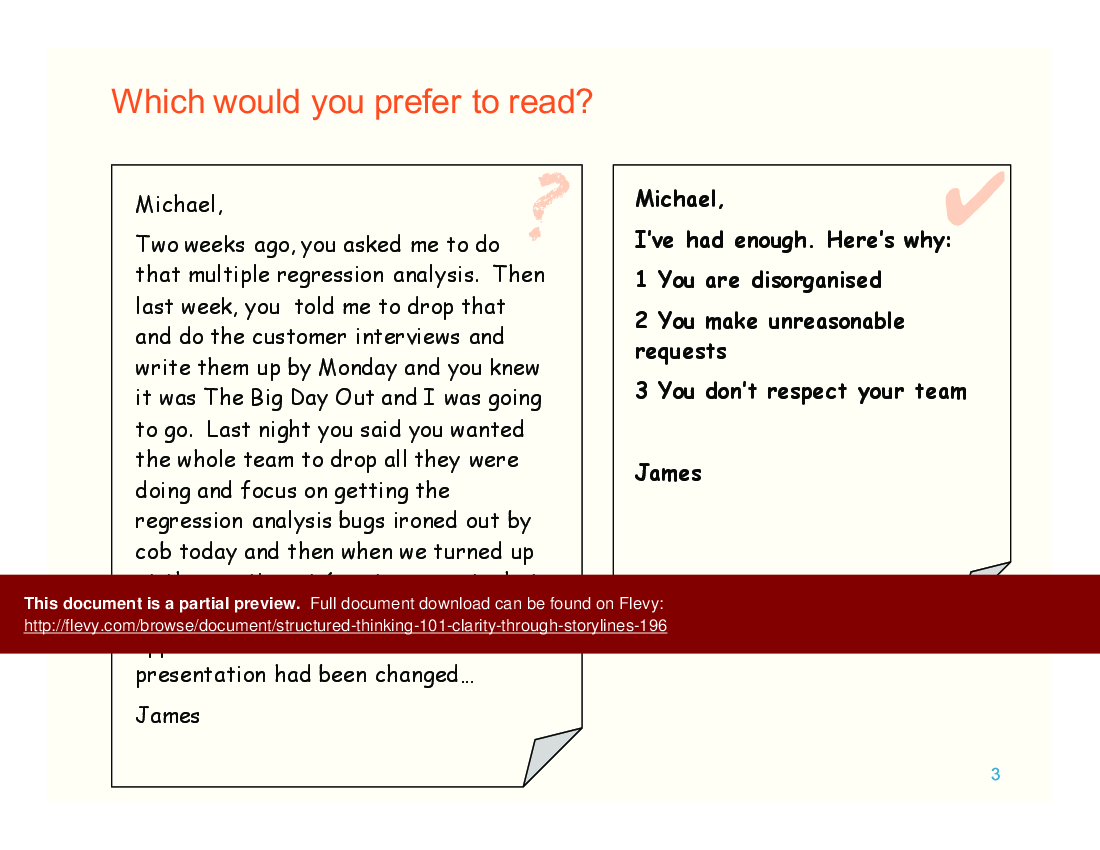
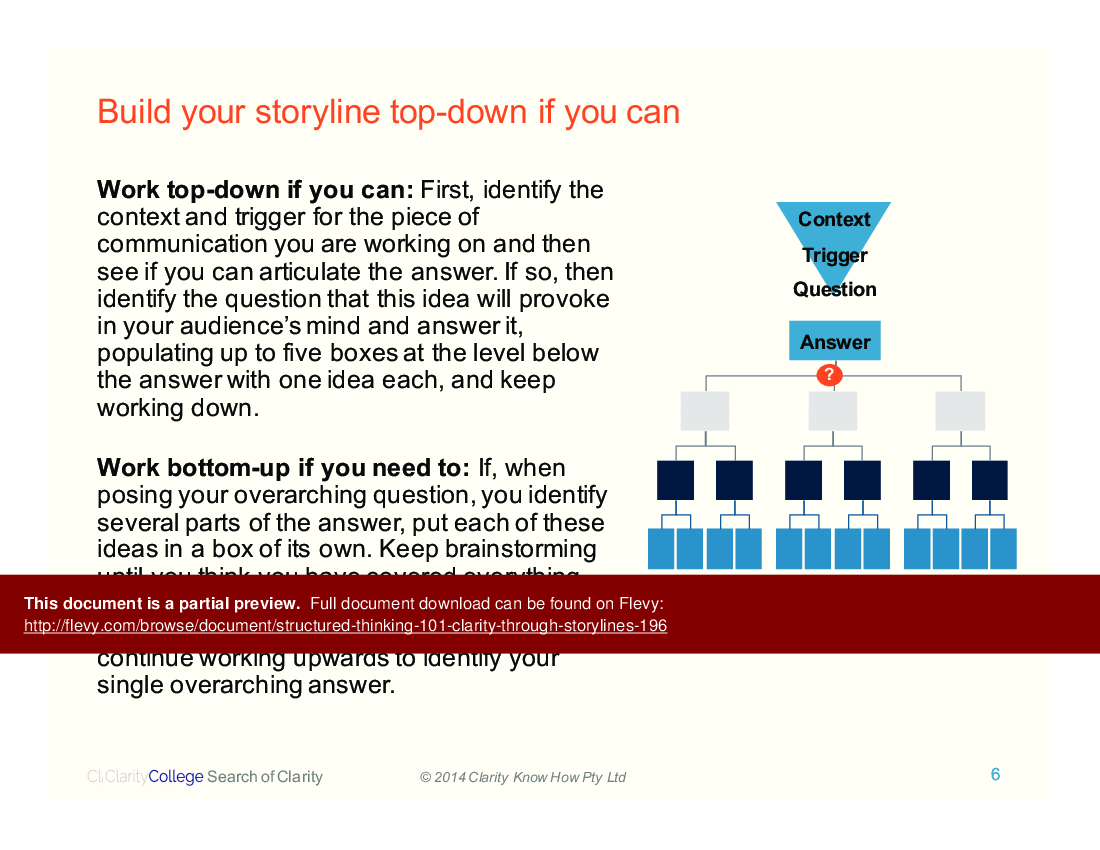
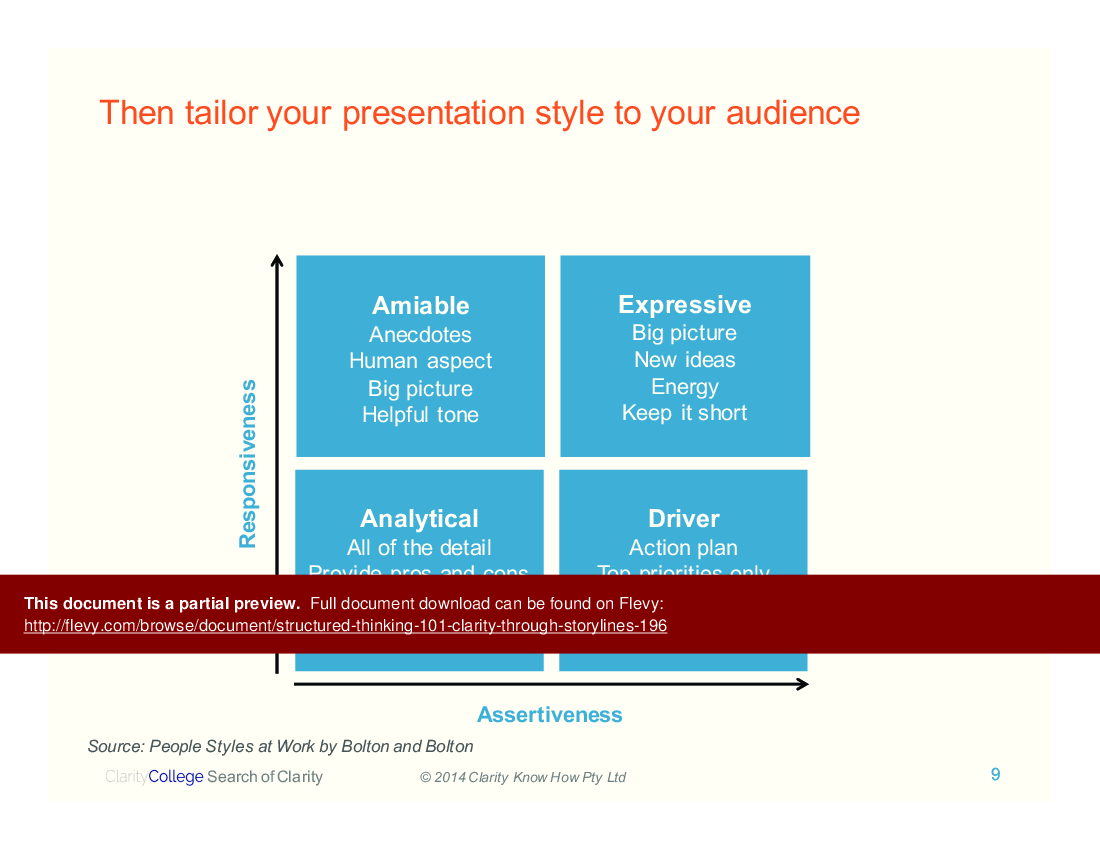
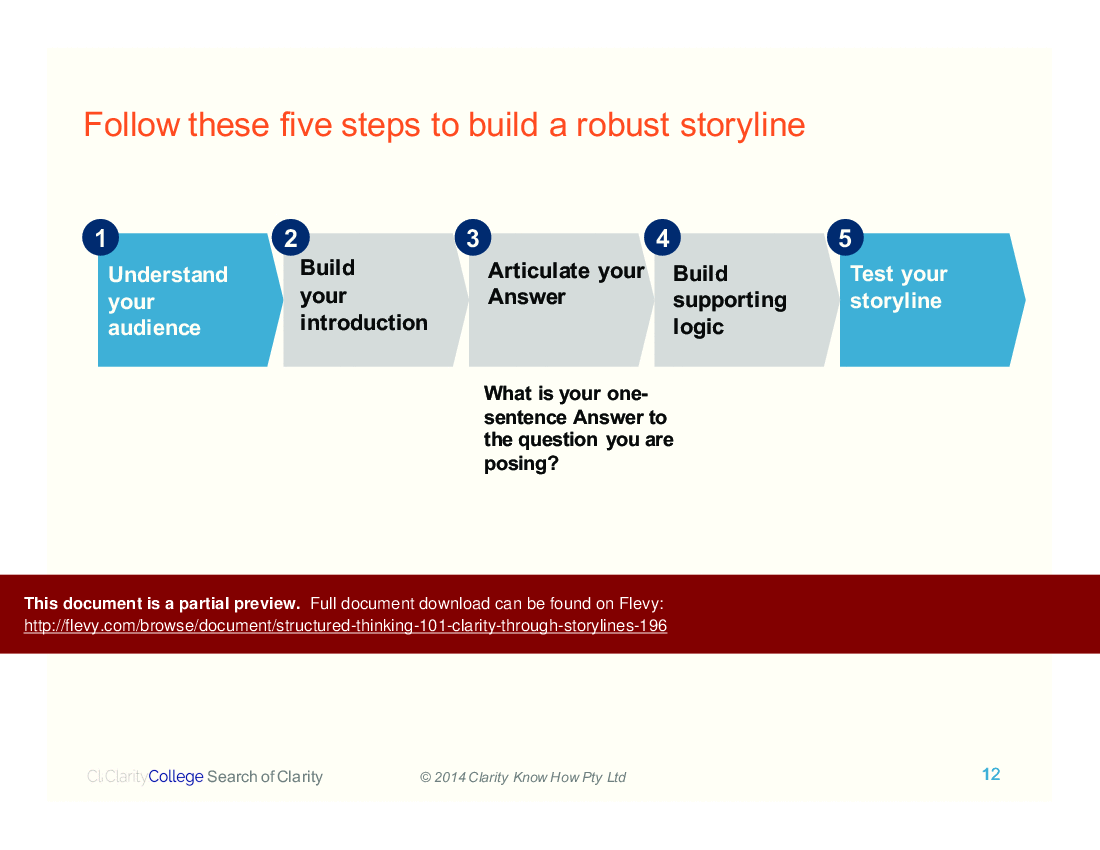

Clarity is critical in business communication of all kinds, yet difficult to achieve.
To add insult, clarity is necessary, but not sufficient.
Powerful professional communication must also deliver an insightful message, while often prepared in collaboration with others and under great pressure.
How do you do that?
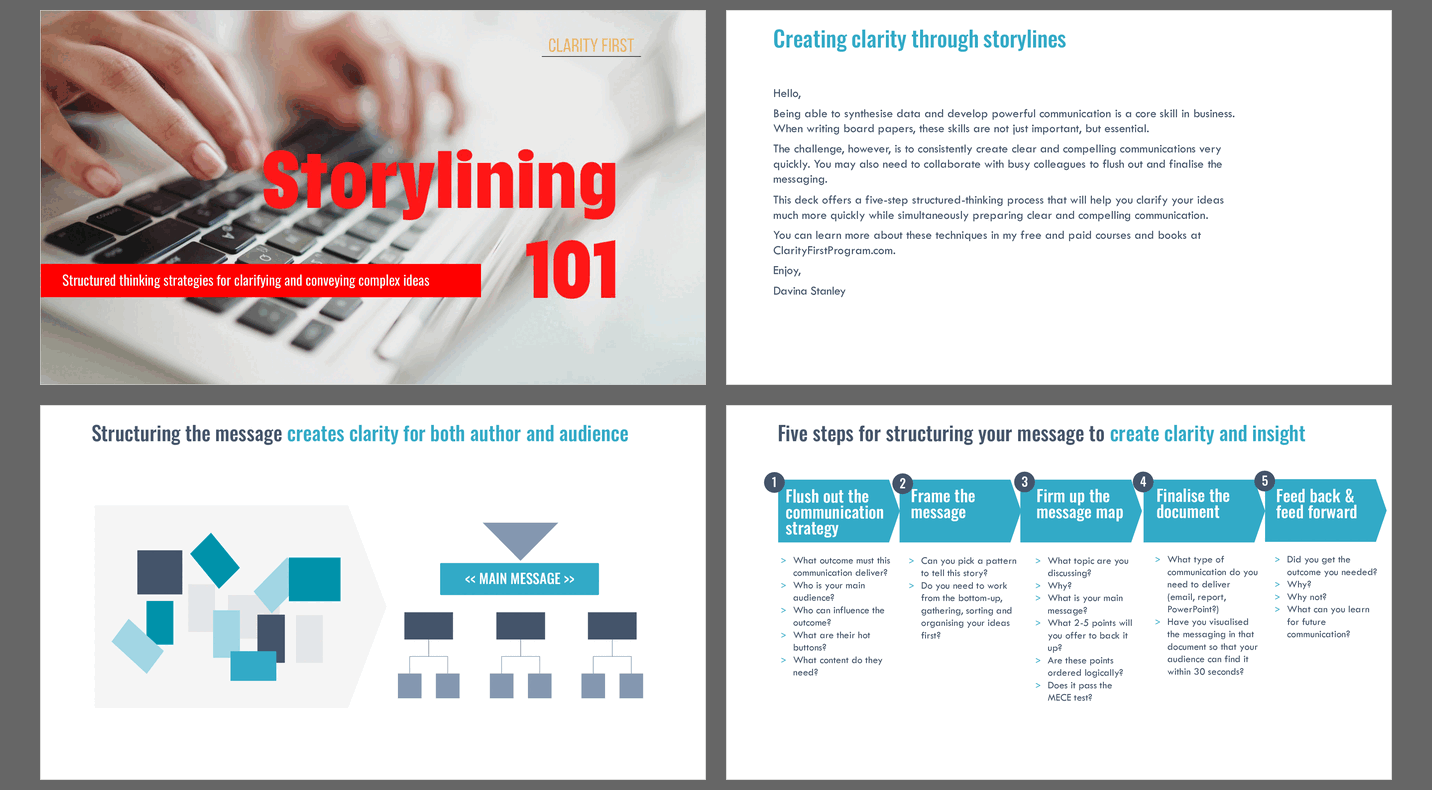
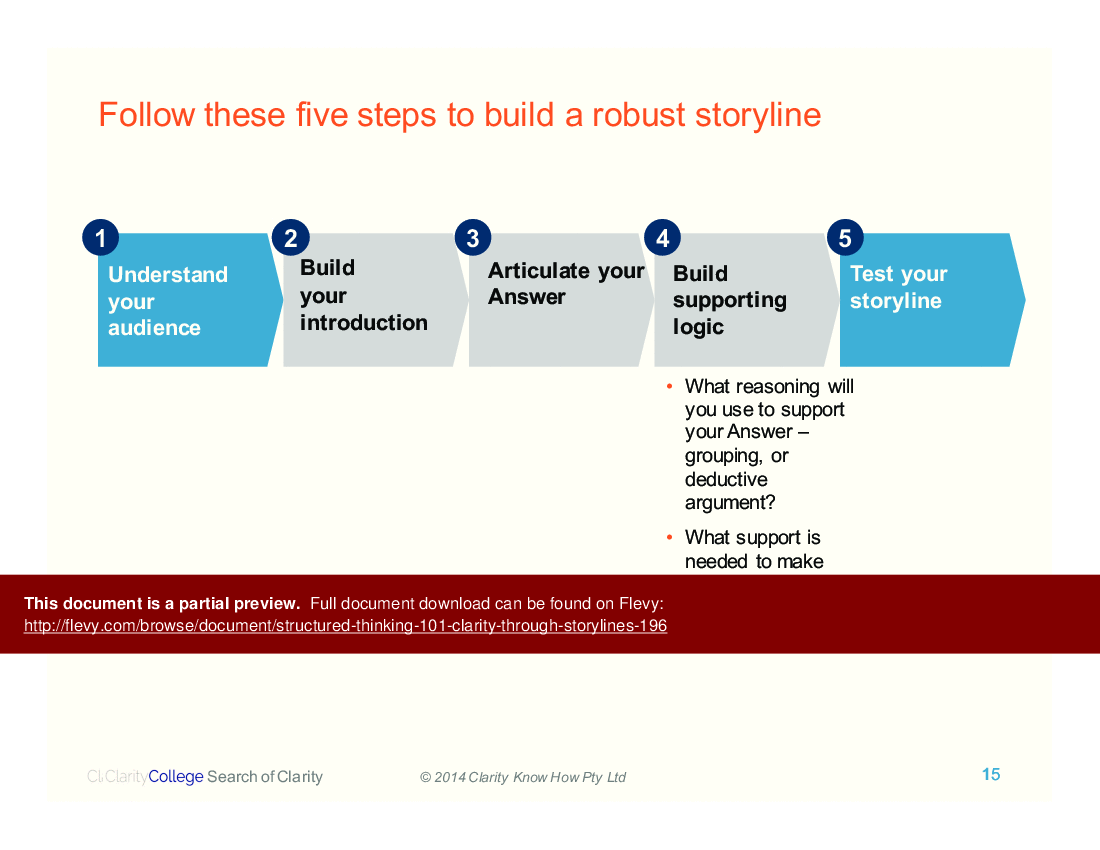
This deck offers five clear steps to help you clarify and convey complex ideas in any format for any audience. It explains how to:
1 / Flush out your communication strategy, so your message achieves a clear purpose. This needs to be done in collaboration with your leader who has commissioned the paper to ensure it is on point.
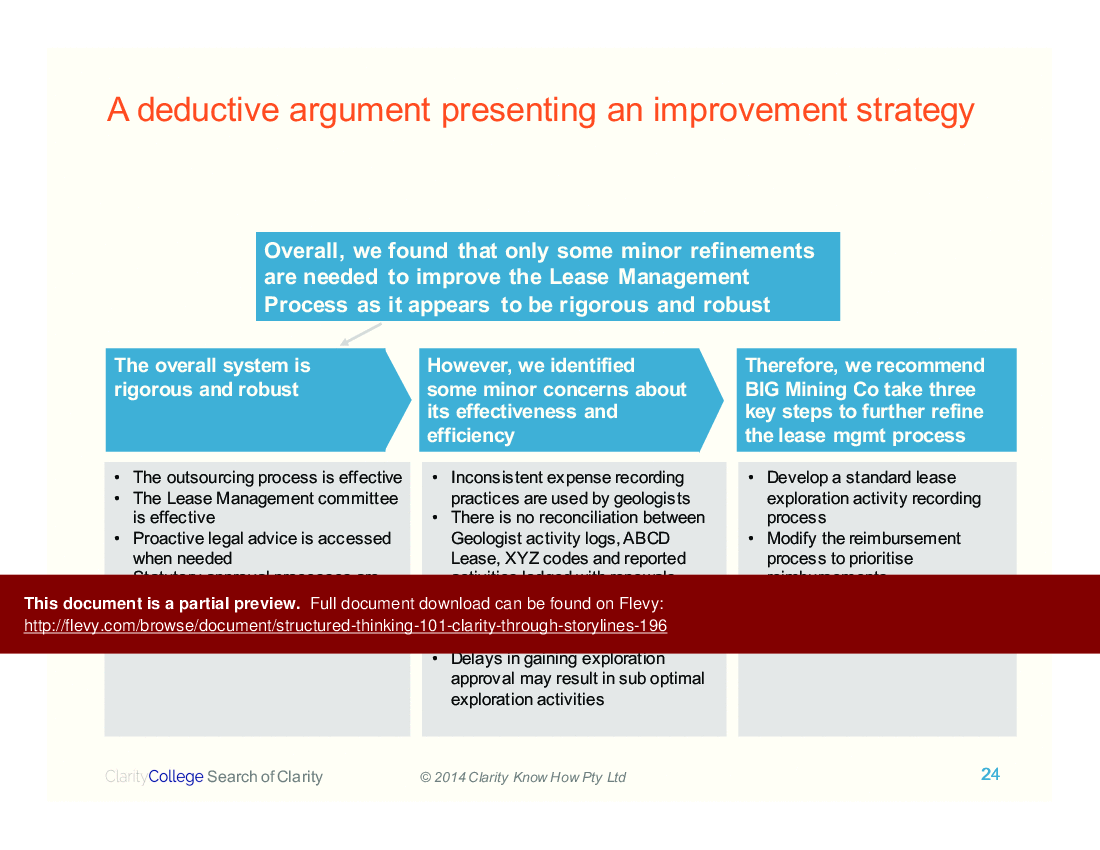
2 / Frame your messaging using time-worn patterns. I offer my 10 favourite structures, or 'patterns' to stimulate your own thinking.
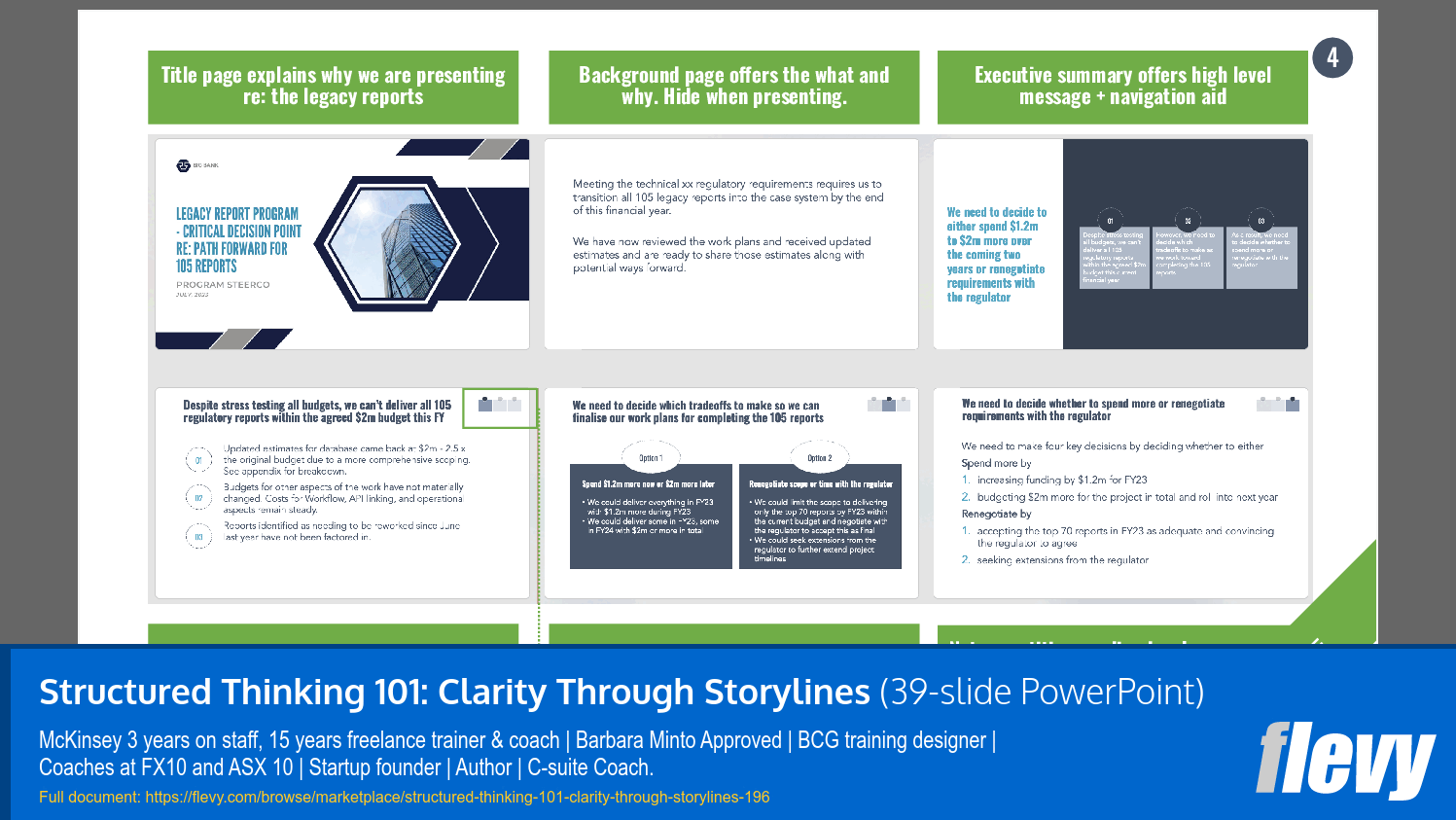
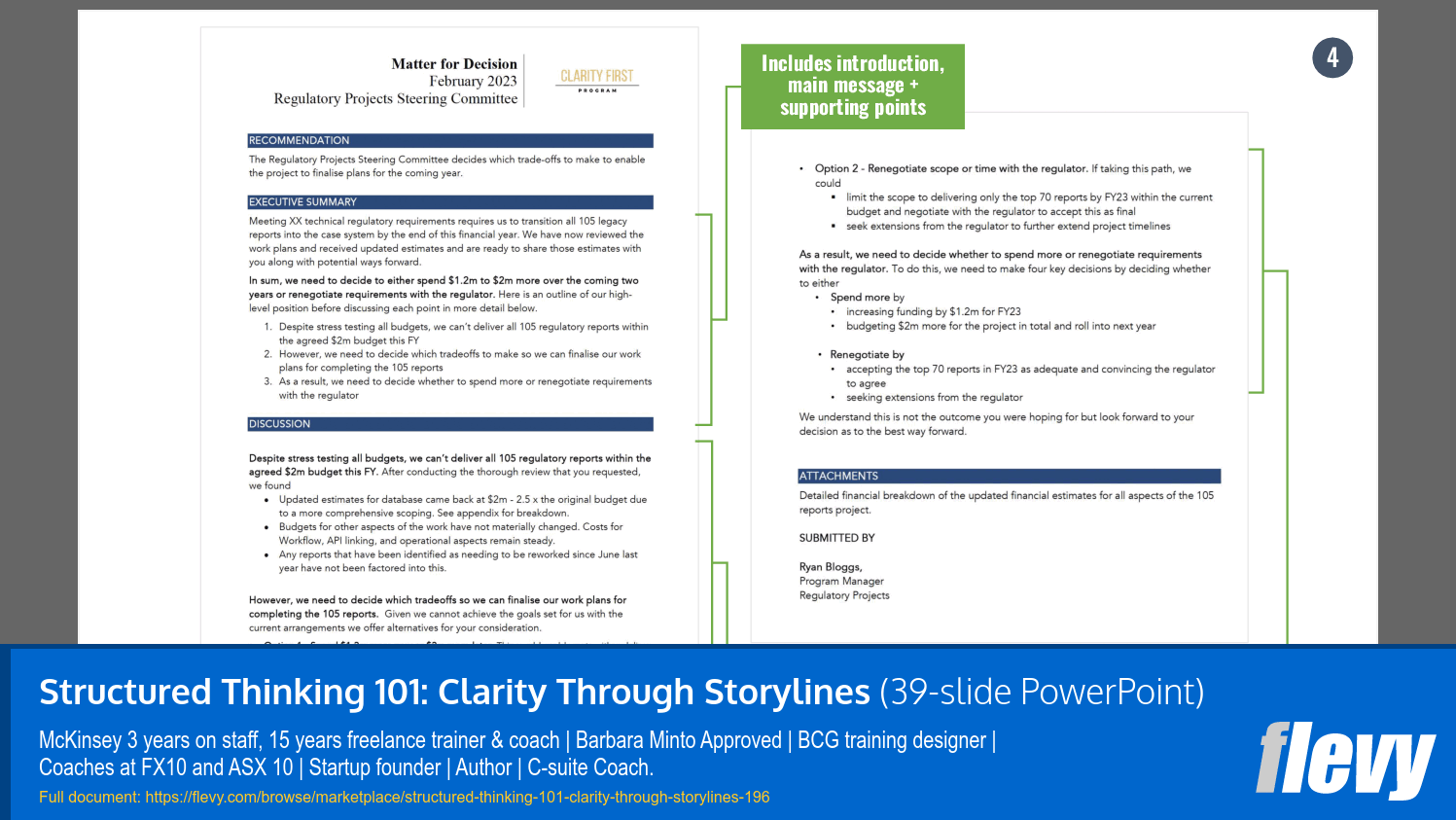
3 / Firm up your messaging using a highly structured one pager. A dot-dash outline isn't enough. These show a hierarchy of ideas, but still allow you to wander. You need something structured to keep you on track, and force you to distil your thinking.
4 / Finalise your document, whether that be a paper, presentation or something else. It's the thinking that matters. It doesn't matter what format you use, the messaging must be clear and compelling. Once that is clear, the document is easy to create.
5 / Feed back and feed forward to apply any learnings from this communication to the next. It is a shame to move so quickly that you don't capture what you learned from a communication so you can feed it into the next one. Understanding stakeholders happens over time, and this can be a useful thing to reflect upon. As can optimising your paper-writing process to gain maximum efficiency and minimise rework.
Informed by the Minto Pyramid Principle and decades of communication consulting experience, these steps have proven to work in a wide range of consulting and business settings.
This deck was prepared by Davina Stanley of Clarity First. Davina specialises in helping executives get to the point, using the Pyramid Principle. She learned the techniques at McKinsey. Barbara Minto reviewed and approved her training in 2009 and she has used them to help executives globally ever since.
Got a question about the product? Email us at support@flevy.com or ask the author directly by using the "Ask the Author a Question" form. If you cannot view the preview above this document description, go here to view the large preview instead.
Executive Summary
This presentation, "Structured Thinking 101: Clarity Through Storylines," offers a five-step structured-thinking process designed to enhance clarity and effectiveness in business communication. Developed by Davina Stanley, an ex-McKinsey consultant, this deck provides consulting-grade insights comparable to McKinsey, Bain, or BCG-quality presentations (not affiliated). Users will learn to synthesize complex data into clear messages, making it easier to communicate ideas quickly and effectively, especially in high-stakes environments like board meetings and presentations.
Who This Is For and When to Use
• Corporate executives seeking to improve communication strategies
• Project managers tasked with delivering complex information
• Data analysts needing to present findings clearly
• Consultants preparing client presentations
• Teams collaborating on strategic initiatives
Best-fit moments to use this deck:
• Preparing for high-stakes presentations
• Collaborating on board papers or reports
• Conducting workshops focused on communication clarity
• Training sessions for teams on effective messaging
Learning Objectives
• Define the core outcome of your communication efforts
• Identify and understand your primary audience and their needs
• Frame your message using structured patterns for clarity
• Firm up the message map to ensure logical flow and coherence
• Finalize documents that effectively convey your message
• Implement feedback mechanisms to improve future communications
Table of Contents
• Introduction to Structured Thinking (page 3)
• The Five-Step Process (page 5)
• Flushing Out the Communication Strategy (page 7)
• Framing the Message (page 11)
• Firming Up the Message Map (page 15)
• Finalizing the Document (page 20)
• Feedback and Feed Forward (page 25)
Primary Topics Covered
• Communication Strategy - Define the desired outcome and identify key audiences to tailor your message effectively.
• Message Framing - Utilize structured patterns to organize and present your ideas clearly.
• Message Mapping - Develop a logical flow of information that adheres to the MECE principle (Mutually Exclusive, Collectively Exhaustive).
• Document Finalization - Ensure that the final communication is visually appealing and easy to navigate.
• Feedback Mechanisms - Implement processes to evaluate the effectiveness of your communication and learn from each experience.
Deliverables, Templates, and Tools
• Communication strategy template for defining outcomes and audience needs
• Message framing patterns for organizing ideas
• Message map template for structuring key points
• Document finalization checklist to ensure clarity and visual appeal
• Feedback forms to gather insights on communication effectiveness
Slide Highlights
• Overview of the five-step structured-thinking process
• Visual representation of message mapping techniques
• Examples of effective communication patterns
• Templates for flushing out communication strategies
• Feedback mechanisms to enhance future messaging
Potential Workshop Agenda
Introduction to Structured Thinking (30 minutes)
• Overview of the five-step process
• Discussion on the importance of clarity in communication
Hands-On Activity: Flushing Out Communication Strategies (60 minutes)
• Breakout sessions to define outcomes and identify audiences
• Group sharing of strategies and insights
Message Mapping Workshop (60 minutes)
• Interactive session to create message maps
• Peer reviews to enhance clarity and coherence
Feedback and Feed Forward Session (30 minutes)
• Reflection on communication experiences
• Strategies for continuous improvement
Customization Guidance
• Adjust the communication strategy template to fit specific organizational contexts
• Tailor message framing patterns to align with industry-specific language
• Modify the message map to reflect unique project goals and audiences
• Incorporate company branding into final documents for consistency
• Use feedback forms to capture insights relevant to your team’s communication style
Secondary Topics Covered
• The role of storytelling in business communication
• Techniques for engaging diverse audiences
• Importance of visual aids in presentations
• Strategies for collaborative messaging in teams
• Common pitfalls in business communication and how to avoid them
FAQ
What is structured thinking?
Structured thinking is a method of organizing thoughts and ideas systematically to enhance clarity and effectiveness in communication.
How can this deck improve my presentations?
This deck provides frameworks and templates that help you clarify your message, ensuring that your audience understands your key points quickly.
Who developed this presentation?
The presentation was developed by Davina Stanley, an experienced consultant with a background at McKinsey.
What are the 5 steps in the structured-thinking process?
The 5 steps are: flush out the communication strategy, frame the message, firm up the message map, finalize the document, and feed back & feed forward.
Is this material suitable for all industries?
Yes, the principles of structured thinking and clear communication are applicable across various industries and sectors.
How can I implement feedback from my audience?
Use feedback forms and discussions to gather insights on what worked and what didn’t, and apply these learnings to future communications.
Can I customize the templates provided in this deck?
Absolutely. The templates are designed to be flexible and can be tailored to fit your specific needs and organizational context.
Where can I find additional resources?
Additional resources, including courses and books, can be found at ClarityFirstProgram.
Glossary
• Structured Thinking - A methodical approach to organizing thoughts for clear communication.
• MECE - A principle ensuring that ideas are mutually exclusive and collectively exhaustive.
• Message Map - A visual representation of key points and their logical flow.
• Communication Strategy - A plan outlining the desired outcomes and audience for a communication effort.
• Feedback Mechanism - A process for gathering insights on communication effectiveness.
• Framing - The act of presenting information in a structured manner to enhance clarity.
• Visual Aids - Tools such as charts and graphs that support verbal communication.
• Stakeholder - An individual or group with an interest in the outcome of a communication.
• Engagement - The process of involving the audience in the communication.
• Collaboration - Working together to achieve a common goal in communication.
• Clarity - The quality of being clear and easy to understand.
• Storytelling - The art of conveying information through narrative to engage the audience.
Source: Best Practices in Presentation Development, Communications Strategy, Pyramid Principle PowerPoint Slides: Structured Thinking 101: Clarity Through Storylines PowerPoint (PPTX) Presentation Slide Deck, Clarity First
|
Receive our FREE whitepaper on the Top 101 Consulting Frameworks
Download our 200+ page guide summarizing the Top 101 Management Consulting Frameworks. Each framework provides a structured approach to analyzing and solving a common business problem. |