
Process Capability   47-slide PPT PowerPoint presentation slide deck (PPT)
$24.00

Process Capability (47-slide PPT PowerPoint presentation slide deck (PPT)) Preview Image
Log in to unlock full preview.
Process Capability (47-slide PPT PowerPoint presentation slide deck (PPT)) Preview Image
Arrow   Click main image to view in full screen.

Process Capability (PowerPoint PPT Slide Deck)

PowerPoint (PPT) 47 Slides

$24.00

Add to Cart


Immediate download
Fully editable PowerPoint
Free lifetime updates

PPT DESCRIPTION

Process Capability PPT: Learn process capability types, z-value methods, capability indices, and stability analysis. Download this step-by-step quality control guide. Process Capability is a 47-slide PPT PowerPoint presentation slide deck (PPT) available for immediate download upon purchase.

This Process Capability presentation will provides information about changes and tendencies of the system during production. Details step by step guidance to conduct Process Capability.
These presentations can be modified and re-branded to your own business needs.
Content :-
Process Capability – Explanation
Process capability types
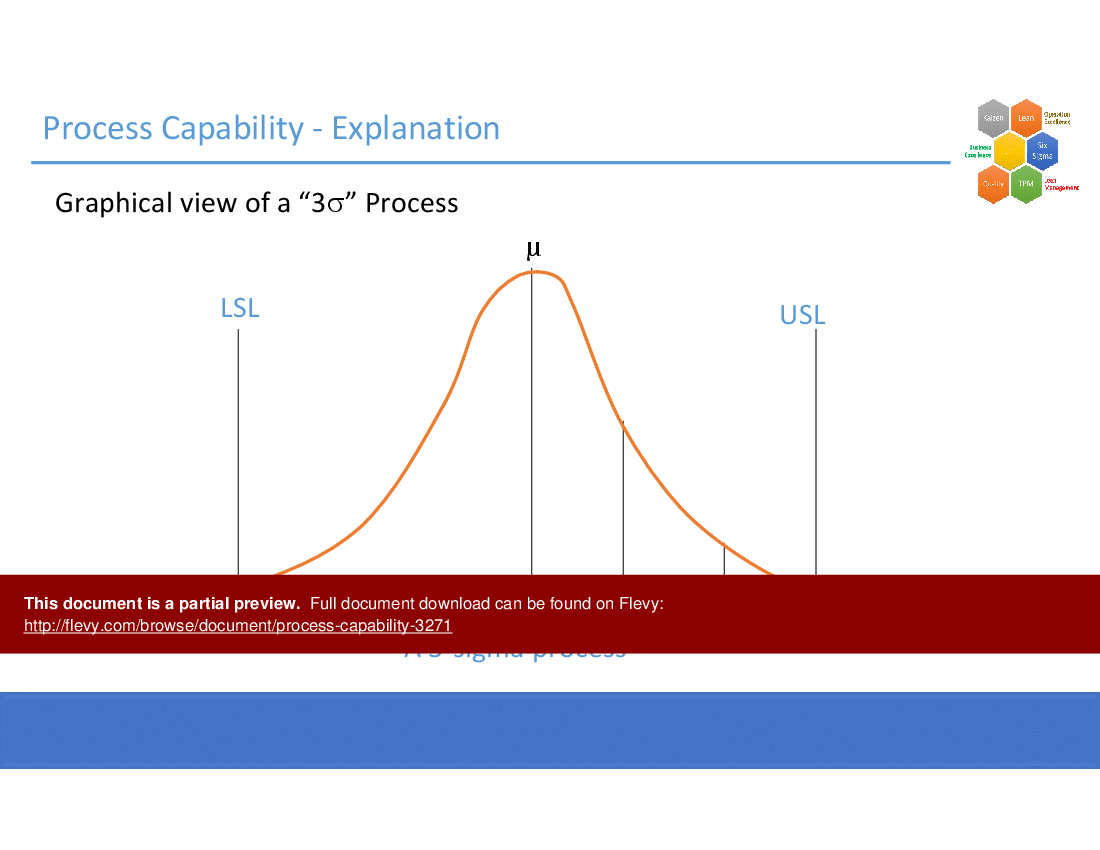
Graphical view of a "6?" Process
sources of variation
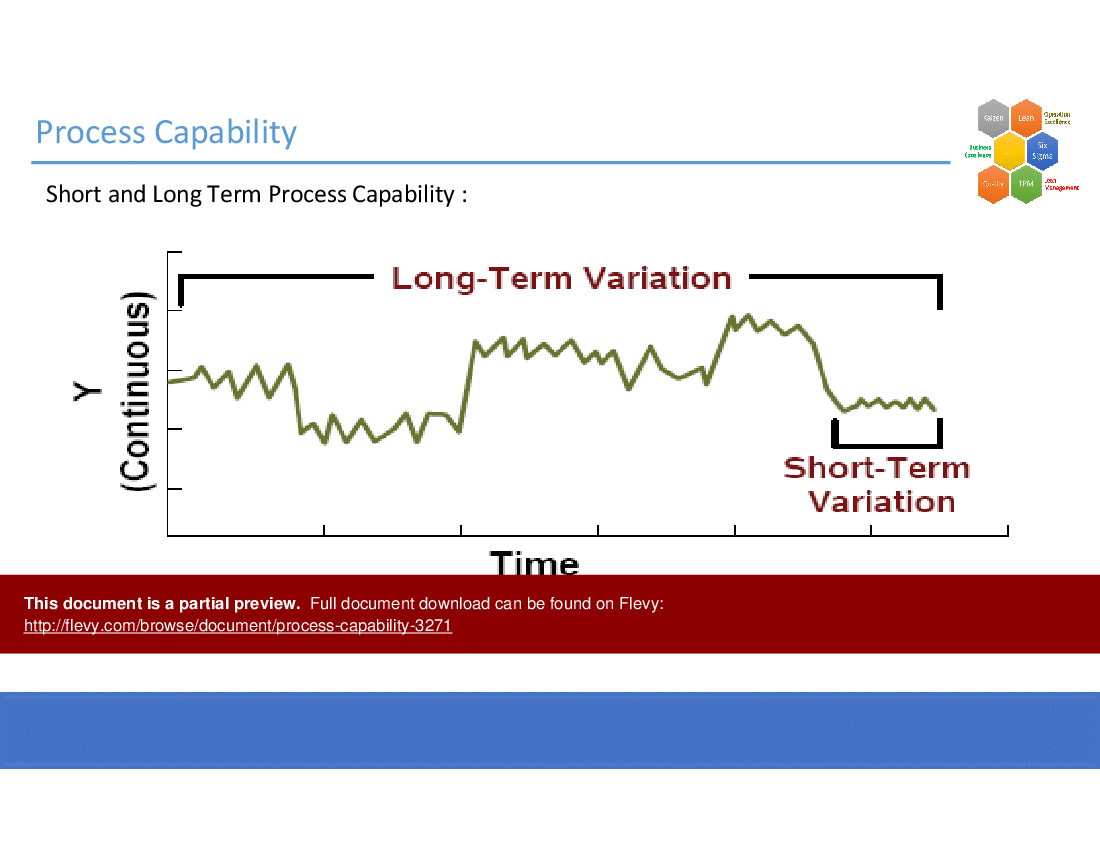
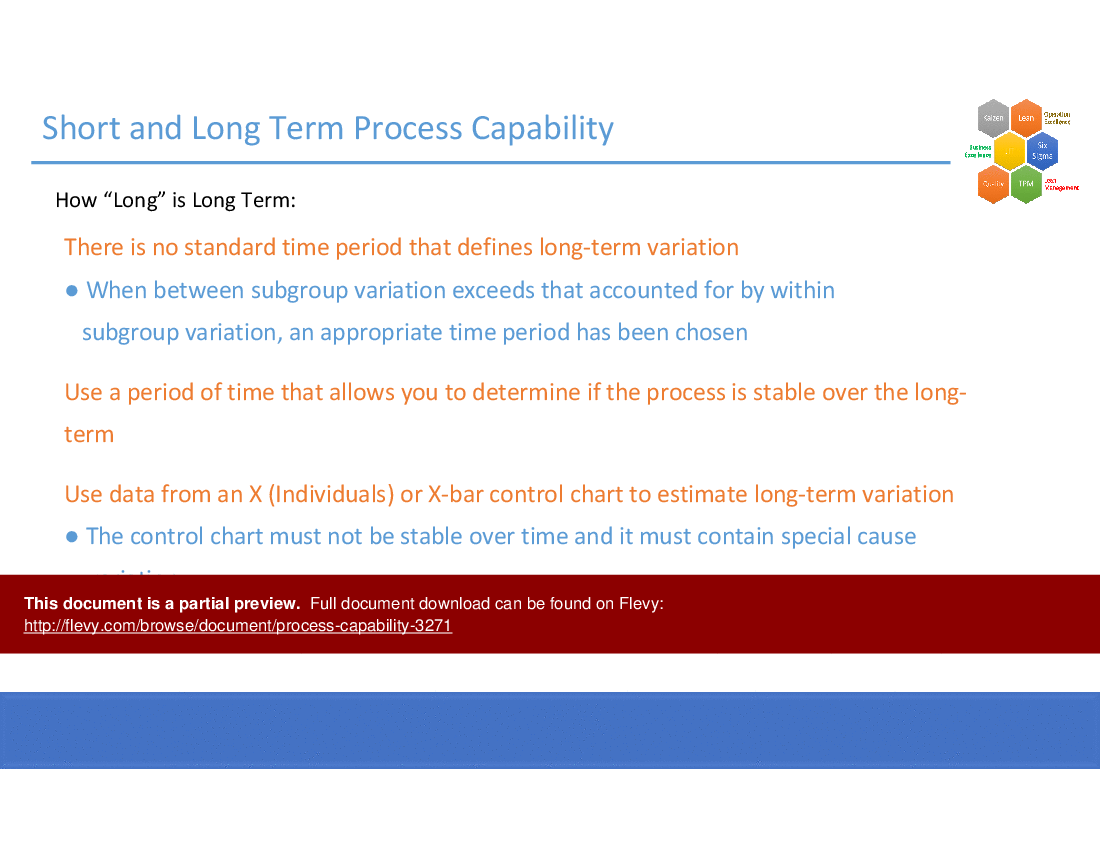
Short and Long Term Process Capability
Short and Long Term ? Thumb Rules
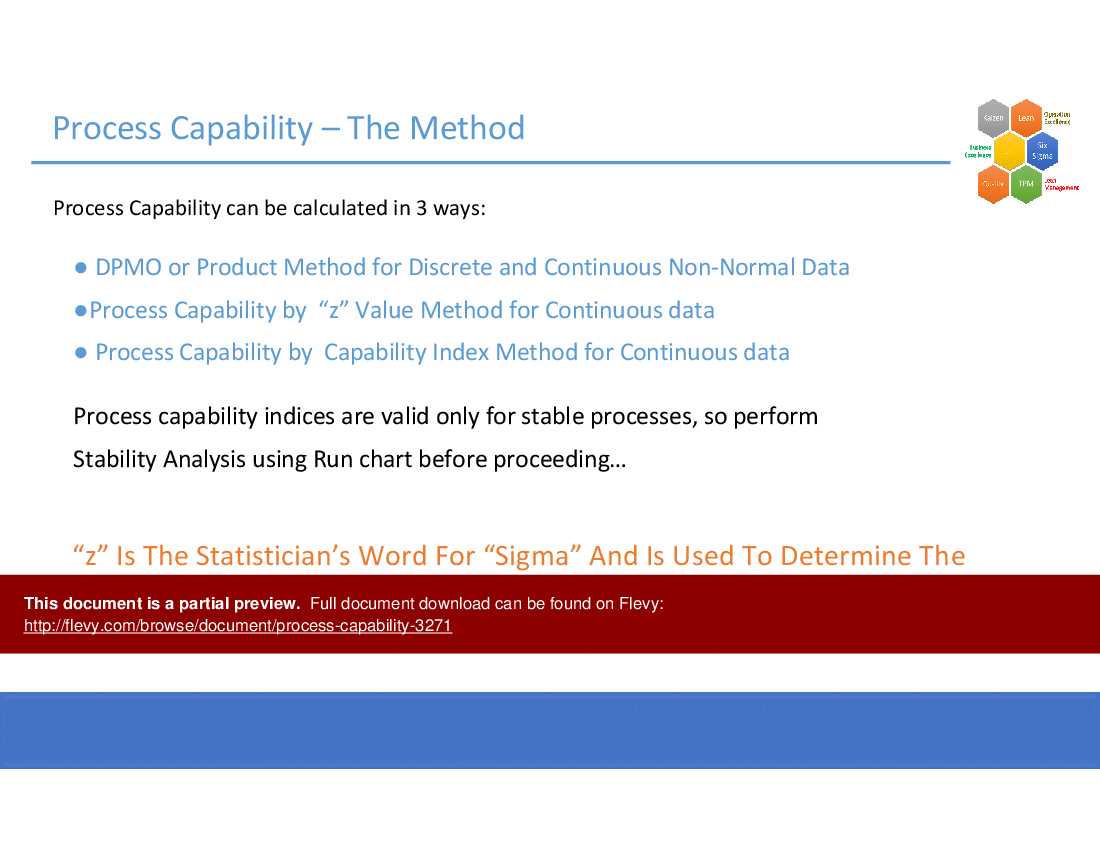
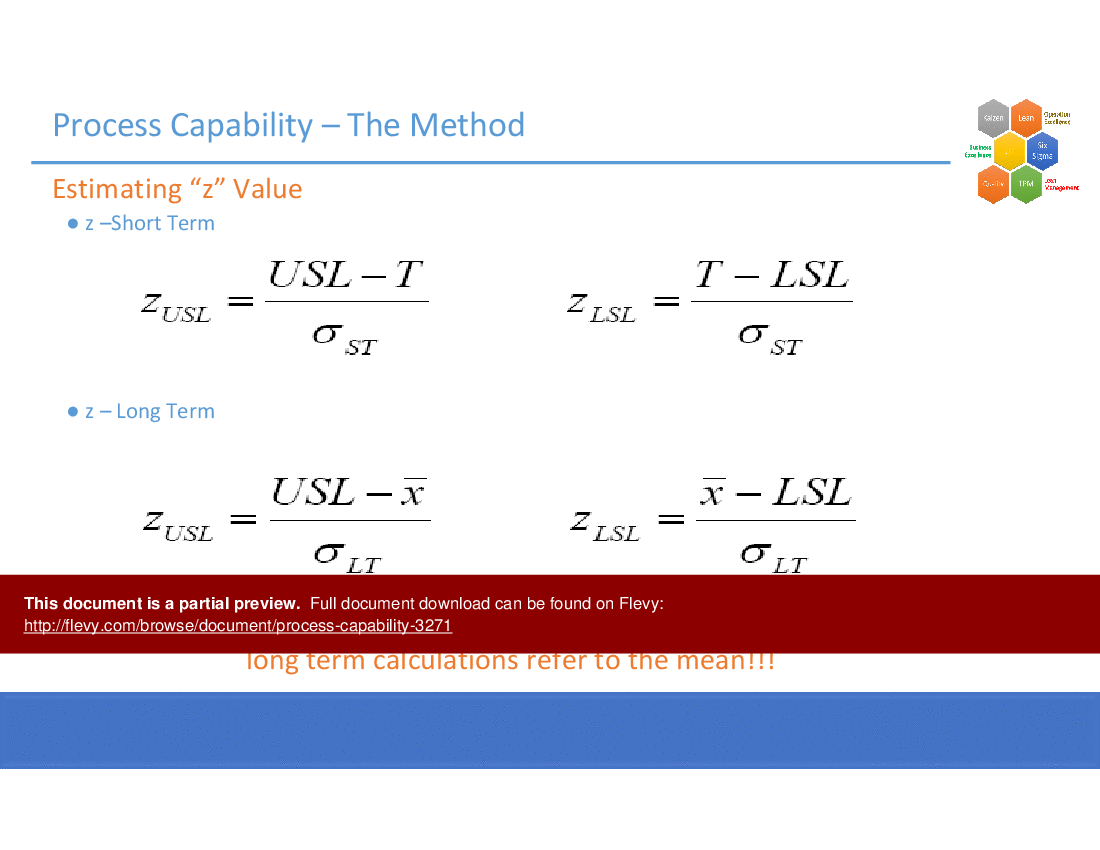
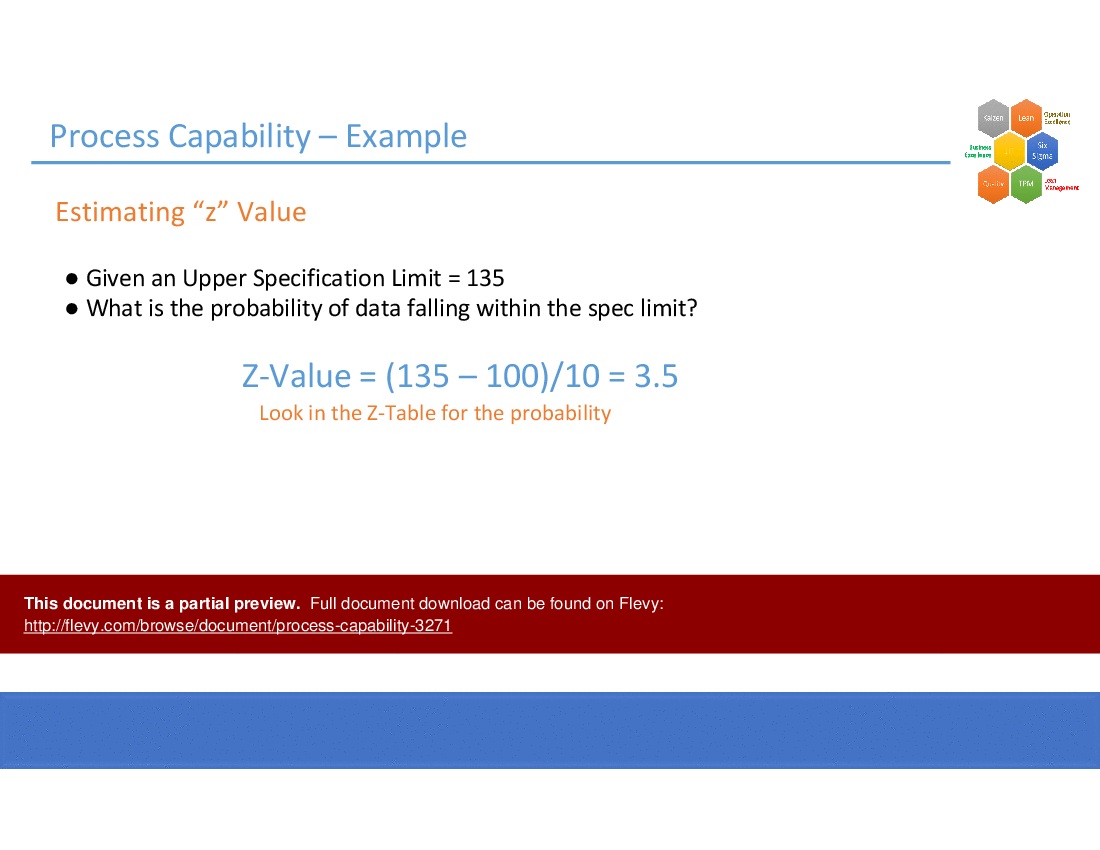
Process Capability by "z" Value Method
Process Capability and Capability Indices
Process Capability Vs Performance

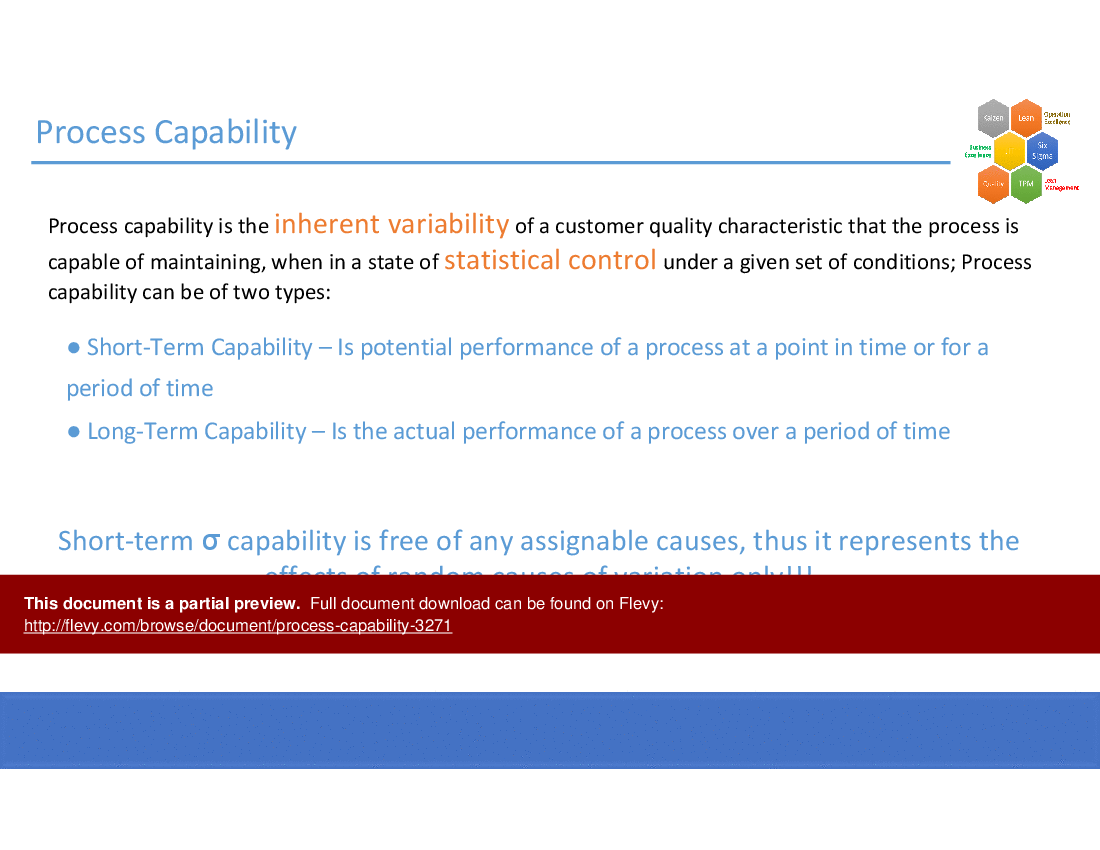
The PPT delves into the nuances of short-term and long-term process capability, providing clear distinctions and practical applications. It highlights the importance of understanding the inherent variability and the role of statistical control in maintaining process standards. The graphical representations and detailed explanations make complex concepts accessible, ensuring that the audience can implement these methodologies effectively.

The presentation also covers the calculation methods for process capability, including DPMO, z-value, and capability index methods. It emphasizes the necessity of stability analysis before proceeding with capability calculations, ensuring that processes are stable and data is reliable. The step-by-step guidance on estimating z-values and interpreting capability indices provides a robust framework for quality control.

The document includes practical exercises and examples to reinforce learning and application. By calculating process sigma for different scenarios, users can gain hands-on experience and confidence in their ability to assess and improve process capability. This comprehensive approach ensures that executives can make data-driven decisions to enhance process performance and quality outcomes.

Got a question about the product? Email us at support@flevy.com or ask the author directly by using the "Ask the Author a Question" form. If you cannot view the preview above this document description, go here to view the large preview instead.

MARCUS OVERVIEW

This synopsis was written by Marcus [?] based on the analysis of the full 47-slide presentation.


Executive Summary
The Process Capability PPT provides a comprehensive guide on understanding process capability, focusing on its types, measurement methods, and implications for quality control. This presentation is designed to equip users with the knowledge to assess and enhance their processes, ensuring outputs meet specified limits. By utilizing this resource, executives and consultants can effectively implement quality improvement strategies such as Six Sigma and Lean Management, ultimately driving operational excellence.

Who This Is For and When to Use
•  Quality Assurance Managers overseeing process improvement initiatives
•  Operations Executives focused on optimizing production efficiency
•  Lean Six Sigma Practitioners implementing quality control methodologies
•  Consultants advising organizations on process improvement strategies

Best-fit moments to use this deck:
•  During training sessions on quality management and process optimization
•  When conducting workshops on Lean and Six Sigma methodologies
•  For strategic planning meetings focused on enhancing operational capabilities

Learning Objectives
•  Define process capability and its significance in quality management
•  Differentiate between short-term and long-term process capability
•  Calculate process capability indices (Cp and Cpk) using statistical methods
•  Analyze the impact of variation on process performance
•  Implement strategies to reduce process variation and improve quality
•  Interpret process capability results to inform decision-making

Table of Contents
•  Introduction to Process Capability (page 3)
•  Types of Process Capability (page 5)
•  Measurement Methods (page 10)
•  Statistical Control and Process Variation (page 15)
•  Capability Indices: Cp and Cpk (page 20)
•  Case Studies and Examples (page 25)
•  Conclusion and Next Steps (page 30)

Primary Topics Covered
•  Process Capability Definition - Process capability measures the ability of a process to produce outputs within specified limits, reflecting its inherent variability.
•  Short-Term vs. Long-Term Capability - Short-term capability assesses performance at a specific time, while long-term capability evaluates performance over extended periods.
•  Statistical Control - A stable process is one where variation is predictable and within control limits, essential for accurate capability assessment.
•  Capability Indices (Cp and Cpk) - Cp indicates potential capability, while Cpk accounts for shifts in the process mean relative to specification limits.
•  Variation Sources - Identifying chronic and acute variations helps in understanding process performance and areas for improvement.
•  Defects and Yield - Understanding defects per million opportunities (DPMO) and yield rates is crucial for evaluating process effectiveness.

Deliverables, Templates, and Tools
•  Process capability calculation templates for Cp and Cpk
•  Statistical control chart examples for monitoring process stability
•  Case study examples illustrating process capability applications
•  Guidelines for conducting process capability assessments
•  Templates for documenting process improvement initiatives
•  Checklists for identifying sources of variation in processes

Slide Highlights
•  Visual representations of 3-sigma and 6-sigma processes illustrating variation and specification limits
•  Graphical analysis of process capability indices (Cp and Cpk)
•  Flowcharts detailing the steps for calculating process capability
•  Case studies showcasing successful implementation of process capability improvements
•  Summary slides highlighting key takeaways on process capability

Potential Workshop Agenda
Introduction to Process Capability (30 minutes)
•  Overview of process capability concepts
•  Discussion on the importance of capability in quality management

Calculating Process Capability (60 minutes)
•  Hands-on practice with Cp and Cpk calculations
•  Analyzing case studies to reinforce learning

Identifying and Reducing Variation (45 minutes)
•  Group activities to identify sources of variation
•  Strategies for implementing process improvements

Customization Guidance
•  Tailor the presentation to include specific industry examples relevant to your organization
•  Adjust case studies to reflect your company’s processes and challenges
•  Incorporate company-specific terminology and metrics for clarity

Secondary Topics Covered
•  Lean Management principles and their relation to process capability
•  Kaizen methodologies for continuous improvement
•  Just-In-Time (JIT) practices and their impact on process efficiency
•  Total Productive Maintenance (TPM) strategies for enhancing operational reliability

FAQ
What is process capability?
Process capability measures how well a process can produce outputs that meet specified limits, indicating its inherent variability.

How do I calculate Cp and Cpk?
Cp is calculated using the formula (USL - LSL) / (6 * standard deviation), while Cpk considers the process mean and its distance from specification limits.

What is the difference between short-term and long-term capability?
Short-term capability assesses performance at a specific moment, while long-term capability evaluates performance over an extended period, accounting for shifts in the process mean.

Why is statistical control important?
Statistical control ensures that process variation is predictable, allowing for accurate capability assessments and effective quality management.

What are common sources of variation in processes?
Sources of variation can include chronic mean shifts, acute mean shifts, and changes in variation within subgroups.

How can I improve my process capability?
Improving process capability involves identifying and reducing sources of variation, implementing quality management strategies, and continuously monitoring performance.

What does a 6-sigma process mean?
A 6-sigma process has minimal variation, producing only 3.4 defects per million opportunities, indicating high-quality performance.

How do I interpret process capability results?
Interpreting results involves analyzing Cp and Cpk values to determine if the process meets customer specifications and identifying areas for improvement.

Glossary
•  Process Capability - The ability of a process to produce outputs within specified limits.
•  Cp - Capability potential index measuring process capability against specification limits.
•  Cpk - Capability index accounting for shifts in the process mean relative to specification limits.
•  DPMO - Defects per million opportunities, a measure of process quality.
•  Yield - The proportion of products that meet quality standards.
•  Specification Limits - The defined boundaries within which a process output must fall.
•  Statistical Control - A state where process variation is predictable and within control limits.
•  Variation - The differences in process outputs that can affect quality.
•  Lean Management - A methodology focused on minimizing waste while maximizing productivity.
•  Six Sigma - A data-driven approach for eliminating defects and improving quality.
•  Kaizen - A philosophy of continuous improvement in processes.
•  Total Productive Maintenance (TPM) - A maintenance approach aimed at improving productivity by reducing downtime.

Source: Process Capability PowerPoint (PPT) Presentation Slide Deck, Nishil Josh


$24.00

Add to Cart
  

ABOUT THE AUTHOR

Author: Nishil Josh
Additional documents from author: 23

I am a Business Excellence Professional with over 25 years of experience in Manufacturing Operations, Quality Assurance & Improvement, and Resource Management across various industry sectors. Throughout my career, I have specialized in managing production activities, optimizing processes, and implementing best practices to enhance operational efficiency and productivity.

My expertise includes ... [read more]

Ask the Author a Question

You must be logged in to contact the author.

Click here to log in Click here register

Did you know?
The average daily rate of a McKinsey consultant is $6,625 (not including expenses). The average price of a Flevy document is $65.
Bundle and save! You can save up to % with bundles!

View bundle(s)


Trusted by over 10,000+ Client Organizations
Since 2012, we have provided business templates to over 10,000 businesses and organizations of all sizes, from startups and small businesses to the Fortune 100, in over 130 countries.
AT&T GE Cisco Intel IBM Coke Dell Toyota HP Nike Samsung Microsoft Astrazeneca JP Morgan KPMG Walgreens Walmart 3M Kaiser Oracle SAP Google E&Y Volvo Bosch Merck Fedex Shell Amgen Eli Lilly Roche AIG Abbott Amazon PwC T-Mobile Broadcom Bayer Pearson Titleist ConEd Pfizer NTT Data Schwab


Read Customer Testimonials

 
"Flevy is our 'go to' resource for management material, at an affordable cost. The Flevy library is comprehensive and the content deep, and typically provides a great foundation for us to further develop and tailor our own service offer."

– Chris McCann, Founder at Resilient.World
 
"[Flevy] produces some great work that has been/continues to be of immense help not only to myself, but as I seek to provide professional services to my clients, it gives me a large "tool box" of resources that are critical to provide them with the quality of service and outcomes they are expecting."

– Royston Knowles, Executive with 50+ Years of Board Level Experience
 
"FlevyPro provides business frameworks from many of the global giants in management consulting that allow you to provide best in class solutions for your clients."

– David Harris, Managing Director at Futures Strategy
 
"I have used FlevyPro for several business applications. It is a great complement to working with expensive consultants. The quality and effectiveness of the tools are of the highest standards."

– Moritz Bernhoerster, Global Sourcing Director at Fortune 500
 
"Flevy.com has proven to be an invaluable resource library to our Independent Management Consultancy, supporting and enabling us to better serve our enterprise clients.

The value derived from our [FlevyPro] subscription in terms of the business it has helped to gain far exceeds the investment made, making a subscription a no-brainer for any growing consultancy – or in-house strategy team."

– Dean Carlton, Chief Transformation Officer, Global Village Transformations Pty Ltd.
 
"I have used Flevy services for a number of years and have never, ever been disappointed. As a matter of fact, David and his team continue, time after time, to impress me with their willingness to assist and in the real sense of the word. I have concluded in fact "

– Roberto Pelliccia, Senior Executive in International Hospitality
 
"Flevy is now a part of my business routine. I visit Flevy at least 3 times each month.

Flevy has become my preferred learning source, because what it provides is practical, current, and useful in this era where the business world is being rewritten.

In today's environment where there are so "

– Omar Hernán Montes Parra, CEO at Quantum SFE
 
"FlevyPro has been a brilliant resource for me, as an independent growth consultant, to access a vast knowledge bank of presentations to support my work with clients. In terms of RoI, the value I received from the very first presentation I downloaded paid for my subscription many times over! The "

– Roderick Cameron, Founding Partner at SGFE Ltd


Save with Bundles

This document is available as part of the following discounted bundle(s):

Save %!
Quality Management Tools

This bundle contains 6 total documents. See all the documents to the right.

$59.00


Add Bundle & Save

Save %!
Lean Six Sigma Problem Solving Tools

This bundle contains 8 total documents. See all the documents to the right.

$50.00


Add Bundle & Save


Customers Also Bought These Documents


Customers Also Like These Documents

Explore Related Management Topics


Your Recently Viewed Documents
Receive our FREE Primer on Lean Management

This 32-page presentation from Operational Excellence Consulting explains the Lean Management philosophy, based on the Toyota Production System (TPS). Learn to eliminate waste.









