
Objectives and Key Results (OKR)   23-slide PPT PowerPoint presentation slide deck (PPTX)
$29.00

Objectives and Key Results (OKR) (23-slide PPT PowerPoint presentation slide deck (PPTX)) Preview Image
Log in to unlock full preview.
Objectives and Key Results (OKR) (23-slide PPT PowerPoint presentation slide deck (PPTX)) Preview Image
Arrow   Click main image to view in full screen.

Objectives and Key Results (OKR) (PowerPoint PPTX Slide Deck)

PowerPoint (PPTX) 23 Slides FlevyPro Document

Top 100 Best Practice $29.00
FlevyPro price: FREE (included in subscription)
This framework is developed by a team of former McKinsey and Big 4 consultants. The presentation follows the headline-body-bumper slide format used by global consulting firms.
Add to Cart


Immediate download
Free lifetime updates

PERFORMANCE MANAGEMENT PPT DESCRIPTION

Editor Summary A 23-slide PowerPoint presentation (PPTX) titled "Objectives and Key Results (OKR)" by LearnPPT Consulting that presents an OKR framework for defining objectives and measurable key results. Read more

Successful organizations are using Objectives and Key Results (OKR) now. OKRs are efficient way to track company and team goals and measure their progress. It helps every organization's success by cutting out unimportant goals and focusing on what truly is important within the organization.

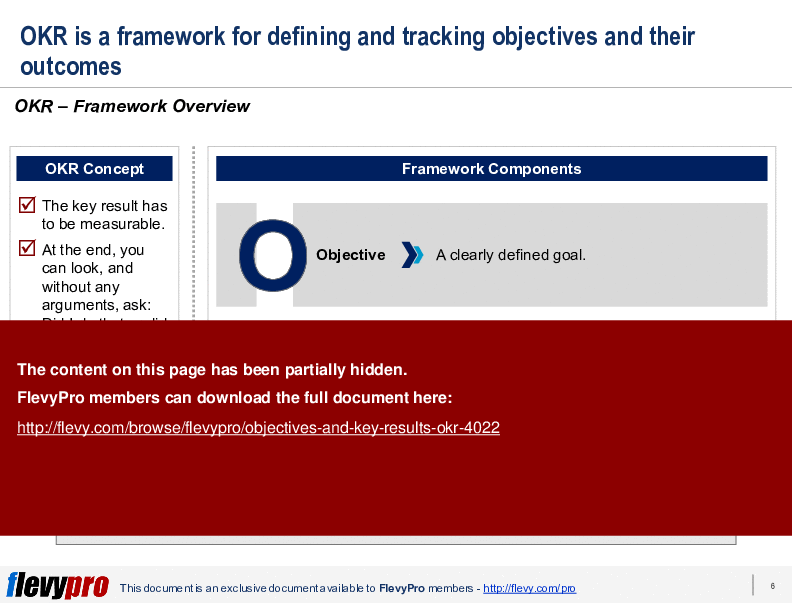
OKR is a framework for defining and tracking objectives and their outcomes. OKRs has been seen as a way to communicate so that there is clarity of purpose. It is also a tool for motivating and aligning people to work together. It increases transparency, accountability, and empowerment.

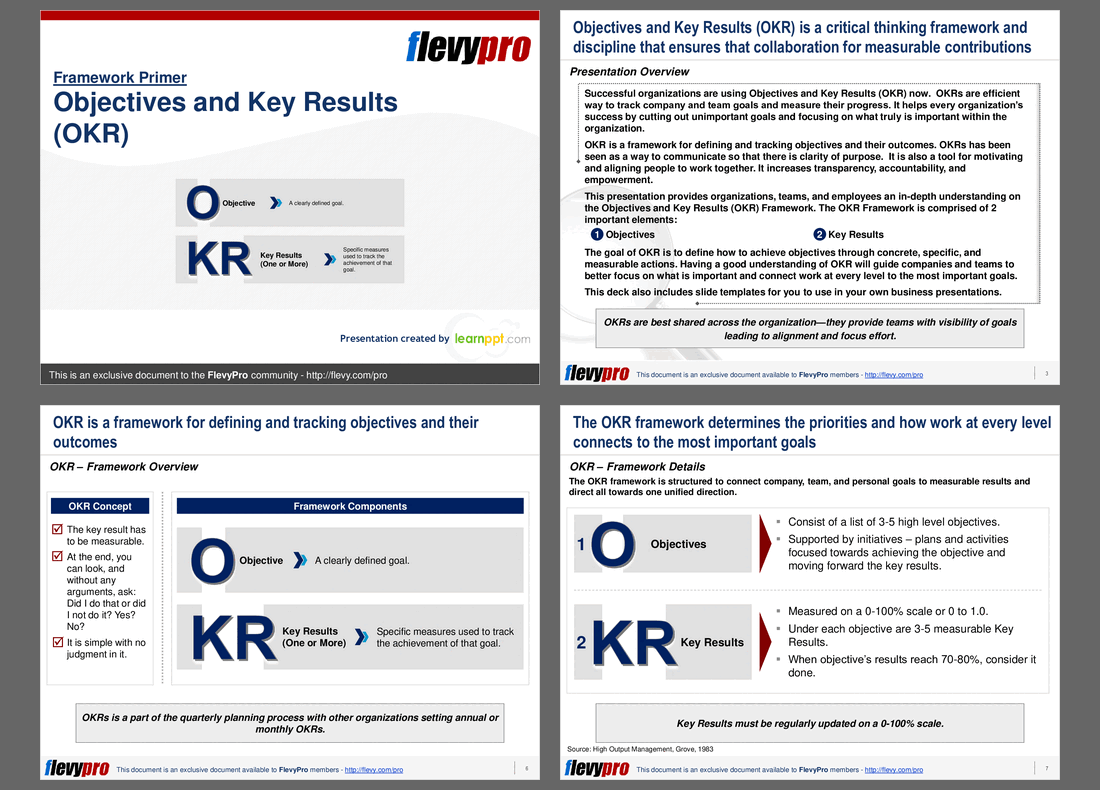
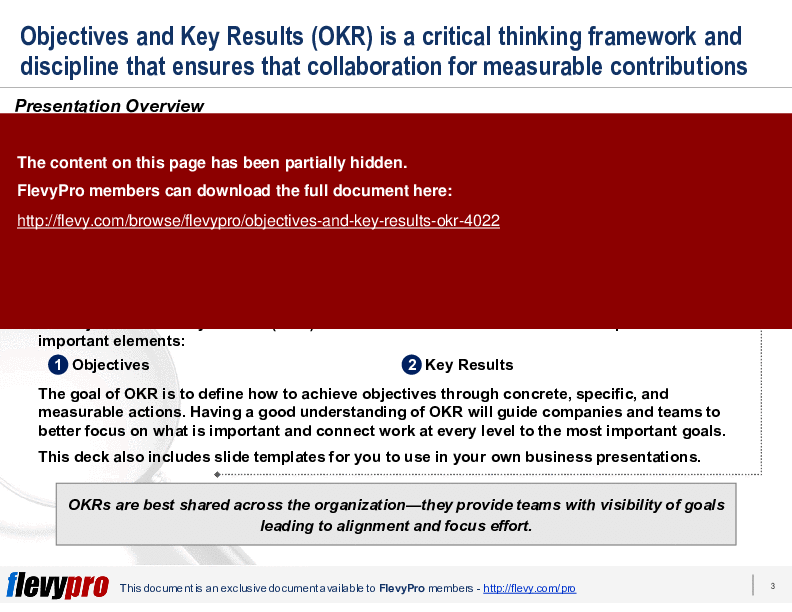
This presentation provides organizations, teams, and employees an in-depth understanding on the Objectives and Key Results (OKR) Framework. The OKR Framework is comprised of 2 important elements:

1. Objectives
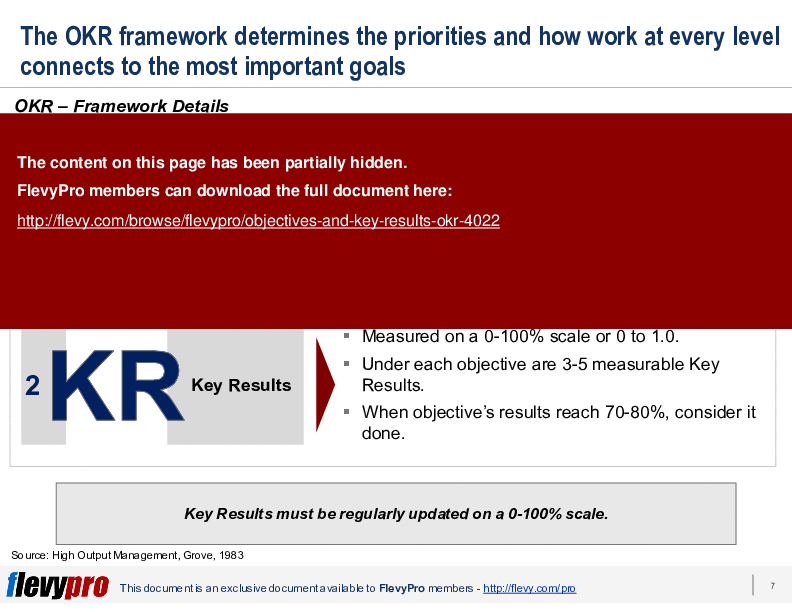
2. Key Results

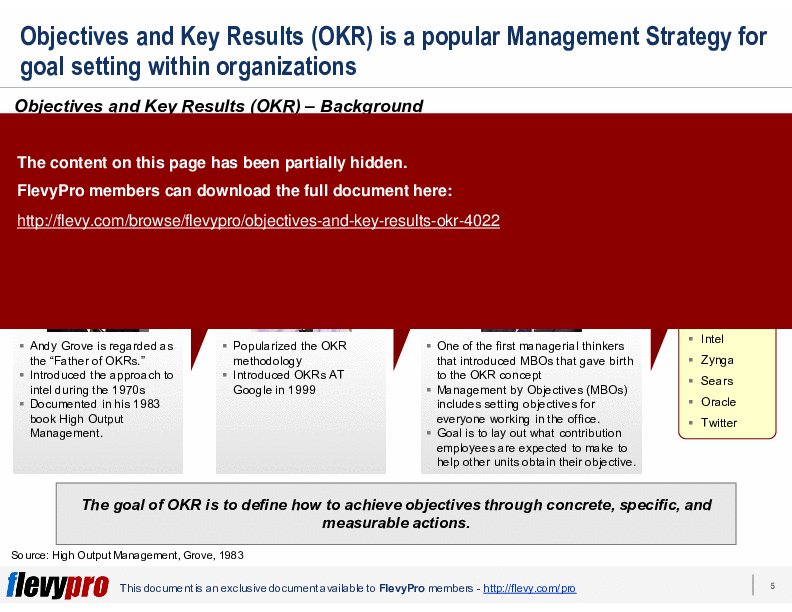
The goal of OKR is to define how to achieve objectives through concrete, specific, and measurable actions. Having a good understanding of OKR will guide companies and teams to better focus on what is important and connect work at every level to the most important goals. OKRs are best shared across the organization. They provide teams with visibility of goals leading to alignment and focus effort.

This deck also includes slide templates for you to use in your own business presentations.

This presentation delves into the nuances of setting effective objectives and key results, emphasizing the importance of qualitative and time-bound goals. It highlights common pitfalls in the OKR journey and provides practical examples to illustrate the application of the SMART goal framework. The deck also includes customizable templates to streamline your OKR implementation process, ensuring your team remains aligned and focused on high-impact activities. This resource is indispensable for leaders aiming to drive measurable outcomes and foster a culture of accountability within their organizations.

Got a question about this document? Email us at flevypro@flevy.com.

MARCUS OVERVIEW

This synopsis was written by Marcus [?] based on the analysis of the full 23-slide presentation.


Executive Summary
The "Objectives and Key Results (OKR)" PowerPoint presentation provides a structured framework for organizations to define and track their goals effectively. This presentation is designed to help teams establish clear objectives and measurable key results, fostering alignment and accountability across all levels of the organization. By implementing the OKR methodology, organizations can enhance transparency, focus on what truly matters, and drive performance towards achieving strategic goals. This deck includes templates and examples to facilitate the practical application of the OKR framework in business settings.

Who This Is For and When to Use
•  Corporate executives looking to implement strategic goal-setting frameworks
•  Team leaders aiming to enhance collaboration and alignment within their teams
•  HR professionals focused on improving employee engagement through clear objectives
•  Project managers seeking to track progress and outcomes effectively

Best-fit moments to use this deck:
•  During quarterly planning sessions to set and align organizational goals
•  In team meetings to establish clear objectives and key results
•  For training sessions on the OKR methodology to enhance understanding and implementation

Learning Objectives
•  Define the OKR framework and its components for effective goal setting
•  Establish actionable and measurable objectives that align with organizational goals
•  Develop key results that provide clear metrics for tracking progress
•  Identify common pitfalls in OKR implementation and strategies to avoid them
•  Utilize templates and examples to create tailored OKRs for various teams

Table of Contents
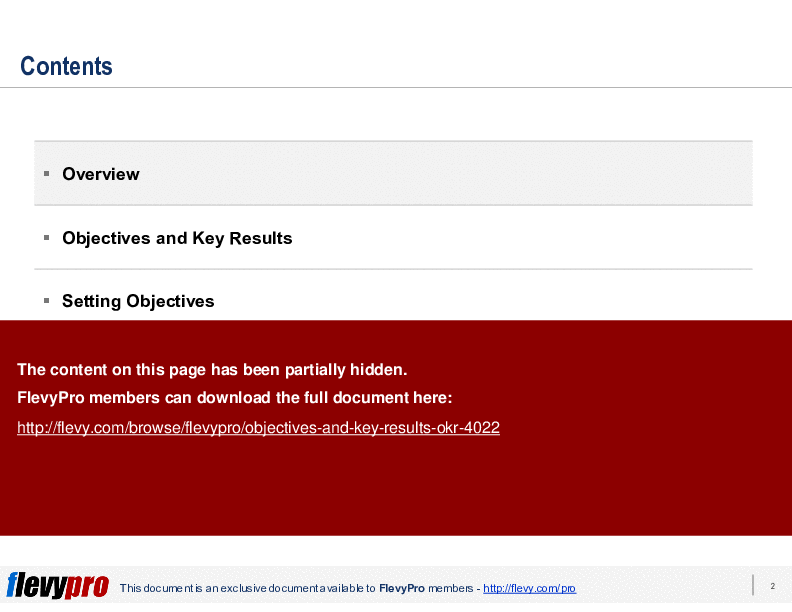
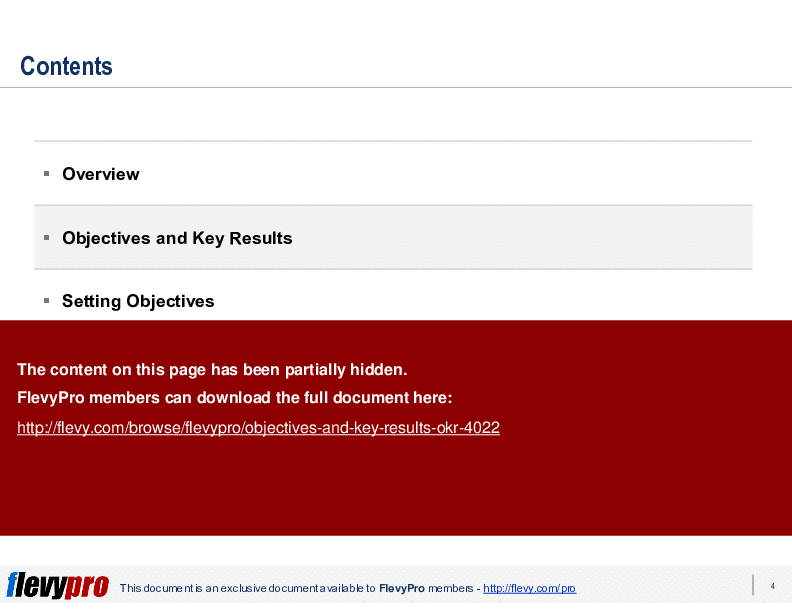
•  Overview (page 3)
•  Objectives and Key Results (page 5)
•  Setting Objectives (page 10)
•  Setting Key Results (page 13)
•  OKR Examples (page 16)
•  Templates (page 19)

Primary Topics Covered
•  Overview of OKR Framework - Introduction to the OKR methodology and its significance in goal setting.
•  Objectives - Clear definitions of objectives and their role in guiding organizational focus.
•  Key Results - Importance of measurable key results in tracking progress towards objectives.
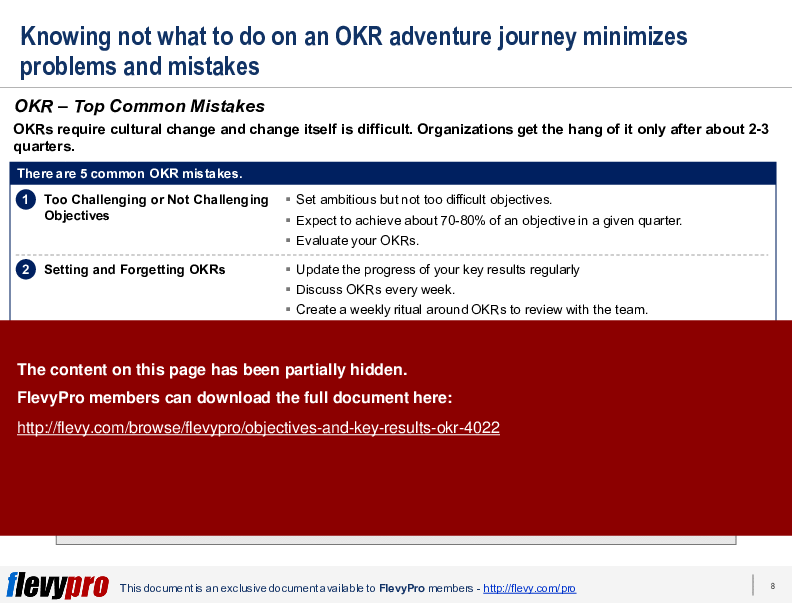
•  Common Mistakes - Identification of frequent errors in OKR implementation and how to mitigate them.
•  SMART Criteria - Guidelines for setting key results that are specific, measurable, achievable, relevant, and time-bound.
•  Examples of OKRs - Practical examples demonstrating the application of the OKR framework across different functions.

Deliverables, Templates, and Tools
•  OKR framework templates for setting objectives and key results
•  Examples of well-defined OKRs for various departments
•  Guidelines for conducting effective OKR meetings
•  Tracking sheets for monitoring progress on key results
•  Best practices for communicating OKRs across teams

Slide Highlights
•  Overview slide detailing the significance of OKRs in organizational success
•  Framework components slide illustrating the relationship between objectives and key results
•  Common mistakes slide outlining pitfalls to avoid in OKR implementation
•  SMART goals slide providing a clear breakdown of criteria for effective key results
•  Example slides showcasing practical applications of OKRs in different contexts

Potential Workshop Agenda
OKR Introduction Session (60 minutes)
•  Overview of the OKR framework and its benefits
•  Discussion on the importance of aligning team objectives with organizational goals

OKR Development Workshop (90 minutes)
•  Breakout sessions for teams to draft their objectives and key results
•  Group presentations to share and refine proposed OKRs

OKR Review and Feedback Session (60 minutes)
•  Review of drafted OKRs with feedback from peers and leadership
•  Finalization of OKRs for the upcoming quarter

Customization Guidance
•  Tailor objectives to reflect specific organizational goals and strategic priorities
•  Adjust key results to ensure they are measurable and relevant to the team's focus
•  Incorporate team-specific initiatives that support the achievement of objectives
•  Update templates with relevant metrics and timelines to align with organizational cadence

Secondary Topics Covered
•  The role of leadership in fostering an OKR culture
•  Techniques for maintaining accountability in tracking progress
•  Strategies for communicating OKRs effectively across the organization
•  The impact of OKRs on employee engagement and performance

Topic FAQ

What are the core components of the OKR framework I should understand before starting?

OKR centers on 2 components: Objectives (qualitative goals that provide direction) and Key Results (quantitative measures that track progress toward those objectives). The framework aims to translate strategic aims into concrete, measurable actions, emphasizing visibility and alignment across teams and the organization through Objectives and Key Results.

How often should my organization set and review OKRs?

The presentation notes that OKRs are typically set on a quarterly basis to keep teams focused and able to adapt to changing priorities. Quarterly planning and regular review meetings—supported by tracking sheets—are recommended to maintain visibility and course-correct during the period.

What guidance helps make key results effective and trackable?

Effective key results should follow SMART criteria: specific, measurable, achievable, relevant, and time-bound. The deck also recommends using a simple progress scale (0–100%) to track proximity to each key result, combining SMART guidance with quantitative tracking practices and a percentage-based progress metric.

What common mistakes should teams avoid when implementing OKRs?

Common pitfalls include setting overly ambitious objectives without measurable key results, failing to maintain visibility of the big picture, and insufficient tracking of outcomes. The presentation identifies these typical errors and offers mitigation tactics to preserve alignment and accountability across teams as implementation progresses.

What should I look for when choosing an OKR template deck for my organization?

Look for templates that include clear Objective and Key Result layouts, SMART guidance for key results, meeting and workshop agendas, examples across functions, and tracking sheets to monitor progress. Flevy’s Objectives and Key Results (OKR) deck explicitly provides templates, examples, meeting guidelines, and tracking sheets across 23 slides.

How much workshop time is typically needed to introduce and draft OKRs with teams?

The presentation outlines a practical agenda example: a 60-minute OKR introduction session, a 90-minute OKR development workshop for drafting team OKRs, and a 60-minute OKR review and feedback session. These session lengths support learning, drafting, and finalization within a half-day to full-day workshop schedule.

After a reorganization, how can I use OKRs to align team objectives with company strategy?

Use a top-down cascade: translate strategic priorities into company-level objectives, then run team breakout sessions to draft aligned team objectives and measurable key results. Share drafts for peer and leader feedback, and finalize for the quarter—using templates and examples to ensure consistency across teams for the upcoming quarter.

Are OKRs adaptable to different organization sizes and types?

Yes; the material states that OKRs can be adapted across contexts from startups to large enterprises. The framework’s focus on clear objectives, measurable key results, and shared visibility supports scaling and adaptation across organizational sizes and functions.

Document FAQ
These are questions addressed within this presentation.

What are Objectives and Key Results (OKRs)?
OKRs are a goal-setting framework that helps organizations define clear objectives and measurable key results to track progress and align efforts.

How often should OKRs be set?
OKRs are typically set on a quarterly basis to ensure that teams remain focused and can adapt to changing priorities.

What are common mistakes when implementing OKRs?
Common mistakes include setting overly ambitious objectives, failing to measure key results, and not maintaining visibility of the big picture.

How can I ensure my key results are effective?
Key results should follow the SMART criteria: they must be specific, measurable, achievable, relevant, and time-bound.

Can OKRs be used in any type of organization?
Yes, OKRs can be adapted for use in various organizational contexts, from startups to large enterprises.

What resources are available for implementing OKRs?
This presentation includes templates and examples to help teams effectively implement the OKR framework.

How do I track progress on key results?
Progress can be tracked using a simple percentage scale (0-100%) to evaluate how close teams are to achieving their key results.

What role do leaders play in the OKR process?
Leaders are essential in setting the vision, aligning team objectives with organizational goals, and fostering a culture of accountability.

Glossary
•  OKR - Objectives and Key Results, a goal-setting framework.
•  SMART - Specific, Measurable, Achievable, Relevant, Time-bound criteria for setting goals.
•  Key Results - Specific measures used to track the achievement of objectives.
•  Objectives - Clearly defined goals that guide organizational efforts.
•  Alignment - Ensuring that team objectives support overall organizational goals.
•  Transparency - Open communication about goals and progress within the organization.
•  Accountability - Responsibility for achieving set objectives and key results.
•  Engagement - The involvement and commitment of employees towards achieving organizational goals.
•  Initiatives - Plans and activities focused on achieving objectives and moving forward key results.
•  Cultural Change - The process of shifting organizational values and behaviors to support new practices like OKRs.
•  Quarterly Planning - The process of setting objectives and key results every quarter.
•  Performance Tracking - Monitoring progress towards achieving objectives and key results.

PERFORMANCE MANAGEMENT PPT SLIDES

Aligning Goals with the OKR Framework

Characteristics of Effective Objective Setting

Common Pitfalls in OKR Implementation

Implementing Effective OKRs for Product and Marketing

Implementing the SMART Framework for Key Results

Source: Best Practices in Performance Management, SMART, Team Building PowerPoint Slides: Objectives and Key Results (OKR) PowerPoint (PPTX) Presentation Slide Deck, LearnPPT Consulting


$29.00
FlevyPro price: FREE (included in subscription)
This framework is developed by a team of former McKinsey and Big 4 consultants. The presentation follows the headline-body-bumper slide format used by global consulting firms.
Add to Cart
  

Did you need more documents?

Consider a FlevyPro subscription from $39/month. View plans here.

For $10.00 more, you can download this document plus 2 more FlevyPro documents. That's just $13 each.

ABOUT FLEVYPRO

This document is part of the FlevyPro Library, a curated knowledge base of documents for our FlevyPro subscribers.

FlevyPro is a subscription service for on-demand business frameworks and analysis tools. FlevyPro subscribers receive access to an exclusive library of curated business documents—business framework primers, presentation templates, Lean Six Sigma tools, and more—among other exclusive benefits.

Click here to learn more about FlevyPro and its benefits.

Did you know?
The average daily rate of a McKinsey consultant is $6,625 (not including expenses). The average price of a Flevy document is $65.


Trusted by over 10,000+ Client Organizations
Since 2012, we have provided business templates to over 10,000 businesses and organizations of all sizes, from startups and small businesses to the Fortune 100, in over 130 countries.
AT&T GE Cisco Intel IBM Coke Dell Toyota HP Nike Samsung Microsoft Astrazeneca JP Morgan KPMG Walgreens Walmart 3M Kaiser Oracle SAP Google E&Y Volvo Bosch Merck Fedex Shell Amgen Eli Lilly Roche AIG Abbott Amazon PwC T-Mobile Broadcom Bayer Pearson Titleist ConEd Pfizer NTT Data Schwab


Read Customer Testimonials

 
"As a young consulting firm, requests for input from clients vary and it's sometimes impossible to provide expert solutions across a broad spectrum of requirements. That was before I discovered Flevy.com.

Through subscription to this invaluable site of a plethora of topics that are key and crucial to consulting, I "

– Nishi Singh, Strategist and MD at NSP Consultants
 
"My FlevyPro subscription provides me with the most popular frameworks and decks in demand in today’s market. They not only augment my existing consulting and coaching offerings and delivery, but also keep me abreast of the latest trends, inspire new products and service offerings for my practice, and educate me "

– Bill Branson, Founder at Strategic Business Architects
 
"The wide selection of frameworks is very useful to me as an independent consultant. In fact, it rivals what I had at my disposal at Big 4 Consulting firms in terms of efficacy and organization."

– Julia T., Consulting Firm Owner (Former Manager at Deloitte and Capgemini)
 
"Last Sunday morning, I was diligently working on an important presentation for a client and found myself in need of additional content and suitable templates for various types of graphics. Flevy.com proved to be a treasure trove for both content and design at a reasonable price, considering the time I "

– M. E., Chief Commercial Officer, International Logistics Service Provider
 
"As a small business owner, the resource material available from FlevyPro has proven to be invaluable. The ability to search for material on demand based our project events and client requirements was great for me and proved very beneficial to my clients. Importantly, being able to easily edit and tailor "

– Michael Duff, Managing Director at Change Strategy (UK)
 
"I like your product. I'm frequently designing PowerPoint presentations for my company and your product has given me so many great ideas on the use of charts, layouts, tools, and frameworks. I really think the templates are a valuable asset to the job."

– Roberto Fuentes Martinez, Senior Executive Director at Technology Transformation Advisory
 
"Flevy is our 'go to' resource for management material, at an affordable cost. The Flevy library is comprehensive and the content deep, and typically provides a great foundation for us to further develop and tailor our own service offer."

– Chris McCann, Founder at Resilient.World
 
"As an Independent Management Consultant, I find Flevy to add great value as a source of best practices, templates and information on new trends. Flevy has matured and the quality and quantity of the library is excellent. Lastly the price charged is reasonable, creating a win-win value for "

– Jim Schoen, Principal at FRC Group


Customers Also Bought These Documents


Customers Also Like These Documents

Explore Templates on Related Management Topics


Your Recently Viewed Documents
Download our FREE Strategy & Transformation Framework Templates

Download our free compilation of 50+ Strategy & Transformation slides and templates. Frameworks include McKinsey 7-S, Balanced Scorecard, Disruptive Innovation, BCG Curve, and many more.